RM Sotheby’s Munich auction on November 20, 2026, achieved €12,101,700 in sales, with 55 of the 60 cars offered finding buyers. The 92 per cent sell-through rate followed the withdrawal of a 1993 Porsche 911 Carrera RS 3.8 before the auction, which took place at Motorworld Munich.
The highest result was €1,332,500 for a 1963 Mercedes-Benz 300 SL Roadster, followed by €1,265,000 for a 1992 Porsche 911 Turbo S Lightweight. However, the biggest margin above the upper estimate was achieved by a 2014 Mercedes-AMG C-Coupé DTM, which made €938,750 against a pre-sale guide of €400,000 to €600,000. The €338,750 difference exceeded that of the Porsche, which finished €265,000 above its high estimate.
At the other end of the results, a 1939 BMW 328 Roadster recorded the largest shortfall in absolute terms, selling for €291,875 against an estimate of €550,000 to €650,000. The €258,125 deficit was notable given that the car had undergone extensive restoration work in 2020 and 2021. By percentage, the greatest shortfall concerned a 1971 Maserati Indy restoration project, which achieved just €2300 against an estimate of €20,000 to €40,000. One of the strongest results by percentage came from a 1990 Ferrari Testarossa with just 923km recorded, which sold for €444,000 against €180,000 to €280,000.
Five cars remained unsold after the auction, including a 2016 Porsche 911 R, a 1962 Porsche 356 B Carrera 2 Cabriolet and a 1963 Maserati 3500 GTi Spyder. Two BMW competition cars also failed to find buyers: the 1986 Schnitzer 635CSi Group A that won the Spa 24 Hours and the 1971 Broadspeed-developed 3.0 CSL subsequently modified to Batmobile specification.
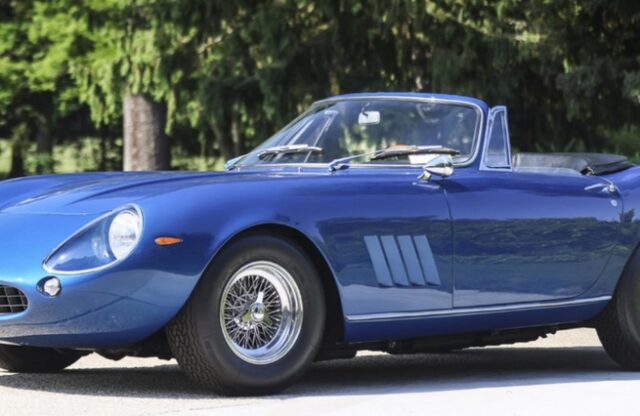
The two named collections produced notably different results. All six cars offered from the Porsche Heritage Collection found buyers, generating a combined €1,154,075. The highest result was €376,250 for a 2024 Porsche 911 S/T, followed by €314,375 for a 2023 Porsche 911 Sport Classic. The Tridente Collection, by comparison, recorded six sales totalling €584,000, against aggregate lower estimates of €820,000. None of those six cars reached its lower estimate, while the seventh, a 1963 Maserati 3500 GTi Spyder by Vignale, remained unsold. The results ranged from €342,500 for the Ghibli Spyder to €2300 for the Indy project. Let’s take a look at the key lots in greater detail.
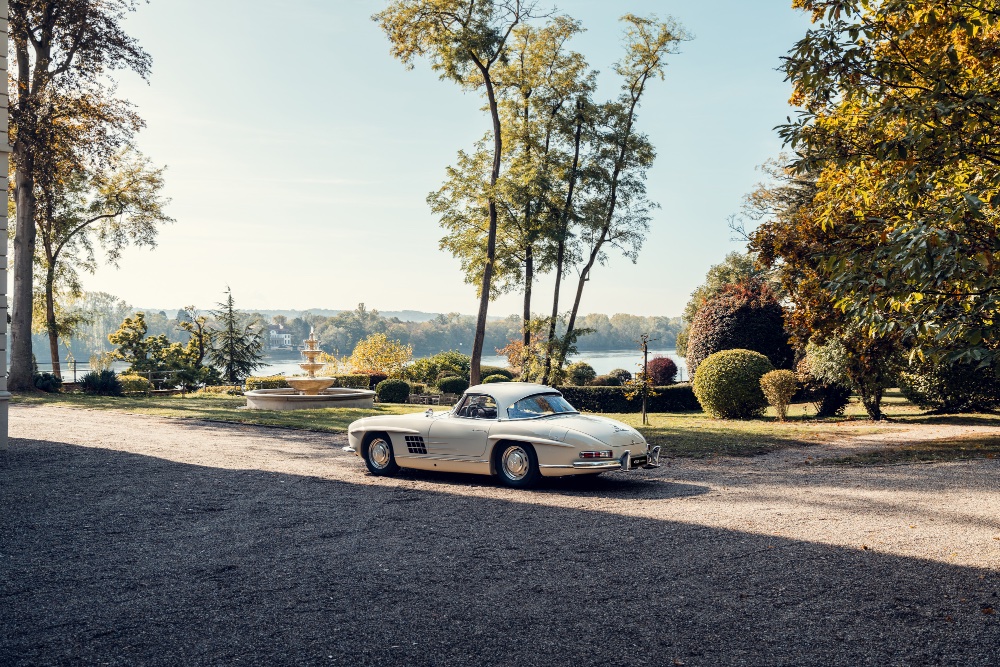
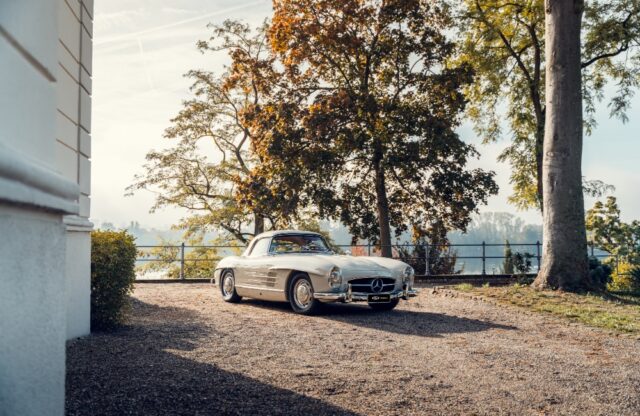
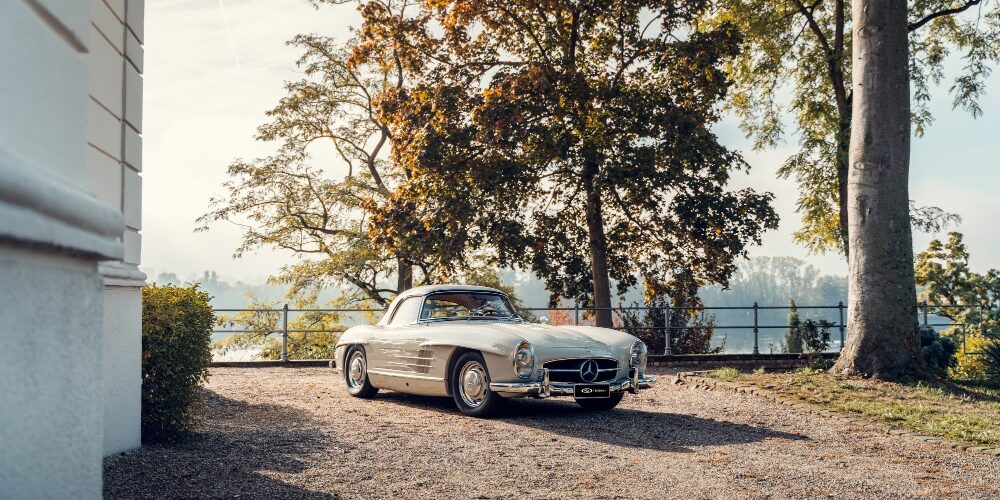
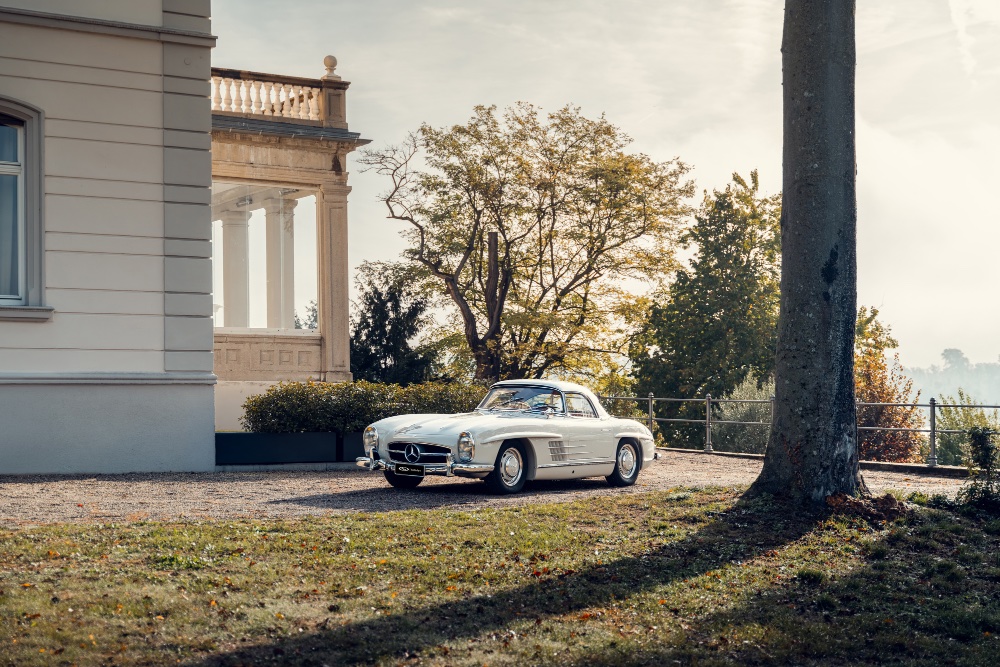
The 1963 Mercedes-Benz 300 SL Roadster, chassis 198.042.10.003248, was one of the final examples produced, its chassis number placing it 11 cars from the end of the production sequence. It combines the later disc-brake specification with the aluminium engine block introduced in 1962. The Mercedes-Benz was originally finished in White Grey over red leather, the colour combination it retains today.
Although its earliest ownership history is undocumented, the car was in Germany with Walter Schröder of Rüsselsheim by 2000, passing to a collector in Neunkirchen in January 2002. By then it had been repainted dark blue. The consignor acquired it in early 2022 and subsequently commissioned a comprehensive refurbishment, undertaken primarily by TG Classics of Willich with additional finishing work by Walter Pusch. Completed in 2025 at a documented cost exceeding €170,000, the work included renewal of chassis components, reconditioning of the cylinder head, installation of a new fuel tank and brake-system components, and a return to the original exterior colour. The engine, gearbox, differential and kingpins retain numbers corresponding to the factory documentation and Gull Wing Group records.
The Mercedes-Benz was offered with a matching hardtop, fitted red leather luggage, a copy of its factory data card and technical documentation including a metallurgy report. Against an estimate of €1,300,000 to €1,700,000, it sold for €1,332,500 including fees.
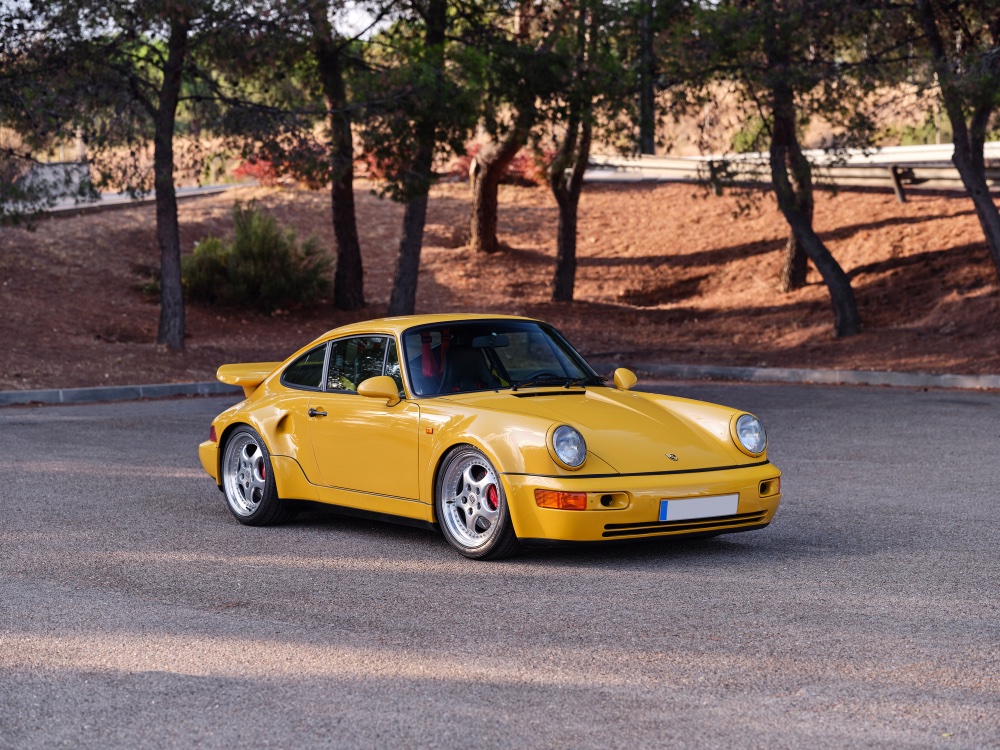
The 1992 Porsche 964 Turbo S Lightweight, chassis WP0ZZZ96ZPS479021, had remained with the same family since 1993. Originally ordered by a Porsche VIP client, it was completed in September 1992 for the German market before being delivered in December and subsequently moving to Spain.
Its specification was notably individual. Paint-to-Sample Speed Yellow was combined with an Interior-to-Sample arrangement featuring black leather and yellow and grey inserts on the bucket seats and three-spoke steering wheel. Factory options included an on-board computer, limited-slip differential and 18-inch split-rim Speedline wheels fitted with Dunlop tyres. The accompanying documentation records services by Porsche España in 1993 and 1998, together with six Spanish ITV inspections between 1997 and 2007. Further inspections took place in 2021 and October 2023. Most of the recorded mileage was accumulated during the car’s first decade, with relatively little road use since 2000. In October 2026 the Porsche underwent an inspection at Porsche Classic Center Gelderland, which confirmed the presence of its matching-numbers engine and gearbox. Its odometer displayed 30,933km at the time of cataloguing.
Against an estimate of €800,000 to €1,000,000, the Porsche sold for €1,265,000 including fees.
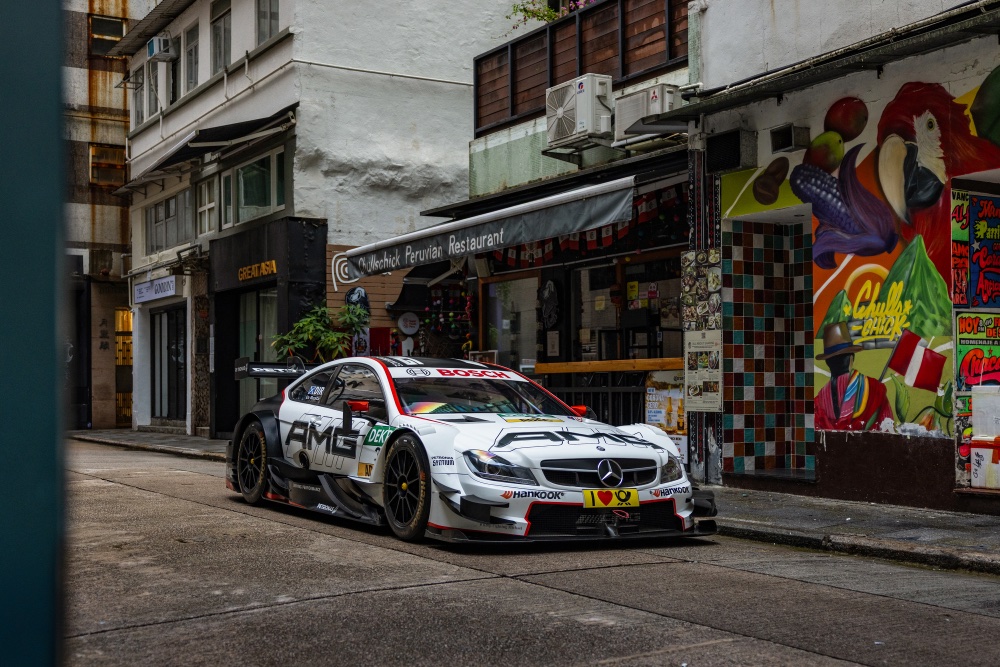
The 2014 Mercedes-AMG C-Coupé DTM, chassis V35-035, was built and campaigned by HWA, Mercedes-AMG’s long-standing motorsport partner, and competed in three consecutive DTM seasons between 2014 and 2016. Its first driver was former Formula 1 racer Paul di Resta, who returned to the championship in 2014 after three seasons in Formula 1.
Di Resta secured three fourth-place finishes in the car during 2014, at Oschersleben, the Nürburgring and Hockenheim. He continued with the chassis in 2015, taking third place and setting the fastest lap at the opening Hockenheim round on his way to eighth in the drivers’ championship. For 2016, the car was updated to the later W205-style silhouette and allocated to Maximilian Götz. His best finish was fourth in the opening Moscow race. HWA subsequently sold the chassis to the consignor in June 2018. At Munich, V35-035 was presented in its earlier W204 bodywork, wearing di Resta’s number-three livery from the 2015 season. Documentation included a DMSB Wagenpass issued in April 2014 and an HWA engine operation manual. A spare-parts package included additional wheels, slick and wet tyres, oil and water pre-heaters and associated workshop equipment.
Against an estimate of €400,000 to €600,000, the Mercedes-AMG sold for €938,750 including fees, surpassing its upper estimate by €338,750, equivalent to approximately 56 per cent.
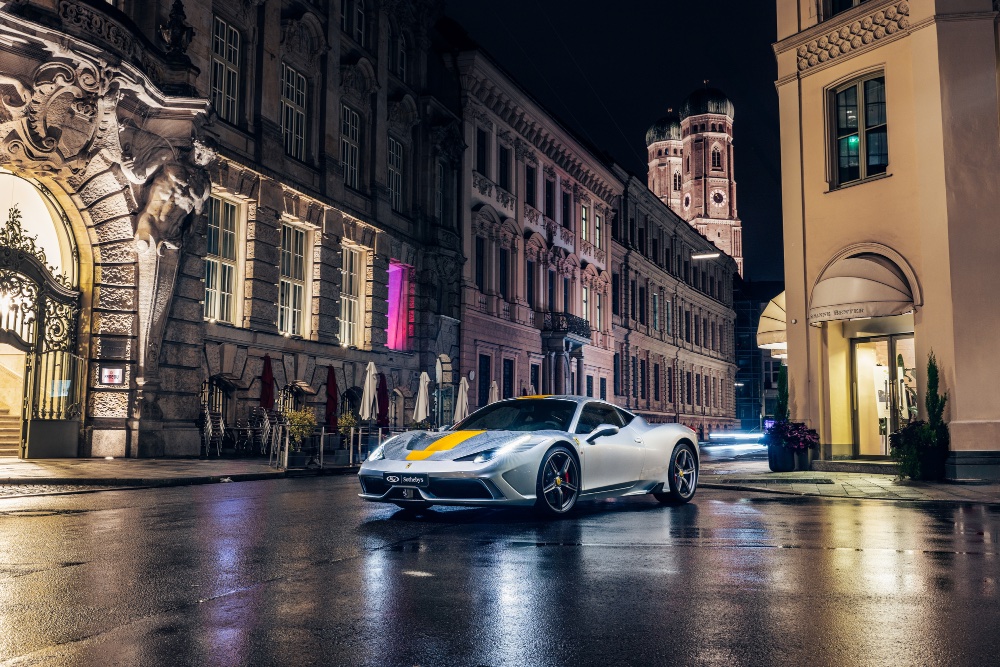
The 2015 Ferrari 458 Speciale, chassis ZFF75VHB000214180, was originally supplied to Croatia in November 2015 through Forza Rossa Holding Limited, with the first owner identified in the catalogue as a partner of management consultancy McKinsey & Company.
The Ferrari was ordered in Grigio Alloy, complemented by a full-length NART racing stripe in Giallo Triplo Strato. Carbonfibre detailing extended to the rear diffuser and side blades, while red brake callipers were specified for the carbon-ceramic braking system. Inside, the Nera Alcantara upholstery featured contrasting stitching and embroidered Cavallino emblems. The accompanying service book recorded ten stamps, with a history of maintenance undertaken through Ferrari specialists and official dealers. The car was serviced in Budapest during September 2017, when it had covered 2300km, before moving to Germany. Visits to Auto Toy Store in Starnberg, Scuderia Gran Tourismo and Eberlein Ferrari Kassel were documented over the following years. The brake fluid and ancillary belts were renewed in July 2023, with further work undertaken in June 2025. Its most recent service was completed by Emil Frey Sportivo in Munich in October 2026. At cataloguing, the odometer displayed 29,254km.
Against an estimate of €520,000 to €620,000, it sold for €635,000 including fees.
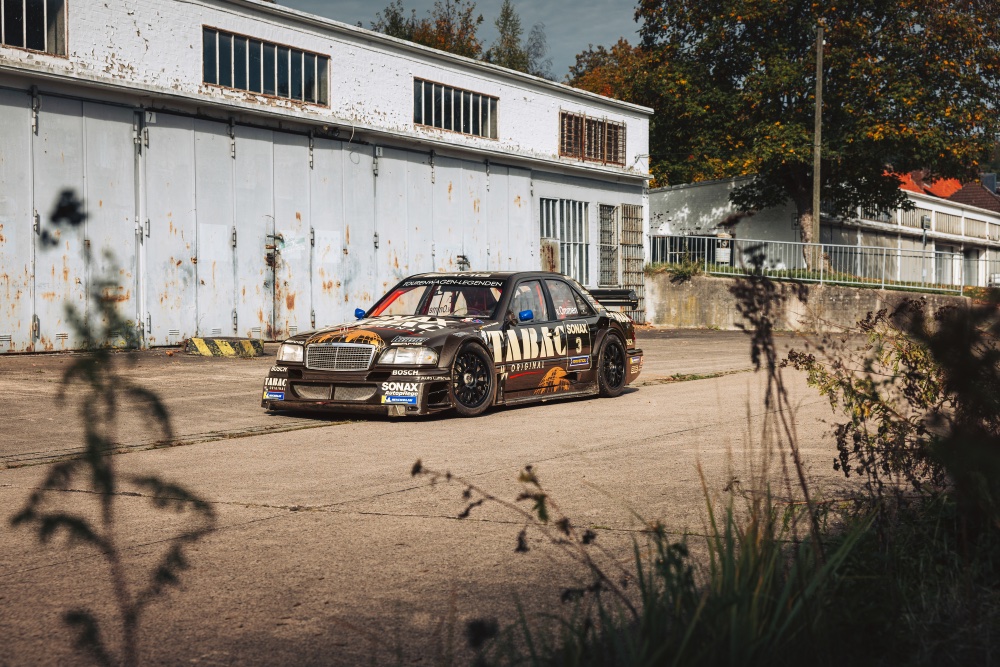
The 1995 AMG-Mercedes C-Klasse DTM, chassis RS95-0216, was prepared by AMG for the Deutsche Tourenwagen Meisterschaft and International Touring Car Championship, and was driven exclusively during that season by Jörg van Ommen.
Van Ommen opened the DTM season with two second-place finishes at Hockenheim, followed by podium appearances at the Norisring and Diepholz. In the ITC he recorded a third place at Donington Park and another at Magny-Cours, while a further DTM podium came at the Hockenheim finale. He finished runner-up to Bernd Schneider in the German championship and fifth in the international series. After an unsuccessful single appearance in the 1996 ITC, the car was retired from competition and placed on display at the Wilhelm-Maybach-Schule in Stuttgart, where it remained until 2014. It subsequently passed to collector Jörg Hatscher, who commissioned a restoration by Mercedes-Benz racing specialist Thorsten Stadler, completed in 2018. Since restoration, the car has competed in historic DTM events, driven by van Ommen, Patrick Huisman and Stadler. It was presented at Munich in its appropriate UPS, Tabac and Sonax livery from 1995.
Against an estimate of €450,000 to €550,000, the Mercedes-Benz sold for €522,500.
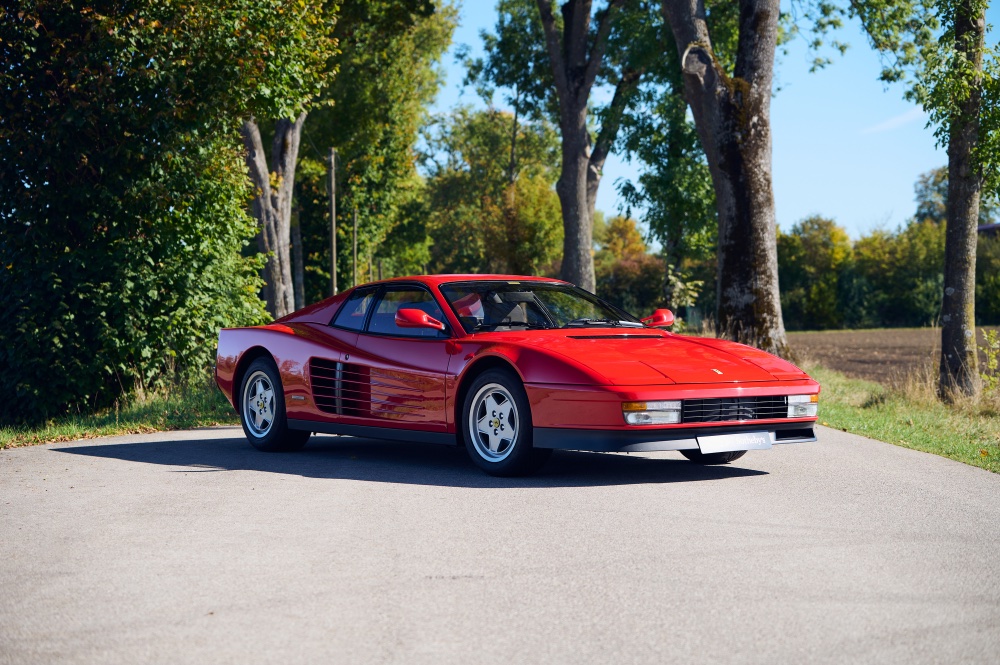
The 1990 Ferrari Testarossa, chassis ZFFAA17B000089053, had covered just 923km from new, accumulated during a single ownership spanning more than 36 years.
The Ferrari was supplied new by Auto Becker of Düsseldorf, having been imported into Germany through Ferrari Deutschland GmbH. Its original owner collected it on May 4, 1990, but reportedly never became comfortable driving the car. After covering fewer than 1000km, he placed it in a heated garage and cancelled the registration. Against an estimate of €180,000 to €280,000, the Testarossa sold for €444,000 including fees, exceeding the upper guide by €164,000, or 58.6 per cent.
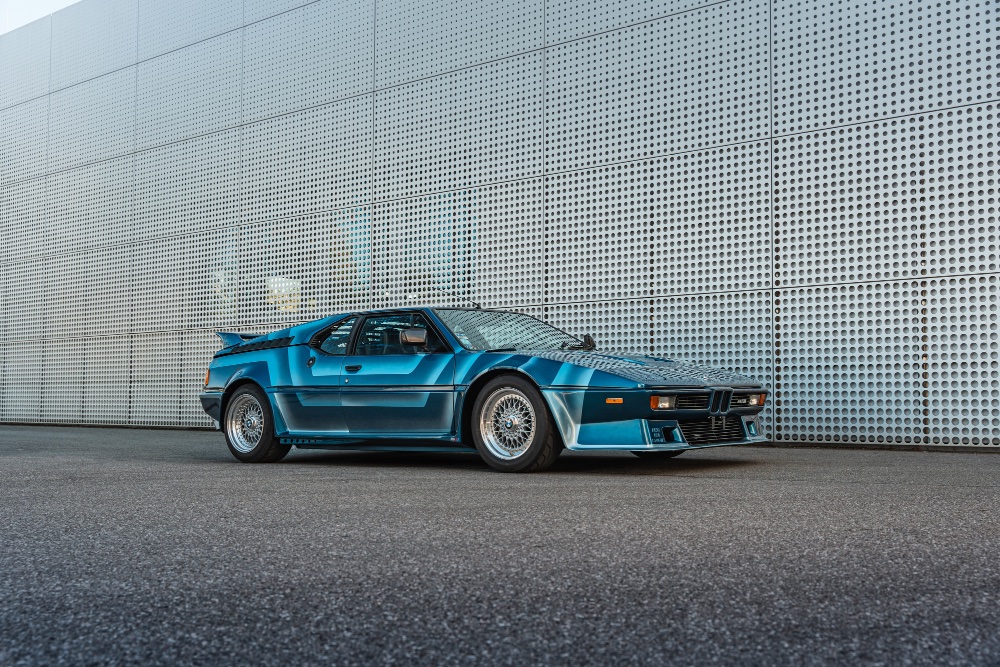
The 1987 BMW M1 AHG Studie, bearing BMW VIN WBS59910004301461, was accompanied by documentation that distinguished its construction from conventional M1 road cars modified by AHG. Its VIN falls immediately beyond the final BMW M1 production chassis number, while period registration paperwork describes a car constructed using original spare parts and a bare body shell.
The project was undertaken by AHG, the German BMW dealership and motorsport operation controlled by Peter Gartemann. This particular car is believed to have been built for Gartemann himself and was later used to promote AHG’s interpretation of the M1. Its specification included widened bodywork, front and rear spoilers, adjustable competition suspension, three-piece BBS wheels and a modified engine reportedly producing 350bhp. The distinctive blue livery was created by Hermann Altmiks, whose signature appears beneath the left rear light. The vehicle was registered in Germany in September 1987 under the chassis number TP8220526. The accompanying paperwork referred to BMW Motorsport suspension components, AHG bodywork and the re-stamping of its identification number. A contemporary promotional leaflet featuring the car also formed part of the documentation.
Against an estimate of €400,000 to €500,000, the M1 AHG Studie sold for €387,500 including fees, €12,500 below the lower guide. The result was also €67,500 less than the €455,000 achieved by the standard 1980 BMW M1 offered as Lot 118.
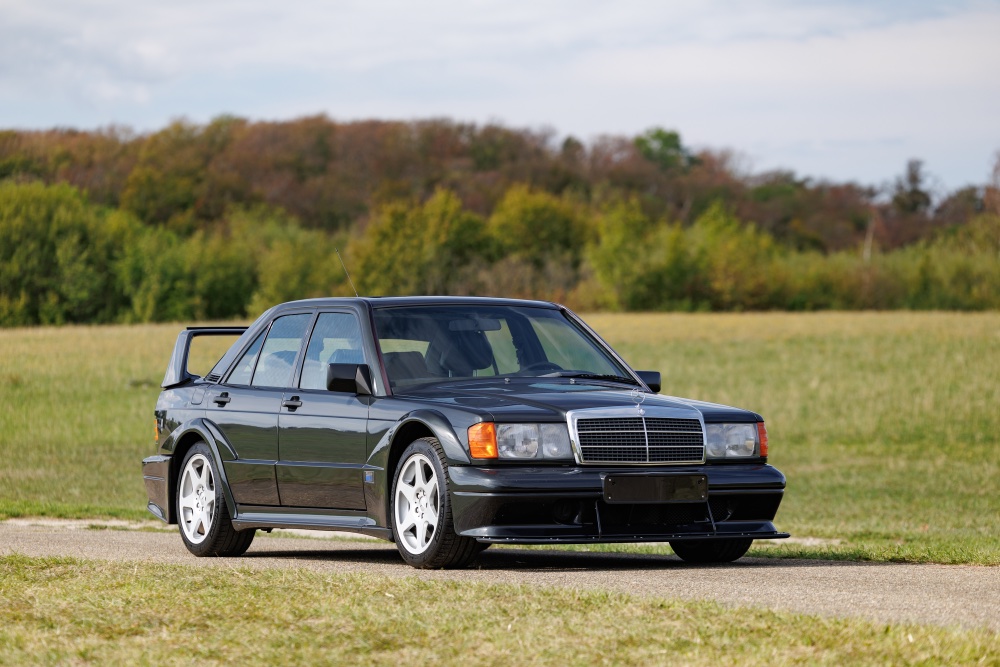
The 1990 Mercedes-Benz 190E 2.5-16 Evolution II, chassis WDB2010361F726329, carried production number 002 of 500 and was retained by Mercedes-Benz AG when new. Completed in March 1990, it was allocated to AMG-Mercedes driver Klaus Ludwig for personal use. Finished in Blue-Black Metallic over black leather, the car featured air conditioning, an electric sunroof and heated front seats. Documentation supplied with the lot included a letter from Ludwig confirming his use of the Mercedes-Benz, together with a model car and dashboard trim signed by the three-time DTM champion.
In July 1991, Mercedes-Benz sold the car to Georg Mekle of the Mosolf Racing Team near Stuttgart for DM98,952. By that point, the Evolution II had covered approximately 20,500km. Mekle subsequently used it primarily for journeys to truck-racing events, and its later mileage accumulated at a comparatively slow rate. The catalogue documented a replacement rear axle fitted by a Mercedes-Benz service centre in 1990, while confirming that the original engine remained installed. Its odometer showed 45,833km at the time of sale.
Against an estimate of €300,000 to €400,000, the Evolution II sold for €398,750 including fees.
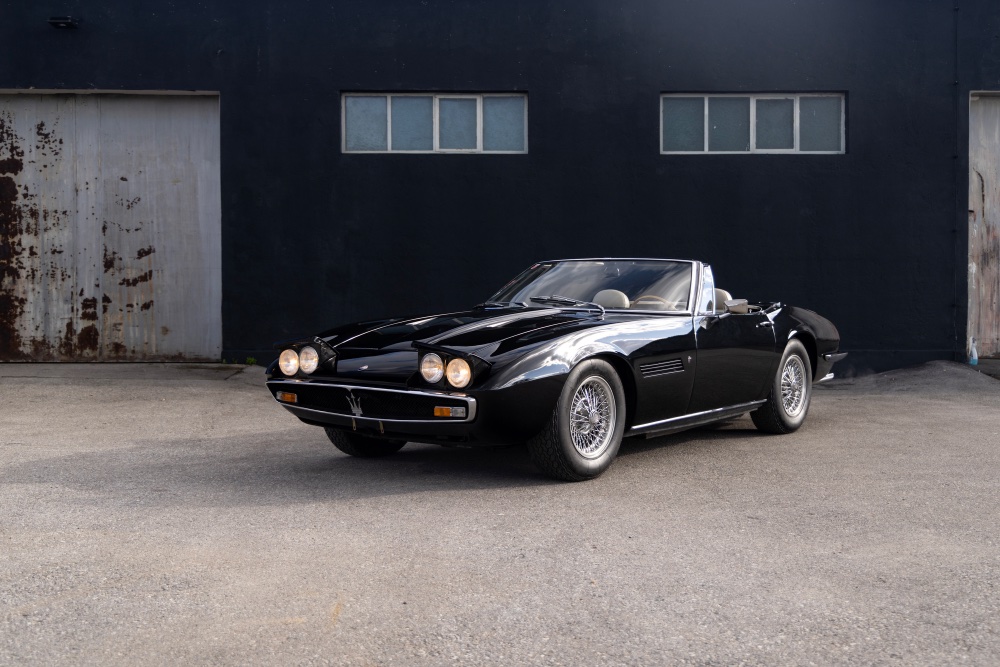
The 1970 Maserati Ghibli 4.7 Spyder by Ghia, chassis AM115/S 1233, was completed on December 3, 1970, for delivery to Atlanta, Georgia. Finished in Verde Gemma metallic over white leather, it was originally equipped with a Borg Warner automatic transmission. The car retains its matching-numbers V8 engine but has undergone significant changes since leaving Modena. Its original metallic green paintwork has been replaced by black, while a manual gearbox has been substituted for the factory automatic. RM Sotheby’s acknowledged that the Ghibli’s intervening ownership history was incomplete.
The Maserati subsequently entered a private European collection before being acquired by the consignor in February 2018. The catalogue’s addendum also drew attention to a discrepancy in its paperwork: although factory records establish a December 1970 completion date, the Austrian registration documents identify the vehicle as a 1969 model. Against an estimate of €420,000 to €520,000, the Ghibli Spyder sold for €342,500 including fees, falling €77,500 below the lower guide. It was nevertheless the highest-priced car in the Tridente Collection and accounted for more than half the proceeds achieved by its six sold lots.
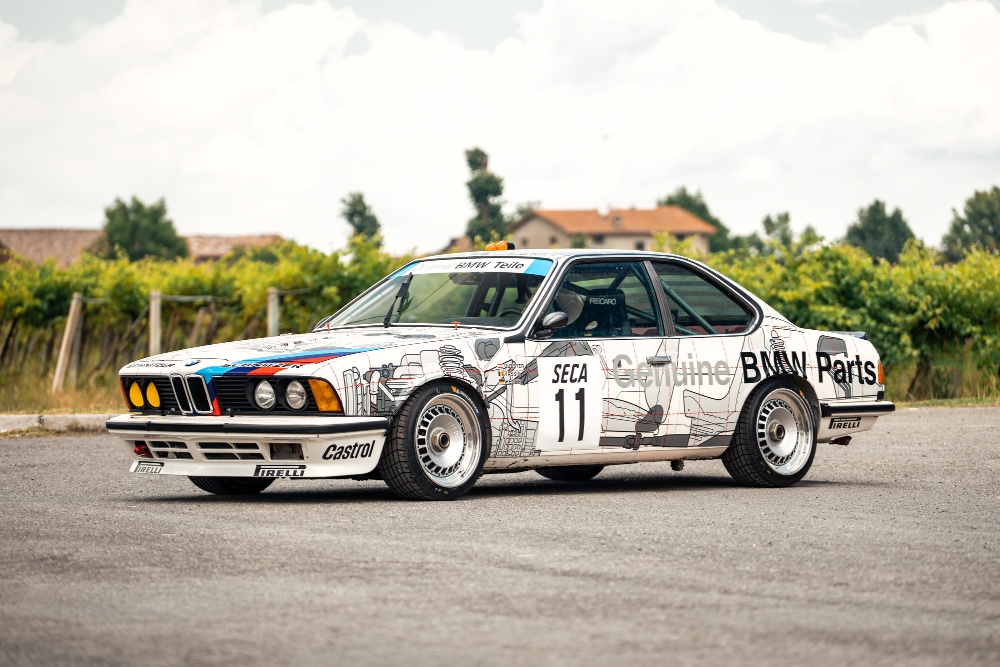
The 1986 BMW 635CSi Group A, chassis E24-RA2-79, was one of approximately 10 Works cars built by Schnitzer Motorsport and carried one of the strongest competition records of any car in the Munich sale. Entered by Schnitzer in period, it won the 1986 Spa 24 Hours with Dieter Quester, Thierry Tassin and Altfrid Heger, having started ninth on the grid. Its 1986 season also included European Touring Car Championship podium finishes at Donington, Hockenheim and Zeltweg, while other drivers to race the car included Roberto Ravaglia, Emanuele Pirro, Gerhard Berger and Otto Rensing.
After nine ETCC appearances in 1986, its Works career ended with a retirement in the Bathurst 1000-kilometre race before it passed into private ownership. The consigning owner acquired the car in June 2017, after which it was restored, maintained and race-prepared by Graber Sportgarage in Switzerland between 2017 and 2024. Pastrolli Classic Cars in Maranello subsequently carried out an engine rebuild and fitted a new clutch in late 2025. Invoices for the combined work exceeded €250,000. The BMW was offered in its period-correct Genuine BMW Parts livery, accompanied by an FIA Historic Technical Passport, Schnitzer Motorsport Archive timing sheets, engineering notes and setup pages. RM Sotheby’s also noted that the car was fitted with a correct-type replacement engine, while its original unit accompanied the sale.
Against an estimate of €500,000 to €700,000, the BMW failed to sell at auction. RM Sotheby’s subsequently listed it on its post-auction platform with an asking price of €525,000.
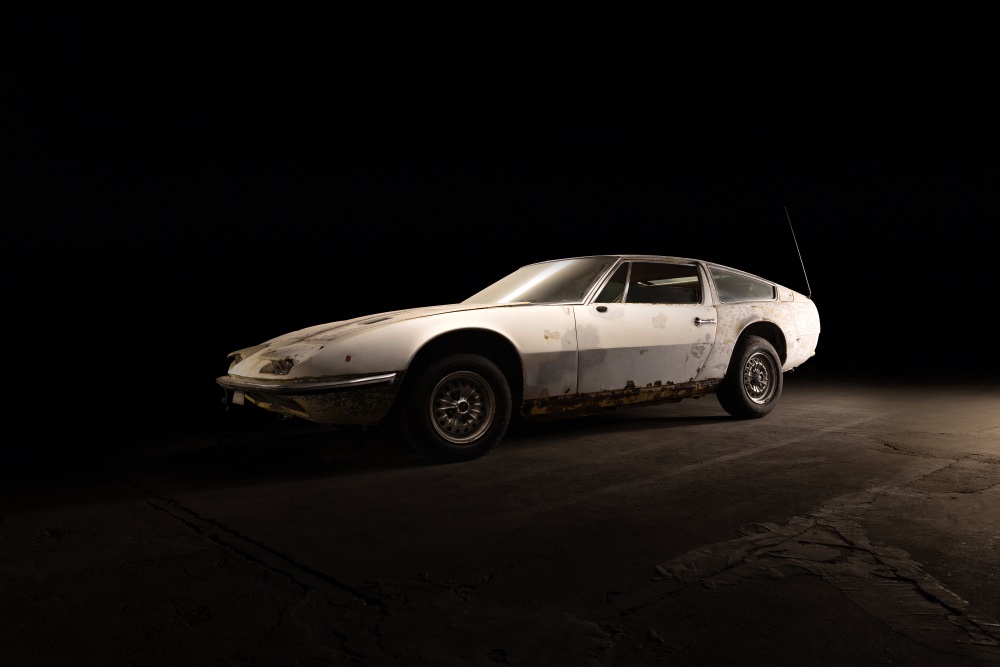
The 1971 Maserati Indy 4.2 Project by Vignale, chassis AM116/958, recorded the greatest percentage shortfall against the lower estimate at RM Sotheby’s Munich sale. Factory records confirm completion on March 6, 1971. The car was originally finished in Bianco Polo with Senape leather upholstery and supplied new to Milan. Its specification included a five-speed manual gearbox and electric windows. More recently, the Indy formed part of the Austrian-based Tridente Collection. It was presented in its original exterior colour, although the catalogue described its overall condition as requiring a complete restoration. Unlike several other cars in the collection, it was offered with a bill of sale only.
Against an estimate of €20,000 to €40,000, the Indy sold for €2300 including fees, falling €17,700, or 88.5 per cent, below its lower estimate.
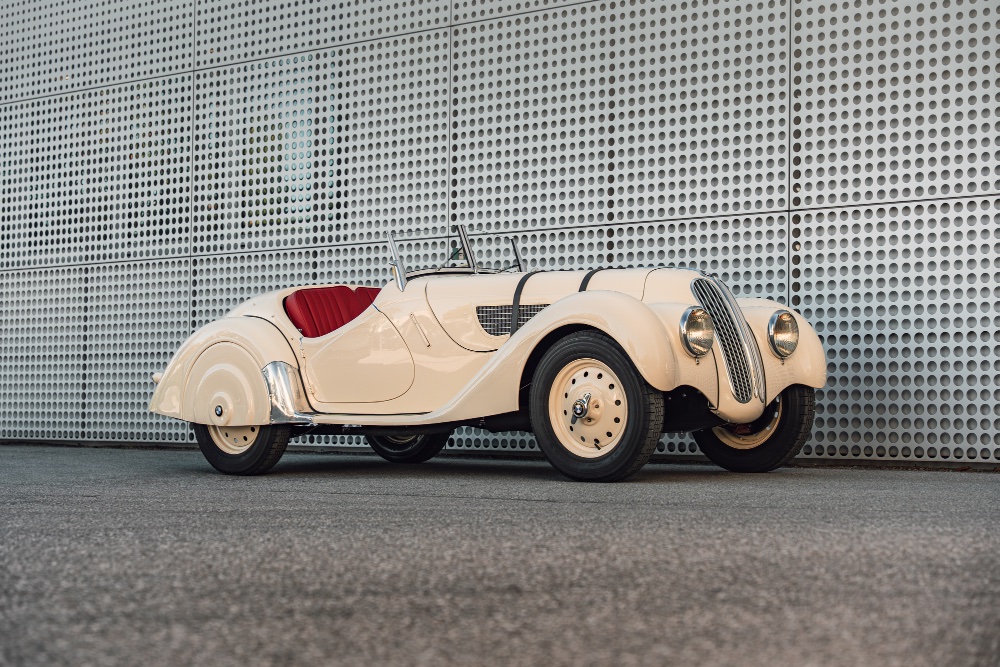
The 1939 BMW 328 Roadster, chassis 85367, recorded the auction’s largest shortfall against its lower estimate in monetary terms. The result represented a deficit of €258,125, despite documentation detailing extensive restoration work completed five years earlier.
According to BMW’s handwritten production records, chassis 85367 was finished in white in April 1939 and is believed to have been delivered new to Bucharest. Its first registration dates from July that year. The subsequent history is incomplete, although surviving German registration paperwork places the car in the Aumann Collection by at least 1998. The restoration, undertaken between 2020 and 2021, was substantial. Michael Plass Motoreninstandsetzung rebuilt a correct-type replacement engine block at a cost of €9235. The block was restamped to correspond with the chassis number and is coupled to a Volvo-sourced gearbox.
The bodywork required similarly extensive intervention. Mario Schrank of Die Oldtimermanufaktur stripped the car and fitted a replacement body originating from another BMW 328. The rear section and wings were newly fabricated, while the exterior, interior and associated mechanical components were refurbished. The body restoration accounted for 1716 hours of work and €135,197, bringing the combined expenditure to approximately €145,000.
Against an estimate of €550,000 to €650,000, the BMW sold for €291,875 including fees, falling €258,125, or approximately 47 per cent, below its lower estimate.
Further details
For more details on RM Sotheby’s Munich sale, head here.