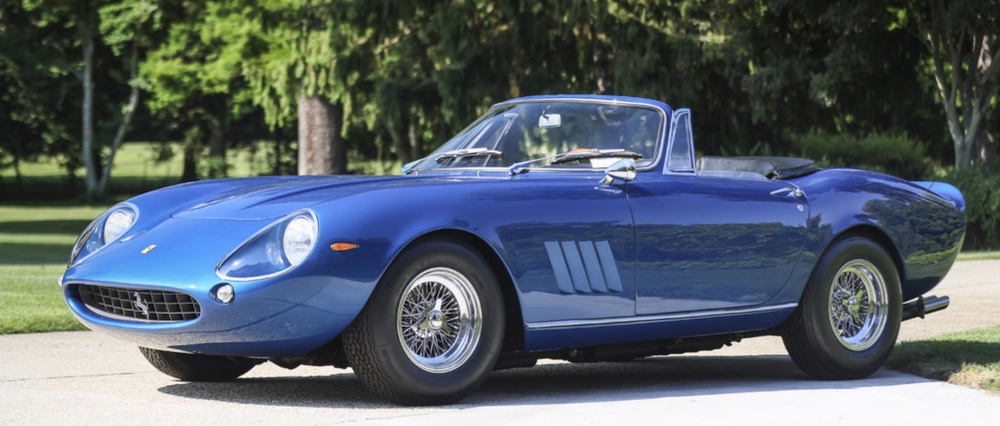
Gooding Christie’s achieved $51,468,075 in sales at its inaugural Retromobile New York auction, held at the Javits Center on November 20 and 21, 2026. The two-day sale recorded a 92 percent sell-through rate, with 146 of the 159 lots offered finding buyers. The highest result came from the 1967 Ferrari 275 GTB/4*S NART Spider originally owned by Steve McQueen, which sold for $18,925,000 against an estimate of $15,000,000 to $20,000,000.
The Friday session accounted for $49,235,995, with 77 of 90 lots sold. The following day was devoted to 69 lots from Billy Joel’s collection, all offered without reserve, which contributed a further $2,232,080 and achieved a 100 percent sell-through rate. Although the headline Ferrari result was within estimate, several significant cars fell short of their pre-sale expectations, while the Joel collection produced some of the auction’s largest percentage increases over estimate. Let’s take a closer look at the most notable results.
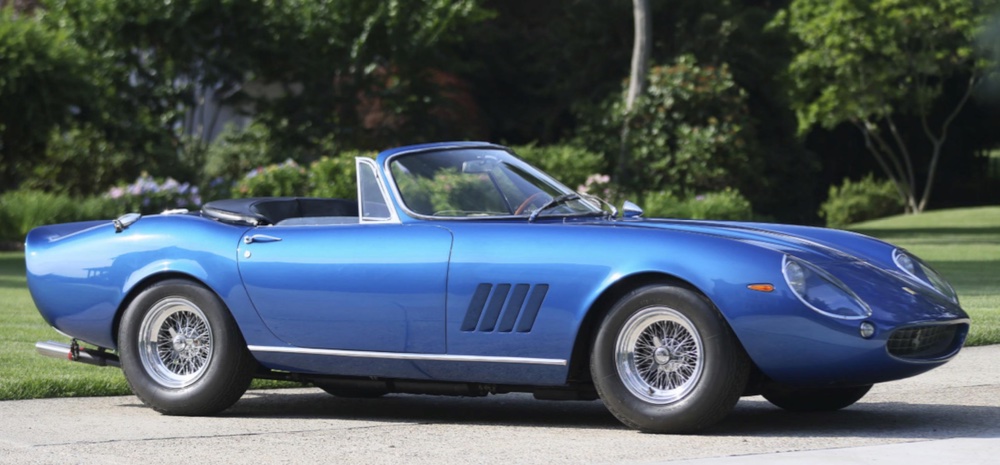
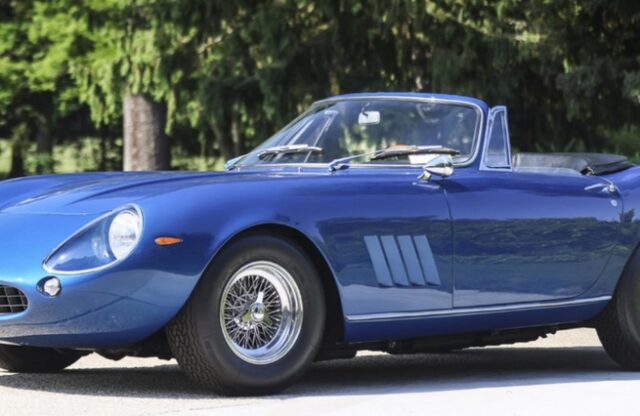
The 1967 Ferrari 275 GTB/4*S NART Spider, chassis 10453, was the sixth of ten examples built and was delivered new to actor Steve McQueen through Hollywood Sport Cars in Los Angeles. Completed in September 1967, it was originally finished in Blu Sera with black Connolly leather upholstery, Borrani wire wheels and US-market instrumentation. Its Scaglietti body was numbered A0202, while Ferrari’s records identified engine internal number 1836 and transaxle number 535/I/R. McQueen was away when the Ferrari arrived at Los Angeles International Airport, so his friend R Lee Brown collected it and arranged its initial preparation.
McQueen subsequently commissioned Brown to personalise the car, having it repainted a darker metallic blue, removing the bumpers and fitting an external quick-fill fuel cap, rally-style mirror, custom radio console and concealed electric aerial. Tony Nancy retrimmed the seats with the distinctive stitching pattern that survives today. The Ferrari was later damaged in a road accident on Pacific Coast Highway, when a truck struck it from behind, and was repaired by Hershel ‘Junior’ Conway, who also modified the wheelarches and rear bodywork. McQueen sold chassis 10453 to engineer and Ferrari collector J David Kopf in 1971, who retained it until 1985. The consignor acquired it through Grand Prix SSR in 1986 and subsequently displayed it only occasionally, including at the 1996 Louis Vuitton Classic and the Chrysler Museum of Art in 2003. Against a pre-sale estimate of $15,000,000 to $20,000,000, the Ferrari sold for $18,925,000 including fees.
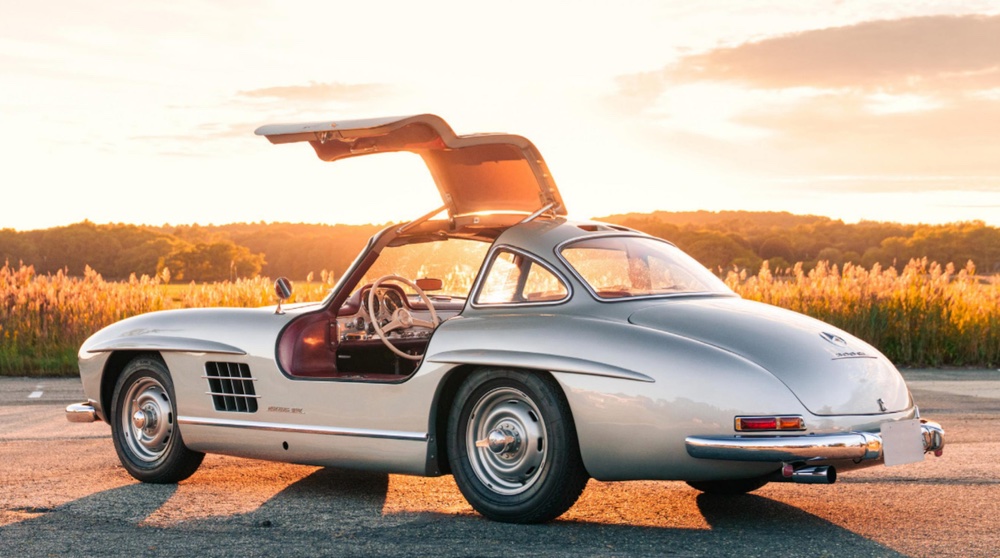
This 1955 Mercedes-Benz 300 SL Alloy Gullwing, chassis 198.040.5500189, was the third of 29 aluminium-bodied examples produced and was supplied for competition use to Lance Reventlow and Bruce Kessler through Mercedes-Benz of Hollywood. The two drivers collected the car from a Mercedes-Benz receiving facility in San Francisco, reportedly taking a magnet to help identify its aluminium coachwork. Originally silver, the Gullwing was subsequently refinished in dark metallic blue and had its front bumper removed in preparation for racing. In October 1955, Reventlow finished second at the SCCA Regional meeting at Salinas, while Kessler secured an overall victory at Torrey Pines later that month. Further outings included the Torrey Pines Six Hours, Glendale and Palm Springs, with the car carrying number 216 and Equipe L Reventlow identification.
Following its retirement from competition in early 1956, the Mercedes-Benz was refurbished by Mercedes-Benz of Hollywood before entering private ownership. Dr Oscar Fodor acquired it by 1964, followed by D Blair Hamilton, Peter Waschke and Dr Gerhard Winkler. It subsequently passed through Swiss ownership before being acquired by Dennis Daugs, who commissioned Rudi & Company to return the bodywork to German Racing Silver. The consignor purchased the car in 2010. It retained its original Rudge wheels, concave-star grille, fitted luggage and patinated red Roser leather upholstery, although its engine history required qualification; Gooding Christie’s noted that the original engine appeared to have been replaced early in the car’s life. The present unit was an early 1955 engine, subsequently fitted with an NSL-style camshaft and restamped with the car’s original engine number. Against a pre-sale estimate of $4,000,000 to $6,000,000, the Mercedes-Benz sold for $4,735,000 including fees.
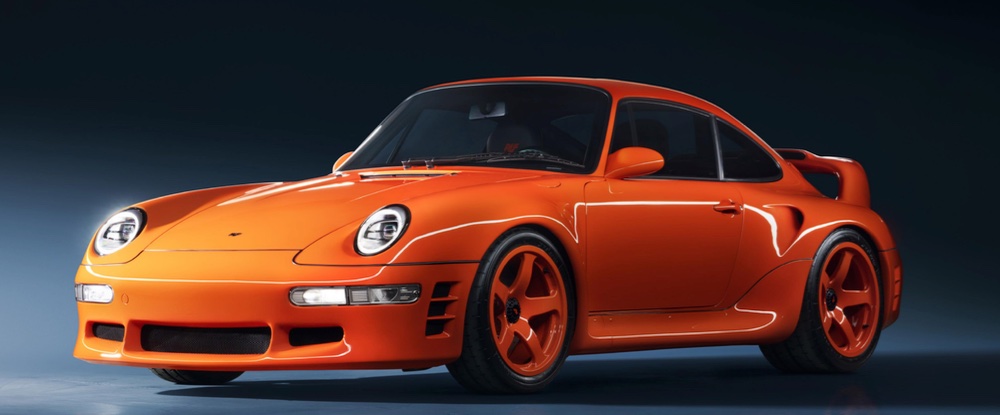
The 1998 RUF Project Dragon, chassis W09BA0369WPR06044, was a one-off factory commission based on the final unused W09 bodyshell retained by RUF from its CTR2 production programme. Although the chassis dated from 1998, the completed car was not delivered until March 2024. Its commissioner, an established Porsche and RUF collector, had wanted to create a modern interpretation of the CTR2 Sport since the late 1990s, eventually acquiring the unused shell from Alois Ruf. The project was developed with British designer Tony Hatter, whose work at Porsche included responsibility for the exterior design of the 993-generation 911. The brief retained the CTR2 Sport’s wide rear bodywork, distinctive clamshell and bi-wing arrangement while introducing contemporary construction and aerodynamic development.
The completed Dragon received bespoke carbonfibre bodywork, revised front wings and bumpers, functional rear-quarter cooling ducts and RUF’s integrated roll cage. Mechanical upgrades included Bilstein PSS10 suspension, carbon-ceramic brakes and specially designed 18-inch centre-lock wheels manufactured by OZ Racing. According to the catalogue, development of the wheels alone cost approximately €100,000. Its twin-turbocharged air-cooled flat-six produced a dyno-confirmed 621bhp and 615lb ft, driving the rear wheels. The exterior was finished in Dragon Fire Orange, developed from Porsche’s Blutorange and Continental Orange colours, while the interior combined black semi-aniline leather with period Porsche velour seat centres and colour-coded detailing. Having covered 759 miles, the car was offered with an extensive RUF build book, factory documentation identifying it as the CTR2 Sport Dragon, paint and fabric samples, tools, manuals and service records. Against a pre-sale estimate of $6,000,000 to $8,000,000, the RUF sold without reserve for $4,075,000 including fees, finishing $1,925,000 below its low estimate.
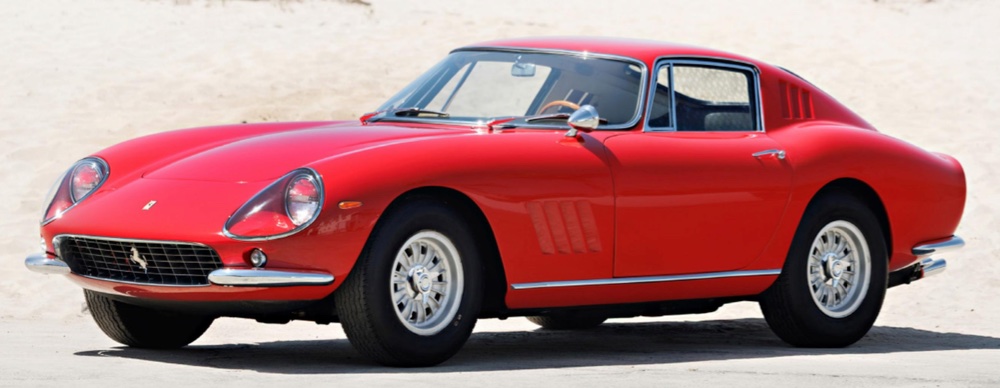
The 1965 Ferrari 275 GTB, chassis 06617, was completed in February 1965 as an early short-nose example, originally finished in Oro Chiaro with black leather upholstery, Campagnolo Sunburst alloy wheels and US-market instrumentation. Research by Ferrari historian Dyke Ridgley identifies it as one of 11 short-nose examples originally finished in the gold colour. The Ferrari was supplied through Luigi Chinetti Motors to Dr Richard H Cardozo of Hanover, New Hampshire, a cardiothoracic surgeon and collector who also owned a Ferrari 250 GTO, chassis 5571 GT. During Cardozo’s ownership, chassis 06617 appeared at the 1966 Ferrari Club of America National Meeting in Indianapolis.
By 1972, the Ferrari had passed to Robert L Ruleff of Ohio, followed in 1973 by Dr Norman Hagman, an Illinois-based orthopaedic surgeon who retained it for approximately 12 years. It subsequently entered the ownership of Wisconsin attorney William A Spring, who commissioned a comprehensive restoration by Wayne Obry’s Motion Products. Around 1990, the 275 GTB was acquired by Dr Jan Friberg of Winnetka, Illinois, under whose ownership it appeared at the Ferrari Club of America International Concours in 1994 and 2004, receiving a Platinum Award at the latter event. The consignor purchased the car from Friberg’s estate, bringing to an end more than three decades in his ownership. Chassis 06617 retained its matching-numbers engine, internal number 072/64, and was accompanied by its original Campagnolo wheels, a further set of Borrani wire wheels, tool roll, jack, handbooks and a Marcel Massini history report. It was no longer finished in its original Oro Chiaro, while the restoration itself was more than 30 years old. Against a pre-sale estimate of $2,250,000 to $2,500,000, the Ferrari sold for $2,205,000 including fees.
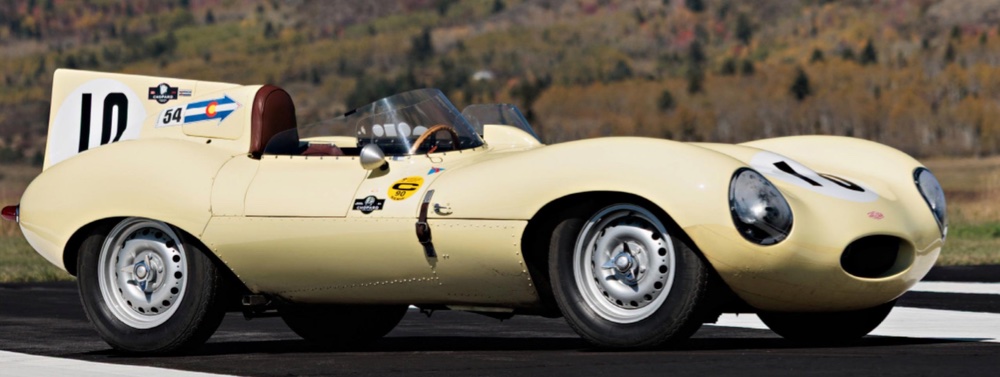
The 1956 Jaguar D-Type, chassis XKD 552, had an extensive international ownership and competition history, beginning with its dispatch to Kenya in 1957. Originally finished in Battleship Grey, the Jaguar remained with the factory following completion in 1956 and was initially loaned to James Church for display purposes. It was returned to Jaguar that November before being dispatched to Nairobi distributor Lowis and Hodgkiss on May 6, 1957. Its first private owner was John Manussis, an experienced racer who had previously competed with a Jaguar C-Type. Manussis raced the D-Type at Nakuru Park in Kenya before selling it to Nolis John Samaras of Dar es Salaam around 1958.
The Jaguar subsequently travelled through the Caribbean, including a period with Cliff Stuart in Trinidad, before reaching Canada. During the 1960s, its owners included Montreal jeweller Roger Lucas, who had the car painted gold, and photographer Don Newlands. By 1989, XKD 552 belonged to Swiss collector Eric Traber, who commissioned Jaguar specialist Terry Larson to restore it. The work included refinishing the body in pale yellow, the colour it subsequently wore at numerous historic events. The car later passed through the ownership of Bruce Lustman and Ned Spieker before entering the consignor’s collection in 2003. During this period it participated in events including the Goodwood Revival, Le Mans Classic, 1000 Miglia and Monaco Historic Grand Prix. According to Larson, XKD 552 retains its original monocoque, front subframe, brass identification plate and riveted body tag. Its original matching-numbers engine accompanied the car, although the bonnet had been replaced by the 1970s and the tail fin was added during restoration. Against a pre-sale estimate of $6,000,000 to $7,000,000, the Jaguar failed to sell.
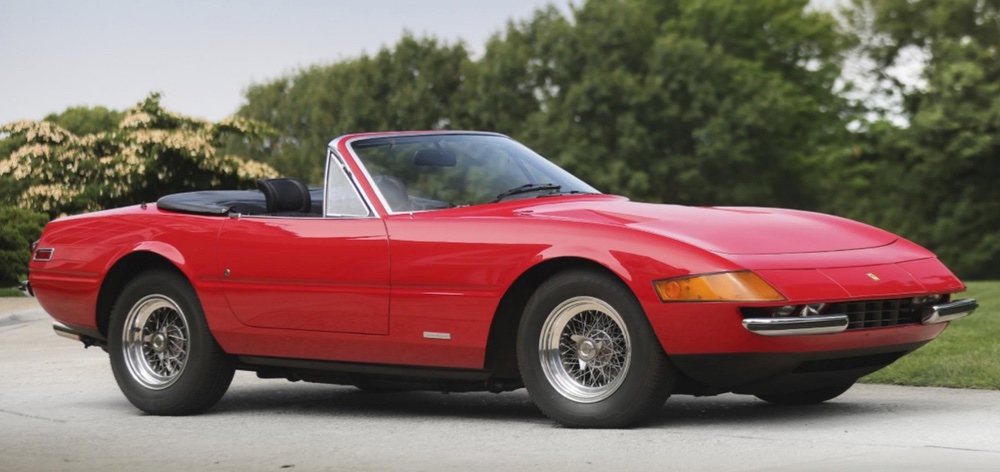
The 1972 Ferrari 365 GTS/4 Daytona Spider, chassis 14913, was the 38th of 121 production examples and one of four originally finished in Azzurro Dino, a non-metallic blue. Completed in early 1972, it was built for the American market with Borletti air conditioning and instruments calibrated in miles. Imported through Luigi Chinetti Motors, it was reportedly sold new to Dr Calvin Lee Stevens, a professor of organic chemistry at Wayne State University who is credited with the first synthesis of ketamine. Stevens was associated with several Daytona Spiders, although the car’s subsequent ownership history is more extensively documented.
Chassis 14913 was repainted red during the 1970s and belonged to William P Kiernan of New Jersey by 1979. It was advertised that December by Steven Kessler Motor Cars, described as a red US-specification Daytona Spider with Borrani wire wheels. By 1981 it had passed to William T Comer, president of Comer Machinery Company in Atlanta, before being consigned to FAF Motorcars in Georgia. FAF advertised the car for $105,000 with approximately 36,600 miles recorded. The consignor acquired it from a Long Island dealer in 1982 and retained it for 44 years, during which it was driven sparingly and seldom exhibited. At the time of sale, its odometer displayed 39,544 miles, an increase of fewer than 3000 miles since 1981. The Daytona remained largely unrestored apart from its older red repaint, while the catalogue recorded paint damage to the driver’s-side rear valance caused by an exhaust backfire. Against a pre-sale estimate of $1,750,000 to $2,250,000, the Ferrari sold for $2,040,000 including fees.
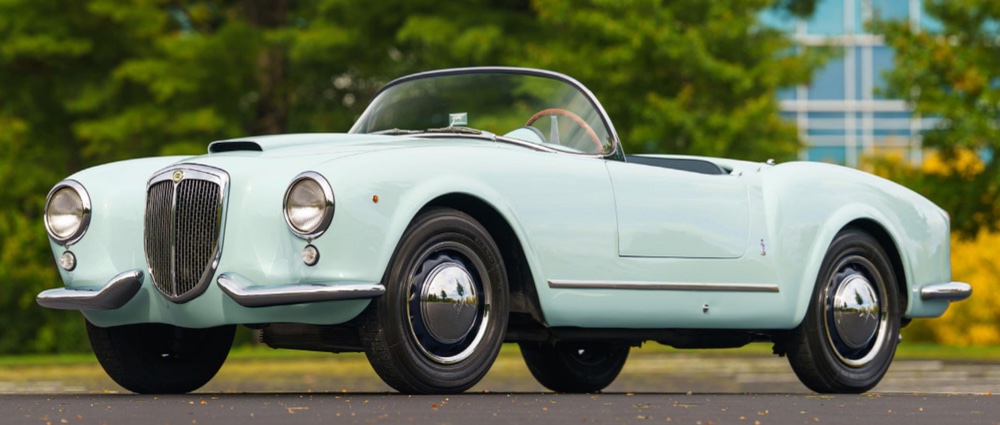
The 1955 Lancia Aurelia B24S Spider America, chassis B24S-1044, was originally finished in grey with red leather upholstery and is believed to have been delivered to the United States through Max Hoffman’s New York dealership. Factory records confirmed that it retained its matching-numbers engine, number B24-1052, and transaxle. Its early owners included Victor Ricci of New York and Eunice Griffith of Illinois, who acquired it by 1963 and retained it for more than 30 years. In 1995, the Lancia was purchased by automotive historian Raymond Milo, who subsequently sold it to Luciano Bartolero of Turin.
Bartolero undertook a three-year mechanical and cosmetic restoration, during which the Spider was refinished in light blue with navy leather upholstery. It passed to Terenzio Longoni of Milan before returning to California in 2001 under the ownership of Bruce Milner. As part of the purchase, Milner requested the installation of a Nardi twin-carburettor performance conversion and Borrani wire wheels. The Lancia subsequently appeared at the 2005 Pebble Beach Concours d’Elegance and remained in Milner’s collection until 2015. It later passed through an English collection and the ownership of Tony Owen in Los Angeles before entering the consignor’s possession. The standard Lancia wheels had been refitted, although the Borranis accompanied the sale, together with the Fontana hardtop, original steering wheel, tools, books and Lancia Classiche Certificate of Origin. The car had also completed the Colorado Grand in 2023, 2024 and 2026. Against a pre-sale estimate of $750,000 to $900,000, the Lancia sold for $775,000 including fees.
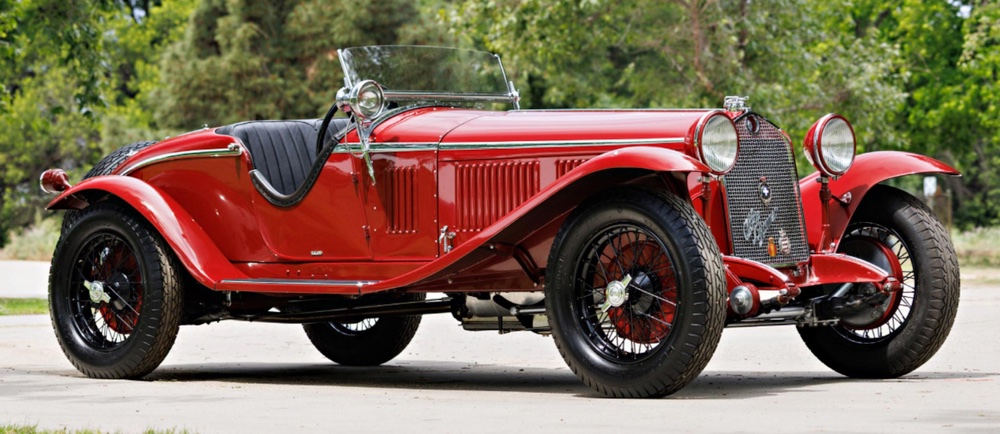
The 1930 Alfa Romeo 6C 1750 Series III Super Sport Spider, chassis 0312957, was a Zagato-bodied example with an ownership history extending back to its early years in Italy. Its early owners included Luca Alessio, Francesco Cherubini and Adolfo Carminati, before it passed to James Street in December 1933. Street is believed to have imported the car into Britain, where it received the registration AUU 594. Subsequent British custodians included actor James Robertson Justice, dealer Jack Bond and Alfa Romeo historian Roy Slater.
Bond advertised the car in Motor Sport in November 1952, recording an engine overhaul, fresh paintwork and a replacement hood. Around 1960, Slater sold the Alfa to Hamish Moffat, who undertook restoration work that included panelling over the rear deck lid. The car subsequently crossed the Atlantic, passing through the collections of Ed Mayne, Bill Jacobs and Bob Fergus. A further restoration, believed to have been completed during the late 1980s, introduced polished finishes and additional chrome trim inspired by later Zagato-bodied 6Cs. The Alfa subsequently belonged to sculptor Stanley Wanlass before being acquired by the consignor in 2013. Its chassis and engine numbers corresponded, while the ownership history was supported by research compiled by the late Angela Cherrett. More recent work included fitting replacement wheels and tyres, with the car otherwise remaining in its earlier restored condition. Against a pre-sale estimate of $900,000 to $1,200,000, the Alfa Romeo sold without reserve for $500,000 including fees.
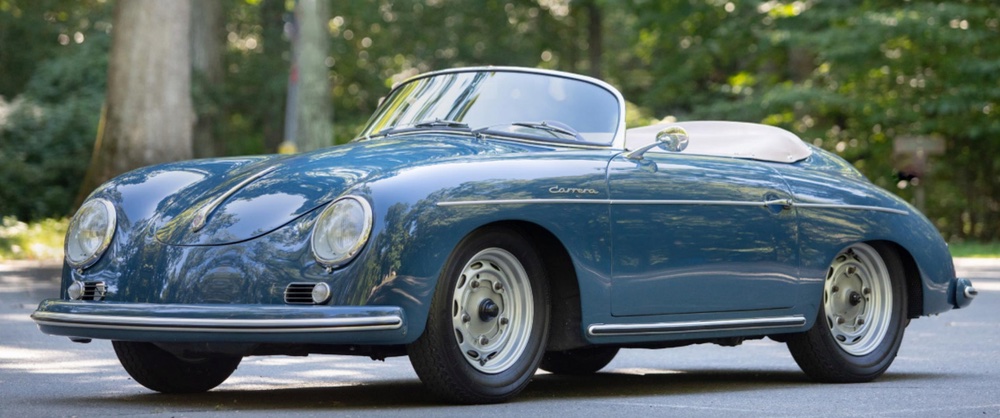
The 1957 Porsche 356 A 1500 GS/GT Carrera Speedster, chassis 83780, was delivered new to Hollywood film editor and amateur racing driver Jimmy Moore. Originally finished in Silver Metallic with black leatherette and beige corduroy upholstery, the Carrera GT was used extensively in Californian sports-car racing between 1957 and 1959. Moore usually entered the car with race number 72, winning the preliminary race at Paramount Ranch in December 1957 and recording another overall victory at Phoenix in March 1958. Research compiled by Porsche historian Steve Heinrichs documents almost 30 competition appearances, including eight class victories and 11 further podium finishes at venues including Santa Barbara, Del Mar, Riverside and Hourglass Field.
The Speedster subsequently passed to Randy Crume of Laguna Niguel, California, before being acquired by the consignor in 1983. At the time of purchase, it was fitted with a Porsche 912 engine, although its original Carrera GT identity was subsequently confirmed by factory documentation. In 2003, the owner located the car’s original four-cam engine, number 90896, advertised through an internet parts website. Having recognised the number, he purchased the engine and commissioned Carrera specialist Gerry McCarthy, assisted by Jeff Adams, to rebuild and reinstall it. The Porsche was subsequently refinished in Aquamarine Blue and appeared at numerous concours, receiving awards at Greenwich in 2011 and Scarsdale in 2017. It also participated in the historic display at Rennsport Reunion VI in 2018. Offered after more than 40 years in the same ownership, it was accompanied by a Porsche Certificate of Authenticity. Against a pre-sale estimate of $650,000 to $750,000, the Porsche sold for $720,000 including fees.
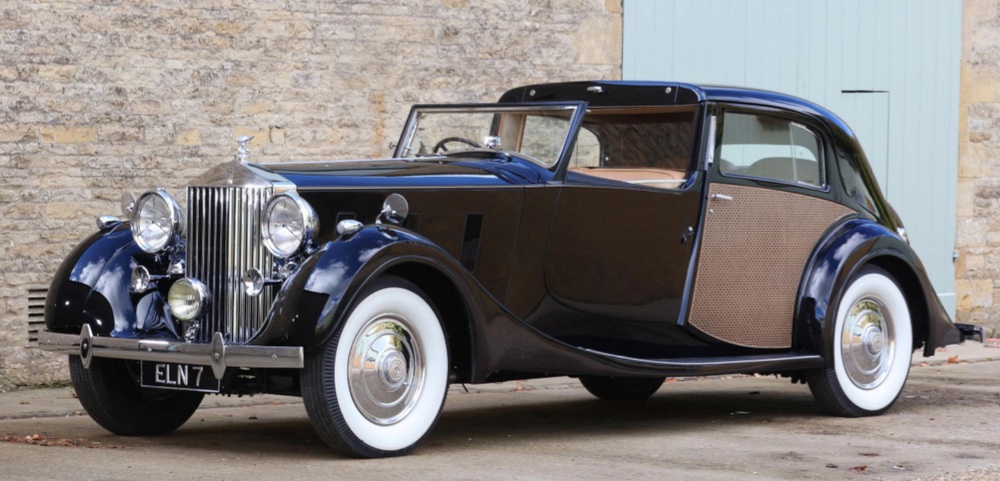
The 1937 Rolls-Royce Phantom III Sedanca de Ville, chassis 3CM61, was one of two examples fitted with Park Ward’s distinctive streamlined coachwork. Completed on January 4, 1938, the car was delivered to London property surveyor J D Clarke, who had specified an elaborate interior featuring bleached maple cabinetry, a cocktail cabinet, tray tables and vanity fittings. Its exterior incorporated sharply raked glass, sweeping wings, rear wheel spats and simulated canework decoration. Registered ELN 7, the Rolls-Royce remained with Clarke through the Second World War and was still recorded in his possession in 1947. It subsequently appeared in the 1952 British film Derby Day.
By 1978, chassis 3CM61 belonged to Patricia Geerke, before passing to American collector Tom Barrett and subsequently returning to Britain. It entered Don Williams’ Blackhawk Collection in California in 1989, having been refinished in red, before being acquired by Malcolm Pray in 2001. Lord Bamford purchased the Phantom III in 2014 and subsequently commissioned extensive mechanical and cosmetic work through Clark & Carter Restorations of Essex. The work included an engine rebuild, with invoices exceeding £200,000, and was supported by detailed records. During Bamford’s ownership, the car appeared at the Cartier Style et Luxe concours at Goodwood and Salon Privé. Its history also included earlier awards at Amelia Island and Greenwich. The Rolls-Royce was offered without reserve from Bamford’s collection. Against a pre-sale estimate of $450,000 to $650,000, the Rolls-Royce sold for $324,000 including fees.
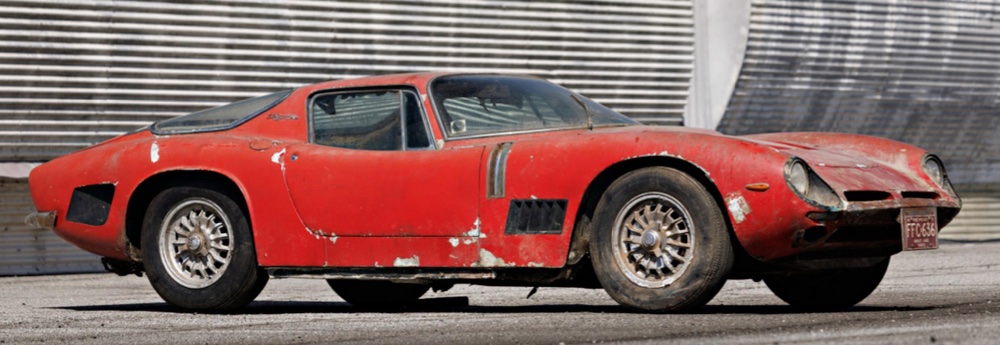
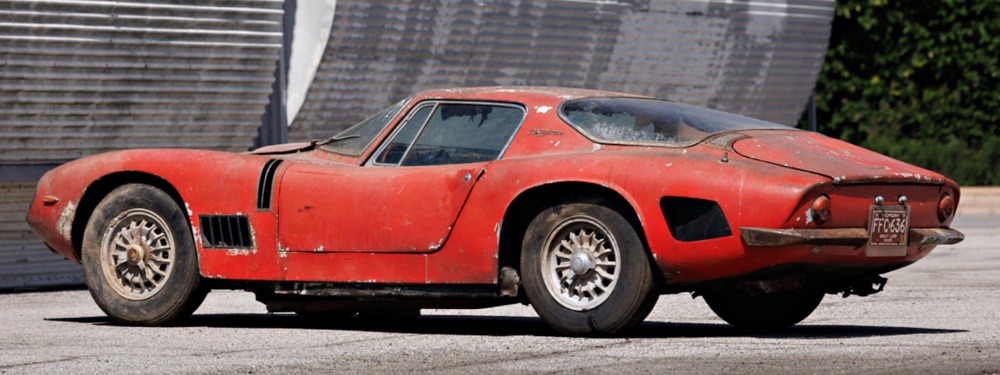
The 1967 Bizzarrini 5300 GT Strada, chassis IA3 0284, had been rediscovered after spending more than 50 years in storage in Pontiac, Michigan. The car was completed in 1967 and is believed to retain its original Chevrolet 327 V8, identified by engine code F0606HT. Its original equipment included a single Holley four-barrel carburettor, wood-veneer dashboard, Veglia instrumentation, wood-rimmed steering wheel, Voxson radio and electric windows. Italian registration records establish that the Bizzarrini was first registered in Rome in May 1968 to actor Giangiacomo Elia, before passing to Carlo Tinacci of Carpi later that year. Subsequent owners included Luciano Fancinelli, who acquired it through Achilli Motors of Milan in January 1970, and Roberto Brunetti, who purchased it six months later.
The Bizzarrini was deregistered for export in 1971 and subsequently arrived in Pontiac, where it entered the ownership of Kenneth Ray Caldwell. Correspondence from 1971 and a Michigan title issued in 1978 documented its American history, while its 1971 Michigan registration plate, FFC 636, remained attached when catalogued. Caldwell kept the car in his garage for more than five decades, during which it disappeared from the published registers of the marque. Presented in red with black upholstery, the car showed extensive deterioration from storage, including cracked and faded paintwork, damaged interior trim and visible corrosion. Traces of green paint beneath the red finish suggested a possible earlier colour scheme. Against a pre-sale estimate of $500,000 to $800,000, the Bizzarrini sold for $687,000 including fees.
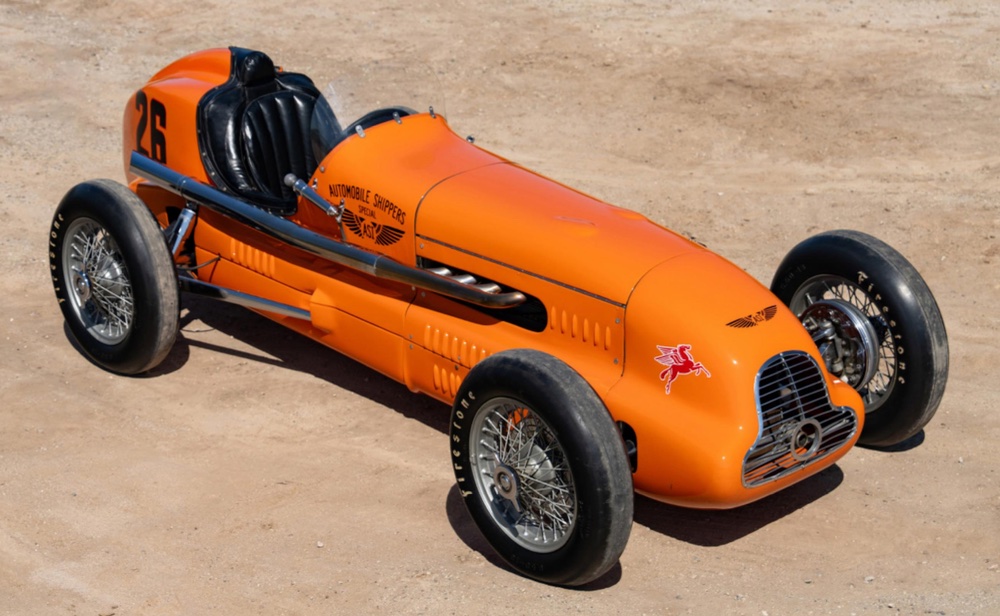
The 1948 Snowberger-Offenhauser ‘Auto Shippers’ Special, engine number 56, was constructed by Lou Rassey and mechanic Ed Zalucki using a chassis developed by Russ Snowberger. Initially fitted with a V16 assembled from Harry Miller components, the car subsequently received an Offenhauser four-cylinder after problems with the original engine. At Indianapolis in 1949, George Lynch qualified eighth before crashing on the second lap. The car returned in 1950 with Bill Schindler.
Schindler recorded the fifth-fastest qualifying speed at Indianapolis in 1950, although the starting system placed him 22nd on the grid. An early spin compromised his race, but he recovered towards the leading ten before a universal-joint failure forced his retirement after 111 laps. The Special subsequently competed at Indianapolis with Peter Hahn in 1952 and Jud Larson in 1953 before being retired. It was acquired by industrial designer Brooks Stevens for his Milwaukee museum, later passing to David Uihlein, who commissioned a restoration to its 1949 configuration. The work included an Offenhauser engine with twin Riley carburettors and the orange Auto Shippers livery. Following further private ownership, the car entered the Price Museum of Speed, where it remained for approximately a decade. It was offered on a bill of sale, and against a pre-sale estimate of $175,000 to $250,000, the Snowberger-Offenhauser sold for $84,000 including fees.
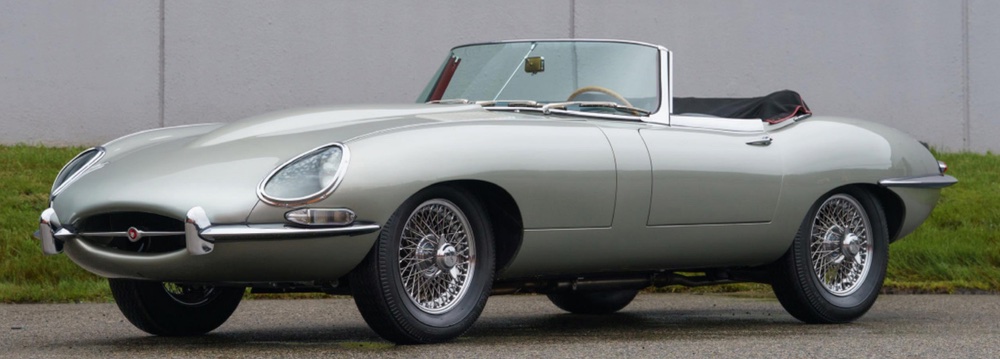
The 1961 Jaguar E-Type Series I 3.8-Litre Roadster, chassis 876073, was an early-production example retaining the flat floors and welded bonnet louvres. Completed on November 9, 1961, it was originally finished in Opalescent Silver Grey with red upholstery and dispatched through Jaguar Cars New York. The car was sold in June 1962 by Kansas dealer M Heath to its first recorded owner, D R Fairchild. It retained its original engine, number R2512-9, confirmed by a Jaguar Daimler Heritage Trust certificate.
In 1999, the Jaguar was acquired by Roger Los, founder of the XKE Data register, who commissioned an extensive restoration by specialists in the Seattle area. Approximately 2500 hours were devoted to the work, which included stripping the body to bare metal, refinishing it in its original colour and retrimming the interior in red leather. The engine and original Moss four-speed gearbox were rebuilt, while modifications intended to improve usability included upgraded brake calipers, an improved radiator and KONI front dampers. The consignor acquired the car in 2019. Against a pre-sale estimate of $100,000 to $130,000, the Jaguar sold without reserve for $173,600 including fees.
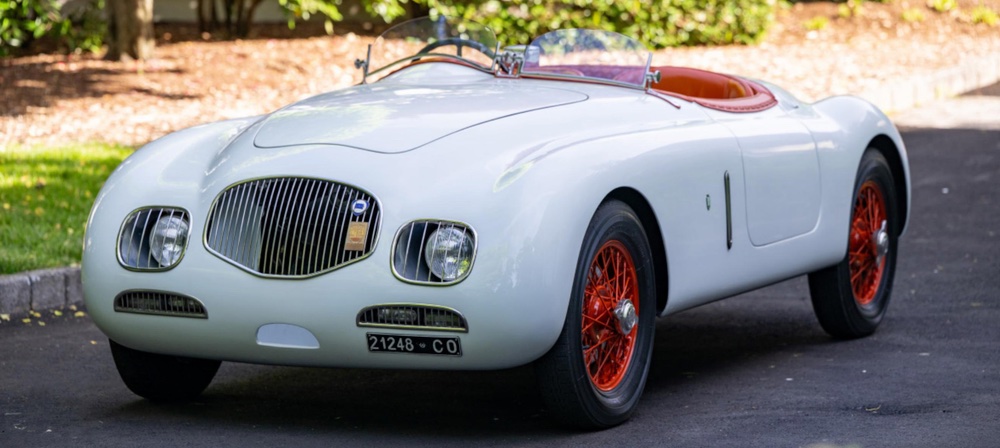
The 1946 Lancia Aprilia Barchetta Corsa, chassis 438-21979, was a one-off competition car commissioned by Lancia dealer Luigi Beretta of Lecco shortly after the Second World War. Beretta employed coachbuilder Riva of Merate to construct its lightweight aluminium two-seat body, while Milanese engine specialist Luigi Pagani developed a modified version of the Aprilia’s V4. The work included a specially constructed crossflow cylinder head, two Weber carburettors and increased compression, reportedly raising output from 48bhp to approximately 90bhp. Beretta competed with the car during the late 1940s before it passed through the family’s ownership.
In 1983, a restoration was commissioned from Giancarlo Cappa’s KCA workshop in Cassina de’ Pecchi, with the work intended to return the Lancia to its original specification. The completed car subsequently participated in the 1989 1000 Miglia and passed to Alfredo Morosati of Milan in 1993, followed by Greyhound Motorsports in 2004 and Scott Rosen of New York in 2005. The consignor acquired chassis 438-21979 in 2006 and subsequently used it for the Colorado Grand, the 2008 1000 Miglia and tours in Sicily and the Veneto. Further work included renewed paintwork and upholstery, restoration of the wire wheels and a comprehensive engine rebuild by Lancia specialist Santo Spadaro of White Plains. Against a pre-sale estimate of $300,000 to $400,000, the Lancia sold for $224,000 including fees.
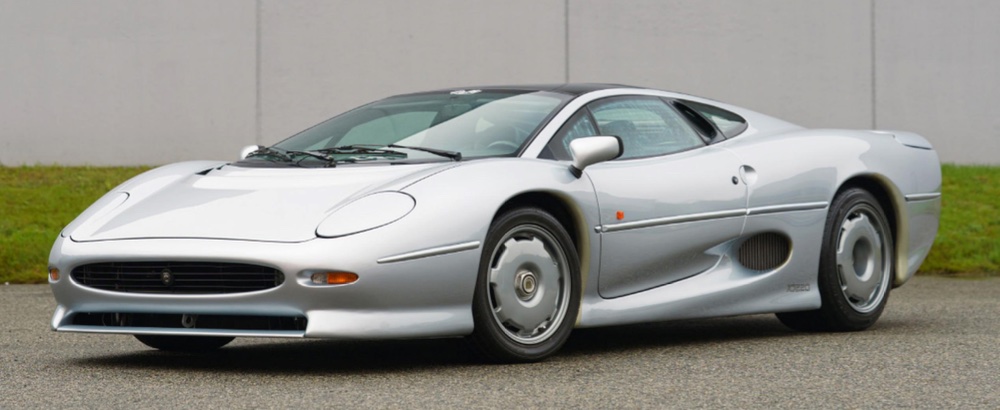
The 1993 Jaguar XJ220, chassis SAJJEAEX8AX220849, was originally delivered to a private collector in the Netherlands on January 14, 1993, finished in Spa Silver with Smoke Grey leather upholstery. Its first owner retained the car for eight years, during which it covered relatively little mileage. In June 2001, the XJ220 was acquired by Vik Keuylian, formerly of Lamborghini of Orange County, who imported it into the United States. The federalisation work necessary for American registration was undertaken by G&K Automotive Conversions, after which the Jaguar remained in California.
In 2009, the car was acquired through Grand Prix Classics by racing driver and collector William M Wonder, whose competition career spanned more than five decades. Wonder had raced at Daytona, Sebring and Bridgehampton, including appearances in Ford GT40 chassis GT/103 at the 1966 Daytona 24 Hours and Sebring 12 Hours. He retained the XJ220 until 2017, leaving his initials, W.M.W., painted in small red letters on both doors. The consignor acquired the Jaguar in 2018, becoming its fourth recorded owner. At the time of cataloguing, the odometer displayed just 2103km. Against a pre-sale estimate of $400,000 to $500,000, the Jaguar sold without reserve for $516,500 including fees.
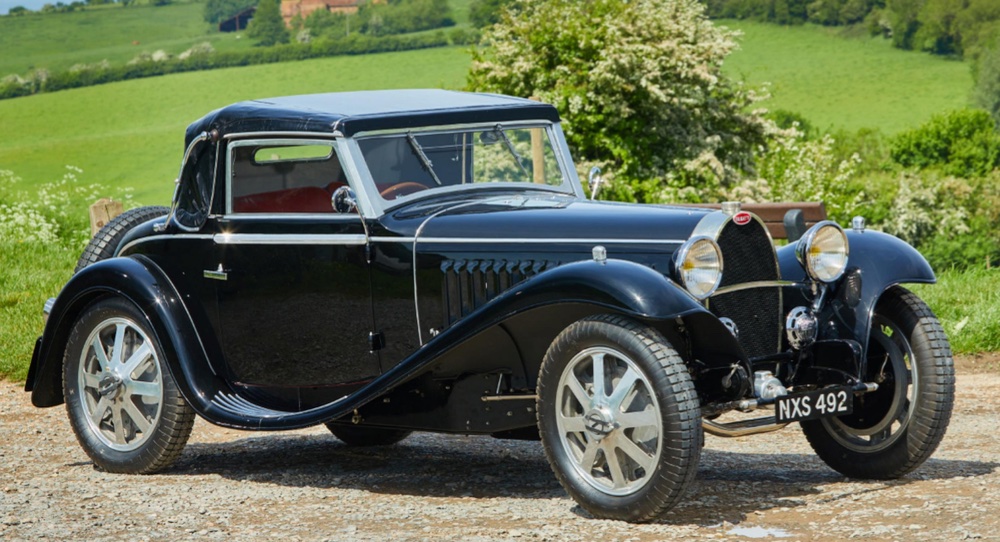
The 1932 Bugatti Type 55 Cabriolet, chassis 55230, was ordered in April 1932 through the Giraud & Hoffmann agency in Marseille. Its two-seat Cabriolet body was constructed by Gangloff at Colmar, with an invoice dated June 20, 1932, recording a price of 19,000 francs. The original specification included a folding hood made from Rexine, while the car was fitted with engine number 15. Its first owner was Emile Vidal, who registered it in Paris in 1932. The subsequent French ownership history was researched by Bugatti specialists Pierre-Yves Laugier, Mark Morris and David Sewell, with the car passing through several custodians before entering the ownership of Marcel Cirou, a former Amilcar dealer and racing driver. In June 1947, Cirou won a sports-car race at Montlhéry driving chassis 55230.
The Bugatti was exported to California in 1956, entering the ownership of racing driver and dealer Bob Estes. It subsequently remained associated with Precision Motors, the business operated by Estes and Otto Zipper, before passing to Walter Weimer of Pennsylvania in 1978. Weimer dismantled the car in preparation for restoration, although the work was not completed. In 2014, it was acquired by British collector Peter Neumark, who commissioned Classic Motor Cars to restore the coachwork and Ivan Dutton to rebuild the mechanical components. Finished in black with red upholstery and a black Rexine hood, the Bugatti was sold by Gooding at its 2022 London auction for £2,925,000 against an estimate of £3,750,000 to £4,750,000. Its subsequent owner commissioned additional historical research and displayed the car at Salon Privé in 2024, where it received the Most Elegant Award. Against a pre-sale estimate of $3,500,000 to $4,000,000, the Bugatti failed to sell.
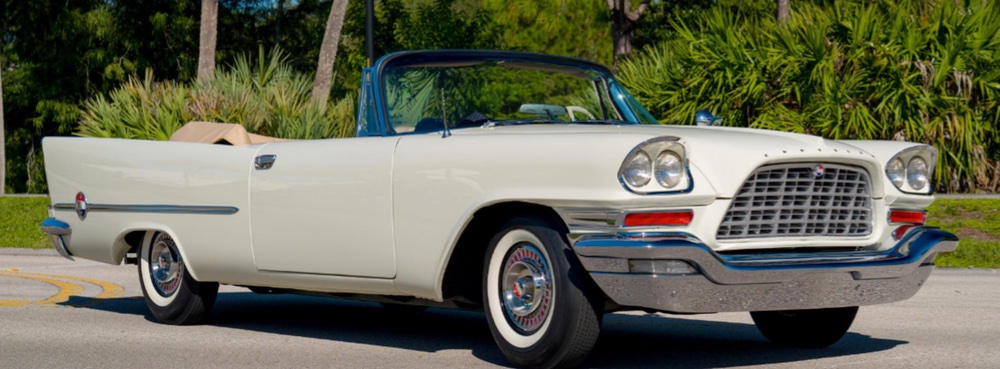
The 1958 Chrysler 300D Convertible, chassis LC41686, was one of 191 examples of the open-top 300D constructed during the model’s single production year. Originally finished in Ermine White, the car had been ordered with an extensive selection of factory equipment, including air conditioning, electrically operated windows, power-adjustable seats and cruise control. It was also fitted with Chrysler’s Highway Hi-Fi record player, an unusual period accessory that allowed specially manufactured records to be played through the vehicle’s audio system.
During the mid-2010s, the Chrysler underwent a comprehensive body-off restoration by Bob Lorkowski’s L’Cars Automotive Specialties in Bruce, Wisconsin. The work was commissioned by a previous owner and returned the car to its original Ermine White finish, with attention paid to the exterior brightwork, interior fittings and mechanical presentation. It had covered relatively little mileage since the restoration. The car was offered without reserve, with the consignor’s proceeds designated for the William C Kontes ’99 Memorial Scholarship, supporting the College Year in Athens educational programme. Against a pre-sale estimate of $90,000 to $120,000, the Chrysler sold for $134,400 including fees.
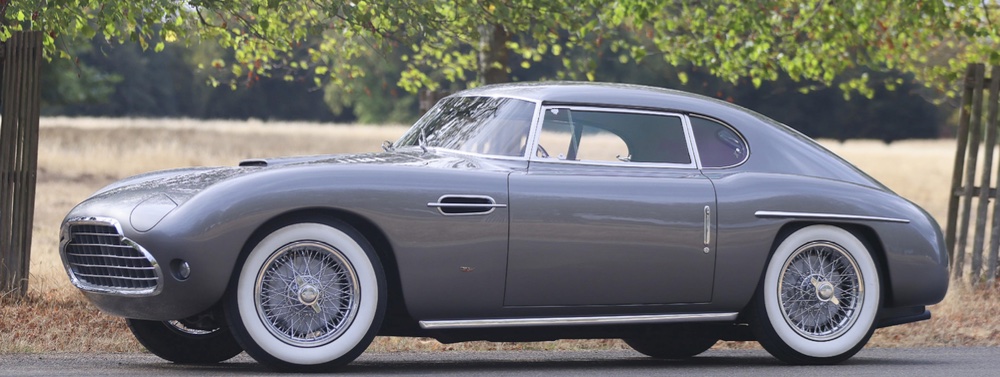
The 1953 Siata 208 CS Berlinetta, chassis CS 072, was one of nine examples bodied by Carrozzeria Balbo. Completed in April 1953, the car was purchased directly from Siata by Jean-François Du Quenne of France in August that year. It passed to Italian dealer SAIGARAGE in 1956 before being acquired by Gaetano Florio Pessina, who had it presented in a specification inspired by another Balbo-bodied example, chassis CS 065. Subsequent Italian owners included Cesare Musmeci, Andrea Ravizza and Italian Air Force Lieutenant Giuseppe Capaldi. Capaldi brought the Siata to the United States in 1960, beginning an American ownership history that included Gordon Gumble of Arizona and California collector Charles Betz.
In 1984, Betz sold the car to Peter Kaus, who incorporated it into his Rosso Bianco Collection in Germany. It subsequently passed to Evert Louwman in 2004 before returning to California with architect Tim Walker in 2006. The Siata appeared at the 2017 Pebble Beach Concours d’Elegance, receiving Third in Class, and was sold by Gooding at Pebble Beach in August 2021 for $1,627,500. Its purchaser, Stephen Bruno, later sold it to the consignor, who commissioned RX Autoworks to undertake a comprehensive cosmetic and mechanical restoration. Finished in metallic anthracite with brown leather upholstery, chrome Borrani wire wheels and whitewall tyres, the Siata received First in Class and the Strother MacMinn Most Elegant Sports Car Trophy at Pebble Beach in 2025. It was subsequently exhibited at Villa d’Este and Hampton Court Palace in 2026, receiving further awards at the latter. Against a pre-sale estimate of $1,500,000 to $2,000,000, the Siata failed to sell.
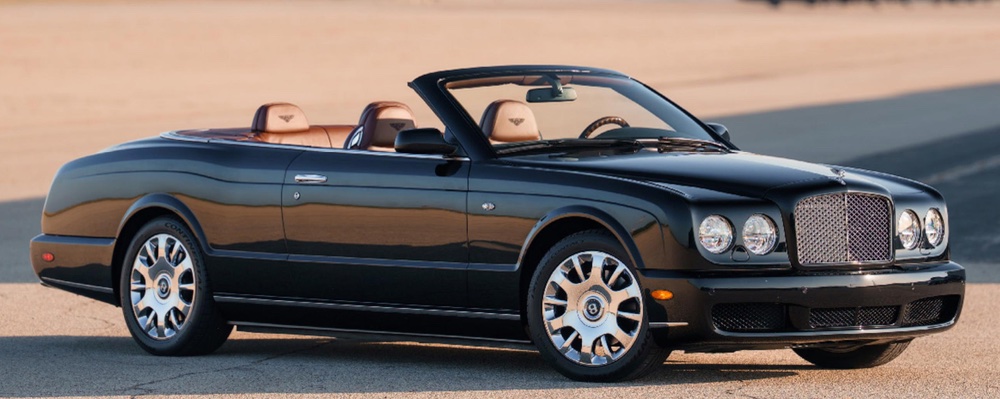
The 2007 Bentley Azure, chassis SCBDC47L87CX12199, was finished in Beluga Black with a matching fabric hood and Cognac leather upholstery extending across the seats, dashboard and door panels. This particular example had covered 6103 miles when it appeared at Gooding Christie’s Retromobile New York.
The Bentley had previously been offered by Gooding at Amelia Island in March 2024, when it displayed fewer than 4400 miles and sold for $162,400 against an estimate of $140,000 to $180,000. During the following two years it received substantial specialist maintenance, with Albers Motorcars of Zionsville, Indiana, carrying out more than $5500 of work in 2024. Bentley Omaha subsequently undertook servicing in August 2026, generating invoices exceeding $10,000. The latter work included replacing the hydraulic convertible-hood pump motor, bleeding and refilling the hood mechanism, fitting new anti-roll-bar links and attending to the air conditioning and routine fluids. Against a pre-sale estimate of $140,000 to $180,000, the Bentley sold without reserve for $190,400 including fees, exceeding its upper estimate by $10,400. The result was also $28,000 above its March 2024 auction price.
Further details
For more information on the Gooding Christie’s Retromobile New York sale, head here.