

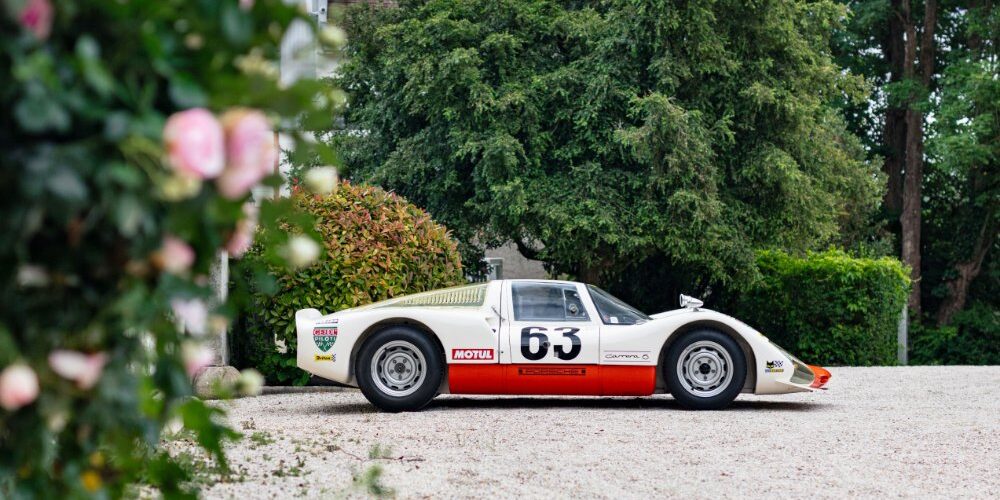
The Artcurial Le Mans Classic 2026 sale sees the penultimate Porsche 906 built, a Fangio-driven Jaguar XK120 and a African government-ordered Mercedes-Benz 600 Pullman Landaulet go up for grabs on July 3.
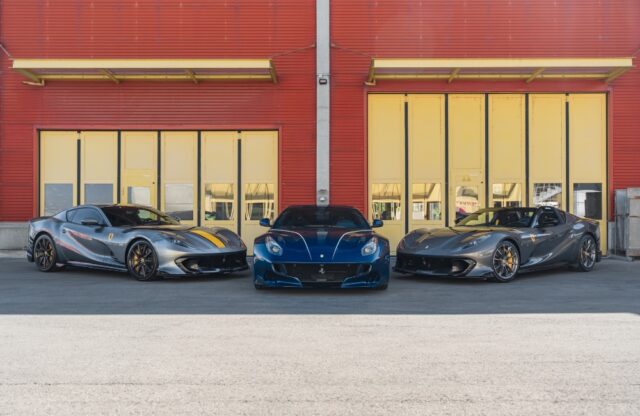
The collection features 71 lots (including non-car items), with a range of road and racing cars from across the spectrum of motoring. Although we haven’t featured them below, a trio of post-2000 Ferrari road cars will be worth keeping an eye on: a 2011 599 GTO (€850k-€1.05m est), a 2009 F430 Scuderia (€450k-€650k) and a 2005 575 SuperAmerica (€300k-€360k).
There’s also a 2001 550 Barchetta (estimated at €450k-€550k) and a rare manual 2001 360 Modena with a leather-wrapped roll bar, estimated at €100k-€140k. Here are some of the other highlights in store at the Artcurial Le Mans Classic 2026 sale.
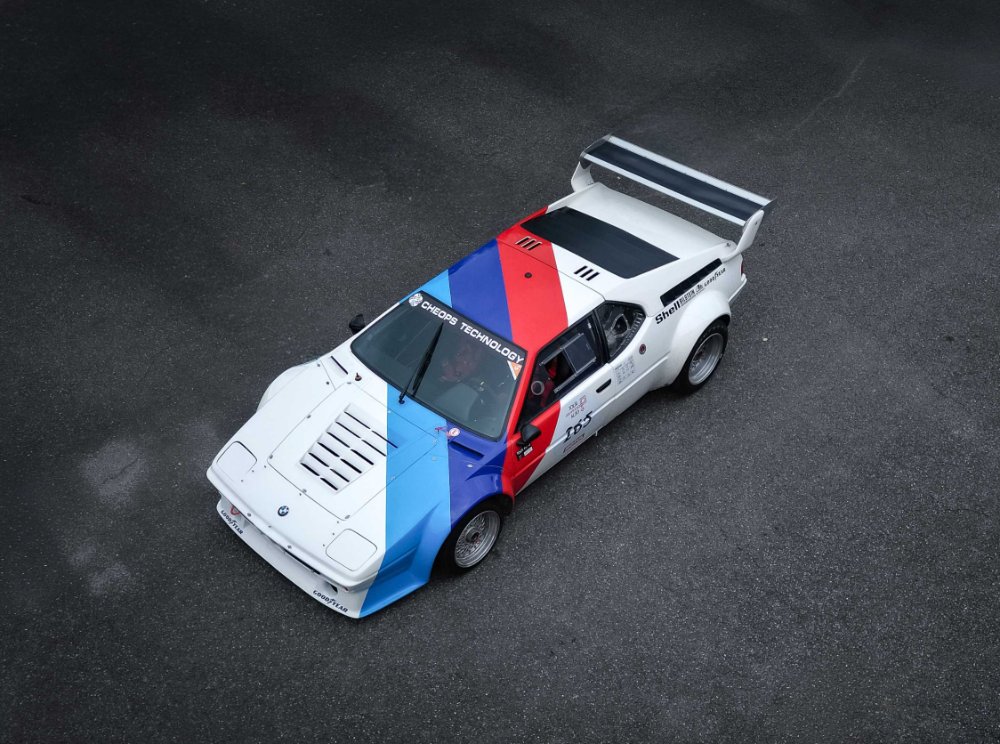
This 1980 BMW M1 Procar is chassis 4301302, an unregistered competition car originally delivered new in Italy as an orange road model. Walker Brown Racing converted it to Procar specification in 1982 before entering it in the IMSA GTO category.
The M1 contested four races during 1983, followed by 13 events in 1984, including the Sebring 12 Hours. Four further races followed in 1985, before Dallas Motorsport entered it in the 1986 Daytona 24 Hours. It competed in white, black and red liveries during this period, consistently carrying race number 43. Franco Sbarro acquired the car in 1986. A restoration completed in 2005 enabled it to compete at Le Mans Classic and in Peter Auto’s Classic Endurance Racing series.
A subsequent owner commissioned another comprehensive restoration, completed in 2019 at a reported cost of approximately €150,000, returning it to BMW Motorsport colours. The car contested the Tour Auto each year from 2019 to 2023, finishing within the top ten on every occasion and placing second in the 2023 timed classification. Its current owner acquired it in 2024. For the Arcurial Le Mans Classic 2026 sale, it is estimated at between €900,000 and €1.2m.
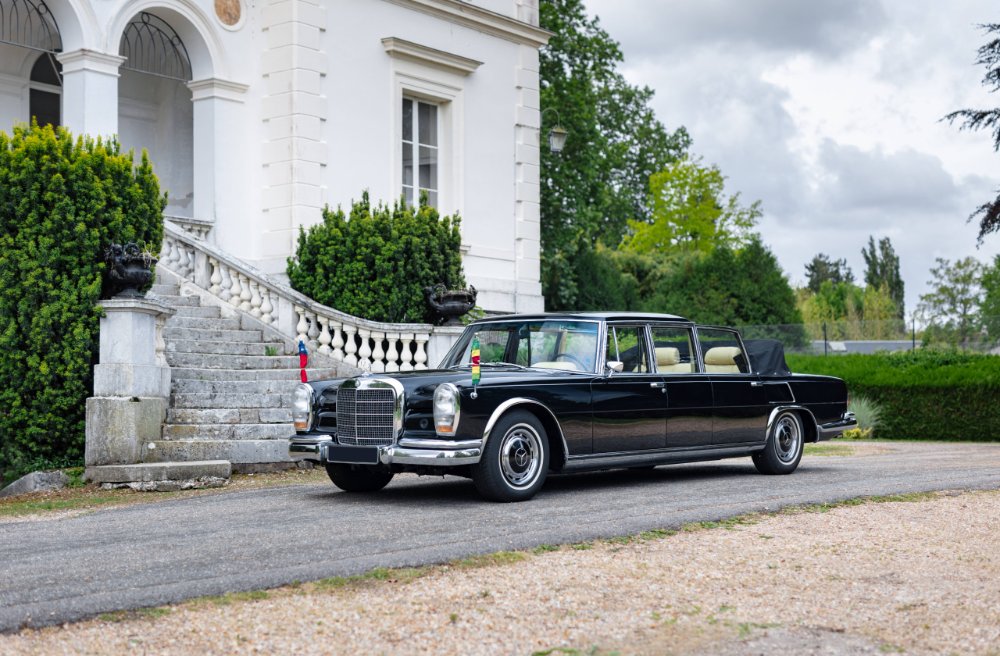
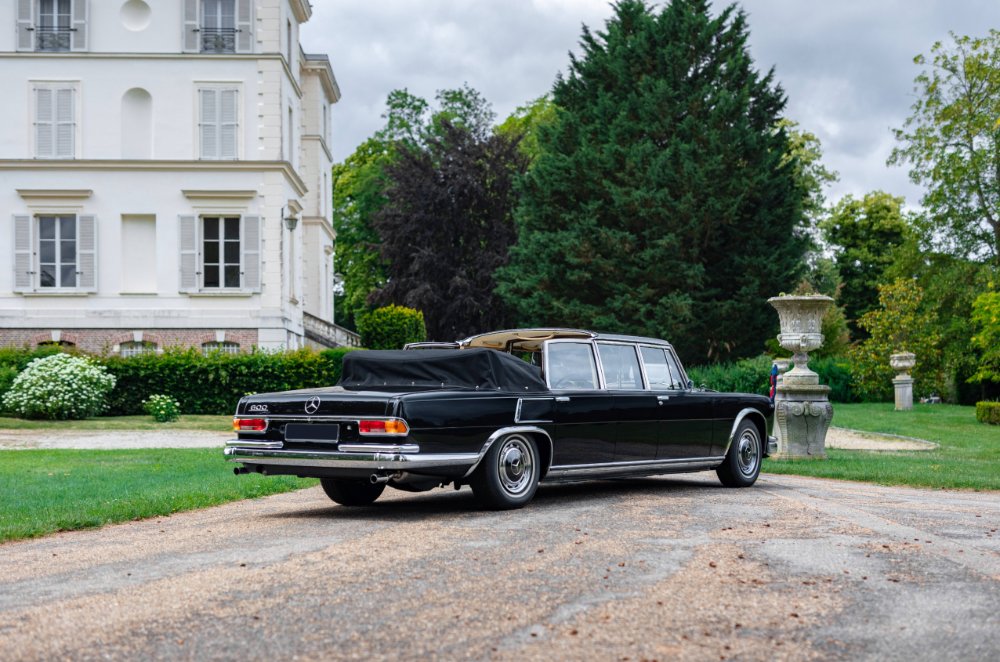
This 1971 Mercedes-Benz 600 Pullman Landaulet is chassis 100.015.12.001779, powered by engine 100.980.12.001846. It is one of 21 left-hand-drive, four-door examples built with the one-third-length folding rear roof.
The Mercedes was supplied new to the presidential garage of a conspicuously unnamed West African country. Its original specification included front and rear cameras with a CRT display mounted in the division, a television and VHS player, Sony cassette stereo, folding centre table, two bars including a refrigerated unit, rear-door glass holders, a telephone and front-wing flag mounts.
In 1987, the car returned to Mercedes-Benz in Stuttgart for a comprehensive mechanical rebuild. It was then sent to Carat Duchatelet in Belgium, which restored the woodwork and retrimmed the cabin in beige leather with matching carpets. The car subsequently returned to its original presidential fleet.
Its current owner acquired it in 2014 with 27,000km recorded. A further restoration began in 2016 at Atelier 600 near Paris. Work included rebuilding the engine, hydraulic and pneumatic systems, brakes, suspension and cooling set-ups, replacing the engine mounts and ball joints, fitting a new windscreen and refurbishing the folding roof, upholstery, woodwork and chromework. It is estimated at between €1.4m and €1.8m.
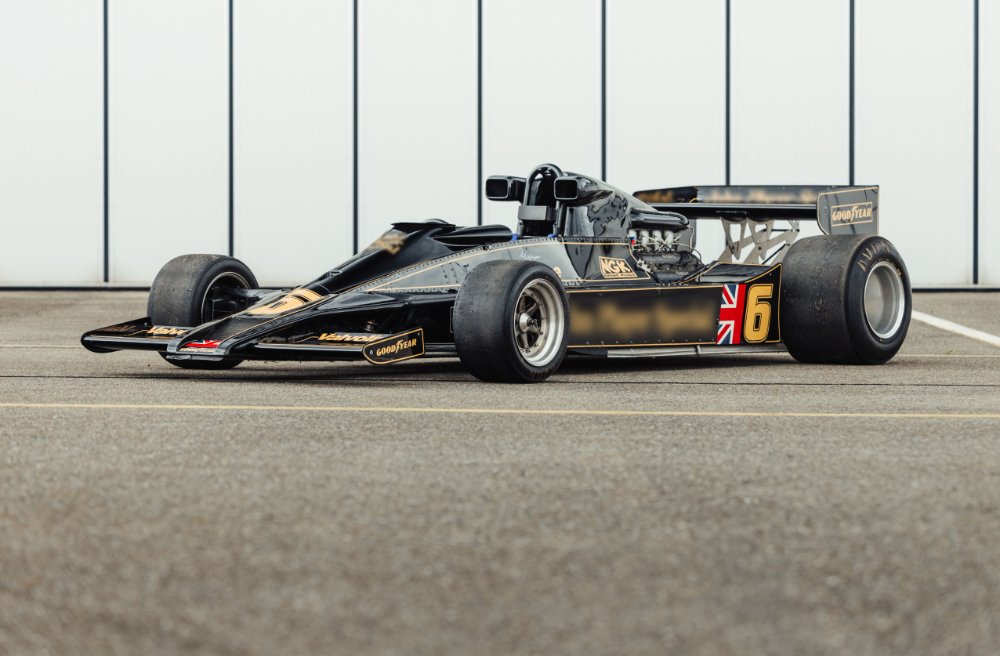
This 1979 Lotus 78 Formula 1 car is chassis 78/3, built by Team Lotus around an unused Works reserve chassis manufactured during 1978. Following Ronnie Peterson’s fatal accident at Monza, the identity of his destroyed car was reassigned to this newly completed example as a tribute.
Team Lotus assembled the car during 1979, but it was not intended for competition. Instead, it remained within the team’s heritage collection and was displayed in the Team Lotus museum for several decades. The Lotus is powered by a naturally aspirated 2993cc Ford Cosworth DFV V8, coupled to a five-speed Hewland gearbox. It is presented in black and gold John Player Special colours and incorporates the sidepod tunnels and sliding skirts associated with the Type 78’s ground-effect design.
Classic Team Lotus completed a comprehensive restoration in 2009, returning the car to running condition for demonstration use. It was subsequently sold to a Japanese collector. The current owner acquired it approximately ten years ago and has displayed it without further track use. The car will require recommissioning and preparation before participating in Historic events. It is accompanied by correspondence with Classic Team Lotus director Clive Chapman and documentation confirming its construction, identity and continuous connection with Team Lotus. For the Arcurial Le Mans Classic 2026 sale, it is estimated at between €1m and €1.5m.
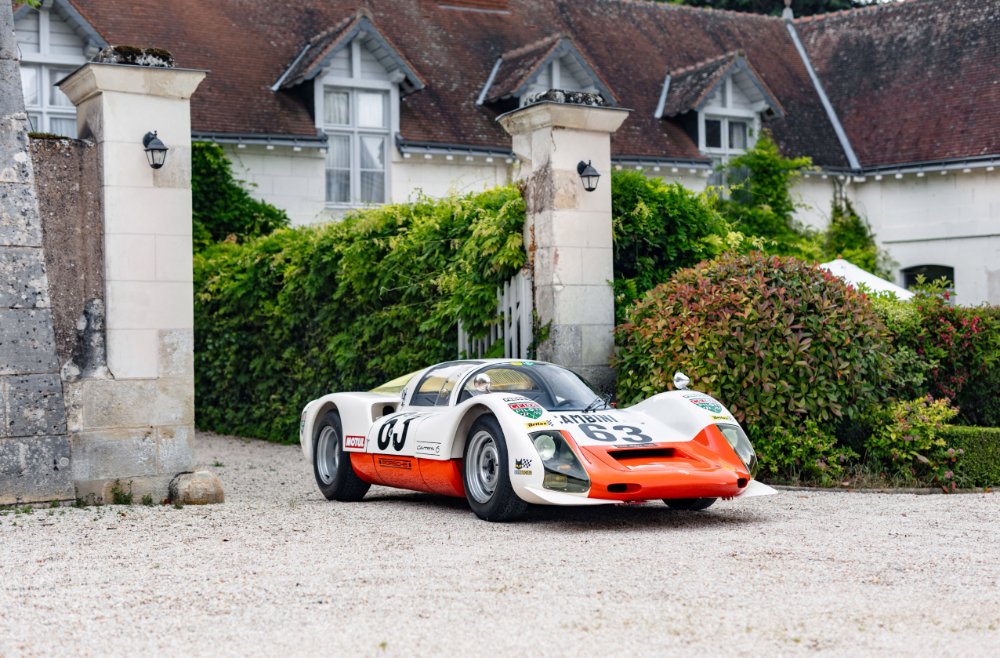
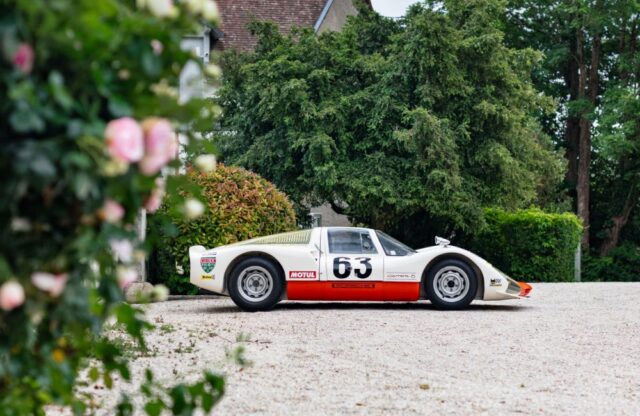
This 1967 Porsche 906 Carrera is chassis 906-161, the penultimate example built. Completed on June 9, 1967, it was entered by Porsche in the Trofeo Frescobaldi at Mugello the following month, where Leo Cella and Giampiero Biscaldi finished fifth overall and won their class.
Porsche subsequently sold the car to Guido Nicolaï, who raced it extensively in Italy during 1968. Results included victory in the Camucia-Cortona hill climb, eighth overall in the Imola 500km and several class podiums. Vittorio Mascari acquired the Porsche in 1971 and competed with it under the name Mascaleros. He entered 17 events during his first season, finishing fourth at Vallelunga behind a Ferrari 512 S, Porsche 917K and Porsche 910.
Further hill climbs and races followed, while Mascari retained the car until 2007. Its next owner commissioned a sympathetic restoration. Robert Médard removed, supported and repaired the original polyester body panels, while damaged floor sections were restored or replaced. Marc de Siebenthal rebuilt the mechanical components, including the engine, which received a new magnesium crankcase and chrome-lined cylinders to Works specification. It is estimated at between €1.8m and €2.4m.
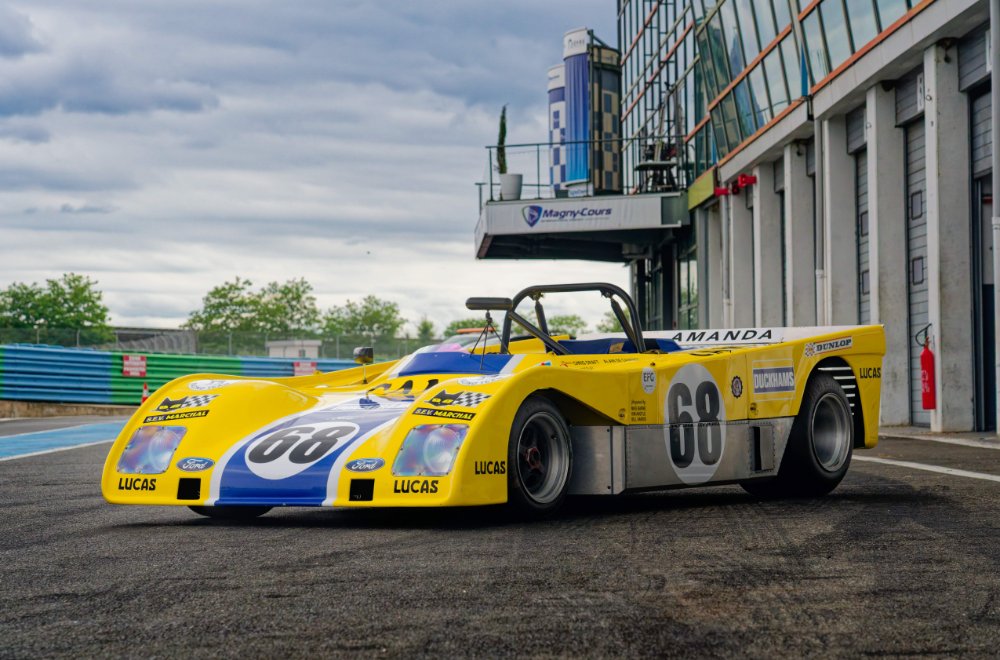
This 1972 Duckhams Le Mans is the prototype commissioned by Alain de Cadenet and designed by Gordon Murray, making it the first complete car credited to Murray. Its monocoque was built by Grand Prix Metalcraft, with bodywork by ProToCo and power from a Cosworth DFV V8 previously used by McLaren in Formula 1.
De Cadenet and Chris Craft drove it at the 1972 Le Mans 24 Hours, where it ran as high as fourth before finishing 12th. It returned in 1973 with revised bodywork but retired after an accident, then competed again in 1974 with John Nicholson and Craft, reaching third place before another accident forced retirement. The car also appeared at Watkins Glen and in Can-Am competition before being sold to Colin Hawker, who rebodied it for club racing. It was restored to its 1972 configuration in 2002.
Later acquired by Jacques Nicolet, the Duckhams competed in Historic events and won Grid 5 at Le Mans Classic in 2018. It has seen only limited demonstration use since. The sale includes spare body panels, moulds, wheels, 1973 and 1974 bodywork sets, construction drawings and period correspondence. A certificate signed by Gordon Murray confirms its identity and history. The Artcurial Le Mans Classic 2026 sale see it estimated at between €700,000 and €1.1m.
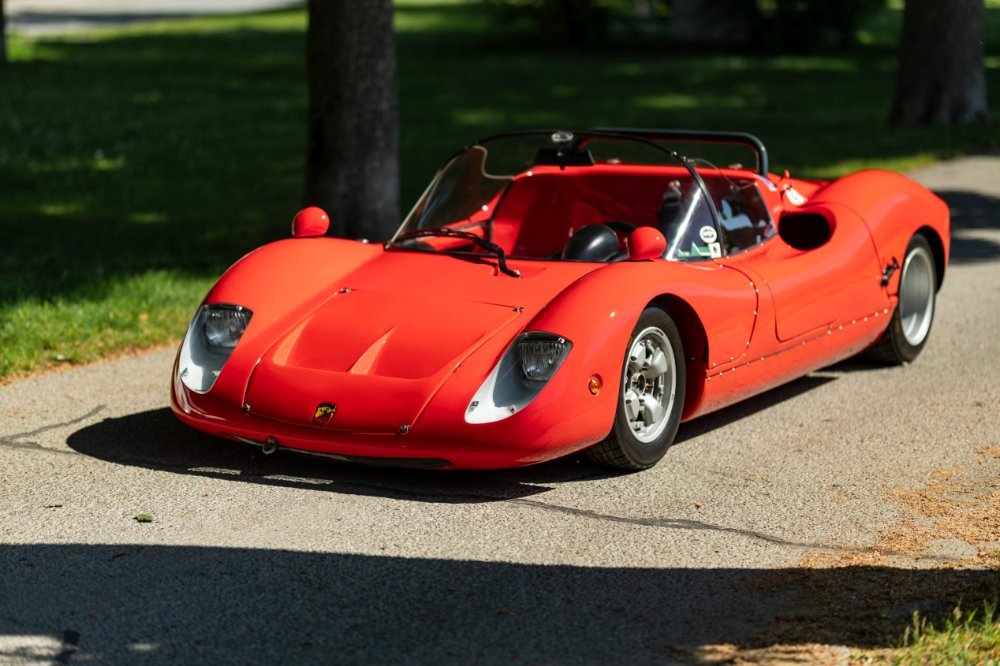
This 1967 Abarth 1600 SP Spider is chassis SE04/L-018, a prototype originally completed by Abarth as a 1000 SP SE04/L.
During the early 1970s, following Fiat’s takeover of Abarth and the company’s withdrawal from competition, the car was converted to 1600 specification. It is understood to be one of four SE04 chassis fitted by Osella with a 1.6-litre Cosworth BDA engine. It was offered for sale in Germany in 2013 and acquired by its current owner in 2017. Subsequent maintenance and restoration included work on the engine and gearbox by Sahl-Engineering between September 2018 and May 2019.
Noci Motor attended to the chassis and suspension in 2022, when new tyres were also fitted. RM-Productline rebuilt the shock absorbers in October 2023, while OK-Classic overhauled the braking system in June 2024. Arturo Merzario drove the Abarth during a demonstration at the 2024 Ventilspiel meeting at Spielberg, held to mark Abarth’s 75th anniversary. It is estimated at between €180,000 and €280,000.
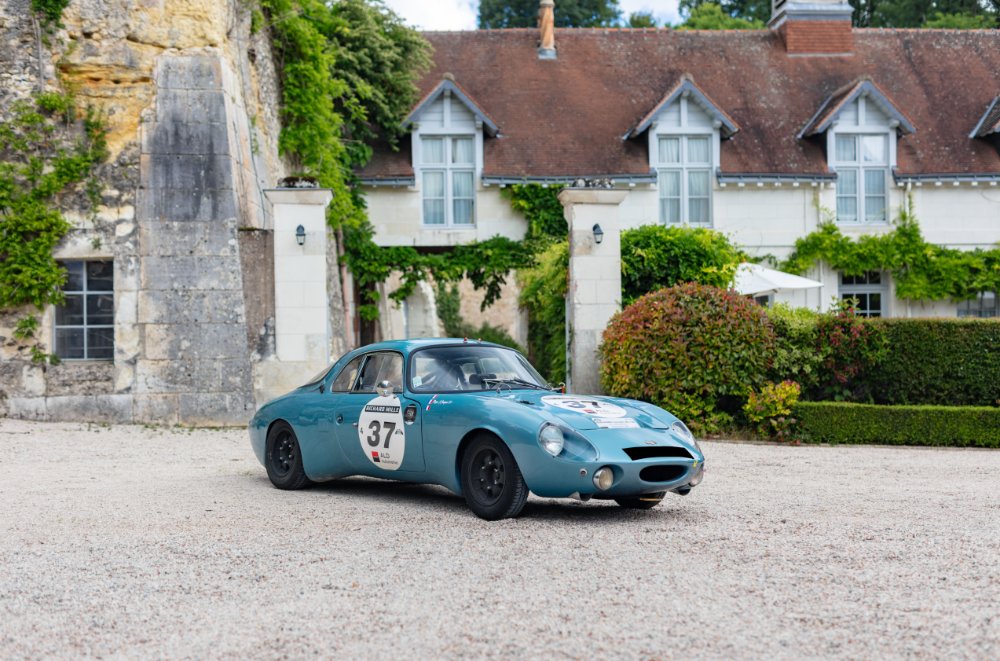
This 1963 René Bonnet Aerodjet LM6 is chassis 7013, the car entered as race number 41 in that year’s Le Mans 24 Hours. René Bouharde and Bruno Basini suffered a regulator fault before the water-pump belt failed, causing the cylinder-head gasket to blow. Repairs took too long for the car to cover the minimum required distance, so it crossed the finish line but was not classified.
René Bonnet sold the car after the season to Parisian enthusiast Pierre Madet, who retained it for 15 years. It subsequently passed to Le Mans clerk of the course Roger Bocquet before being acquired by its current owner in December 1989. Provost du Mans later completed a detailed restoration. The original 17kg tubular chassis was stripped and preserved, while the undamaged fibreglass nose and lightweight bodywork were repainted in their 1963 colours.
Its original 1108cc Le Mans engine has been retained and accompanies the car, while a 1300cc Gordini unit is currently installed. The sale also includes the five original magnesium wheels, with replicas fitted for use. The car has since appeared at Le Mans Classic and other events. It is estimated at between €130,000 and €190,000.
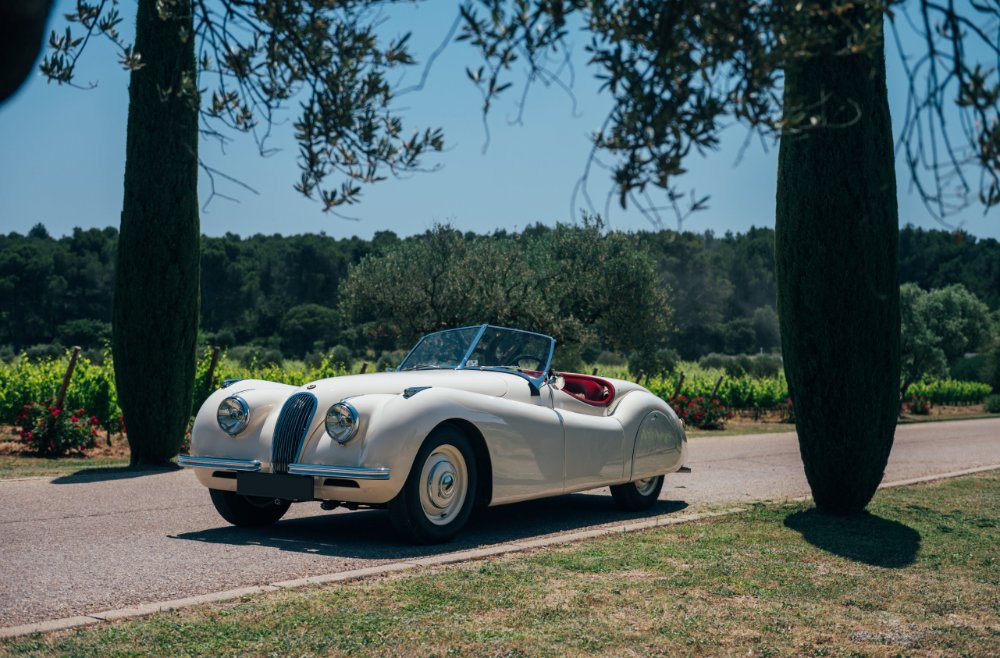
This 1949 Jaguar XK 120 Aluminium is chassis 670043, the 43rd left-hand-drive aluminium-bodied example built.
Completed during November 1949, the Jaguar was delivered through official importer Pablo Acardi in Montevideo on February 1, 1950. It competed in Uruguay during the 1950s and was driven by Argentinian racing drivers José Froilán González and Juan Manuel Fangio. Period photographs include an appearance at the inauguration of the Punta Fría circuit in January 1952.
After several decades in South America, the XK 120 was exported to Europe in 1990 and taken to Barcelona. Its engine was subsequently returned to Coventry for rebuilding. The current owner acquired the car in 2011 and commissioned a chassis-up restoration by Jaguar specialist Parlanti in Arles. Completed between 2012 and 2018 at a reported cost exceeding €250,000, the work retained the original ash frame wherever possible and saw the aluminium body restored and refinished in Old English White. The cabin was retrimmed in Connolly leather to the original specification. It is estimated at between €180,000 and €240,000.
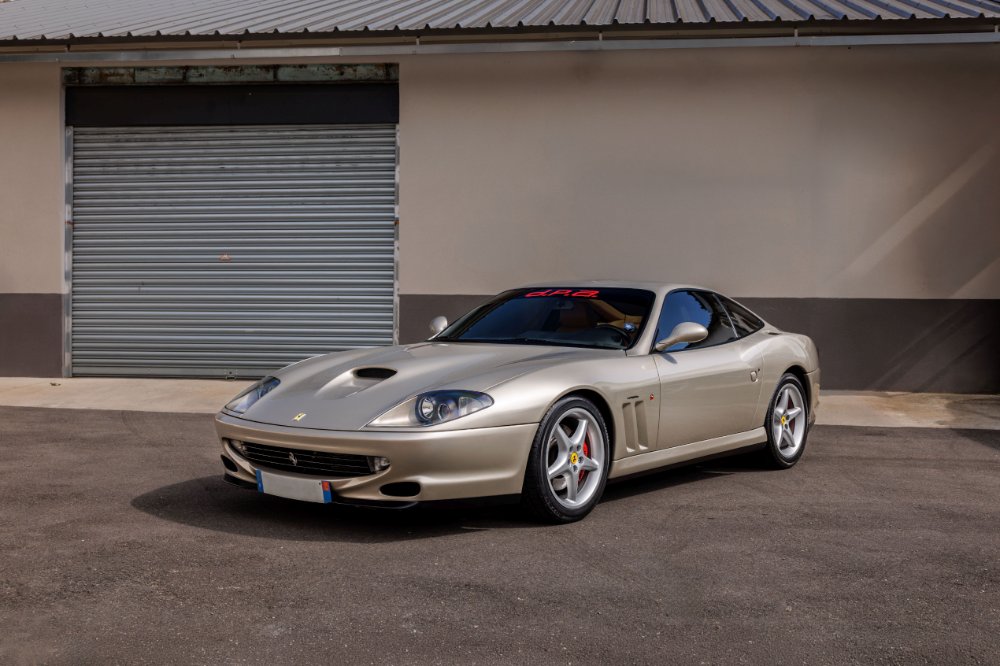
This 1999 Ferrari 550 Maranello is chassis ZFFZR49B000114069, a French-registered example supplied new in Belgium on January 19, 1999. It is finished in Grigio Ingrid with a beige leather interior, one of four European-market 550s understood to have been built in this colour combination. The car has remained with its current owner since 2014 and has covered 85,033km.
Its bodywork has undergone a complete glass-out repaint by Carrosserie Hervé in southern France. The driver’s seat bolster has also been repaired, while UV-filtering film was applied to the windows to protect the interior. A complete spare hide in the correct A4208 beige leather is included with the car. At the Artcurial Le Mans Classic 2026 sale, it is estimated at between €120,000 and €150,000.
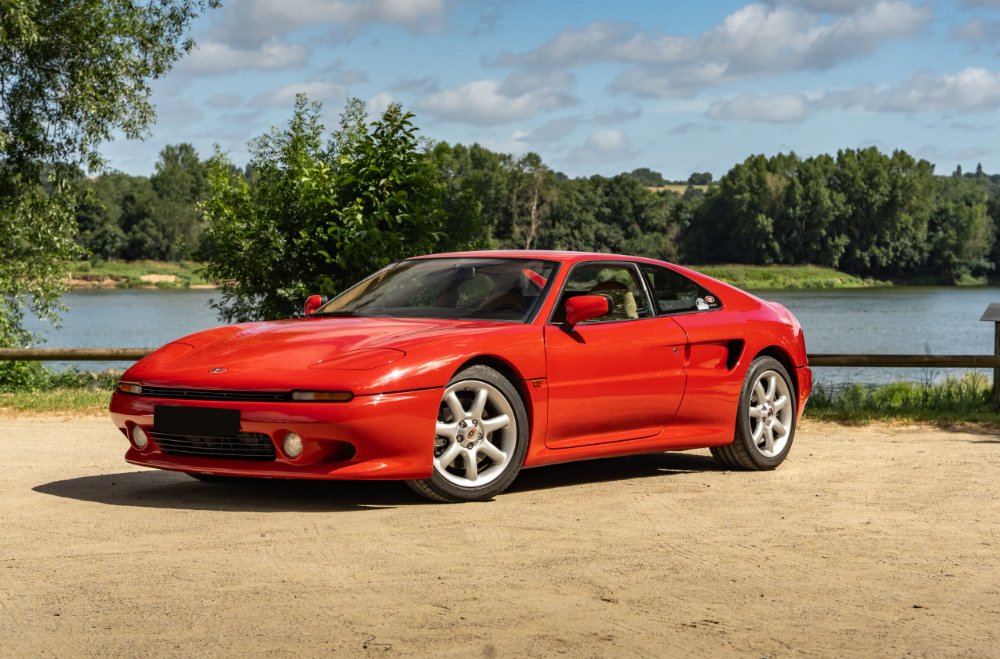
This 1997 Venturi 300 Atlantique is chassis CUP41195CE0001, the first example built and the prototype used to develop the model. Sporting engine number Z7XS744F000887, it was originally finished in Mauritius Blue and unveiled to the press at the Pavillon Baltard before appearing on Venturi’s stand at the 1994 Paris Motor Show.
The car subsequently featured in factory brochures and launch material, and served as Venturi’s press demonstrator. It was later allocated to company chief executive Hubert O’Neil before being sold to its first private owner. Venturi then modified the car at the factory, repainting it in a bespoke Passion Red finish and retrimming the cabin in Alcantara with white-faced instruments, manually adjustable Sparco seats and buffalo leather behind the seats. Adjustable dampers were fitted and the ride height was reduced by 10mm.
The car was first registered in this specification in 1997. The current owner acquired the Venturi in 2003. Its actual mileage is estimated at approximately 67,000km because the odometer display has failed. It has been signed by Venturi co-founder Claude Poiraud. At the Artcurial Le Mans Classic 2026 sale, it is estimated at between €110,000 and €130,000.
Further details
For more information on the Artcurial Le Mans Classic 2026 sale, head here.