

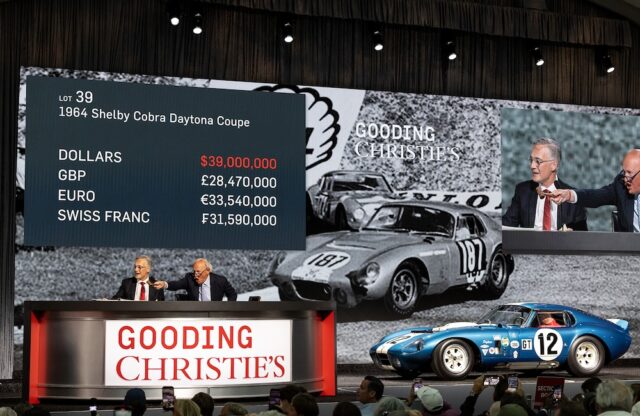
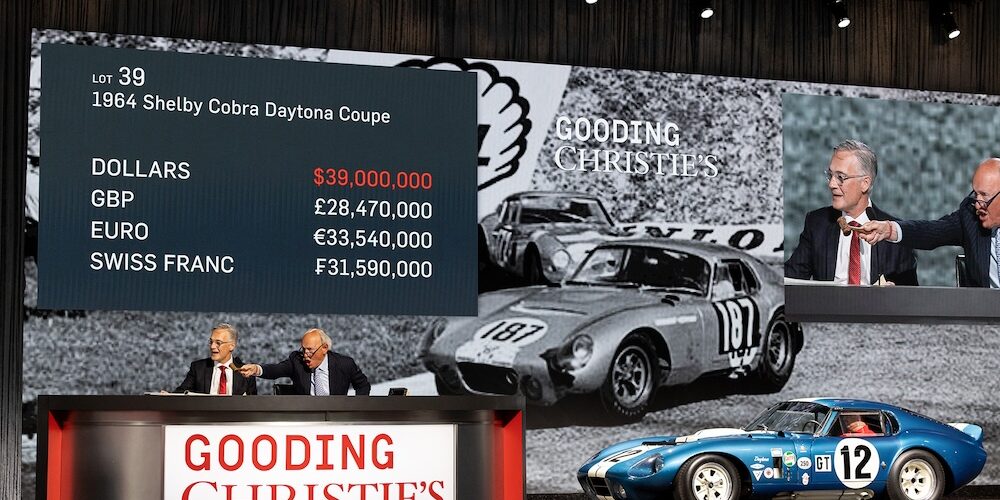
The Monterey 2026 auctions produced some extraordinary numbers at the very top of the market, led by Gooding Christie’s $42.905 million Shelby Cobra Daytona Coupe and RM Sotheby’s $34.655m McLaren F1 GTR. Add in RM’s $40m charity sale of the one-off Ferrari Luce, plus strong results for the Corvette Grand Sport, Ferrari Daytona SP3 and several F50s, and the week underlined that exceptional cars with provenance, rarity and cultural significance can still bring serious competition.
However, before we run down each company’s top results at the Monterey 2026 auctions, we’ll take a look at the broader picture, which was more nuanced. Gooding Christie’s, RM Sotheby’s, Mecum, Broad Arrow and Bonhams all achieved notable individual results, but estimates were not universally swept aside. Some headline cars comfortably exceeded expectations, while others landed within estimate or fell noticeably short, suggesting buyers were prepared to spend heavily but remained selective.
Magneto editor David Lillywhite was on the ground for the Monterey 2026 auctions. “Excluding the Ferrari Luce sale, the total sales added up to $718.3m according to Hagerty. Last year’s was $432.7m and even 2022’s post-Covid sale was $471.2m” he says. “The sales were extraordinary. The obvious high sales were the halo Ferraris, from 288 GTO-onwards, but there were plenty of strong prices for all other eras including the ‘Brass Era or Veterans. It’s all about iconic models and superb condition.”
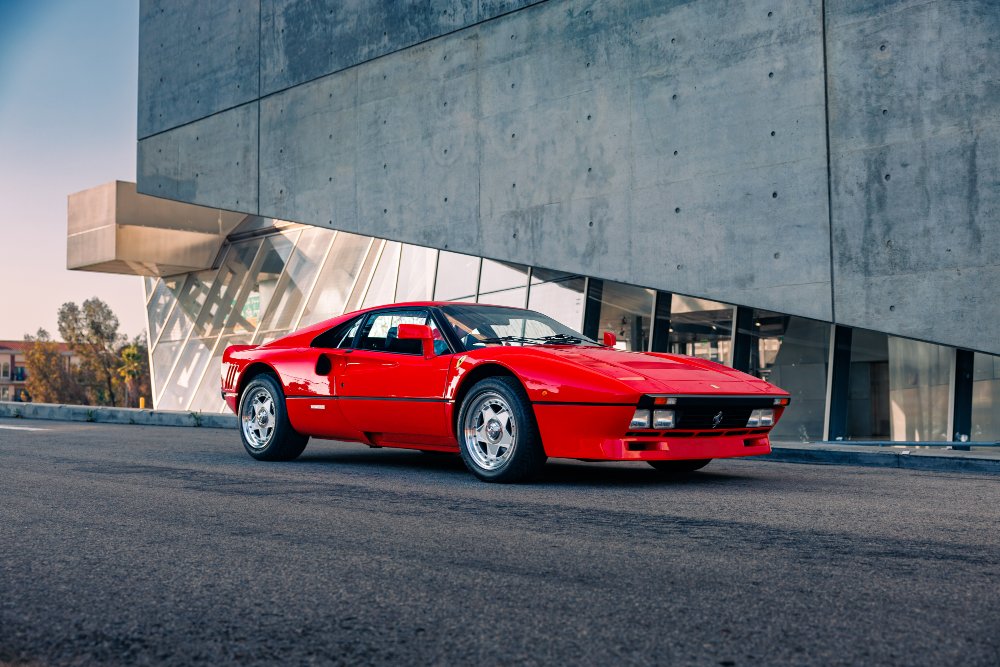
The market for 1980s, 1990s and 2000s supercars was one of the strongest areas of the Monterey 2026 auctions, but the results were highly selective. The biggest premiums went to recognised halo models, rare factory specifications, low-mileage examples and cars with unusually strong provenance. Ferrari provided the clearest evidence of that trend.
At RM Sotheby’s, a 1985 Ferrari 288 GTO (pictured above) sold for $11.555m against a $9m-$11m estimate, establishing a new model record. The same sale saw a 1991 F40 achieve $8.365m, a record for a standard F40, helped by its 320-mile odometer reading and first ownership by former Chrysler and Ford executive Lee Iacocca.
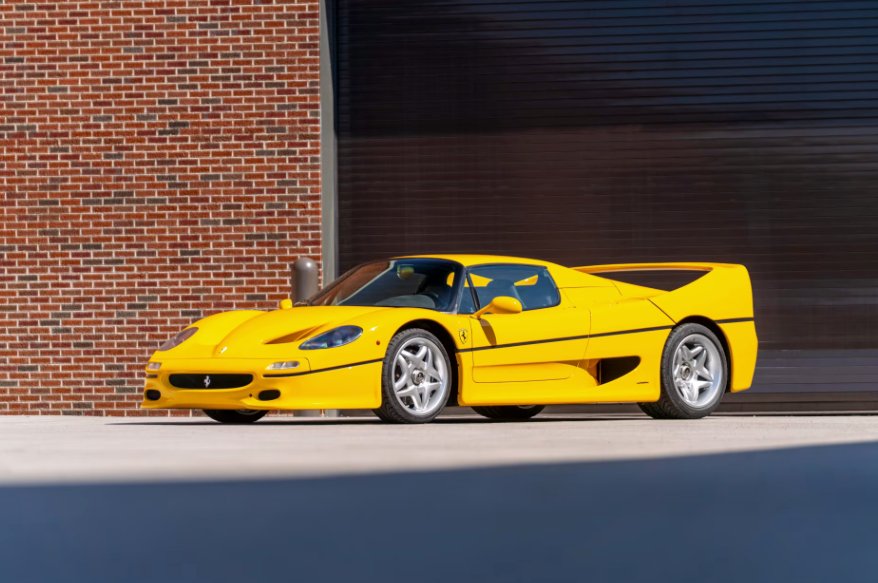
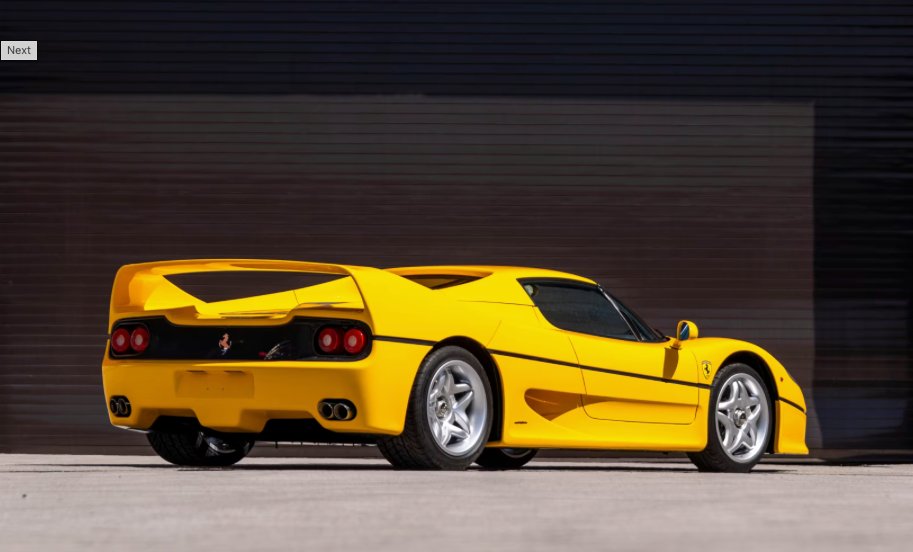
The F50 market was stronger still at the Monterey 2026 auctions. RM sold a 1995 example formerly owned by Mike Tyson for $12.105m against a $7m-$9m estimate, while Mecum’s 1996 Giallo Modena car (pictured above) reached $14.575m. That compared with $5.505m for an F50 at Monterey in 2024 and $9.245m in 2025, illustrating how quickly the model’s benchmark has moved.
The Enzo showed similar strength across a broader sample. Mecum sold a 589-mile example for $12.1m, Broad Arrow achieved $10.675m for another and RM Sotheby’s sold a 9834-mile car for $9.41m against a $6.75m-$7.5m estimate. The spread suggests that demand was not confined to delivery-mileage examples.
Price growth was also visible further down the Ferrari hierarchy. Gooding Christie’s sold a 1989 Testarossa for $257,600 against $175,000-$225,000, while Mecum achieved $522,500 for a 4106-mile Classiche-certified example in Bianco Avus. Gooding’s 1999 F355 Spider Serie Fiorano, one of 26 fitted with the six-speed manual gearbox, made $588,000 against a $300,000-$400,000 estimate.
Gated manuals and special derivatives remained particularly sought after at the Monterey 2026 auctions. RM sold a manual 2002 575M Maranello for $472,500, a manual 575 Superamerica for $1.38m and a six-speed F430 for $841,000.
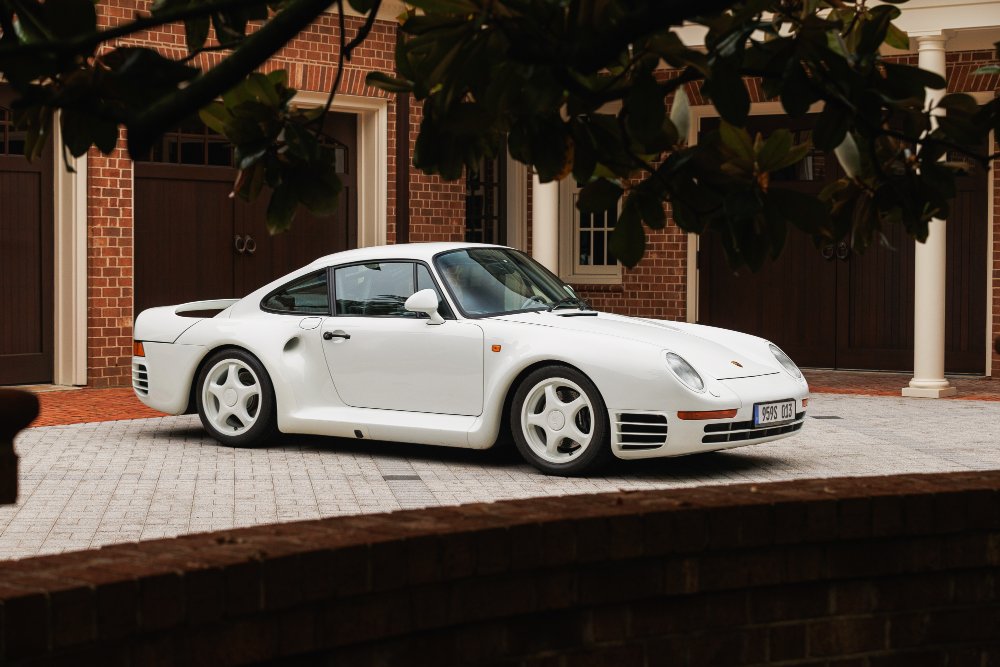
Away from Ferrari, the Monterey 2026 auctions showed similarly strong demand for 1980s, 1990s and 2000s supercars, but the results were highly dependent on specification. Buyers were prepared to pay heavily for the recognised top derivative of a model, while cars only one rung further down the hierarchy could produce markedly softer results.
Porsche illustrated the point particularly clearly. The RM Sotheby’s 1989 959 Sport (pictured above) sold for $7.045m against a $5m-$6m estimate. One of only 29 Sport models, and formerly owned by Nick Heidfeld, it comfortably exceeded expectations. Broad Arrow’s 959 Komfort, by comparison, made $2.865m. Both were significant results, but the gap showed just how much value collectors now attach to the rarer, lighter Sport.
The same distinction appeared with Lamborghini. RM’s 1985 Countach LP5000 QV Downdraft made $1.325m against a $900,000-$1.1m estimate, while a 952-mile 1990 Countach 25th Anniversary sold for $797,000 against an $800,000-$950,000 estimate. Low mileage alone was therefore insufficient to overcome the market’s preference for the carbureted specification.
The 1990s produced the Monterey 2026 auctions’ largest non-Ferrari result. RM sold the 1996 McLaren F1 GTR chassis 10R for $34.655m – more on that below. Other 1990s cars were more measured. Bonhams sold a 2000 Lamborghini Diablo GT for $2.425m, close to the top of its estimate range, while RM’s 838-mile 1991 Diablo made $802,500 against $550,000-$700,000. By contrast, RM’s 1993 Bugatti EB110 GT achieved $1.8475m against $1.75m-$2.25m, while a 191-mile Jaguar XJR-15 failed to sell against a $1m-$1.4m estimate.
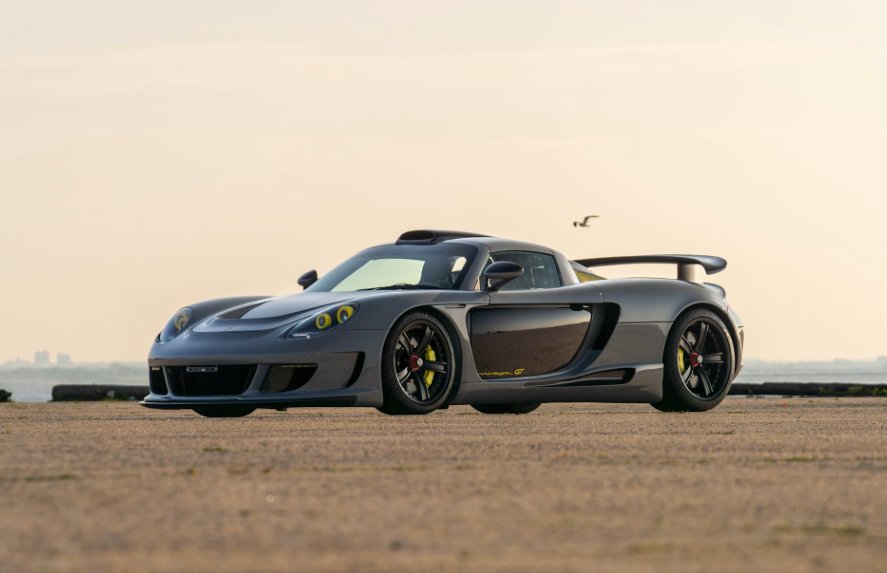
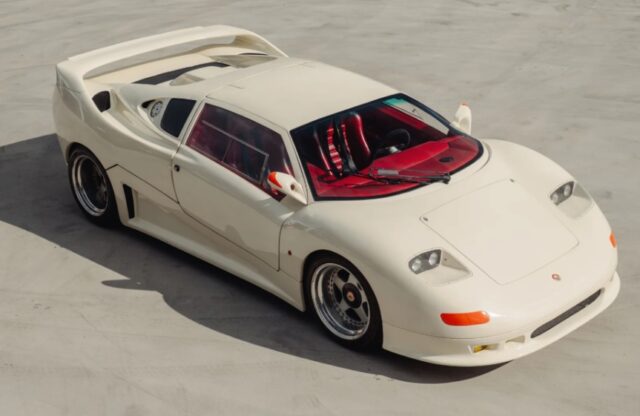
The 2000s market at the Monterey 2026 auctions looked strongest around the Porsche Carrera GT. Mecum sold a 3480-mile example for $3.575m, while another attracted a $4m bid without selling. A separate Monterey transaction reached $3.7212m, reinforcing the view that good Carrera GTs now occupy a genuine $3m-plus market. Perhaps the most unusual result came from Mecum’s 2004 Gemballa Mirage GT (pictured above), which sold for $3.96m and established a record for the marque.
Other 2000s supercars also produced notable results at the Monterey 2026 auctions. RM Sotheby’s sold a 2005 Saleen S7 Twin Turbo for $1.105m against a $750,000-$1m estimate, while the Mercedes-Benz SLR McLaren also continued to strengthen. RM’s 2009 722 S Roadster, one of 150 built and showing 1796 miles, sold for $1.27m. Lamborghini’s Murciélago market was similarly specification-sensitive. RM’s 2003 40th Anniversary, number 50 of 50 and fitted with the six-speed manual gearbox, sold for $1.105m against an $850,000-$1.2m estimate. At Mecum, a far more heavily used 2008 LP640 with 30,156 miles and the e-Gear transmission still achieved $522,500.
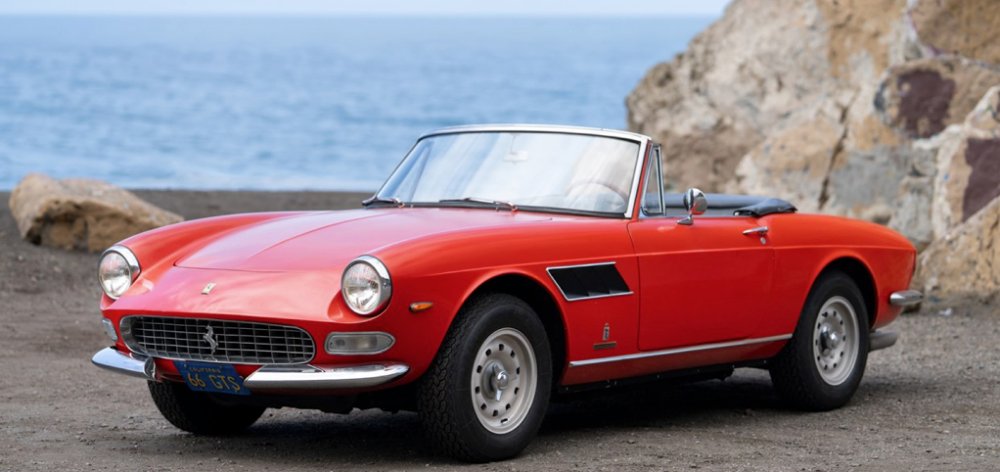
If the Monterey 2026 auctions’ headline Ferraris suggested the market was running hot, the 1960s road cars told a much more selective story. The strongest result was Gooding Christie’s 1966 275 GTS (pictured above), which made $1.82m against a $1m-$1.2m estimate. That was no ordinary example: chassis 07929 had been owned by one Southern California family since 1981, had not been publicly exhibited for more than 40 years and retained its matching-numbers engine. Its first owner was Ferrari privateer Pietro Ferraro, who had raced everything from a 250 GTO to a 330 LMB. The provenance translated directly into price.
The more conventional 275 GTBs were far less explosive. RM Sotheby’s sold a 1966 alloy-bodied 275 GTB for $2.7m against a $2.5m-$3m estimate, while its 1965 short-nose 275 GTB brought $2.1775m against $2m-$2.2m.
The clearest weak spot was the 250 GT Lusso. Gooding’s 1964 example, chassis 5931 GT, sold without reserve for $1.27m against a $1.5m-$1.8m estimate. More tellingly, this was the same chassis Gooding sold for $1.43m in October 2020, when it carried a $1.4m-$1.8m estimate. Six years, a high-quality restoration and continued matching-numbers status later, it returned $160,000 less in nominal terms. That is an 11.2 percent decline before inflation is considered.
There was no blanket collapse, however. Gooding’s 1969 365 GTC, one of 168 built, sold for $841,000 against a $750,000-$850,000 estimate. It retained its matching engine and transaxle, its original Grigio Mahmoud over Pelle Bleu specification and Ferrari Classiche certification.
The 1970s Ferrari market was just as selective at the Monterey 2026 auctions. Daytona coupés and 365 GTC/4s encountered resistance, Dinos produced widely differing results and some of the strongest momentum came much further down the price ladder, among early 308s.
The Daytona market was restrained outside the rarest versions. RM Sotheby’s 1972 365 GTS/4 Spider sold for $2.315m against a $2m-$2.5m estimate. The 37th of only 121 examples built, it had been owned by Herb Chambers, who bought it in 1973 before losing track of the car following an accident, then reacquiring it 34 years later. Its result was solid rather than exceptional, remaining within estimate.
Daytona coupés struggled to generate the same enthusiasm. Gooding’s 1971 365 GTB/4, one of around 12 originally finished in Giallo Dino, made $610,000 against a $600,000-$700,000 estimate. Once buyer’s premium is accounted for, the hammer price was below the low estimate. Broad Arrow’s matching-numbers, Ferrari Classiche-certified 1971 Daytona, estimated at $700,000-$900,000, failed to sell.
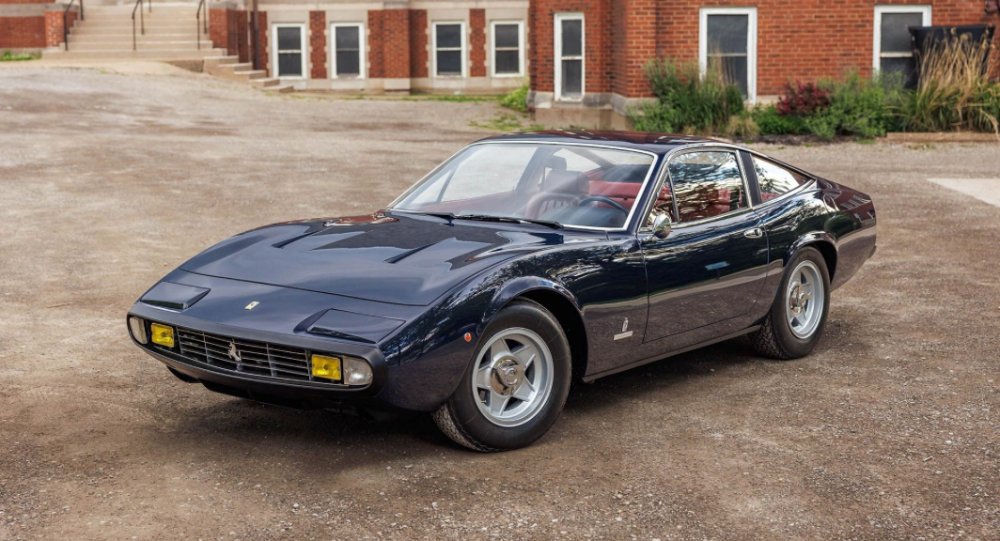
The 365 GTC/4 showed similar price sensitivity. Broad Arrow offered the sixth example produced (pictured above), originally ordered by Pininfarina and used personally by company president Sergio Pininfarina. It hammered at $215,000 against a $220,000-$260,000 estimate, although the $240,800 price including premium brought the published result into the range. Bonhams’ 1972 example sold for $174,720 including premium against an estimate of $180,000-$220,000.
Dino results were far less consistent at the Monterey 2026 auctions. Two 1972 246 GTs at Gooding illustrated the point. An unusually preserved 14,120-mile Azzurro Metallizzato car sold for $555,000 against $575,000-$650,000, while a restored Grigio Ferro example made $643,000 against $400,000-$600,000. RM’s 1974 246 GTS reached $637,500 against a $550,000-$650,000 estimate, whereas Bonhams’ 1972 GT sold for $417,500 against $400,000-$500,000. Celebrity provenance was no guarantee of success.
Steve Winwood’s 1973 246 GTS, one of five UK-delivered Chairs and Flares cars and originally finished in Nocciola Metallizzato, failed to sell against a $750,000-$1m estimate. Its restoration in a non-original dark blue and tan colour scheme may have counted against it. The result was especially notable given that another Dino 246 GTS had sold for a record $1.325m at Amelia five months earlier.
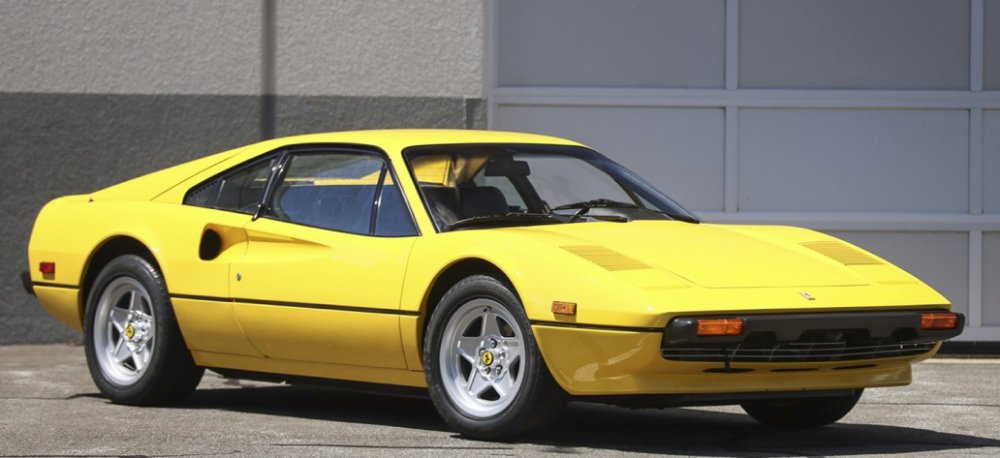
Perhaps the most convincing movement came among early 308s. RM’s 1976 308 GTB Vetroresina from the Phil Bachman collection sold for $302,000 against $200,000-$300,000 following an extensive restoration. Gooding’s European dry-sump Vetroresina brought $196,000 against $140,000-$180,000, while Mecum sold a 27,000-mile example for $154,000. Even more strikingly, Gooding’s steel-bodied 1979 308 GTB (pictured above) sold for $131,600 against an $80,000-$100,000 estimate, 31.6 percent above its upper guide.
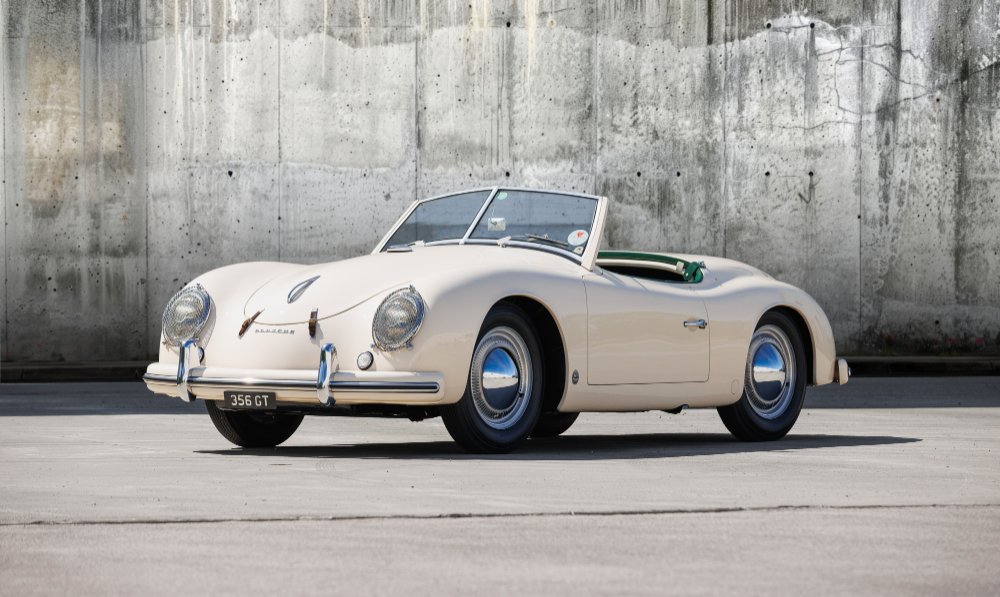
There was a much clearer story in the 356 and early 911 market than in some of the headline sectors: the ordinary cars were holding up, but several supposedly blue-chip 356 variants struggled with ambitious estimates. Early 911s looked steadier, particularly the RS 2.7.
The Porsche 356 market showed some of the clearest signs of price resistance at the Monterey 2026 auctions. RM Sotheby’s 1952 America Roadster (pictured above) was the exception, selling for $2.205m against a $2m-$2.5m estimate. One of just 16 built, it underlined that genuinely important early Porsches can still command seven-figure sums when rarity and historical significance align.
Elsewhere, however, several supposedly blue-chip 356s struggled. RM’s 1958 Carrera 1500 GT Speedster, a competition-history example known as ‘Little Miss Zero’, sold for $857,500 against a $1m-$1.4m estimate. Its conventional 1958 1600 Speedster also fell short, making $390,000 against $400,000-$450,000.
Gooding Christie’s produced still stronger evidence of resistance. Its 1961 356 B 1600 GS/GT Carrera Coupé, one of only 49 built and retaining its matching-numbers four-cam engine and transaxle, realised $423,000 against $550,000-$650,000. A 1962 Super 90 Twin Grille Roadster made $456,000 against $500,000-$650,000, while a rare 1959 Super GT Speedster estimated at $800,000-$1m failed to sell. Broad Arrow’s 1951 Porsche-Sauter 356 Pre-A Sportwagen, estimated at $1.8m-$2.2m, also failed to find a buyer and was subsequently offered at $1.65m. Bonhams added three further misses, including a 1956 Super Speedster and two 1955 Pre-A Continental Coupés.
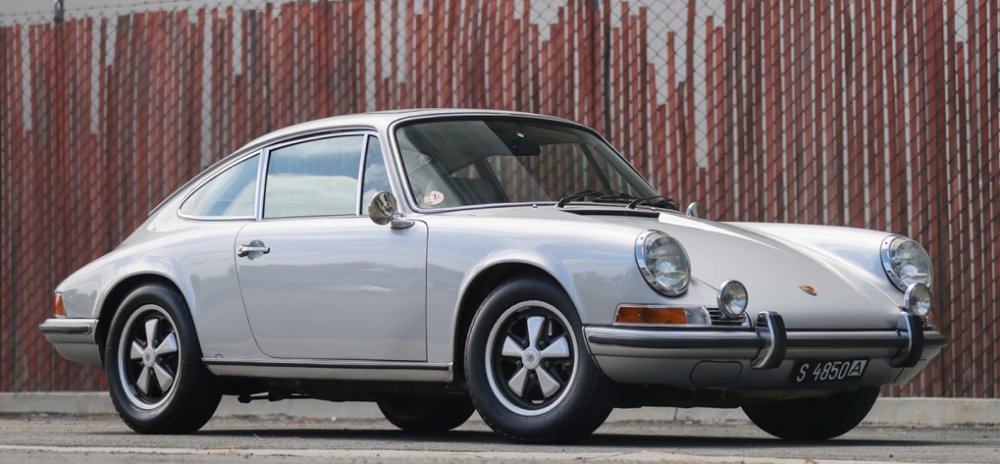
The early 911 market looked notably steadier than the 356 sector, with fewer dramatic misses and a clearer relationship between hierarchy and price. The strongest evidence at the Monterey 2026 auctions came from RM Sotheby’s 1973 Carrera RS 2.7 Touring, which sold for $896,000 against a $700,000-$900,000 estimate. In a week when several rare 356s were failing to reach their low estimates, an RS effectively touching its upper estimate looked significant. Gooding Christie’s early 911 results were more measured but broadly healthy.
A largely unrestored 1969 911 2.0 S, finished in special-order Zinc Yellow and retaining its matching-numbers engine, sold for $140,000 against a $140,000-$180,000 estimate. A 1971 911 2.2 S (pictured above), whose factory paperwork recorded a special request by Wolfgang Porsche, made $270,000 against expectations of $250,000-$325,000. Mecum also found buyers across the market.
Its 1967 911 S Coupé, restored to concours standard and formerly owned by baseball player Reggie Jackson, sold for $231,000, while a 1971 911 T Targa brought $72,600. There were misses, too. Broad Arrow’s early 1965 911, chassis 300718, remained available after the auction despite a $150,000-$180,000 estimate. Even so, the overall picture was less fractured than with the 356.
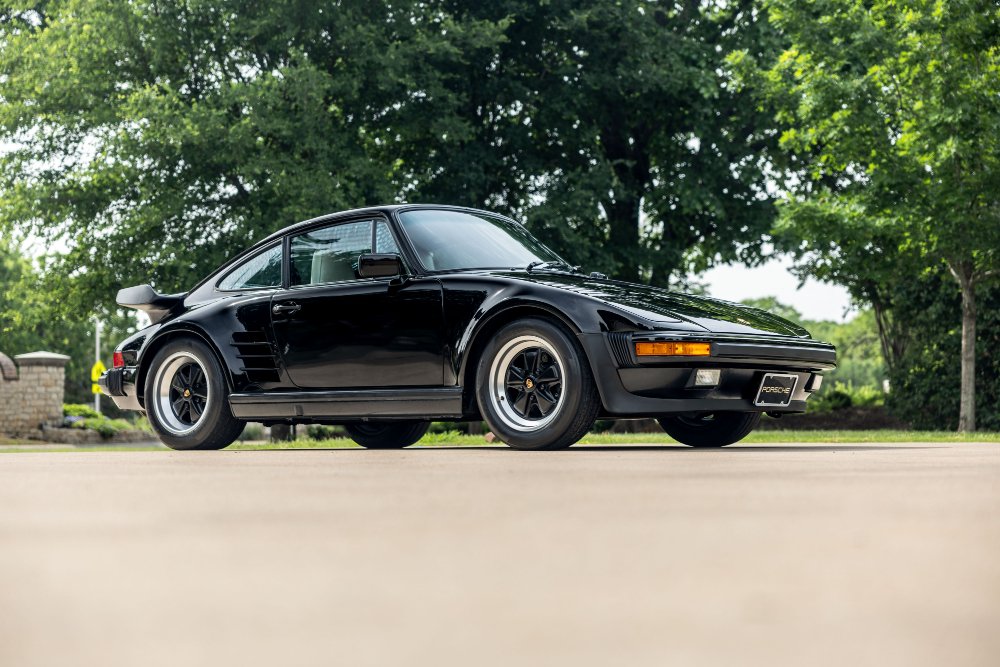
Factory Porsche 911s from the 1980s, 1990s and 2000s produced some notable results at the Monterey 2026 auctions, although looking across the auction houses reveals a more selective market than the strongest RM Sotheby’s sales alone suggested. Porsche Exclusive specifications, low mileage and recognised RS derivatives attracted substantial interest, but there was also resistance to ambitious valuations.
Late G-series cars were among the stronger performers at RM. A 1988 911 Turbo M505 Flat-Nose Coupé sold for $494,500 against a $300,000-$350,000 estimate, while a 1989 M505 Flat-Nose Targa reached $577,000 against $450,000-$550,000. An M491 Turbo-Look Carrera 3.2 Targa made $357,000 against $250,000-$350,000.
Broad Arrow provided useful context. Its 12,110-mile 1989 911 Speedster carried a $250,000-$300,000 estimate, while another narrow-bodied Speedster was guided at $500,000-$700,000. The former subsequently appeared through Broad Arrow at $250,000, showing that not every low-mileage G-series special benefited from the premiums seen elsewhere.
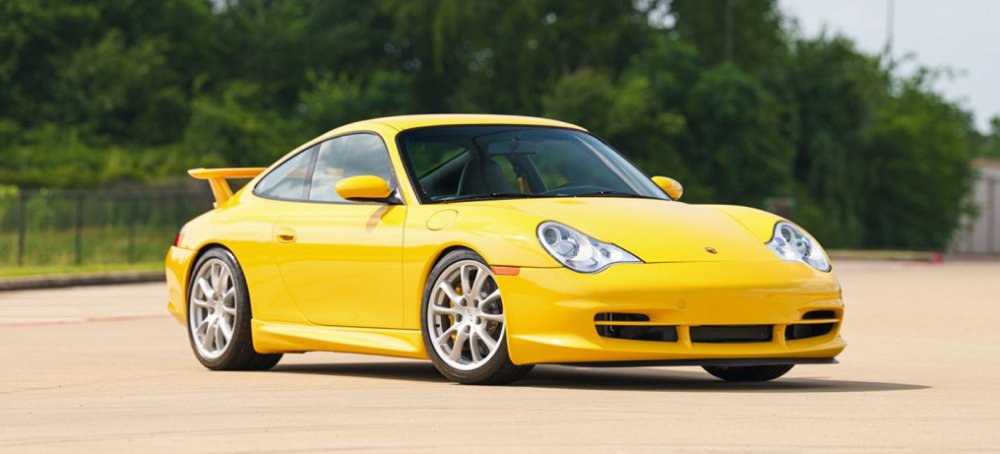
The 964 and 993 markets were similarly divided at the Monterey 2026 auctions. RM sold a 1992 Carrera RS for $511,000 against $425,000-$500,000 and a 1995 993 Carrera RS 3.8 for $797,000 against $500,000-$650,000. Its 993 Turbo S also exceeded expectations at $967,500 against $700,000-$900,000. Broad Arrow’s results temper that picture. Its Riviera Blue 1995 Carrera RS Clubsport, one of 224 M003 examples and with Daytona 24 Hours history, was estimated at $850,000-$950,000.
It did not produce a confirmed auction sale and was subsequently advertised at $875,000. A standard 1992 Carrera RS estimated at $275,000-$325,000 was later advertised at $325,000, while Broad Arrow also offered an RS Clubsport N/GT at the same $275,000-$325,000 estimate. That suggests buyers were distinguishing carefully between individual RS cars rather than simply chasing the badge. Even extreme rarity was no guarantee: Gooding Christie’s 964 Turbo 3.6 S Flachbau, one of 39 US-market X85 examples, failed to sell against a $1.1m-$1.3m estimate.
The clearest emerging strength at the Monterey 2026 auctions was in the first water-cooled generations. Gooding’s one-owner 2004 996 GT3 (pictured above) sold for $351,500 against $125,000-$175,000, more than twice its high estimate, while RM’s 5386-mile 2002 996 Turbo X50 brought $280,000 against the same $125,000-$175,000 range. Both combined low mileage with desirable factory specification.
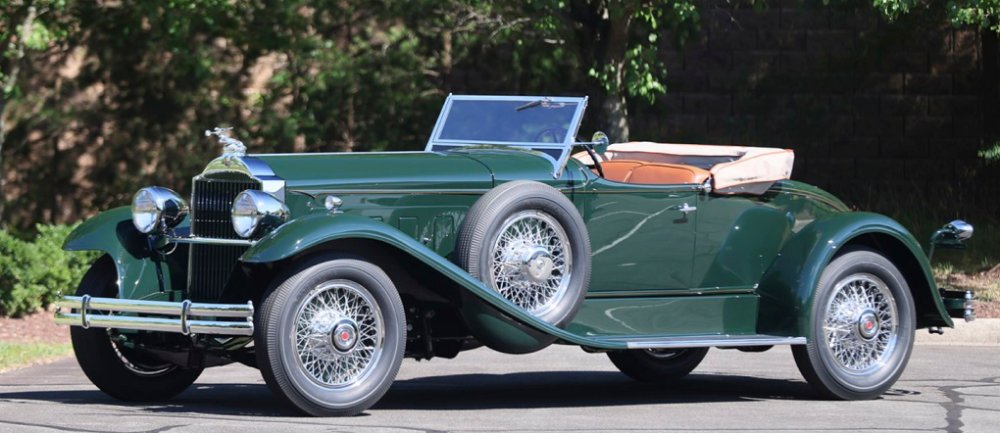
The pre-war market at the Monterey 2026 auctions was far from weak, but the results showed a much greater degree of selectivity than in the modern supercar sector. Buyers were still prepared to commit substantial sums to important American Full Classics, coachbuilt Europeans and cars with exceptional provenance, but rarity, concours success or competition history alone did not guarantee a strong result.
The clearest success was RM Sotheby’s 1935 Duesenberg Model JN Convertible Coupé, built for Clark Gable, which sold for $9.08m against a $5.75m-$8m estimate. Packard produced similarly convincing results. RM’s 1934 1108 Twelve Individual Custom Sport Phaeton by LeBaron made $4.295m against a $4m-$5m estimate. One of four authentic surviving examples, it retained its original chassis, engine and coachwork and had passed through the Harrah and General William Lyon collections. Gooding Christie’s 1930 734 Speedster Runabout (pictured above) also performed strongly, selling for $1.765m against $1.4m-$1.8m at the Monterey 2026 auctions.
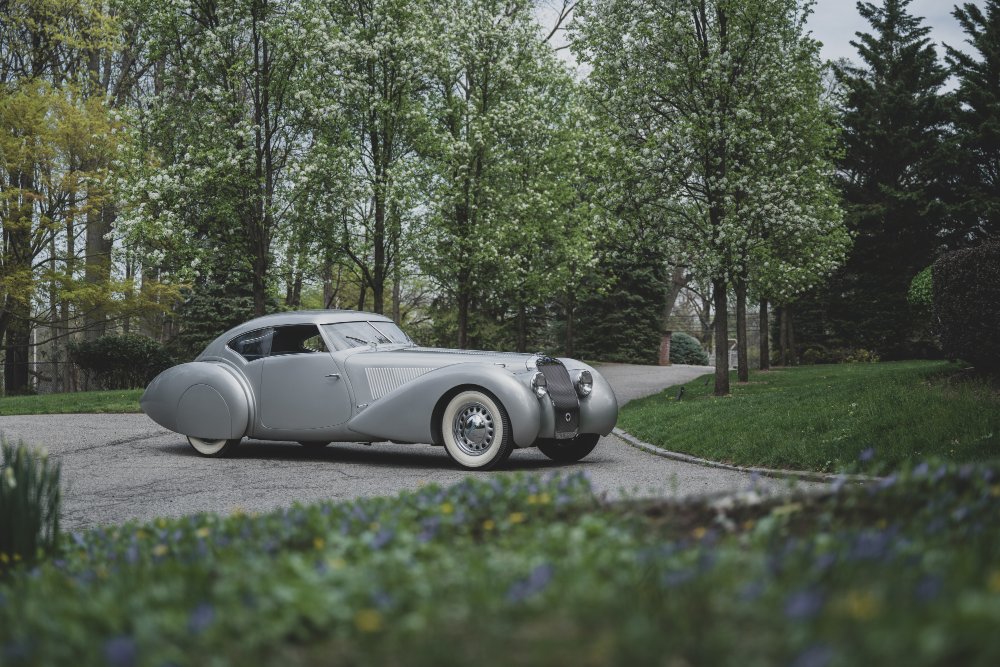
The European picture was more divided at the Monterey 2026 auctions. RM’s 1937 Delage D8-120 S Aerodynamic Coupé by Pourtout sold for $5.78m against a $5m-$6m estimate (pictured above). It had been Louis Delage’s personal car, was the prototype D8-120 S and won Pebble Beach Best of Show in 2005. A 1937 Bugatti Type 57SC Atalante also sold within estimate at $4.955m against $4.5m-$6m. By contrast, RM’s 1937 Delahaye 145 Cabriolet by Franay sold for $3.415m against a $4.5m-$6m estimate. Its credentials included V12 competition origins, probable Prix du Million significance, a Pebble Beach class win and Best of Show at The Quail in 2024. Even with that history, the result finished well below the low estimate.
Competition provenance was similarly inconsistent. Gooding’s 1931 Stevens-Miller Bowes Seal Fast Special, winner of the 1931 Indianapolis 500, sold for $1.6m against a $2m-$3m estimate. In contrast, its 1929 Alfa Romeo 6C 1500 Super Sport Testa Fissa, which won the Brooklands Double Twelve and finished second in the RAC Tourist Trophy, made $1.16m against $1m-$1.5m. A 1932 Alfa Romeo 8C 2300 Lungo Spider reached $3.305m against $2.5m-$3.5m.
There was resistance even at the historically significant end of the market. RM’s 1904 Mercedes Simplex 40 HP sold for $4m against a $5m-$6m estimate, despite its age, originality and long-term museum ownership. Further down the scale at the Monterey 2026 auctions, Bonhams’ 1934 Packard Twelve Individual Custom Convertible Sedan made $456,000 against $450,000-$550,000
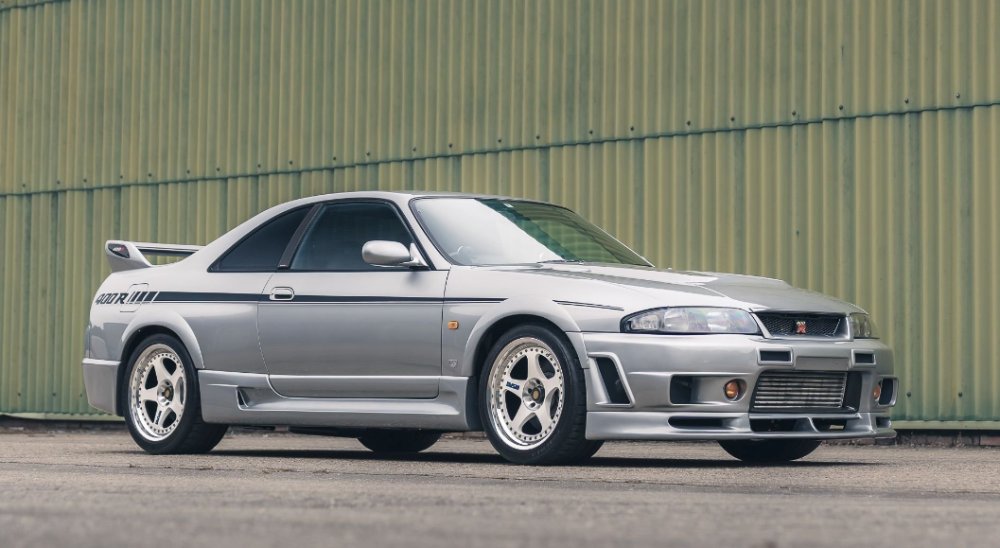
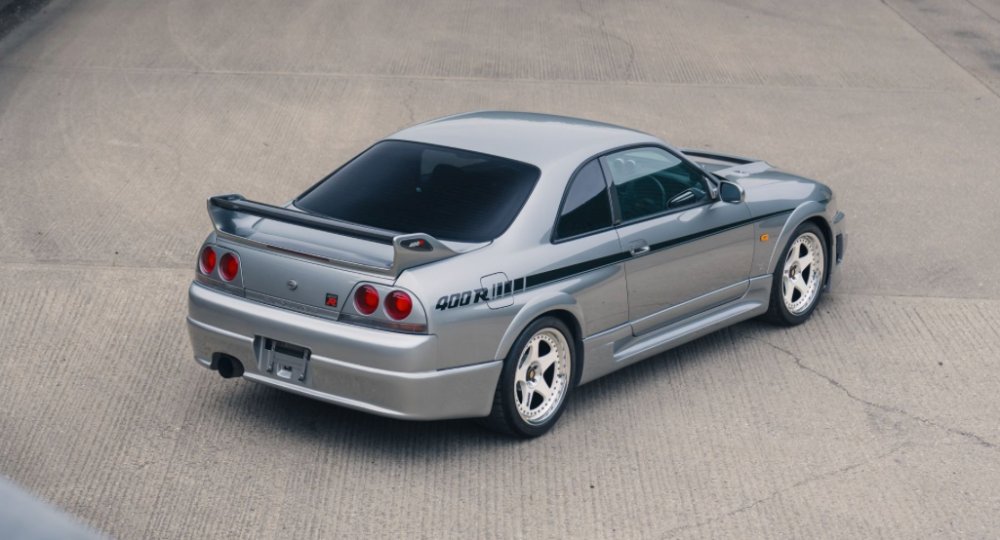
But what of more modern trends? JDM was strong, but extremely selective. Broad Arrow’s 1996 Nissan NISMO 400R (pictured above) made $857,500 against an $800,000-$950,000 estimate, while the extraordinarily rare US-market 1994 Toyota TRD 3000GT reached $582,500 against $500,000-$800,000. By contrast, Mecum’s modified 2000 R34 Skyline GT-R V-Spec failed to sell at $180,000, having carried a $215,000-$355,000 estimate.
Pre-merger AMG was much less convincing. Broad Arrow’s 1989 Mercedes-Benz 300 CE-24 AMG Wide-Body sold for $168,000 against $175,000-$200,000, while Bonhams’ 1995 E60 AMG Limited brought $313,000 against $325,000-$375,000. Both sold, but both were below low estimate. That follows the pattern we saw at Amelia in 2025, when several heavily hyped pre-merger AMGs also struggled against ambitious estimates. Intriguingly, later AMG did considerably better. The 179-mile SLS AMG Black Series at Mecum sold for $1.815m, establishing a model auction record and, according to Hagerty, beating the previous benchmark by 93 percent.
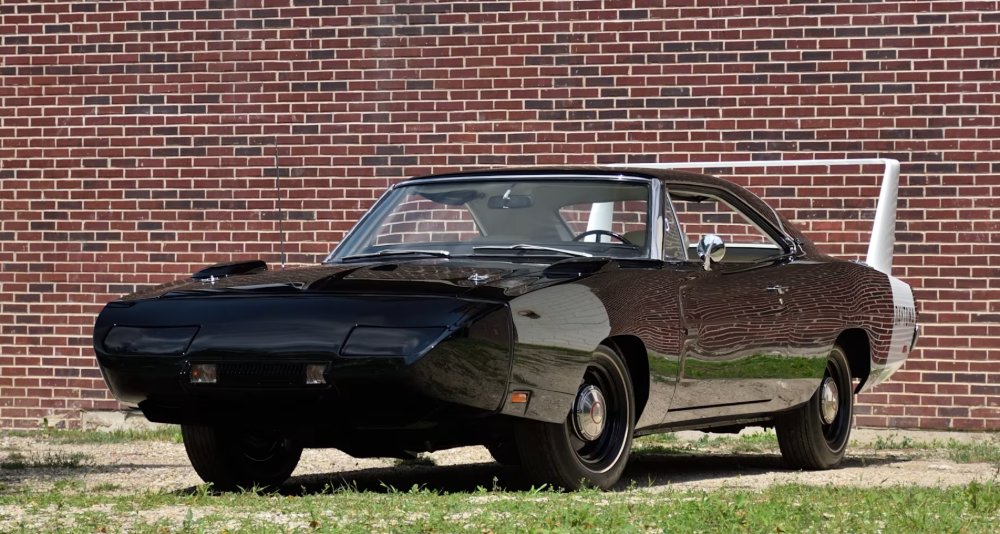
Road-going American muscle produced a markedly different picture from the rapidly rising supercar market at the Monterey 2026 auctions. There was still substantial money available for the best cars, but several ambitious estimates went unmet, even where rarity, specification or historical significance appeared compelling.
Mecum provided most of the evidence. Its 1969 Dodge Hemi Daytona in F6 Spring Green sold for $1.32m. One of only two Hemi Daytonas known in that colour, it demonstrated that the most desirable winged Mopars remain seven-figure cars. However, a black four-speed Hemi Daytona at the same sale attracted a $2.2m bid without selling (pictured above). One of only 22 four-speed Hemi Daytonas built, it showed that even at the top of the sector there was a limit to what bidders would pay. Further down the Daytona hierarchy, a matching-numbers 440-engined example also failed to sell after bidding reached $370,000 against a $500,000-$550,000 estimate. The Hemi ’Cuda market produced clearer signs of price resistance. A 1971 Plymouth Hemi ’Cuda hardtop, one of 59 built with the four-speed gearbox, was estimated at $850,000-$900,000 but stalled at $550,000. A 1970 Hemi ’Cuda finished in In Violet, with period NHRA Super Stock history, reached only $250,000 against expectations of $340,000-$360,000 and also remained unsold.
Ford fared rather better at the Monterey 2026 auctions. A restored, matching-numbers 1969 Mustang Boss 429 sold for $506,000 against a $450,000-$500,000 estimate. Shelby Mustangs were more restrained. A four-speed 1967 GT500 restored by Dennis Collins sold for $324,500 against $350,000-$375,000, while another GT500 brought $308,000 during the same Monterey auction. Chevrolet provided another significant miss; Mecum offered a 1970 Chevelle SS 454 LS6 described as the first LS6 Chevelle built, with an estimate of $370,000-$400,000. Despite the historical significance and 450bhp specification, bidding stopped at $275,000 and the car remained unsold.
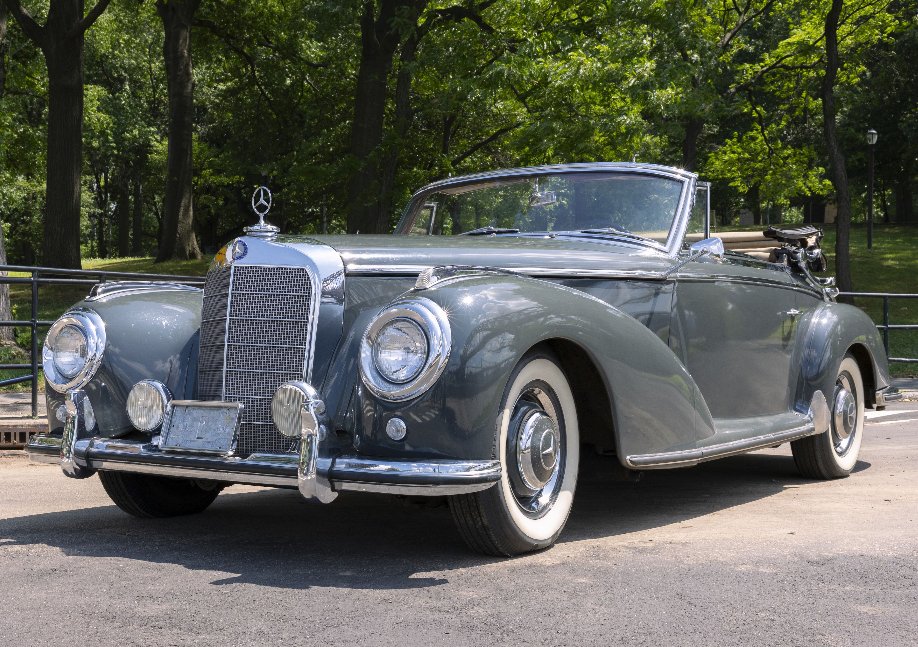
Away from Ferrari, Porsche and American muscle, the Monterey 2026 auctions showed a distinctly selective market for 1950s, 1960s and 1970s road cars. There was substantial money available for the established icons, particularly the Mercedes-Benz 300 SL and Lamborghini Miura, while more conventional Aston Martins, Maseratis, Jaguars and even lesser Mercedes-Benz models received a much cooler reception.
The 1950s market demonstrated that division particularly clearly. Gooding Christie’s 1955 Mercedes-Benz 300 SL Gullwing sold for $2.975m against a $2.5m-$3m estimate. This was an unusually desirable example, equipped from new with an NSL-series engine, sports suspension and Rudge knock-off wheels, and restored in its original German Racing Silver. It effectively reached its upper estimate, even before allowing for premium. Gooding’s highly original 1958 300 SL Roadster also performed strongly, making $1.435m against $1.2m-$1.4m. It retained its matching-numbers engine and gearbox, original colour scheme and a particularly rare factory leather tonneau cover. Broad Arrow’s 1957 Roadster went further at $2.04m, helped by matching chassis, engine and body numbers and 41 years of single-family ownership.
Yet that strength did not extend across 1950s Mercedes-Benz models generally at the Monterey 2026 auctions. Bonhams’ 1953 300 S Coupé (pictured above) sold for $201,600 against a $225,000-$325,000 estimate. Jaguar was similarly restrained: a 1951 XK120 Roadster made $44,800 against $50,000-$70,000, while a 1957 XK140 Drophead Coupé reached $67,200 against $50,000-$60,000. A 1958 Lancia Aurelia B20S GT brought $134,400 against $130,000-$160,000 (all Bonhams).
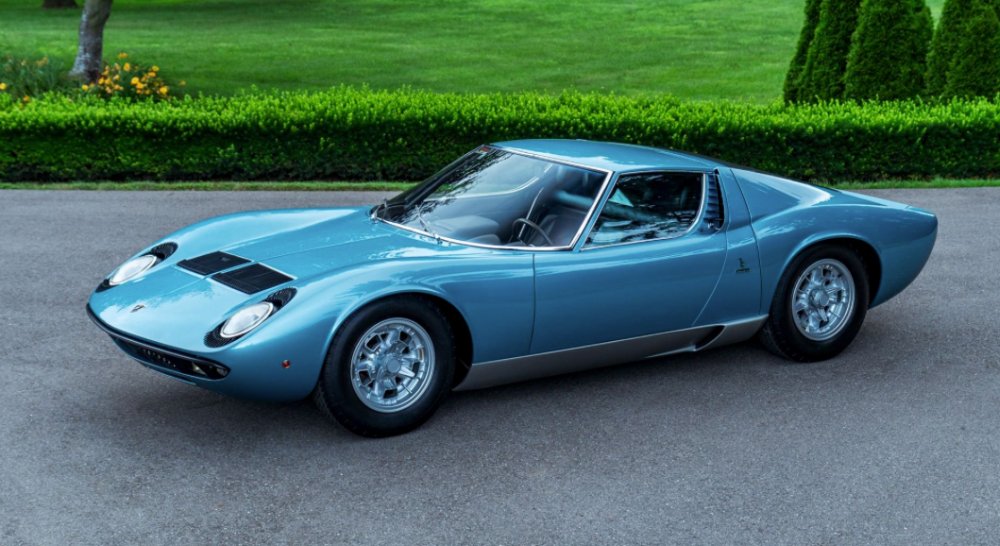
The 1960s picture was dominated by the Lamborghini Miura. Broad Arrow’s 1968 P400 S (pictured above) sold for $4.075m, comfortably exceeding its $3.6m upper estimate, while RM Sotheby’s third production Miura, a 1967 P400, reached $3.03m against $1.9m-$2.8m. Two strong results at different auction houses suggest that demand for the model itself, rather than one exceptional car, remains substantial. But Lamborghini’s earlier front-engined cars were not carried upwards with it. Gooding’s 1965 350 GT sold for $535,000 despite a $650,000-$750,000 estimate.
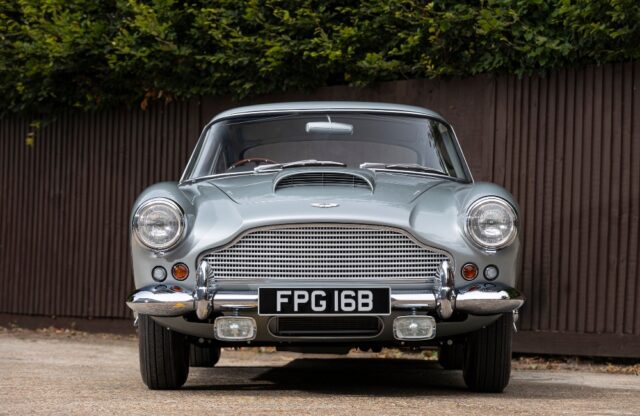
Aston Martin was similarly car-specific at the Monterey 2026 auctions. RM’s 1960 DB4 Series I made $467,000, while Bonhams’ 1961 DB4 Series III sold for $190,400 against $225,000-$275,000. Conversely, RM’s 1967 DB6 Volante reached $621,000 against $450,000-$550,000. The latter had extensive specialist work and a desirable open body, demonstrating how specification and usability could still produce a premium even when the broader Aston market appeared restrained. As for Maserati, Bonhams’ 1968 Ghibli 4.7 Coupé, formerly owned by Hugh Hefner and Barbi Benton, made $190,400, while RM’s comprehensively restored, matching-numbers 1973 Bora 4.9 sold for only $156,800 against $200,000-$250,000.
If one aspect of the Monterey 2026 auctions appeared to have genuine momentum, it was machinery built during the past 15 years. Modern hypercars attracted some of the week’s largest premiums over estimate, while the best restomods demonstrated that collectors increasingly regard them as distinct high-value cars rather than modified versions of old ones. However, neither sector was indiscriminate: rarity, specification and the name responsible for the build remained crucial.
The clearest example was RM Sotheby’s 2023 Ferrari Daytona SP3. Estimated at $10m-$12m, it sold for $17.825m. The 227-mile car had been configured through Ferrari’s Atelier programme in Giallo Triplo Strato, but its result represented substantially more than specification alone: the previous non-charity auction record for an SP3 had been little more than $7m. Bugatti provided equally useful evidence. Broad Arrow’s 2025 W16 Mistral sold for $8.805m, despite an original price of around $5.3m. Hours later, another Mistral at RM made $8.31m against $7.5m-$9.5m. Meanwhile Bonhams’ 2024 Chiron Super Sport brought $4.57m against $4.3m-$4.8m and RM’s 1281-mile 2019 Chiron Sport reached $3.67m.
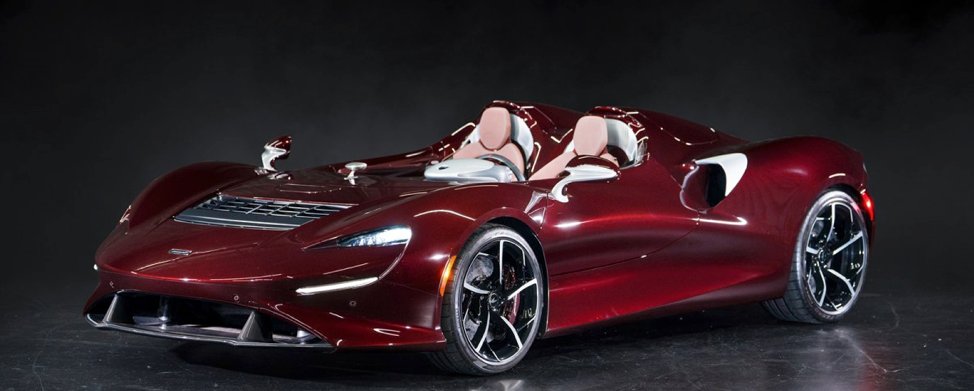
The most extreme specifications did particularly well at the Monterey 2026 auctions. RM’s one-off 2024 Pagani Huayra Roadster ‘Executor’, one of the tiny number of Huayras equipped with a gated manual transmission, made $8.035m against $5m-$7m. Its 2024 Aston Martin Valkyrie Spider, showing just 85 miles, sold for $4.735m against $3.75m-$4.25m. The McLaren P1 GT by Lanzante, one of four produced, was more restrained at $3.195m against $3m-$3.5m. Not every limited-production modern car was transformed into an investment phenomenon. Gooding Christie’s 2021 McLaren Elva (pictured above) sold for $1.325m against $1m-$1.5m. That was a perfectly respectable result, but illustrates the distinction between scarcity and collector demand: simply having been produced in small numbers was not enough to generate an estimate-beating sale.
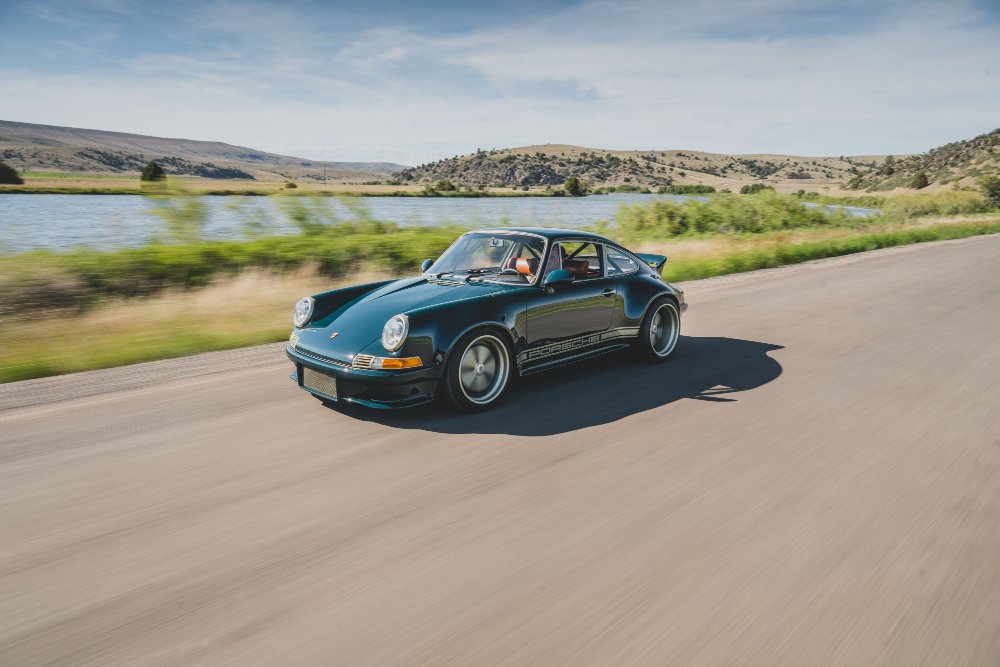
The restomod market was similarly hierarchical. RM’s 1992 Porsche 911 Reimagined by Singer Classic Turbo Services, the Paradise Found Commission, made $1.985m against $1.8m-$2.2m. Its 503bhp twin-turbo engine and sub-230-mile odometer placed it towards the upper end of Singer’s increasingly broad spectrum of builds. Perhaps more revealing was RM’s Thornley Kelham European RS. One of only 15 customer cars, with a 425bhp 4.0-litre engine and nearly 6000 hours invested in its construction, it sold for $802,500 against $450,000-$650,000. Mecum added two further reference points. Its Gunther Werks 993 Speedster sold for $1.21m, while a Singer Targa made $1.1m. Yet Broad Arrow’s older Singer ‘Los Angeles Commission’, estimated at $1.1m-$1.3m, failed to sell and was subsequently advertised at $1.15m.
Bonhams
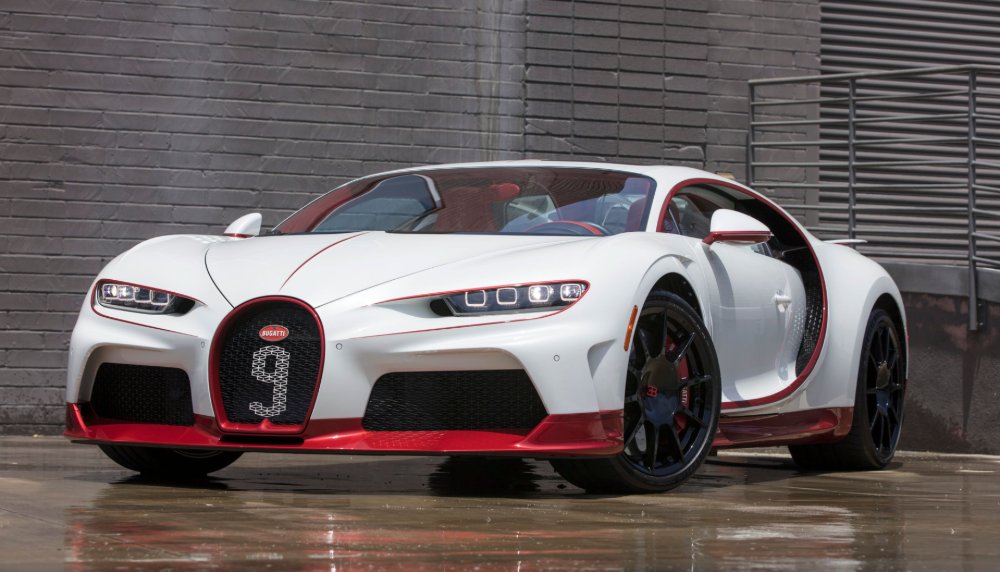
Bonhams moved to Laguna Seca for its inaugural Monterey Motorsports Reunion sale, which took place on August 13, 2026. The sale wasn’t a great success, not helped by the auction taking place so far away from the week’s other attractions. “Away from the flow of spectators, hampered by the noise from the track, Bonhams struggled to pull in collectors,” David Lillywhite says. “Several no-reserve sales of bikes and then cars led to some selling for half of their estimates.”
Bonhams’ top result was this 2024 Bugatti Chiron Super Sport, configured through Bugatti’s Sur Mesure personalisation programme. It was finished predominantly in Glacier white with Rouge Étoilé detailing. The interior combined Italian Red and Blanc leather. The original owner specified more than $450,000 of options. These included magnesium wheels, comfort seats and Bugatti’s Sky View glass roof panels. By the time the car was offered by Bonhams at the Monterey 2026 auctions it had covered fewer than approximately 1325 miles. Bonhams estimated the car at $4.3m-$4.8m, and it sold for $4,570,000.
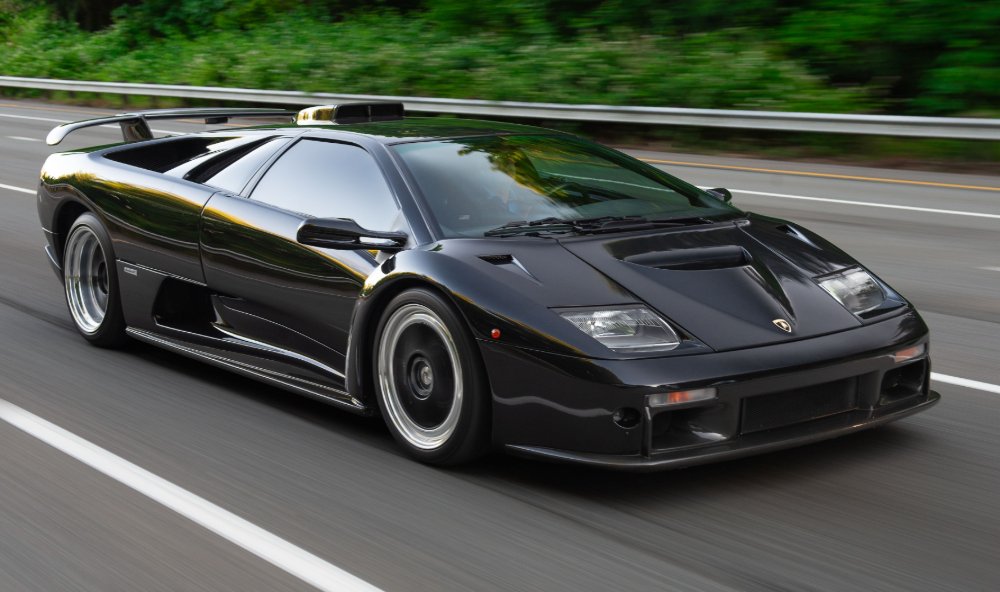
Bonhams’ Lamborghini Diablo GT was chassis ZA9DE21A0YLA12561, number 74 of the 80 cars produced. It was originally finished in Black Rage with a black interior and remained in that factory specification at the time of the Laguna Seca sale.
The car was driven regularly following its original delivery rather than immediately being stored. It subsequently entered a long-term ownership beginning in 2007 and remained with that custodian for approximately 19 years. The clutch was replaced at 12,225km and the Diablo was serviced by a marque specialist. By Monterey 2026 its odometer showed 14,208km, and the car was accompanied by its original leather bag, tools, key and remote together with service documentation. Later practical additions included a reversing camera and racing harnesses. Offered with an estimate of $2.1m-$2.6m, it sold for $2.425m – a public-auction record for a Diablo GT.
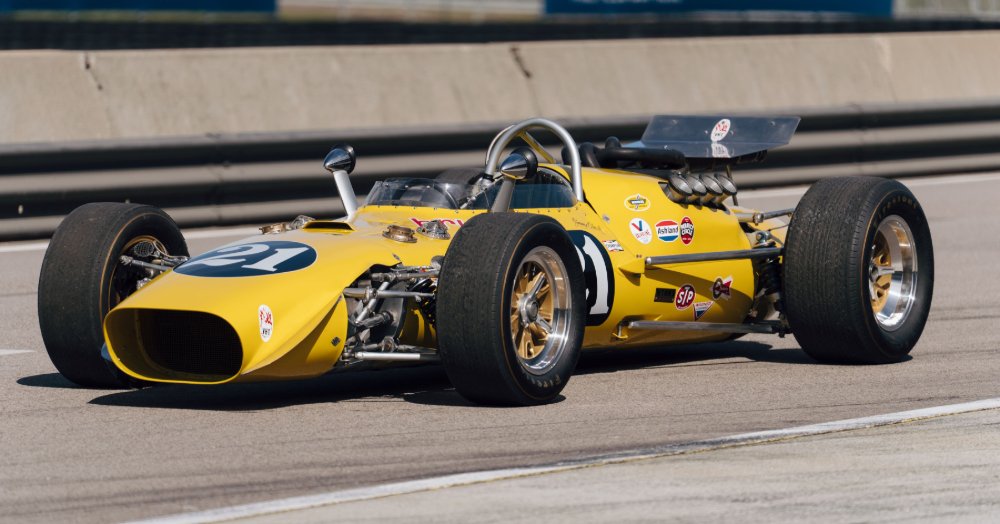
The Vollstedt-Ford 67B offered by Bonhams at the Monterey 2026 auctions was a genuine period USAC single-seater associated directly with Jim Clark. Independent constructor Rolla Vollstedt prepared the rear-engined Ford-powered car for Clark during 1967, two years after the Scot had won the Indianapolis 500 for Lotus. It sold for $698,000.
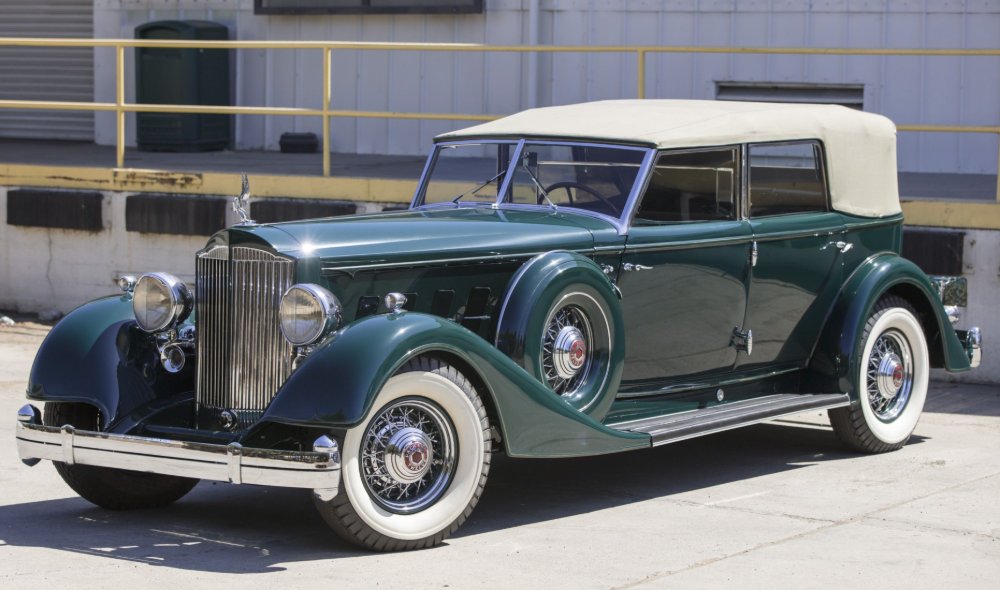
This Packard Twelve was vehicle number 1108-45 and carried Individual Custom Convertible Sedan coachwork by Dietrich on the long-wheelbase Model 1108 chassis. It’s one of 12 Convertible Sedans of this type known to still exist, and prior to its 2023 sale via Gooding & Co it had spent 60 years in the same collection, and had been extensively restored between 1977 and 1982. This year its sale price was $456,000 – $5500 more than last time.
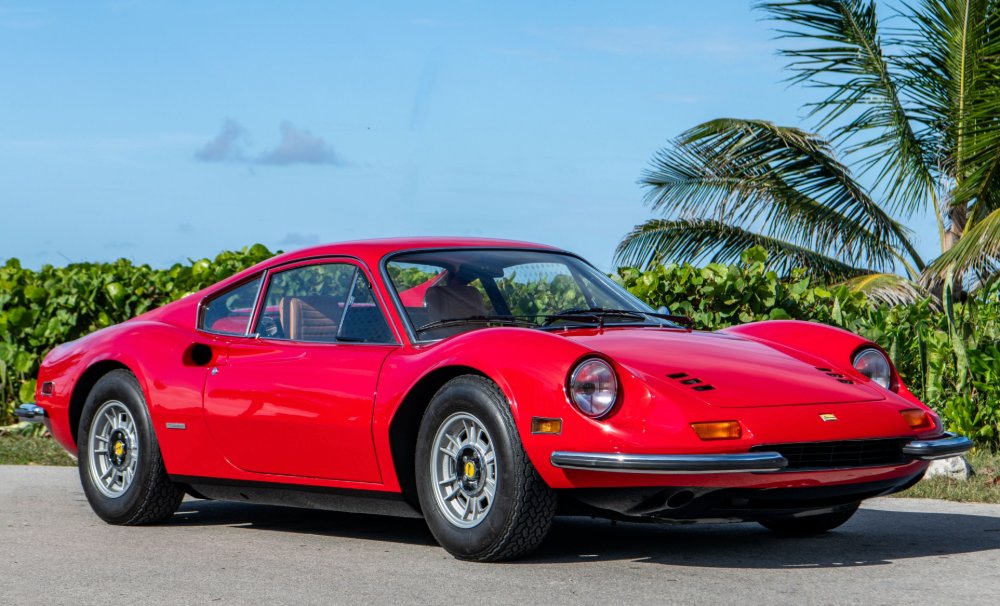
Rounding out the top five at the Monterey 2026 auctions was this Ferrari Dino 246 GT. Chassis 04382 was completed on November 10, 1972. It left the factory in Rosso Chiaro over Pelle Beige and retained engine number 10462 and gearbox 1487 E. The Dino travelled to the US through William F Harrah’s Modern Classic Motors in Reno in December 1972 before passing through Steve Griswold & Co in Berkeley. Its first owner was Page Roos of San Mateo, California.
Roos retained the car for many years and records place it in his ownership until at least 1989. It remained California registered until 2021, giving chassis 04382 a long and comparatively stable early life in the same state. The Dino subsequently moved to Canada. During 2021 it underwent approximately $80,000 of mechanical work involving technicians experienced with Ferrari Classiche cars. The programme included work to the gearshift mechanism, wiring, radiator, blower motors, thermostat and various gaskets. Exterior chrome, brake calipers and underbody panels were also attended to. Ferrari Classiche certified the car in January 2023, confirming its chassis, engine and transaxle identity. Its recent auction history was also documented. RM Sotheby’s sold chassis 04382 in Miami during 2024 for $313,000. Two years later Bonhams offered it at Laguna Seca with a $400,000-$500,000 estimate. It sold for $417,500.
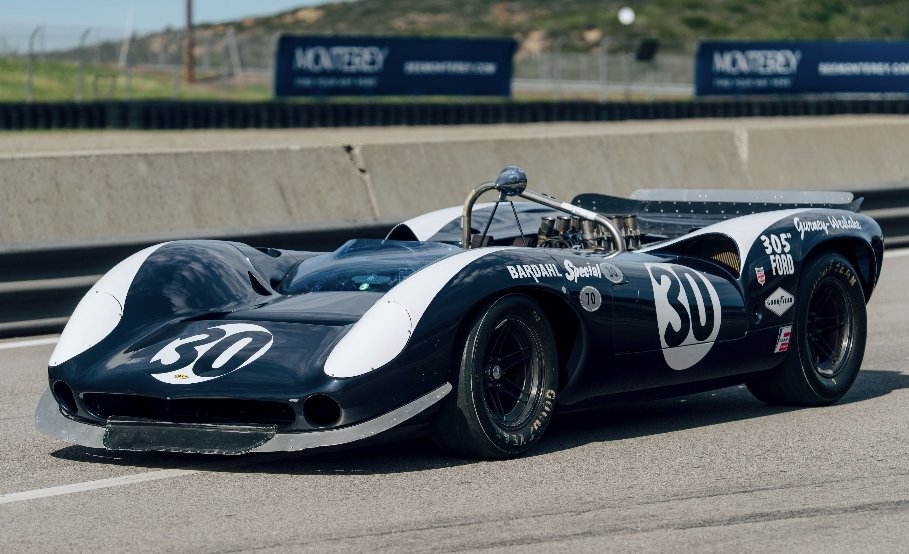
The most notable no-sale was the Lola T70 Mk II offered by Bonhams at the Monterey 2026 auctions. This was the Ford-powered car associated with Dan Gurney and his All American Racers operation during the first Can-Am season in 1966.
Where most T70s became associated with Chevrolet V8 power, this chassis used Ford power as part of Gurney’s programme. That distinction became historically important when Gurney drove the car to victory during the 1966 Can-Am campaign. The result made it the only Ford-engined car to win a round of the original Can-Am championship between 1966 and 1974. It carried a $1.1m-$1.5m estimate, and returned home with its vendor.
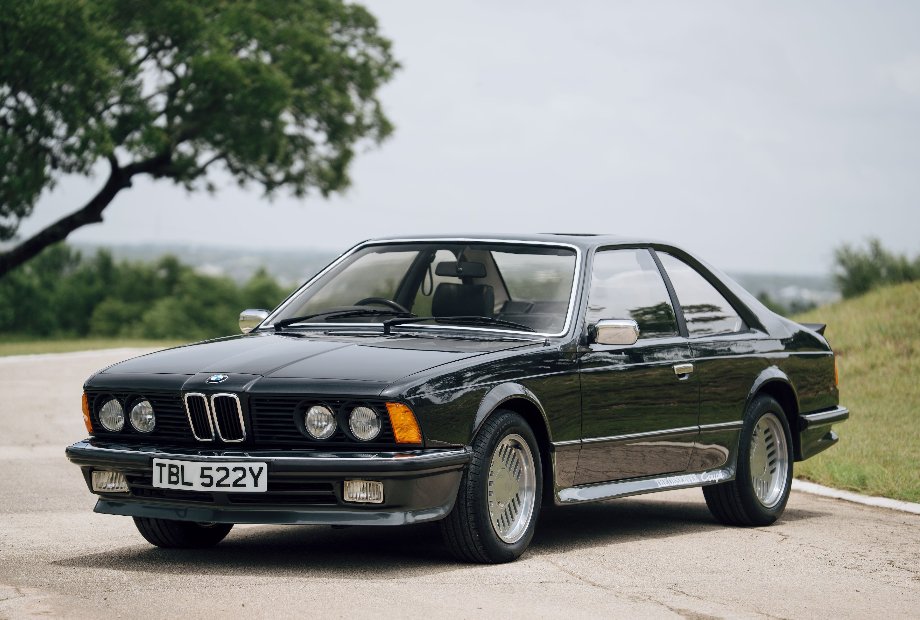
Bonhams’ sale had few above-estimate highlights, and the biggest was one of its least expensive. The BMW above, known as the Observer Coupé, began as an E24 635CSi before Coventry-based MGA Developments transformed it into a one-off design project during 1982.
British newspaper The Observer provided financial backing for the programme, which investigated how the BMW could be converted into a more open luxury coupé without adopting a conventional fabric convertible roof. MGA created a system of large retracting glass roof panels while the rear glazing moved into an extended rear body section. An integral roll-over structure remained in place when the roof was open. Triplex Safety Glass and existing production sunroof technology contributed to the mechanism. Within MGA the project was identified as Special Project M3, a designation that predated and was unrelated to BMW’s later M3 production car. The conversion was reportedly completed in a matter of months and the finished Observer Coupé appeared publicly at the 1982 British International Motor Show.
It was refurbished during 2017 and by its 2026 Bonhams appearance had covered 19,315 miles. Bonhams estimated it at $18,000-$24,000. It sold for $28,000 including buyer’s premium, 16.7 percent above the upper estimate.
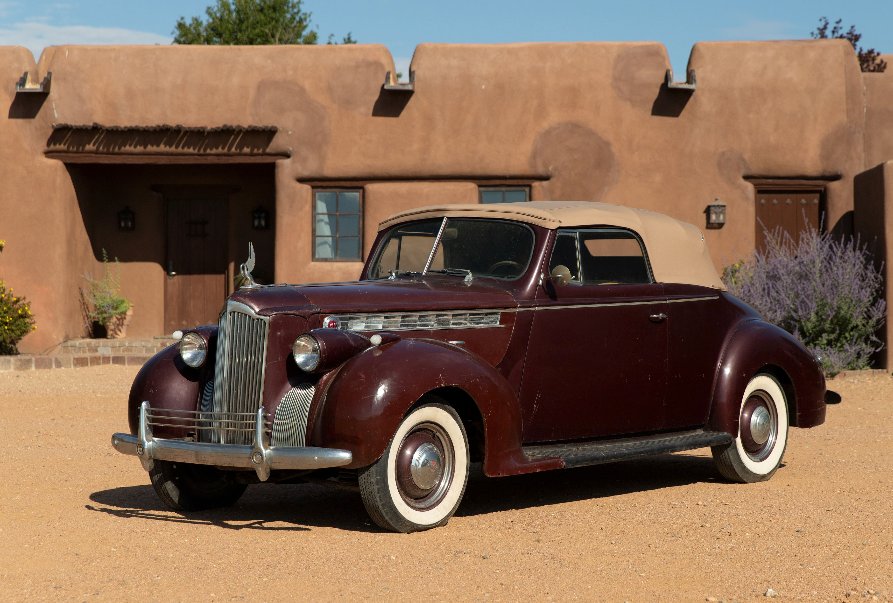
The biggest below-estimate result at the Monterey 2026 auctions was the 1940 Packard One-Ten Convertible Coupe. Acquired by its seller approximately a decade before the Laguna Seca sale, it had received limited restorative work, but it had not undergone the kind of recent ground-up restoration associated with the most highly presented pre-war cars at Monterey. It was instead catalogued as an older, usable collector automobile. Bonhams estimated the car at $35,000-$45,000, but it sold for only $13,440 including buyer’s premium – a 61.6 percent shortfall.
Broad Arrow
Broad Arrow hit an 85 percent sell-through rate at the the Monterey 2026 auctions. David Lillywhite was there for the auction: “Broad Arrow’s new set-up at Quail was really impressive – everyone was talking about it. It was the best of all of them, with its new temporary structure with excellent air-con and all cars really thoughtfully laid out. It was one hell of a statement, and the auctioneer was very good,” he says.
However, it wasn’t all good news… “The Quail location is still a problem. Traffic (because of Quail) is terrible on the Friday and very few people leave the venue to visit the auction because it’s a shuttle ride away – plus they’ve paid over $1500 each to be at Quail, it’s a good show and there’s lots to see. First day of the sale, the day before Quail, was much easier. Much better set-up, layout, curation and lots than Bonhams has had in recent years, though.”
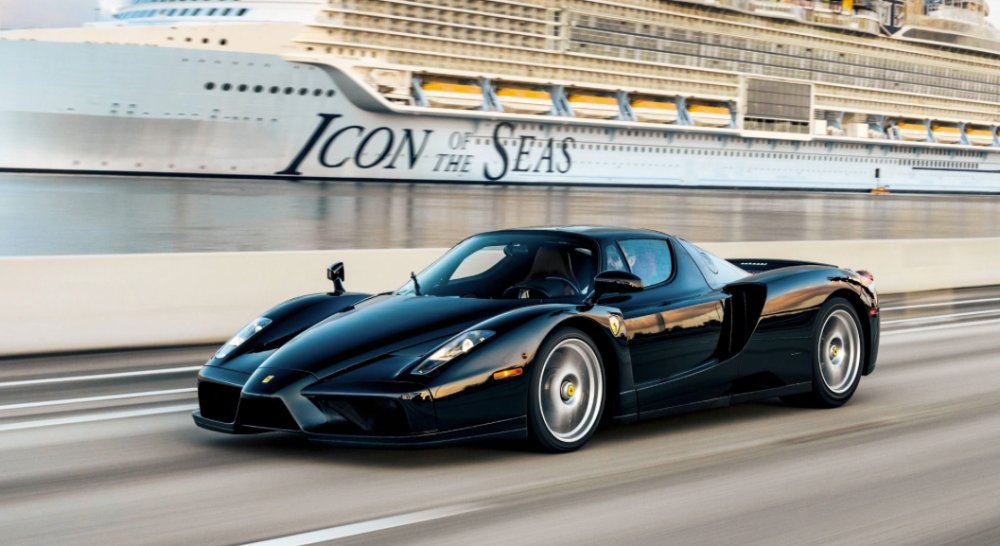
Broad Arrow’s leading result at the Monterey 2026 auctions was the above Ferrari Enzo. US-market chassis ZFFCW56A130132652 had remained within the same family from its original delivery. Its factory colour combination was highly unusual. The body was finished in Nero DS and Broad Arrow stated that only around a dozen black Enzos had been delivered to the US. Of those, this was understood to be one of only three paired with a Rosso leather interior. Unlike many Enzos that subsequently became low-mileage collection pieces, this car was used regularly. By Monterey 2026 it had covered approximately 13,200 miles. Before the Broad Arrow sale it also underwent Ferrari Classiche certification. Broad Arrow offered the Enzo without reserve with an estimate of $9m-$11m; it sold for $10.675m.
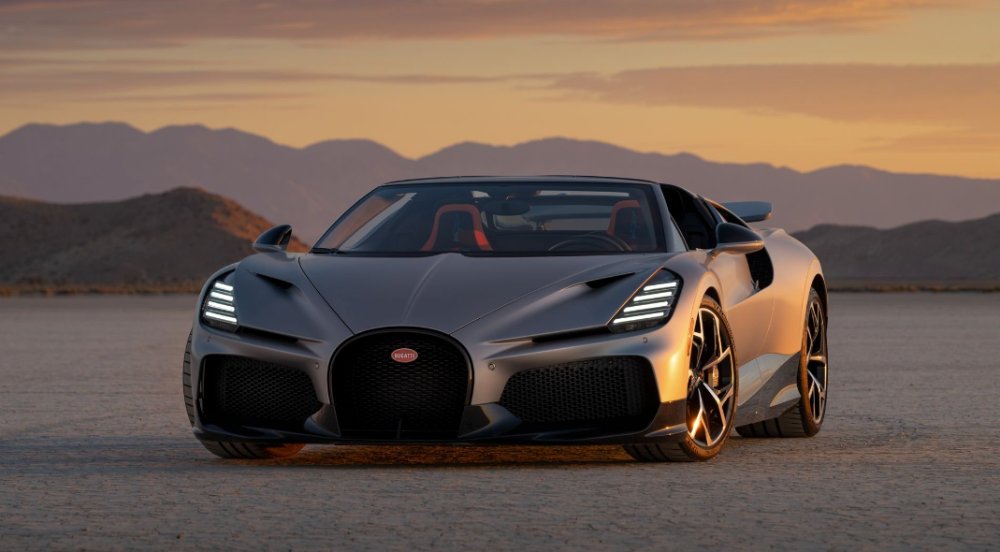
This Bugatti W16 Mistral had been commissioned by its original owner with an unusually extensive bespoke specification before being delivered in 2025. The body combined Matt Argent paint with exposed Black Carbon, while the cabin used Beluga Black and Tangerine. Broad Arrow stated that almost $650,000 had been spent on personalised options and bespoke details alone. Broad Arrow offered the car at $8m-$10m and sold it for $8.805m.
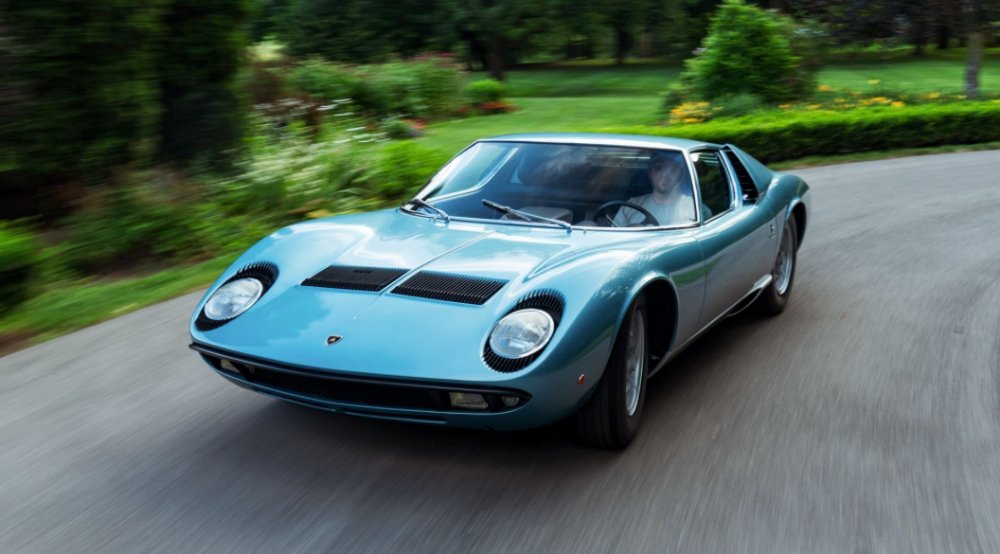
Broad Arrow’s 1968 Lamborghini Miura P400 S came from the Apex Collection and was distinguished primarily by the extent to which its original identity had survived. The car retained its matching-numbers V12 and was catalogued with approximately 4870 miles. Broad Arrow estimated the Lamborghini at $3.2m-$3.6m, and it sold for $4.075m.
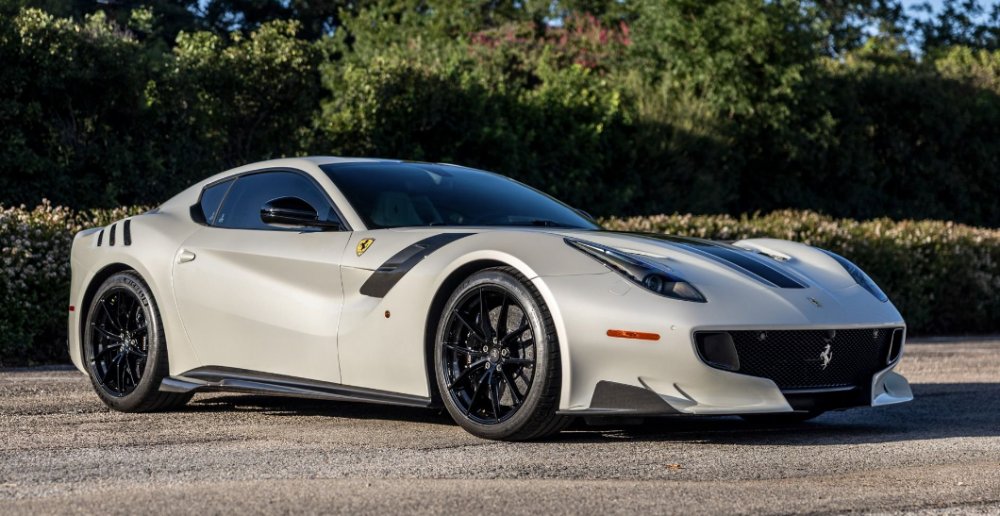
Broad Arrow’s F12tdf was finished in Bianco Italia, an extremely rare colour option, paired with a Nero interior. Extensive carbonfibre equipment and additional factory options further individualised the car when it was originally ordered. Broad Arrow estimated it at $3.3m-$3.8m, and it sold for $3,657,500.
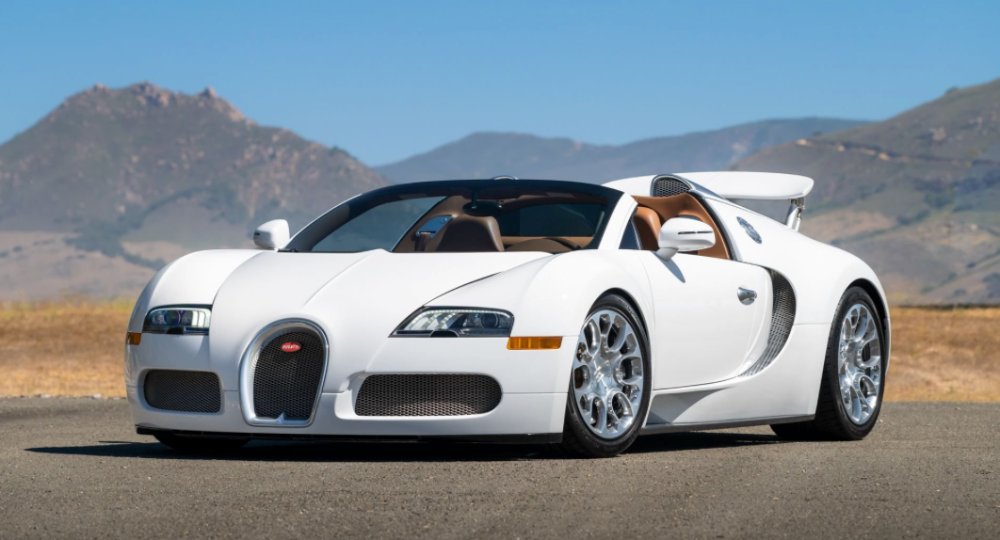
This Bugatti Veyron Grand Sport was a 2011 example finished in white and had covered 8595 miles. Estimated at $3.25m-$3.75m, it sold for $3.305m.
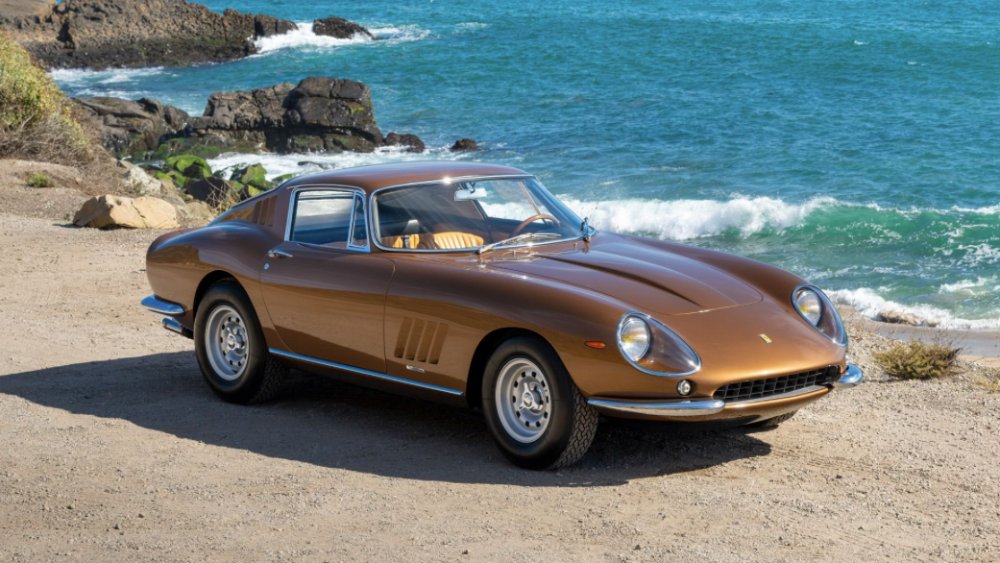
The most notable no sale at Broad Arrow’s Monterey 2026 auctions was this 1966 Ferrari 275 GTB Alloy. Formerly part of the Don Orosco Collection, it had lived in California since the early 1990s and had been Classiche Red Book certified. Yet that, and the fact it’s one of ten 275 GTB/4s finished in Nocciola Metallizzato, didn’t help it find a buyer. It was estimated at $2.7m-$3m.
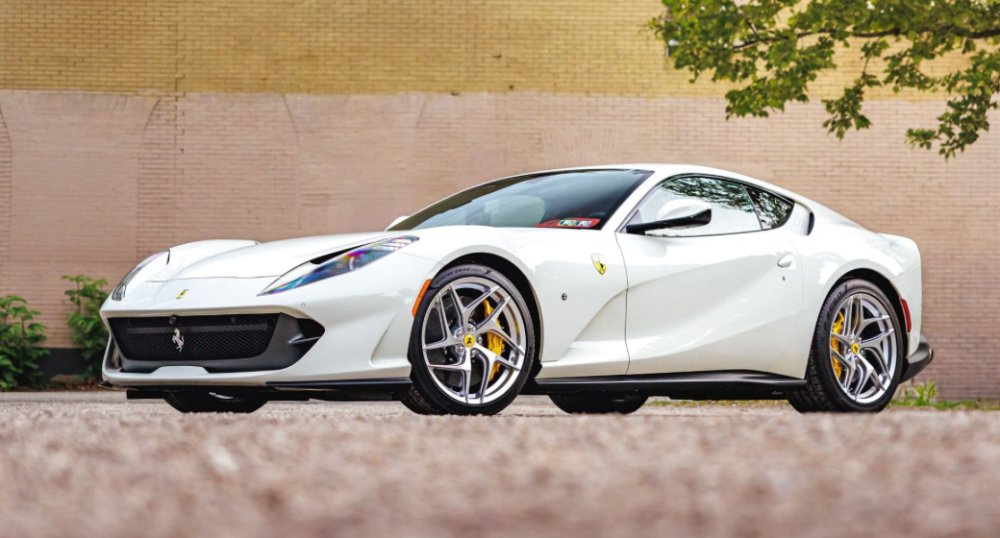
There must have something in the air for white front-engined Ferrari V12s of the modern era. This 2019 Ferrari 812 Superfast came from the Casa Bella Macchina Collection and had remained with its original owner since new. It was ordered in Bianco Avus with a Rosso Ferrari leather interior and Daytona-style seats. Its first owner also selected a substantial list of factory options. Estimated at $350k-$400k, the final result was $747,500 – 86.9 more than top estimate.
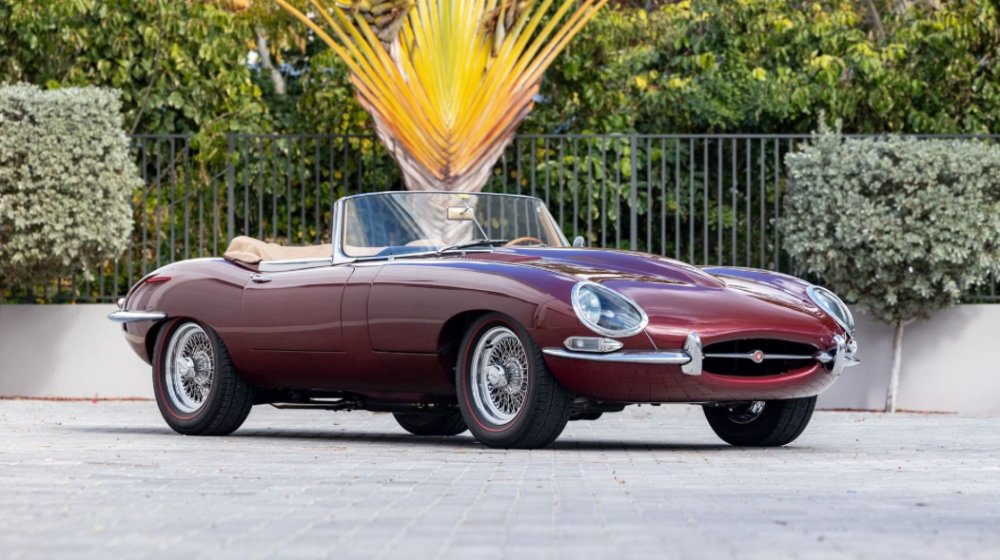
This 1963 Jaguar E-type Series 1 3.8 Roadster had undergone restoration before its appearance with Broad Arrow and was presented as a finished, usable example rather than an untouched survivor. Approximately 5000 miles had been covered since restoration, and Broad Arrow suggested a $195,000-$225,000 estimate and no reserve. It sold for 28 percent below estimate at $140,000.
Gooding Christie’s
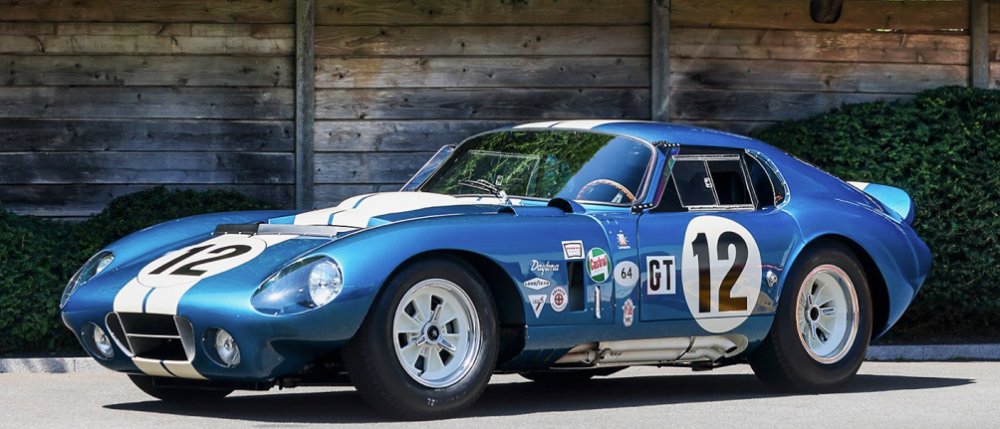
Gooding Christie’s majored on 1960s racing cars at the Monterey 2026 auctions and it paid off handsomely, especially at the top end. David Lillywhite was there: “Gooding’s sales were strong but less vibrant. Lots of great cars and obviously the top sale of the week with the Shelby Daytona,” he says. “Charlie Ross is the best auctioneer out there – very funny, refusing to take 1/2-million bids on the Daytona, insisting it went up in millions.”
And so to that Shelby Daytona, Gooding Christie’s leading result. Estimated at in excess of $25m, CSX2300 was the third of the six original Shelby Cobra Daytona Coupes constructed. Its aluminium body was one of five fabricated by Carrozzeria Gransport in Italy from Peter Brock’s design. Its competition career began during 1964 when Bob Bondurant and Jochen Neerpasch drove it on the Tour de France Automobile. Mechanical trouble prevented a finish, but CSX2300 became more prominent during Shelby American’s successful 1965 world championship campaign. At Daytona it finished sixth overall and third in class. It followed that with third in class at Sebring, 12th overall and third in class at the Nürburgring 1000km, and ninth overall and second in class at Reims, while operating within the Shelby and Alan Mann programmes.
After Shelby’s principal international campaign ended, CSX2300 travelled to Japan. Tadashi Sakai acquired it in 1966 and it continued racing there, including at Fuji and Suzuka. Subsequent Japanese owners included Kazuo Myouchin, Shinichi Yoshikawa, Kawanabe and Kenji Murakami. The car returned to the United States and Carroll Shelby acquired it in 1975. He retained CSX2300 until 1998, making it the only Daytona Coupe owned for an extended period by the man whose company created it. Mike McCluskey restored it to 1965 competition specification. Later owners included Jim Spiro and Larry Bowman before the consignor acquired the car in 2005. Still active at major historic events, including Goodwood in 2026, CSX2300 sold for $42.905m, setting records for a Shelby and an American-built car.
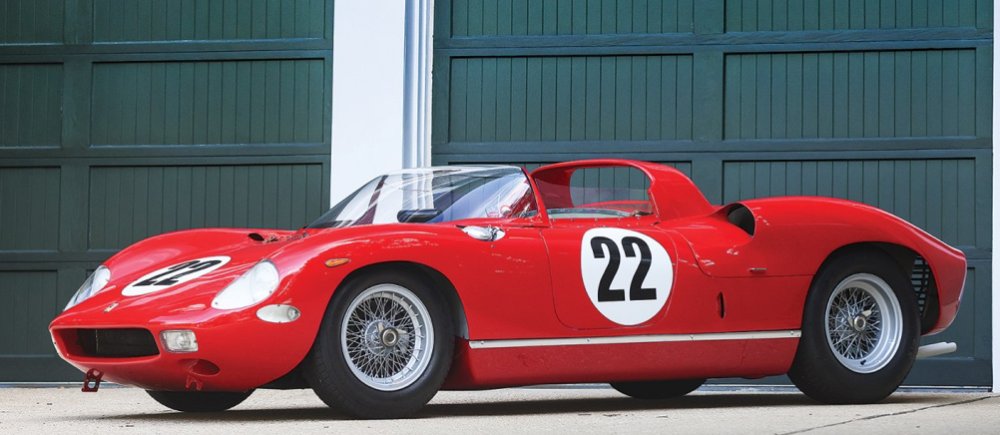
Ferrari chassis 0810 was completed as one of the new mid-engined 250 P sports prototypes and appeared publicly when Ferrari unveiled its 1963 competition machinery at Monza on March 4 that year. It immediately entered frontline Scuderia Ferrari service. At Sebring, Willy Mairesse, Lorenzo Bandini and Nino Vaccarella drove 0810 to second overall. Its Targa Florio and Nürburgring 1000km appearances ended in retirement, but at Le Mans Mike Parkes and Umberto Maglioli brought it home third overall.
Ferrari subsequently sold the car into Luigi Chinetti’s North American Racing Team. Pedro Rodríguez drove it to second at the Bridgehampton Double 500 and then won the Canadian Grand Prix at Mosport. At Nassau it finished second overall and first in class in the Governor’s Trophy and again second in the Nassau Trophy. The car was progressively updated, first towards 275 P specification and later 330 P configuration. It returned to major events including Sebring and Le Mans during 1964 before William McKelvy’s Scuderia Bear acquired it. Gordon Tatum later painted the Ferrari dark blue to match his 250 GTO and continued racing it through the later 1960s.
Subsequent collectors included Carl Bross, Kirk White, Ken Starbird, Don Fong and Greg Garrison. The consignor acquired 0810 in 1988 and kept it for nearly four decades. Gooding Christie’s offered it at $15m-$20m, and sold it for $18.705m.
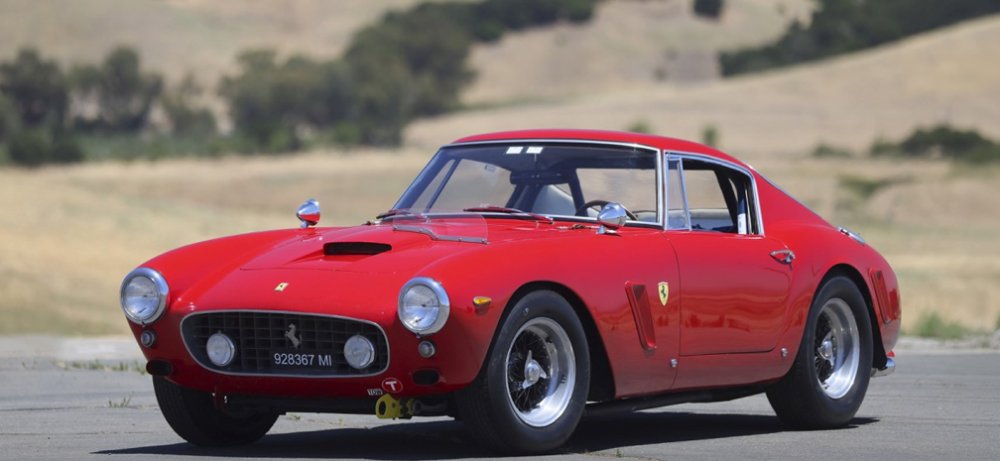
Chassis 2701 GT was completed in April 1961 as one of the lightweight competition 250 GT SWBs commonly referred to as Comp/61 or ‘SEFAC Hot Rod’ cars. Ferrari initially retained it rather than immediately delivering it to a private customer. Its first important appearance came at the 1961 Le Mans Test weekend. Mike Parkes, Fernand Tavano and Jo Schlesser all drove 2701 GT, which recorded the fastest GT-class time. Schlesser subsequently crashed the car and Ferrari rebuilt it before it entered private ownership.
Carlo and Massimo Leto di Priolo became its early private custodians. By 1964 it belonged to Hans Günter Perle-Lex and in 1967 Egon Hofer campaigned it in European events, scoring class victories at Weerberg and Gaisberg. Hofer and Anatoly Arutunoff then entered 2701 GT in the Targa Florio. After that event its original engine was separated from the chassis and eventually passed to American Ferrari specialist Tom Meade. The car itself travelled to the United States with Arutunoff and at one stage was fitted with an American V8. Brian Brunkhorst acquired 2701 GT in 1981 and commissioned Wayne Obry and Rick Bunkfeldt to restore it. The work was completed in 1983 using period Ferrari 250 GTE engine 4039. Later owners included Michael Leventhal and Ned Spieker, and the Ferrari became a regular at the Tour Auto, Goodwood Revival, Le Mans Classic and Monterey Historics. Offered as a non-matching-numbers car at $8m-$10m, it sold for $8.09m.
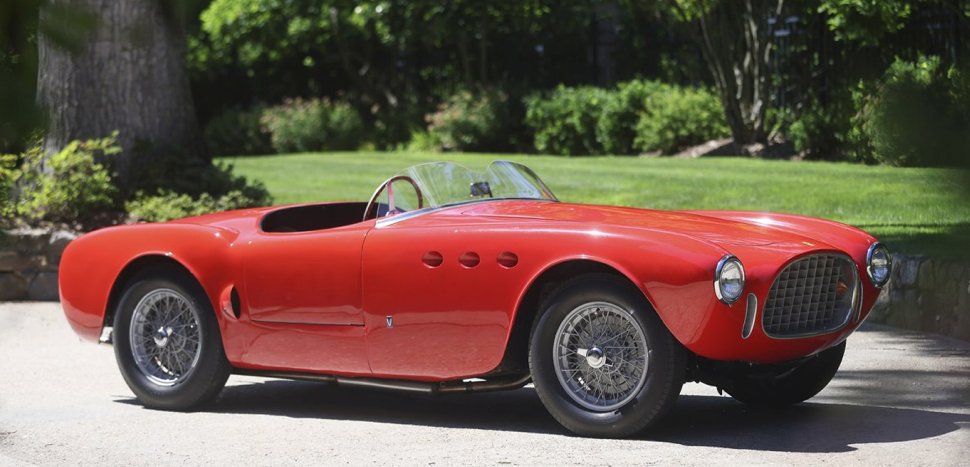
Ferrari 225 Sport chassis 0194 ET was one of six open cars constructed around Ferrari’s experimental lightweight Tuboscocca structure and clothed by Vignale to a design by Giovanni Michelotti. Scuderia Ferrari retained the car initially and entered it in the 1952 Mille Miglia for Piero Scotti and Giulio Cantini. Although it failed to finish, 0194 ET continued through a busy first season. It placed 11th overall and fourth in class on the Targa Florio and 15th overall at the Coppa d’Oro delle Dolomiti.
American racer Tom Cole acquired the Ferrari later in 1952. During his ownership it appeared in a distinctive dark-blue and white colour scheme and competed at international events including the Goodwood Nine Hours. Its prominence was reinforced when it appeared on the cover of Motor Sport in September 1952. Cole died in 1953 and the car passed to his son Nigel. Later owners included Dan Margulies, Peter Gibson and John Sturgis before David Shute acquired it in 1972. Peter Sachs bought 0194 ET in 1977 and the consigning family acquired it around 1980. The car continued to appear selectively at historic events, including the Mille Miglia Storica. Estimated at $2m-$3m, it sold for $4.295m.
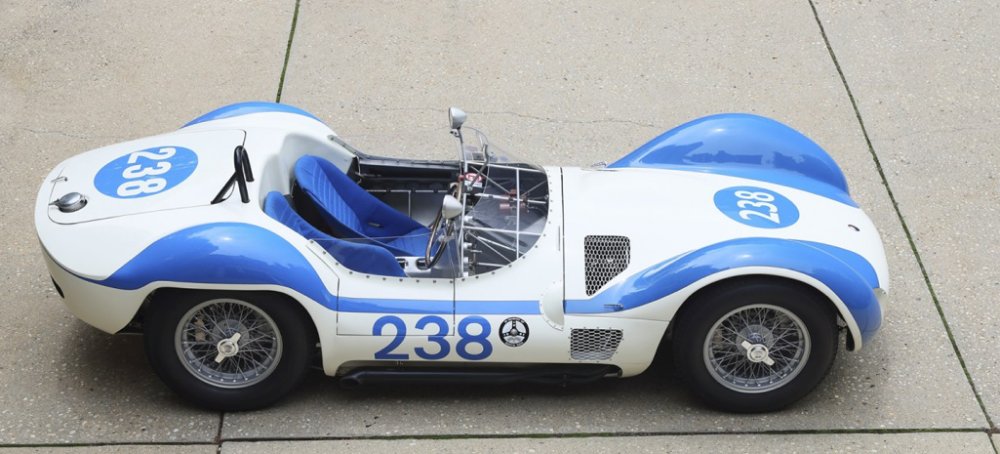
Chassis 2452 was completed on September 10, 1959 as the first production Maserati Tipo 61. American enthusiast Joe Lubin acquired it after meeting Maserati engineer Giulio Alfieri and the car was delivered to Beverly Hills in its original white-and-blue competition colours. Bob Drake gave 2452 its competition debut at Riverside in December 1959 and finished second overall. During 1960 he scored victories at Palm Springs, Willow Springs, Vaca Valley and Santa Barbara. At Riverside he qualified ahead of drivers including Dan Gurney and Carroll Shelby, while at Laguna Seca he finished second overall and first in class.
Stanley Sugarman subsequently owned the car, with Bill Rudd preparing it and Jim Connor adding further victories at Vaca Valley, Santa Barbara and Cotati. Jim Hall also drove 2452, qualifying on the front row behind Stirling Moss at the 1960 Pacific Grand Prix at Laguna Seca and finishing on the podium. Harry Finer acquired it in 1961 and Bill Krause raced it during 1962. The car later crossed the Atlantic, becoming part of Nigel Moores’ collection before passing to Maserati historian Joel Finn. Monterey Historics founder Steve Earle was another later custodian. The consigning collection had owned 2452 since 1998. It continued to appear in historic competition and concours events, including a Best of Show award at Lime Rock’s Sunday in the Park in 2016. It was supplied with a period engine block while using a replica competition engine for historic running. It sold for $4.24m against a $3m-$4m estimate.
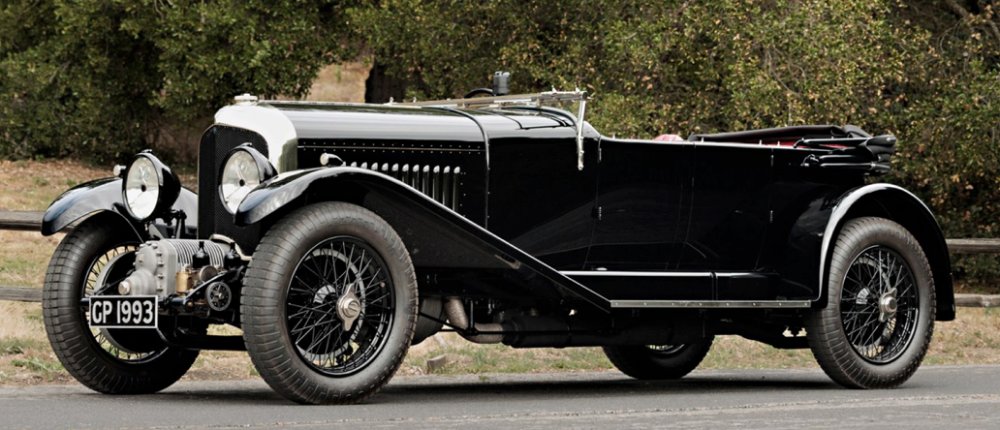
The most notable no-sale was this 1931 Bentley 4½ Litre Supercharged ‘Blower’ Sports Tourer, which retained its Vanden Plas aluminium body, chassis, axles and steering box, and Le Mans-style seating. The currently fitted supercharged engine and gearbox are replacements, although both changes appear in factory records.
MS3927 was delivered new to OD Winterbottom in 1931. FW Ball acquired it in 1938, followed by Captain PG Ashton in 1939. Post-war owners included Michael Crowley-Milling, Sleight and Ben Bowring before Jack Bailey acquired it in 1954. The Bentley continued through a long sequence of enthusiast custodians, including DA Bullock, Vyvyan Salisbury, Tim Holcroft, Peter Agg, Michael Over and Samuel Ornstein. Henry Petronis acquired the car in 1993 and Chris Blundell followed in 2011. A comprehensive restoration involved both Vintage Bentley and McDonald Vintage Restoration. MS3927 subsequently appeared at the 2022 Pebble Beach Concours d’Elegance and won its class. Gooding Christie’s offered the car with a $3.5m-$4m estimate. Despite its original body, extensive documented ownership history and recent concours appearances, a buyer wasn’t forthcoming.
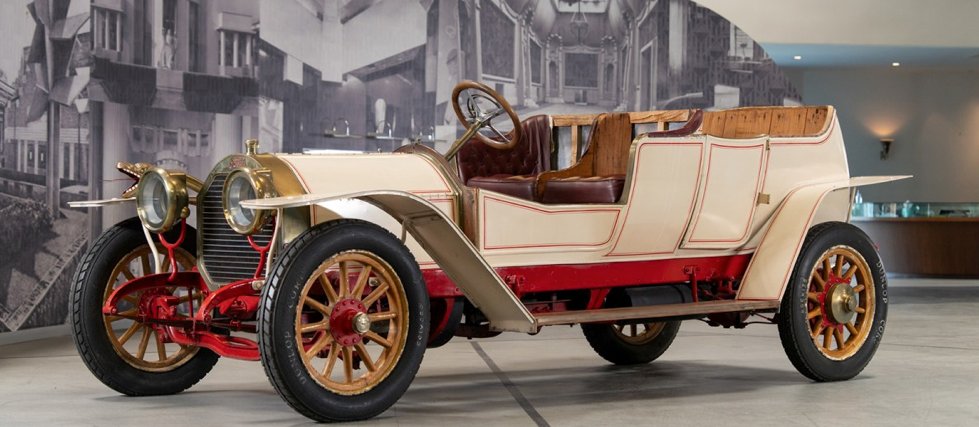
Beyond the top five the biggest estimate-buster was this 1910 Peugeot Type 134 22 HP Touring. Chassis 12506, was fitted with engine FD12553 and completed during the single year in which the 4.7-litre Type 134 was offered. By 1968 it was featured in the Horseless Carriage Gazette, with surviving documentation recording its appearance both before and after an earlier restoration.
It subsequently entered the collection of Fernando Ariza in Mexico City, and it later became part of the Petersen Automotive Museum holdings in Los Angeles. Christie’s offered it publicly in June 2000, after which collector Peter Mullin acquired it. It remained in the Mullin Collection for more than 25 years. The catalogue made clear that the car would benefit from further refurbishment, hence the modest $10,000-$20,000 estimate. Bidding nevertheless reached $29,120 including premium, 45.6 percent above the upper estimate.
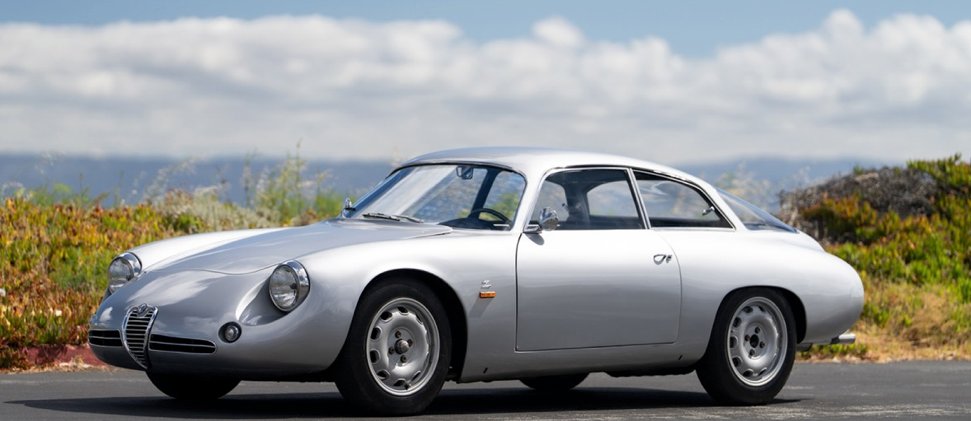
The biggest drop below estimate came with this 1962 Alfa Romeo Giulietta SZ ‘Coda Tronca’. Chassis AR10126.00188 was completed on February 10, 1962 and originally finished in metallic grey. It was delivered to Lugano, Switzerland for Rafael Lochen Izaguirre. By the early 1970s the Alfa belonged to Henri Vuarraz of Neuchâtel, an Alfa Romeo garage proprietor and collector. During his long ownership it was sympathetically restored and repainted red, then used on the road and in touring events rather than disappearing into static storage.
The SZ subsequently formed part of a group of Zagato-bodied cars sold to an Italian dealer. Carrozzeria Galbiati in Milan later restored it, returning the body to a silver finish with black detailing. Fred van Lingen acquired chassis 00188 by 2004 and used it at European historic events. The Alfa was exported to the United States in 2008 and subsequent owners included Manny del Arroz, Tom Stegman and Robert Cole. Gooding Christie’s estimated it at $400,000-$450,000. The final price was $252,000 including premium, a 37 drop below low estimate.
Mecum
Mecum’s selection at the Monterey 2026 auctions was far more European than many might have credited it for – there was still plenty of US muscle on show, but modern supercars stole the show at the top end. “Mecum was exciting and vibrant with a lot of strong European cars,” says David Lillywhite. “A lot of people are dismissive because they think Mecum are just about muscle cars, but that’s no longer the case. Mecum says that Kissimmee 2026 has made a massive difference to the amount of European cars that are consigned.”
The leading result was the above Ferrari F50. Chassis ZFFTA46B000106690 and was originally delivered to Switzerland. It was one of only 31 examples painted Giallo Modena. It subsequently moved to the United States and retained its original chassis, engine, gearbox and body. Factory stampings remained present and the car later completed Ferrari Classiche certification.
Its odometer showed approximately 7250km, equivalent to around 4500 miles, and the accompanying equipment was unusually complete. In addition to the removable hardtop and storage flight case, the car retained its emergency fabric roof, three-piece Schedoni luggage, books and tools. A pair of TOD’S F50 driving boots also accompanied it. Ahead of Monterey it had recently been serviced by Ferrari Lake Forest. Mecum sold it for $14.575m. That surpassed the $12.21m achieved by another F50 at the company’s Kissimmee auction earlier in 2026 and the $12.105m paid for the ex-Mike Tyson example at RM Sotheby’s during the same Monterey week. Oh, and it was a new public-auction record for an F50.
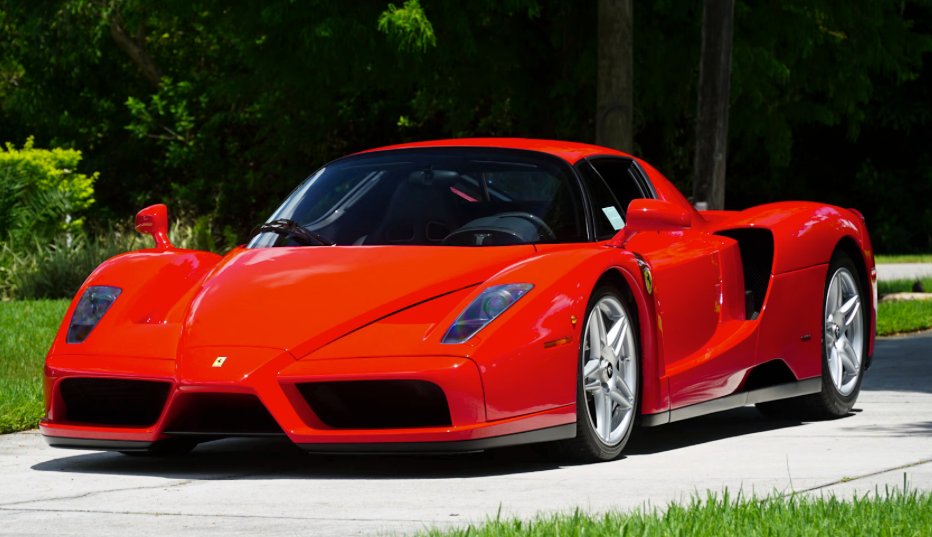
Mecum’s Rosso Corsa Ferrari Enzo had an unusually useful public history because the same car had already appeared with the auction house nine years earlier. At Monterey in 2017 it was offered with only 151 miles recorded. Bidding reached $2.7m but failed to satisfy the reserve, so no sale was concluded.
The car then accumulated very little additional mileage. When it returned to Mecum at Monterey in 2026, the odometer showed 589 miles. Its specification was deliberately conventional by Enzo standards: Rosso Corsa paint over a Nero interior. It therefore had no rare factory colour, celebrity provenance or bespoke post-production conversion to separate it visually from many other examples. All of which makes the $12.1m it sold for even more impressive.
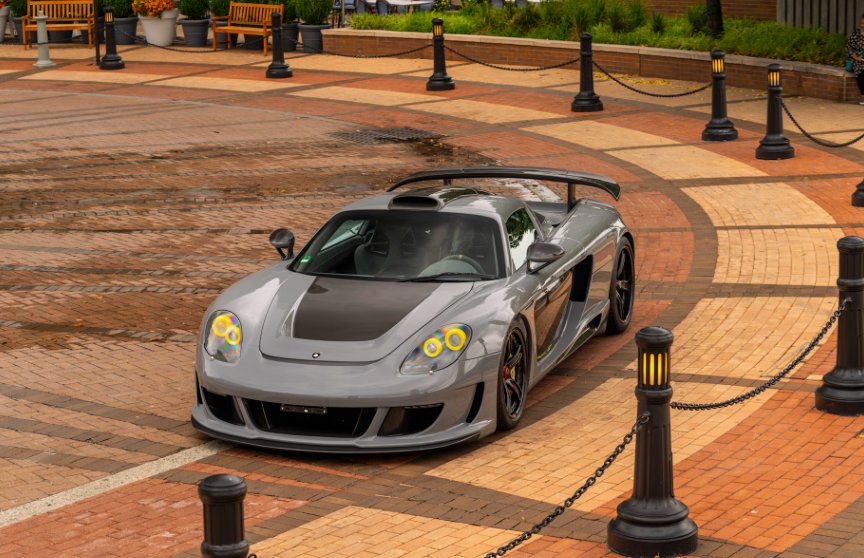
The Gemballa Mirage GT sold by Mecum was number 24 of the 25 conversions planned by Gemballa around the Porsche Carrera GT. The car was finished in Lime Rock Grey Metallic with a slate-grey cabin and had covered only around 100 miles since completion of its conversion.
Gemballa’s work went considerably beyond fitting aftermarket wheels or trim. The Carrera GT’s 5.7-litre naturally aspirated V10 was modified to produce approximately 650bhp while retaining Porsche’s six-speed manual gearbox and ceramic clutch. The body was extensively redesigned with a new nose, altered cooling apertures, side skirts, larger rear aerodynamic devices and a distinctive exhaust installation. Consequently, number 24 had a documented identity as a complete low-volume Gemballa conversion rather than a Carrera GT subsequently fitted with isolated aftermarket components. At $3.96m, it was the highest price achieved for a Gemballa.
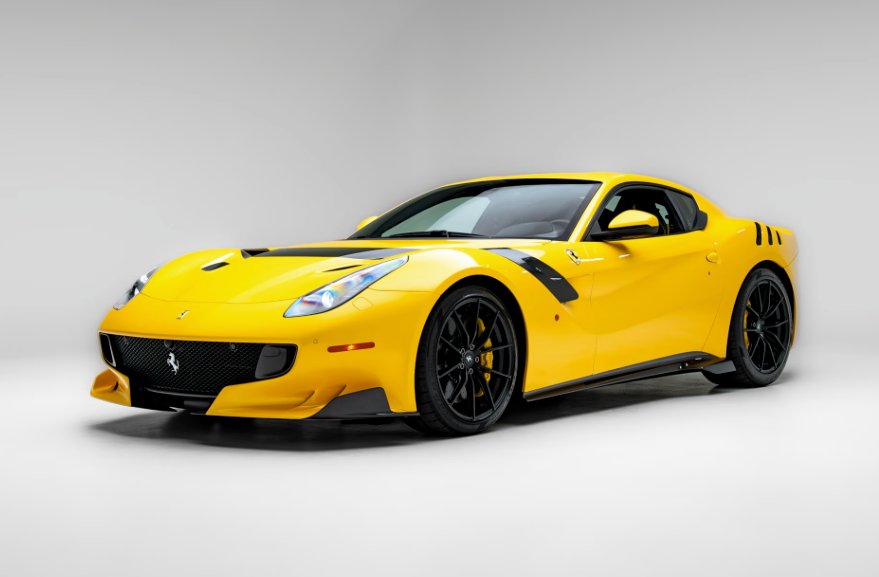
This Ferrari F12tdf was one of the 799 examples produced and had been ordered in Giallo Triplo Strato over Nero. It had covered just 799 miles, and sold for $3,657,500.
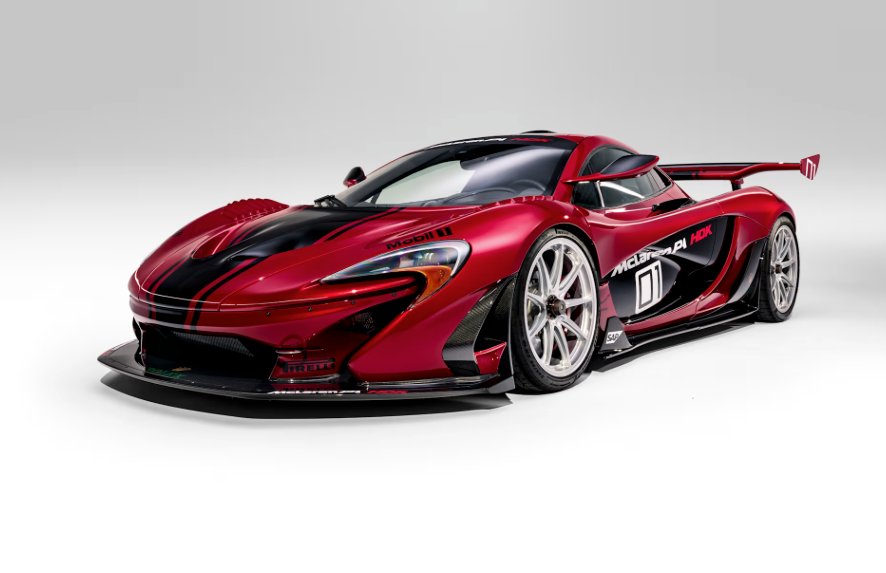
This McLaren P1 was chassis SBM12ABA7EW000003, the third of the 375 production road cars completed and was the first of nine cars to receive the Lanzante HDK conversion. The High Downforce Kit incorporated aerodynamic developments derived from the track-only P1 GTR, including revised bodywork and a substantially larger DRS-equipped rear wing.
The changes to chassis three went beyond aerodynamics. Working with Cosworth, Lanzante increased the displacement of the original twin-turbocharged V8 from 3.8 to 4.0 litres. Combined hybrid-system output rose to a quoted 1058bhp. Suspension revisions were also incorporated. The car was later refinished in Cherry Bomb Red with contrasting black striping by McLaren-certified repairer Karosserie in Pennsylvania. It sold for $3.575m.
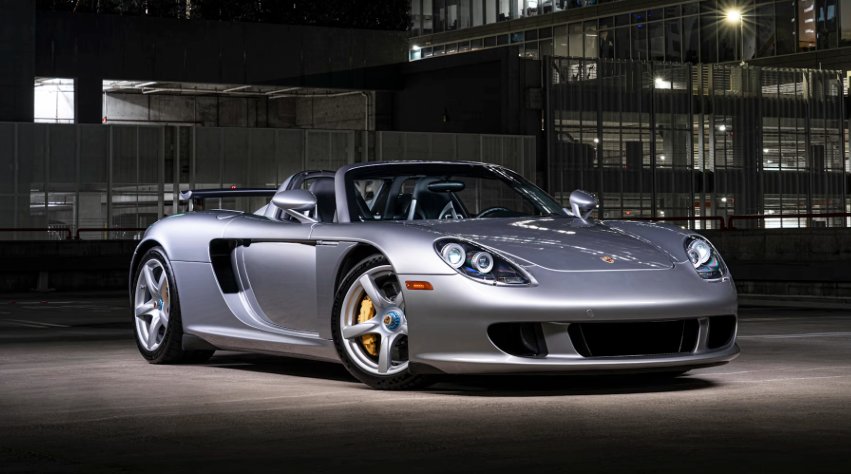
Mecum’s most notable no-sale at Monterey 2026 auctions was the 2005 Porsche Carrera GT. It had covered just 372 miles; as per usual Mecum didn’t release estimate but bidding petered out at $4m and the car returned to its vendor. Mecum’s refusal to post estimates means we can’t bring you the estimate beaters and shortfallers.
RM Sotheby’s

RM Sotheby’s three-day sale at Monterey 2026 auctions was always going to promise something special. None of us could quite fathom this, however. “RM’s sales were packed and very exciting,” says David Lillywhite. “After the McLaren F1 sold, the room got so noisy that it was almost impossible to hear the auctioneers. Weirdly they didn’t turn up the volume so that continued for at least an hour.”
And so to the leading car, Ferrari Luce chassis 0. designated as the first production example of Ferrari’s first series-production battery-electric car. Unlike the customer cars that would follow it, Chassis 0 was created specifically as a unique Tailor Made example and came to auction directly through Ferrari rather than entering the secondary market after conventional private ownership. Ferrari donated the car for sale, with all proceeds directed to educational initiatives supported by the Ferrari Foundation. Estimated at a high of $1.1m-plus, it sold for significantly more pluses: $40m.
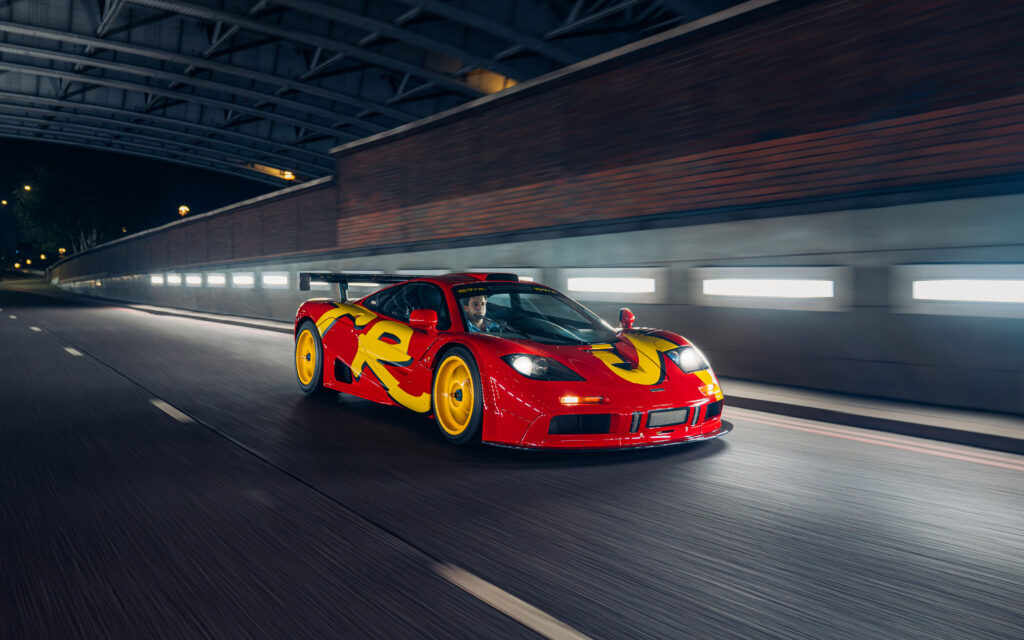
McLaren F1 GTR chassis 10R was constructed as the first of two development GTRs for the 1996 season, when McLaren was refining the competition F1 following its outright Le Mans victory the previous year. It remained a factory development car rather than being sold immediately to a customer racing team. Chassis 10R took part in testing and qualifying activities at Le Mans in 1996, ranking eighth in class and 20th overall during testing, although sister development chassis 11R was selected to contest the race itself. McLaren finished 10R in its distinctive Blood Red and yellow graphic scheme, creating the appearance responsible for its longstanding ‘Pop Art F1’ nickname.
The car remained with McLaren until 1999, when it was sold directly to Pink Floyd drummer Nick Mason. McLaren converted it for road use, with work involving Paul Lanzante, and it was registered K40 MCL. Mason retained 10R for approximately 25 years and used it rather than maintaining it solely as a static collection car. That use included appearances at Rétromobile, Goodwood and several McLaren F1 driving events. An accident in 2009 prompted a restoration overseen by Dean Lanzante, while another incident at Goodwood in 2017 resulted in further work. It returned publicly at events including the 2022 Goodwood Festival of Speed. Mason sold 10R privately in 2024. RM Sotheby’s subsequently offered it at Monterey, where it realised $34.655m, just below its $35m-plus estimate.
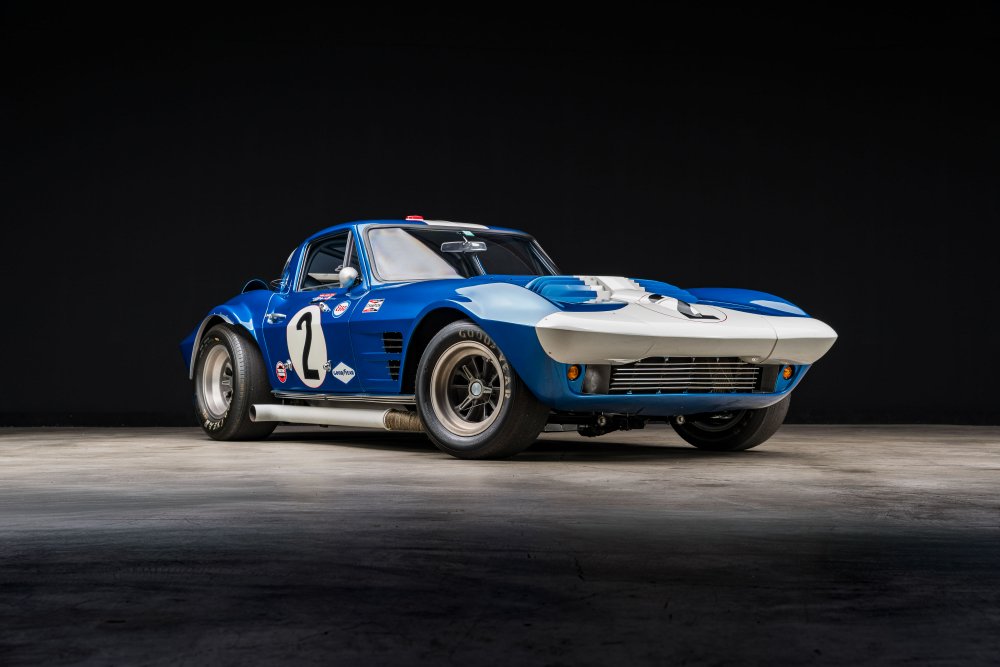
Grand Sport 003 was the first of the three coupés completed during Zora Arkus-Duntov’s short-lived attempt to produce a competition Corvette capable of challenging the Shelby Cobra. Only five Grand Sports were completed before General Motors’ corporate prohibition on factory racing halted the programme.
Dick Doane obtained 003 during 1963 and scored three SCCA class victories before the car became associated with John Mecom’s racing operation. At Nassau late that year Jim Hall qualified it third for the Tourist Trophy before differential problems intervened. John Cannon subsequently drove it to second in class and eighth overall in the Nassau Trophy. Its best-known period appearance came at Sebring in 1964. Starting 62nd, AJ Foyt gained roughly 50 positions on the opening lap before axle problems interrupted the charge. Foyt and Cannon eventually finished 23rd overall and second in class.
The Grand Sport continued competing, including a second-in-class result with Jack Saunders at Houston and another Nassau appearance. In 1965 Delmo Johnson, Ed Sevadjian and Dave Morgan took it to third in class at Sebring. The car passed through several owners after its frontline career. Mike Golas acquired it in 1967 and Alan Foster in 1968. Robert Paterson bought it in 1975 and had Bob Waldschmidt return the body to its 1963 Mecom Blue appearance. Tom Armstrong acquired it in 1989.
The seller had owned 003 since 2003 and commissioned Terry Scarborough Racing to complete a four-year restoration involving more than 4000 hours and reportedly around $1m. Estimated at $11m-$13m, it sold for $18.705m, setting a Corvette auction record.
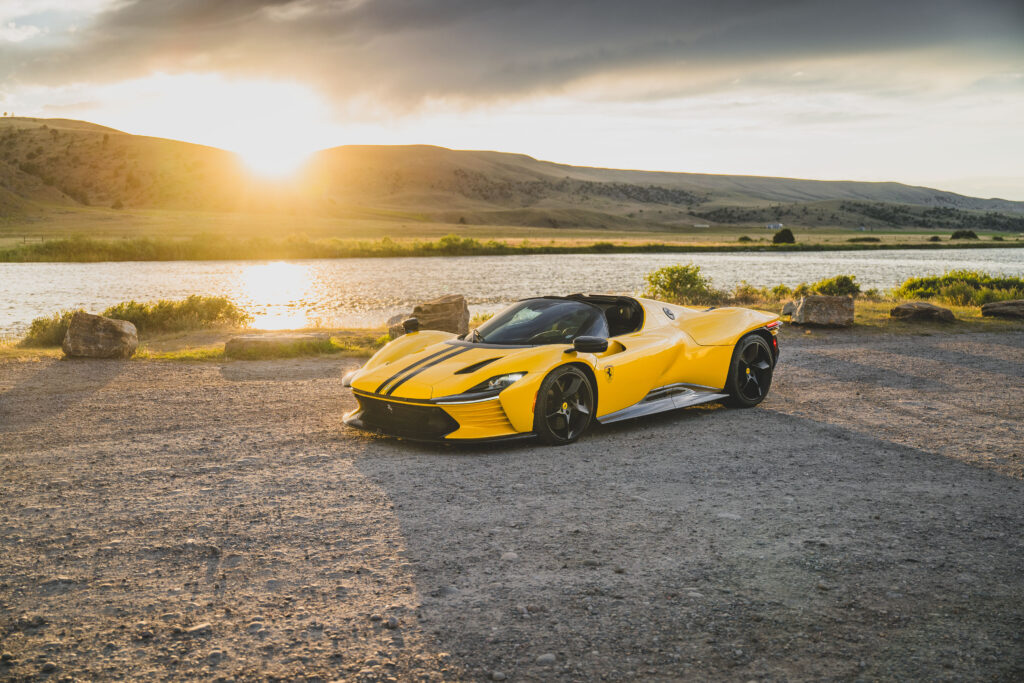
The Daytona SP3 sold by RM Sotheby’s was chassis ZFF05UMA0P0297567, completed during July 2023 and subsequently forming part of the Driver’s Philosophy Collection.
Rather than being finished in a conventional catalogue specification, the car had been configured through Ferrari’s Atelier programme. Its body was painted Giallo Triplo Strato with contrasting Nero detailing and an Italian tricolore motif. Factory options included a suspension-lift system, matte-black wheels with gloss-black brake calipers, airbrushed Scuderia shields and extensive carbonfibre equipment. The removable hard-top, lower body sections and mirror components were among the items specified in carbonfibre. It had passed through two ownerships by the time it arrived at Monterey but had covered only 227 miles. RM Sotheby’s estimated it at $10m-$12m. Bidding carried the price to $17.825m including premium, $5.825m beyond the published upper estimate – and a record for a non-charity SP3.
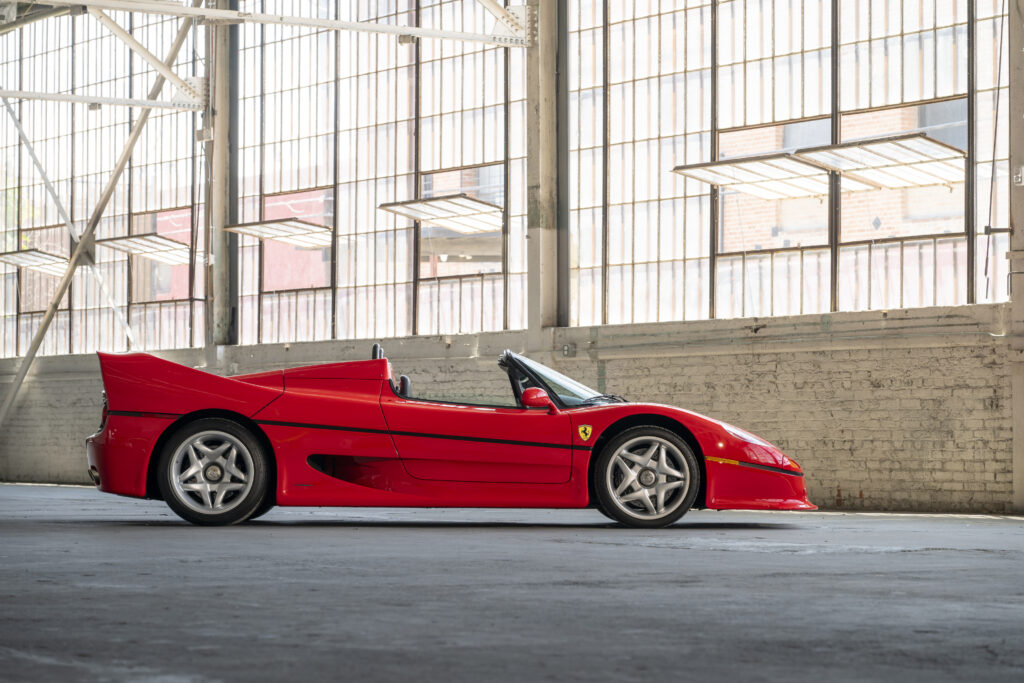
This US-market Ferrari F50 was finished in Rosso Corsa over Nero with contrasting red seat inserts and was supplied new to heavyweight boxing champion Mike Tyson. After Tyson, the Ferrari passed through several enthusiast collections. Brian Ross acquired it in 2006 and the car was submitted for Ferrari Classiche certification two years later. The certification process confirmed the originality of its engine, transaxle and bodywork.
RM Sotheby’s sold it at Amelia Island in 2017 for $2.64m. Five years later it appeared at Gooding’s Pebble Beach sale and realised $4.625m. By Monterey 2026 the odometer showed 6196 miles. It retained its removable hard-top and was accompanied by the associated equipment, books, tools and fitted luggage. A history report by Ferrari specialist Marcel Massini was also supplied. This year it sold for $12.105m against a $7m-$9m estimate.
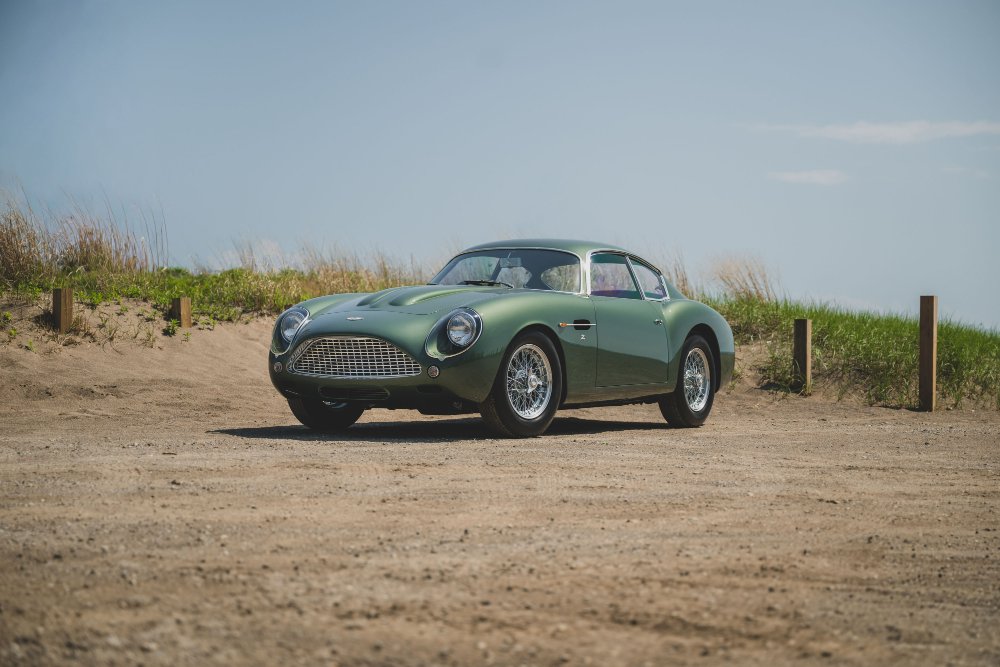
The most notable no sale was this 1962 Aston Martin DB4 GT Zagato. DB4GT/0186/R was completed in December 1961, the 14th DB4 GT Zagato by completion date, and dispatched almost immediately through Tozer Kemsley & Millbourne and Australian distributor Vulcan to Laurie O’Neill. It was the only original DB4 GT Zagato delivered new to Australia.
Finished in Desert White with red leather, the Aston was soon put into competition. Doug Whiteford won the GT Handicap at Calder in February 1962, then took the GT Scratch race and South Pacific GT Championship at Longford. The Zagato was reportedly timed at up to 145mph there. O’Neill later won his class at Silverdale, while Ian Geoghegan took third at Warwick Farm and raced it elsewhere in Australia. Its profile was sufficient for 0186/R to appear on the August 1962 cover of Sports Car World. O’Neill sold the car in 1963 to Colin Hyams. After factory servicing in Britain during 1967 it appeared painted red at the 1968 Melbourne Motor Show. Alex Copland subsequently acquired it, returned it to white and stored it for around two decades.
By 1988 it belonged to Nicholas Springer in Switzerland. Further owners returned 0186/R to competition and concours use during the 1990s. Peter Read acquired it around 2000 and commissioned Richard Williams to restore the car, with Zagato in Milan involved in the bodywork. Later honours included concours appearances at Pebble Beach and Villa d’Este. Despite retaining its original Zagato body and matching-numbers engine, no sale was completed against an estimate of $12m-$15m.
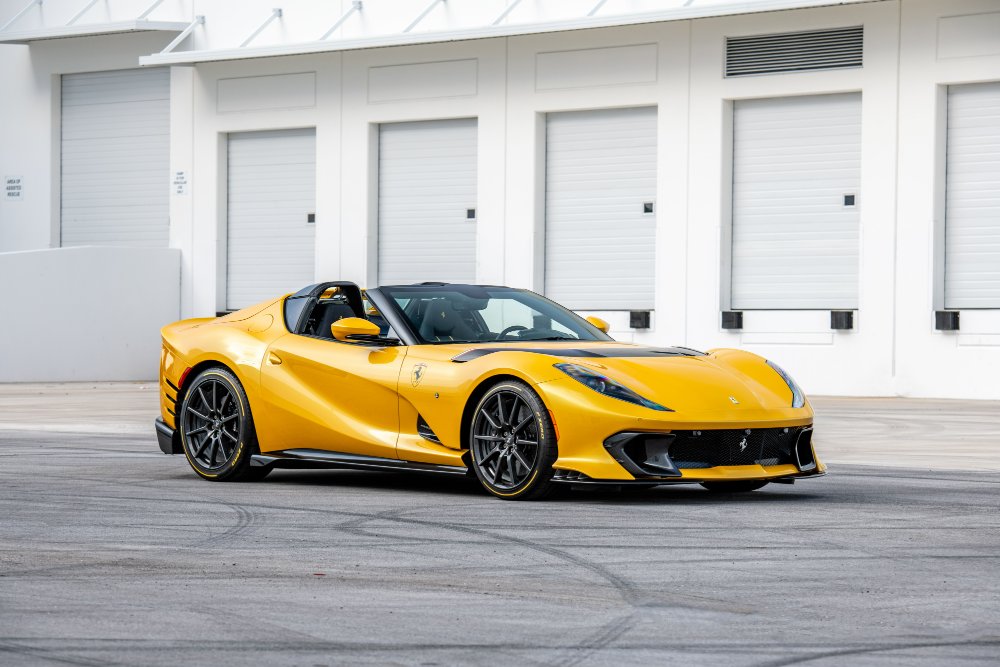
Outside the top five, the car that broke its upper estimate by the largest degree was, rather predictably, a modern Ferrari. This Ferrari 812 Competizione A was chassis ZFF04TMA6R0301363 and had been configured through Ferrari’s Tailor Made programme with more than $242,000 in factory options.
Its exterior was finished in Giallo Sirius and incorporated considerably more carbonfibre than a conventionally specified example. The roof, engine covers, diffuser and intake detailing were carbonfibre, as were the wheels. A tricolore motif ran across the distinctive rear panel. The interior specification was similarly individual, combining Nero Alcantara with Jeans Aunde Nero and Cordura materials rather than the more usual leather-dominated treatment. Despite having been used, mileage remained modest at 1021 miles. The Ferrari had also received regular servicing through Ferrari of Fort Lauderdale, with the most recent recorded visit taking place in January 2026. Matching luggage, including an attaché case and carry-on, accompanied it.
RM Sotheby’s estimated the car at $2.5m-$2.9m. It realised $4.845m including premium – bursting its upper estimate by 67.1 percent.
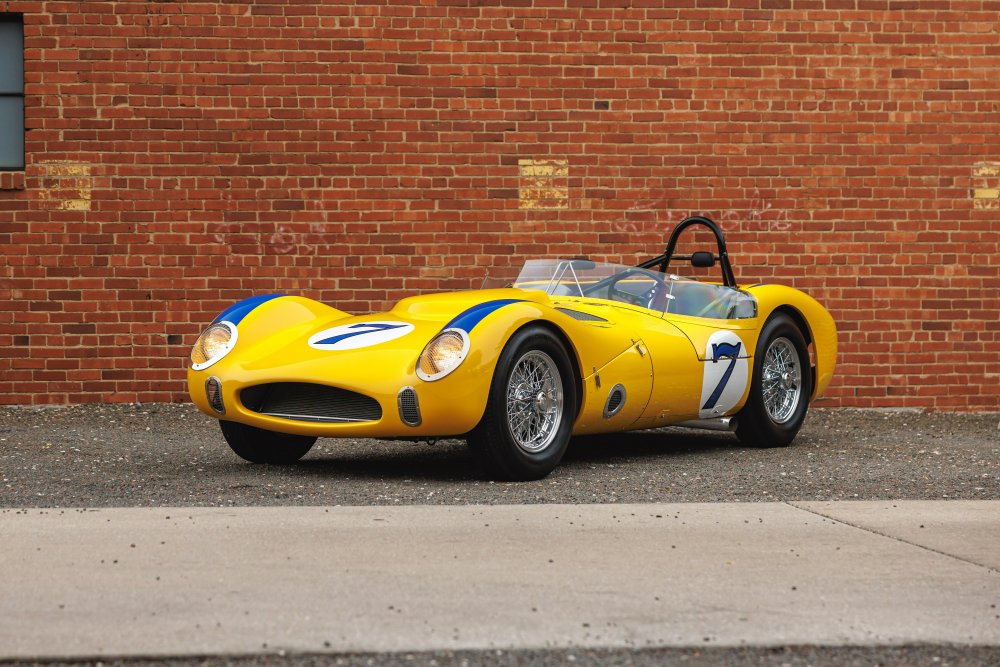
Not everything yellow works out well – as the 1961 Balchowsky Ol’ Yaller Mk VII will attest. Max Balchowsky completed Ol’ Yaller Mk VII in 1961 for Don Kirby of Rochester, New York. Unlike some of Balchowsky’s other Buick-engined specials, Mk VII was built specifically around Chevrolet power and was initially supplied without an engine. The car wore a lightweight Devin glassfibre body. Kirby installed a competition-prepared fuel-injected 327cu in Chevrolet V8 and entered the special in SCCA events during 1963 and 1964.
Its documented results included fifth overall at Virginia International Raceway in October 1963. At the 1964 Road America 500 it finished 15th overall and fourth in class, demonstrating that the home-built Balchowsky remained a serious contemporary competition car rather than simply an experimental special. After Kirby, Mk VII passed to Stan Kozlowski and subsequently through several enthusiast owners. Jimmy Dobbs acquired the car during the early 1990s and returned it to regular use in Historic motor sport and long-distance events, including the Colorado Grand.
Palhegyi Design undertook a substantial restoration in 2009. Watkins Engine Development rebuilt the Chevrolet V8, while the project also involved a replacement glassfibre body together with changes to the brakes, cooling system and safety equipment to permit continued active use. RM Sotheby’s offered Mk VII with a $250,000-$300,000 estimate. It sold for $190,400 including premium, 23.8 percent below the low estimate – significantly less than the $307,500 RM sold it for at Monterey in 2023.
Further details
For more information on the Bonhams sale at the Monterey 2026 auctions, head here.
For more information on the Broad Arrow sale at the Monterey 2026 auctions, head here.
For more information on the Gooding Christie’s sale at the Monterey 2026 auctions, head here.
For more information on the Mecum sale at the Monterey 2026 auctions, head here.
For more information on the RM Sotheby’s sale at the Monterey 2026 auctions, head here.