

Kruse Auctions returns to Auburn, Indiana over Labor Day weekend 2026 for its 56th Annual Auburn Auction & Show, with the sale running from September 3-5 and previews opening on September 2.
Held at Kruse Plaza, the three-day Kruse Auctions Auburn sale 2026 is set to gather more than 300 collector cars alongside around 150 pieces of automobilia, while Auburn itself will be in full enthusiast mode as the wider Auburn Car Week programme encompasses the ACD Festival and ACD Club Reunion. We’ve picked out ten of our favourite lots – what’s causing your purse strings to twitch?
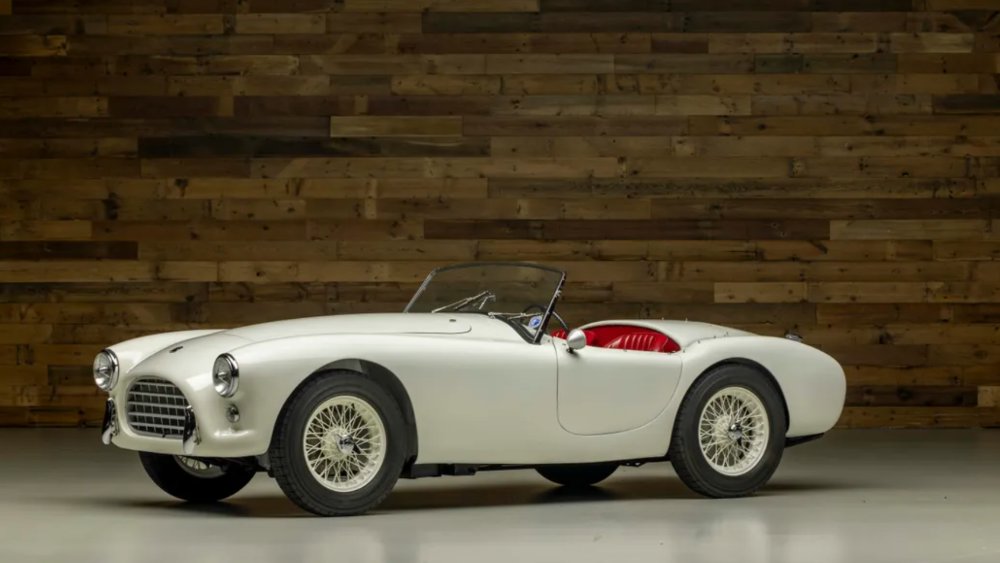
This 1959 AC Ace Bristol Roadster, which will go up for sale at the Kruse Auctions Auburn sale 2026, was bought new by Charles McDonald through Motorsport Corp. of Santa Fe, New Mexico in September 1959. Having decided to move on from the Triumph he had been campaigning in SCCA events, during the 1960 season McDonald scored class victories in three of his first four races, including the feature event. Over the following two seasons the AC amassed 12 victories at circuits including Continental Divide Raceway and La Junta Raceway.
McDonald was drafted into the US Army in 1962, after which the Ace was placed in storage. It later returned to road use before being laid up again in 1972 following an oil-pressure problem. A comprehensive restoration began in 1999, retaining the original aluminium coachwork apart from a small section affected by electrolysis. Gary McGlasson Racing Engines rebuilt the numbers-matching Bristol engine, while the body was returned to its original Old English White and a new red interior was fitted to factory specification.
McDonald finally sold the car in 2017. It subsequently took First in Class at the 2018 St. Michaels Concours and Best European Sporting Car at The Elegance at Hershey in 2019. Its accompanying history includes the original purchase agreement, restoration invoices, period racing photographs and contemporary newspaper clippings.
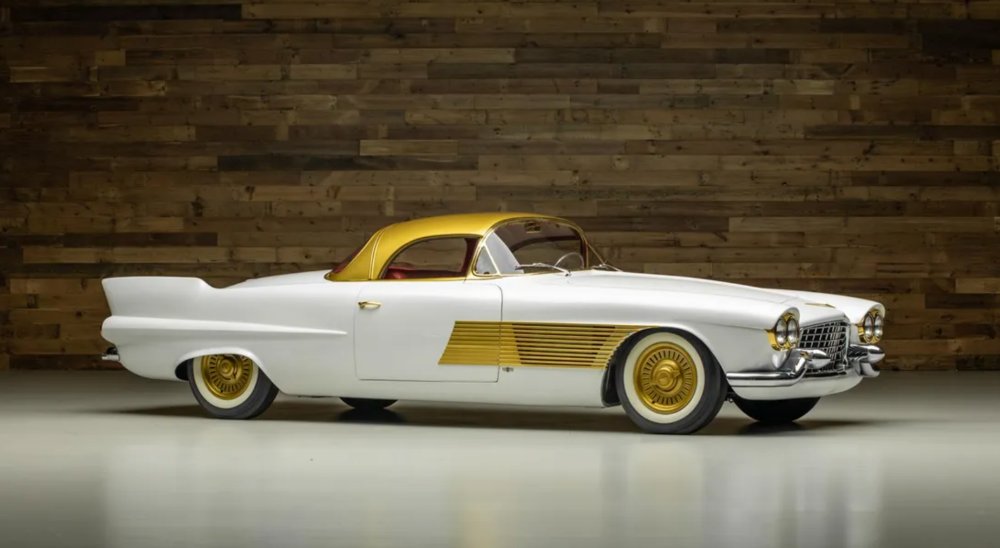
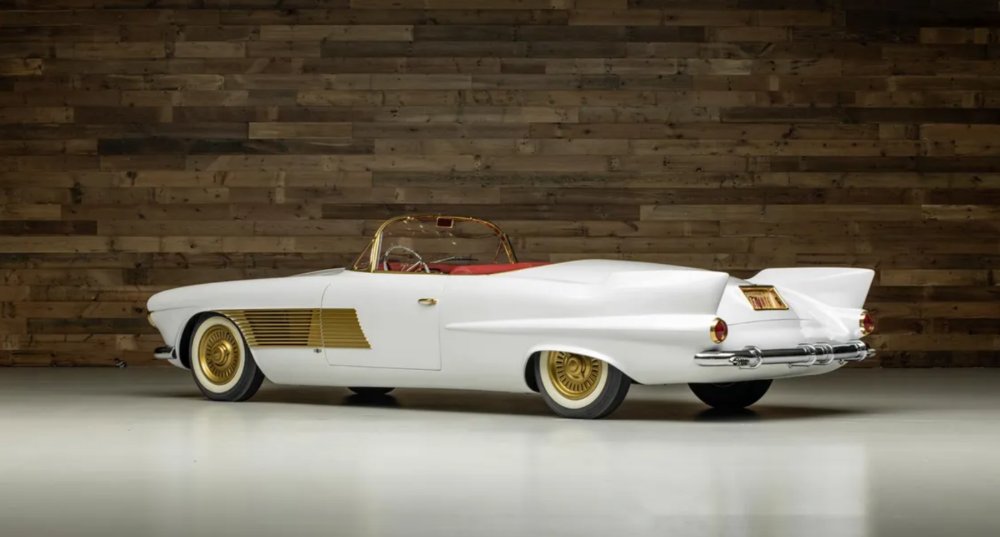
This 1953 Cadillac ‘Elegante’ is a one-off coachbuilt conceived by commercial artist Harry Birdsall and importer Joe Mascari, using a Cadillac Series 62 chassis, 331ci V8 and Hydra-Matic automatic transmission. Birdsall produced the initial sketches before the design was developed by Albrecht von Goertz, who had recently established his own studio in New York. Goertz would subsequently become best known for his work on the BMW 503 and 507.
Construction was entrusted to Carrozzeria Rocco Motto in Turin, which created the hand-formed aluminium body. The chassis was lowered by eight inches, while bespoke features included a hydraulically operated retractable hard-top, wraparound windscreen, Lucite steering wheel and gold-plated exterior trim. The build reportedly took 30 months and cost $30,000. The Elegante made its public debut at the 1955 New York International Auto Show, where it was displayed on a rotating platform and subsequently featured in The New York Times. Birdsall retained the Cadillac until his death in 1960, after which it passed through several owners before returning to the Birdsall family in 1992.
Harry’s son Richard ‘Dicky’ Birdsall then embarked on a 16-year restoration, returning the car to its original appearance and mechanical specification. Its first major outing after completion came at the 2014 Amelia Island Concours d’Elegance, where it won the People’s Choice Award. The Kruse Auctions sale marks its first public offering and also includes a custom enclosed Pegasus Race trailer.
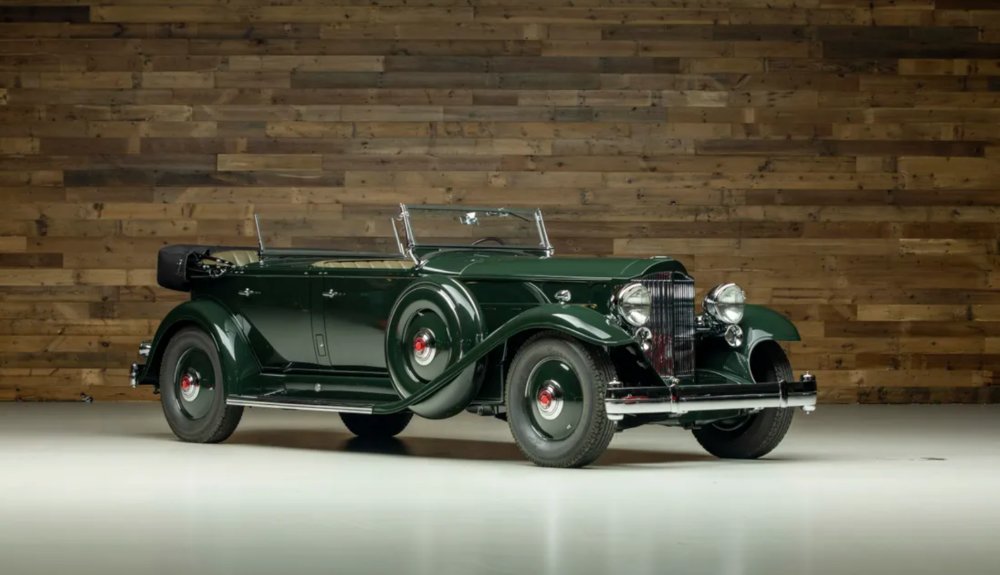
This 1932 Packard Twin Six Dual Cowl Sport Phaeton, which will be available at the Kruse Auctions Auburn sale 2026, is one of eight examples built and retains its original engine, body and chassis. It was reportedly delivered through Packard’s Detroit branch in September 1932.
Its known ownership history begins with David Perry of Brookfield, Wisconsin, who retained the car until 1959. It then passed to Ronald Parhams of Dallas, Texas, who repainted it maroon, fitted burgundy upholstery and rebuilt the engine and transmission. Later owners included Bill Jones and oil executive Charles F Urschel, under whose ownership the Packard was restored again and became known in collector circles as the Urschel Oil Packard.
The car subsequently passed through the collections of Dick Barbour, Don Williams, Leo Gephart, Matteo Trotta and Dale Bliss. In 2013 it joined the Denmark-based Frederiksen Collection, before returning to the US following the collection’s dispersal in 2015. More recently, the Packard underwent a comprehensive restoration by Straight Eight of Troy, Michigan. Its original body was refinished in dark green by Paddocks Paint Works, while Nostalgic Motoring Ltd completed the olive-brown interior. The original V12 engine and transmission were also rebuilt as part of the work.
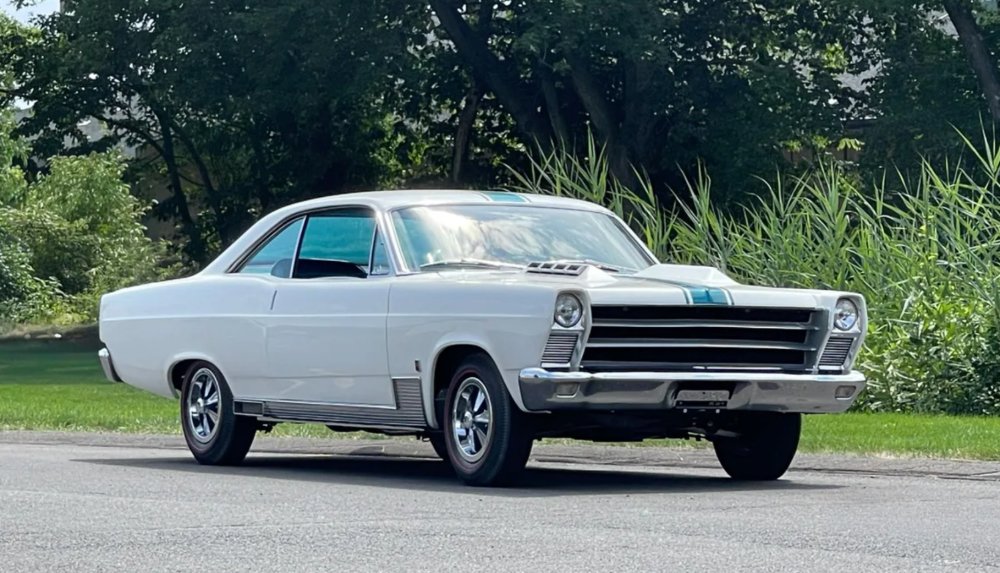
This 1966 Ford Fairlane GT-X was built as a factory show car for Ford’s Custom Car Caravan and was customised by Gene Winfield. It began life as an early pilot-production Fairlane two-door hard-top before being diverted to Ford’s Prototype Division.
The car was fitted with a 427ci medium-riser V8, C6 automatic transmission and nine-inch rear axle with 4.11:1 gearing before being sent to Winfield’s workshop in Modesto, California. There it received extensive body and interior modifications, including revised front lighting apertures to improve engine-bay airflow, reshaped rear lights, bumper-mounted exhaust outlets and additional exhaust exits incorporated into the front wings. The standard interior was replaced by four fixed bucket seats trimmed in Peacock Blue metal-flake Naugahyde, along with a competition-style steering wheel and matching interior details. Winfield also changed the exterior from Arcadian Blue to Metal Flake Pearlescent White with a Peacock Blue centre stripe and fitted Hurst wheels. Planned GT-X badging was reportedly omitted after Ford learned that Plymouth intended to use the GTX name.
After its period on the Custom Car Caravan, the Fairlane was sold through Ford’s surplus-vehicle system and its subsequent history became unclear. It resurfaced in Ohio in the early 2000s and was identified as the original GT-X. Gene Winfield later authenticated the car and carried out its restoration, recreating the paintwork using the same techniques employed in 1966. The odometer currently shows just over 3000 miles.
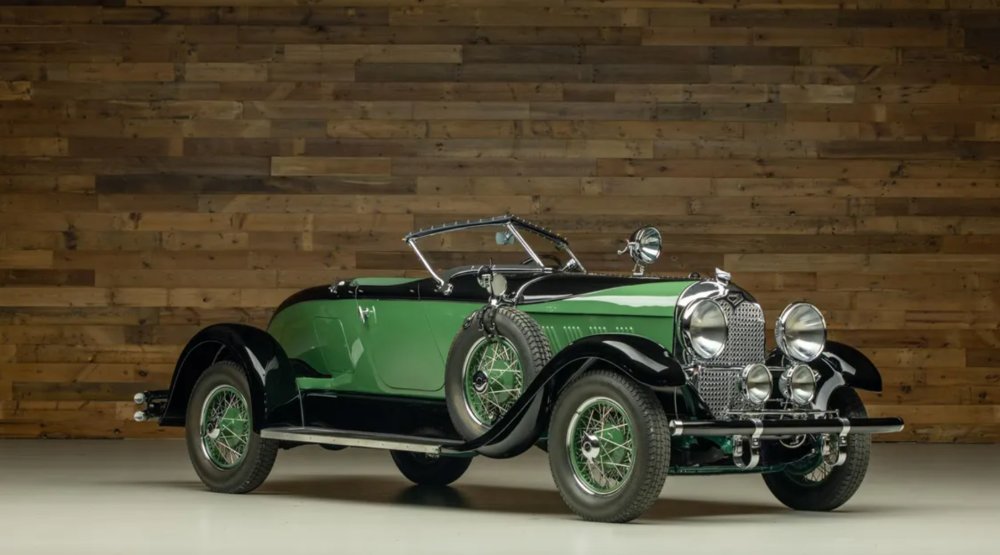
This 1929 Auburn 8-90 Boattail Speedster will go under the hammer at the Kruse Auctions Auburn sale 2026. It has documented ownership history dating back to 1980 and was later owned by Don Knight, the Auburn-Cord-Duesenberg Club’s technical adviser for 1927-1930 Auburn models.
A surviving title records Garnet Rose of Gibbon, Nebraska acquiring the car from John McGuire of Buffalo, New York in February 1980. Rose was active in the ACD Club and was known to have restored other Auburn Speedsters during the same period. The car later passed to Knight, who had been involved with the club since its early years and had restored several Speedsters himself. Knight sold the Auburn to Tom Gallo of Florida in 2010, after which it underwent a concours-level restoration by a specialist in New Jersey. The body was refinished in Cat’s Eye Green with black wings, while the chassis was painted Myrtle Green, both period-correct Auburn colours. The interior was retrimmed in green leather with Wilton wool carpeting.
During the mechanical rebuild, the straight-eight engine received 0.030-inch oversize pistons and modified valves to allow operation on unleaded fuel. Equipment includes dual headlights, cowl lights, a radiator stone guard, Pilot Ray driving lights, twin side-mounted spare wheels with Auburn-script mirrors, a running-board-mounted spotlight and a removable black cloth hood. The car was acquired by its current owner in 2016 and has since seen limited exhibition use.
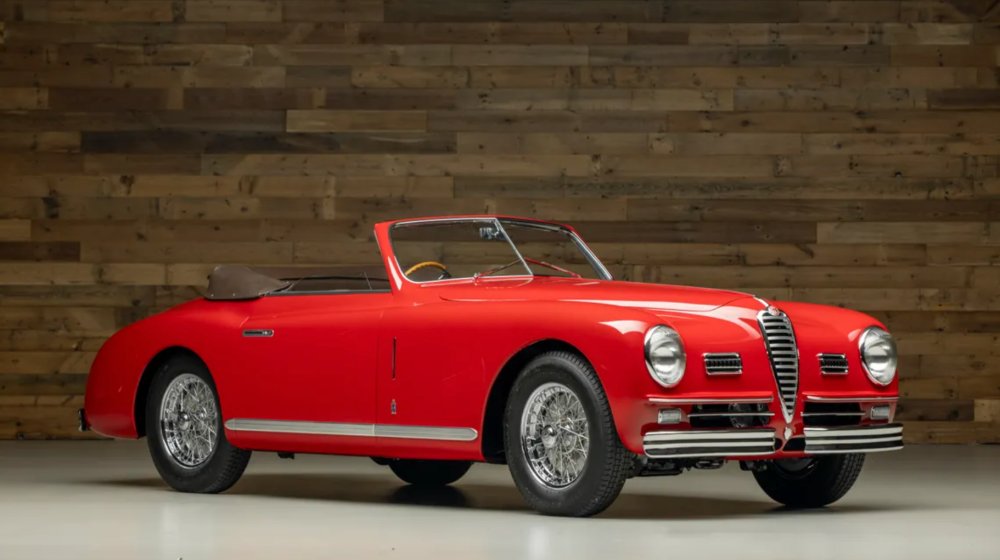
This 1949 Alfa Romeo 6C 2500 Super Sport Cabriolet is one of 383 Super Sport chassis produced and retains its matching-numbers engine and chassis. Built on the short-wheelbase Super Sport platform, it carries Pinin Farina cabriolet coachwork. According to Angelo Tito Anselmi’s Alfa Romeo 6C 2500, chassis 915811 was delivered on December 30, 1949 to ITAC SpA in Rome. It is believed to have remained with its original owner into the 2000s, receiving cosmetic refurbishment to the paint, hood and interior during the 1990s.
An Illinois collector acquired the Alfa Romeo in 2007 and subsequently displayed it at events including Meadow Brook, The Glenmoor Gathering, The Masterpiece Concours and Auto Historica V in Chicago. It also received the Pat Braden Award at the National Alfa Meet. A third owner acquired the car in 2016 and commissioned Salzano Studio of Miami, Florida to carry out a body-off restoration. The Pinin Farina body was refinished in Alfa Romeo red with a chocolate-brown leather interior, while the six-cylinder engine and four-speed synchromesh manual gearbox were also rebuilt. Following completion in 2017, the car was shown at Concorso Italiano in Monterey, where it received the Best Alfa Romeo award.
The current ownership dates from 2019. Since then, more than $15,000 has reportedly been spent on further cosmetic and mechanical work, including rebuilding the Weber 45 DCOE-9 carburettors. The car is also eligible for historic events including the Mille Miglia.
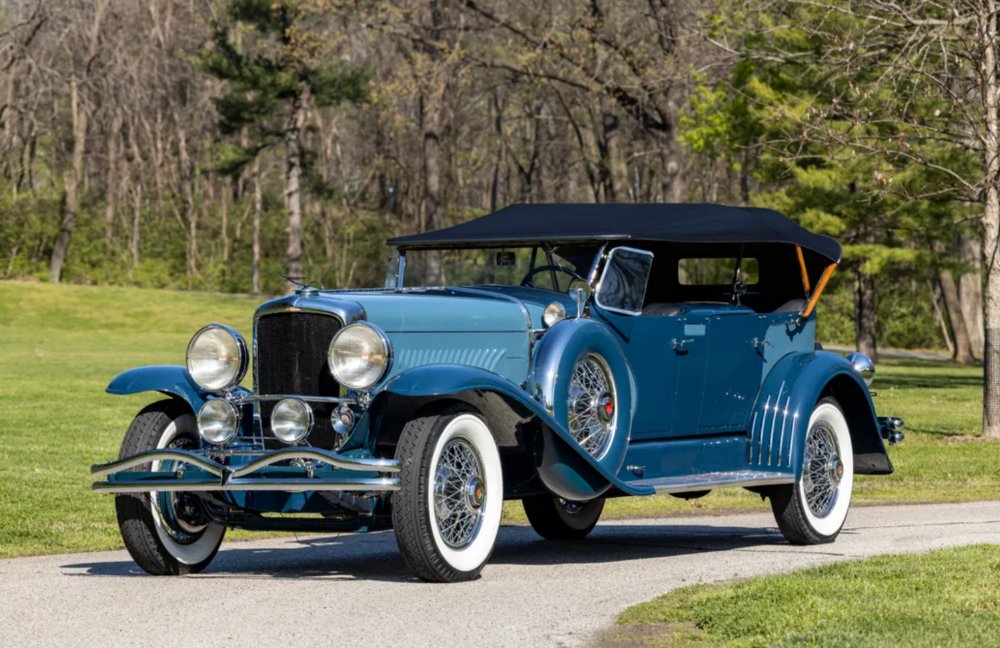
This 1932 Duesenberg Model J, which will go up for auction at the Kruse Auctions Auburn sale 2026, is built around engine J156 and was originally supplied on long-wheelbase chassis 2185 with LeBaron Dual Cowl Phaeton coachwork in the firm’s distinctive Sweep Panel style.
Its early history is incomplete, but period records indicate that the car was involved in an accident in Pennsylvania during the early 1930s. Rather than being immediately repaired, it was placed into storage, where it remained for several decades. By the 1970s it had entered the ownership of Duesenberg collector Leo Gephart, before passing in the 1980s to Rick Carroll, who owned 18 Model Js during his lifetime. Carroll commissioned a comprehensive restoration, during which the original chassis was found to be beyond safe repair and replaced with a correctly specified unit. The original coachwork was also too badly damaged to reuse, so a new body was constructed in the style of the original LeBaron Sweep Panel Dual Cowl Phaeton. The restored car was shown at the 1987 AACA Special National Fall Meet.
Following Carroll’s death in 1989, the Duesenberg passed to Carmine Zeccardi. Under his ownership it received an AACA Senior National award at the 1990 Eastern Division National Spring Meet and appeared on the cover of Antique Automobile in 1991. The car was later offered at Kruse’s 1996 Auburn sales, changed hands again in 2005 and 2011, and has since remained in a private North American collection. It is finished in two shades of blue and fitted with enclosed side-mounted spare wheels, Pilot Ray driving lights, chrome wire wheels, a trunk rack and a recently fitted blue soft-top.
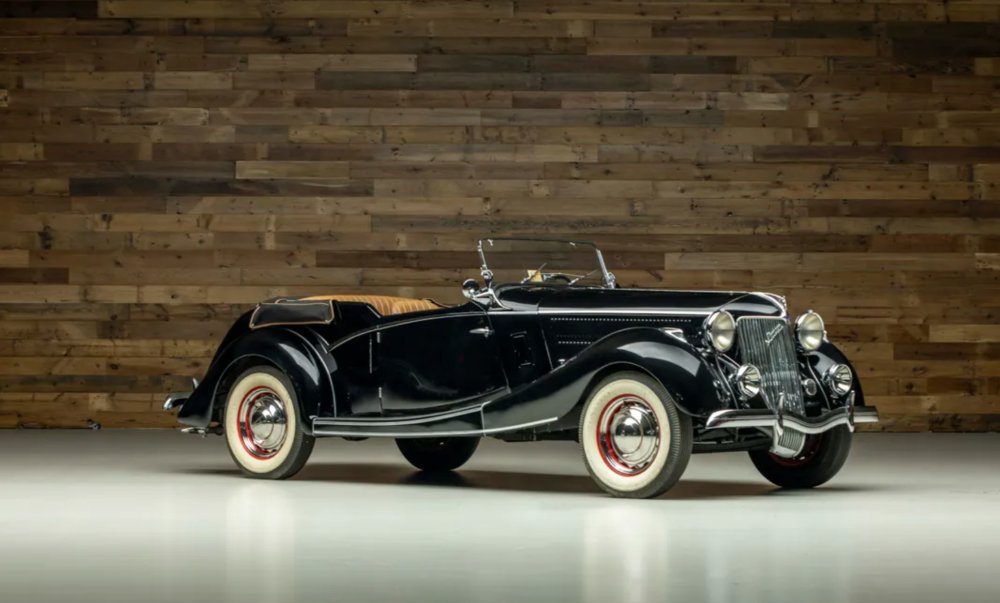
This 1936 Jensen-Ford Tourer is believed to be one of around 30 Jensen-Fords built between 1934 and 1936, and the first of three factory left-hand-drive examples produced for export to the US. It is being offered without reserve. The Jensen-Ford combined Ford mechanical components with coachwork built by Jensen Motors in West Bromwich. This example was ordered by California industrialist Percy Morgan, who had secured a Jensen-Ford franchise. Its Ford chassis was reportedly shipped from the US to England to receive its body before returning to America.
Morgan ordered this car in black, while a second left-hand-drive example was specified in silver by his friend Clark Gable. According to Morgan’s later account in Automobile Quarterly, Gable preferred the black car and attempted to buy it, but Morgan declined. Gable nevertheless posed with this example for a series of period publicity photographs, several of which subsequently appeared in books and magazines.
Later owners included Warren Wyman and Robert Gottlieb, during whose ownership the car featured in Automobile Quarterly. It subsequently joined the Art Astor Collection in California and was restored in the early 2000s. Following the dispersal of that collection, the Jensen-Ford entered its present private estate collection in the early 2010s. During current ownership, the 221ci Ford flathead V8 was fitted with Edmunds Custom cylinder heads, an Edmunds intake manifold and twin carburettors. The interior was also refreshed with brown faux-leather upholstery.
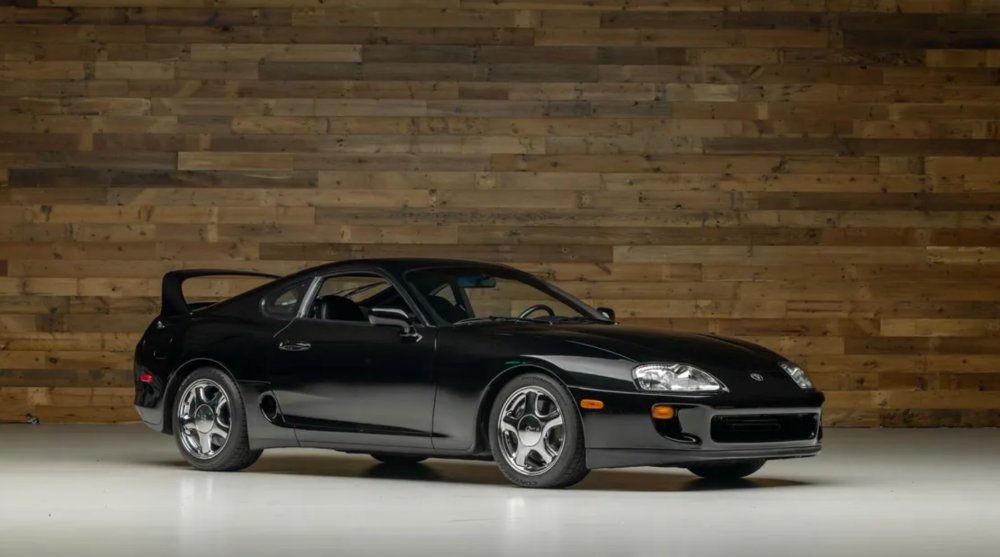
This 1994 Toyota Supra Twin-Turbo is a factory hard-top equipped with the Getrag six-speed manual gearbox and 3.0-litre 2JZ-GTE twin-turbocharged straight-six. It has covered 49,012 miles from new and is accompanied by a clean CARFAX report.
Toyota produced 7866 Twin-Turbo Supras for the US market between 1993 and 1998, with the fixed-roof hard-top available only during the first three model years. Of those, 269 were hard-tops, including 64 built for 1994. According to the auction catalogue, this car is also one of 15 1994 Twin-Turbo hard-tops produced in black. Equipment on this example includes a rear spoiler, integrated foglights, rear wiper, power antenna, automatic climate control, cruise control, powered driver’s seat, electric windows and locks, and the factory stereo.
Mechanical work carried out by Steeco Motors of Tampa, Florida in 2019 included replacement of the timing belt and tensioner, serpentine belt, water pump, camshaft seals and thermostat. A modified timing gear from Induction Performance was also fitted, together with Eibach lowering springs. During the current ownership, the car received the lighter factory alloy wheels used on 1997-98 Supras, fitted with new Continental tyres.
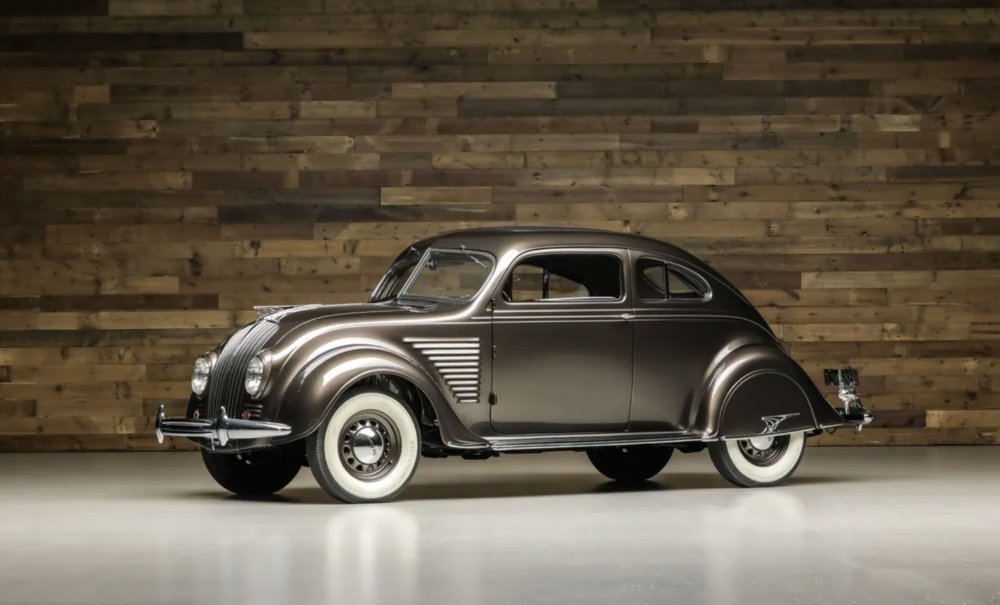
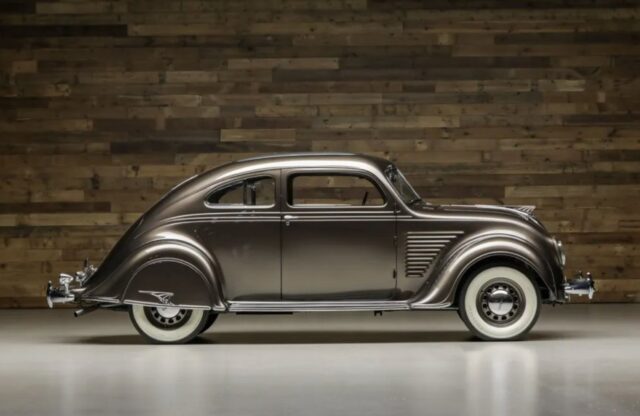
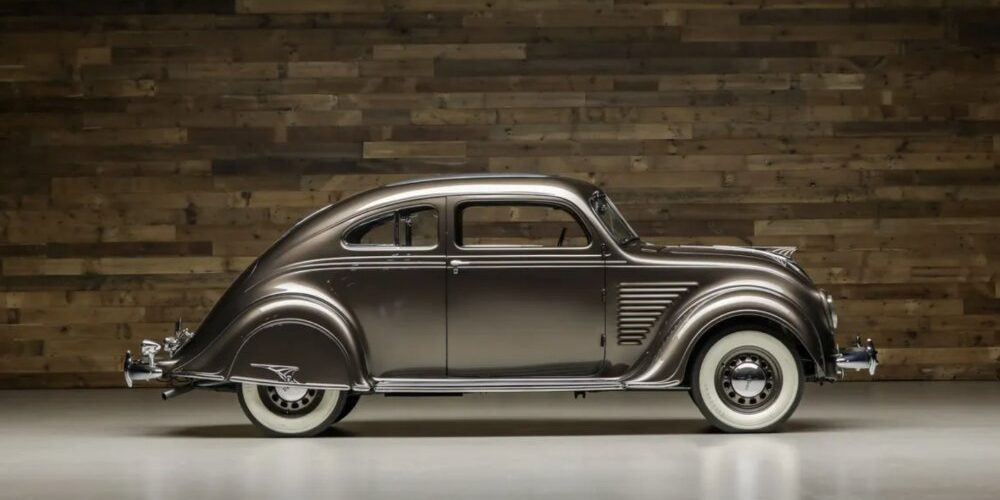
This 1934 DeSoto Series SE Airflow Coupe is one of around 1600 two-door examples produced for the model year and one of just 15 known survivors. It is being offered by Kruse Auctions without reserve and is accompanied by a copy of its original build card from Fiat Chrysler Automobiles Historical Services. Documentation records that it was originally sold through James F Waters Inc. in San Francisco and specified with overdrive and a leather interior.
Its more recent history includes ownership by former Airflow Club president Chuck Cochran of Shelbyville, Indiana. Minnesota collector Fred Mehr acquired the car from Cochran in 2016 and subsequently commissioned a four-year body-off restoration. Barry Dohrmann of Custom Auto carried out the body and paintwork, JT Upholstery retrimmed the interior and JR Custom Plating completed the chrome.
The car was refinished in the correct Cedarbird No 4 Polychromatic, a copper metallic shade, with its optional leather upholstery also restored. Following completion, it received a series of awards between 2019 and 2023, including Best of Show and People’s Choice at the National DeSoto Convention, Best of Show at the Des Moines Concours d’Elegance, Best of Class at the 10,000 Lakes Concours d’Elegance and an AACA Grand National Award.
Further details
For more information on the Kruse Auctions Auburn sale 2026, head here.