

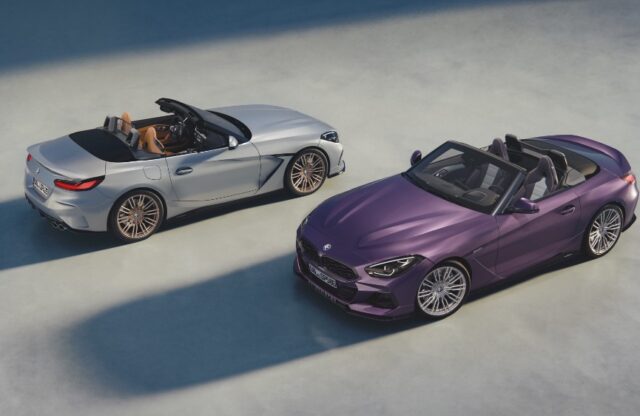
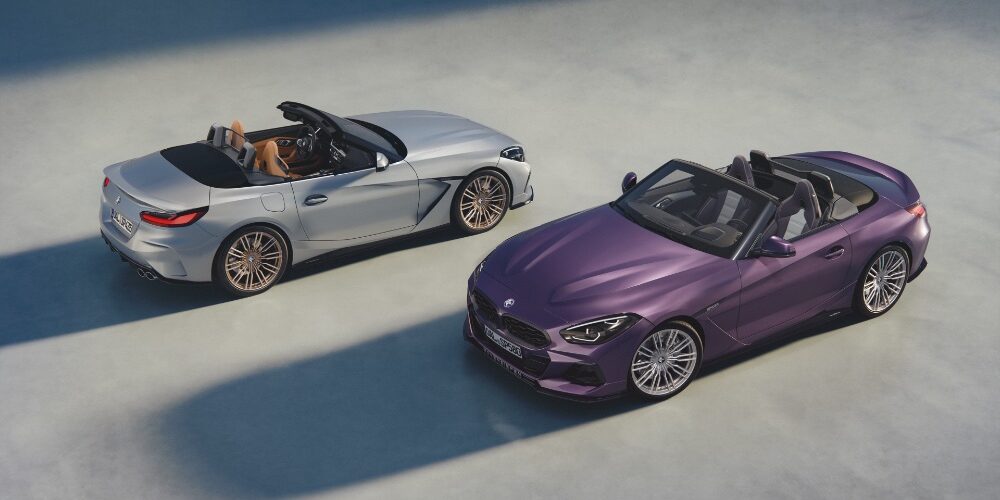
Bovensiepen has unveiled the Spider, a two-seat roadster with a 429bhp turbocharged straight-six and production limited to 99 hand-built cars. Developed with exterior input from Frank Stephenson Design, it combines revised intake and exhaust systems with changes to the suspension, cooling and bodywork. Orders are open, with the first deliveries scheduled for the end of the first quarter of 2027.
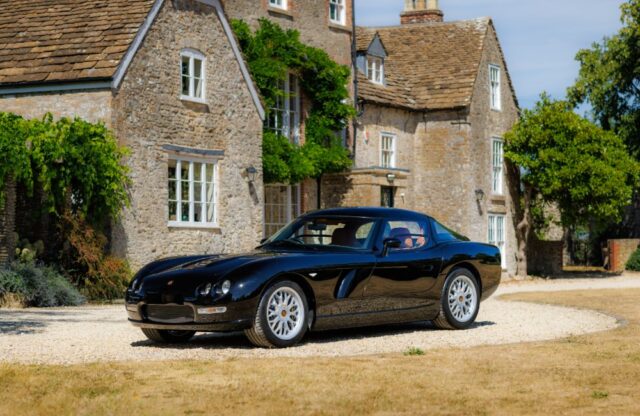
The Bovensiepen Spider is the third model from the family-owned manufacturer based in Buchloe, Bavaria. The brand made its debut with the Zagato (more details on that here) at FuoriConcorso on Lake Como in May 2025, while Stephenson also collaborated on the exterior components of the 05 GT. Design, engineering, development, manufacturing and personalisation are brought together at the company’s Buchloe premises.
Three big launches in such a short space of time – the 05 GT was only launched in June – is quite a risk, but circumstances forced the company’s hand. BMW stopped production of the Z4, and no replacement has been announced. For joint managing director Andreas Bovensiepen, an avowed roadster fan, there was one chance left to build a Bovensiepen Spider: “We thought: ‘Porsche is stopping, Jaguar has stopped. Everybody is stopping with roadsters, and there’s a last chance to work with the BMW Z4 as a base car.’”
He says. “We had to secure the last 99 units, which we bought in March 2026. It was therefore important to start development quickly so that the car would be ready for next season.”
We’ll have more from Andreas shortly, but first – what exactly is the Bovensiepen Spider?
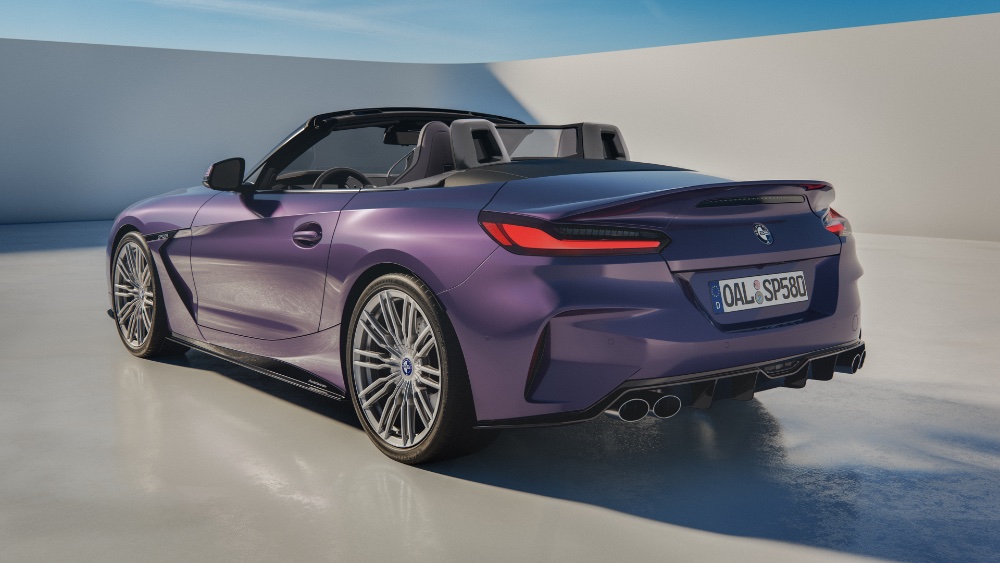
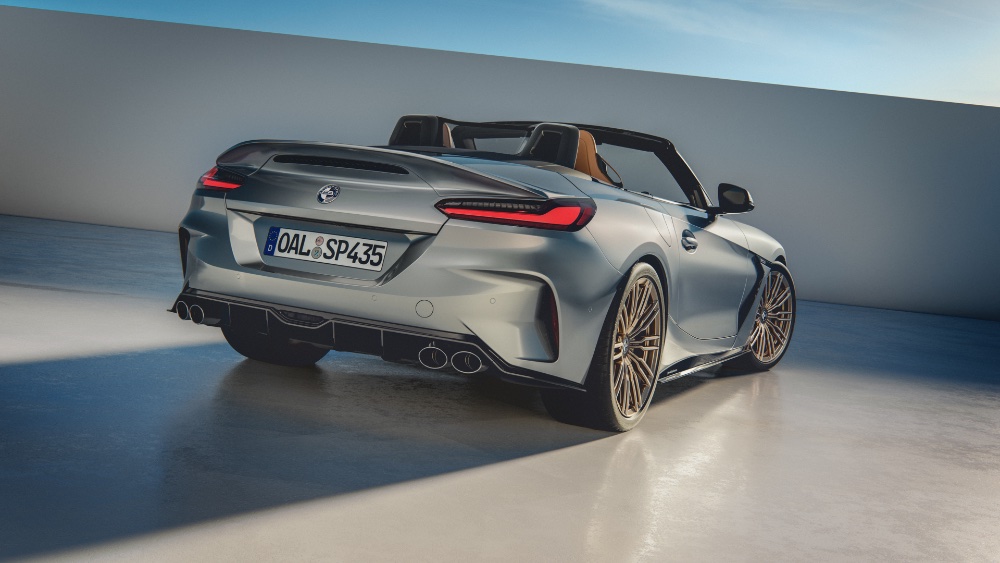
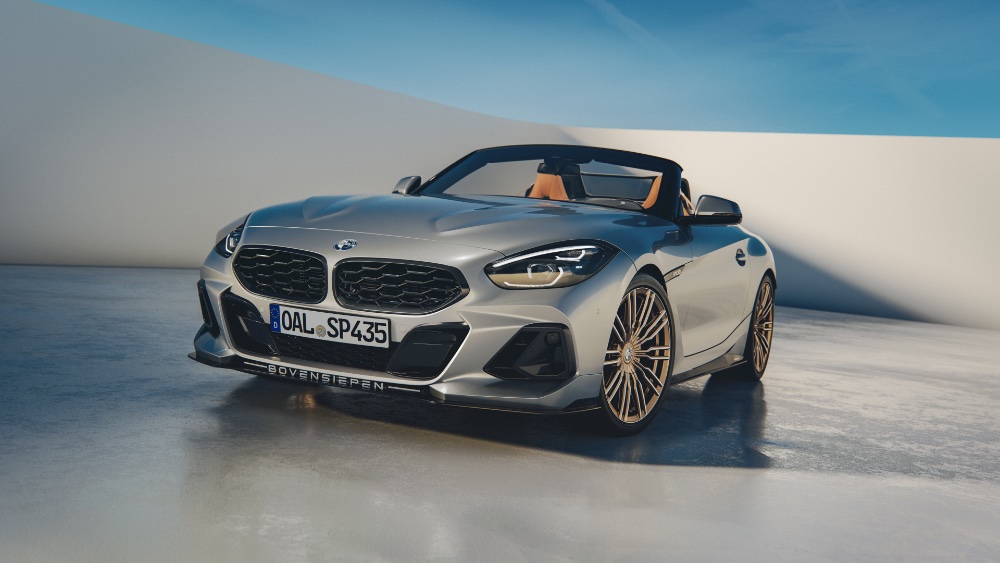
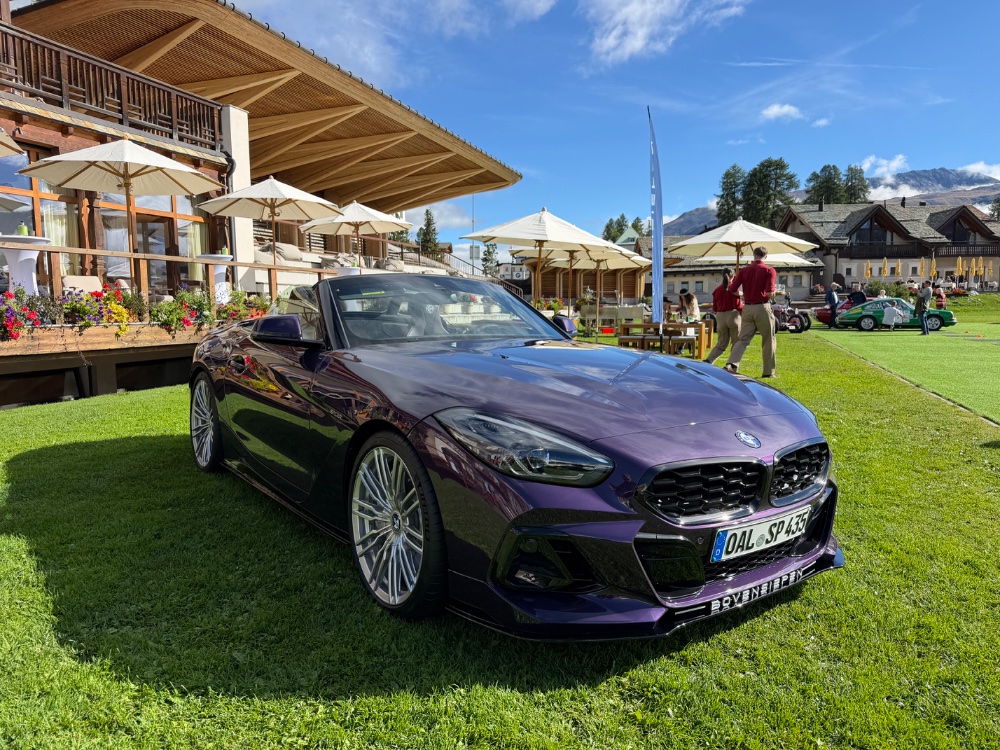
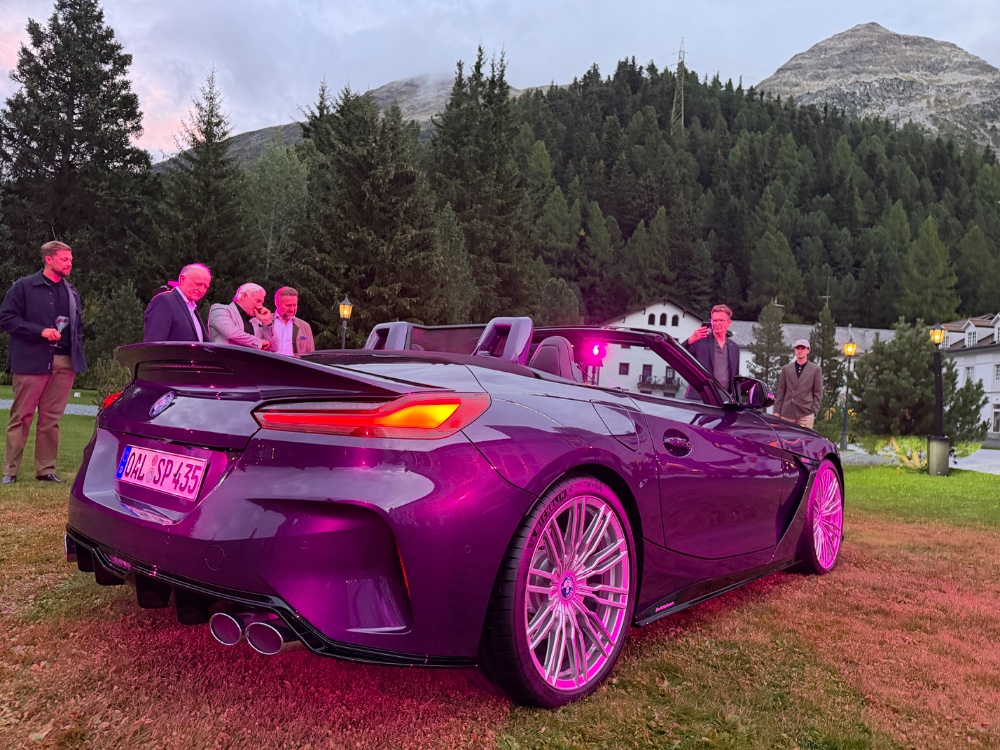
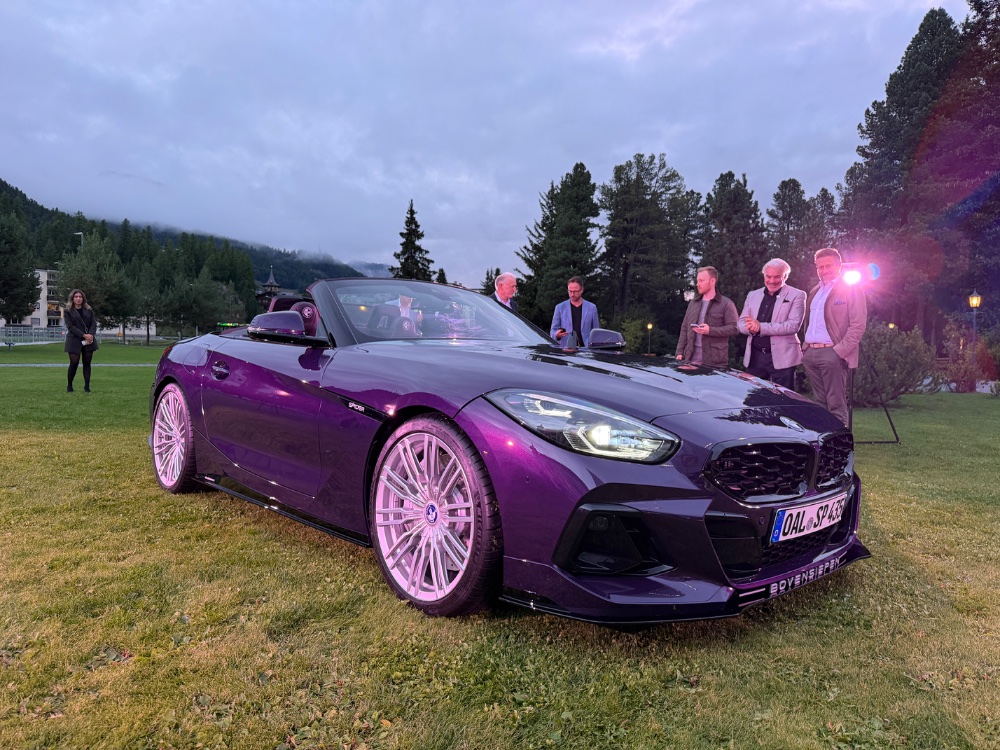
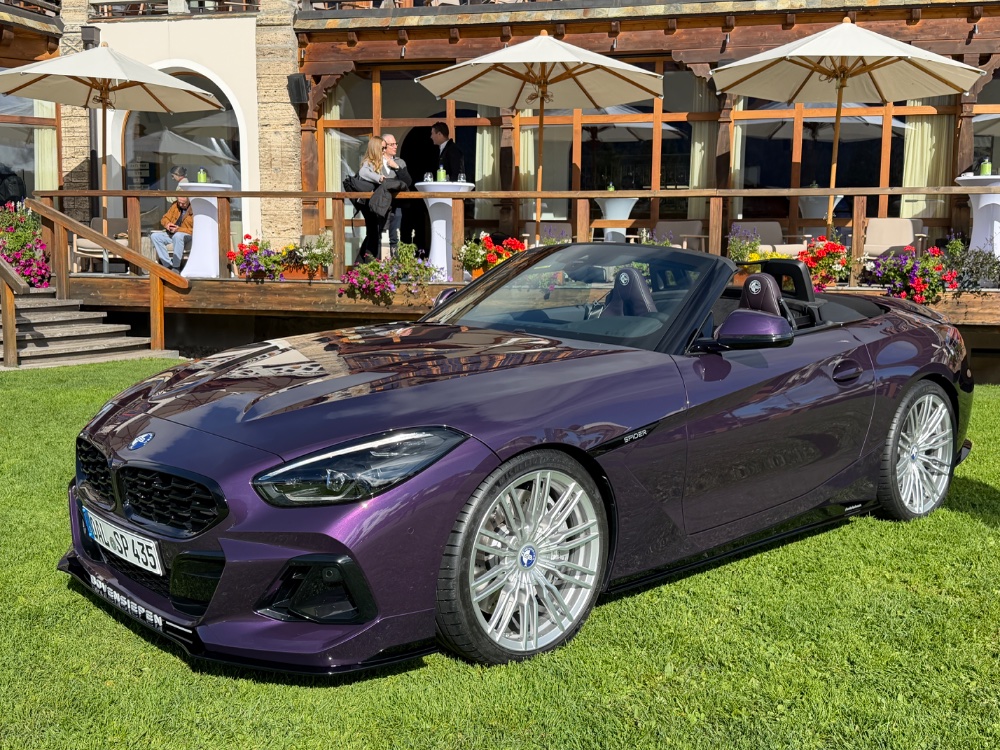
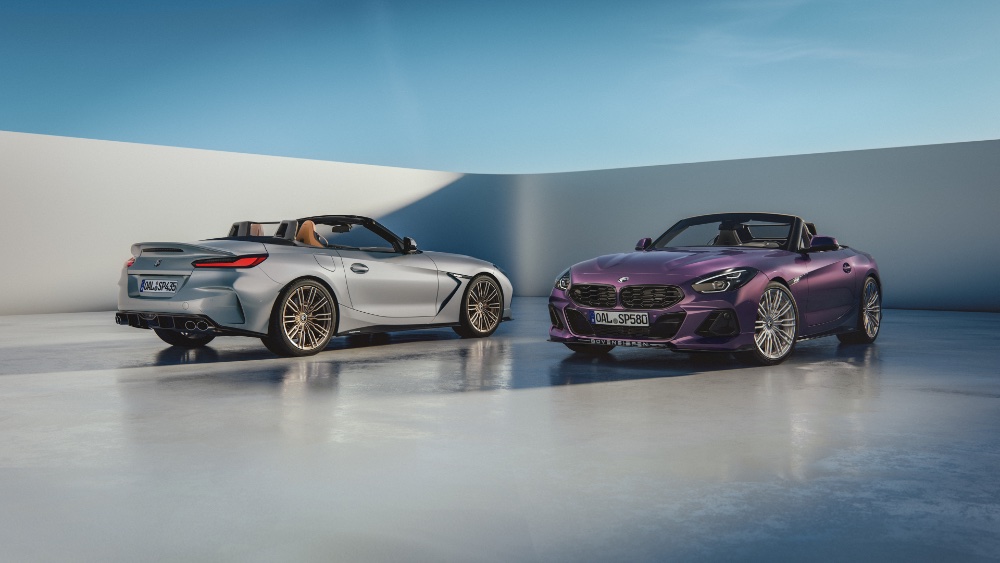
Its exterior treatment includes a high-gloss black front splitter with twin tips, large vents in the front wings, side skirts and a rear diffuser. An integrated rear spoiler extends the tail, while the black splitter and a black styling line running around the body link the design to the company’s other models.
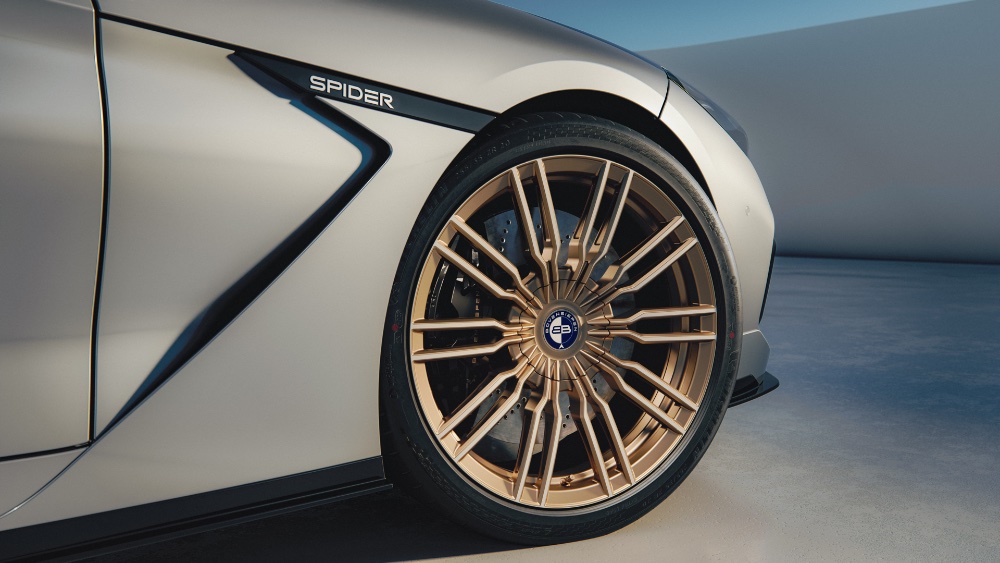
The 20-inch forged wheels have ten pairs of elongated spokes. Bovensiepen says its construction reduces weight, with intended benefits for agility and ride comfort. Overall dimensions are 4334mm long, 1864mm wide excluding mirrors and 1304mm high.
Power comes from a 3.0-litre straight-six with a twin-scroll turbocharger, producing 320kW, or 435PS, equivalent to 429bhp. Maximum torque is 428lb ft (580Nm). The Bovensiepen Spider’s preliminary DIN kerbweight is 1585kg, while the EC unladen weight is 1660kg. Bovensiepen quotes a weight-to-power ratio of 3.6kg per PS, equivalent to approximately 271bhp per tonne using the DIN figure.
The engine’s intake tract has been opened up to reduce restriction and is supplemented by an additional ram-air channel. The intake silencer has also been enlarged and reshaped to improve airflow. On the exhaust side, Bovensiepen has revised the sports system’s flow characteristics and back pressure, with the intake and exhaust changes providing the basis for the increased output; the exhaust terminates in four tailpipes. The firm claims 0-62mph in 4.2 seconds and a standard maximum speed of 162mph (260km/h). The optional Performance Package raises the quoted maximum to 183mph (295km/h).
Cooling changes on the Bovensiepen Spider include a 1000-watt electric fan supporting the main cooling package, intended to help maintain consistent powertrain performance under sustained load. The Performance Package adds a rear differential cover milled from aluminium, with enlarged cooling fins to reduce the differential’s thermal load. The company identifies repeated heavy acceleration during fast motorway driving as one of the operating conditions this modification addresses, linking the additional cooling provision to the higher maximum speed. The package also includes revised underbody reinforcement incorporating a V-brace. This is intended to increase structural rigidity and sharpen the chassis response.
Transmission is through a ZF eight-speed automatic, with steering-wheel paddles allowing manual gear selection. Bovensiepen says the ‘box adapts to driving style and completes shifts in approximately one-tenth of a second in Sport mode, while its automatic operation also accommodates more relaxed driving.
The Bovensiepen Spider’s chassis specification includes newly calibrated dampers, with particular attention to increased compression damping at low damper speeds. Longer auxiliary springs are fitted at the rear, a change Bovensiepen describes as providing a more responsive connection between the body and chassis.
Michelin Pilot Sport 4 S tyres are fitted to 9 x 20-inch front wheels and 10.5 x 20-inch rears. Tyre sizes are 255/35 ZR20 at the front and 295/30 ZR20 at the rear. The company says the wheel and tyre combination was selected to provide grip while retaining wet-weather performance. An optional high-performance braking system brings four-piston fixed front calipers, perforated discs measuring 395mm at the front and 345mm at the rear plus specific brake pads. The package is intended to improve resistance to fade under repeated braking.
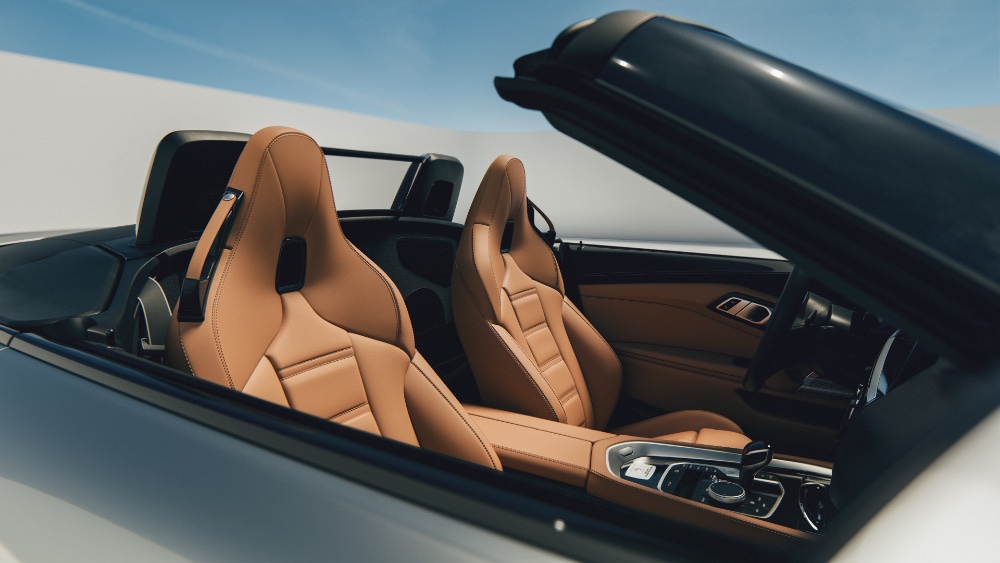
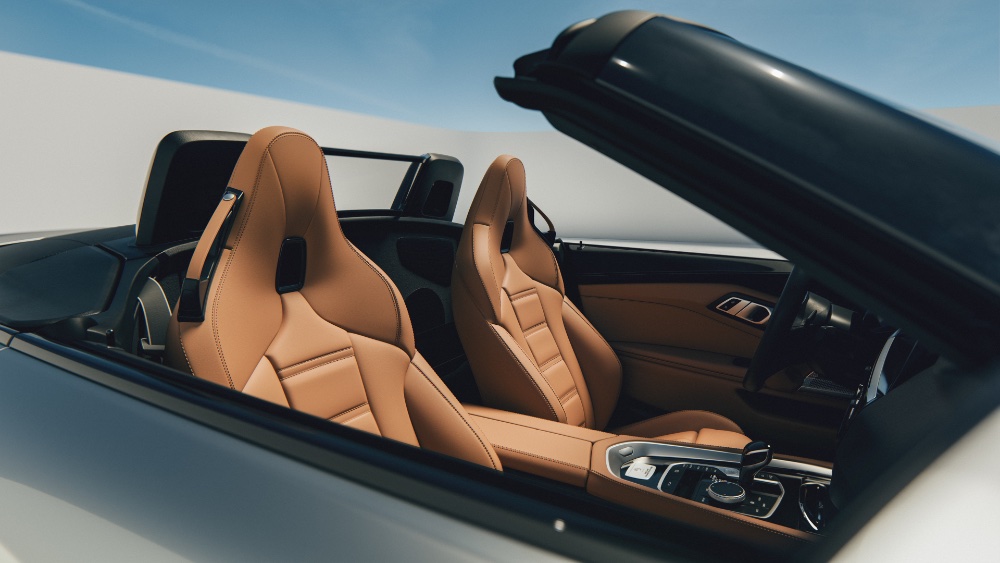
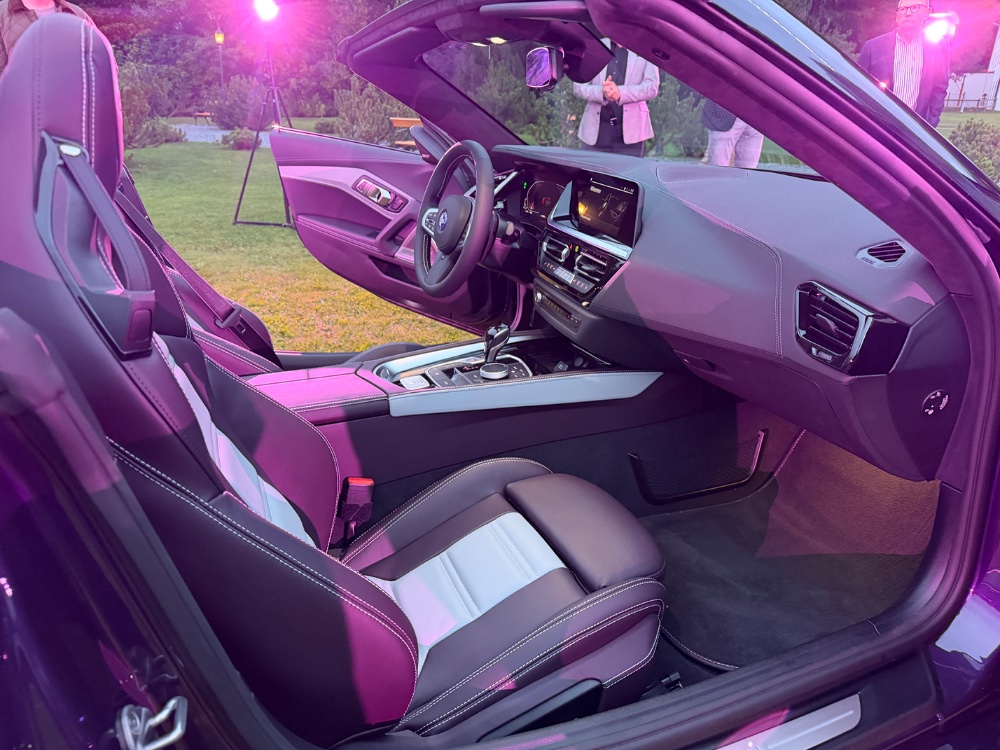
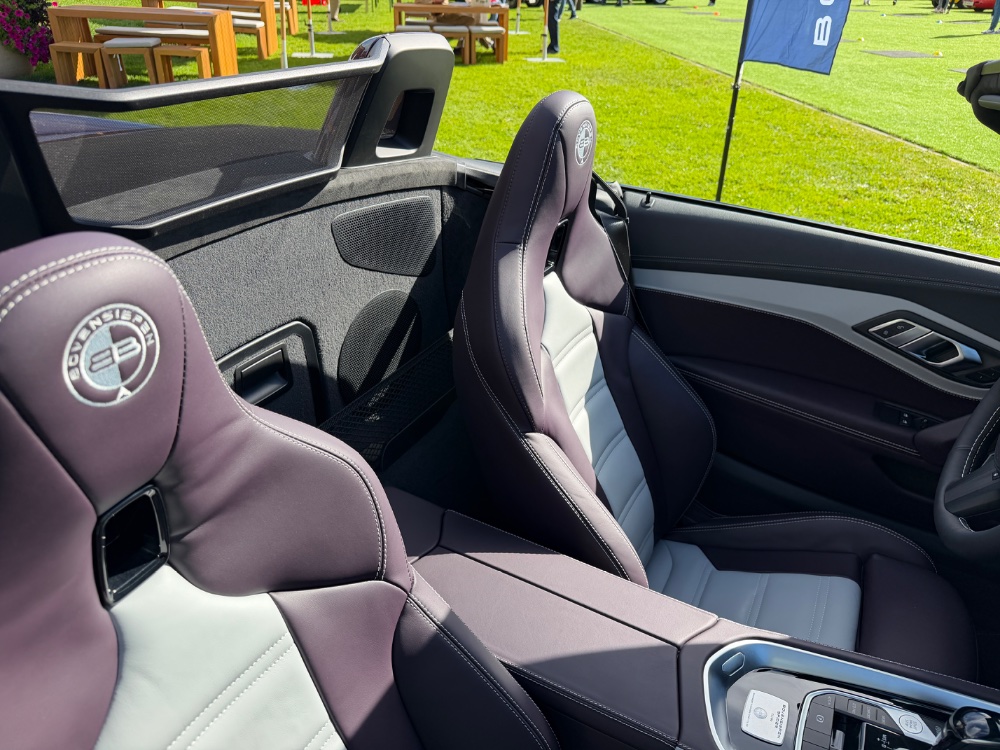
Luggage capacity is quoted at 281 litres, and standard upholstery combines Vernasca leather with Alcantara seat panels in a Bovensiepen-specific design. The steering wheel is trimmed in Lavalina leather, with steering-wheel heating, Comfort Access and a Harman Kardon Surround Sound System also included in the standard specification. Full Lavalina leather interiors are available through the company’s in-house saddlery, using dyed full-grain cowhide.
Further options on the Bovensiepen Spider include a leather-trimmed dashboard and Alcantara coverings for the A-pillar trim, wind deflector and the cover surrounding the roll bar. The footwells and boot can also be lined in Alcantara, while customers can specify headrest embossing and individually commissioned embroidery. Each car receives a numbered production plaque.
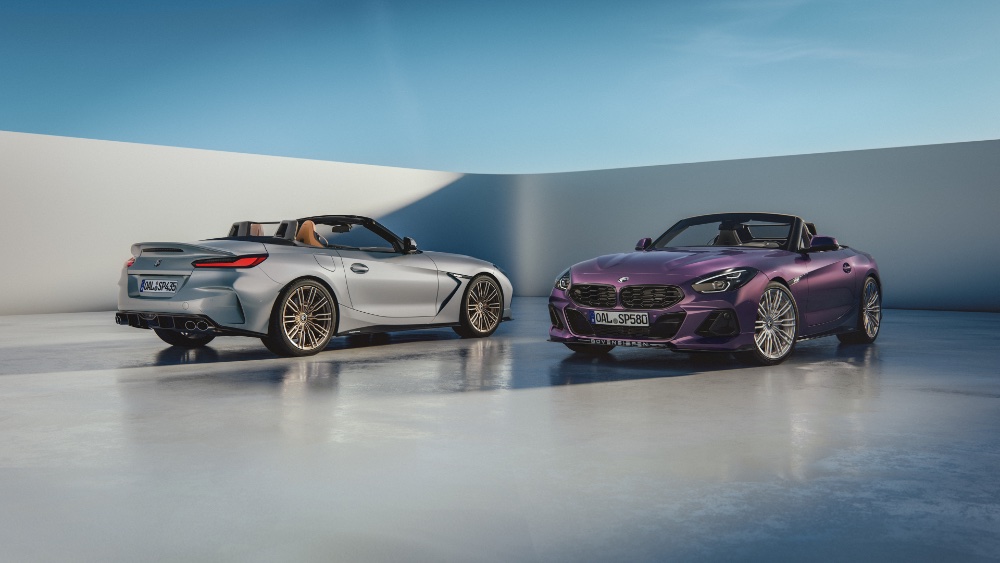
The announced paint allocation comprises 40 cars in Sapphire Black, 25 in Sanremo Green, 20 in Skyscraper Grey, nine in Thundernight and five in Frozen Grey II. Customers can request a different paint colour through the Buchloe factory. Black Vernasca leather and Alcantara upholstery is standard across the range, with a Cognac version also available for Sapphire Black and Sanremo Green cars. Before taxes, the price is €97,059.
We caught up with Andreas Bovensiepen at the Bernina Gran Prix, where the Bovensiepen Spider made its debut at the Kempinski Hotel before tackling the hillclimb with Andreas behind the wheel. “Making the roadster was a very emotional project,” Andreas explains. “I’m a roadster fan, and knowing there would be no successor to the Z4, I thought this was the last possibility. I don’t know what will happen in ten years, but probably we can’t expect a Z4 successor within the next five years – or perhaps ever.”
His love of roadsters comes from his time in BMW’s development centre from 1995 to 2000. In the beginning, he worked in the suspension department, signing off the overall set-up for cars such as the Z3 and E46.
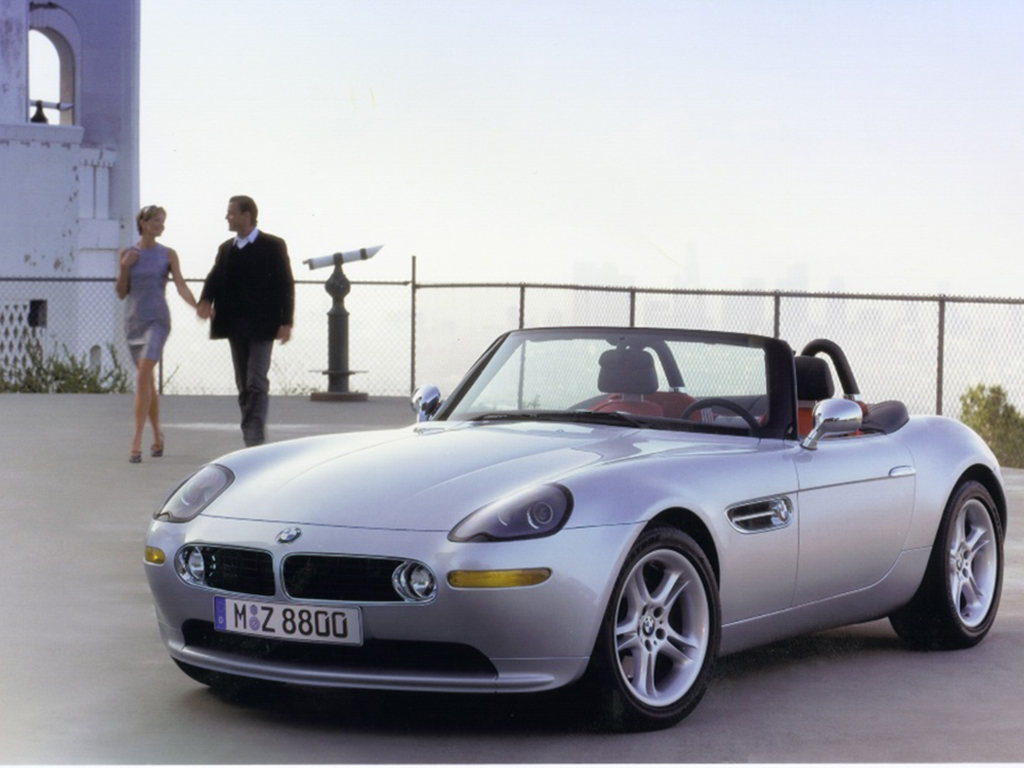
“In 1996, the first prototype of the BMW Z8 (pictured above) suddenly showed up. They asked me: ‘Can you drive it around? This is the first prototype. There are dampers and springs in it that we specified at the desk, but drive it and, if it’s quite okay, we can leave it. In two weeks, we have a drive for the board members to show them the car for the first time.’
“So I came into contact with the Z8 very early,” he recalls. “BMW had its established model series, such as the 3 Series, 5 Series, 6 Series and 7 Series, but it wanted to make small-volume vehicles with a very tight team. These included the Z3, Z8 and first X5, because nobody knew how many BMW might sell.”
Quite quickly, the head of special vehicles asked Andreas wanted to work on the Z8 team. “It was a really cool project, and I became very enthusiastic about roadsters and nice design. I’m very much connected to pure driving roadsters,” Bovensiepen says.
That meant that with Z4 production wrapping up, he had to act swiftly. “I had the idea in mind because I knew there would be no successor to the Z4. We bought one car and played around a little. We thought: ‘How would it feel? What are the basics? How much horsepower does it need to feel special?’” he recalls. “We had a standard Z4, and I said: ‘Put on some wheels for development purposes and give it some more power. We’ll drive it, see how it feels and then decide whether to make a model.”
The whole Bovensiepen Spider development process started about a year and a half ago, but the design work started internally in early 2026. “Frank Stephenson came at the end of June or beginning of July. He did his sketches and worked very closely with our team, perhaps for four weeks,” Andreas says. “As with the Zagato, we wanted an air vent in the front wing. In our proposal, it went straight down. Now it’s a little edgier and more dynamic – that came from Frank Stephenson Design. It looked at the overall design and made some refinements. For us, it was a perfect way to do it because we knew the general direction and could ask for fine adjustments.”
For a roadster fan, there’s already been some disquiet that there isn’t a manual option available for the Bovensiepen Spider, when BMW itself offered a limited-run manual gearbox version of the Z4. Andreas admits the economics simply didn’t add up for such a short-run production. “I’m a big fan of manual gearboxes, but this is the last series, it’s only 99 cars and it’s at the end of the life cycle. Looking at our customer base, we thought probably two-thirds would like a fast-changing eight-speed automatic that they could shift at the steering wheel. Perhaps a third, or 25 percent, would look for a manual,” he explains.
“We couldn’t make two versions, because it would be too costly. You have to set up the engine, and there are more restrictions on torque with the manual gearbox. If we’d gone with the manual, there would have been no chance of going to 580Nm. Considering acceleration and our customer base, the better option was the quick-shifting automatic. The 0-100km/h time is much faster.”
Andreas said he was convinced when he drove the test mule – and that the horsepower was more than enough. “We’re now in a world where cars have 500bhp or 600bhp, but in this car, with 435bhp, you still have wheelspin when you accelerate in first gear,” he says. “You need to shift quickly into second, so you think: ‘This is more than enough power for this small vehicle.’ We have 295mm-wide rear tyres. Without all-wheel drive, this is a very nice combination.”
Andreas admits to being surprised by just how good the donor car’s suspension was to begin with – however, there are some changes for the Bovensiepen Spider. “When we fitted the 20-inch wheels, with 295mm tyres at the rear and 255mm at the front, we felt quite quickly that we should stiffen the damping, which we did, especially at the rear,” he says. “There’s an auxiliary spring, which is a rubber part. We wanted more stability, for example at the Nürburgring, so we fitted a longer auxiliary spring. That worked quite well. The main springs were still fine. We wanted a certain sportiness, so this car is sportier than you might be used to from what we did in the past.”
There has also been further reinforcement at the rear: “There are V-shaped strengthening bars from BMW, but we changed and reinforced them, and that worked well, too. Finally, you play a little with camber, toe and tyre pressures.”
The major changes for the Bovensiepen Spider come via cooling, intake and exhaust. ““We immediately felt there were restrictions in the air intake. The Z4’s air intake is more or less behind the right-hand headlight, so it has no direct ram-air effect,” he says. “We repositioned it so that when air comes through the kidney grilles towards the front coolers, some of it goes to the side, and our air intake is directly there. That gives a certain ram-air effect. We also enlarged the air-filter housing, so the engine can breathe much more freely.”
The standard car’s petrol particulate filter has been removed, and the catalytic converters are all still in place – meaning the Spider still meets emissions regulations. “The big companies are very cautious and often like to be 30 percent below the emissions limit. We might be 10 percent below. We don’t need quite so much margin, especially with open cars. I don’t think many people will drive 100,000 miles in two years and then perhaps have to undergo an emissions test. With these cars, perhaps people will drive 5000km to 10,000km a year.”
In the mid-2000s the Bovensiepen family invested in its own emissions testing set-up in Buchloe – a facility that is also used by other small-scale companies such as Ruf, as well as by BMW. “We saw how everything was getting stricter. We could go to external emissions laboratories, but it’s very costly, and at the beginning you don’t know exactly how many hours you’ll need to fulfil the legislation,” he says. “We said: ‘Let’s establish our own rolling-road test bench for emissions testing in Europe.’ We can also do American and Japanese testing, and make it available to other tuners or, in Germany, the ADAC automobile club.”
The Bovensiepen Spider has two options when it comes to performance – one with a maximum speed of 260km/h, the other at 295km/h. “If you drive at high speed for a long time, especially on a German motorway, we found we needed additional rear-axle cooling. We machined an aluminium part with cooling fins,” Andreas explains. “Some customers say: ‘This is an open car. I’m fine with a maximum speed of 260km/h.’ But if you like to go faster, particularly on German motorways, and you often accelerate hard and drive very fast, the rear axle gets warmer and warmer. Let’s say you get up at five in the morning and drive 20km at 295km/h. We needed this additional machined-aluminium rear-axle cover.”
This is an optional extra on the car of around €2500. “In the past, we had integration into the BMW plant. You could put a rear axle with Alpina cooling into the assembly process, and BMW would fit it on the assembly line. Now we buy complete cars and have to dismantle them,” Andreas explains. “It’s quite a process. You have to remove the rear axle, drain the oil and change the V-shaped brace for stiffness. It takes quite a few hours. We decided to offer two versions so that the car’s base price wouldn’t be too high. If people are happy with a roadster with a maximum speed of 260km/h, we retain the standard BMW rear axle. But for those who want to go faster, accelerate hard or perhaps spend all day on a racetrack, we need the additional cooling.”
There are also more options for the Bovensiepen Spider’s interior – although there’s a more limited range of standard colours and interiors, anything is possible. “The basic interior uses BMW leather, with Alcantara in the centre of the seat. The standard interior for most cars has black seats with black Alcantara in the centre. With Sapphire Black and Sanremo Green, we also have brown,” Andreas says.
The car on display had Bovensiepens’s two-colour Lavalina option. “The customer can make use of our whole saddlery. They can come to Buchloe and say: ‘I have this colour on my wife’s handbag. Can you make the leather in the same colour?’ More or less the same is possible as in the Zagato, but I don’t think everybody will want, for example, the finest leather in the boot. I think this is a more practical car, so we’ll see. But we can fulfil everything.”
Looking more broadly at the Bovensiepen project, don’t expect to see another car quite so soon. “The strategy was to work from the top down: the Zagato as a halo project, then a daily driver such as the 05 GT, which our customers are looking for, especially as a Touring, and now this emotional roadster project,” Andreas says. “You shouldn’t expect the next model to arrive within six months. We now have to put everything we’ve started into production.”
Production of the first Zagato customer car has started, and in October GT production begins, with the Spider starting at the end of the year or the beginning of 2027. Bovensiepen aims to deliver the first 30 or 40 cars in March. “With the 05 GT, we were really overwhelmed. Within a few days, we had 500 emails saying: ‘The car is cool. We’d like more information.’ This is a car people have been waiting for.”
However, there’s the thorny issue of US homologation. The Zagato’s US-approved status is still around six months away, and there are no short-term plans with regards to the 05-GT; they’re also hoping to keep the Spider close to BMW’s homologation. “We’re a small company, and we’re not solely dependent on new Bovensiepen vehicles. If we can earn good money servicing BMWs or Alpinas, let’s do that. Or we can move further into restoration – there are always collectors who want a nice rebuild or restoration of their cars. There are different fields in which we can have fun.”
That raises the question of a restomod. “Perhaps we’re not only looking at new cars,” Andreas chuckles. “There’s no decision yet, but we’re thinking in different directions. Perhaps at some point we’ll do a restomod. That could happen, too.”
The issue of parts availability compared to a Porsche-based restomod is a thorny one, however. “We have a lot of collectors with the old turbo models, the E12 and E24, and we do restorations. We’ve also carried out further development of the injection systems and that kind of thing,” Andreas says, referring to Alpina Classic. “We haven’t decided on a restomod project. The Porsche idea is great, and it works very well with the 911, but I don’t think there are many examples where people really earn money from it.
“Of course, you have things such as Kimera and Lancias, but I think a lot of it is a playing field for investors saying: ‘I have some money. Let’s make some cars. Whether we earn money or not doesn’t matter.’ That’s not our approach. It’s a very interesting field, but it’s difficult to earn money. In terms of price, I think the market for a BMW-based car is more limited than for a Porsche 911.”
Alpina Classic is up and running, with E12 and E24s proving popular choices – although Andreas admits it hasn’t been the company’s main focus so far. That could change over the next ten years, however. “We are able to offer full paint and body restoration, but we’re more involved in engine, rear-axle and gearbox rebuilds. From time to time we do complete rebuilds for some customers, but we don’t have a paint shop. We have to outsource that.”
One of the problems has been determining the cost of a restoration. “You can’t see everything at first with an old car. A customer says: ‘How much will the restoration cost? I need quite an exact figure.’ If you then tell them it’s twice the price…” Andreas chuckles. “When you’re as driven towards perfection as we are, if we see something rusty, we don’t want to cover it up. We have to be frank and say: ‘This goes much deeper’ or ‘There’s something that needs welding.’ We’re also dependent on BMW’s supply chain for old spare parts. If that’s a problem, we’re limited, because we can’t recreate every BMW engine part or every other component.”
As for future Bovensiepen models, Andreas is very clear on not going head to head to the BMW-run Alpina nameplate (more on that here). “BMW is positioning the new Alpina line-up with big cars such as the 7 Series and X7. We don’t want to compete against it. It should have its playing field. It doesn’t make sense to counteract that,” he says. “We need to investigate further what BMW’s Alpina model line-up will be, and we absolutely don’t want to interfere there. No 7 Series, no XB7, nothing from Bovensiepen in that area.”
The flip side of that is there’s unlikely to be a 3 Series model, either. “It’s not really our focus at the moment. I won’t say never, but we had a very successful year last year, and the dealers took a certain amount of stock. We don’t want to disturb that process. There are still cars in the market, so there’s currently no need,” Andreas says. “The further down the ladder you go, the more difficult it becomes [in terms of feasibility]. We have to wait and see what the BMW portfolio will look like, then decide. But it’s not one of the most important things we’re looking at in the short term.”
We’re coming to the end of our conversation – Andreas was due to take on the Bernina Gran Prix course in the Bovensiepen Spider, and needed to relearn where the course went (a bit different from the last time in his E30 M3 touring car) – he wants to make clear that people don’t see Bovensiepen as Alpina 2.0. “We have more limited models and much less volume. In 2025, we had our highest number ever with Alpina: 2616 cars. Bovensiepen production will be in the hundreds. There’s no comparison,” he says.
He also wants to address any potential concerns about the cost of the models. “They are more expensive because, if you start with a complete car and have to dismantle it to a certain extent, it becomes more costly. There’s no longer factory integration with BMW. Bovensiepen will be much smaller. That’s one reason we’re focusing more on design. We’re also aiming for a different clientele. There will be some existing customers, of course, but we’d like to go a little further up the ladder.”
However, he’s also clear that the wider company doesn’t have to rely on Bovensiepen cars. “We have servicing for BMW cars, Alpina cars and Alpina Classic. We’re also moving further into second-hand cars: cool used cars with V8 and inline-six engines. We have different fields within the company, and every field should develop.” There is, of course, also the wine…
More details on the marque, including the Bovensiepen Spider, can be found here.