The upper end of the collector car market provided some of the most encouraging news from Auto e Moto d’Epoca 2026, as the organisers reported a 30 percent increase in both international visitors and overseas exhibitors. The 43rd edition, held at BolognaFiere from October 22 to 25, attracted visitors from 34 countries, with more than 5000 cars and motorcycles spread across 14 halls and 235,000 square metres of exhibition space.
According to Auto e Moto d’Epoca 2026 organiser Intermeeting, demand was concentrated on rare, expensive classics and limited-production machinery, with buyers showing increasing interest in modern supercars and hypercars already regarded as collectables. Conditions were considerably more difficult for cars priced below €50,000, which were feeling the effects of wider economic uncertainty.
There was certainly no shortage of high-end machinery on offer. Across the dealer halls, the traditional Italian favourites from Ferrari, Lamborghini, Maserati and Alfa Romeo were joined by significant Porsches, Mercedes-Benz models, pre-war machinery and competition cars. Two Ferrari F40s shared the AutoVergiate stand, while other dealers offered everything from early coachbuilt Italian cars to more recent limited-production performance models.
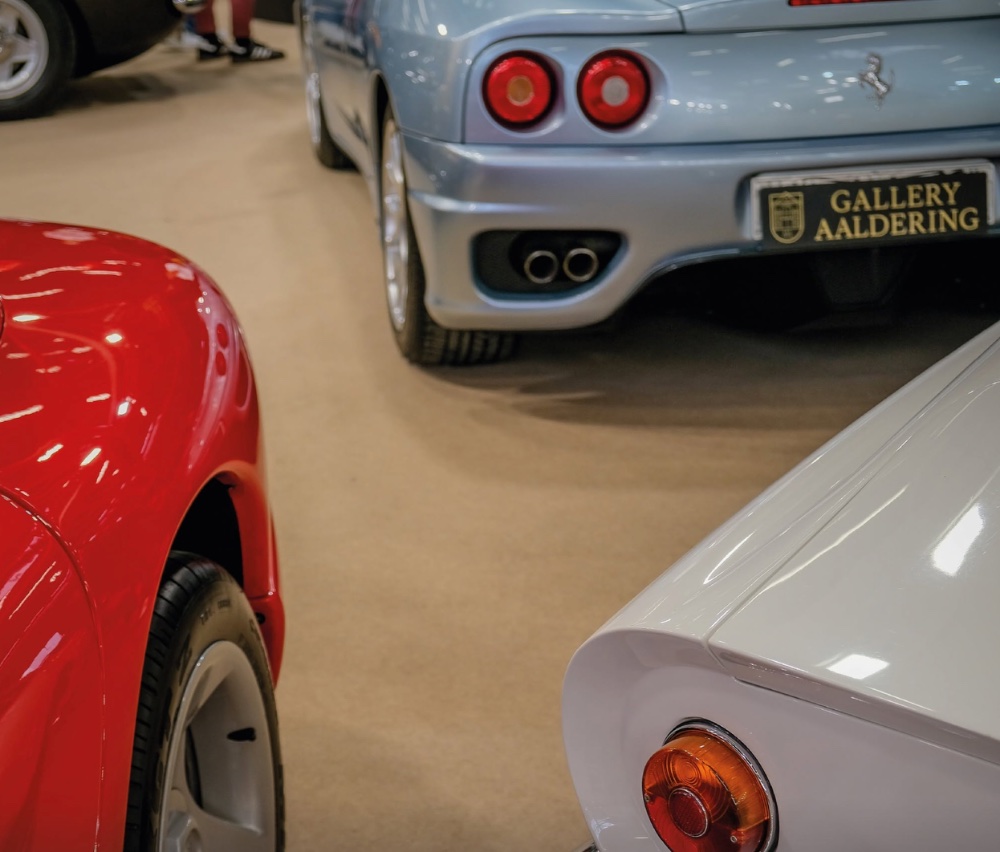
The presence of international specialists continues to grow. Dutch dealer Gallery Aaldering made its first appearance at Bologna with 18 cars, including a Ferrari 250 GT Lusso, Mercedes-Benz 300 SL Roadster and Lamborghini Miura P400 S. Metropole and Belgium’s OldtimerFarm were among the other established European participants, while the show’s new partnership with InterClassics Brussels brought further cross-border involvement.
Italian dealers were equally well represented at Auto e Moto d’Epoca 2026. Auto Classic exhibited the 1951 Lancia Aurelia B20 bodied by Ghia for Count Aymo Maggi, one of the founders of the Mille Miglia, alongside an extraordinary Fiat 500 Allemano Spider and the unique Stola GTS. Montini Automobili’s selection included an Alfa Romeo GTA 1300 Junior and an SZ, while Prewarcar brought a Graham Lucenti Special that finished tenth at the 1934 Indianapolis 500.
A wide selection of Ferraris, Lamborghinis and Porsches filled the spaces between, with the larger dealers joined by smaller specialists and private sellers. Bologna’s appeal to traders has traditionally been its sheer scale, with everything from inexpensive restoration projects to seven-figure collectables available under one roof. This year’s results suggest the market is becoming more selective, although the organisers have not published a breakdown of completed sales or the total value of transactions.
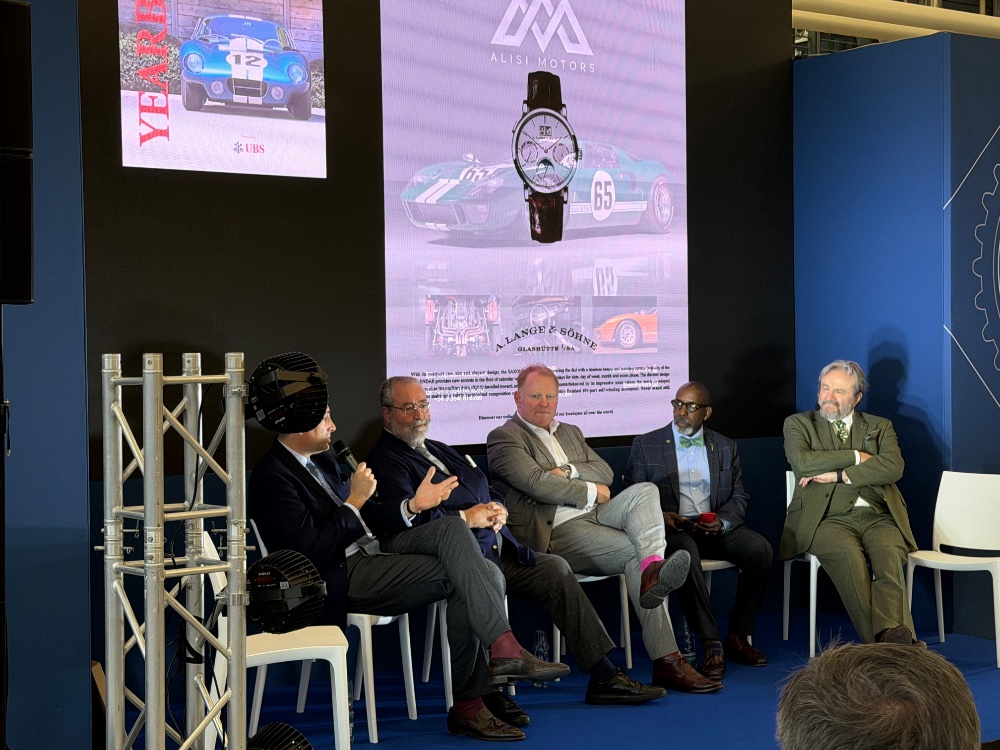
The state of the collector car market was also discussed at the presentation of the 31st edition of the Classic Car Auction Yearbook, compiled by Adolfo Orsi and, for the first time as co-author, his son Antonio. The latest volume examines international auction results between September 2025 and August 2026, recording more than €3 billion in turnover, an increase of 54 percent, and 536 cars achieving seven-figure prices.
The launch, held at the ACI Storico stand, was followed by a discussion moderated by Donald Osborne and featuring representatives of Artcurial, Bonhams, Broad Arrow, Gooding Christie’s and RM Sotheby’s. The Yearbook figures relate to international public auctions rather than business conducted at Bologna, but provided useful context for the conversations taking place in the dealer halls.
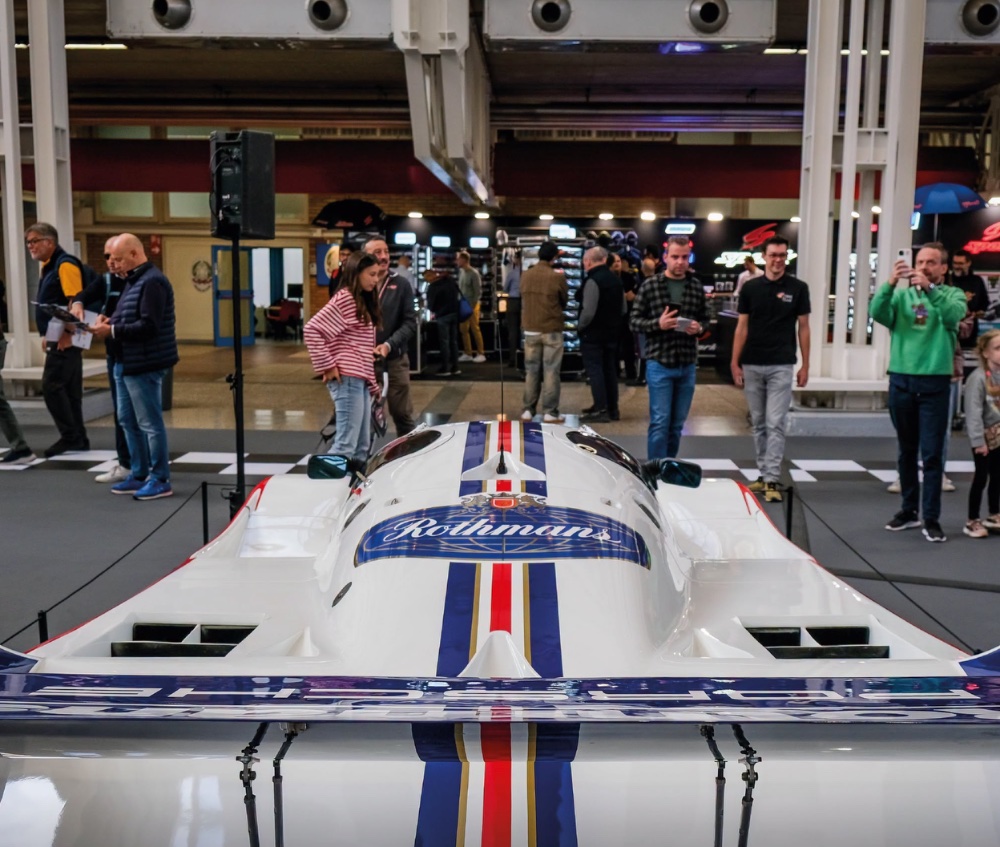
There was plenty to see away from the sales stands at Auto e Moto d’Epoca 2026. The centrepiece of the exhibition programme was Icons of Speed – Endurance Legends, which brought together 12 significant competition cars in the main exhibition. Among the principal attractions were a Gulf-liveried Porsche 917, Rothmans Porsche 956 and the Le Mans-winning Sauber-Mercedes C9. They were joined by the Bentley EXP Speed 8, Lancia LC1 and LC2, Bugatti EB110 LM, Alfa Romeo Tipo 33 and Maserati MC12 Corsa. Important loans came from the Nationales Automuseum – The Loh Collection in Germany and the Fondazione Gino Macaluso per l’Auto Storica.
Several manufacturers and historic organisations used the event to celebrate important anniversaries. Lancia’s 120th birthday was marked by ACI Storico with a selection of eight competition cars, including the D50 Grand Prix car, LC2, Sandro Munari’s 1972 Monte-Carlo Rally-winning Fulvia Coupé HF and Miki Biasion’s Delta Integrale Safari. ASI, which celebrated its own 60th anniversary, also paid tribute to Munari, who died earlier this year, with a Fulvia and Stratos associated with his Safari Rally appearances.
Carrozzeria Touring Superleggera celebrated its centenary with Gianni Agnelli’s distinctive green-and-blue Ferrari 166 MM Barchetta and an unrestored 1931 Alfa Romeo 6C 1750 GT Berlinetta Aerodinamica Tipo Mille Miglia, and the Museo Ferruccio Lamborghini brought the founder’s personal Miura SV to commemorate 60 years since the model’s introduction, while Mercedes-Benz marked 140 years since Carl Benz’s pioneering motor car patent with a display including the 300 D ‘Adenauer’ and 190 E 2.5-16 Evolution II.
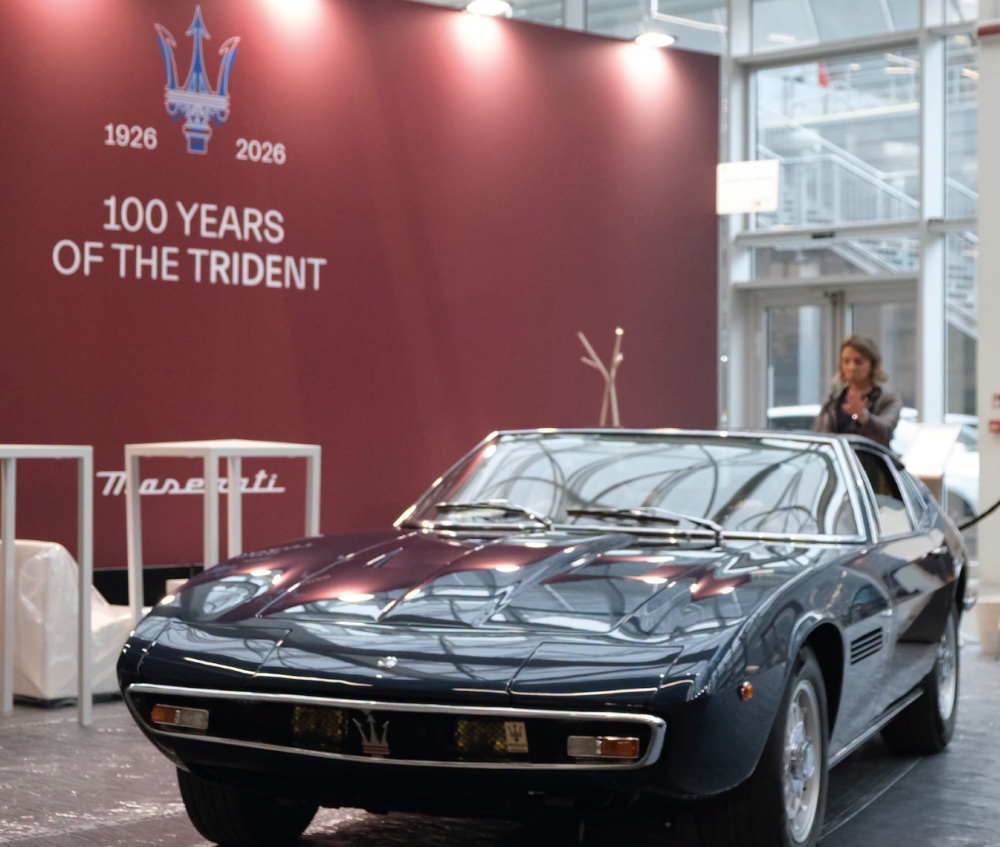
Maserati commemorated a century since the Tipo 26 became its first racing car to carry the Trident badge, while the Porsche clubs marked 50 years of the transaxle family and 75 years of Porsche Motorsport. Other celebrations included 60 years of the Alfa Romeo Duetto, 40 years of the BMW M3, 50 years of the BMW 6 Series, 90 years of the Fiat Topolino and the Vespa’s 80th birthday.
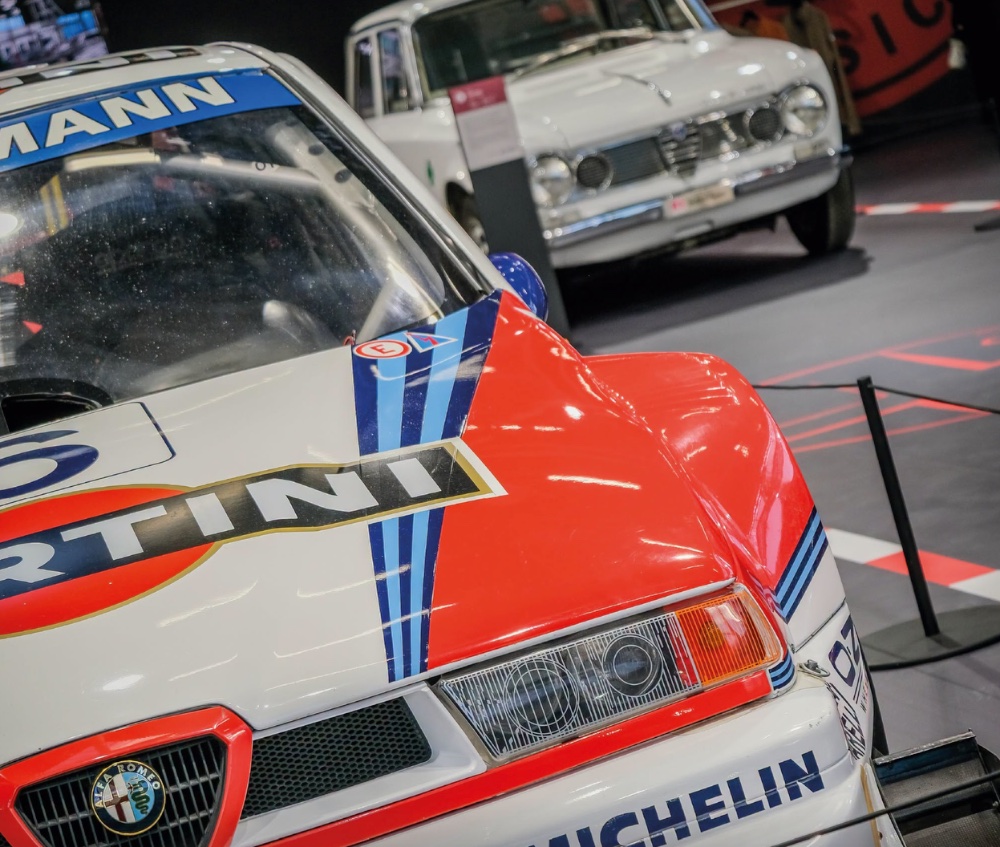
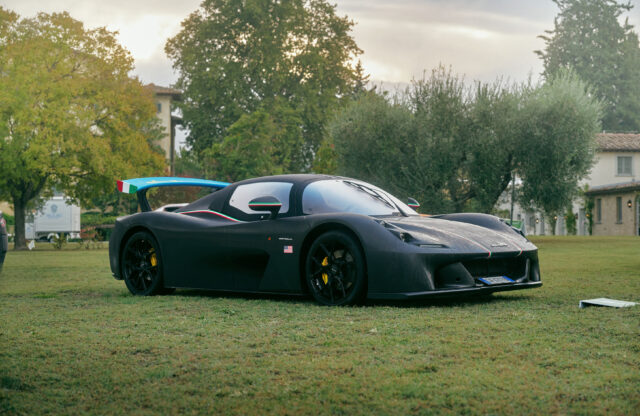
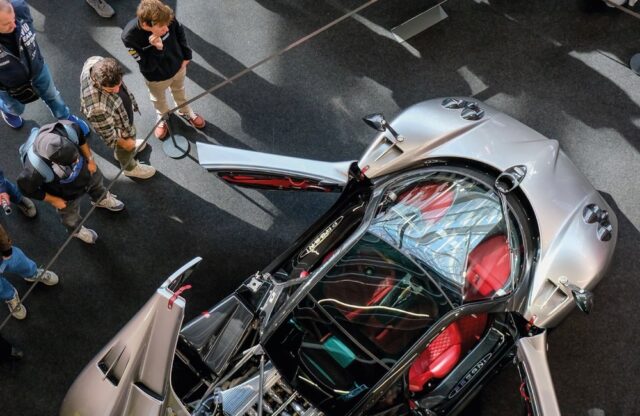
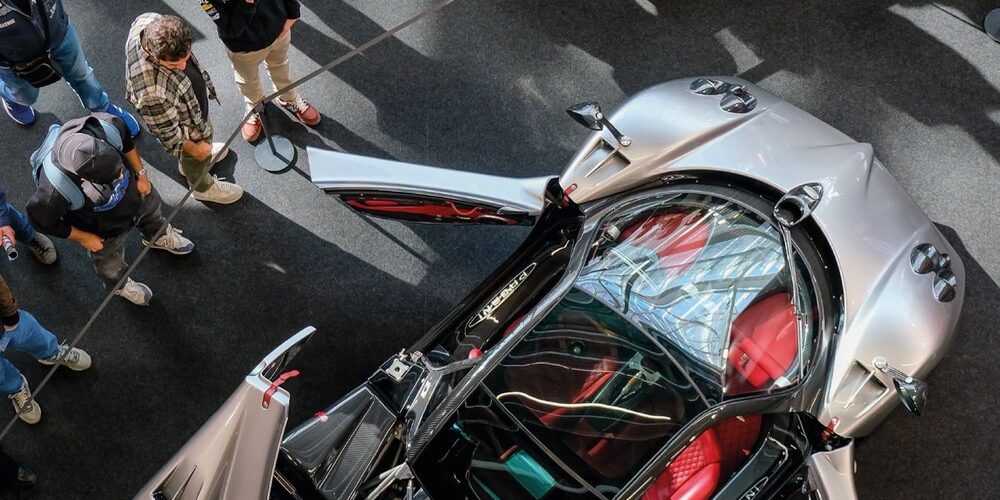
The manufacturers’ displays at Auto e Moto d’Epoca 2026 included Alfa Romeo’s selection of sporting saloons, comprising the Giulia TI Super, 75 Turbo Evoluzione, 155 V6 Ti ITC and contemporary Giulia Quadrifoglio. The Motor Valley presentation brought together a Ferrari 250 GT Lusso formerly owned by conductor Herbert von Karajan, a Pagani Zonda F and Dallara machinery, while another exhibit explored Ayrton Senna’s personal connections with Ferrari.
There was also considerable activity in the motorcycle section. Honda Motor Europe brought important Grand Prix machines associated with Eddie Lawson, Mick Doohan and Valentino Rossi, including examples from its collection in Motegi. The new Prestige Bikes area catered specifically for collectors of rare motorcycles, alongside displays of historic 500cc Grand Prix machinery and the returning Italian Motorcycle Championship – Custom Bike Show.
Among the other events, ACI Storico presented Giampaolo Dallara with its 2026 Premio Eccellenza, while the 1000 Miglia organisation outlined preparations for the centenary of its inaugural race in 1927. Conferences on restoration skills, conservation and the future of historic motoring also formed part of the programme, while European Corvette Day, organised in association with the National Corvette Museum in Kentucky, took place on October 25.
The organisers have already confirmed plans to expand their calendar in 2027. Padova Only Classics will run from February 26 to 28, specialising in cars and motorcycles built up to 1977. It marks a return to the city where Auto e Moto d’Epoca spent four decades before moving to Bologna in 2023. The principal event will remain at BolognaFiere, with the 44th edition scheduled for October 21-24, 2027.
The sheer variety of machinery in the dealer halls at Auto e Moto d’Epoca 2026 remains one of Bologna’s greatest attractions, particularly for those prepared to venture beyond the obvious blue-chip classics. Among the thousands of vehicles on display were some remarkable survivors, unexpected rarities and unusual pieces of automotive history.
Magneto has chosen ten of the cars that particularly caught our attention.
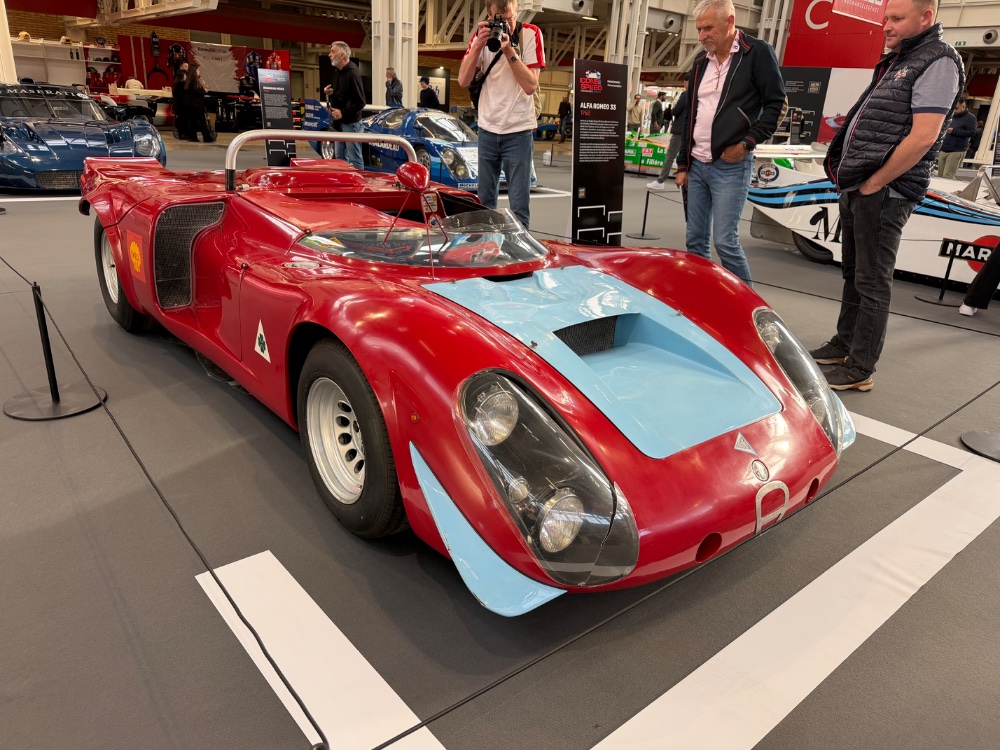
Built by Autodelta as a closed-bodied Tipo 33/2 ‘Daytona’, chassis 750.33.014 enjoyed a distinguished, if short, Works career. It finished seventh overall at the 1968 Daytona 24 Hours, part of Alfa Romeo’s celebrated fifth-sixth-seventh finish, before Mario Casoni and Lucien Bianchi took it to third at that year’s Targa Florio. It returned to Sicily in 1969 but was damaged in practice. On June 17, 1969, Alfa Romeo sold the car to Pistoia privateer Aldo Bardelli. Autodelta had already removed the roof and, in 1970, it developed the car into the open Spider seen today – one of only three 33/2s converted by the factory.
Bardelli campaigned it in Italian hillclimbs until 1971, after which it passed to Giulio Dubbini and then Peter Kaus’s Rosso Bianco collection in Germany. Acquired subsequently by Evert Louwman, it returned to Italy in 2010 under Alessandro Carrara, retaining much of its original patina and appearing at Goodwood.
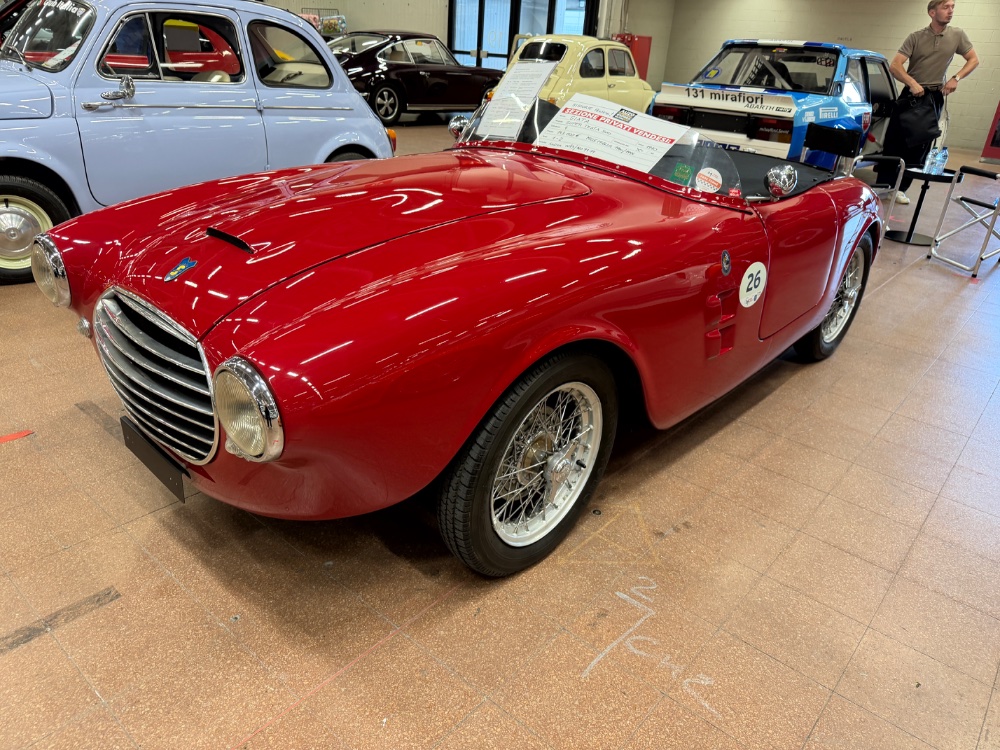
Tucked away, somewhat innocuously in the ‘cheap car’ hall at Auto e Moto d’Epoca 2026 was this Mille Miglia-compatible rarity. Built in 1940 on a Fiat Topolino chassis, this SIATA 500 Super Testa received a performance cylinder head that raised the 569cc four-cylinder’s output to around 22bhp. Its early custodians included Roman racing figures Roberto Nappi, Rosario Bonito and Carlo Paganini, the latter buying it in May 1948. Mauro Pasquale took possession shortly before the 1949 Mille Miglia, with ownership passing through several more Roman hands before the car moved to Tivoli in June 1950.
Its most significant transformation followed when Turin’s Carrozzeria Vignale clothed the tiny Fiat in lightweight aluminium spider coachwork. Umberto Proietti acquired it in 1958, before Egidio Mazzei brought it back to Rome the following year. Granted ASI certification in 1991, chassis 500072869 participated in the 1994 retrospective Mille Miglia with Vago and Niggi, finishing 187th. A restoration followed between 2005 and 2012. It was offered for €143,000.
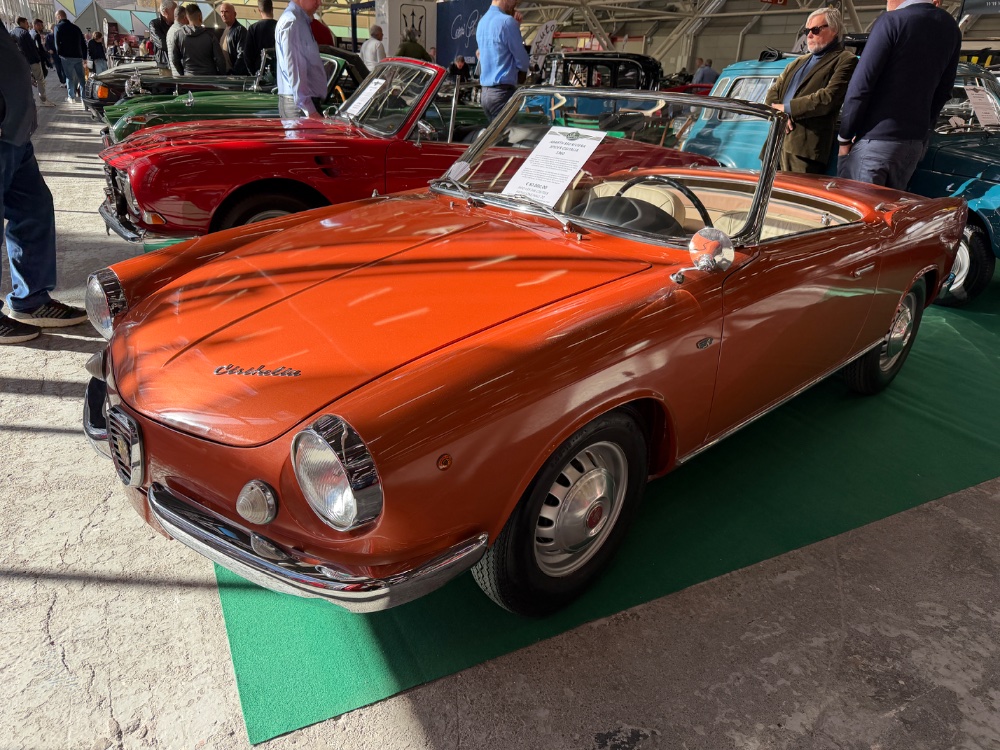
Carlo Abarth’s Riviera Spider acquired an unexpected second life on the other side of the Atlantic. Styled by Giovanni Michelotti and bodied by Allemano in Turin, it was the final, 850cc evolution of a series of low-volume Abarth roadsters begun in 1957. They were costly to produce and difficult to sell; one specialist estimates fewer than 100 Riviera Spiders and related Scorpione coupés were built. Unsold bodyshells went to Cisitalia Argentina in Buenos Aires, where they were completed with locally sourced Fiat 600 mechanical components and sold as Cisitalia Abarth Gran Sports in 1960 and 1961.
The Bologna example was advertised as a 1960 Riviera Spider, with an 847cc Fiat-derived engine claimed to produce around 51bhp. City Motors described its interior as original, with certification from the Italian Fiat Register, although its foreign registration was still being transferred to Italy. The asking price was €80,000.
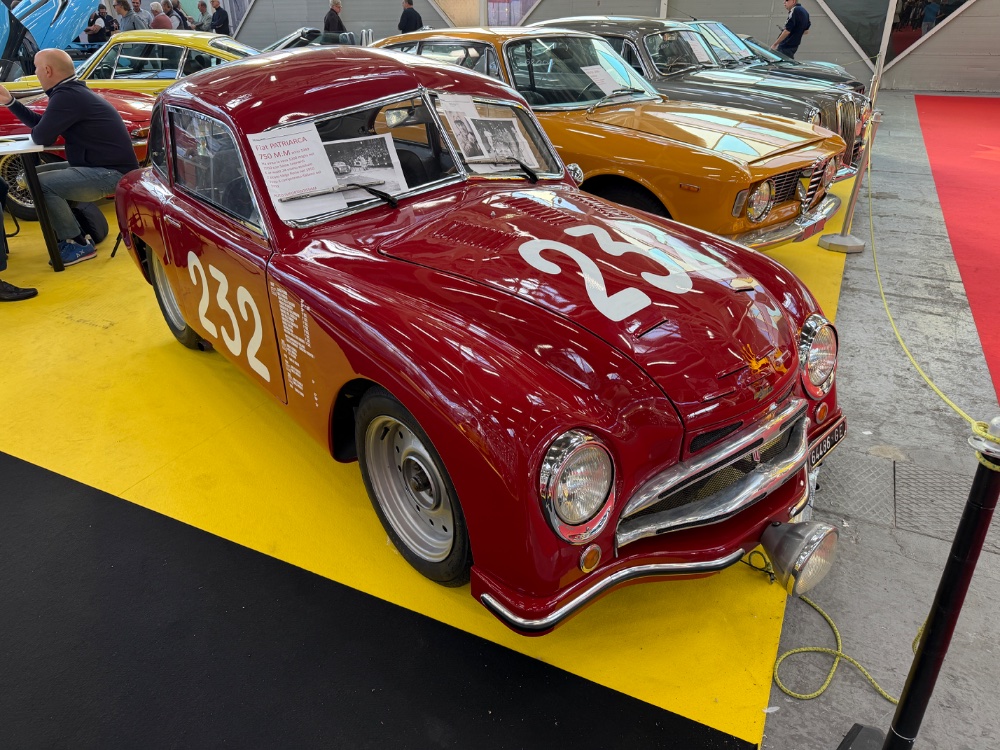
Rome-based tuner Rodolfo Patriarca built this tiny 750 Berlinetta Sport, chassis 156073, for racer Sesto Leonardi in 1949, using a Fiat 500 C chassis, aluminium coachwork by Mario Faina and a Giannini-tuned 750cc engine. With Agostino Prosperi alongside him, Leonardi took 15 hours, 55 minutes and 40 seconds to complete the 1950 Mille Miglia, finishing an extraordinary 24th overall and winning the 750cc sports class.
The pair also finished third in class at that year’s Targa Florio, while Leonardi secured the Italian 750cc sports car championship. Further competition appearances included the Coppa d’Oro delle Dolomiti, although an accident during the 1950 Coppa della Toscana left the car damaged. It later called America home.
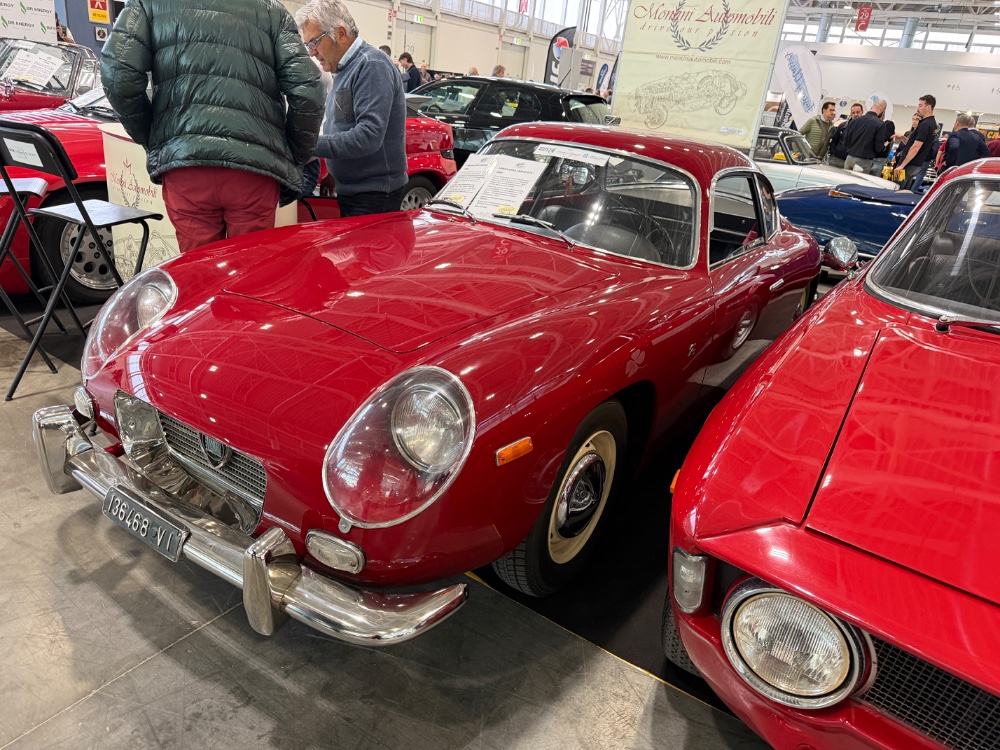
Zagato’s Appia GTE was introduced in 1958, when Lancia began selling the Milanese coachbuilder’s lightweight coupés through its own dealers. The model employed the Appia’s narrow-angle V4, but in later 1960 specification its 1090cc engine produced around 59bhp, helped by a four-into-one exhaust manifold. Covered headlamps gave the early GTE its sleek nose before changes to Italian lighting regulations prompted an open-headlamp version.
This 1960 car was sold new in Turin and, according to dealer Montini Automobili, had been registered in Vicenza since 1967. It later formed part of the collection of Edilberto Mandelli, a noted Lancia enthusiast. A comprehensive restoration of its bodywork, engine and mechanical components followed in 2011, with the dealer reporting matching engine and chassis numbers, factory-correct paint colour and rare original bumpers. Carrying ASI and FIVA certification, it was offered at Bologna for €115,000.
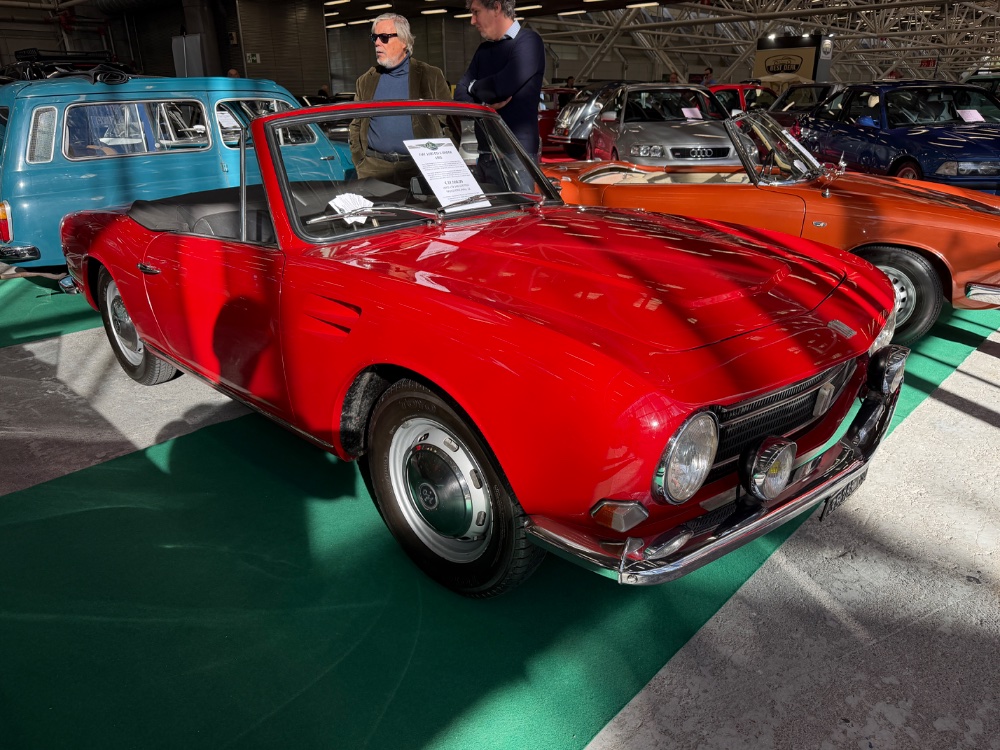
Giovanni Michelotti’s neat little roadster was built by Officine Stampaggi Industriali, the Turin coachbuilding and manufacturing concern better known as OSI. Under its carefully proportioned body lay Fiat 1100D-derived underpinnings and a 1221cc four-cylinder producing around 57bhp. The 1200S Spider appeared in the early 1960s, with production continuing in small numbers alongside a related coupé and the Neckar-badged St Trop for other markets. Around 280 Fiat-badged Spiders are commonly quoted, although the specialist OSI register cautions that exact production totals remain uncertain.
The 1965 example displayed by City Motors was reported to have had just two owners and retained its original Italian black numberplates and registration booklet. It had also received ASI’s highest, gold-plate certification. It was offered at Bologna for €27,000.
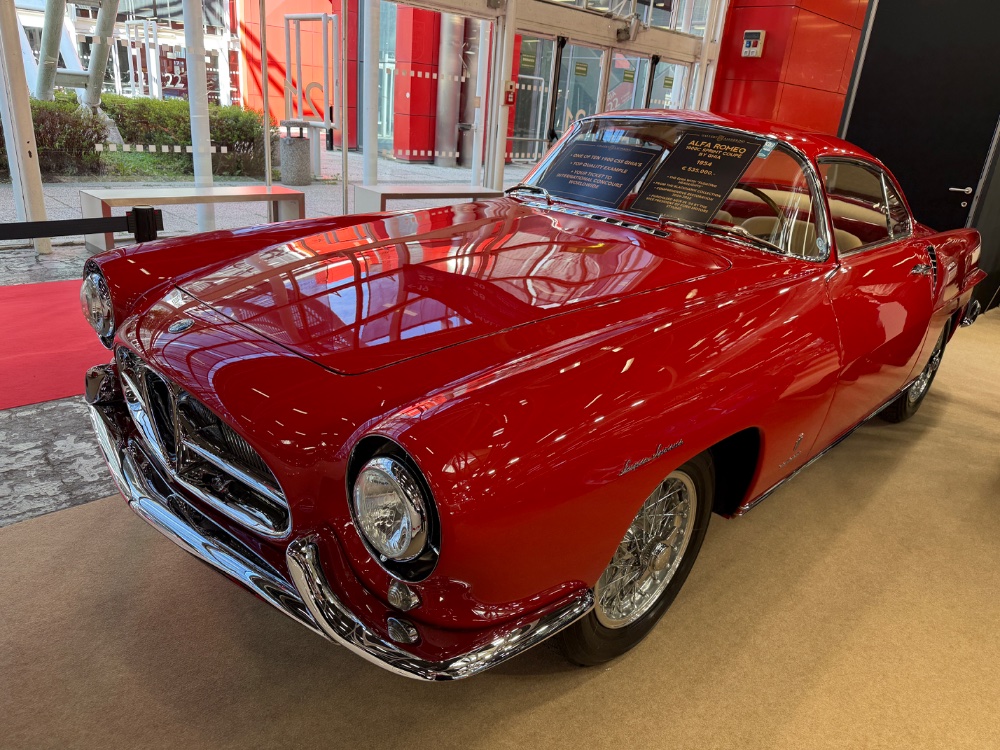
This Alfa Romeo 1900C Super Sprint, chassis 01838, is one of a tiny group of Ghia-bodied coupés completed in 1954. Giovanni Savonuzzi, formerly of Cisitalia, gave it an arresting face: the headlamps appear to float inside grille openings, while a panoramic windscreen and abbreviated tailfins betray an American influence. Beneath the bespoke coachwork lay Alfa Romeo’s short-wheelbase 1900C chassis, powered by a 1975cc twin-cam four developing around 115bhp. Its first owner was reportedly George Walker, who would become Ford’s styling vice-president and was closely associated with the Thunderbird.
The car subsequently joined the Blackhawk Collection in California, leaving it for private ownership in 2014. Restored extensively during 2021 and 2022, it has since won concours awards at Paleis Het Loo and Antwerp. Gallery Aaldering brought the car to Bologna with a €535,000 asking price.
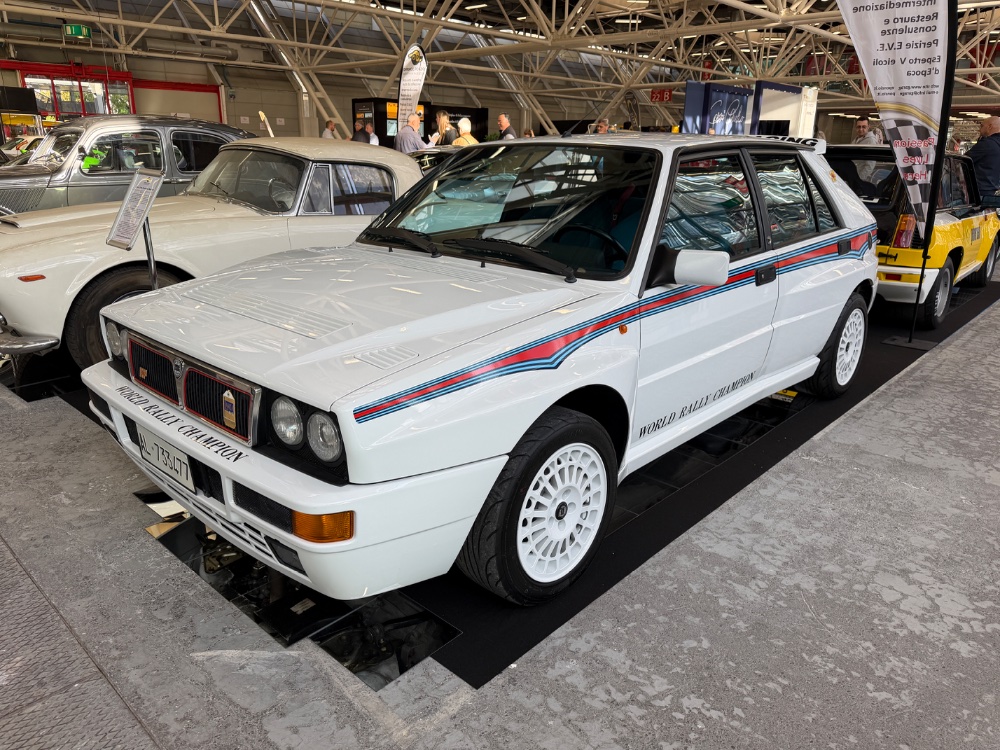
Lancia’s sixth successive World Rally Championship manufacturers’ title in 1992 brought a final Martini-liveried celebration of the Delta’s extraordinary Group A career. Just 310 Martini 6 Evoluzione I models were produced, following the 400 Martini 5 cars released earlier that year. Beneath the white bodywork and widened arches sat the familiar turbocharged 2.0-litre 16-valve four-cylinder engine, five-speed gearbox and permanent four-wheel drive. The Martini 6 featured revised red-and-blue stripes, special badging, a numbered plaque and turquoise Alcantara-trimmed Recaros.
This particular example has an appealing backstory. Originally owned by an established Lancia dealership, it remained within the same family after the business closed in 2000. Garage Ponzio reports just 49,500km, completely original paintwork and lifelong maintenance by the same mechanic, including a recent cambelt replacement. At Bologna, its asking price was €236,900.
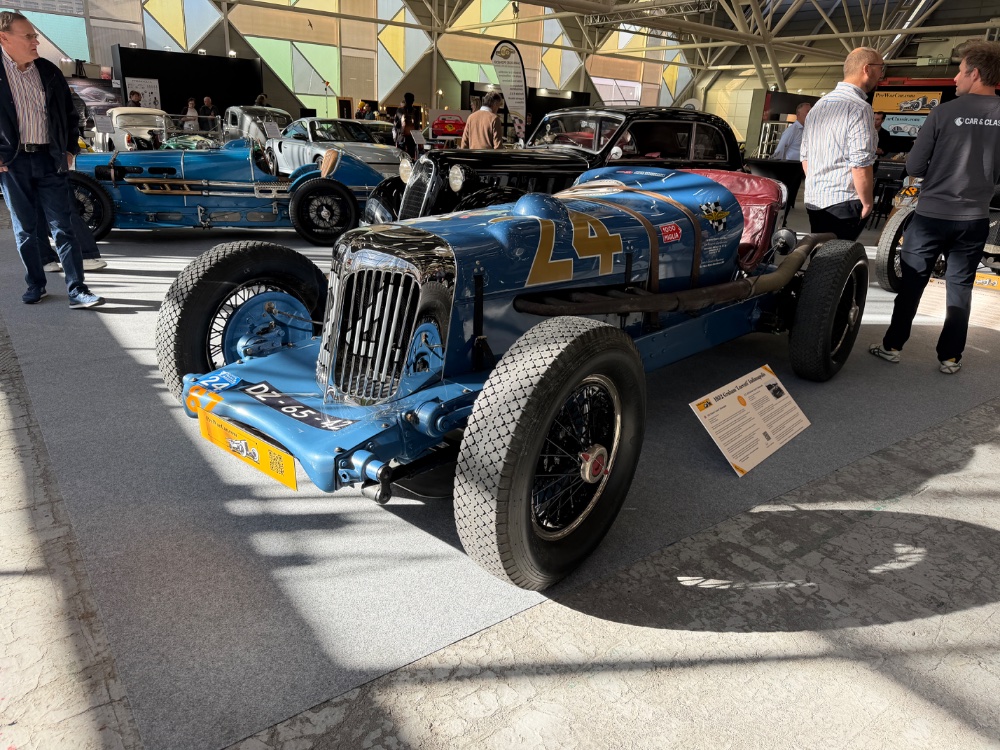
Indianapolis’s Depression-era ‘Junk Formula’ encouraged resourceful privateers, including Angelo Lucenti, Roy Painter and John Saunders. Their 1932 Lupasa Special combined a Graham Blue Streak Eight chassis with a modified 4.3-litre sidevalve straight-eight featuring a high-lift camshaft, larger valves and four Winfield carburettors. The frame’s unusual rear-axle arrangement allowed exceptionally low bodywork. It failed to qualify at Indianapolis in 1932, but returned in 1934 as the Lucenti Special. Herb Ardinger qualified at 111.722mph; he and relief driver Danny Day finished tenth, the car’s finest result.
Renamed the Frigenor Special for 1935, it again missed the race after a qualifying accident. Remarkably, it later became an orphanage plaything. Kept by one owner from 1953 to 2006, it was subsequently restored around its surviving aluminium body and original drivetrain, winning its class at Amelia Island in 2010. Dutch-registered today, it also participated in the 2019 Mille Miglia.
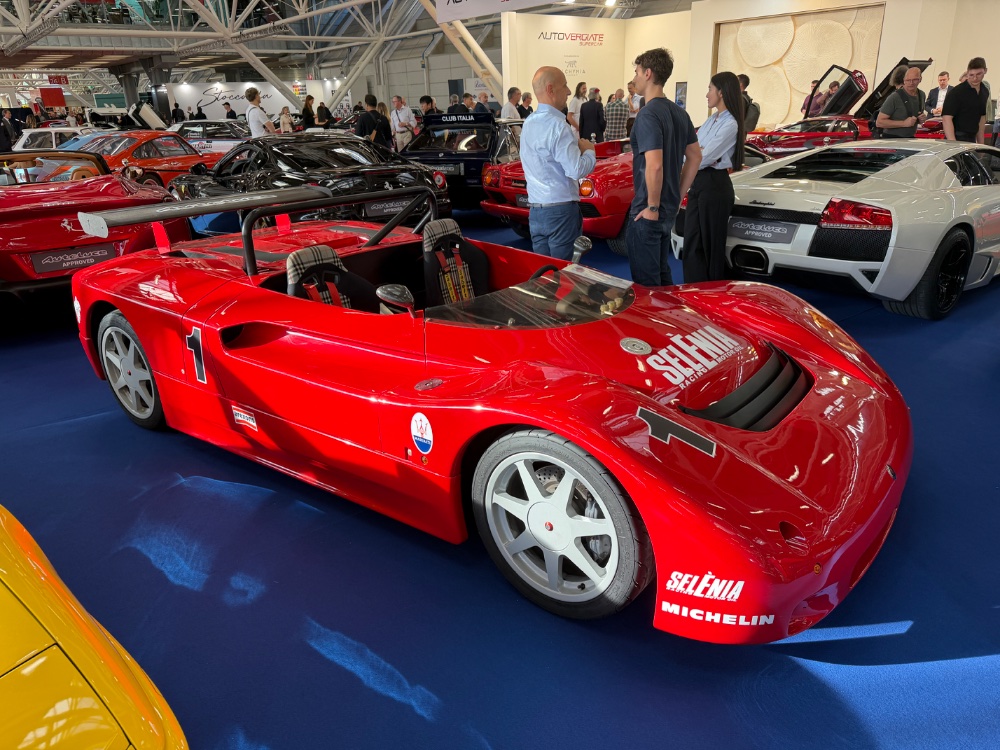
Conceived under Alejandro de Tomaso in 1991, the Maserati Barchetta was an unlikely attempt to revive the marque’s competition credentials during the troubled Biturbo years. Carlo Gaino of Synthesis Design fashioned its low, screenless body around a backbone chassis evolved from the stillborn Chubasco supercar. Composite construction helped keep weight to 775kg, while a mid-mounted, 2.0-litre twin-turbo V6 produced approximately 311bhp through a six-speed manual gearbox. Maserati claimed the car had a top speed exceeding 300km/h – and it weighs just 775kg.
Built for the Grantrofeo Monomarca Barchetta Maserati, it raced during 1992 and 1993, before the championship disappeared following Fiat’s takeover. Only 17 were produced, and the proposed road-going Stradale never entered series production, although the chassis architecture lived on in the De Tomaso Guarà. This red 1992 car, advertised by Autoluce Modena as number 11 of the 17, is Maserati Classiche-certified.
More information on Auto e Moto d’Epoca 2026 and the event’s future editions can be found here.