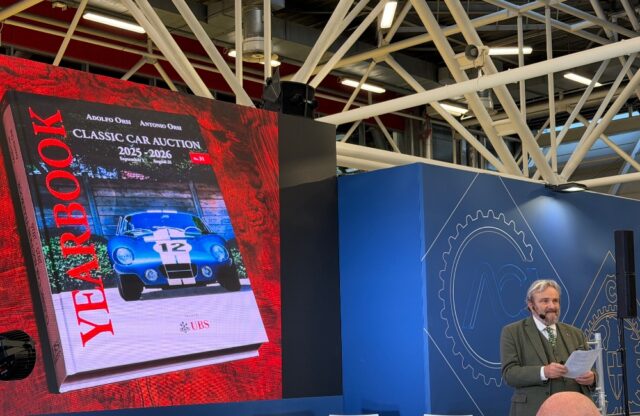
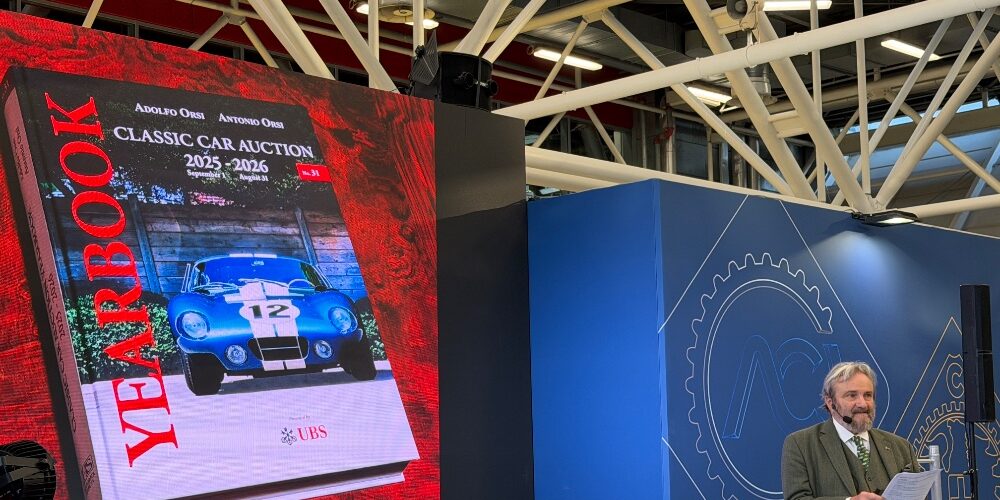
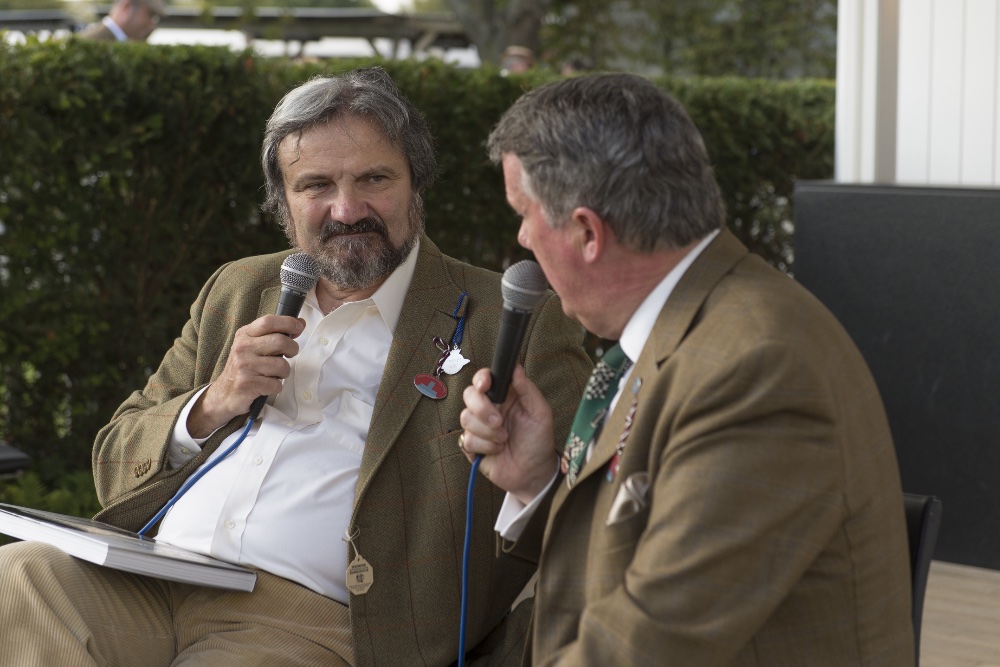
“The goal is to give the reader an exact picture of what the market is doing,” says Adolfo Orsi, whose Classic Car Auction Yearbook has reached its 31st edition. “That was our goal at the beginning. In fact, it was initially for my own use, because I felt there was something like that missing from the market.”
The first edition covered 1993-94, when, Orsi recalls, the worldwide auction market turned over $31 million across some 1700 cars. Today he puts it at $3.6 billion and around 11,000 cars. The yearbook’s fundamentals, though, have remained the same: a record of individual cars rather than headline prices alone.
“We have followed the market from that day onwards with the same approach: for every car, the chassis number; for every car, the price in three different currencies, because currencies naturally change in relation to one another, and it’s important to understand that. Now we have a database of 160,000, probably more, cars, and we are able to trace a car back from 1993 to today: when it was offered at auction, what price it achieved, what condition it was in and so on.”
The 2025-26 edition records 11,884 cars from 428 marques, offered between September 2025 and August 2026, with estimates, hammer prices in pounds, dollars and euros, venues and previous auction appearances. The history of a particular chassis matters as much as its latest price. “I think people have come to understand this over the years. Today the book has become a tool for collectors, specialists and the industry.”
Graphs, statistics and now world-record information have expanded its scope. Annual print numbers have increased from 1000 to 5000.
That might be surprising to some, given that – on the surface at least – there is a wealth of data online. Results can now be consulted almost as soon as the hammer falls, but Adolfo Orsi sees the yearbook as serving another purpose.
“Today you can get immediate results from probably several apps. You can have a kind of report two days afterwards. Therefore, you have access to a lot of information,” he says. “But the book is something that gives you the possibility to reflect, to think about the market, and to look back not only at what happened yesterday but at what happened over the past 12 months. You can also look at the statistics from before that. Some people are happy just knowing the result of yesterday’s auction. Others want to understand where that result fits into the wider picture.”
Pre-sale estimates, which some houses remove from online listings after an auction, provide another useful measure. “We put the estimate in the book in order to show that a car had an estimate of 100 and was sold for 80 or 200. That gives you a comparison.”
As the business has expanded, so have the ways in which a car can change hands. “In the old days, there were the dealers, there were the auction houses and there were the brokers. That was it. Now, because the market has become bigger, it has evolved in different ways. Auction houses now do private-treaty sales and sealed bids. They are doing many different things.”
Even when a sealed-bid price remains confidential, the car’s appearance on the market is worth recording. “With sealed bids, we keep a record of them. Naturally, we cannot put in a price because the price is confidential. But I think it’s important for the collector to understand whether a car has been offered over the years, or offered by sealed bid, in order to know whether the car is fresh to the market or has already been offered.”
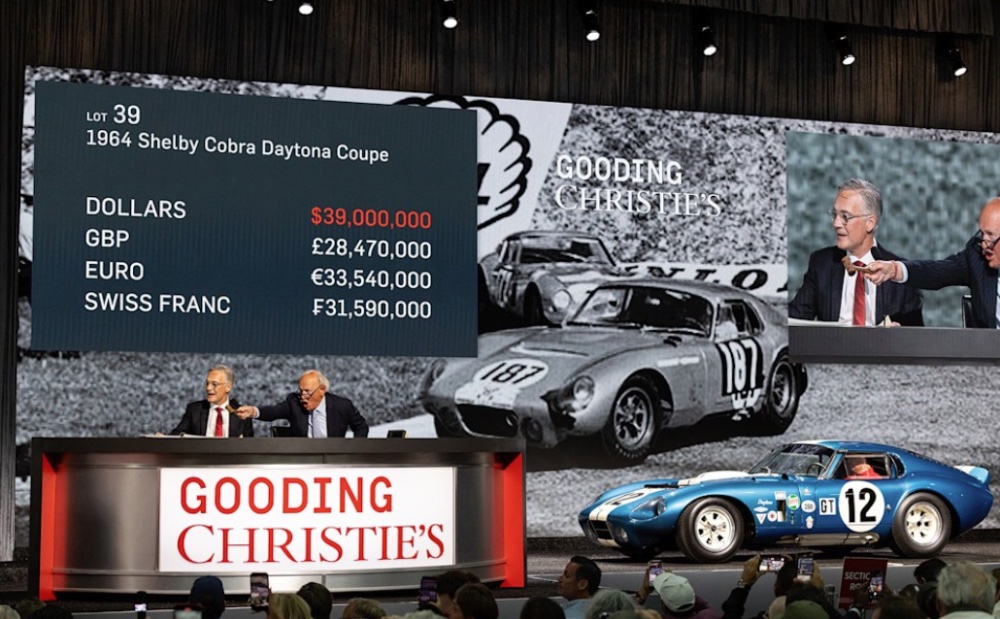
Auction houses also withhold information such as a car’s destination, although their published catalogues and results allow Orsi to record sale prices, selling countries and sell-through rates. He questions the value of publishing the highest bid on an unsold car, however. “I think the estimate also gives you an idea of what the expectations were. Adding the highest bid doesn’t, I think, add anything to that information.”
On whether auction houses will become more secretive as they diversify into private sales, he is pragmatic: “They are trying to cover all the ways of selling, including privately, and to do so efficiently. I think they are doing their job, trying to be as efficient as possible.”
The distinction he does insist upon is that the yearbook is separate from those businesses. “Something that characterises this publication is that I am totally independent. I am not part of any auction house. Therefore, we try to be absolutely fair. We publish the data and the graphs, and it’s up to the reader to understand it and make their own evaluation.”
The flood of lower-value online sales has also made selection necessary, with $20,000 as a threshold. But Adolfo Orsi corrects the suggestion that everything below it is excluded. “We didn’t cut all of them. Not all of them, because I checked them one by one. I kept the ones that, in my opinion, were historically important, and also some that could give people guidance about cars that aren’t expensive. At least then we have a couple of results to help us understand their values.”
His son Antonio, who joined the business six months ago, is a co-author of the latest edition. “I’m 75 and he’s 33. He brings a modern view of what the younger generation probably expects to read, and I’m very open to that.”
Having followed the market since 1987, Orsi is unconvinced that today’s enthusiasm for newer cars represents a break with the past. “There is nothing really new in the market. You have to consider that, at the end of the 1980s, a car such as the Ferrari 250 GTO was built in 1962 or 1963. It was only 25 years old. Today there are cars that we define as contemporary cars that are also 25 years old. So, in perspective, yes, the market has changed, but that’s because collectors are becoming older and new, younger collectors are entering the market.”
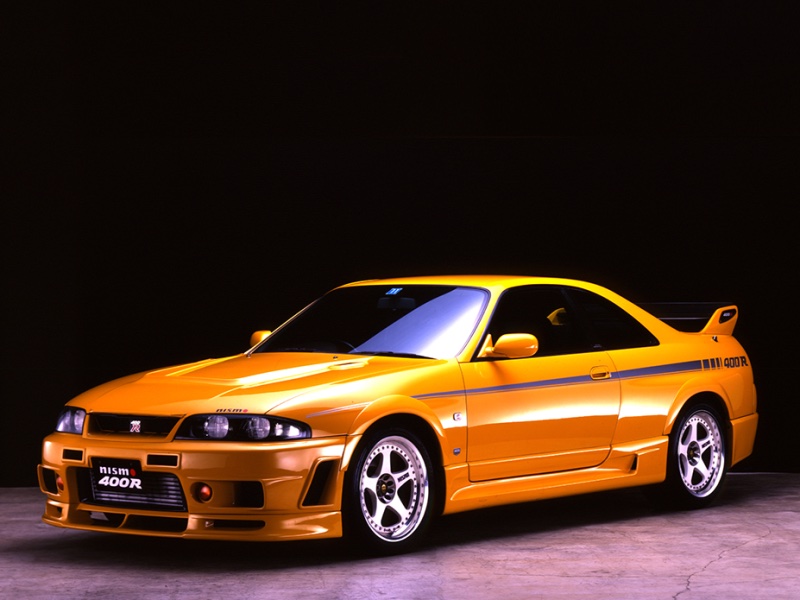
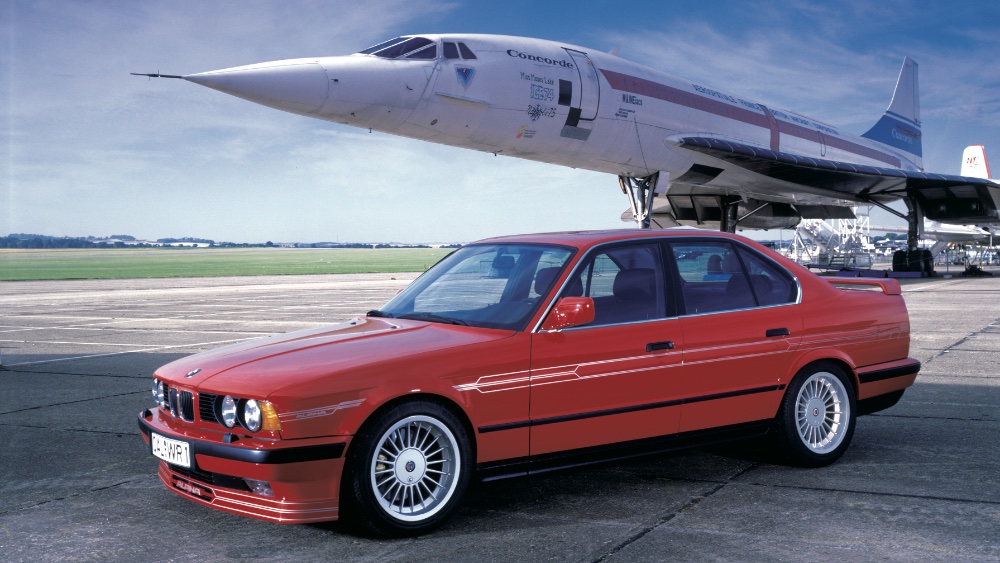
Pre-merger AMG and Alpina models, along with Japanese performance cars and their period tuning culture, illustrate his point. In the Japanese market particularly, modifications can be an attraction in their own right rather than a detraction.
“Collectors have always been attracted by their dream cars. At one time that was probably a Ferrari GTO; in another period it was AMG or Alpina cars, and now also Nismo and so on. I wouldn’t call them new collectors, I’d call them younger collectors. They’re looking to buy these cars because those cars represent their dreams. You buy a dream. You don’t buy a piece of iron. You buy something that reminds you of the nice days, or a nice period of your life. Therefore, I think this is natural. It’s the evolution of the market.”
The means of buying that dream have changed rather more dramatically. “Internet sales are increasing in number for several reasons. One reason is that they’re the cheapest way to offer a car. You don’t have to transport it to an auction house or give it to a dealer. You manage the sale yourself.”
Yet he sees no reason why a live auction should disappear: “Live sales are more suited to collections, entire collections, and to cars being sold by people who aren’t 100 percent involved in this field. There is room for everyone in the future market.”
He likens the change to buying an airline ticket. “In my day, the only way to buy a ticket was to go to a travel agent. Then we had low-cost airlines, and then the internet. Today most people buy flights online. Covid forced our industry to take that step in two years. We had the equivalent of low-cost airlines in internet auctions, and the possibility to bid online. In two years, we had the revolution that was already happening in other fields.”
But has the buyer lost the personal advice offered by traditional auction specialists? Adolfo Orsi sees another side: “In those days there was, I would say, a conflict of interest, because naturally auctioneers had an interest in selling the cars.”
The comments on Bring a Trailer, he suggests, can provide a different sort of scrutiny. “The comments you read are from people who have no interest in the car being sold, but who know something about the model. That sometimes helps the buyer to make a choice and to ask additional questions of the seller, because they might not have known that there was a second version, or a modification, or a weak point of the car. Therefore, I think that helps the buyer to make a better choice.”
He is similarly inclined to trust market forces when the question turns to the regulation of auction houses: “I think that, over the medium term, the market gives its own direction. I remember that, in the past, there were some auction houses whose behaviour was a bit on the line. What happened is that today they don’t exist any more, because the market, in some way, is self-regulating.”
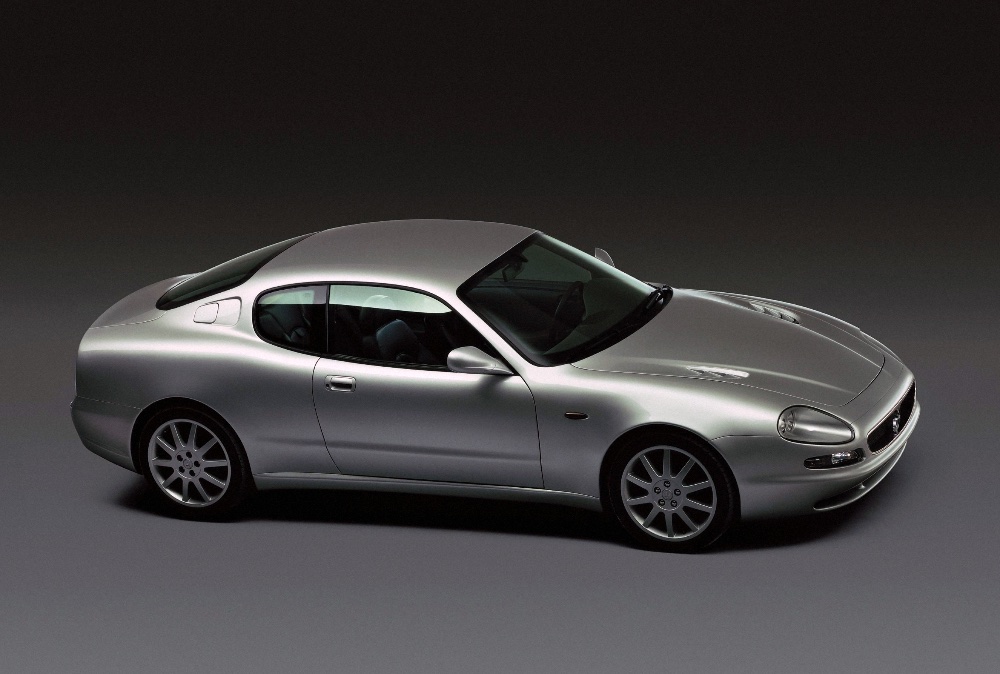
The growing regard for modified cars raises a more difficult question for concours judges, whose standards are built around originality and authenticity rather than the reputation of a tuner. “My approach to classic cars is to keep their original specifications. That means originality in terms of the mechanics and also in terms of aesthetics: the same colour, the same upholstery and so on. This is the way we are all used to judging cars. I don’t know. In 2040, at concours events, most probably the approach will be different.”
He can envisage a home for modified cars, just not in the same classes as untouched examples. “You could eventually create a class for tuned cars, for modified cars, in order to keep them separate and judge them in the right way. You shouldn’t mix original cars with tuned cars, because it’s like putting fish and meat together. They cannot live together. What I see in the future could be a class of modified cars, yes, but as something separate from the normal classes.”
There is also the question of which cars get invited. Many established concours offer broad GT classes for the 1950s to 1970s, yet their post-1990 classes can be dominated by supercars and hypercars. That leaves cars such as the Ferrari 456, Maserati 3200 GT and Jaguar X100 XKR in an awkward position: elegant, aspirational grand tourers that rarely find a home above marque events. If a Ferrari 330 GTC or Aston Martin DB6 belongs on a prestigious concours lawn, why not their successors?
Adolfo Orsi disagrees, pointing to the different levels of concours already available: “There are a lot of concours that give the younger generation the opportunity to enter their cars and have them compared with similar cars. There are club events, marque events and model events. Those can make ten million collectors happy. Then there are other events that can make, I don’t know, 100 collectors happy. I think there is room for both.”
Cost is also a factor. “At Anantara Concorso Roma, naturally, you are staying in a five-star hotel, so the cost of entering is high. But if you compare it with the package given to the entrants, it is what they would normally pay. If you have a Fiat Cinquecento that’s worth perhaps €10,000, you’re not going to enter it in a concours that costs €10,000.” And for young visitors, supercars exert their own appeal: “If you show a supercar, a hypercar, to a ten-year-old boy, he could like it, dream about it. If you present a Volkswagen Golf…”
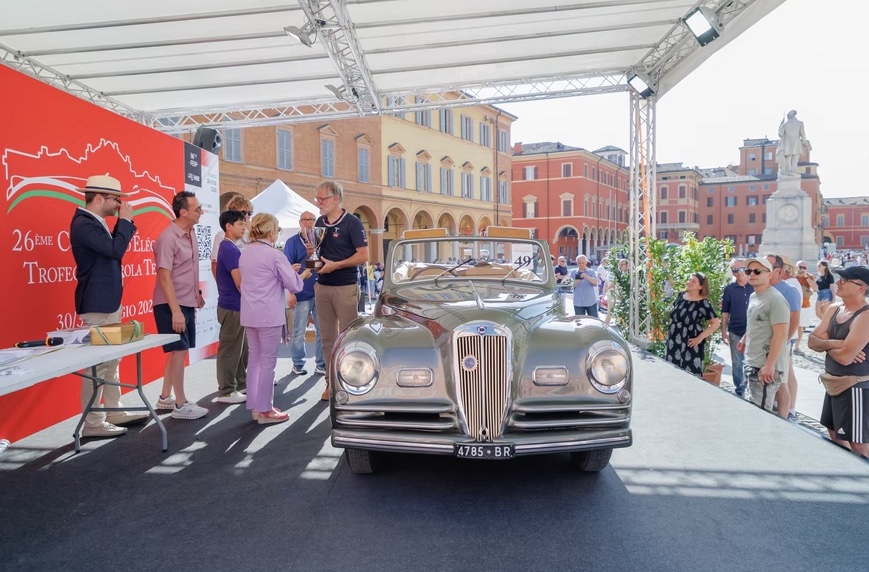
For Orsi, the answer is less to widen every elite concours than to recognise the roles played by the rest: “At club events, you’re comparing your car with similar cars, or cars from the same era. I don’t think there’s really a gap. Then there’s the upper level, with one-off cars, cars built in the 1960s, dream cars and cars built to special order. That’s a different level. But there’s also space for owners of cars that aren’t very expensive but aren’t cheap, either.”
He can point to his own involvement with the Concours d’Elégance Trofeo Salvarola Terme, near Modena (pictured above), which has run for more than 25 years. “I’m also chief judge at a local event in the Modena area. At this event we have the cars you’re speaking about. It is a good school for the younger generation of judges. I started using some judges at this event, and now I’m taking those people with me to judge at high-profile concours events. It’s good for the entrants, but it’s also a very good school for younger judges. Judging a car once a year is like football. Messi has to train every day, as all the others do. You cannot train just one day a year.”
His point is practical, rather than simply philosophical: “The more, the better, because you become trained to understand what to look for and to make a decision in ten minutes. If you have a whole day to look at a car, everyone can do it. But to make a decision in ten minutes needs training, and that comes through the smaller events.”
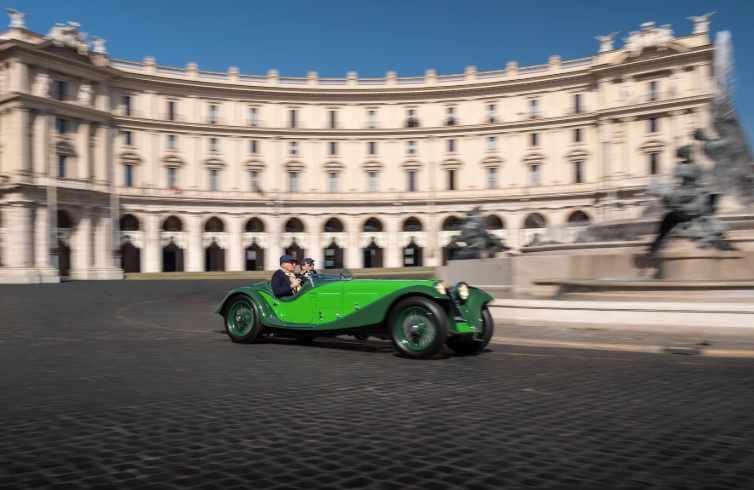
Anantara Concorso Roma, with which Adolfo Orsi is deeply involved, occupies the exclusive end of that spectrum. Postponed in 2025 following the death of Pope Francis, its inaugural event took place in April 2026, combining Italian cars with several days of hospitality. Orsi is as pleased by the entrants as he is by the machinery: “I was really happy to see its success this year. We had quality cars, but also quality entrants. What was good was that everyone was happy with the event, and also with the feeling of being together, spending time over dinner and lunch. I think that, for the first year, it was beyond our best expectations.”
Preparations for the second event, taking place on April 1-4, 2027, are already under way. He will not yet reveal its planned classes: “We already have several entries. Some are still on standby, because creating the classes is very delicate. You have to create classes of cars that are homogeneous, one with another. We will certainly have some standard classes. But we’re also working on some really very special classes for next year. We’re already working on them, and I hope visitors will be surprised when they come.”
Find out more about the Classic Car Auction Yearbook by Adolfo Orsi here and the Anantara Concorso Roma here.