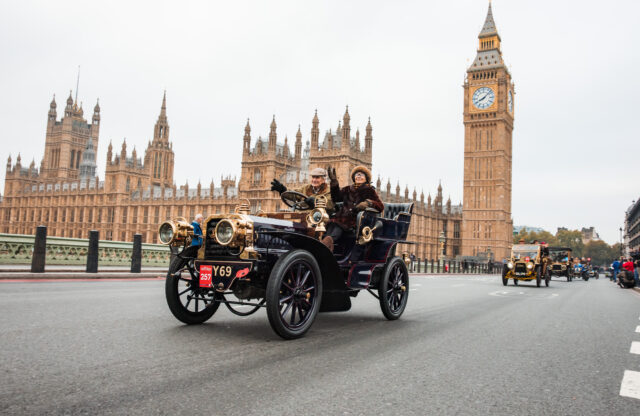
Bonhams’ Golden Age of Motoring sale, held at New Bond Street in London on October 30, 2026, achieved approximately £2.15 million from 20 of the 22 motor cars offered, representing a 91 percent sell-through rate. A 1901 Panhard et Levassor Four-Cylinder Cab Phaeton led the results at £460,000, followed by a 1904 Rochet-Schneider Model 2500 at £425,500 and another 1901 Panhard et Levassor, a Type A2, at £270,250.
The two highest-priced cars at Bonhams London 2026 accounted for £885,500, or 41 percent of the car total. The leading Panhard also recorded the largest amount above its upper estimate, hammering for £400,000 against an expectation of £300,000 to £350,000. The Rochet-Schneider’s £370,000 hammer was £10,000 below its lower estimate, however, while the second Panhard hammered for £235,000 against an estimate of £270,000 to £325,000. Its £35,000 shortfall was the largest in monetary terms among the cars sold.
The auction’s 91 percent sell-through rate contrasted with the number of cars achieving their estimates. Of the 20 successful car lots, only three exceeded their upper estimates at the hammer, while 14 fell below their lower estimates. The two cars that failed to sell were an 1899 Phébus motor tricycle, estimated at £50,000 to £60,000, and a 1923 Rolls-Royce Silver Ghost limousine, estimated at £50,000 to £70,000.
Another focus of the Bonhams London 2026 sale was the Somerset Hoard, a collection of seven early motor cars that had remained together in the Spiers family since before World War Two. Stored in a barn since approximately 1939, the cars were offered in unrestored condition, with several requiring extensive mechanical and structural work. All seven found buyers, generating a combined £258,533. The highest-priced was a circa-1902 Progress at £63,250, followed by a circa-1903 Darracq at £58,650 and a circa-1903 Baker Electric at £55,200.
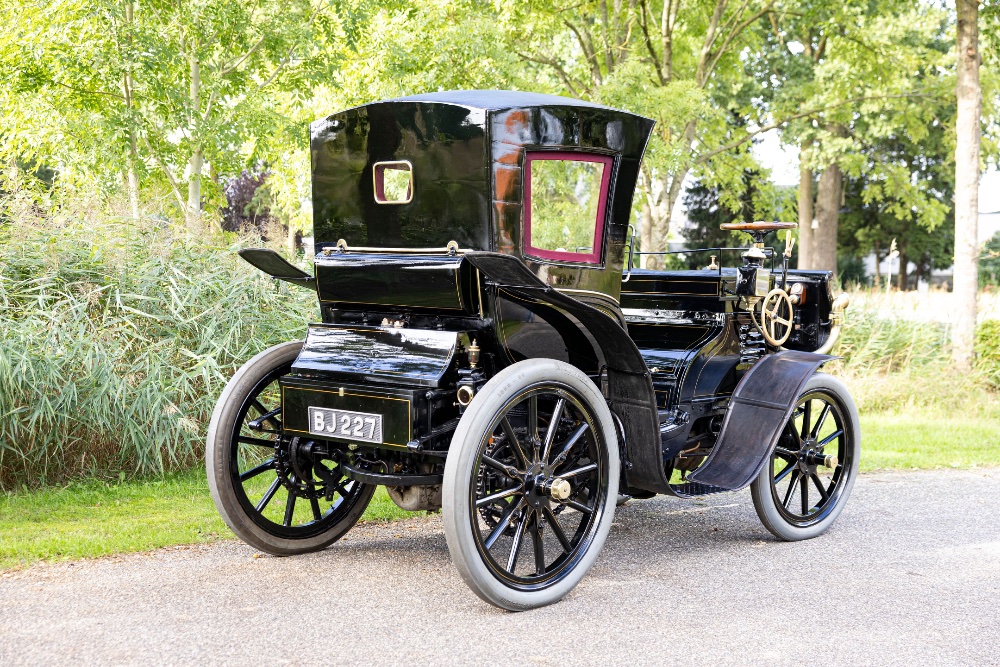
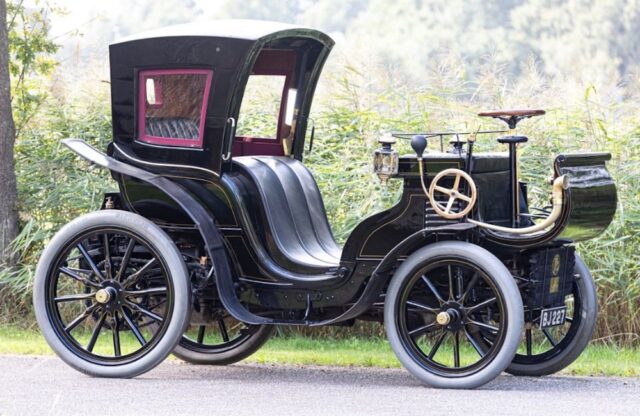
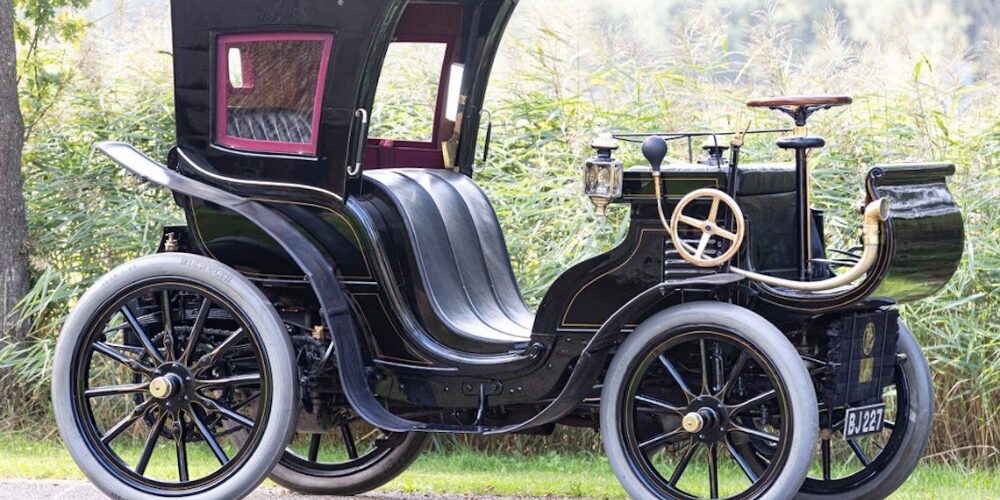
This 1901 Panhard et Levassor 2.4-Litre Four-Cylinder Cab Phaeton, chassis 624 was delivered new on April 22, 1901, to Mademoiselle Thorcy, a theatrical performer living on Avenue Friedland in Paris, next door to Panhard racing driver and company director René de Knyff. Its subsequent owners included art collector Arthur Weil-Picard, whose family owned the Pernod drinks business. The car was supplied with unusual forward-control cab coachwork attributed to Kellner, placing the driver ahead of the enclosed passenger compartment. Its specification included an electrically operated gearchange. During its early life, the steering controls were relocated inside the cab, a configuration retained during an extended period of museum display in France.
The Panhard subsequently belonged to former Veteran Car Club president Brian Moore before changing hands at auction in July 1989. Its new owner reinstated the original forward driving position. Later ownership included American collector William Wrather and several European collections. Chassis 624 was offered from a private collection in the Netherlands, having previously participated in the London to Brighton Veteran Car Run and appeared at Pebble Beach in 2008. Estimated at £300,000 to £350,000 at Bonhams London 2026, it sold for £460,000 including fees.
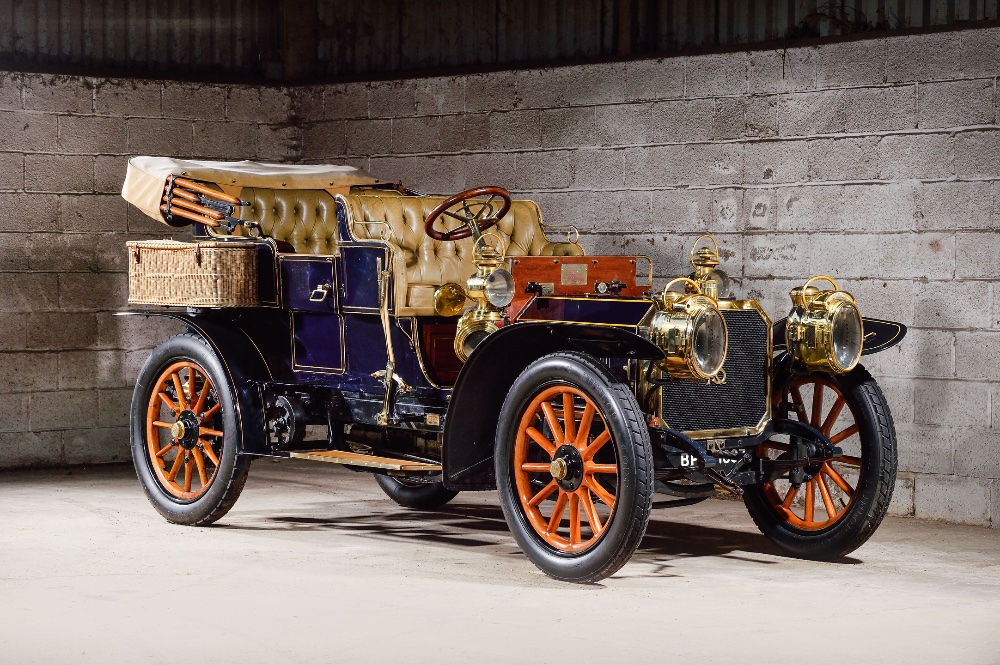
This 1904 Rochet-Schneider Model 2500 16/22hp, chassis 2545, was completed in Lyon in early 1904 and delivered to Charles J Henri Besombes of Villiers-le-Bel, north of Paris. By 1908 it had moved to Rouen, subsequently entering the collection of Roger Pichon, whose family operated the Musée de l’Automobile at Clères. The car remained in the museum until 1967, when it was purchased by British collector Bob James and imported into the UK. It arrived without bodywork but was otherwise substantially complete. Subsequent owners included Denis Wright, Peter Agg, James Leake and the Tierra Blanca Collection, before entering the ownership of its most recent custodian in 1991.
Its present side-entrance tonneau coachwork is a reproduction of the original Rochet-Schneider design. Restoration work was undertaken during the 1970s, with further mechanical attention in 2003 and servicing expenditure of approximately £21,000 recorded in 2019. The car had covered an estimated 16,000 to 18,000 miles across more than 100 veteran motoring events during its most recent ownership, including approximately 20 London to Brighton runs. Estimated at £380,000 to £530,000, it sold for £425,500 including fees.
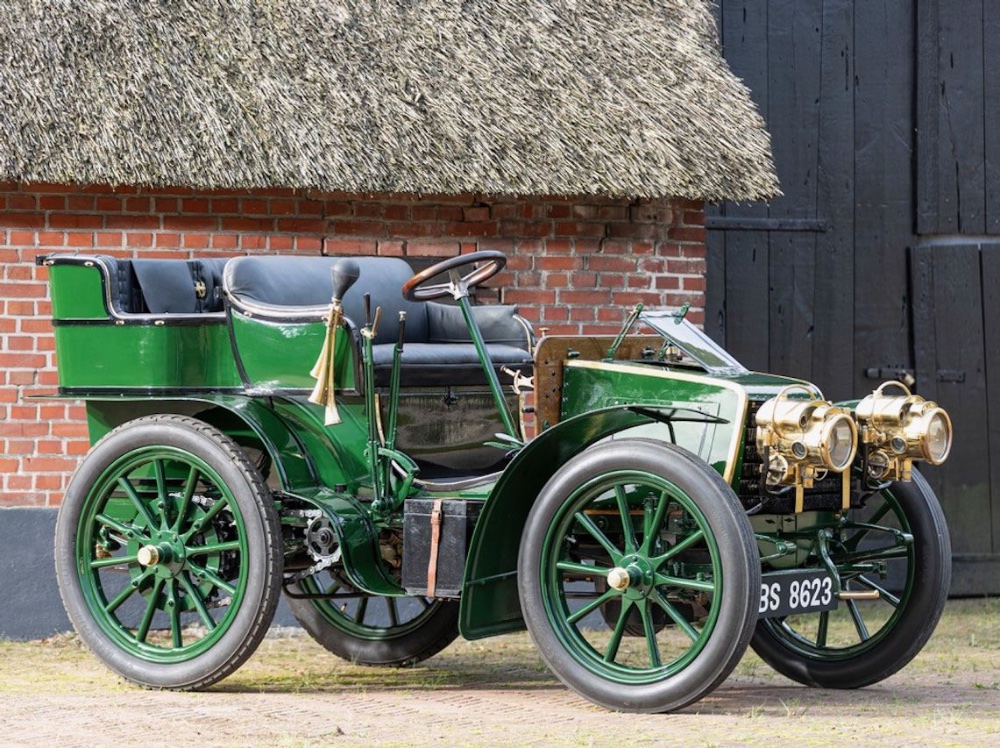
This 1901 Panhard et Levassor Type A2 7hp, chassis 3114, was completed on October 25, 1901, and originally supplied with rear-entrance tonneau coachwork and black leather upholstery. Factory documentation records its delivery through the Palais de l’Automobile in Paris. By 1909 the car was registered in Bordeaux, with subsequent French ownership documented through surviving registration records. During the 1930s it participated in events organised by the Les Teuf-Teuf historic motoring association, including a Paris to Rouen rally in June 1939. The Panhard also appears in newsreel footage of veteran-car gatherings in Paris after World War Two.
It is believed to have subsequently belonged to the Schlumpf Collection before entering the Mercedes-Benz Museum in 1965. The car passed to the Louwman Collection in 2010 and was acquired by Swiss collector Christoph Grohe in 2012. A later restoration by Tattersall’s Veteran to Classic included rebuilding the rear bodywork to its original configuration, overhauling the engine and refinishing the car in Brewster Green. Estimated at £270,000 to £325,000 at Bonhams London 2026, the Panhard sold for £270,250 including fees.
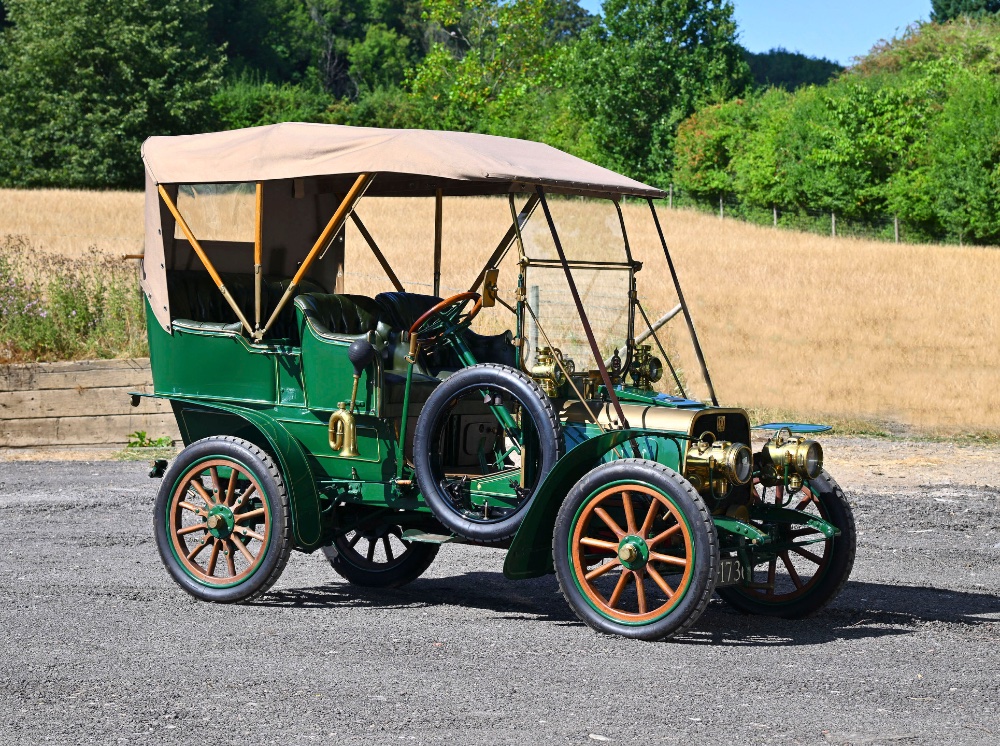
This 1904 Darracq 10hp Swing-Seat Tonneau, chassis 5723 was delivered new in the UK to Dr James Vincent Bell of Rochester, Kent, who used the car until his death in 1909. It subsequently passed to his assistant, Dr White. Research undertaken during the 1980s established that the Darracq was built on one of the manufacturer’s 10hp commercial-vehicle chassis, subsequently fitted with passenger-car coachwork. It was rediscovered in deteriorated condition near Portsmouth during the 1960s or early 1970s by Veteran Car Club member Leslie Green.
Restoration work began during the 1970s and continued into the following decade. The project is documented in three volumes of photographs and correspondence, including material supplied to the Veteran Car Club’s Dating Committee. The car entered its most recent long-term ownership in 2000 and subsequently completed numerous London to Brighton runs, the last recorded in 2020. It had not been used for approximately five years before the auction and was offered requiring recommissioning. Estimated at £150,000 to £200,000, it sold for £161,000 including fees.
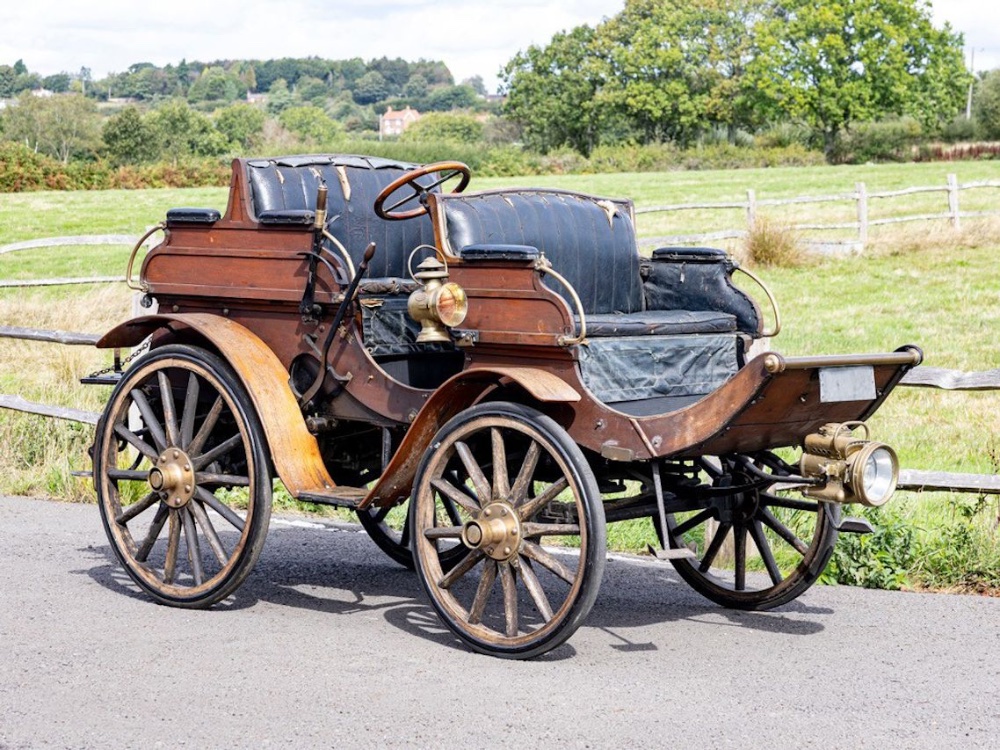
This 1902 Arrol-Johnston 10/12hp Dogcart, chassis 281, is recorded as the second motor car registered in Paisley, Scotland, and is believed to have been supplied new to Sir Thomas Coats, whose family owned the Ferguslie Thread Works. The six-seat dogcart was placed in storage on the Isle of Bute in 1919 and remained there until its discovery in 1942 by veteran-car enthusiast Tom Lightfoot, then serving with the Royal Navy. Its subsequent owners included Norman Cole, Norman Ball and Geoffrey Plaisters. The car retains its three-row seating arrangement, with the driver occupying the middle row. Its construction includes an opposed-piston twin-cylinder engine, chain transmission and solid tyres.
Chassis 281 participated in a London to Brighton run during the late 1990s and the Glasgow-Paisley-Dumfries Arrol-Johnston Commemoration Run in 2002. More recently, it was displayed at the Great British Car Journey museum in Derbyshire, where partial recommissioning was undertaken. Although running when catalogued, further work was considered necessary before regular road use. Estimated at £90,000 to £120,000, the Arrol-Johnston sold for £92,000 including fees at Bonhams London 2026.
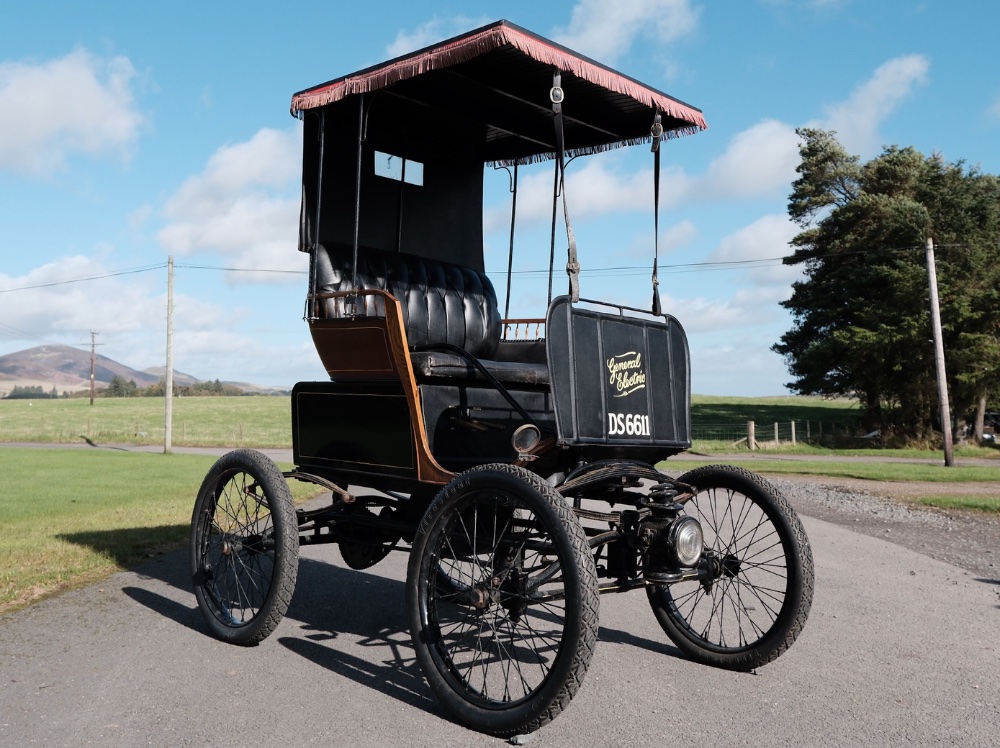
This circa-1899 GEC Light Electric Town Runabout was offered directly from the family of Angus Douglas-Hamilton, 15th Duke of Hamilton, who acquired it during the late 1980s. Previously owned by David Leach of Beaconsfield, the car had attracted the attention of National Motor Museum curator Michael Ware in 1982. Correspondence from that year identified it as potentially one of the earliest electric motor cars surviving in Britain.
During its ownership by the Duke of Hamilton, it was displayed at the Grampian Motor Museum, Myreton Motor Museum and Lennoxlove House. The car had not been operated for many years before the auction and was offered requiring restoration or recommissioning. Its original equipment includes an electric motor numbered 909060 and an unusual external chain-drive arrangement. Although its UK registration document records chassis number 8, Bonhams noted that the number had not been located on the vehicle itself. Estimated at £50,000 to £70,000, it sold for £73,600 including fees.
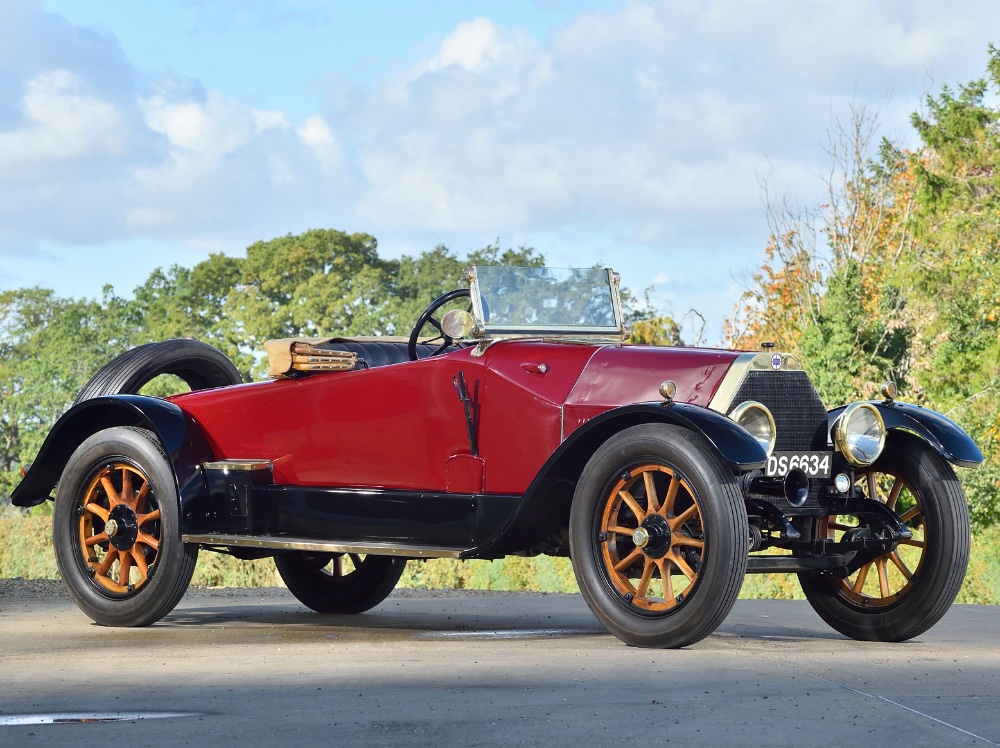
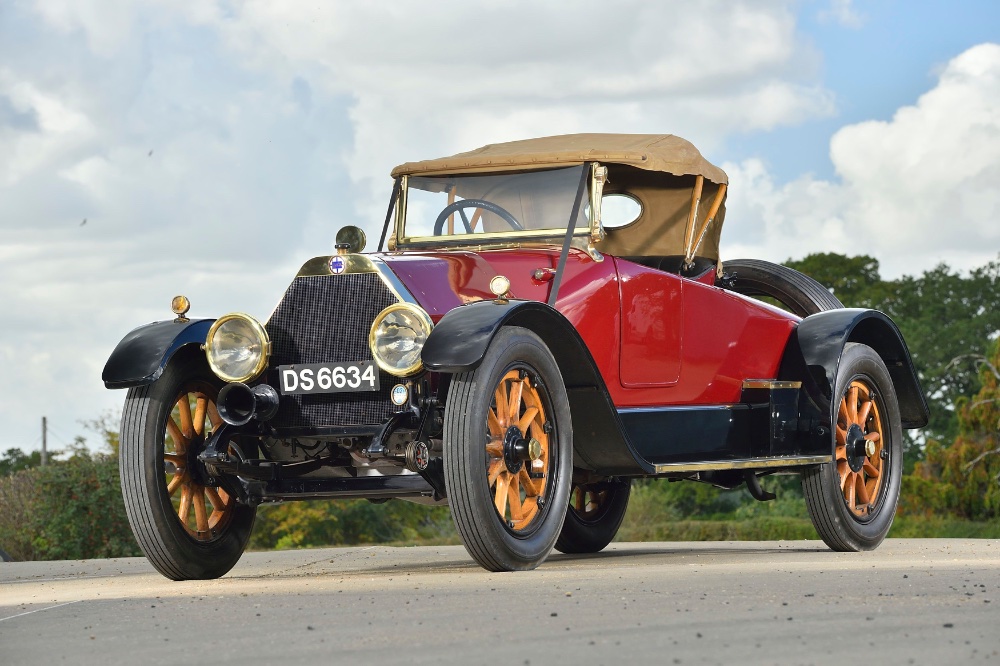
This 1915 Lancia Theta Hydroplane Runabout, chassis 2645, was originally delivered in the United States through New York Lancia agent Thomas Evarts Adams, fitted with two-seat Hydroplane Runabout coachwork by Hayes & Miller. The Lancia subsequently entered the collection of American casino entrepreneur Bill Harrah before being imported into Britain in 1981. It retained its original engine, gearbox, axles and coachwork, together with its numbered bonnet and much of its original brass equipment.
Following several years of use in Britain, a restoration began during the 1990s and was completed around 2011. The work included rebuilding the engine with new connecting rods, pistons and bearings, restoring the chassis and running gear, and refurbishing the original instruments. Its electrical system was subsequently converted from six to 12 volts. The Lancia entered its most recent ownership in 2011 and participated in several rallies, with subsequent maintenance undertaken by NP Veteran Engineering. The accompanying documentation included factory records, restoration invoices, photographs and a Veteran Car Club passport. Estimated at £70,000 to £90,000 at Bonhams London 2026, the Theta sold for £73,600 including fees.
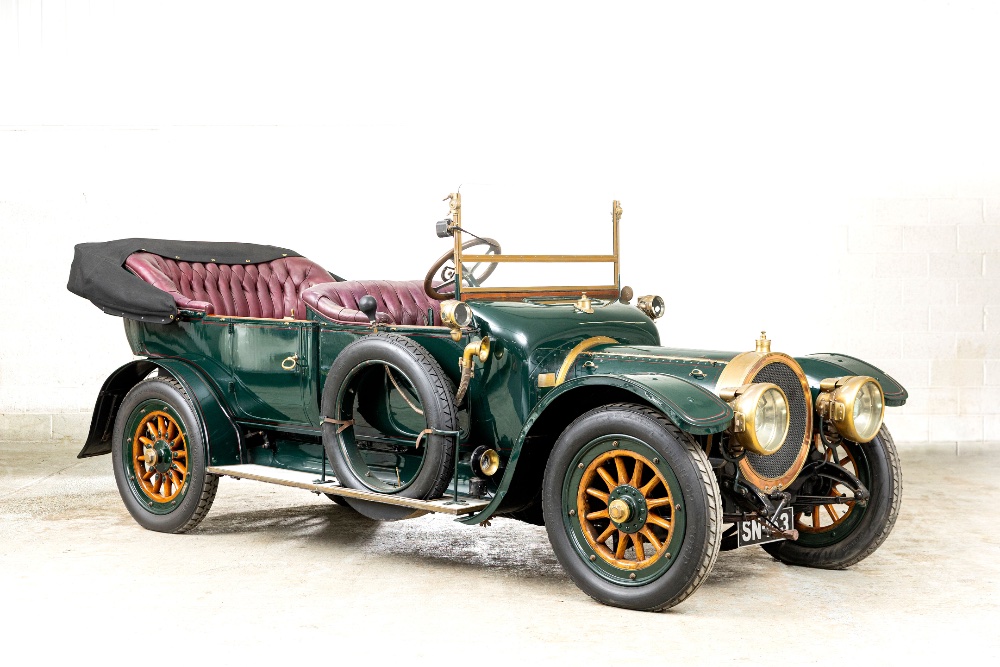
This 1911 Delaunay-Belleville, chassis 4548V, was originally supplied to the Durrant-Stuart family of Dalaguise in Perthshire, Scotland. Their family crest remains embossed on the car’s door pockets. At some point during its history, the rear section of the original tourer coachwork was removed and the vehicle converted into a pick-up. The missing bodywork was subsequently reconstructed during a restoration in the 1980s, with photographs documenting its earlier condition.
An accompanying logbook issued in May 1925 records ownership by Frederick Stewart of Glasgow, followed by two further Scottish owners. Later custodians included Ellen MacFarlane of Dunfermline and RP Phillips of Ripley, before the car entered its most recent ownership in 2009. Since then, the Delaunay-Belleville had participated in touring events in Austria, Spain and France. Maintenance by NP Veteran Engineering included rebuilding the rear axle and clutch, fitting a replacement windscreen and carrying out routine servicing. Estimated at £70,000 to £100,000, it sold for £71,300 including fees.
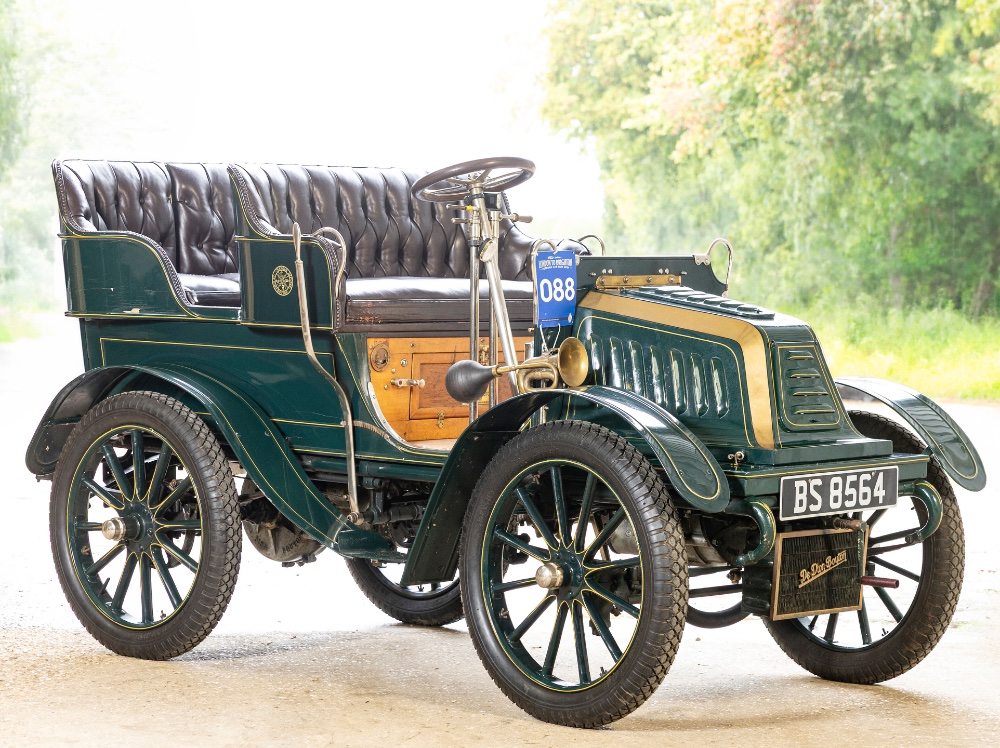
This 1902 De Dion Bouton 6hp Model J, chassis 6922, was purchased in Paris by Australian agricultural machinery manufacturer Hugh Lennon for his wife, arriving in Australia in 1904. The car carried its unusual rear-entrance tonneau coachwork when it reached Australia. It subsequently sustained accident damage affecting the gearbox, mudguards, radiator and steps, after which it was placed in storage for approximately 40 years.
The De Dion eventually passed to Rod McMullin, who commissioned a restoration completed around 2008 or 2009. It was imported into Britain in 2012 and subsequently participated in several London to Brighton Veteran Car Runs. Further work by NP Veteran Engineering between 2013 and 2021 included replacement water and fuel tanks, installation of a dynamo-starter and a comprehensive engine rebuild. Invoices totalled more than £30,000.
The Veteran Car Club’s dating report identifies several non-original components, including the radiator, which is of a later 1903 pattern, and a gearbox believed to have replaced the unit damaged in the earlier accident. Estimated at £70,000 to £80,000, the De Dion Bouton sold for £74,750 including fees at Bonhams London 2026.
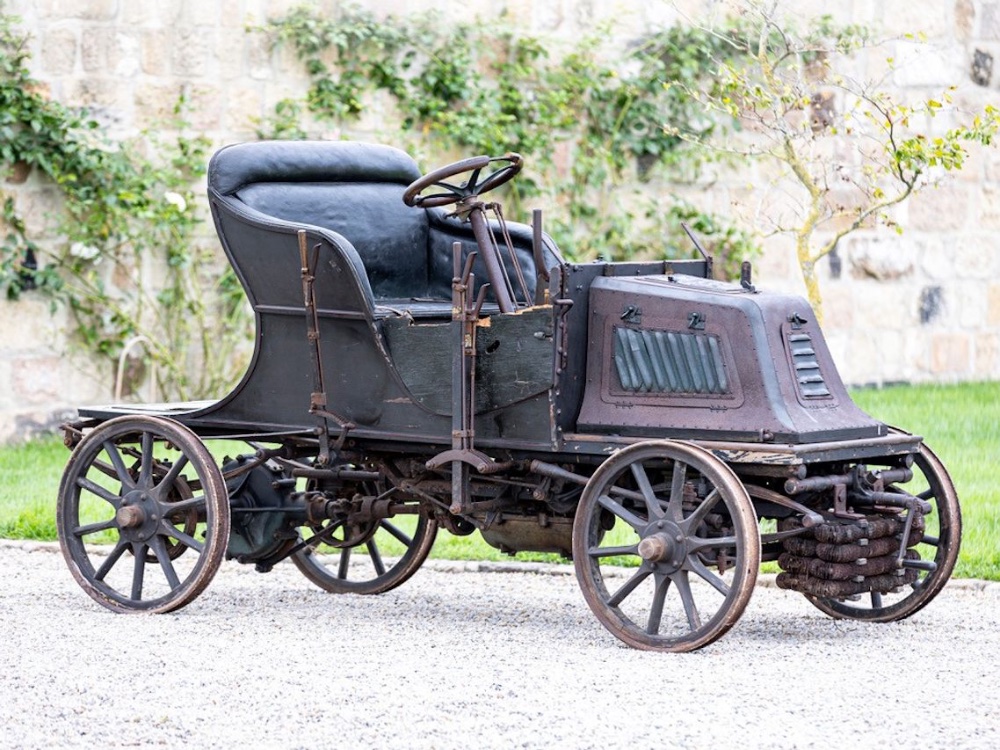
The highest-priced car from the Somerset Hoard was this circa-1902 Progress 9hp Two-Seat Tourer, built by the short-lived Coventry manufacturer and fitted with a De Dion Bouton engine numbered 10258. The car had remained in the Spiers family’s possession since before World War Two, having been stored alongside six other early vehicles since approximately 1939. Its identification rests on several surviving features, including Progress-branded hubcaps, a three-lever control arrangement and the De Dion Bouton engine.
No manufacturer’s identification plate or registration documentation accompanied the car. A number stamped into the front seat sill board could indicate chassis 78, although Bonhams stated that its interpretation was uncertain. The Progress had not been operated for decades and was offered in unrestored condition, with its mechanical state unknown, and stated it required extensive work before being returned to road use. Estimated at £35,000 to £45,000, the car sold for £63,250 including fees.
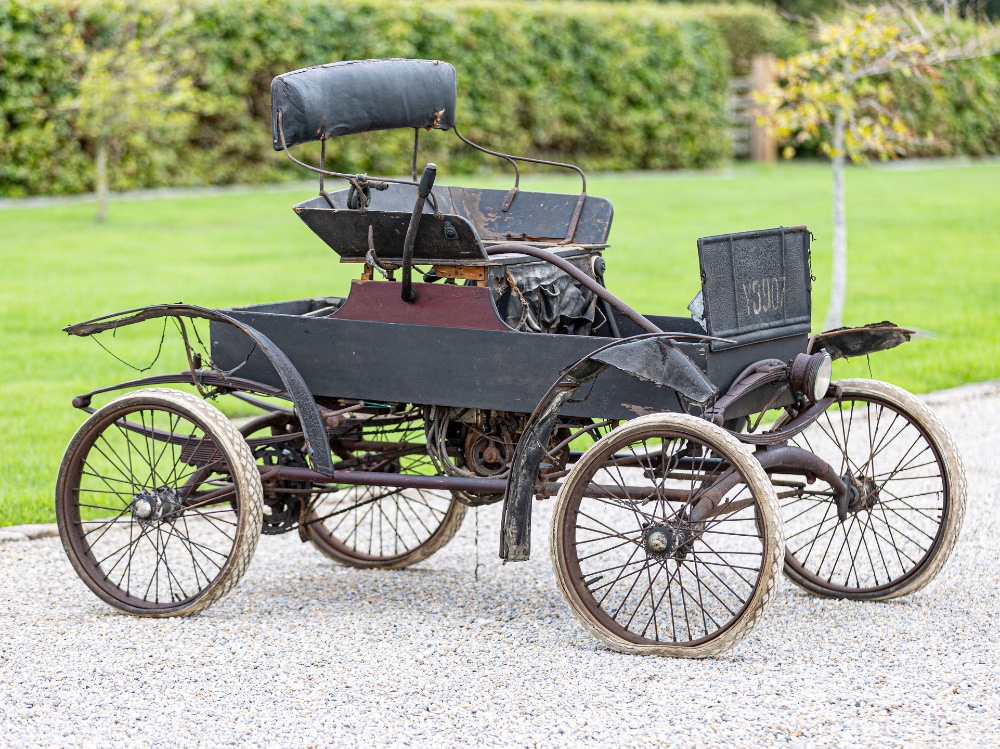
This circa-1903 Baker Electric Runabout, chassis 476, was originally built for the British market with right-hand tiller steering and control levers, rather than the left-hand arrangement more commonly associated with American examples. Its early history is documented through surviving Somerset registration records. In January 1905 it was registered Y 311 to Alfred Bruce of Burrington, near Bristol. Ownership subsequently passed to the Bristol Carriage and Wagon Works in 1915, when the registration became Y 3907, before the car moved to Scotland later that year.
The Baker retains its original Ewell-Parker electric motor, an electric bell beneath the footboard and an early headlamp. Its control system provides three forward and three reverse speeds, although its electrical and mechanical condition was unknown when catalogued. As part of the Somerset Hoard, it had remained in storage since approximately 1939. The car was offered without documentation at Bonhams London 2026 and required extensive restoration. Estimated at £35,000 to £45,000, it sold for £55,200 including fees.
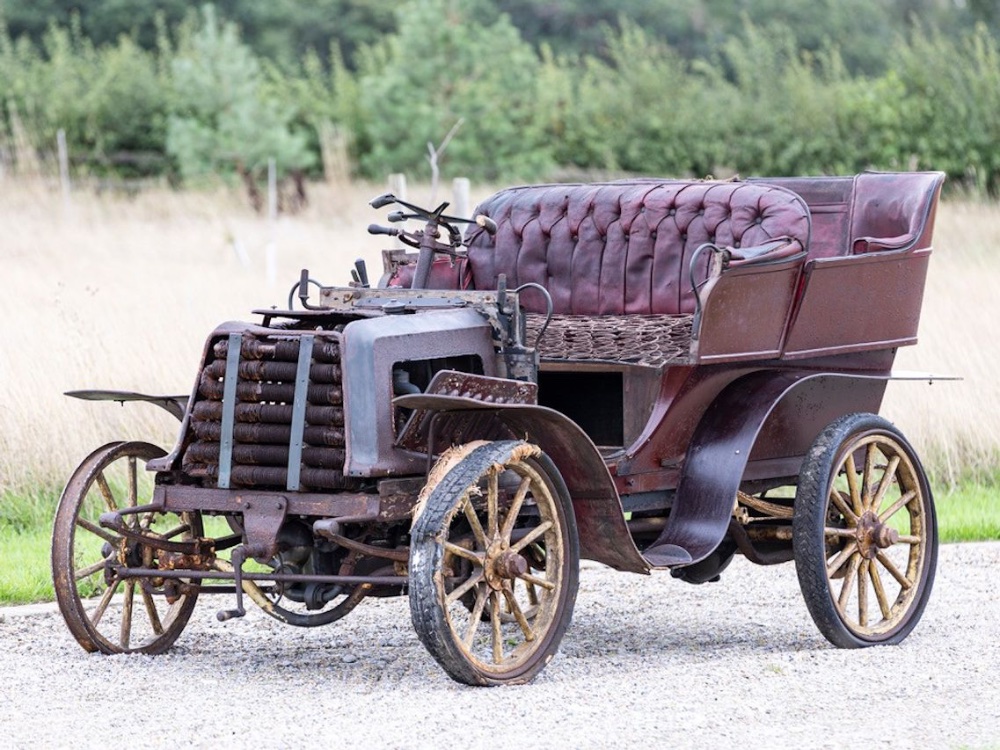
This circa-1903 Darracq 112hp Rear-Entrance Tonneau was another of the seven vehicles from the Somerset Hoard, having remained in storage in the same family collection since approximately 1939. The car retained its registration number A 3367 and carried engine number 3231. Its surviving construction included a steel-and-timber flitch-plate chassis, trembler-coil ignition and four-seat rear-entrance tonneau coachwork.
The Darracq had not been used for more than eight decades and was offered in substantially unrestored condition. Estimated at £55,000 to £75,000, it sold for £58,650 including fees.
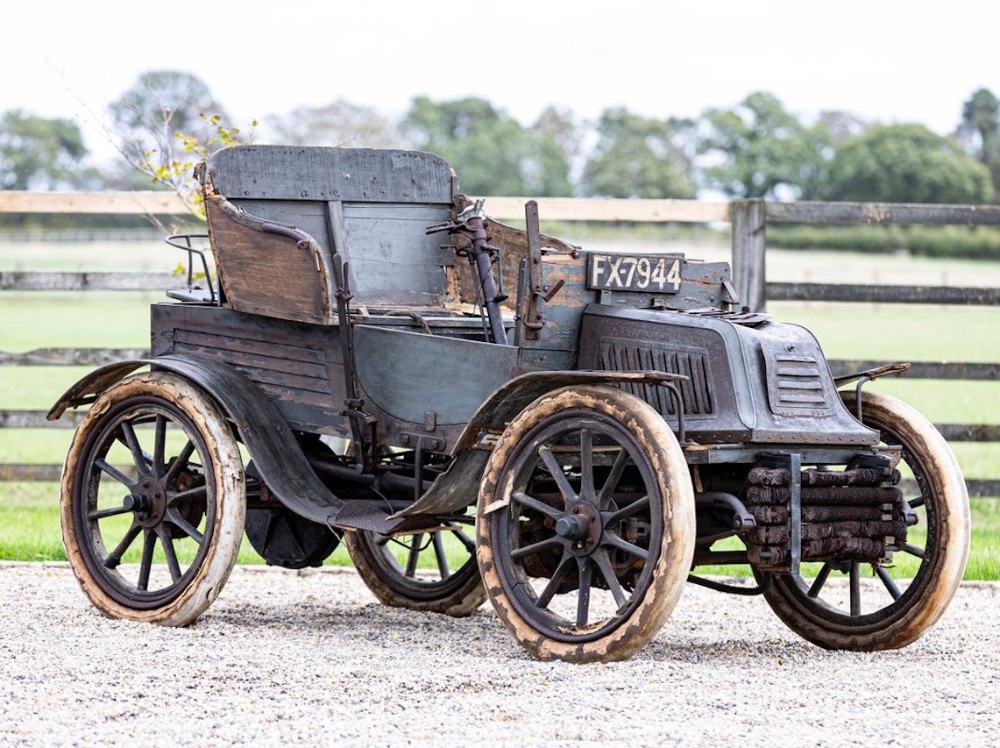
This circa-1903 Swift 6hp Three-Seater, chassis 65, stamped LXV, was offered with its original De Dion Bouton engine numbered 12075 and coachwork by Hollick & Pratt of Coventry. The Swift retained several unusual components, including a detachable rear groom’s seat, a starting handle located behind the rear axle and an early British Motor Traction Company licence plate numbered 1837.
It was one of the seven cars in the Somerset Hoard and had remained unused since approximately 1939. As with the other vehicles in the collection, it was presented in unrestored condition and was accompanied by no documentation. The car also retained registration FX 7944; estimated at £35,000 to £45,000, the Swift sold for £43,700 including fees.
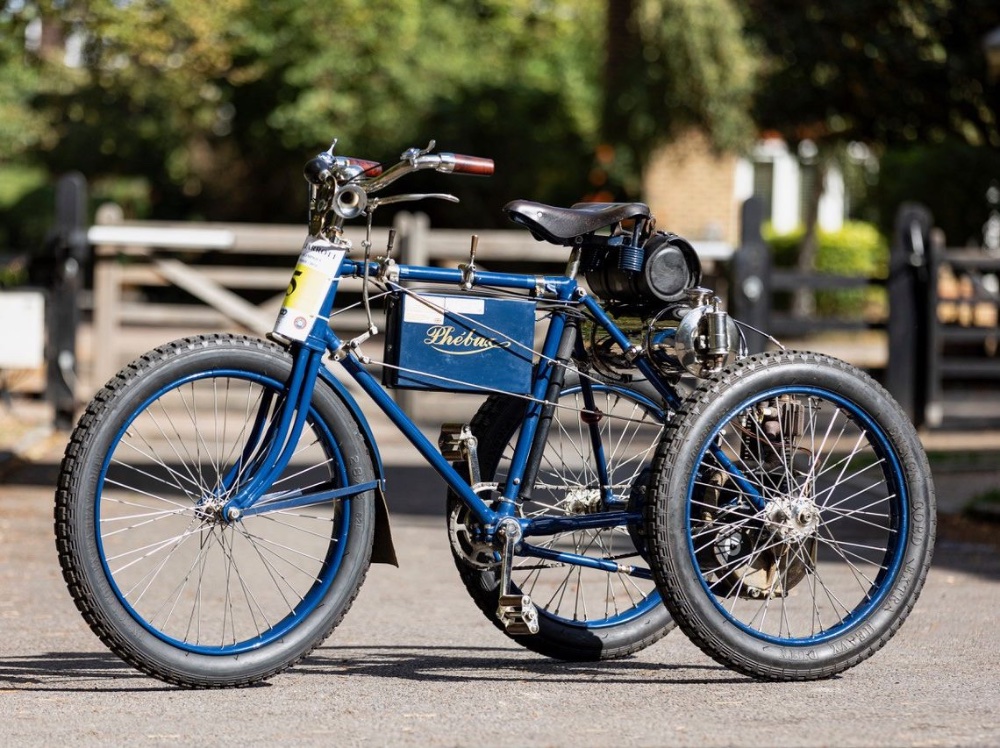
This 1899 Phébus 2¼hp Motor Tricycle, chassis 178, was discovered in the collection of a museum at Assen in the Netherlands in 2014 by Peter Fryer, chairman of the De Dion Bouton Club. It had reportedly been stored there for approximately 30 years and had been incorrectly identified as a De Dion Bouton tricycle. The Phébus subsequently underwent a comprehensive restoration in 2016. Work included rebuilding its De Dion Bouton engine and transmission, manufacturing replacement transmission components, restoring the chassis and wheels, and refinishing its nickel-plated fittings.
The tricycle entered its most recent ownership in 2017 and subsequently participated in historic motor-tricycle competitions, including events at Brooklands and Montlhéry. Its accompanying documentation recorded appearances in both the London to Brighton Veteran Car Run and the Pioneer Run. Offered with an estimate of £50,000 to £60,000, the Phébus failed to sell.
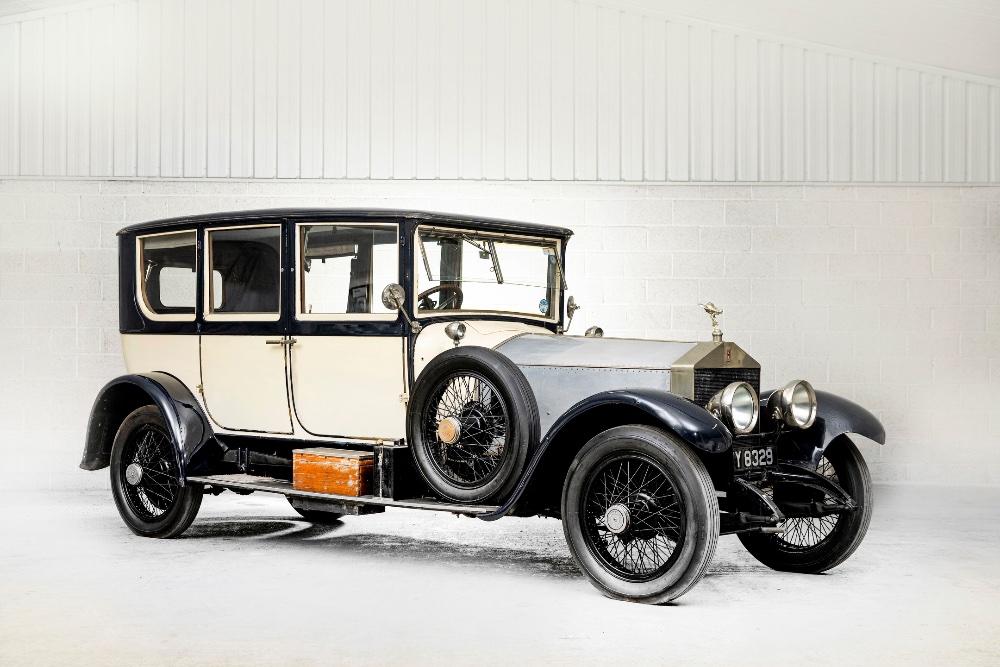
This 1923 Rolls-Royce 40/50hp Silver Ghost Limousine, chassis 56HG, was ordered in December 1922 and delivered to Barker & Co on January 31, 1923, for construction of its formal limousine coachwork. The completed car was supplied through G Dugdale & Co of Manchester to Yorkshire cotton manufacturer Sir Amos Nelson. Its subsequent ownership history included a period in the Netherlands from 1964, followed by a return to Britain and later ownership in Ireland. During its time in Ireland, the Silver Ghost participated in Rolls-Royce Enthusiasts’ Club events and several Gordon Bennett rallies.
Approximately 20 years before the auction, the car was acquired by a Hampshire wine producer and used for local touring. An engine rebuild was completed in 2013, together with radiator work. Additional maintenance included the installation of a replacement exhaust manifold and a period-style temperature gauge. Estimated at £50,000 to £70,000, the Silver Ghost did not sell.
Further details
For more information on the Bonhams London 2026 sale, head here.