


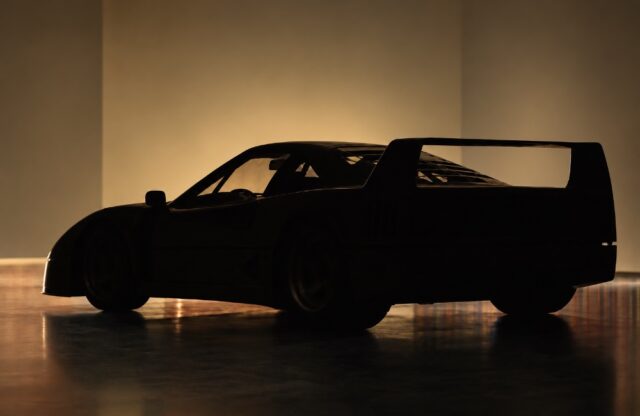
Lewis Hamilton’s acquisition of a Ferrari F40 has brought Azimut’s Automobile Heritage Enhancement Fund, or AHE, to the attention of an audience beyond investors and collectors. AHE has not commented, but research suggests it located the low-mileage 1991 car, which had spent more than three decades largely unused in a private garage. Following work involving Ferrari Classiche, Hamilton drove it into Monza during the Italian Grand Prix weekend in September 2026. For Lewis, it was the culmination of a childhood dream; for Ferrari, it was a rare high point during a difficult weekend. For the Automobile Heritage Enhancement Fund, it was thrust into the spotlight. So who, or what, is AHE?
The Automobile Heritage Enhancement Fund is the collector car investment fund within the wider Azimut asset-management group. Launched in May 2023, it has also built its automotive profile through sponsorship of Ferrari’s World Endurance Championship Hypercar programme. Azimut reports that AHE had €300 million in assets under management by late June 2026, with a cumulative net return of more than 28 percent since inception. By that date, it had completed 63 acquisitions and 20 disposals, leaving a portfolio of 43 cars.
Magneto wanted to know what the AHE fund looks for in a car, and how does it reconcile preserving automotive history with delivering returns. We spoke to Andrea Modena, CEO of T2P Collection and senior adviser to the AHE Investment Committee, and Giuseppe Pastorelli, senior portfolio manager at Azimut and a member of the committee. Modena previously headed Ferrari Classiche and Special Sales; Pastorelli helped establish the fund.
Please note: The car images are for illustrative purposes only, and do not necessarily reflect the vehicles in the AHE fund.
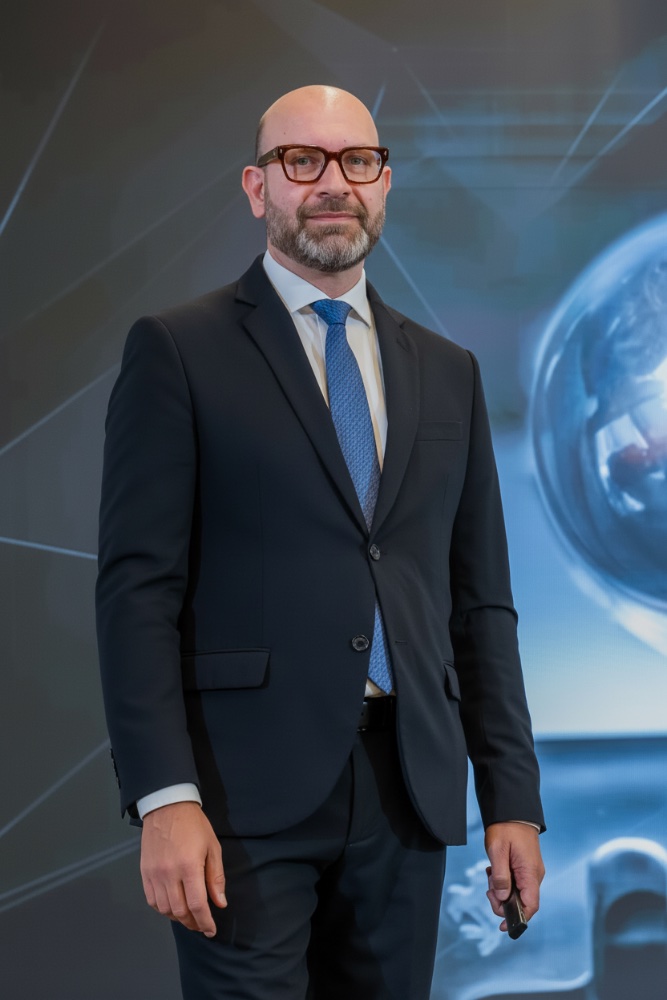
“The strategy was created to invest in very high-end collectable cars. To give you an indication of its positioning, the average value of a car in our portfolio is now around €5 million. The initial objective was to give as wide a group of investors as possible access to this market,” says AHE’s Pastorelli, pictured above. Involved from the outset, he helped develop its investment structure. “I worked with the rest of the Azimut team now involved in managing the fund to build a financial instrument that would give investors access to a very niche market, particularly the high-end collectors’ market.”
The AHE team therefore decided to use an evergreen fund strategy. “It has no fixed lifespan, unlike a private-equity fund, despite being an alternative product. The fund can raise money throughout its life and investors can redeem their shares after a two-year lock-up period following their first investment,” Pastorelli explains.
That structure also brings oversight from Luxembourg’s financial regulator, the CSSF. Pastorelli was involved in establishing the AHE fund’s investment process and controls, as well as choosing its cars. “Because it is an evergreen fund, it is regulated by Luxembourg’s CSSF financial authority in much the same way as an open-ended fund. This requires full regulation and meant working very hard with the regulator to design the product, investment process and controls so that they could offer investors the maximum safeguards.”
Azimut states that the regulator issued it with the first licence for a financial institution to manage this type of asset. Investment decisions are made collectively, with individual purchases considered alongside the fund’s longer-term composition.
“My involvement covers strategy, asset allocation, allocation by marque and individual cars. We meet almost every week to discuss how the fund should be positioned to address this market over the next ten to 15 years,” Pastorelli explains. “I am also involved in the fund’s operations and, with my colleagues, manage relationships with the counterparties in its network, including dealers, appraisers and collectors. Last but not least is our relationship with Ferrari.”
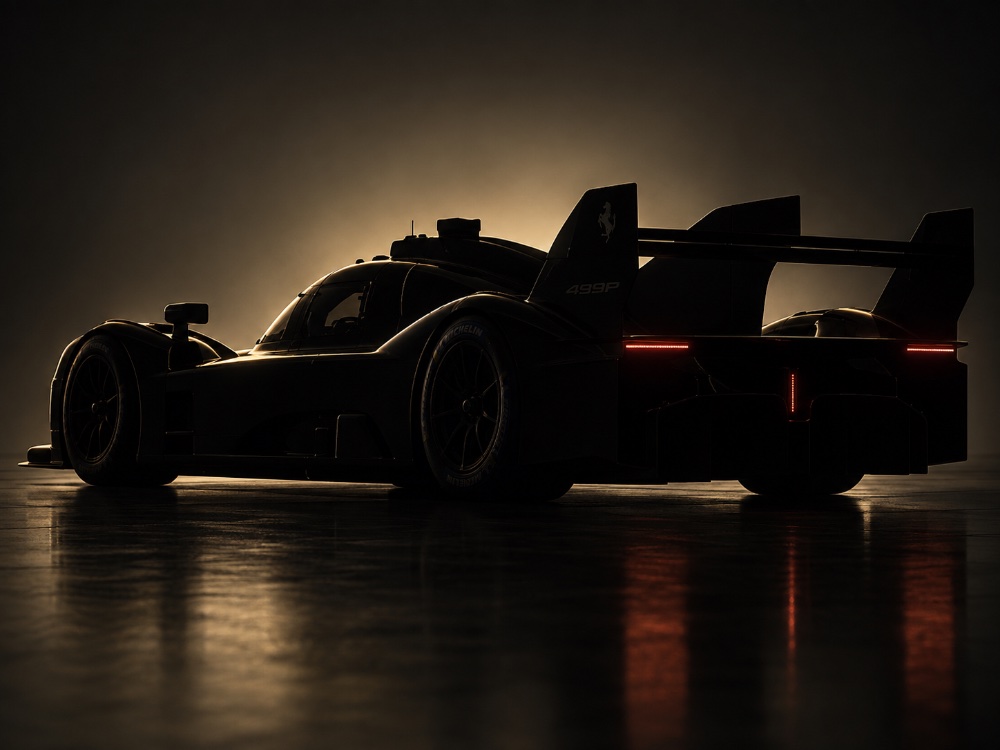
The Ferrari relationship also extends to the collection’s 499Ps, although Pastorelli is careful to distinguish them from the Le Mans-winning chassis. “We launched the AHE fund alongside a sponsorship of Ferrari’s World Endurance Championship Hypercar programme in 2023. It was a fortunate year because Ferrari returned to the top class at Le Mans after 50 years, during the race’s centenary, and won,” he says.
“It was an honour to sponsor those cars. We now own prototypes or test cars related to the 499P, although I want to be precise that these are not the cars that won Le Mans. We take delivery of a car representing each one that wins Le Mans. We therefore have cars associated with numbers 51, 50 and 83, and I believe we are the only collection in the world with all three in its portfolio.”
Ferrari’s prominence is also written into the AHE fund’s investment requirements. “Under the prospectus, at least 50 percent of the fund must be invested in Ferrari. We are currently above that, at around 70 percent,” Pastorelli says. “Our objective is not only to produce returns but also to offer investors the strongest-possible safeguards and protection. Ferrari’s work over many years helps provide those safeguards. The third consideration is liquidity. Ferrari remains at the top of this market in that respect.”
The other marques currently represented are Pagani, Maserati and Porsche. “Pagani is one where we believe there is enormous potential, given its very limited production, its approach to manufacturing and the affection for it among younger collectors and Asian collectors in particular,” Pastorelli explains. Pagani represents approximately five to ten percent of the fund. “We also have Maserati, although in that case we have not moved too far away from the Ferrari sphere, and finally Porsche. Porsche is another very strong candidate.”
“We are always looking for unique cars from other marques, potentially including McLaren or Aston Martin. The fund is still relatively young, at three years old, and is only now beginning to establish a track record. We have wanted to take a safer approach by concentrating upon visibility, liquidity and strong safeguards for investors,” he says.

Alongside the divisions by marque, Pastorelli separates established classics from youngtimers and newer limited-production cars. “We believe cars with a very strong competition pedigree, combined with styling that continues to be regarded as beautiful across generations, represent the unicorns of the past. Around 30 percent of the fund is allocated to such cars.”
The AHE portfolio’s age profile reflects a change in who is collecting and which cars they want. “From the fund’s launch we have also observed growing momentum among younger cars. This has become especially apparent after two years of normalisation following the excesses of the Covid period. The market came under pressure after its 2023 peak, when we launched the fund,” Pastorelli says.
“At the same time, a major generational change is taking place among collectors. Global wealth is transferring from the Baby Boomer generation to Generation X and, over the next ten to 15 years, to Millennials and Generation Z. We already had a clear view of that transition, although its effect upon market prices was less obvious. This year in particular, we have seen interest in youngtimers and more recent cars expand sharply, in some cases doubling the values of genuinely important examples.”
“The remaining 65-70 percent is allocated partly to youngtimers and partly to what I call ‘instant classics’: limited-edition cars produced in small numbers that enter the collections of leading collectors from day one. More than 50 percent of the fund, for example, is invested in cars of less than 20 years old. We believe these will capture the interest of the next generation of collectors.”

Andrea Modena’s move from Ferrari Classiche to the AHE fund raises a question about the relationship between historical importance and investment potential. Does the definition of the ‘best’ car change when it is being bought on behalf of investors?
“No, it doesn’t change,” he affirms. “For the fund, it is extremely important to reassure investors that they have made the right choice by having their capital used to create a portfolio of assets that are, and will continue to be, highly desirable for collectors. The fund must provide reliability and trust, which means that the ‘best’ car must be the absolute ‘best’ car for the specific objective you are pursuing.”
Pastorelli distinguishes between a car’s established status and the price at which it becomes a suitable investment. “Looking at classic cars, there are unquestionably established ‘unicorns’. Their status is recognised not just by collectors but more broadly within global automotive culture. Their estimated values, including those demonstrated in public sales, reflect that status. However, these cars are now in the hands of a relatively small number of leading collectors,” Pastorelli says.
Acquiring those cars relies on relationships with their owners. “We have bought examples that we regard as unicorns, although I cannot discuss specific models while some are undergoing restoration or awaiting final certification. That information is sensitive,” he says. “We must always distinguish between a car that is objectively a unicorn, including one from the past, and the return we can expect from it. Our objective is to generate performance for investors as well as to invest in very strong, iconic cars. Within that 30 percent allocation to older cars, we are especially selective. We pay close attention to history, ownership, originality and authenticity, but we also pay particular attention to the entry price.”
For Modena (pictured above), the meaning of historical importance also depends on the purpose of a collection. Asked what collectors misunderstand about why a car might still matter in 30 or 40 years, he emphasises how that purpose can evolve.
“The concept you’re exploring is incredibly vast and could be discussed for days. From my experience, first of all every collector has his own personal sensibility and interest. But each collection is not static, meaning it can evolve over time. A collection might be curated to highlight a specific period, or a specific race or a series of events. This can change how a collector defines what is ‘historically important’ from one moment to the next. It’s like asking a child which parents he/she loves more.”
Assessing any candidate starts with its history. Freshly outside Ferrari Classiche, how does Modena weigh manufacturer records against historians, external archives and specialist inspection?
“I’ve been extremely lucky and I know that. Outside the manufacturer environment, we should still rely on official manufacturer data by maintaining a direct relationship with them. This allows us to access all historical information for each individual car, both regarding its production phase and, in the case of racing cars, its active racing career if managed directly by the manufacturer itself,” he explains.
“Regarding the subsequent life of each car, I believe it is essential to also rely on dedicated historians who have committed their lives to studying specific brands and models, as well as on marque specialists. Sometimes, it is crucial to consult multiple sources to get the clearest and most comprehensive picture possible.”
Pastorelli’s team uses independent specialists to undertake the physical inspection of chassis stampings, components and documentation.”We have been able to build relationships with some of the best appraisers for the marques in which we invest. The substantial work of technical inspection is therefore carried out independently,” he says.
“Our main source remains the independent appraisers and we use more than one. We also have relationships with restoration workshops, which are another important source of information about a car’s history, as are present and previous collectors. These people often have very strong archives containing unofficial but extremely important information. They can establish links with original owners, uncover the real story of a car and supply documents that might otherwise be unobtainable.”
Modena considers the core principles applicable beyond Ferrari, while recognising that each manufacturer may approach its heritage differently. “There are for sure specificities related to each single manufacturer, but these are the less relevant,” he says. “As core principles ‘authenticity and historical significance’ are universally valid across all marques. The key is to rely on their own rules if there are some.”
“The key lies in cross-checking and corroborating the available evidence,” Pastorelli adds. Incomplete archives do not automatically exclude a car. That matters when examining older machinery or cars modified by tuning firms, where documenting an individual example’s specification can be difficult.
“There is no blanket decision to avoid cars from manufacturers with incomplete archives. We have examined examples of the type you describe. The challenge is often the history and condition of the individual car, including restorations that were not carried out properly. It can be difficult to find the genuinely special example that provides sufficient confidence in its originality and authenticity.”
Pastorelli cites a Porsche 550 RS in the collection as an example of the importance attached to an individual car’s history. “It is not necessarily the most fashionable car at present, but it was among the very small number that competed as an official Porsche racing car. Its engine produces more than 130bhp rather than the approximately 110bhp of a normal 550. We believe fewer than 20 were built in that form,” he says.
“Its competition history is outstanding. These cars won in Europe and the US and were driven by exceptional drivers. The market does not always distinguish sufficiently between individual 550s. We selected a particularly important example with a strong racing pedigree, a traceable history through what were principally two collectors, and a known restoration. We therefore consider cars individually, even if the market is not currently very active or the marque itself is in transition. The significance of a truly important car can endure. If a marque subsequently encounters difficulties, its best cars might attract even greater collector attention because they represent the peak of its history.”
Period racing modifications, accidents and subsequent factory work can leave any racing car, including Ferraris, quite different from the car that first left the factory. Asked where legitimate evolution ends and a loss of originality begins, Modena places particular weight on who carried out the work. “You’re introducing the subject with a clear and absolute richness of the frame; you wrote ‘subsequent factory work’. This is the core point: any activity managed directly by the manufacturer, or by its official racing team, immediately makes that work ‘authentic’ because it adheres to factory specifications. Any modifications introduced later on, or by someone else, can certainly be evaluated, but they fundamentally alter the concept of authenticity, which is very different from that of pure originality,” he says.
That distinction has particular relevance to the emphasis placed on ‘matching numbers’. A competition Ferrari might have changed engines several times during its active career for entirely legitimate reasons. Treating the identity of its components as a simple test of historical correctness risks overlooking how it was actually raced: “There have been cars that during their ‘official’ racing career with Scuderia Ferrari had engine, gearbox and differential replaced and exchanged multiple times in order to meet the needs of a specific race or a particular moment. As far as it’s officially recorded, this overtakes the ‘matching numbers’ basic concept.”
When choosing between an original but tired car, and a mechanically perfect restored example, Pastorelli favours the former. “Originality is the primary consideration from an investment standpoint,” he affirms. “These cars appeal to different types of collector and serve different purposes. Some cars are pieces of art, or very close to art, but a car might also be the only collectable that offers its owner a complete experience. It is not a watch or a painting: you can live with it and experience it. Nevertheless, I would prefer a completely original car, even retaining its original tyres. It is the scarcity within the scarcity. Knowing that a component has remained with the car for 50 or 60 years is unique in investment terms.”
That preference still leaves room for restoration. The appropriate approach, he says, differs between road and competition machinery. “It depends on the individual car and, above all, on its history. For a well preserved or already correctly restored car, we favour a conservative approach that protects its historical integrity,” he adds. “For racing cars, the key is to understand their competition history and restore them as closely as possible to the configuration in which they achieved their most significant success. For production cars, the focus is instead on authenticity, with the aim of returning the car to its original factory specification. In short, racing history guides the restoration of competition cars, while factory originality is the benchmark for road cars.”
Asked whether over-restoration can be a financial risk as well as a historical one, Pastorelli returns to the figures agreed before the work begins. “For every car, before making an investment, we establish a target post-restoration value at concours level. The investment in restoration must therefore be assessed in terms of its expected financial return,” he says. “The financial risk depends on both the acquisition price and the capital invested in the restoration.”

With newer cars, rarity can be harder to establish from a production total alone. Can cultural significance outweigh the numbers built? “Yes, absolutely,” Pastorelli says. “Our objective at AHE is always to identify cars with unique characteristics. When production numbers are higher, we look for specific features, specifications or provenance that can make an individual car particularly rare and distinctive within a larger production run.”
For modern cars, specification is part of that AHE assessment. Uniqueness alone does not establish desirability, and tastes can change. “Specification has become a very distinctive factor for modern cars. Even in the past, however, a unique specification could have considerable value. Take an early Ferrari F40 with Plexiglas windows, an arrangement that buyers did not necessarily want at the time: that detail can now have a substantial effect upon value,” Pastorelli says.
“Ferrari’s Tailor Made programme has become almost a sub-brand and a separate segment, bringing individuality and scarcity. The production numbers of new limited editions have increased consistently, so specification can restore some of that scarcity. Certain specifications are recognised in a car’s value.”
Mileage is another consideration for AHE. “As more people buy new cars as investments, many recent examples remain at delivery mileage. Among the newest cars, delivery mileage alone is therefore not necessarily a distinctive factor and specification becomes more important,” he says. “Over time, delivery mileage might exert a greater influence upon the value of one car compared with another. For the most recent cars, however, scarcity is defined not only by the production run but also by specification.”
Famous ownership offers another way for an otherwise comparable car to stand apart, although its value is not necessarily permanent. “Celebrity provenance can certainly add value, particularly for production cars, as the identity of previous owners can enhance a car’s appeal and historical narrative,” Pastorelli says. “However, this value can evolve with generational changes in collectors’ tastes and perceptions. We therefore consider celebrity ownership an important factor, but not a structural driver of the investment case.”
At the top of the modern market, manufacturers themselves also influence who can buy a car and the conditions under which it can be sold. Asked whether allocations, resale restrictions and access to subsequent models distort the market, Pastorelli sees a distinction between their immediate and longer-term effects. “Scarcity management can create some distortions in value in the short term. However, over the medium to long term, we believe that scarcity and a strong CRM (Customer Relationship Management) managed to reduce speculators and increase real collectors can help preserve the growth in values across the collector car market, distinguishing between collectors and speculators,” he says.
His confidence does not extend to every manufacturer adopting a limited-production strategy. “Some manufacturers’ present strategies do not convince us. There are common themes: many are returning to racing, creating limited editions and restricting production at the top end of the market. However, not all possess the credibility or heritage to sustain that approach. Credibility and consistency with a marque’s DNA come from its heritage and history.”
He also considers whether a car represents a period in which its manufacturer was producing its most significant work. “We look at whether a manufacturer has remained coherent with its DNA and strategy within particular parts of its range. That consistency can exist over a relatively short window, perhaps ten years in which a marque expressed itself at its best, often through racing and by operating at the leading edge of technology.”
Technology also presents a conservation problem quite different from that of the older cars. Software support, hybrid batteries and complex electronics can make continued use dependent upon the manufacturer long after production ends. “Modern cars certainly present a maintenance challenge, particularly because of their increasing electronic and technological complexity. We closely monitor how automotive brands are investing in the production and long-term support of these components, as this will be essential to ensuring the continued usability and collectability of these cars,” he says.
Pastorelli nevertheless expects the wider shift towards electrification to sustain interest in cars bought specifically for the experience of driving them. “Electrification has intensified these questions. I believe that transition will also increase collectors’ interest in significant cars and the driving experiences they offer. Everyday transport from A to B might increasingly involve an electric car, while people seek circuit experiences in which they can enjoy driving what I would call ‘real’ cars. This is one reason for our focus on racing.”
For the AHE fund, enthusiasm for a car must be accompanied by confidence that somebody else will eventually want to buy it. Asked what makes the committee reject an otherwise spectacular example, Pastorelli identifies liquidity. “As a fund, we assess each opportunity not only on its potential return, but also on its future liquidity. We analyse the car’s provenance, rarity, market depth and potential demand before investing, and we walk away when the liquidity profile does not support the investment case,” he says.
Valuing a genuinely exceptional car poses a related difficulty: there may not have been a directly comparable transaction for years. “When there are no directly comparable transactions, we build a benchmark based on the most comparable cars, considering factors such as provenance, specification, rarity, competition history and condition,” he says. “We then analyse their transaction history and price evolution over time, adjusting for the specific characteristics of the car under review. This provides a robust and defensible valuation framework for highly rare or unique cars.”

Not every car is intended to remain in the AHE fund for the same length of time. Alongside the portfolio’s divisions by marque and age, Pastorelli describes a separate split by investment strategy. “Around 30 to 40 percent of the portfolio follows a buy-and-hold strategy, focused mainly on past ‘unicorns’ and instant classics,” he says. “The remaining 50 to 60 percent is more liquid and can be actively traded, allowing us to pursue shorter-term performance while maintaining a long-term preservation strategy.”
When the time comes to sell, the preferred route is generally away from the auction room. “We generally favour private sales, particularly for cars of exceptional collector significance,” Pastorelli says. “As an evergreen fund, we are not under pressure to sell and can wait for the right value to meet the fund’s return objectives. Private transactions also allow us to identify the right buyer for each car and, where appropriate, preserve the car’s legacy.”
The United States is particularly important to that process. Asked whether the emphasis on America concerns access to capital or opportunities among its cars and collections, Pastorelli focuses on buyers. “The US market has experienced particularly strong wealth creation, especially among ultra-high-net-worth individuals, resulting in more dynamic demand for collectable cars,” he says. “For us at AHE, the US is therefore strategically important, particularly as an exit market, given its greater liquidity and the premium that certain cars can command compared with other markets.”
Between acquisition and sale lies a less comfortable question for enthusiasts: how much should culturally significant cars be seen and used? Pastorelli places the AHE fund’s obligations to its investors first. “As a regulated fund, our primary responsibility is to protect both the value and historical integrity of the cars entrusted to us,” he says. “We therefore carefully manage any activity that could expose them to unnecessary risk. At the same time, we aim to create opportunities to share their cultural heritage with investors and the next generation of collectors.”
In practice, that means separating access to the collection from driving its cars. “We select certain events at which cars can be displayed. We have not done a great deal of this yet, but transferring knowledge of this heritage to a new generation is important,” he says. “We initially offer events to our investors. These might be gala dinners or weekends at which they can see the fund’s cars. Through our relationship with Ferrari, we can also use its events programme. Investors might drive cars that do not belong to the fund while seeing the fund’s cars at the same event.”
The cars’ locations depend partly upon taxation and the geography in which they were bought or might be sold. At present, they are stored principally in Milan, at the freeport in Chiasso and in London, while the 499P-related racing cars are in Maranello. “In Milan, for example, we can invite investors, clients and prospective investors to see the collection, understand the stories of the cars and discuss them with experts from our network,” he says. “We want to offer an experience without using the fund’s cars themselves.”
Storage does not, he says, mean leaving them entirely inactive. “There is a maintenance programme that includes moving the cars, but only within defined and controlled spaces. The storage facilities have sufficient room to move and start them, check them and carry out the necessary maintenance,” Pastorelli says. “I have been surprised by how well cars can be preserved if great attention is paid to where and how they are stored.”
Some are so important to automotive history that AHE does not encourage their use. “In those cases, we do not believe the risk is justified,” Pastorelli says. “If you want to use the car, that can lead into a completely different collectors’ market. A collector might keep one car preserved in a vault and have another to use. We are seeing the development of replicas of original competition cars for participation in events, because the experience is becoming increasingly important during this transitional period.”
Asked what he would buy with his own money, both as an investment and to enjoy driving, Pastorelli returns to the personal associations that influence so many collections.
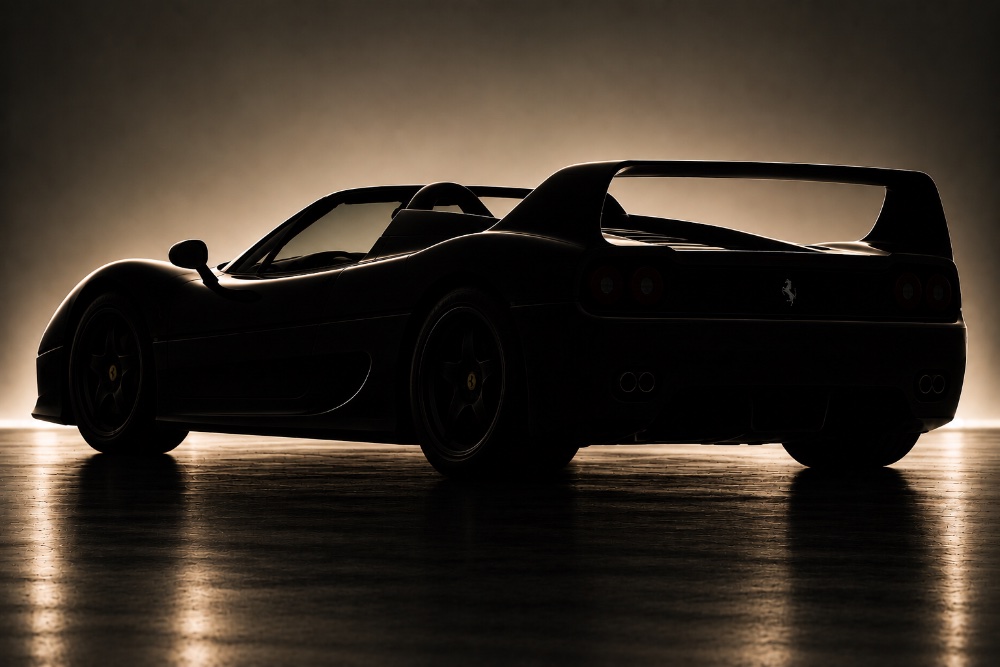
“I have two dream cars,” he says. “One is the Ferrari 330 GTS: a powerful, lightweight and agile car that must be incredibly enjoyable to drive, while also capturing the spirit of the Italian Dolce Vita. The other is the Ferrari F50, which was my dream car as a young man, when I had just obtained my driving licence. It was created around the era of my Formula 1 idol, Michael Schumacher, so it has always had a very special place in my imagination.”
More information on Azimut’s Automobile Heritage Enhancement Fund, or AHE, can be found here.