



Monterey Car Week 2026 has brought a broad selection of new machinery to California, ranging from naturally aspirated, manual hypercars to a heavily re-engineered Lamborghini Diablo and the latest stage in Jaguar’s electric reinvention.
The Quail, A Motorsports Gathering has provided the backdrop for debuts from Hennessey, Gordon Murray Special Vehicles, Eccentrica and the revived Spyker marque, while Jaguar has used Monterey to show the interior of its forthcoming Type 01 and bring the prototype to North America. Singer, Porsche and Ferrari have displayed bespoke creations, and there are new cars from McLaren, Ruf and Aston Martin, too.
Aston Martin Valen
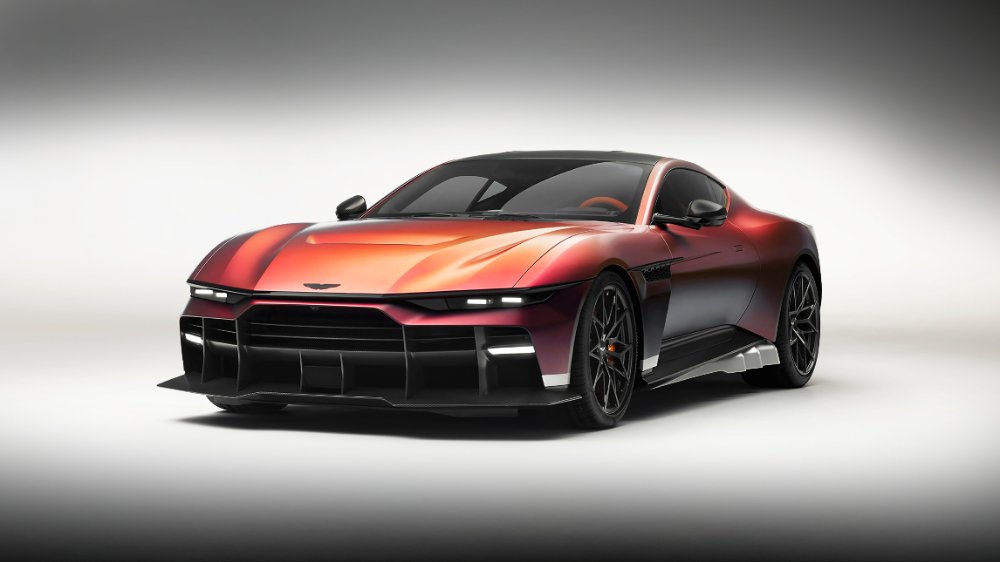
Aston Martin has revealed the Valen at Monterey Car Week 2026, a limited-production front-engined V12 supercar developed by Q by Aston Martin and the company’s Special Vehicle Operations department. Production will be limited to 150 cars, with first deliveries scheduled for the second quarter of 2027. The Valen uses Aston Martin’s 5.2-litre twin-turbocharged V12, uprated to 838bhp and 738lb ft of torque, making it the most powerful front-engined Aston Martin yet. The company quotes 0-60mph in 3.0 seconds and an electronically limited top speed of 214mph.
Drive is sent to the rear wheels through an eight-speed ZF automatic transmission with revised calibration derived from Aston Martin’s Vantage GT4 racing programme. Sport, Sport+ and Track modes alter throttle response, drivetrain behaviour and chassis settings, while an electronic limited-slip differential and carbonfibre propshaft are retained. A major part of the programme has focused on reducing mass. Aston Martin says the Valen can be up to 110kg lighter than its existing V12 platform through the use of carbonfibre, aluminium, titanium and magnesium. Standard equipment includes magnesium wheels, while an optional lightweight package adds machined aluminium suspension arms and knuckles together with titanium chassis bolts, saving a further 16.9kg.
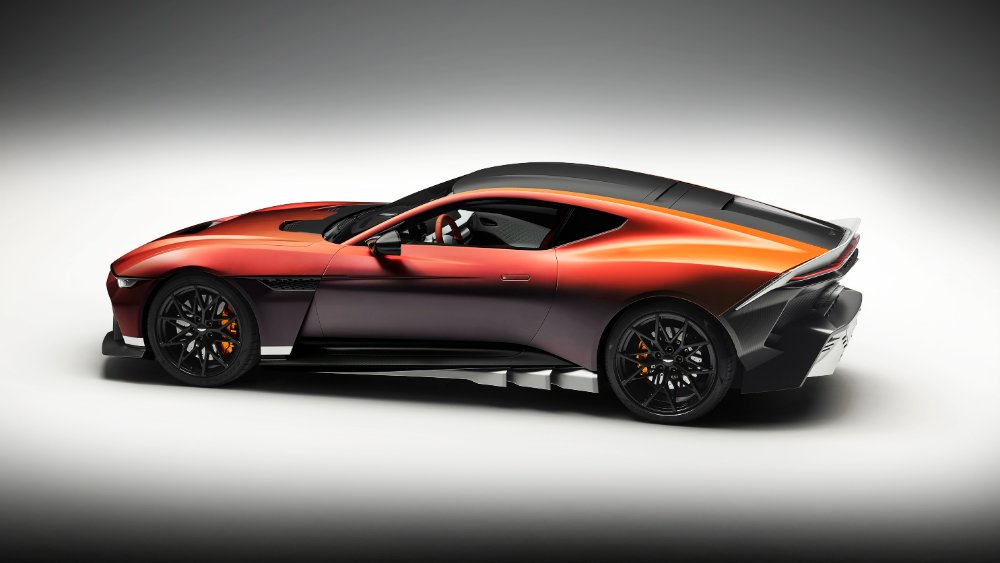
The chassis has also been extensively retuned. Valen uses model-specific springs, helper springs and Bilstein DTX semi-active dampers, together with a solid-mounted rear subframe and revised steering, stability-control and braking calibrations. Carbon-ceramic brakes measure 410mm at the front and 360mm at the rear. Its 21-inch magnesium wheels wear bespoke Pirelli P Zero R tyres, incorporating Cyber Tyre technology that shares real-time tyre data with the car’s electronic control systems. Aston Martin says this allows ABS, ESP and traction-control thresholds to adapt continuously accordingly. A titanium exhaust system is fitted as standard, with four 3D-printed titanium outlets arranged in two upper and two lower positions. The upper exits remain open, while the lower pair are valve-controlled according to drive mode.
Visually, the Valen represents a significant departure from Aston Martin’s current front-engined models. Its full carbonfibre body features slim recessed headlights, a more angular grille, a sharply defined front splitter and large functional vents behind the front wheels. Saw-tooth vortex generators along the side sills are intended to reduce lift and contribute to downforce. At the rear, Aston Martin has replaced the conventional rear window and bootlid arrangement with a solid tailgate incorporating an aerodynamic wing. A full-width light bar sits below the upswept tail, while a large diffuser frames the lower body. Boot capacity is 170 litres.
Inside, the Valen introduces a slimmer centre console using 3D-printed components and switchgear related to the Valhalla. Buyers can choose between Sports Plus seats and lightweight carbonfibre performance seats, alongside a broad range of leather, Alcantara and colour combinations through Q by Aston Martin.
More details are available here.
Hennessey Blackbird

Hennessey has used Monterey Car Week 2026 to unveil its third hypercar, the Blackbird, which takes a markedly different approach from the Venom F5 by combining a naturally aspirated V8 and six-speed manual gearbox with an increased emphasis on long-distance road use.
At its centre is a new 6.2-litre naturally aspirated V8 developed with Ilmor Engineering. Hennessey is targeting between 800hp and 850hp and an engine speed exceeding 9000rpm, with a projected 0-60mph time of 2.5 seconds and a 220mph top speed. The engine sits within a bespoke carbonfibre tub clothed in carbonfibre bodywork, with a target dry weight below 1360kg. The Blackbird uses inboard suspension with adaptive damping, Michelin Pilot Sport Cup 2 tyres, ABS and traction control. Rear-wheel drive and the six-speed gated manual is the only drivetrain configuration offered.

Its name and several elements of its appearance reference the Lockheed SR-71 Blackbird. The most unusual styling details are two active vertical rear stabilisers, which deploy automatically at 71mph and sit at plus or minus 71 degrees. A pronounced body-side chine also references the aircraft, while the diamond-shaped quad exhausts take inspiration from the Bell X-1.
The analogue approach continues inside. There is no conventional infotainment screen or digital instrument display and no steering-wheel buttons. Instead, a large analogue tachometer takes centre stage alongside physical controls, a conventional ignition key and exposed manual gear linkage. Navigation, Apple CarPlay and Android Auto are accessed through the driver’s own device. The Blackbird has a larger cabin than the Venom F5, luggage capacity for two full-size carry-on bags and additional storage behind and inside the cabin. There are also four cup-holders.
Hennessey says the car has been engineered to cover more than 800 miles in a day. Production is limited to 71 cars, priced from $2.5m before taxes. More than two-thirds had already been allocated ahead of the public debut at The Quail. Customer production is targeted for 2029-30, and more details can be found here.
Gordon Murray Special Vehicles S1
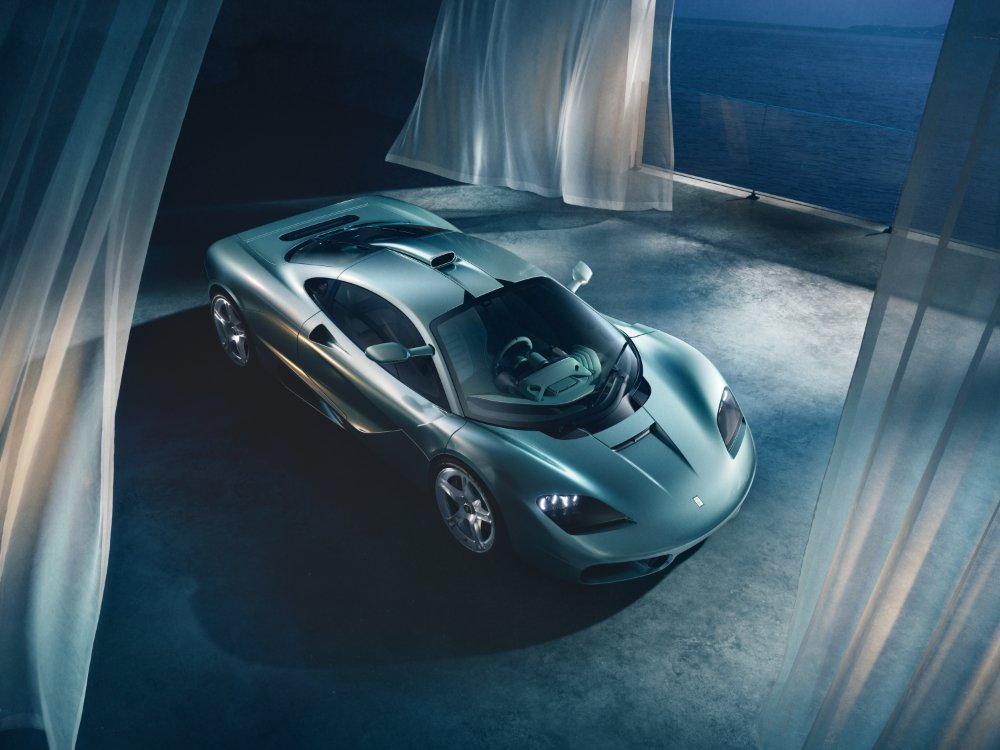
Gordon Murray Special Vehicles has revealed the S1 at The Quail during Monterey Car Week 2026, presenting a more road- and touring-focused interpretation of the S1 LM platform. Although the two cars share their underlying architecture and design lineage, every exterior body panel on the S1 is new. The large fixed rear wing, long front splitter and deep side skirts used by the S1 LM have disappeared, with an integrated active rear aerodynamic system taking their place.
Power comes from a bespoke 4.2-litre naturally aspirated Cosworth V12 producing up to 690PS and revving to 12,100rpm. Competition-derived components include silicon carbide-coated lightweight pistons, titanium valves, titanium connecting rods and dry-sump lubrication. The engine has also been tuned to provide a broader torque spread for road use. Around 500Nm is produced at 7000rpm, while more than 80 percent of maximum torque is available from 2500rpm. A six-speed manual gearbox is standard, complete with a taller touring sixth gear. Straighter gearbox cable routing has also been adopted in an effort to improve the shift action.

The S1 retains the S1 LM’s track width, wider tyres and basic lightweight suspension architecture, but its ride height has been raised by 10mm and the damping recalibrated for greater compliance. Despite increased sound insulation, more substantial interior trim and a bespoke audio system, Gordon Murray Special Vehicles says the target weight remains below that of the T.50. There are also several references to Gordon Murray’s earlier work. Low-mounted auxiliary main-beam lights and the design of the lightweight wheels were inspired by Murray’s 1992 Monaco show car. The V12 remains prominently displayed within the engine compartment, accompanied by a polished Inconel exhaust and 24-carat gold-plated heat shield.
Inside, the S1 retains a three-seat layout with the driver positioned centrally. Premium leather, bespoke fabrics, additional acoustic insulation and revised infotainment screens distinguish it from the more competition-influenced S1 LM. Selectable power steering allows the assistance level to be varied, while new dihedral doors incorporate conventional drop-down glass and provide a wider opening.
Production is limited to 64 cars worldwide. Each will be individually commissioned and pricing has not been disclosed. More details can be found here.
RUF Ehra Widebody
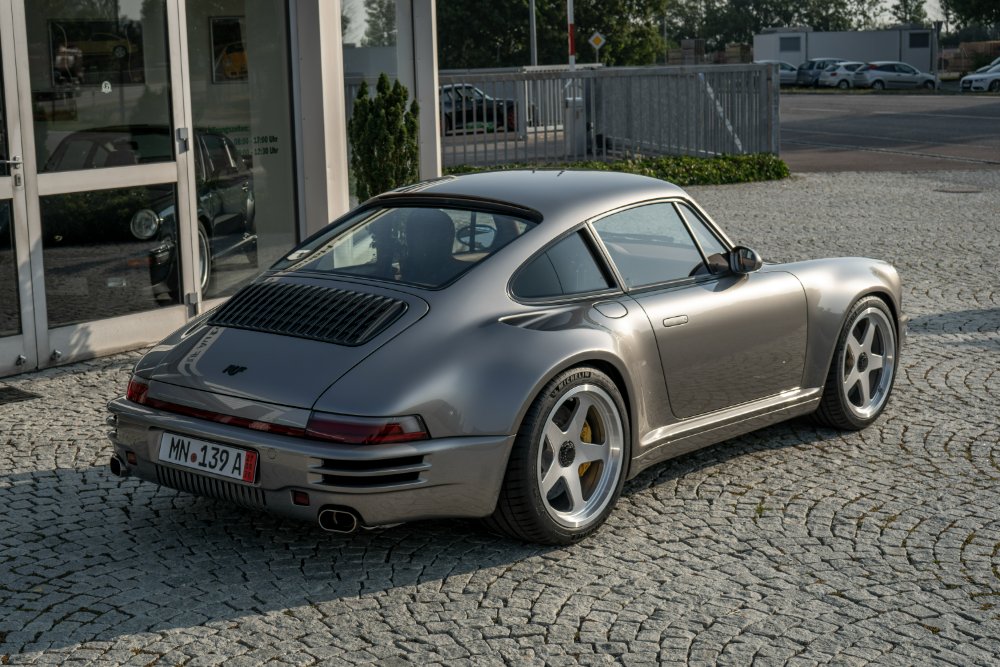
RUF has revealed the EHRA at The Quail during Monterey Car Week 2026, introducing a new widebody, all-wheel-drive model based on the company’s carbonfibre monocoque architecture. Named after the Ehra-Lessien proving ground, where Phil Hill set a record-breaking top speed in the original CTR Yellowbird, the EHRA combines a 3.6-litre twin-turbocharged flat-six with a seven-speed manual gearbox and fully variable all-wheel drive. Output is 650bhp and 664lb ft of torque.
Compared with the CTR Anniversary, the EHRA has wider tracks front and rear, increasing by 58mm and 54mm respectively. It also adopts new front and rear bodywork, a fastback tail without a fixed whale-tail spoiler and newly designed five-spoke centre-lock forged alloy wheels. A variable carbonfibre rear spoiler deploys automatically at higher speeds, but can also be controlled manually.
Underneath, the EHRA uses double-wishbone suspension at all four corners, with pushrod-operated horizontal adaptive dampers. RUF says the chassis has been developed to combine high-speed stability and precise response with road usability, while the variable all-wheel-drive system can retain a more rear-driven character when conditions allow.
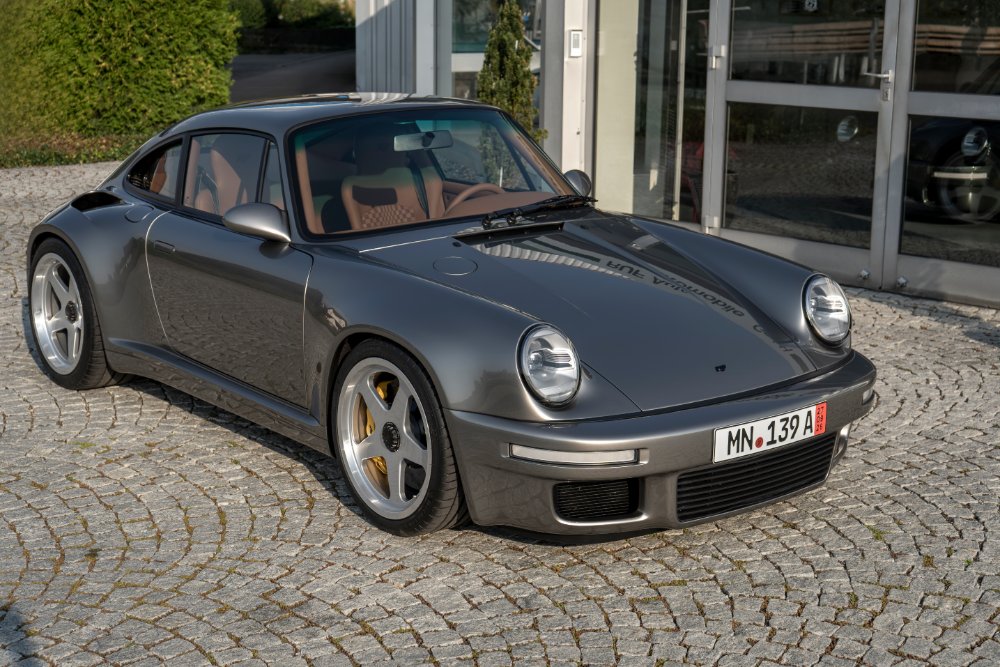
The first production example shown at Monterey is finished in Liquid Silver and features a lightweight carbon body. Its cabin combines natural brown leather with a geometric ‘Pasha’ chequered pattern, dark matt-finished carbon trim and titanium pedals. RUF’s familiar five-dial instrument layout is retained, here with green-faced gauges, while folding carbonfibre bucket seats are designed to provide enough comfort for longer journeys.
Further details include RUF LED lighting, flush electronically deployed door handles and air intakes incorporated into the rear quarter windows. The EHRA also sits on RUF’s proprietary carbonfibre monocoque, first introduced with the CTR Anniversary in 2017 and subsequently used for models including the naturally aspirated SCR and the off-road-focused RODEO. RUF has not yet announced production numbers, pricing or performance figures for the EHRA. More details are available here.
Eccentrica V12 Roadster
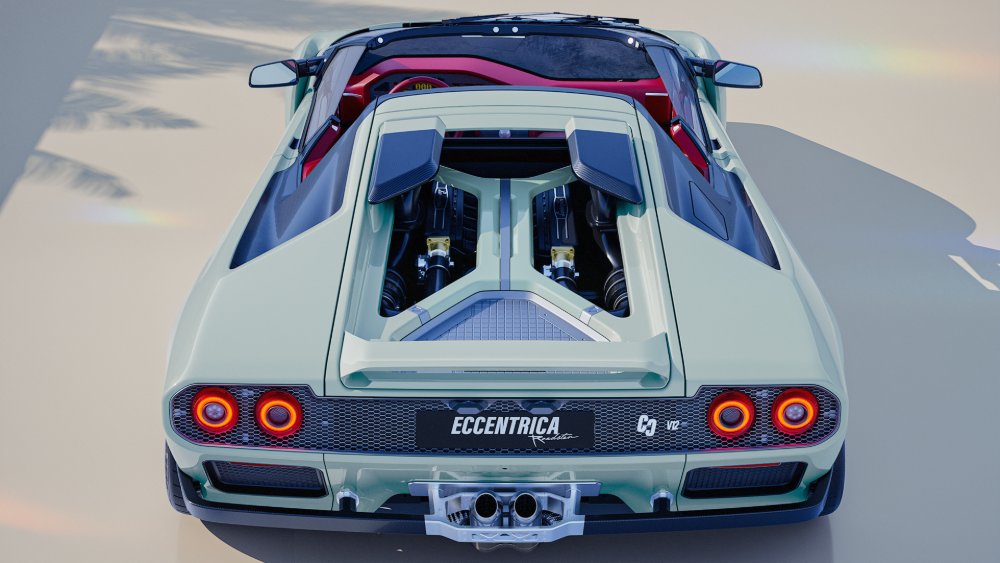
Eccentrica has taken the roof off its comprehensively re-engineered first-generation Lamborghini Diablo to create the V12 Roadster, which has made its physical public debut at The Quail during Monterey Car Week 2026. The Roadster is the San Marino company’s second model and follows the closed Eccentrica V12. As with that car, the starting point is an early Diablo, but Eccentrica says more than 3500 bespoke components are used as part of the reconstruction. The project has been developed by a team led by former Lamborghini chief technical officer Maurizio Reggiani, whose previous projects include the Murciélago, Gallardo, Aventador and Huracán.
Its 5.7-litre naturally aspirated V12 has been retained but extensively revised. Changes to the engine management, thermal control and airflow have resulted in outputs of 550hp at 7000rpm and 600Nm at 6500rpm. A six-speed close-ratio gated manual gearbox is standard. Eccentrica quotes a 0-100km/h time of 3.8 seconds and a maximum speed of 208mph.
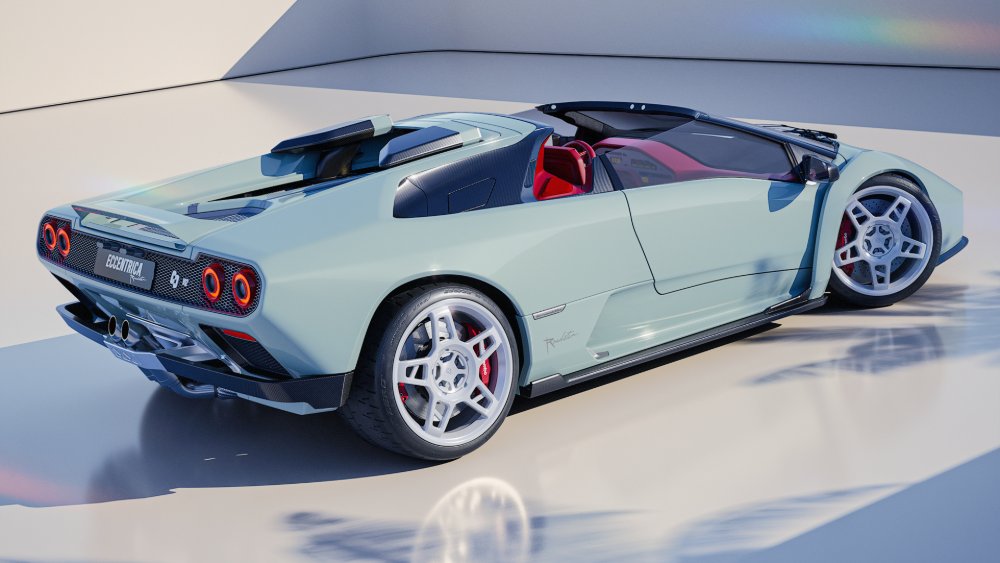
Removing the roof has necessitated further structural development. The original steel spaceframe has been reinforced with carbonfibre, while the exterior bodywork is carbonfibre as well. Eccentrica also conducted specific aerodynamic development to manage airflow through and around the open cabin. The track has been widened and the suspension geometry redesigned. Double wishbones are used at both ends with semi-active dampers, while steering remains hydraulically assisted.
Brakes are 380mm front and 345mm rear Brembo discs. Pirelli Trofeo RS tyres measure 255/30 R19 at the front and 325/30 R19 at the rear. Kerbweight is quoted at 1540kg, distributed 41 percent over the front axle and 59 percent over the rear. Inside, Connolly leather, Alcantara, anodised materials and exposed carbonfibre are used. Each Roadster will be individually configured with its owner. Just 19 examples will be produced, and more details can be found here.
Spyker C8 Preliator XXV Coupé
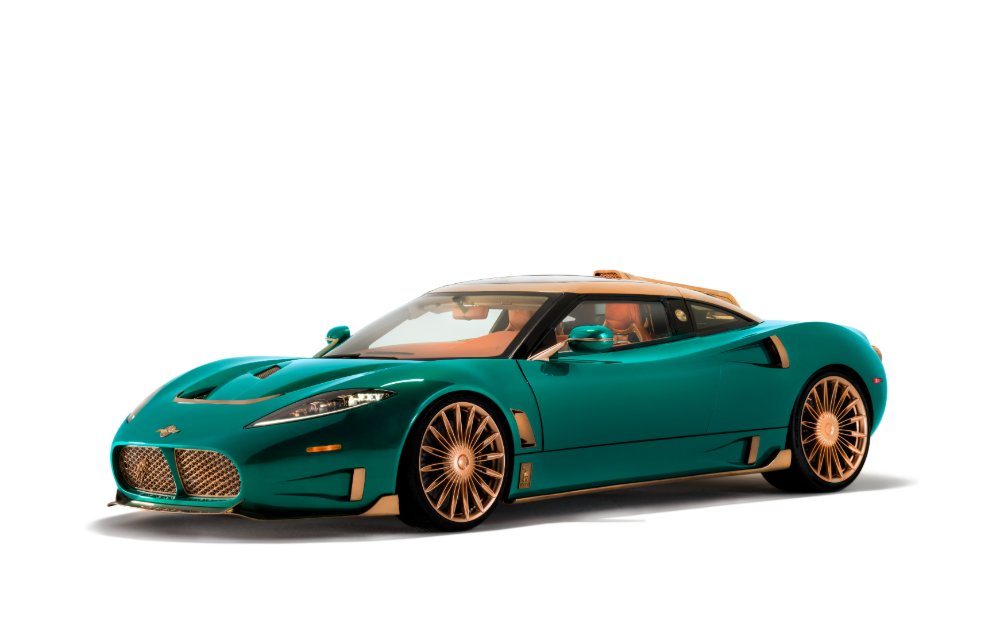
Spyker has returned to The Quail during Monterey Car Week 2026 with the C8 Preliator XXV Coupé, an entirely new 800hp manual hypercar that marks the latest revival of the Dutch marque. Despite retaining the Preliator name, Spyker says the XXV has been conceived from a clean sheet. It uses a completely redesigned spaceframe engineered in-house and carries hand-formed aluminium bodywork produced with Coventry Prototype Panels in England.
Power comes from a 4.0-litre twin-turbocharged V8 developing 800hp and 1000Nm. Spyker quotes a maximum speed of more than 217mph. The engine is paired with a conventional manual gearbox rather than a paddle-operated or automated transmission. Its exposed linkage continues one of the most recognisable features of Spyker’s modern-era interiors.
Digital equipment is deliberately restricted, with a head-up display serving as the only screen. Turned aluminium is extensively used across the dashboard, while an isogrid pattern based on lightweight aerospace structures appears on components including the pedals, vents and upholstery. The aviation references continue outside. NACA ducts form the air intakes, the rear lights resemble jet afterburners and the pronounced tail fin references the 1919 Spyker C1 Aerocoque.
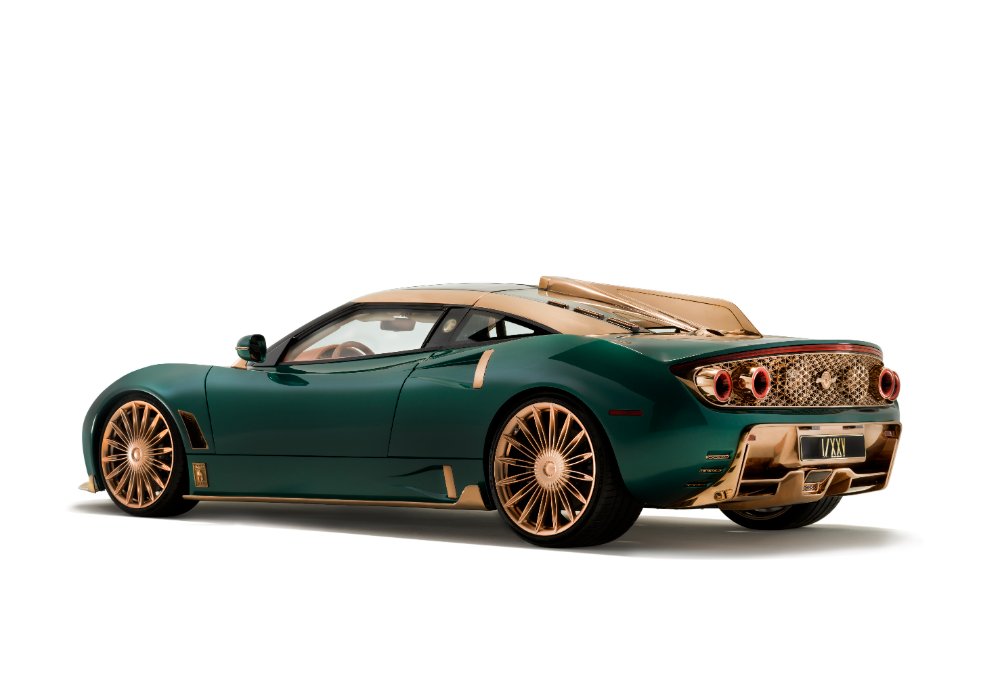
Spyker says each car takes around 2100 hours to construct. The steering wheel alone takes a craftsman four hours to stitch using two needles simultaneously, while even the visible screw heads inside the cabin are manually aligned. The car shown at The Quail is chassis number 270 and is finished in metallic Quail Green with rose-gold detailing and Tuscan Saddle leather. Spyker says it is the last of 255 cars constructed since the marque’s revival in 2000. The fuel tank has been relocated from the sills to a position behind the seats and ahead of the engine, a layout previously employed in Spyker’s Le Mans competition cars. The luggage compartment has consequently moved to the front. A so-called butterfly mode can also open much of the rear bodywork electrically to expose the engine.
Production of the C8 Preliator XXV Coupé will be restricted to 25 individually commissioned cars. The model also marks the beginning of another phase for Spyker following investment from Volodymyr Nosov, who has become co-owner, and a strategic partnership with W Group. Spyker says future plans include further development of the D8 Peking-to-Paris SSUV and an ambition to return to GT3 endurance racing.
More details can be found here.
Jaguar Type 01
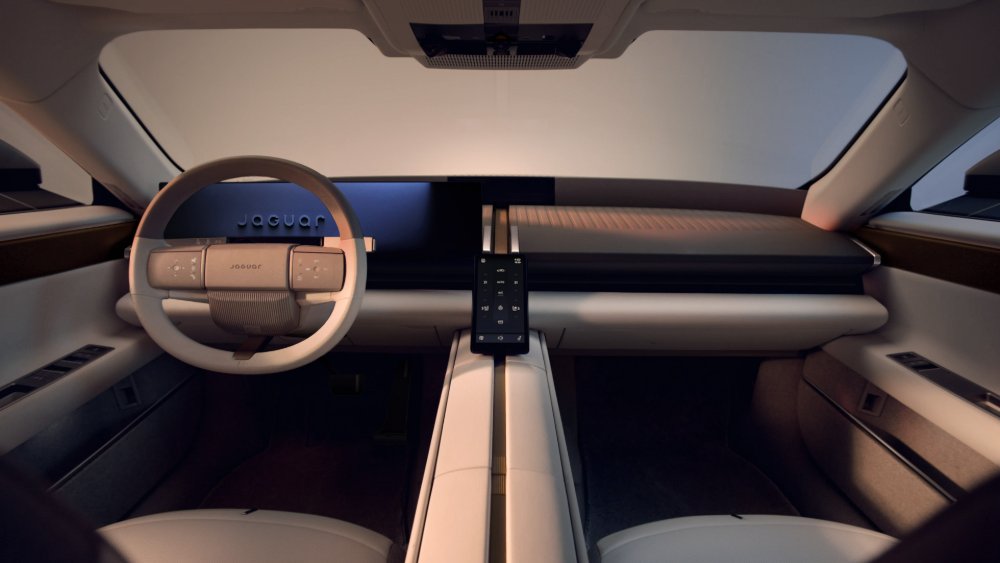
Jaguar has used Monterey Car Week 2026 to reveal the interior of its forthcoming Type 01 and show the prototype in North America with a new exterior wrap. The cabin provides the clearest indication yet of how the company’s new design approach will move from concept cars into series production. Its defining feature is a central spine that extends longitudinally through the interior, dividing the four-seat cabin into individual spaces. The driver sits low in the car, while the dashboard has deliberately been kept slim rather than adopting the broad horizontal screen architecture increasingly common in luxury cars.

Jaguar says the colour and material treatment takes inspiration from travertine stone and artisan textiles. A brass-inspired finish runs along the central spine and the upper sections of the doors, with Jaguar leaper motifs incorporated into the detailing. Technology is integrated rather than being visually dominant; infotainment functions sit within the dashboard architecture, while a digital ClearSight rear-view display has been positioned at the base of the windscreen and at approximately the same height as the exterior mirrors. Concealed compartments and other hidden-until-needed functions are also incorporated into the cabin.
Jaguar’s Monterey Car Week 2026 appearance has provided a preview rather than the complete technical unveiling. The Type 01 prototype is also due to appear at the Pebble Beach Concours d’Elegance on Sunday August 16, 2026. The full production car will be revealed in New York on October 6, when further details are expected.
More details are available here.
Louis Vuitton and Singer

Louis Vuitton and Singer have revealed two jointly developed Porsche 911 restorations at Monterey Car Week 2026, combining Singer’s Classic and Classic Turbo services with bespoke materials, detailing, luggage and accessories created by the French fashion house. The collaboration began with a request for a dashboard clock; Louis Vuitton’s La Fabrique du Temps workshops in Switzerland developed a detachable mechanical timepiece inspired by the Tambour watch, which can also be removed from the car and used as a desk clock. The project subsequently expanded into a redesign of the cars’ instruments, controls, trim and other functional elements.
The first example to be revealed at Monterey Car Week 2026 is a Porsche 911 Reimagined by Singer – Classic, based on a Type 964 coupé. Its lightweight carbonfibre bodywork is finished in a combination of saffron, cobalt blue and yellow developed for Louis Vuitton. The saffron shade references colours used by the company for more than a century, while cobalt blue also appears within the cabin and on the car’s demonstration tyres. Power comes from a naturally aspirated 4.0-litre air-cooled flat-six driving the rear wheels through a six-speed manual gearbox. Carbon-ceramic brakes are fitted, while the rear wing is speed activated.
Inside, natural-coloured leather inspired by Louis Vuitton’s VVT leather covers much of the cabin. Singer carried out the leatherwork using hides selected by Louis Vuitton’s artisans, with yellow stitching and edge-finishing techniques derived from the company’s luggage. Diamond-patterned embossing references the ‘malletage’ used inside Louis Vuitton trunks, while ventilation holes in the seats incorporate Monogram flower motifs. Plastic fittings have been replaced by metal components, predominantly rhodium plated, with switches, knobs, vents and other controls individually finished using techniques associated with watchmaking. A specially designed roof rack can carry bespoke luggage, skis or a Louis Vuitton surfboard.

The second car on show at Monterey Car Week 2026 is a Porsche 911 Reimagined by Singer – Classic Turbo cabriolet, conceived with Louis Vuitton Women’s Collections artistic director Nicolas Ghesquière. Based on a Type 964 cabriolet, it is finished in Calcaire Lutétien white, a colour referencing the limestone associated with Paris, with gold detailing and extensive use of wood. Its lightweight carbonfibre body retains a whale-tail rear spoiler. The Classic Turbo boasts a 3.8-litre twin-turbocharged flat-six with air-to-water intercooling, a six-speed manual gearbox, selectable driving modes, rear-wheel drive and carbon-ceramic brakes.
Wood is used extensively throughout the car, including the bumpers, front luggage compartment, engine bay and a rear deck inspired by classic motorboats. Behind the seats is a dedicated luggage area that also accommodates the lightweight soft-top roof. Its detachable Tambour-inspired dashboard clock sits in the centre console rather than within the main instrument display, accompanied by gold-coloured gauges and a matching ignition key. The gearlever surround incorporates a natural-leather drawstring referencing Louis Vuitton’s Noé bag.
Both cars are accompanied by individually designed collections of clothing, luggage and travel equipment. These range from driving jackets, gloves, helmets and footwear to fitted cases, Keepalls and key holders. Singer completed the Classic restoration at its California facility, while the Classic Turbo cabriolet was created at its operation in England.
More information on Singer can be found here.
Porsche 991 GT2 RS Moby Dick

Porsche has revealed a road-legal 911 GT2 RS-based Sonderwunsch project at Monterey Car Week 2026, which reinterprets the slantnose 935 Moby Dick for the modern era. Created for a private customer by Porsche’s Sonderwunsch department in collaboration with Manthey, the one-off Flachbau RS is based on a 2018 991.2-generation 911 GT2 RS with the Weissach Package. Its owner’s brief called for greater performance, a slantnose body and a rear wing inspired by the 911 GT3 R rennsport. The resulting car has been three years in the making, bringing together specialists from Sonderwunsch, Style Porsche, Weissach, Porsche Motorsport and Manthey.
Although the GT2 RS’s drivetrain has been left unchanged, much of the body and aerodynamic package has been reworked. Most obvious is the front end. The standard wings have been replaced by lower-profile items with louvred vents, while the bumper has been redesigned and fitted with Manthey aerodynamic elements. The familiar round headlights have also disappeared, replaced by a tiered arrangement of narrow LED units for dipped beam, main beam and daytime running lights.
The shape deliberately recalls the 935/78 Moby Dick, as does the colour scheme. Grand Prix White was matched against a historic 911 in Porsche’s collection, while black exposed carbonfibre sections and a U-shaped bonnet graphic reference the Martini-liveried racing car. Rear-wheel aerodiscs are also finished in white.

At the back is a new rear wing supported by S-shaped mounts inspired by the 911 GT3 R rennsport. It sits around 50mm higher than that of the donor car and can be manually adjusted through three positions. Porsche says that in its High Downforce setting the Flachbau RS generates 554kg of rear-axle downforce at 211mph.
Weight has also been reduced by 31.6kg beyond the already weight-conscious GT2 RS Weissach Package. The PCM infotainment system and audio equipment have been removed, together with much of the sound deadening, carpeting and other cabin trim. Unnecessary wiring has also been deleted, while exposed metal and carbonfibre detailing give the rear section of the cabin a more competition-focused appearance. Despite that approach, the car remains road legal. Items such as the warning triangle and towing eye have been relocated into a removable emergency box, allowing them to be taken out for circuit use.
Porsche carried out extensive validation before signing off the project. Three test cars were built, with development including crash simulations, airbag validation, structural analysis, CFD work, wind-tunnel testing and lighting tests. The rear wing underwent vibration and static-load testing, while road and circuit development included 50 laps of the Nürburgring-Nordschleife.
More details can be found here.
Lanzante 95-59
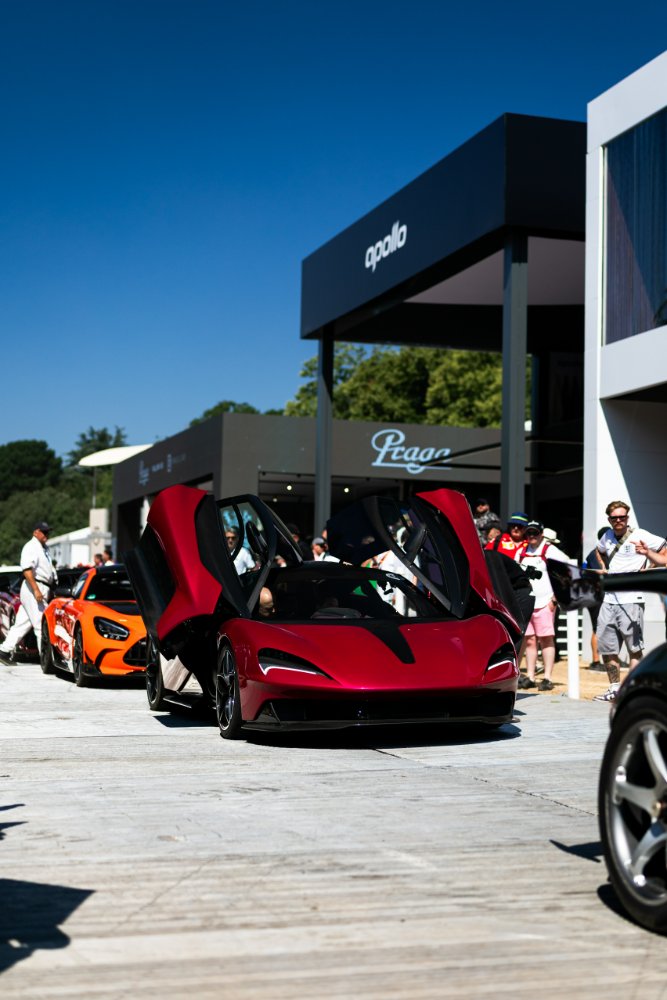
Lanzante has used the Quail during Monterey Car Week 2026 to give the 95-59 its US production-form debut, while also confirming a new high-downforce package and further customisation options for the three-seat supercar. The 95-59 was first shown as a design concept at the Las Vegas Concours at the end of 2025, before appearing dynamically at the Goodwood Festival of Speed in July. Lanzante says development is continuing ahead of production beginning in early 2027, with 59 examples planned.
The latest version shown at the Quail introduces several additional choices for customers. These include a new five-spoke centre-lock wheel design, expanded interior trim possibilities using materials from Loro Piana and the previously announced lightweight LM30 Edition package. More significant is the newly confirmed high-downforce option. This adds a fixed rear wing mounted high above the tail and an integrated roof-mounted air intake, giving the 95-59 a more overtly competition-influenced appearance. Lanzante says the package follows a similar philosophy to the aerodynamic upgrades offered to original McLaren F1 owners during that car’s production life.
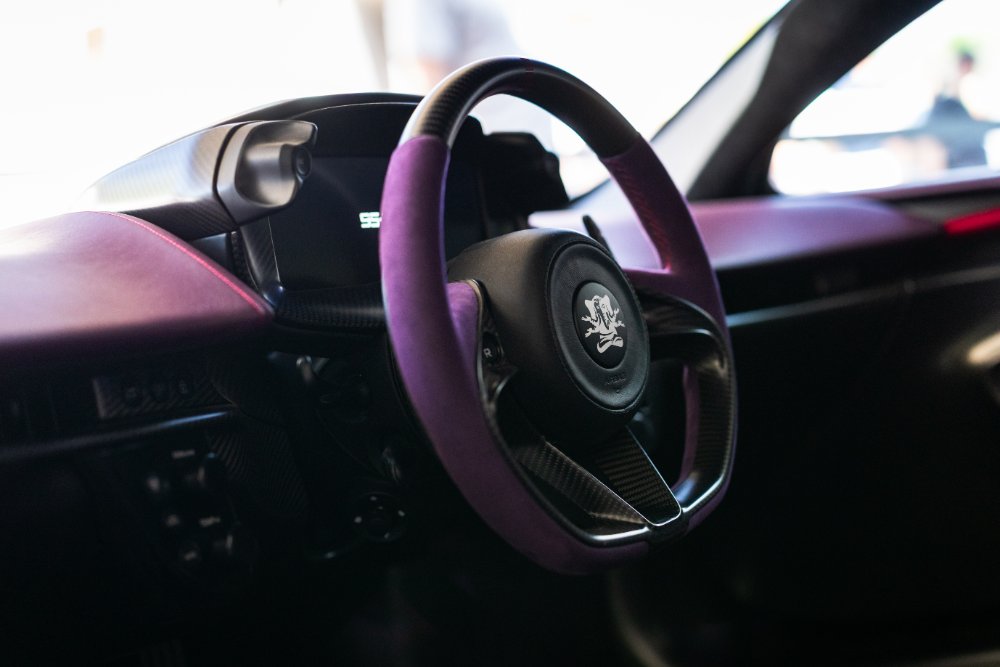
Beyond paint and trim choices, customers can specify the LM30 Edition lightweight package and, from later production slots, the new high-downforce configuration. Lanzante has not yet released detailed aerodynamic figures for the package, but the fixed rear wing and roof intake indicate a clear shift towards greater circuit capability. The new aerodynamic package is available to order immediately and will be offered on later production slots, with all options reserved for the 59-car run. More details are available here.
McLaren McL 6GT
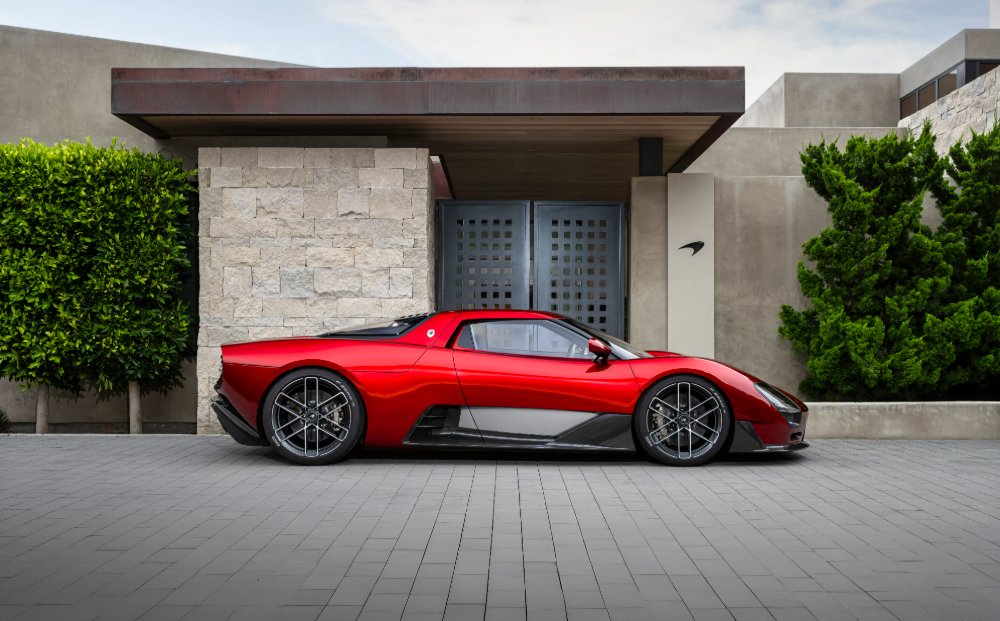
McLaren has revealed the McL 6GT at Monterey Car Week 2026, previewing a new road-going model due in 2028 and reviving a concept first explored by company founder Bruce McLaren more than six decades ago. The McL 6GT is a contemporary interpretation of the M6GT, the road car Bruce McLaren hoped to develop from the M6A Can-Am racer. The new concept is intended to open a more exclusive strand of models beyond McLaren’s existing core range.
Most significantly, the McL 6GT uses a manual gearbox, the first fitted to a McLaren road car since the F1 of 1992. Drive is sent to the rear wheels, while power comes from a V8 internal-combustion engine. McLaren has not yet released output, performance figures or production numbers for the eventual road-going version. Instead, the emphasis is on tactility and low weight. The car uses a carbonfibre monocoque and bodywork, while hydraulic steering, physical switchgear and machined-aluminium controls are intended to give the driver a more mechanical connection than in McLaren’s current series-production models. The gearlever itself incorporates a three-dimensional version of the Speedy Kiwi emblem.

Styling references the M6GT and the sports prototypes of the late 1960s without directly reproducing them. The McL 6GT sits low and wide, with a shallow nose, an integrated cabin and a roofline flowing into a Kammback-style tail. McLaren says the surfacing has been kept deliberately clean, with the body wrapped tightly around the mechanical package. Several smaller details make the historical connection more explicit. A ‘Racing Loop’ motif inspired by the original M6GT’s rear lights is incorporated into the airflow architecture, while Bruce McLaren’s M6GT registration number is reinterpreted graphically on the body. His signature appears in the engine bay and a Speedy Kiwi emblem is etched into the fuel-filler cap.
The cabin follows the same theme. Boxed quilting references the original M6GT, while the digital instrumentation has been designed to retain a simple, clear presentation. Exposed gloss carbonfibre is used inside, both as a structural reference and as part of the car’s lightweight approach. McLaren says the concept will lead to a production version in 2028. The company has not yet confirmed pricing, volume or final technical specification, but says the model will sit outside its existing portfolio as a more exclusive, driver-focused proposition. More details available here.
Ferrari CZ26
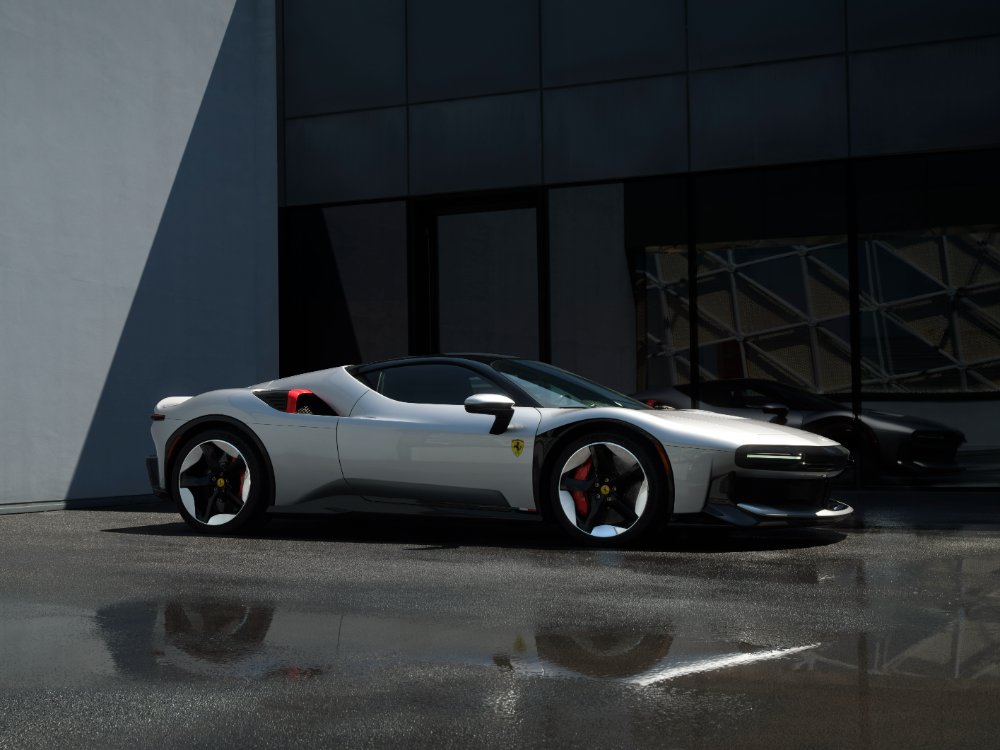
Ferrari has revealed the CZ26 at Monterey Car Week 2026, a one-off Special Projects commission based on the SF90 Stradale and created for a US client. Designed by the Ferrari Design Studio under Flavio Manzoni, the CZ26 retains the SF90 Stradale’s underlying mechanical package but introduces completely new bodywork, aerodynamics and interior detailing. Ferrari describes the project as a reinterpretation of the high-performance berlinetta, with a design intended to emphasise horizontal forms and technical simplicity. The most obvious change is the silhouette; rather than following the SF90’s existing surfacing, the CZ26 uses a two-box profile built around what Ferrari calls a central ‘capsule’, visually supported by pronounced wheelarches. The front is unusually flat and upright, with a full-width grille incorporating ultra-slim lighting units, brake-cooling intakes, sensors and other technical elements.
At the rear, the body terminates in a truncated tail with cantilevered lights and a broad horizontal diffuser. The same horizontal theme continues along the flanks, where the cooling intakes, carbonfibre details and wheelarch extensions are integrated into the main surfaces rather than treated as separate graphic elements. Ferrari says the approach takes inspiration from Italian industrial design of the 1970s.
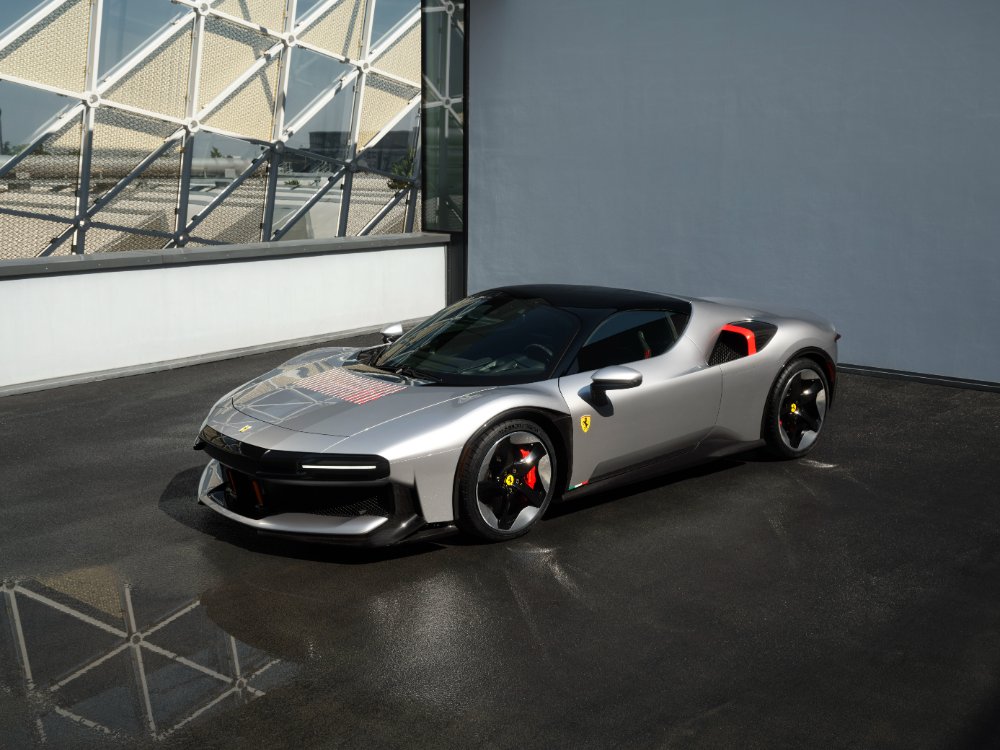
The cabin is visually set into the body by black trim around the roof and pillars, while the exterior is finished in a bespoke Argento Veloce silver developed specifically for the car. Rosso Lampante accents provide contrast, alongside pigmented carbonfibre elements. The wheels are unique to the CZ26, combining gloss-black paint with a shot-peened surface finish, while the exhaust outlets are natural-finish titanium. Inside, the same theme continues with black technical fabric, satin carbonfibre and gloss carbon incorporating metallic filaments. The seat inserts are produced using additive manufacturing, while Rosso Lampante details and embroidered CZ26 logos tie the cabin back to the exterior.
Although the powertrain is unchanged from the SF90 Stradale, the aerodynamic package has been extensively reworked. The central radiator pack has been repositioned, with new bypass ducts introduced to improve cooling and increase front-axle downforce. The underbody and vortex-generator system have also been redesigned, air curtains at the outer edges of the front bumper manage airflow around the front wheels, while the rear gains a large upper spoiler and a dedicated diffuser. The engine cover has also been revised with additional vents to improve heat management.
The CZ26 was created through Ferrari’s Special Projects programme, which develops one-off cars in collaboration with individual clients. Ferrari says each commission typically takes around two years from initial concept to completion. More details are available here.
Find out more about Monterey Car Week 2026 here.