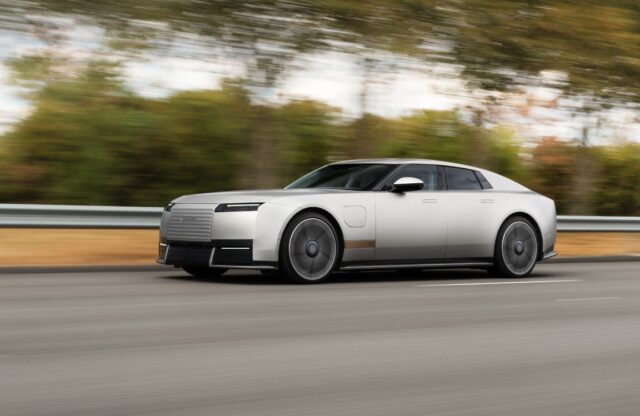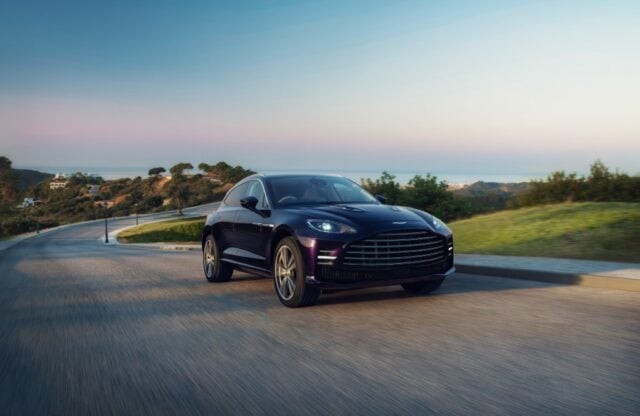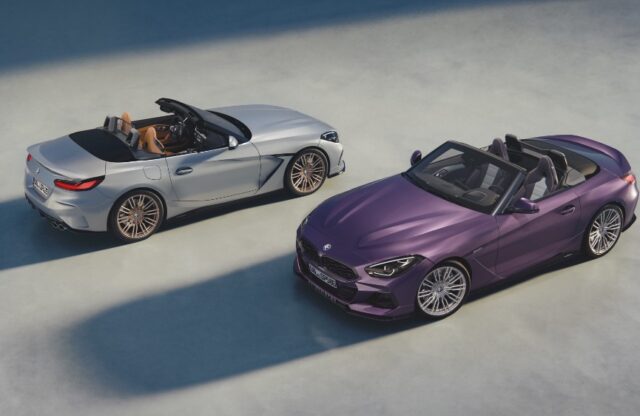


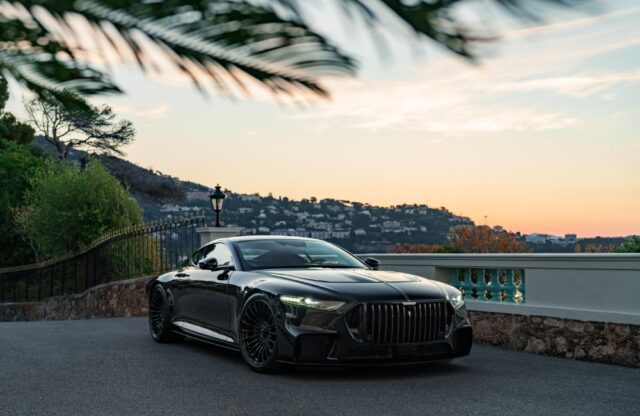
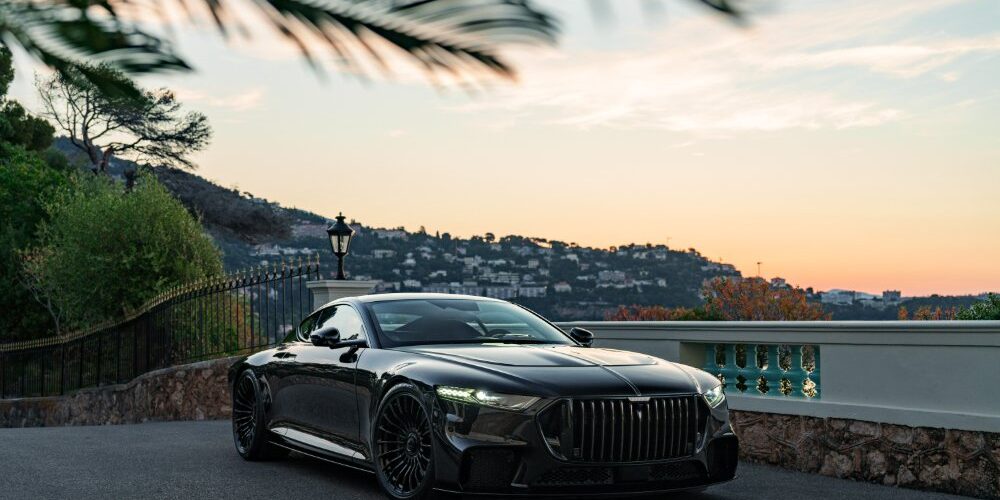
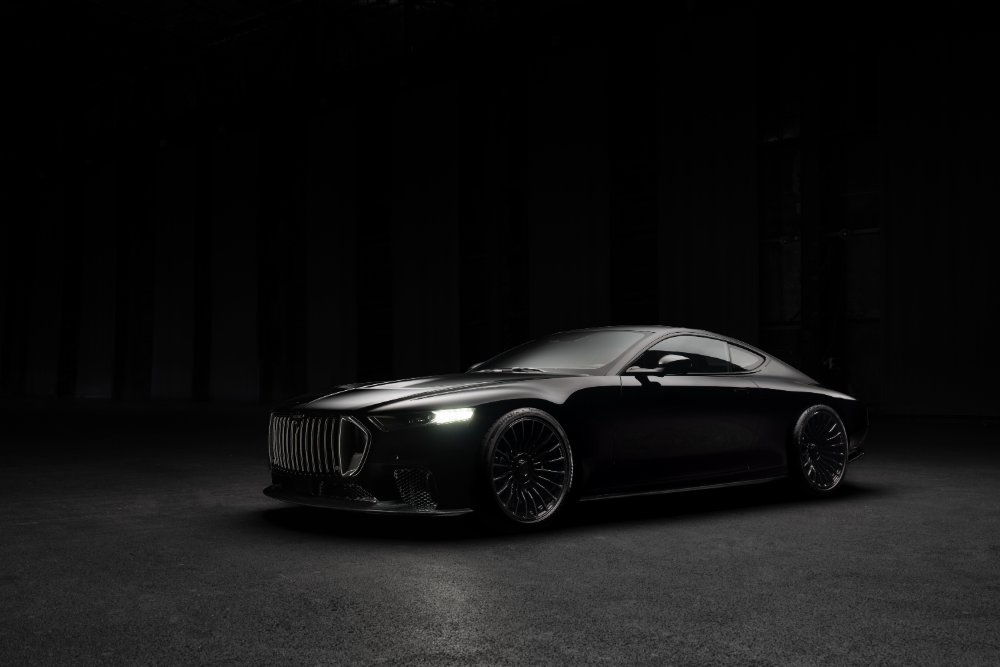
Say hello to the Brabus Bodo, a limited-production 2+2 grand tourer named in tribute to the company’s late founder Bodo Buschmann. Unveiled at FuoriConcorso on the shores of Lake Como on Friday May 15, 2026, the new car represents a more ambitious coachbuilt project from the Bottrop-based firm, combining an aluminium monocoque chassis sourced from the Aston Martin Vanquish, carbonfibre bodywork, active aerodynamics and a 1000bhp V12.
We spoke to CEO Constantin Buschmann about the car, the future of Brabus and the nature of customisation – but before we get to that, let’s dive into the Bodo.
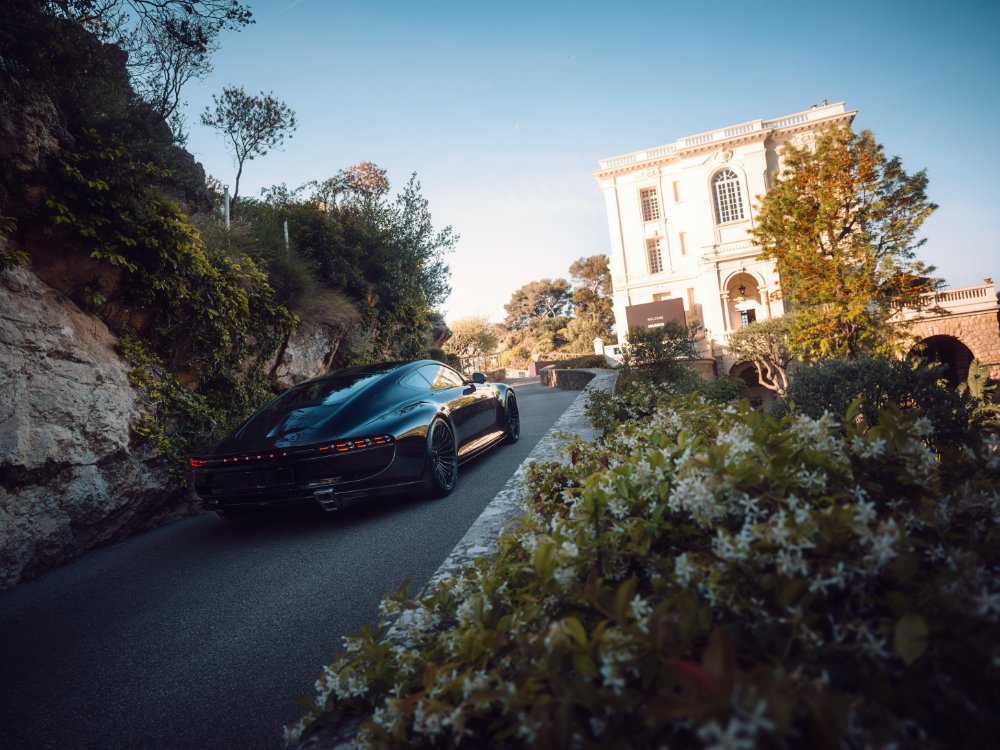
In a reference to 1977, the year Brabus was founded, production will be limited to 77 examples. Each car will be built to order and individually specified by its buyer, with prices starting from €1,000,000 before German VAT.
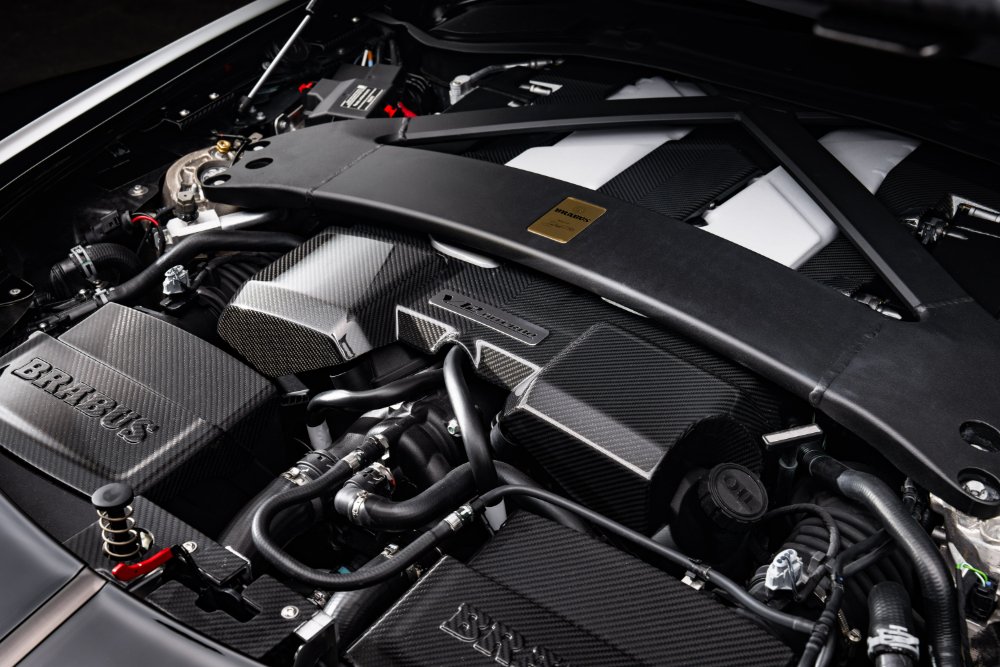
The Brabus Bodo is powered by a hand-built 5.2-litre twin-turbocharged V12 producing 1000bhp at 6400rpm and 885lb ft of torque from 2900rpm to 5000rpm. Drive is sent to the rear wheels through an eight-speed torque-converter automatic gearbox, with manual control via Brabus carbonfibre paddle-shifters. An electronically controlled rear differential can provide up to 100 percent locking.
As a result, it’s pretty nippy in the same way as the distinctive launch car’s theme is ‘quite black’. Brabus quotes a 0-62mph time of 3.0 seconds, 0-124mph in 8.5 seconds and 0-186mph in 23.9 seconds. Top speed is electronically limited to 223mph.
The V12 uses four-valve cylinder heads, direct fuel injection and a Brabus high-performance turbocharging system, incorporating a RAM-AIR airbox, high-efficiency charge-air cooling and two specially developed turbochargers. A Brabus exhaust is also fitted, with four titanium tailpipes produced using 3D metal printing. The system includes electronically controlled sound management, four metal catalytic converters and petrol particulate filters. Brabus says the engine management has been calibrated for injection, ignition and boost-pressure control, and that the car meets the Euro 6e-ISC-FCM emissions standard.
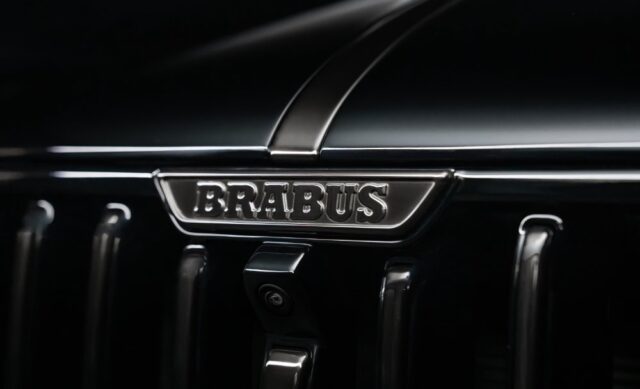
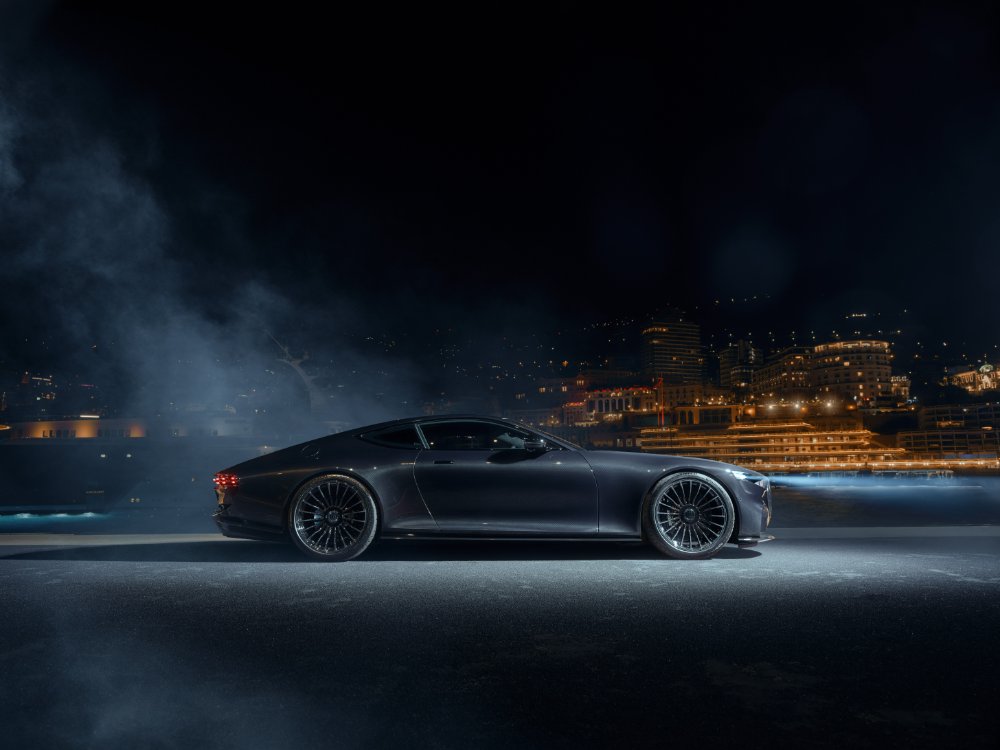
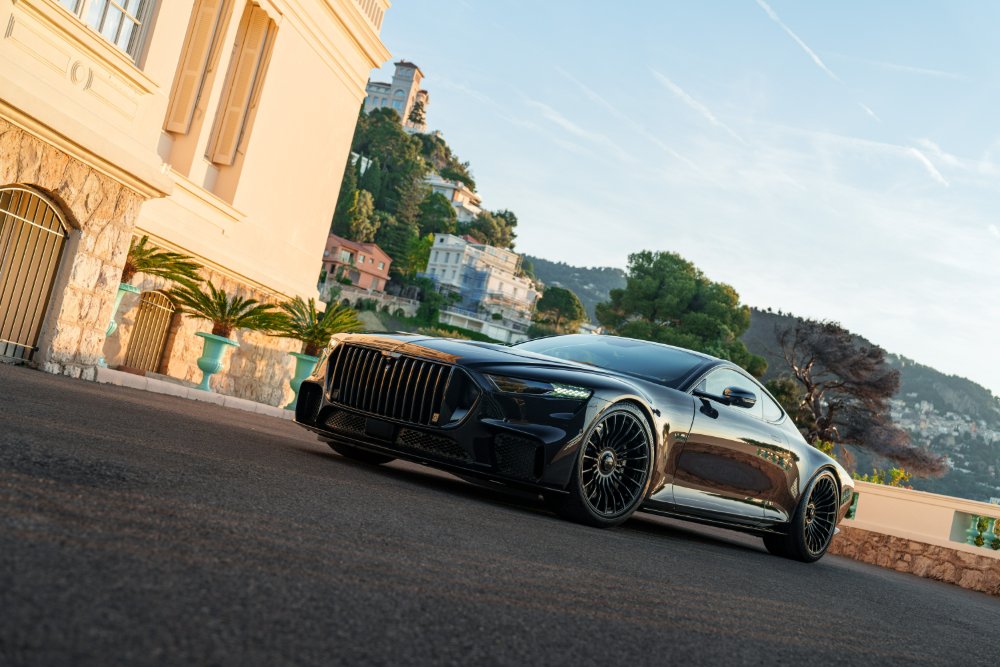
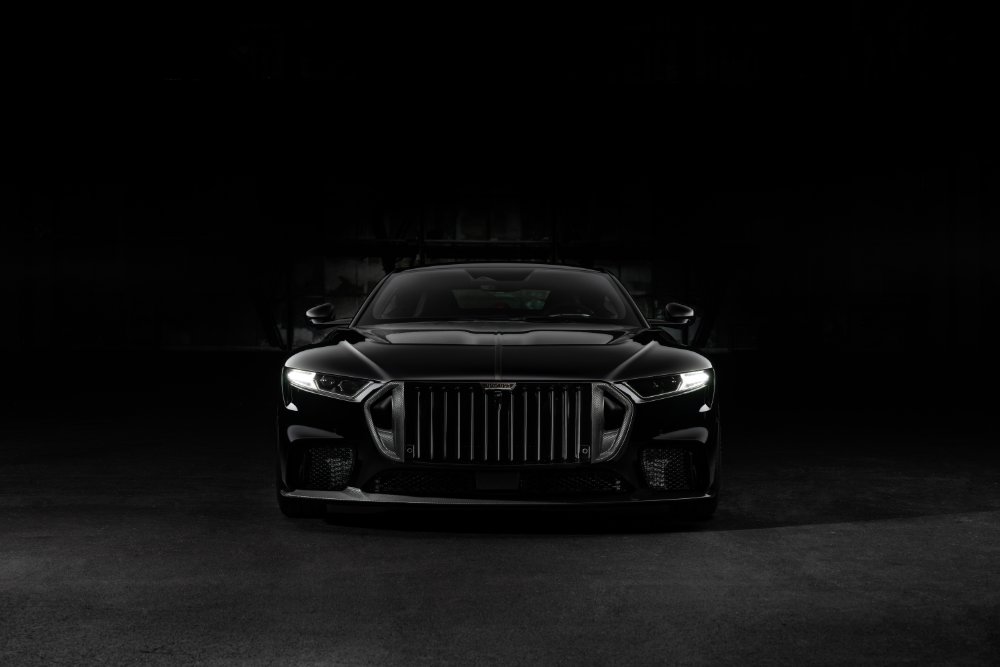
The Bodo’s body is made from pre-preg carbonfibre, apart from the windows and fixed panoramic glass roof. The front end uses LED matrix headlights, a Brabus grille with 13 vertical slats and two large RAM-AIR ducts feeding the V12. Further air intakes in the front facia provide cooling for the water and oil radiators as well as for the front brakes.
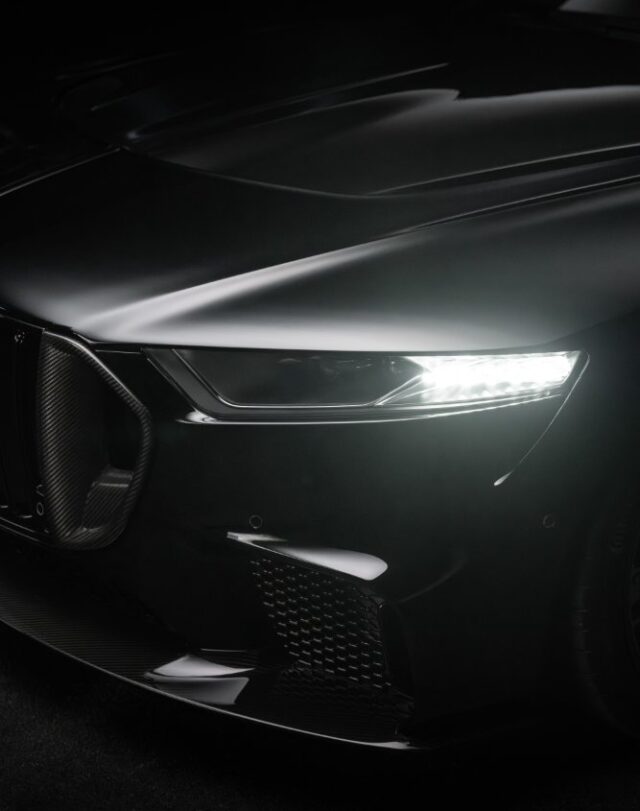
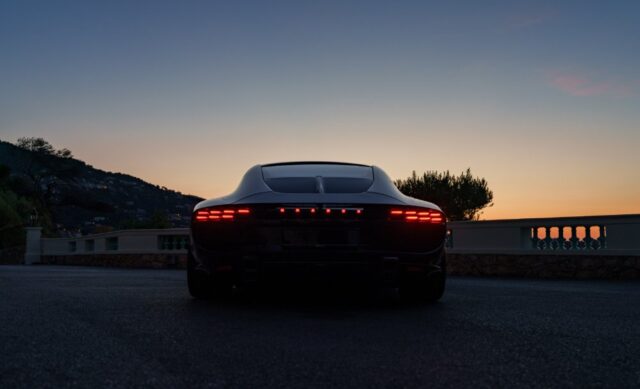
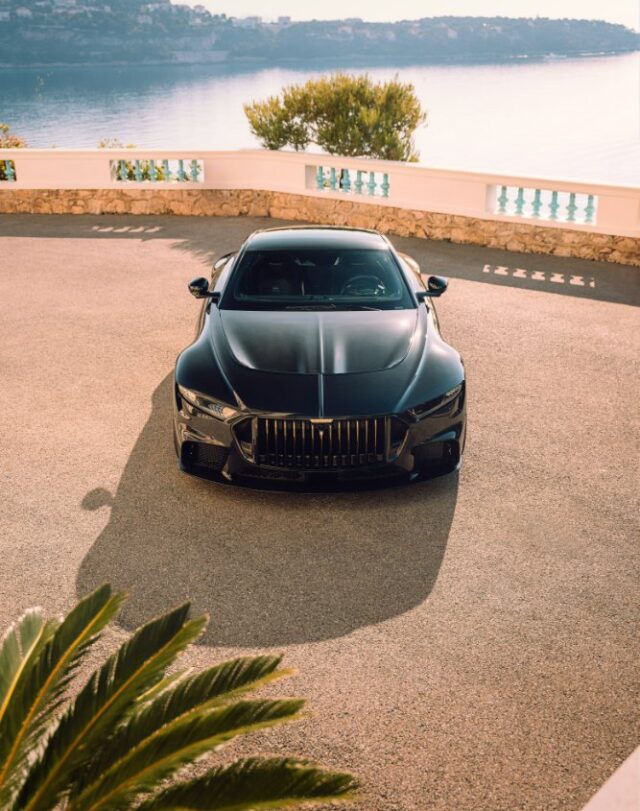
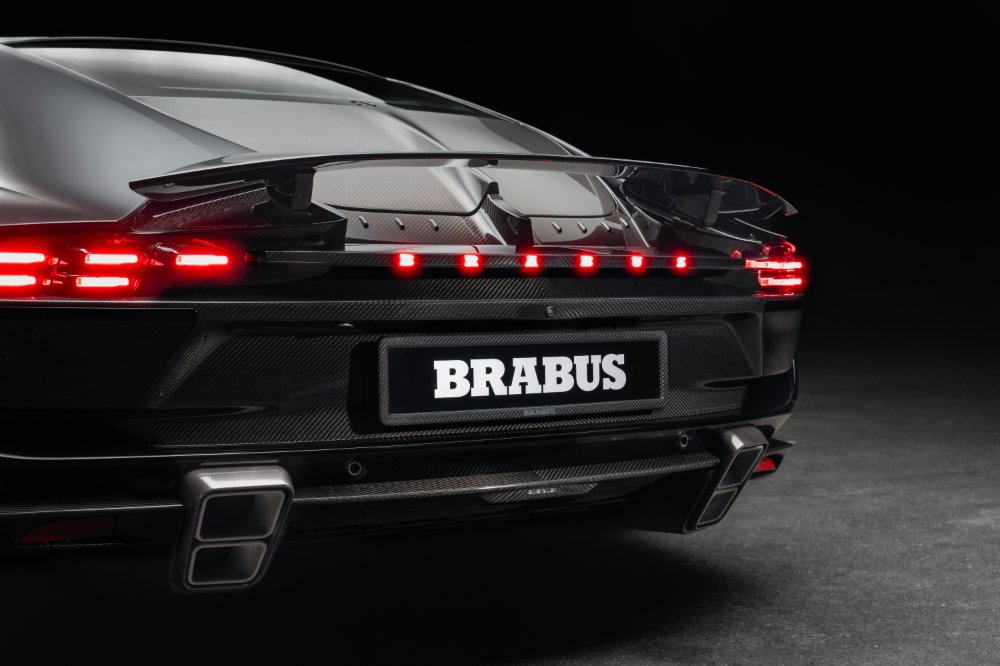
A sealed exposed-carbon front spoiler produces front-axle downforce at speed. At the rear, the Brabus Bodo uses a diffuser, a central high-speed fin on the carbonfibre boot lid and an electrically deployable two-stage rear spoiler. The spoiler extends in stages at higher speeds to increase rear-axle stability; under heavy braking above 87mph, it moves into a vertical position to act as an air brake.
The rear lighting uses seven individual LED units on each side, with illuminated Brabus lettering between them. The diffuser also frames the vertically stacked rectangular exhaust outlets. A ‘77’ emblem below the rear window references the company’s founding year. At 5062mm long, 2027mm wide and 1305mm tall, the Bodo is a sizeable car, although Brabus quotes a dry weight of 3911lb. Weight distribution is listed as 50.2 percent front and 49.8 percent rear.
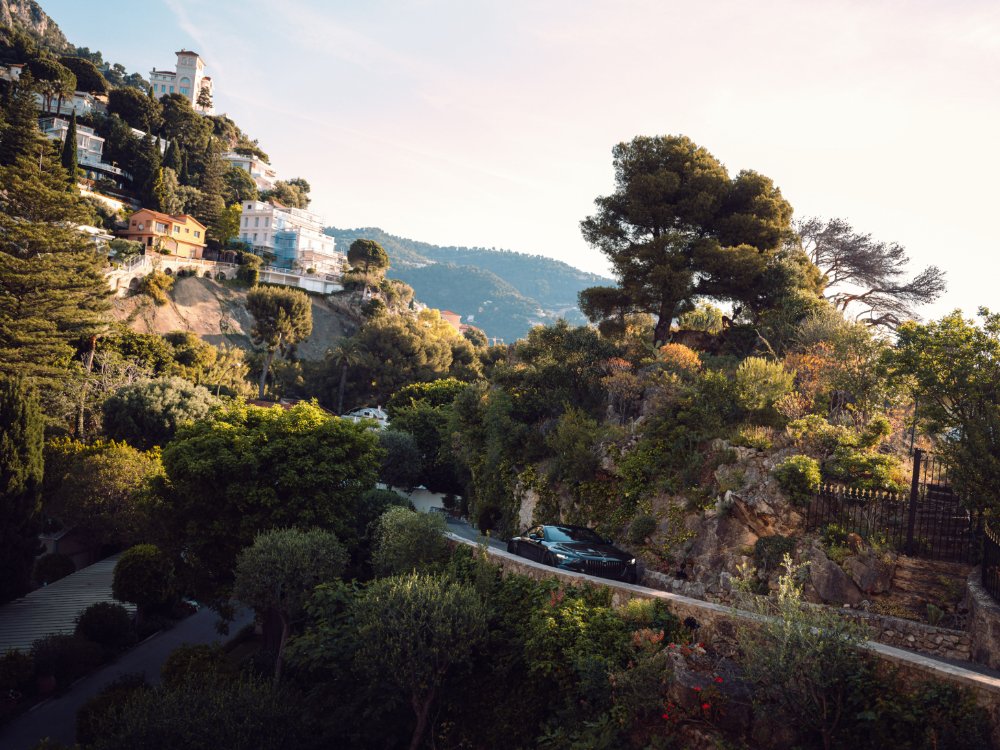
Underneath, the Bodo uses an aluminium monocoque chassis with double-wishbone front suspension and a multi-link rear axle – it’s essentially an Aston Martin Vanquish underneath. Brabus worked with KW on the electronically controlled adaptive aluminium coilover struts, which are tuned specifically for the car’s 21-inch wheel and tyre package.
Five drive modes are available: Wet, GT, Sport, Sport+ and Individual. Wet mode reduces torque output, softens the gearbox shifts and selects the suspension’s most compliant setting. GT is intended for everyday road use, while Sport sharpens the throttle response, raises the shift points, opens the active exhaust valves and increases steering response. Sport+ moves the car into its most focused dynamic set-up, and Individual allows the driver to configure parameters separately.
A lift system is fitted to both axles, raising the Brabus Bodo by around 25mm. The suspension automatically returns to its normal ride height once the car reaches 28mph. Braking is handled by ventilated and perforated carbon-ceramic discs. The front axle uses 410x38mm discs with six-piston fixed calipers, while the rear uses 360x38mm discs.
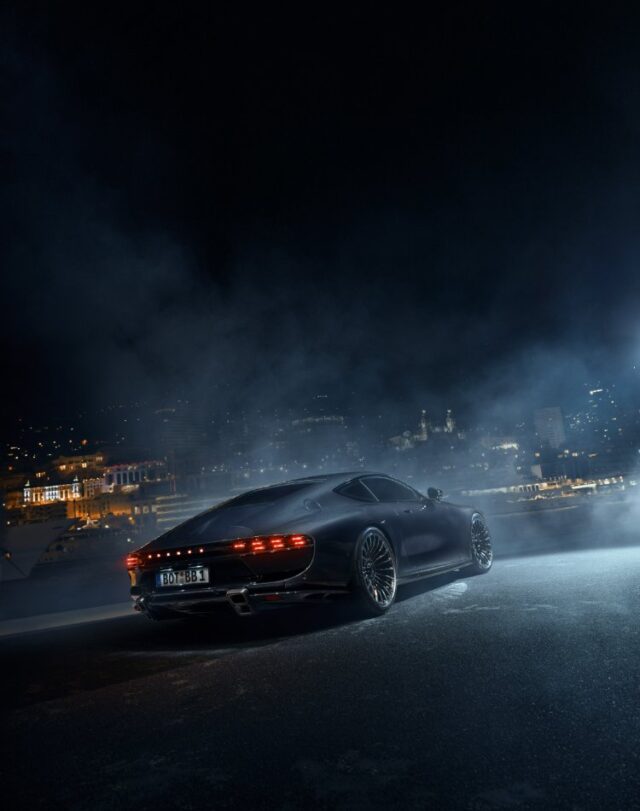
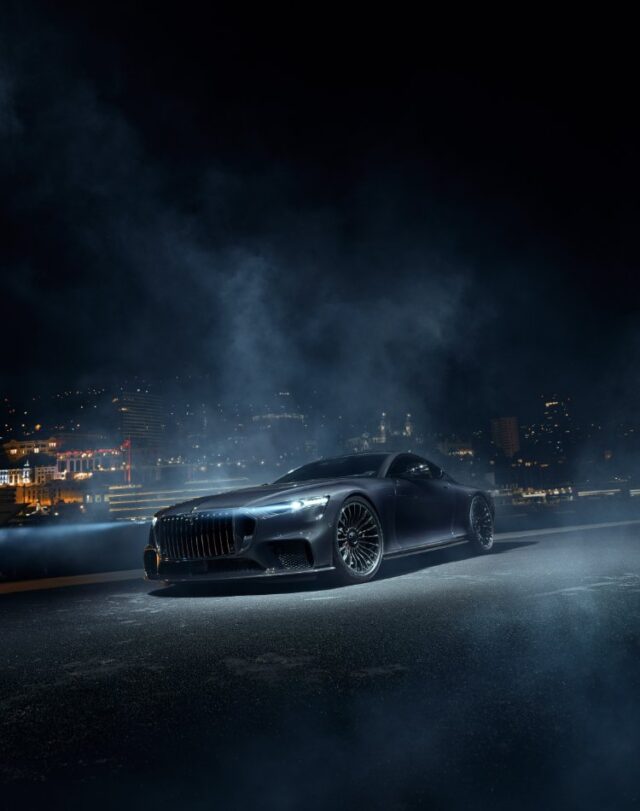
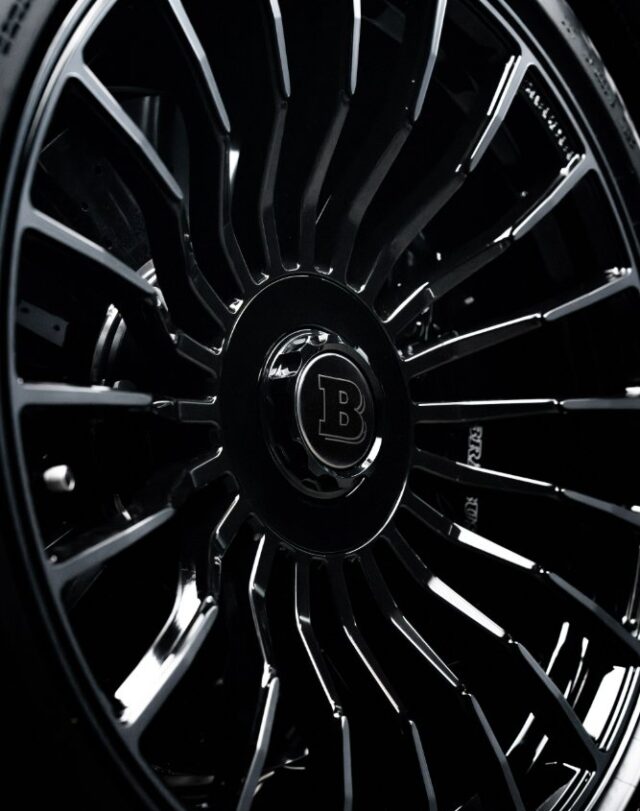
The Bodo sits on 21-inch Brabus Monoblock Z-GT Shadow Edition forged wheels. Produced using forging and CNC machining, the one-piece light-alloy wheels feature 20 concave spokes and centre-lock-style hub covers. The fronts measure 9.5Jx21 and are fitted with 275/35 ZR21 tyres, while the rears measure 11.5Jx21 and use 325/30 ZR21 tyres. Continental developed the SportContact 7 Force tyres specifically for the Bodo.
According to Brabus, the rubber uses an adaptive tread structure intended to manage the contact patch under heavy acceleration, braking and cornering loads. The company says the tyres are designed to retain predictable behaviour during abrupt direction changes at speeds of up to 230mph.
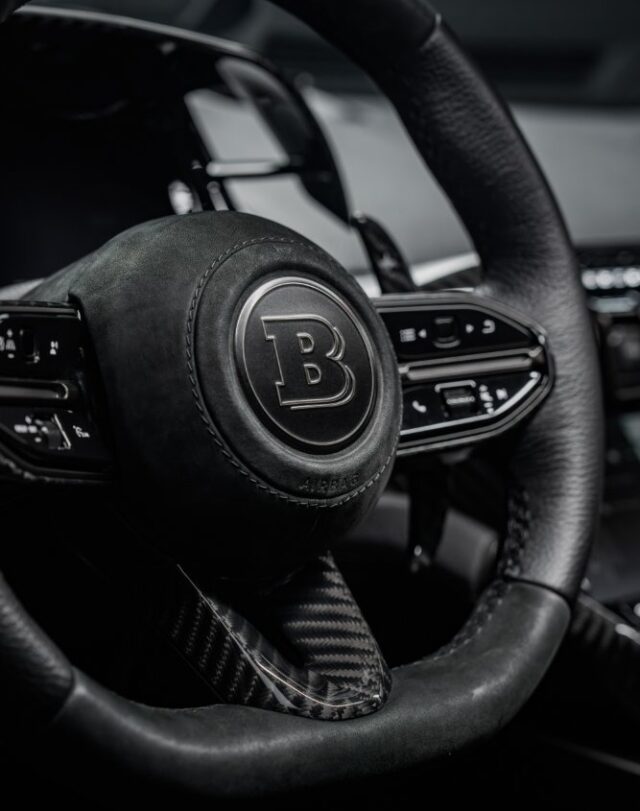
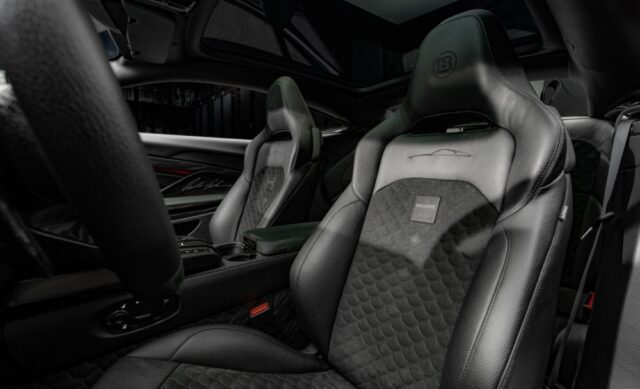
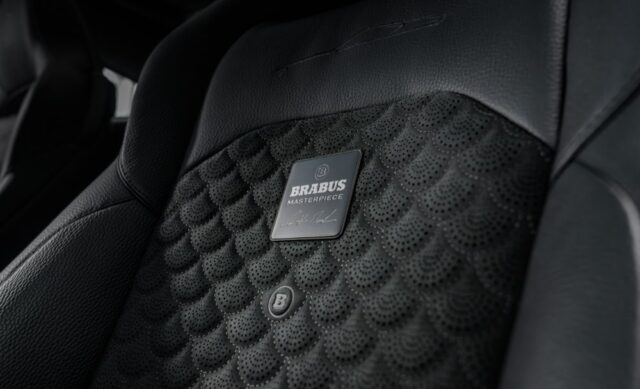
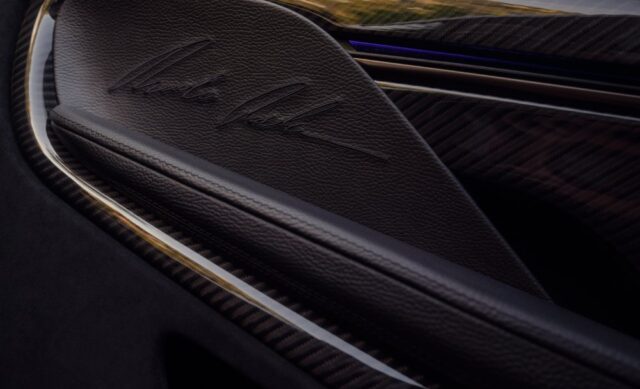
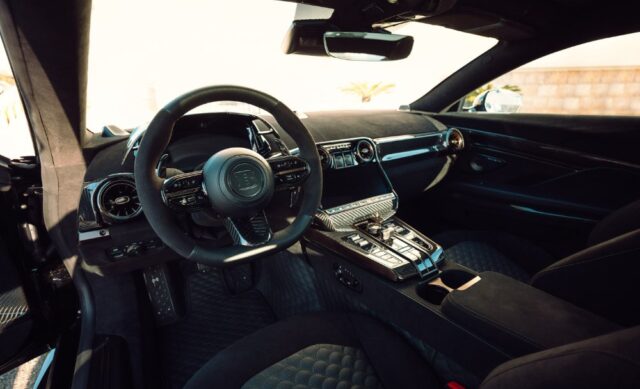
The interior follows Brabus’s familiar Masterpiece treatment for its customised cars, with black leather, exposed carbonfibre and high-gloss Shadow Grey trim elements. Carbonfibre appears on the steering wheel, dashboard, centre console and door panels, while the four seats feature Brabus Shell stitching, Double-B embossing and Masterpiece plaques.
Company founder Bodo Buschmann’s signature is embroidered into the door panels, and the car’s silhouette appears on the seat backs. The same quilting pattern is carried through to the leather-trimmed cockpit floor, boot, floor mats and luggage-compartment liner. A flat-bottomed steering wheel, carbonfibre pedals and a matching footrest complete the driver’s area.
Each Brabus Bodo is supplied with leather-trimmed keys and a Brabus Weekender bag matched to the interior specification. A blockchain-based Digital Product Passport, developed with the Aura Blockchain Consortium, is integrated into a dedicated specification plate in the luggage compartment.
We spoke to Constantin Buschmann in the aftermath of the launch. “It’s really one of the most interesting projects I’ve ever had the chance to realise at Brabus, because the story that we’re telling the world right now is the real story,” he says. “My father Bodo, who founded Brabus in 1977, had the idea of making this car for a very long time. Of course, he never said exactly what it should look like, but it was the idea of making a Brabus car that has a very clear identity of its own; one that has this sort of inspiration in what I call the golden era of the automobile, and that is still very contemporary, like all of our products are.”
Buschmann admits that the mixture is hard to define. “I wonder, if he could see us today, how he would like it. I think he would tell us that we’re exactly as crazy as he was back in the day, but I think he would like it,” he chuckles. “It was a very personal project for a lot of people in the team who knew him for a very long time, and that makes it a very special release.”
Getting to that point was not without its challenges – it’s been a multi-year project. “The car has a full carbonfibre body, it has its own light signature at the front and at the back, and it has 1000bhp, so that was a challenge – getting it there,” Buschmann says. “Electronics integration is a big deal. It is one of the biggest deals in car building today. And, of course, we wanted the car to have all the individualisation options that you have with any other Brabus Masterpiece.”
He stresses that there are millions of customisation options – after all, that’s what Brabus is known for; however, getting that to work with this particular car was one of the biggest challenges. “We still wanted people to have different colours of carbonfibre, and we wanted people to be completely free in the design of the interior. That means dozens of millions of options that we give to the buyer, for example when we’re working on a G-Wagen, Range Rover or Maybach, and we wanted to have the same kind of options here,” he explains.
“Manufacturing and sales are always antagonistic to a degree, because manufacturing wants and needs to keep things simple, while sales wants maximum options. That is always a struggle that we have – but we have a very capable engineering team, and I think one of the main challenges was to convince them that they could actually do it. In the beginning, the cost figures were outrageous, and they said: ‘We can never build it; it’s going to be too expensive.'”
Buschmann says that the fascinating part of his role was to encourage the engineers that it was feasible. “We worked on it for several years, and we found ways to do this. We found ways to do the body, ways to do the lights, ways to work with the drivetrain. You solve things once you go on the journey, and my job is to keep pushing so that we actually start. The result, you can see here.”
For Buschmann, the Brabus Bodo is the manifestation of the company mission – the ‘One-Second-Wow’; he’s adamant that it’s not just marketing speak. Quite the opposite. “It is really the ultimate balance through the customer’s eyes. It describes an emotional effect that we want our products to have when you see them,” he says. “Luxury products work in a way that they kind of unfold their magic through the heart first, and then in the head. They are emotional products, they are cultural products, and they are, in essence, all about the person who sees them or who drives them.”
“One-Second-Wow means that we want you, or anybody else who sees the product, to see it, recognise it as what it is, and fall in love with it – ideally in one second. If we can manage that, we believe we’ve made a good product.”
Buschmann says there’s also a level below that. “It describes the Brabus design language, how we work, how we want it to function technically, because we are still an engineering brand at heart. Although I do describe Brabus as a design house first and foremost, it is a German design house, so we are technical at heart – of course we are,” he says. “It is also supposed to highlight the individuality of the driver, the owner, and so on. So there is a whole level of things below the surface, below the One-Second-Wow, that is supposed to help generate it. It has served us well in boats, motorbikes and motorhomes, but of course the core of the brand remains the car, and that’s why I was very excited for this release.”
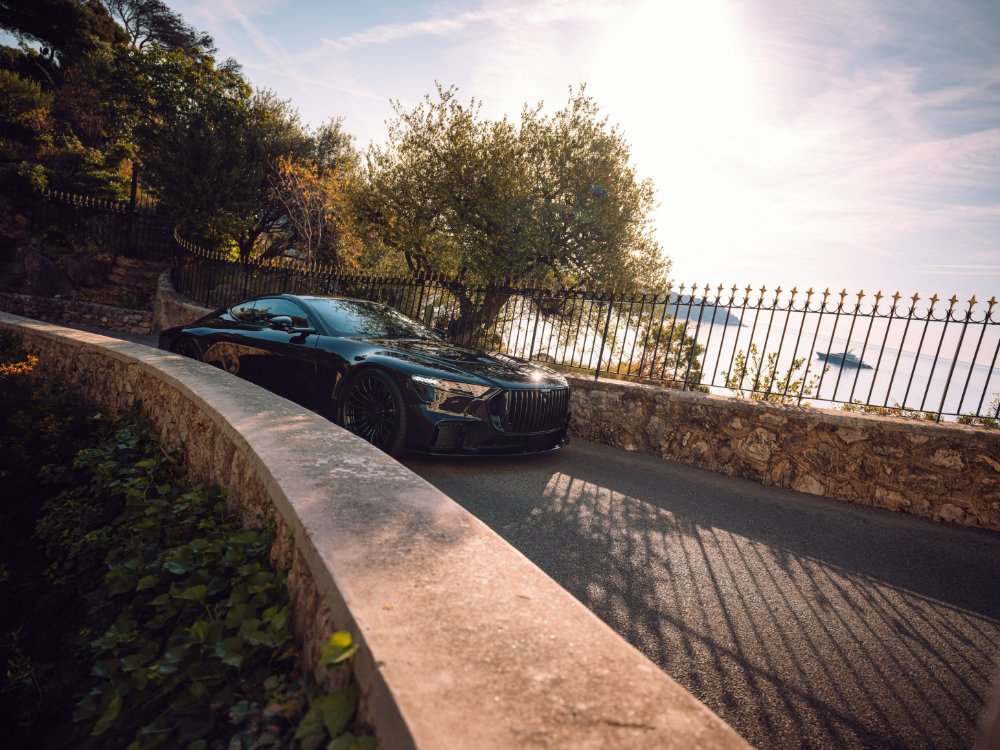
Buschmann says that the delivery time for each car will be around a year; Brabus has a production capacity for ten to 12 Bodos per year on top of everything else it is currently working on. The car is fully homologated for the EU and US. Looking to the future, Buschmann also says that a convertible version is likely.
Another part of the Brabus empire is its classic-restoration department. “We still restore Mercedes with a specific focus on the 1950s, 1960s and 1970s – cars such as the 280 SL Pagoda, W111 and nowadays also R107s. You can see that a few more youngtimers are entering the ranks, and there are people who are interested in those, because the generation has grown up. Of course, 300s, 600s and so on are still our bread and butter in that department,” he says.
That does raise the question of hypercars. A few metres up the hill at FuoriConcorso, HWA was showing off its 190E Evo 2-inspired Evo model, and then there’s the V12 Renntech Sledgehammer that broke cover earlier this year. With Brabus making its name with enormous-engined conversions of 1980s and 1990s Mercedes-Benzes, could Brabus step into the restomod arena?
It’s something that Buschmann’s very open to, but the problem boils down to resources. ‘The very human problem that we face is a 24-hour workday. We have so many ideas for things that push the brand forward, such as the Bodo that we’re showing today, which I think has turned out to be a beautiful car, that we have to focus our resources somewhere,” he says. “Could I imagine a restomod project in the future? Yes. Am I open to the idea? Yes. Do we have specific ideas? Yes. Do we have the time to realise it, and do we have a preference for a few other projects at this very moment? Yes. So it’s on the list, but not at the top spot.”
Those projects might not necessarily centre on Mercedes-Benz, or in the Bodo’s example, Mercedes-Benz-adjacent brands, such as Aston Martin. “If you look at how the brand has moved in the past decade, we have gone from a single focus on Mercedes-Benz, horizontally, to catering to clients of other car brands in our core business of individualisation and tuning. That is good,” Buschmann says,
“We’ve also gone vertical, into segments such as the Big Boy 1200 motorhome, and of course the addition of boats and motorbikes, which are now independent business fields in their own right. Real estate is the latest development, along with electric commuter bikes. Experimentation and partnerships are a big thing at Brabus. I love them because they always bring new influence and new ideas. If you’re open to the knowledge and experience of other people, and you want to combine it with your brand, that’s almost always a good thing – if you choose your partner brands carefully. It brings new things into the company.”
However, he insists that the core of the brand, the cars Brabus builds itself, has to be strong enough to support those partnerships. “I think it has been a journey to get to this point, because whenever we build a car, we look at what the customer will want, and what we believe a customer will want to buy. But on the other side, we also look at how our technological capability is evolving. What are we able to do?” Buschmann says.
“I’ve been going through a car mentally and checking off boxes of things that we are able to do. We’ve been purchasing companies to enhance our capabilities. I’m a big fan of making things in-house, because it makes us a better company. It makes us a better partner for a lot of people. I think we’ve just now got to the point where this was a logical next step. Do we think of stopping? No.”
“There have been a lot of highlights, but this is a special highlight. Yesterday, the question came again: ‘What are we going to do next?’ We have a few ideas already, and again everybody says: ‘Oh my God, we’re never going to make it. It’ll be too expensive. How can we ever do this?’ And I know we’ll be back in two years with something.”
It’s been a tricky time for the traditional tuner – AC Schnitzer recently announced its final creation. Buschmann is adamant that Brabus will continue. “Brabus is more than a company. It is a team of people who love doing what they do; it’s really good if you work in a company, and work with people, where people actually love cars,” he says. “Jörn (the CTO) has now given up on his weekend job of being a race engineer because he doesn’t have the time any more, but we all live, eat, sleep and breathe these projects. That, I think, is also what gives us the power to come up with new things all the time. I hope that people can feel it when they interact with our brand.”
More details on the Brabus Bodo, and other projects, can be found here.