

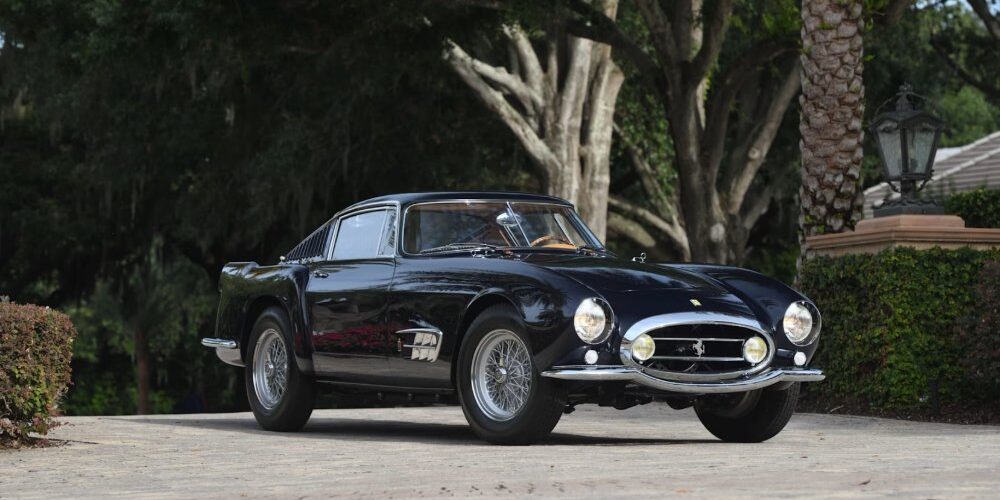
A one-off 1955 Ferrari 250 Europa GT Speciale originally commissioned by French racing driver André Dubonnet is to be offered at Mecum’s Kissimmee sale in January 2027. Chassis 0393 GT, which was displayed at the 1955 Paris Auto Salon and was originally intended to compete in the 1956 Le Mans 24 Hours, will cross the block on Saturday, January 16. Mecum has not yet published a pre-sale estimate.
Kissimmee 2027 takes place at Osceola Heritage Park in Florida from January 5-17, with around 4500 vehicles expected, and Mecum previewed 0393 GT during August’s Monterey Car Week as one of the first headline consignments confirmed for the auction.
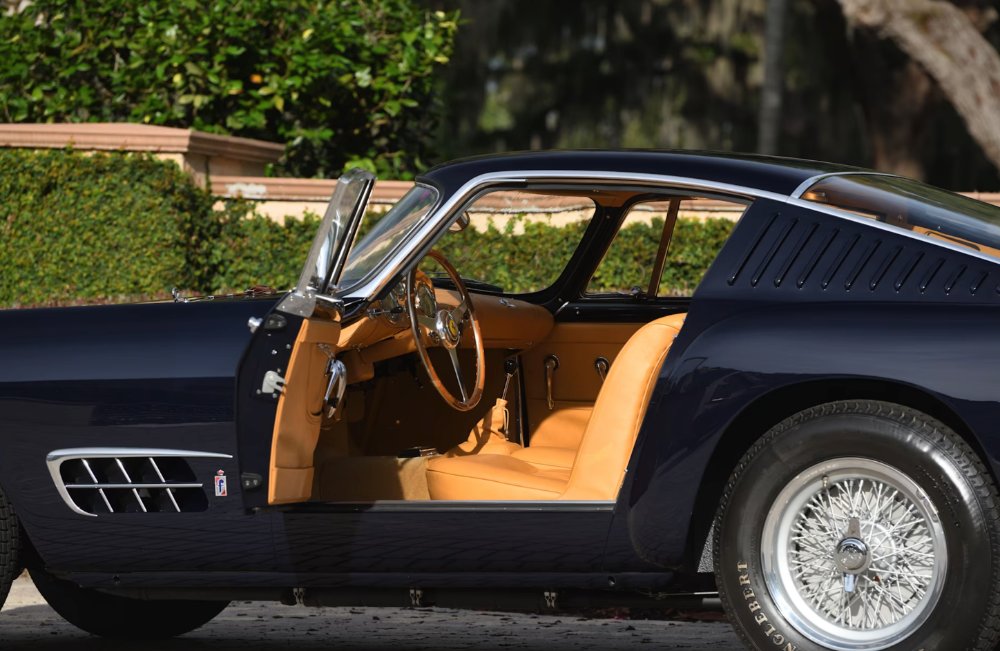
Even within the diverse history of Ferrari’s early 250-series cars, 0393 GT stands apart. Mecum describes it as one of four 250 Europa GT chassis fitted with a special Pinin Farina-designed berlinetta body, and the only one of the group built with its exaggerated rear fins. During 1955, Ferrari and Pinin Farina experimented with several aluminium-bodied berlinettas as they worked towards a dedicated competition GT. Ferrari now describes a group of these cars as prototypes for the later 250 GT competition berlinettas that became known as the ‘Tour de France’.
Europa GT Speciale chassis no. 0393 GT belongs to that developmental period. Contemporary Ferrari historian Alan Boe identified it as one of the first cars to display the lines that would develop into the long-wheelbase 250 GT Berlinetta. Earlier chassis 0369 GT, 0383 GT and 0385 GT retained stronger visual links with the preceding 250 MM, while 0393 GT moved the design noticeably closer to the competition berlinettas that followed. Period writing on the development of the model similarly identifies 0393 GT as an important step towards the Competizione Berlinetta.
The Europa GT Speciale’s appearance was determined in part by the requirements of its first owner. André Dubonnet came from the family behind the eponymous French aperitif, but was also an accomplished driver and engineer. Before World War Two he had competed at events including Le Mans and the Targa Florio, while the independent front-suspension system that carried his name was used by several manufacturers. Dubonnet commissioned 0393 GT directly and worked with Pinin Farina on an aluminium body intended to serve two purposes: it would appear at the Paris Salon and subsequently be used in competition.
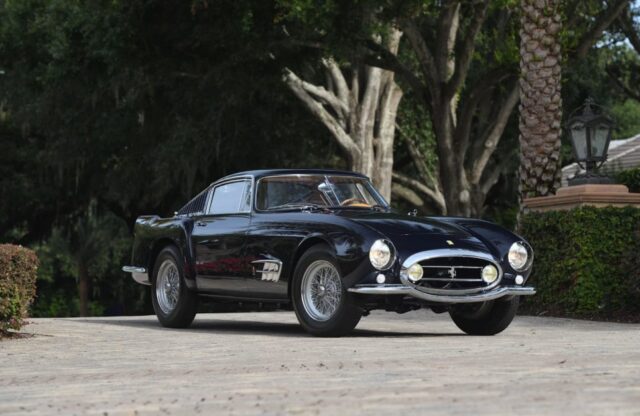
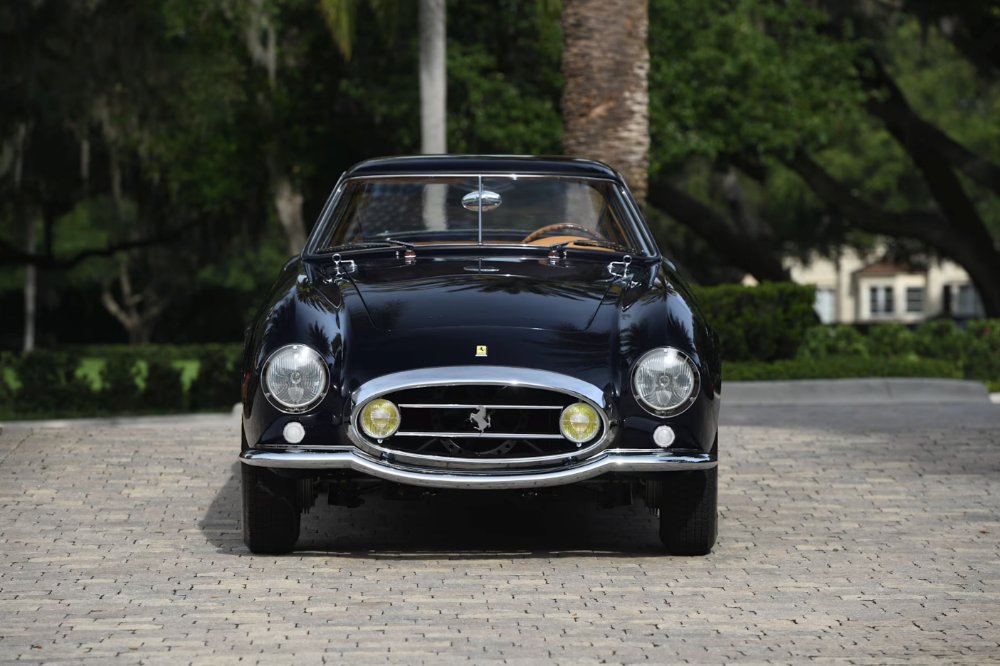
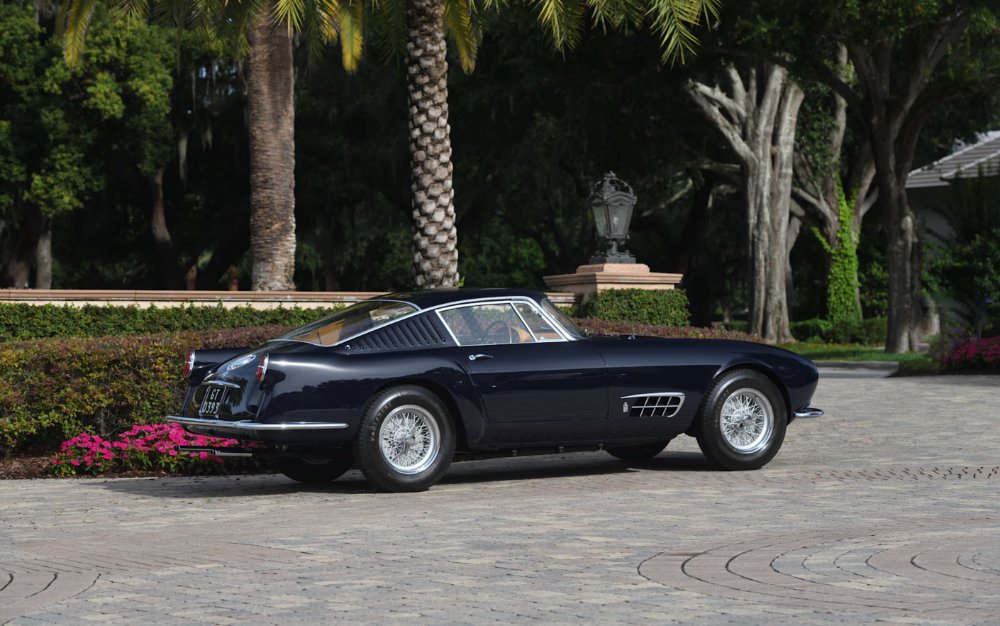
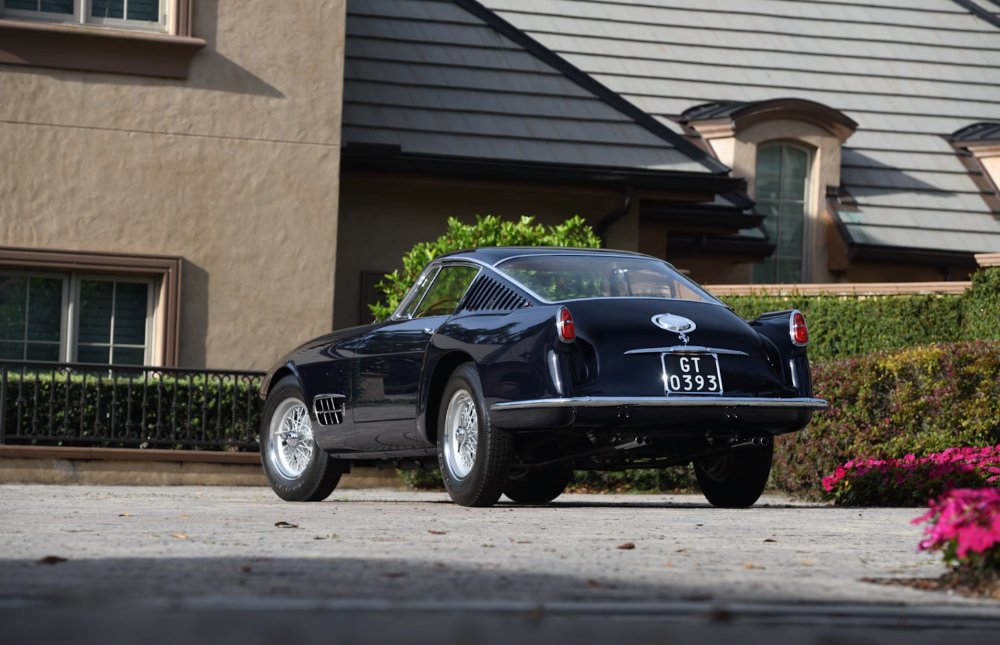
The resulting design contained numerous features specific to the Europa GT Speciale. Most immediately recognisable are the pronounced rear fins framing an unusually abrupt tail. There is a fastback rear window rather than a conventional bootlid, louvres in the rear-quarter panels, covered headlights and polished-aluminium vents behind the front wheels. The front treatment was unusual, too. Rather than the familiar Ferrari egg-crate grille, 0393 GT received a simpler oval opening with a distinctive surround. Other details included a front bumper wrapping beneath the grille, sculpted side vents and unusual rear lights. Research into the car has identified more than 20 details said to be unique to 0393 GT.
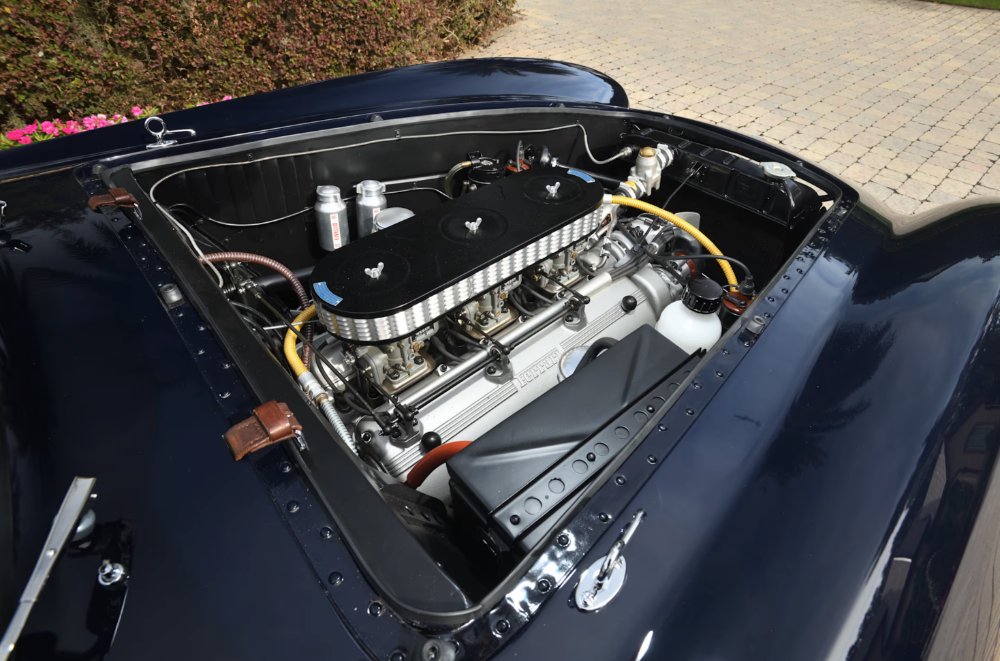
Competition intent extended beneath the bodywork. Mecum lists a 3.0-litre Colombo V12 with three Weber 36 DCZ/3 carburettors and a higher-lift camshaft than that of a standard road-going Europa GT. The auction house quotes 220bhp, although research based on the original Ferrari build sheets records 214hp at 6500rpm. Several aspects of the body were conceived specifically around endurance racing.
The bonnet is a lift-off panel secured with straps and clamps, while an enlarged fuel tank occupies much of the rear of the car and is filled through a centrally mounted Le Mans-style quick-release filler. There is consequently no conventional boot. The spare wheel is strapped into the rear compartment, and the passenger seat can be folded backwards to allow the wheel to be removed.
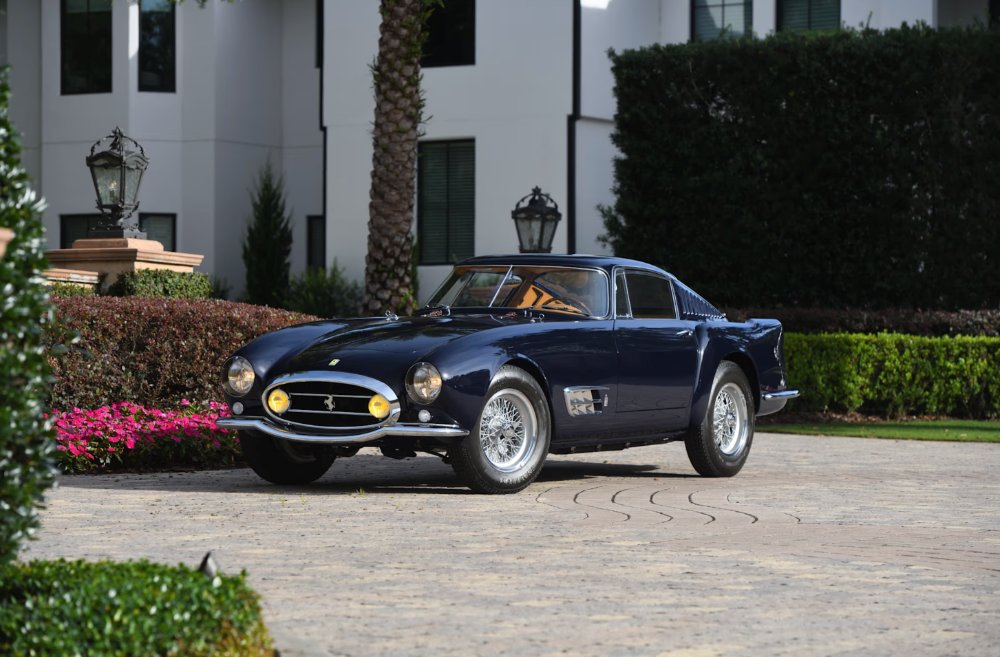
Once completed, the Europa GT Speciale was sent to Paris, where it was exhibited at the October 1955 Paris Auto Salon by Autoval, Paul Vallée’s Ferrari dealership. Factory documentation researched by Boe describes it as a “1955 berlinetta tipo MM azzurra”, indicating its blue finish. Dubonnet had already acquired the car before its Salon appearance, and the next step was supposed to be competition. Dubonnet planned to enter 0393 GT in the 1956 Le Mans 24 Hours with works Ferrari driver Maurice Trintignant as his co-driver.
That appearance never took place. Dubonnet broke his foot before the race and the entry was withdrawn. Trintignant instead joined Olivier Gendebien in a factory Ferrari 625 LM, with the pair finishing third overall behind the winning Jaguar D-type and an Aston Martin DB3S. Research into 0393 GT indicates that, despite the considerable effort put into preparing it for competition, the car was never actually raced by Dubonnet.
It was not entirely spared hard use, however. Records show that it returned to Ferrari for rear-axle work during 1955 and 1956, and was regularly maintained by Franco-Britannic Autos in Paris. This led to suggestions that Dubonnet may have competed with it privately, although subsequent research instead points towards a particularly demanding owner interested in continually improving the car. Dubonnet retained the Ferrari until the early 1960s, after which its history became more complicated.
Mecum’s account records that American serviceman Robert W Spencer discovered 0393 GT at Garage Moloff in Paris. During this period its appearance was altered substantially. The distinctive fins were removed, a bonnet scoop was added and the body was painted bright red, bringing its appearance closer to that of a later 250 GT Tour de France. Published histories differ slightly over the precise sequence of ownership between Spencer and fellow US serviceman Richard DeJagger. Research published by Alan Boe records DeJagger purchasing the Ferrari through Garage Moloff in 1963, then passing it to Spencer three years later. Mecum’s catalogue records Spencer acquiring and modifying it first before transferring it temporarily to DeJagger.
What is agreed is that the car’s journey to America was decidedly unconventional. Mecum says DeJagger repainted it in flat military grey so that it could be transported to the US as a military vehicle. Once it arrived at an Air Force base in Indiana, it was transferred back to Spencer, who eventually took it to Pennsylvania. By then the one-off body had lost some of the features that made the car so distinctive when it appeared in Paris.
Dr Ron Mulacek of La Grange, Illinois acquired 0393 GT in 1980 and embarked on a restoration that would take approximately ten years to complete. Returning the Ferrari to its earlier specification required extensive research as well as conventional restoration work. A number of specialists became involved, including John Hajduk, Jim Riff, Pete Sanchez and Skip McCabe. Bill Leahy reconstructed the missing rear fins and also recreated the grille surround and horizontal bars, while Mulacek carried out much of the assembly himself. The restoration was completed around 1990.
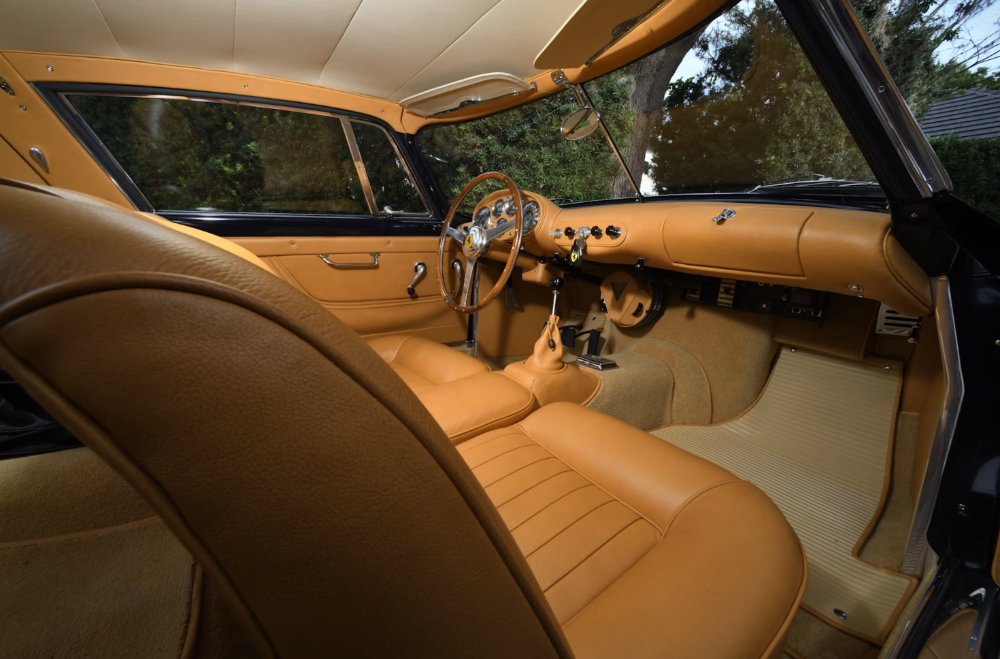
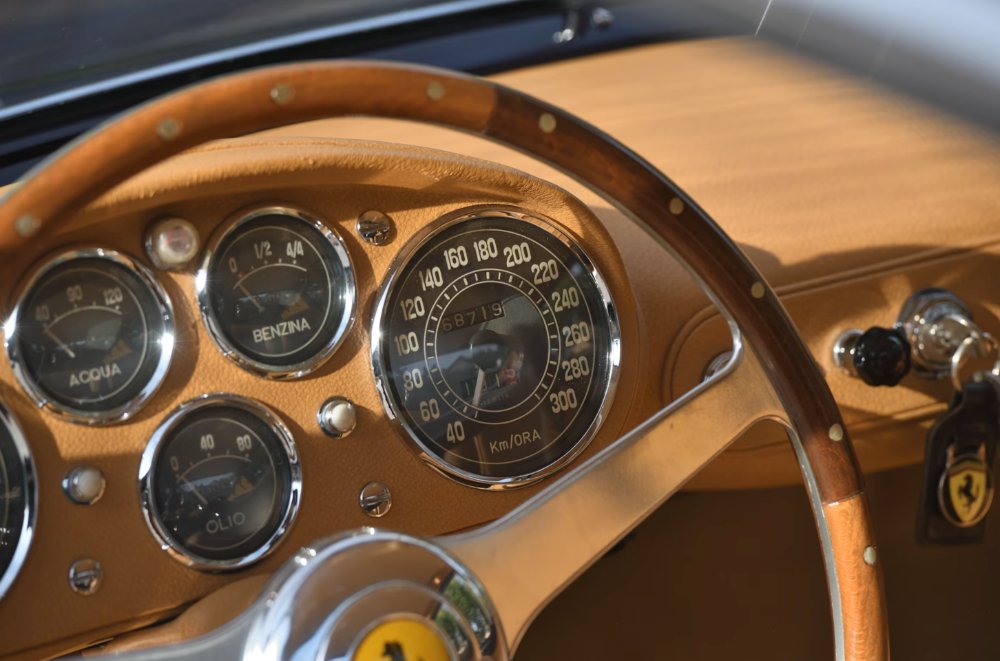
That work subsequently allowed the Ferrari to return to the concours circuit. Mecum records appearances at the Pebble Beach Concours d’Elegance in 1993 and again in 2021. Dennis Machul acquired the car in 1995, and it later joined the Rare Wheels Collection in 2018. Another restoration followed, this time returning 0393 GT to the dark Blu Ultrascuro exterior and tan leather interior corresponding with its original Paris Salon presentation.
The Europa appeared at the Ferrari Club of America International Meet at Watkins Glen in 2018 and at the Cavallino Classic in 2020. At Cavallino it received the Gerald Roush Memorial Cup, an award specifically presented to the Ferrari judged to have required the greatest amount of research to restore. Contemporary Cavallino results list 0393 GT among a field that also included a 340 America, 340 Mexico, 750 Monza and a later 250 GT TdF. Further appearances followed at Pebble Beach and the Ferrari Club of America meeting at Sebring in 2021, where Mecum records it receiving Best in Show. It has subsequently been displayed at The Amelia and Concorso Ferrari in 2023.
Ferrari Classiche certified the car in 2022 and it is being offered with its Red Book. Mecum also lists a collection of period photographs from the Pinin Farina studio and the 1955 Paris Salon among the accompanying documentation. The auction house hasn’t placed an estimate on the car; more details are available here.