

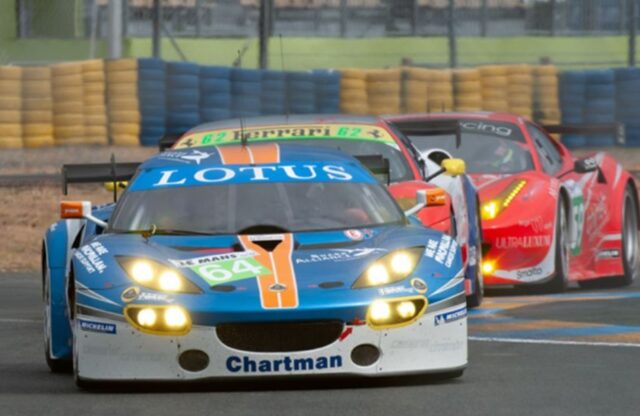
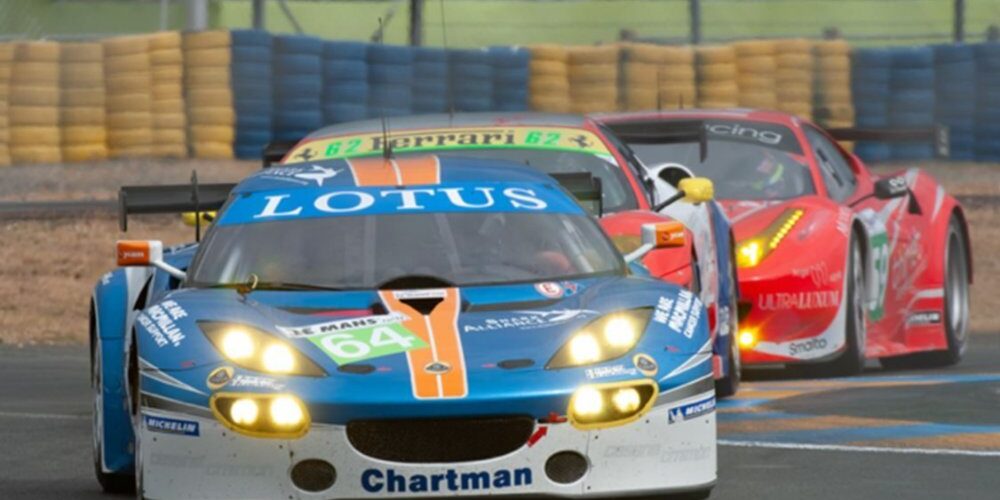
One of the two Lotus Evora GTEs built for the marque’s 2011 return to the Le Mans 24 Hours has appeared for sale in Germany.
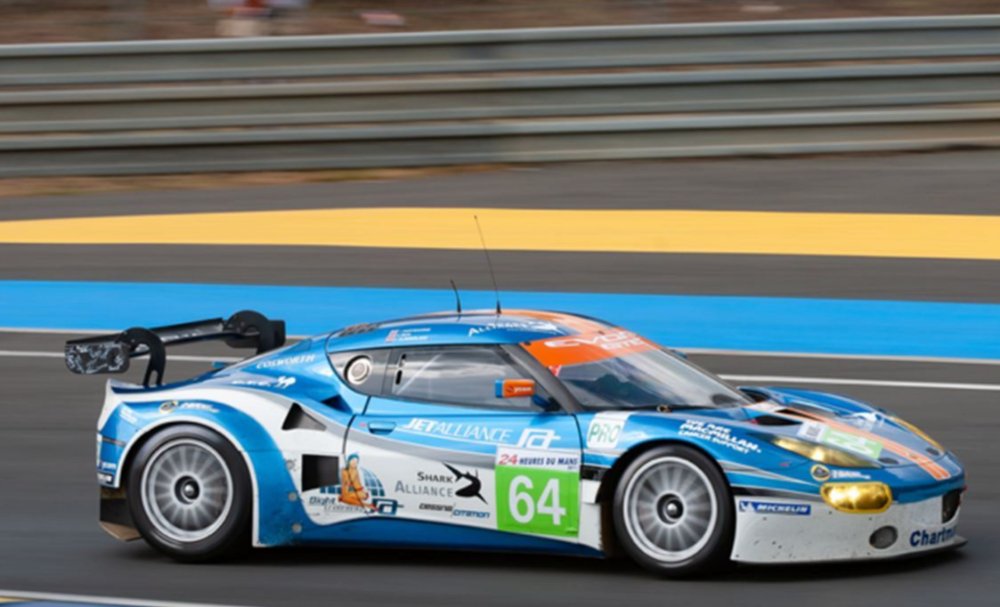
The car, believed to be chassis no. 1, competed with the no. 64. Oskar Slingerland, Martin Rich and John Hartshorne qualified 56th, before going on to complete 126 laps before crashing at the end of the Mulsanne Straight shortly after 4:00am, with a damaged wheel to blame. The sister car, no. 65, went on to finish 22nd overall and seventh in class with Jonathan Hirschi, Johnny Mowlem and James Rossiter behind the wheel.
The sale revisits one of the more extraordinary projects from Dany Bahar’s turbulent period in charge of Lotus. The Evora GTE was not simply an isolated racing derivative. It belonged to an attempt to place Lotus across almost every significant level of international motor sport while simultaneously replacing the company’s entire road-car range.
Bahar regarded racing as the most credible form of marketing available to a sports car manufacturer. Under motor sport director Claudio Berro, Lotus became involved in Formula 1 branding, IndyCar, GP2 and GP3, while developing the customer-focused T125 single-seater, Evora GT cars and a proposed LMP2 programme. Berro even discussed the possibility of progressing to LMP1 if the prototype proved successful.
The Evora’s competition story had begun before the GTE programme. Lotus announced the Type 124 Endurance Racecar in September 2009, using the road car’s bonded-aluminium chassis, transverse Toyota V6 and mid-engined layout as its foundation. The initial car was intended for events such as the Nürburgring 24 Hours, and it received a sequential gearbox, rollcage, long-range fuel system, adjustable suspension and composite aerodynamic panels.
Work on the GT4 programme began in November 2009 with only two engineers and ten mechanics. Lotus commissioned Dallara to conduct an aerodynamic study, displayed the first version at Autosport International in January 2010 and showed a developed car at Geneva that March. An Endurance derivative followed, leading Lotus towards the former GT2 category, renamed GTE for 2011.
Lotus announced its partnership with Austrian team Jetalliance on January 14, 2011. Lead designer Nicola Scimeca was still developing the two cars, while the opening Intercontinental Le Mans Cup round at Sebring was already considered too early. The campaign would instead begin at Spa in May, followed by Le Mans and the remaining ILMC rounds.
A GTE concept appeared at Geneva in March. At its core remained the Evora’s extruded and bonded-aluminium structure, but the car’s vendor Prof. Wolfgang Henseler says little else was shared with the production machine. The GTE used carbon-composite bodywork, bespoke aerodynamics and suspension, Alcon brakes and Öhlins dampers. Cosworth developed the Toyota 2GR-FE V6 to 4.0 litres, with approximately 440bhp and 460Nm, while an Xtrac six-speed sequential transmission drove the rear wheels.
The first GTE ran at Hethel on April 7, covering 700km with James Rossiter. It then tested at Snetterton before both cars arrived at Le Mans for the official test day on April 24. Just 17 days separated the first shakedown from the programme’s appearance at La Sarthe. Even Jetalliance team owner Lukas Lichtner-Hoyer noted at the time that the car had still been on the drawing board three months earlier.
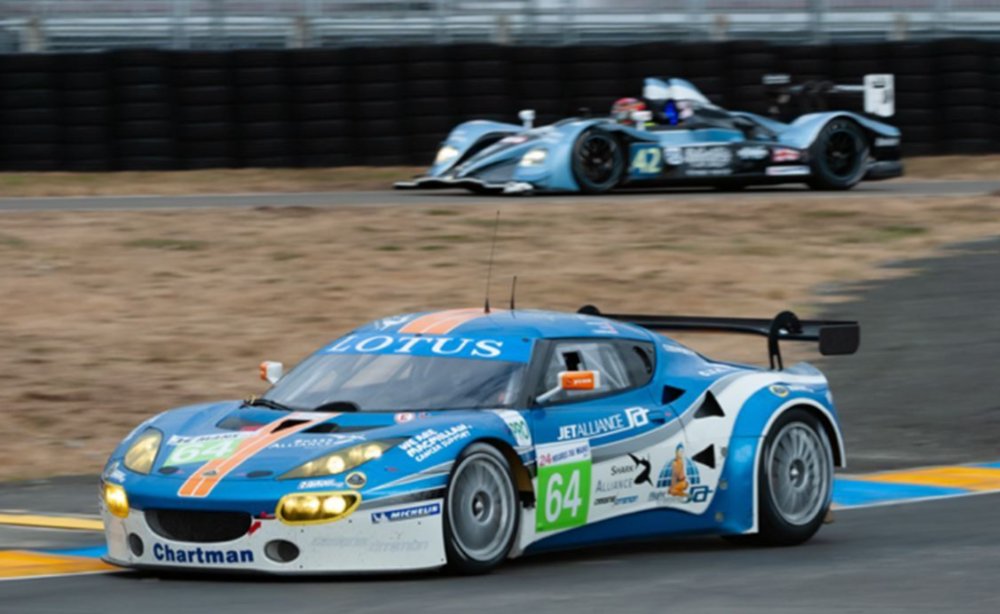
Number 64 made its race debut at the Spa 1000Km, where Slingerland and Martin Rich finished 40th overall. After Le Mans, its 2011 season continued with retirement from the Imola Six Hours through overheating and an unclassified finish at Silverstone after gearbox trouble and contact. The strongest result came at Zhuhai, where Slingerland, Rich and Rene Rasmussen finished 21st overall and fourth in GTE Pro.
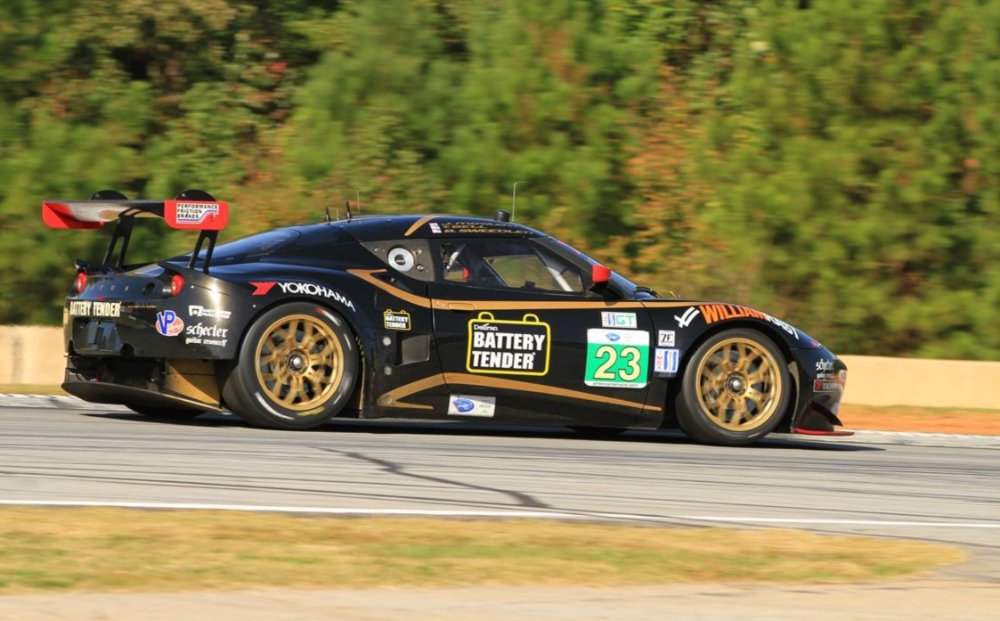
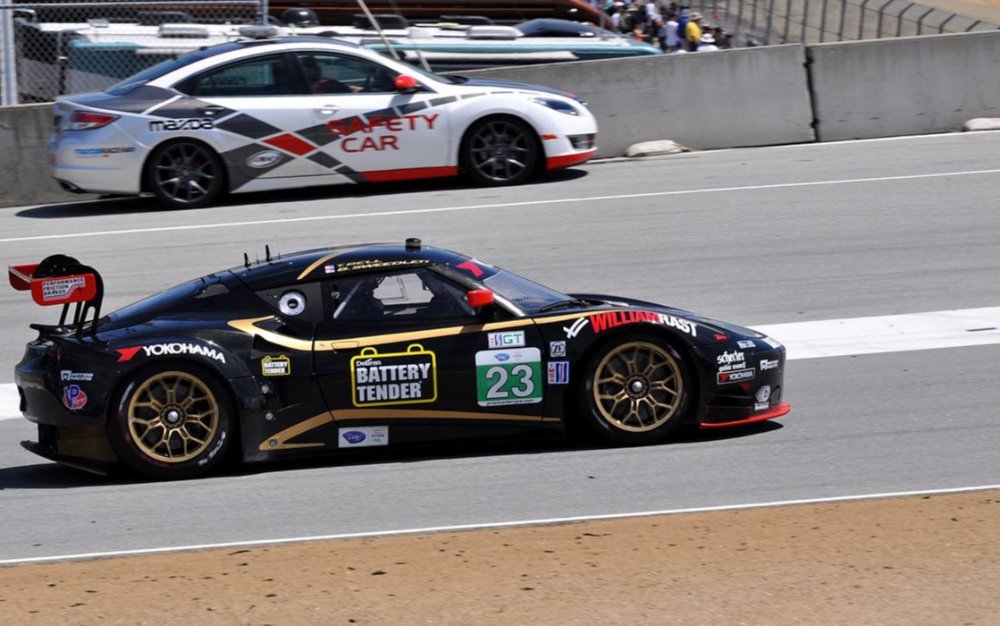
Jetalliance did not continue with the Evora; for 2012, the car crossed the Atlantic to become Alex Job Racing’s number 23 Evora in the American Le Mans Series with factory support. Alex Job Racing received the car only three weeks before its Long Beach debut and entered the race with a lengthy development list. Sebring had already been missed.
Bill Sweedler and Townsend Bell contested nine rounds from Long Beach onwards, recording a best class result of sixth at Virginia International Raceway. Johnny Mowlem joined them for Petit Le Mans, where the Lotus finished 11th in GT despite early contact and a broken rear suspension link. At Laguna Seca an updated engine had to be removed after minimal running, and the team reverted to its 2011 unit. Contemporary reports also cited limited factory development. Although Alex Job Racing initially discussed continuing into 2013, the team abandoned the programme after one season and turned to Ferrari.
Proton’s acquisition by DRB-Hicom temporarily restricted the flow of previously approved funding to Lotus during early 2012. Bahar was suspended in May and dismissed on June 7 following an internal investigation. The five-car road-car plan was reassessed and Lotus’s expansive competition presence began to contract. The company also continued producing new Evora competition derivatives. During 2012 it developed GTC and GX versions for other regulations, even as the GTE struggled for investment.
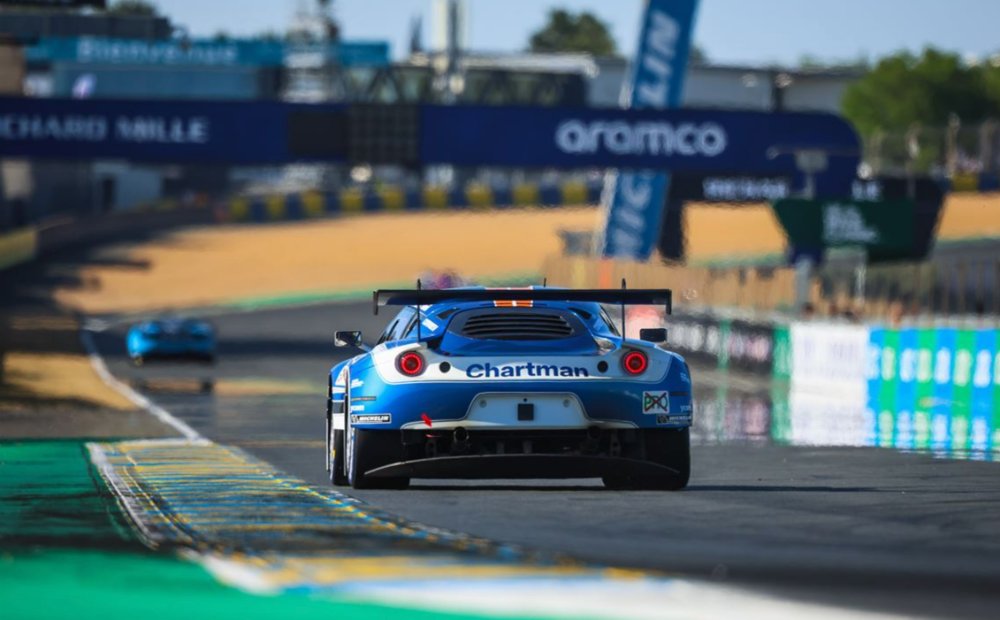
The Evora subsequently spent several years with a dealer in the US. The current owner acquired it through Komo-Tec in 2021, after which the engine was tested and the car completed testing at Hockenheim and the Nürburgring. It was later displayed in the Technik Museum Sinsheim’s Le Mans centenary exhibition. A competitive return followed in Peter Auto’s new Legends of Le Mans series. Henseler finished second in GTE during the opening race at Imola in April 2026 and subsequently campaigned the car at Spa; it’s also entered into the WEC Monza Legends of Le Mans Series in November.
The Evora is currently in its blue-and-white factory livery, although its ALMS black-and-gold bodywork is included in the price. It also comes with two extra engines and further supplies, plus race suits and team apparel from ILMS and ALMS. Its price is €500,000 and more details can be found here.