

A century after nine cars assembled at Brooklands for the first British Grand Prix, the anniversary is being marked by a season of events rather than one isolated commemoration.
The Royal Automobile Club, which organised the 1926 race, is bringing together a winning Delage and a title-winning modern McLaren. Brooklands will gather 100 Grand Prix cars where the story began, Silverstone will feature historic machinery on track at the BRDC Classic and Goodwood will honour figures and marques woven into the race’s history, while the Royal Mint has even referenced the story on a commemorative 50p coin.
The Royal Automobile Club Concours
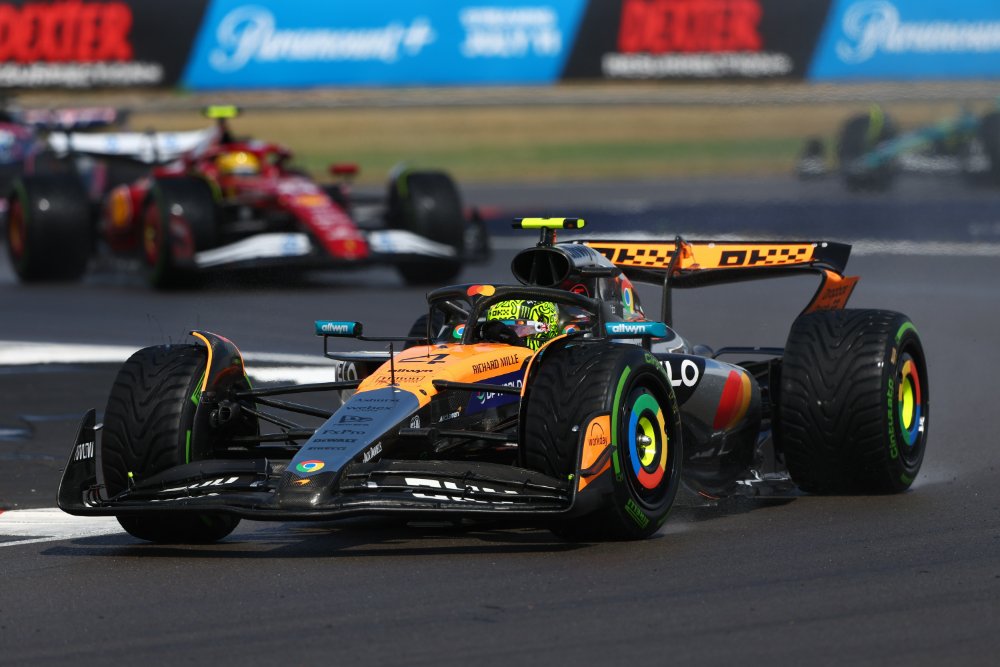
The first major celebratory gathering follows the 2026 British Grand Prix by only three days. On July 8, 2026 the Royal Automobile Club Concours at Woodcote Park in Surrey will use the centenary as one of its principal feature displays, linking the Club’s role in creating the race with the machinery that now defines it.
Outside the refurbished clubhouse will be a Delage 15-S-8 from the victorious 1926 Works team and a McLaren MCL39 from Lando Norris’s 2025 World Championship season. The pairing compresses a remarkable engineering journey into one display: the narrow-bodied, supercharged straight-eight Delage beside the carbonfibre, hybrid McLaren with which Norris became Britain’s newest Formula 1 World Champion. The gold-plated, solid-silver British Grand Prix Trophy will sit between them, freshly engraved with the name of the winner of the July 5 race at Silverstone.
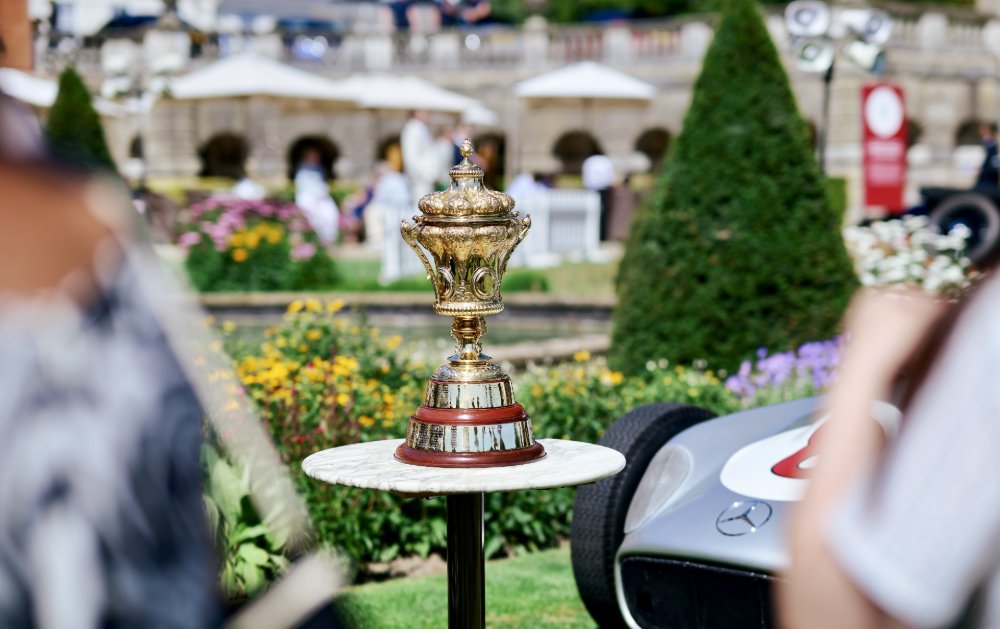
The trophy belongs to the Royal Automobile Club. Its ‘Floreat Etona’ motto has prompted the suggestion that it was presented by Rolls-Royce co-founder Charles Rolls, although its origins remain uncertain. Its winners include Farina, Moss, Clark, Hunt, Mansell, Hamilton and Norris.
Around 70 cars and motorcycles will be judged in seven categories, including 1950s sports-racing cars, V12-engined machinery, Targa Florio competitors and pre-war masterpieces. Feature displays will take the total beyond 200 vehicles, while RM Sotheby’s will hold an auction on site. The programme also includes a tribute to Sir Henry Segrave. More details are available here.
Back to Brooklands
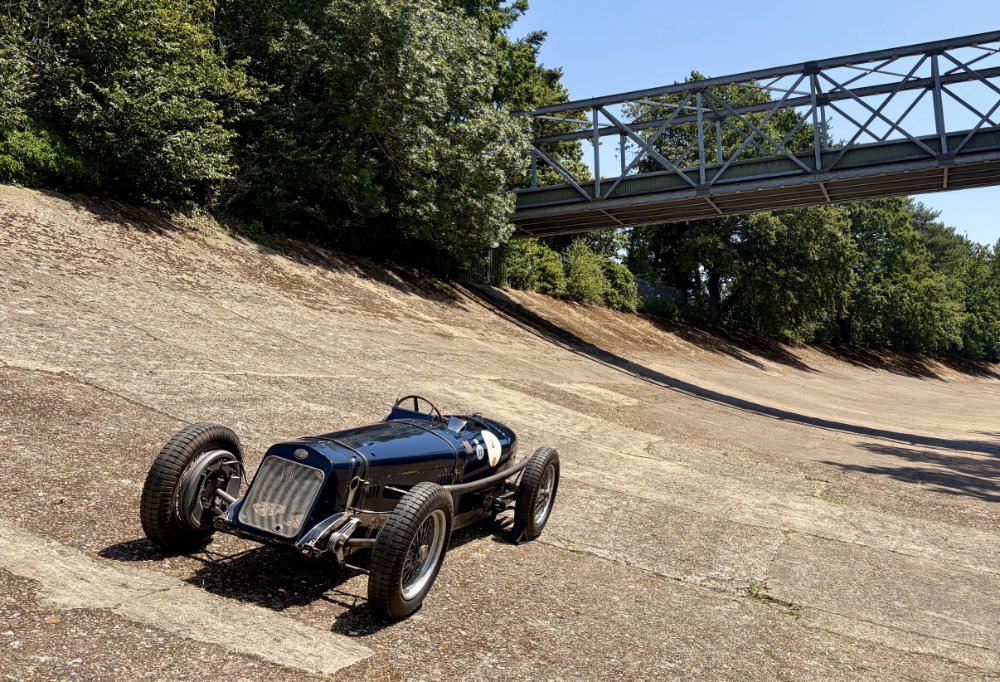
The most literal return to the beginning comes on August 8, 2026, when Brooklands Museum will assemble 100 Grand Prix cars spanning the earliest years of international racing to modern Formula 1. Tickets have already sold out.
Brooklands was established in the Surrey countryside through the determination of Hugh and Ethel Locke King, whose vision produced something the world had not yet seen. When the circuit opened in 1907 it became the first purpose-built, banked motor-racing track ever – a concrete amphitheatre for speed at a time when road racing had been prohibited on the British mainland. In short order Brooklands became the epicentre of British motoring ambition, its steep banking echoing not only with the sound of racing engines but also to the experimental flights of the early aviators who shared the site.
By 1926 it was the obvious stage for the Royal Automobile Club to host Britain’s first official Grand Prix. The organisers devised a special circuit that combined long sections of Brooklands’ vast outer banking with temporary chicanes formed from earthworks along the finishing straight – testing speed and mechanical endurance. On Saturday August 7, 1926, nine Grand Prix machines took the start before a considerable crowd. Four hours later the honours belonged to the Delage 15-S-8 of Louis Wagner and Robert Sénéchal. Malcolm Campbell, already a rising figure in British motor sport, secured second place in his Bugatti 39A.
Fast forward to 2026, and on August 8 early cars are due to run on the Members’ Banking and Finishing Straight, while later machinery will use the Mercedes-Benz World test track within the former 2.75-mile speedway. Interviews, period-themed entertainment and historical displays complete the programme. More details are available here.
The centenary in your pocket
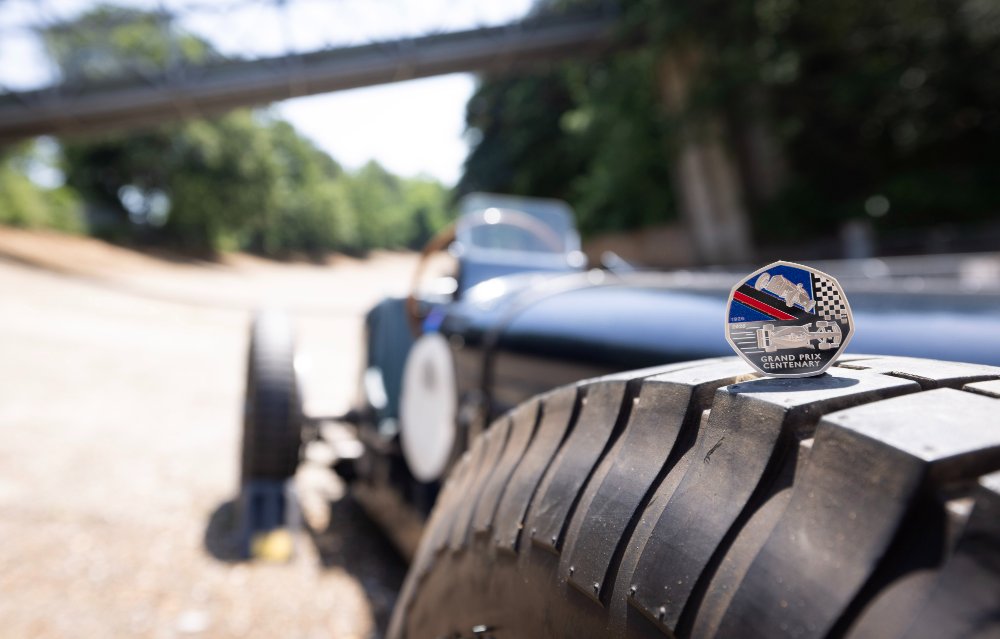
The smallest commemoration may reach the largest audience. At Brooklands on June 29, 2026, the Royal Mint unveiled a collectable Grand Prix in Britain 50p, the first official UK coin to celebrate motor sport.
Designed with London agency Interstate, the reverse places a car from the 1926 Brooklands race beside a 2026 Formula 1 machine. It compresses a century of development, from wire wheels and supercharged engines to survival cells, controlled aerodynamics and hybrid power units. Selected editions add colour to the Union Jack within the design.
Prices start at £15, while visitors to the Royal Mint Experience can strike their own version between July 7 and August 2. More details are available here.
The BRDC Classic at Silverstone
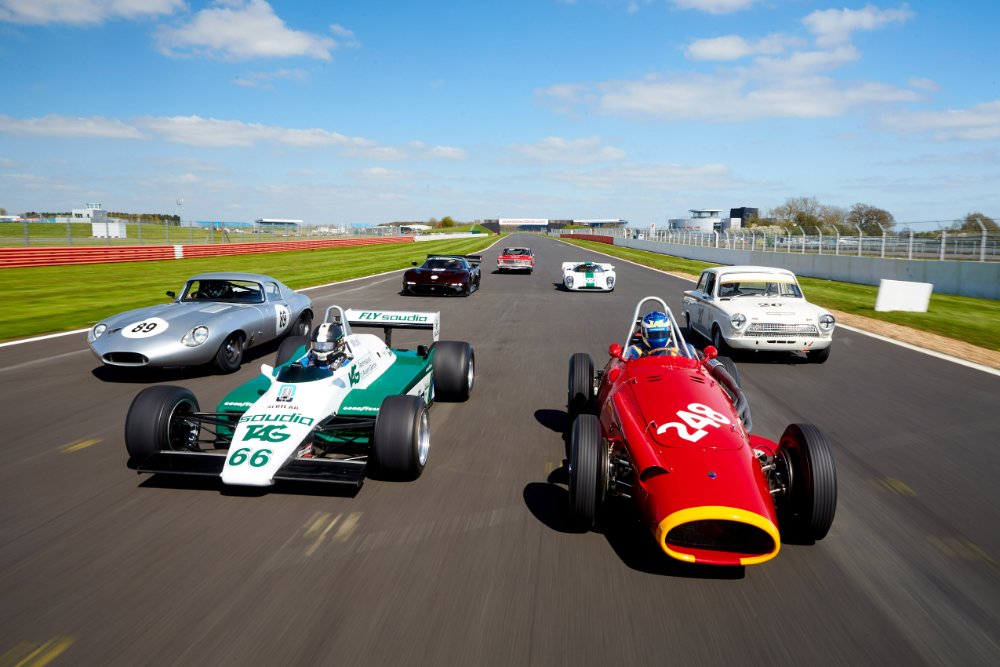
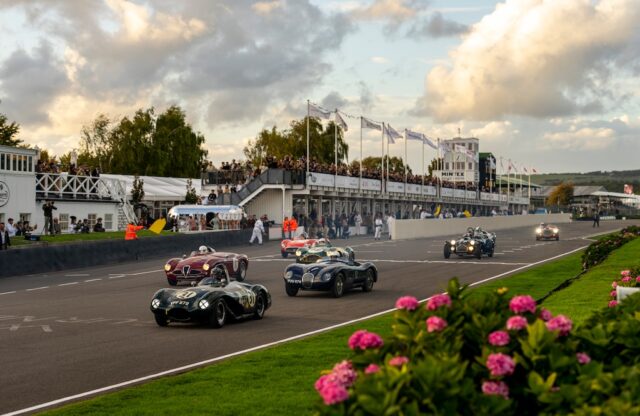
The BRDC Classic, held at Silverstone from July 24-26, 2026, is not solely a British Grand Prix centenary event, but few meetings will provide a better moving survey of the cars that shaped its later history.
Its GP Icons programme will put Formula 1 machinery from the 1960s to the 1980s back on track, while the wider event covers competition cars from the 1920s to the present. Silverstone is promising 12 hours of racing across three days and more than two hours of Formula 1 running, alongside grids for pre-war sports cars, Formula Junior, post-war sports cars, touring cars, GTs and endurance prototypes. More details are available here.
Goodwood’s connected centenaries
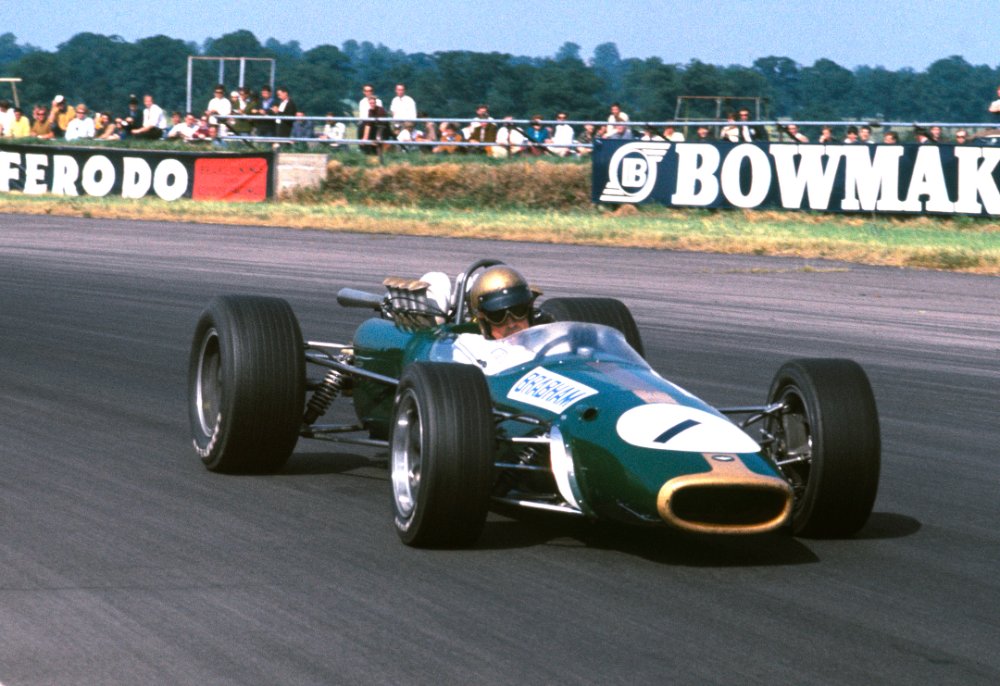
The Goodwood Revival, from September 18-20 is not presenting a dedicated British Grand Prix centenary tribute. Its two principal 2026 racing celebrations are nevertheless closely connected to the race’s history.
The first marks 100 years since the birth of Sir Jack Brabham. He made his World Championship debut in the 1955 British Grand Prix at Aintree, driving the rear-engined Cooper T40 Bristol he had helped create. He later won the British Grand Prix at Aintree in 1959 and Silverstone in 1960 with Cooper, helping to complete the rear-engine revolution, then won at Brands Hatch in 1966 in his own Brabham-Repco. He remains the only driver to become World Champion in a car carrying his own name.
The Revival will also celebrate Maserati’s racing centenary with more than 50 pre-1966 cars, including what Goodwood expects to be the largest gathering of 250Fs. Maserati won the first post-war British Grand Prix at Silverstone in 1948 with Luigi Villoresi, while the 250F became one of the defining cars of the Aintree years. Other expected machinery includes the 4CL, 8CM, V4, V8RI, A6GCS, 300S, 450S and Tipo 151. More details are available here.
The story of the British Grand Prix
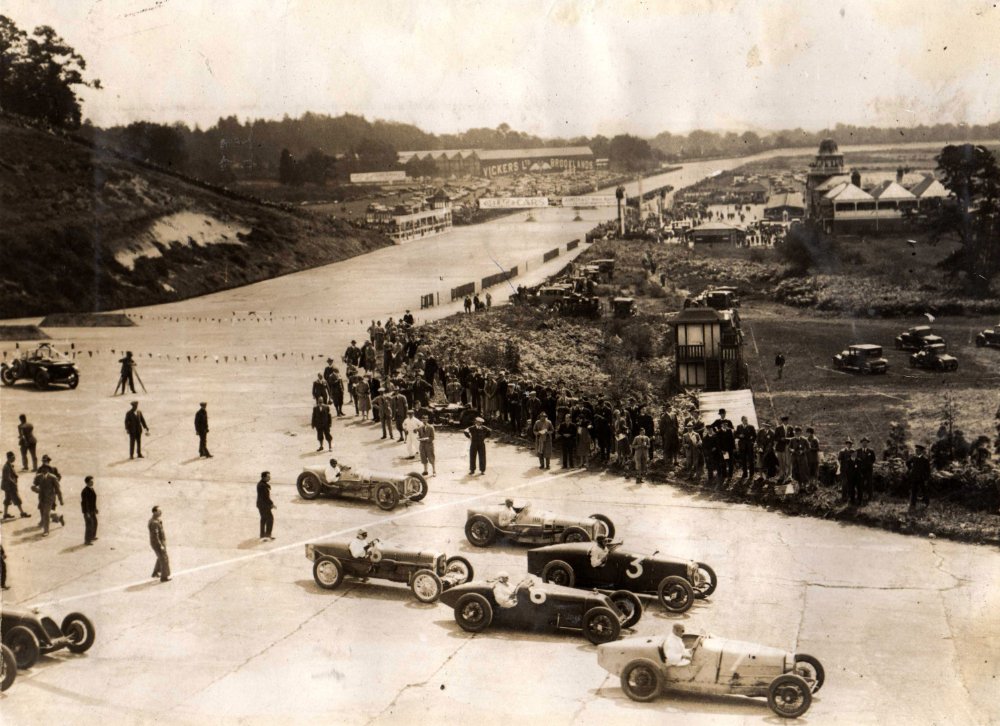
The first Grand Prix of the Royal Automobile Club took place on August 7, 1926. Brooklands had opened in 1907 as the world’s first purpose-built banked motor-racing circuit, created partly because racing on public roads was prohibited in mainland Britain. By the mid-1920s it was the obvious venue for an international race, although its huge banking and rough concrete produced a contest unlike the road circuits used on the Continent.
Only nine cars started. Delage arrived with the technically advanced, supercharged 1.5-litre 15-S-8. Louis Wagner and Robert Sénéchal shared the winning car over four hours, with Malcolm Campbell second in a Bugatti Type 39A. Delage returned in 1927 and won again, this time with Robert Benoist.
The British race then disappeared from the international calendar. Brooklands became heavily involved in aircraft production during World War Two, and motor racing never returned. Yet aviation provided the post-war solution, leaving Britain with redundant airfields whose perimeter roads could be adapted cheaply for racing.
Silverstone and the birth of Formula 1
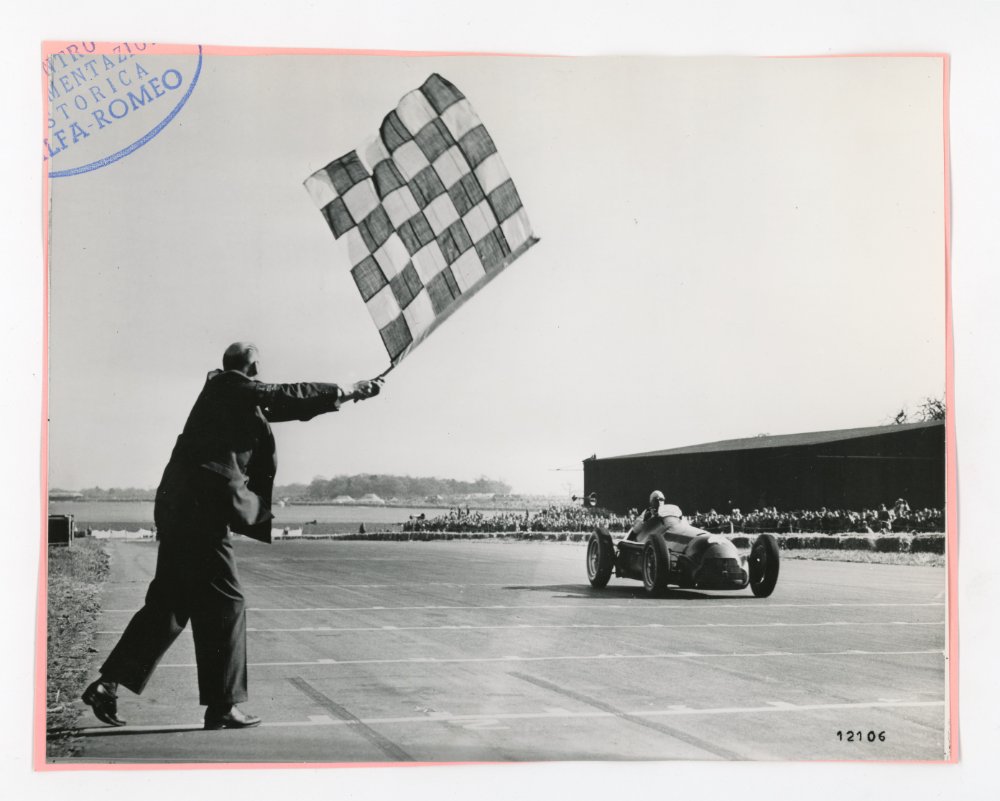
RAF Silverstone hosted the first post-war British Grand Prix in 1948, with Luigi Villoresi winning for Maserati. Two years later the race became the opening round of the new Formula 1 World Championship. Giuseppe Farina led an Alfa Romeo 158 (pictured above) in a clean sweep of the podium before King George VI, Queen Elizabeth and Princess Margaret.
The machinery still followed the pre-war template. The Alfettas were front-engined, supercharged and thirsty, with drivers sitting behind long bonnets and fuel tanks filling much of the car. Silverstone was brutally fast. Its perimeter course linked the airfield’s corners in broad sweeps, rewarding power, commitment and trust in tyres and drum brakes over exposed laps.
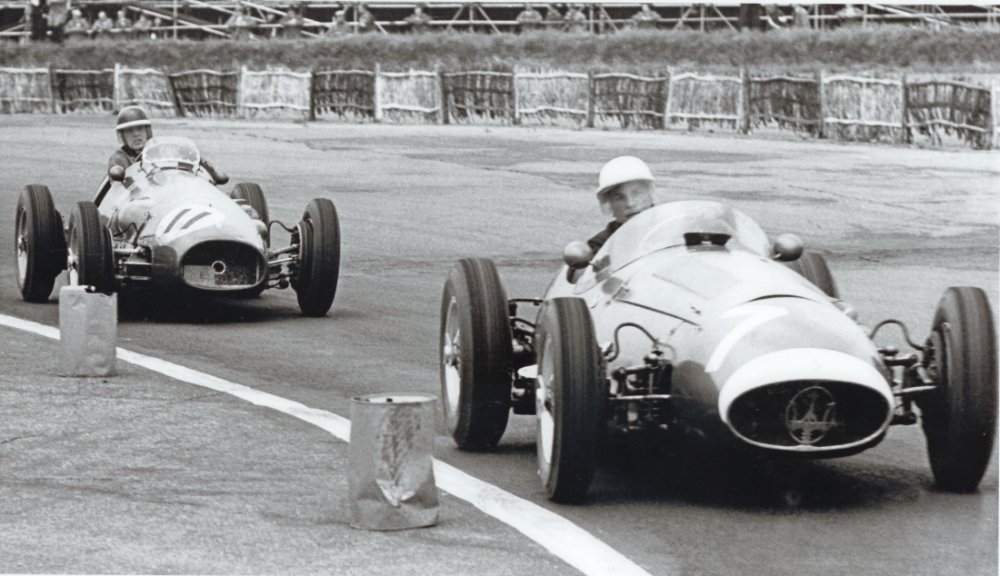
Aintree changed the atmosphere. The British Grand Prix moved to the Liverpool circuit in 1955 and alternated with Silverstone until 1962. Its first race produced Stirling Moss’s maiden World Championship victory in a Mercedes-Benz W196, making him the first British driver to win his home Grand Prix. Whether team leader Juan Manuel Fangio allowed him through remains unresolved. Fangio insisted Moss was simply faster, while Moss was never entirely certain.
Two years later Moss and Tony Brooks shared the winning Vanwall at Aintree, the first World Championship Grand Prix victory for a British car driven by British drivers. By 1959 Jack Brabham’s Cooper-Climax had put its engine behind the driver and rendered the front-engined establishment obsolete. The compact Coopers changed the British Grand Prix and Formula 1 itself.
Brands Hatch, Silverstone and Britain’s golden age
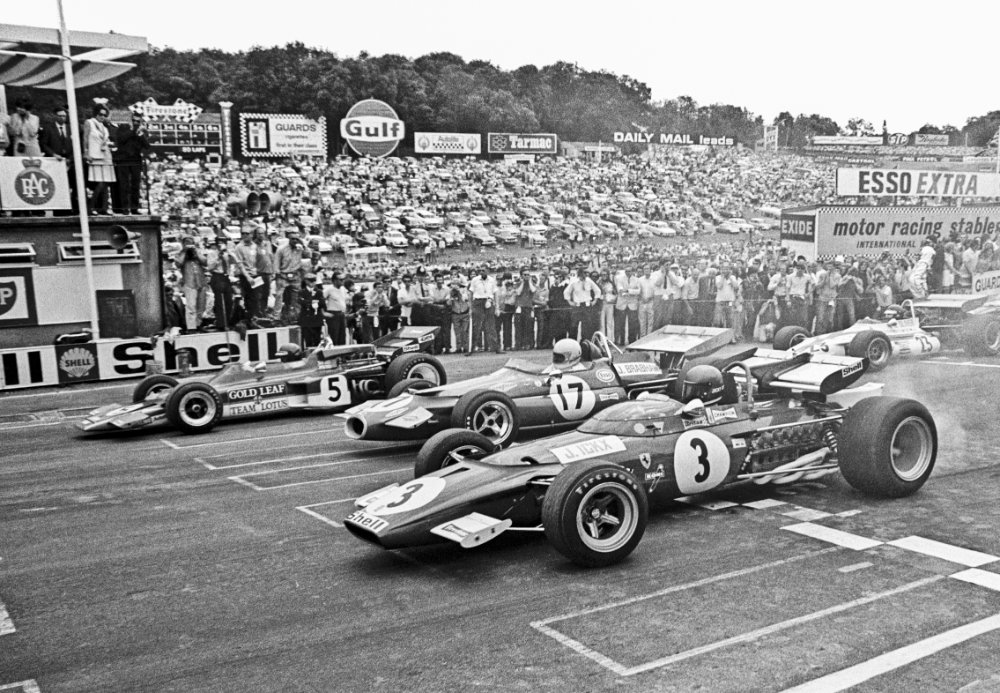
Brands Hatch (pictured above) first hosted the race in 1964, beginning an alternation with Silverstone that continued through 1986. The Kent circuit offered the opposite of an airfield: gradients, blind crests, compression, trees close to the track and spectators packed into natural amphitheatres. Jim Clark won that first race in a Lotus 25, the stressed-skin monocoque that had already shifted another engineering boundary.
The following two decades were the age of the British kit car, although the phrase understates the sophistication involved. Lotus, Brabham, McLaren, Tyrrell and Williams combined light chassis, Cosworth DFV power and Hewland transmissions into cars capable of beating major manufacturers. Wings arrived, tyres widened, ground effect pulled cars towards the track and turbocharging eventually pushed qualifying power towards four figures.
The era also supplied controversy. At Brands Hatch in 1976, James Hunt was caught in a first-lap accident and did not return his damaged McLaren to the pits under its own power. Officials allowed him into the restart amid fears of crowd trouble. He won, but Ferrari’s appeal succeeded two months later and Niki Lauda inherited victory.
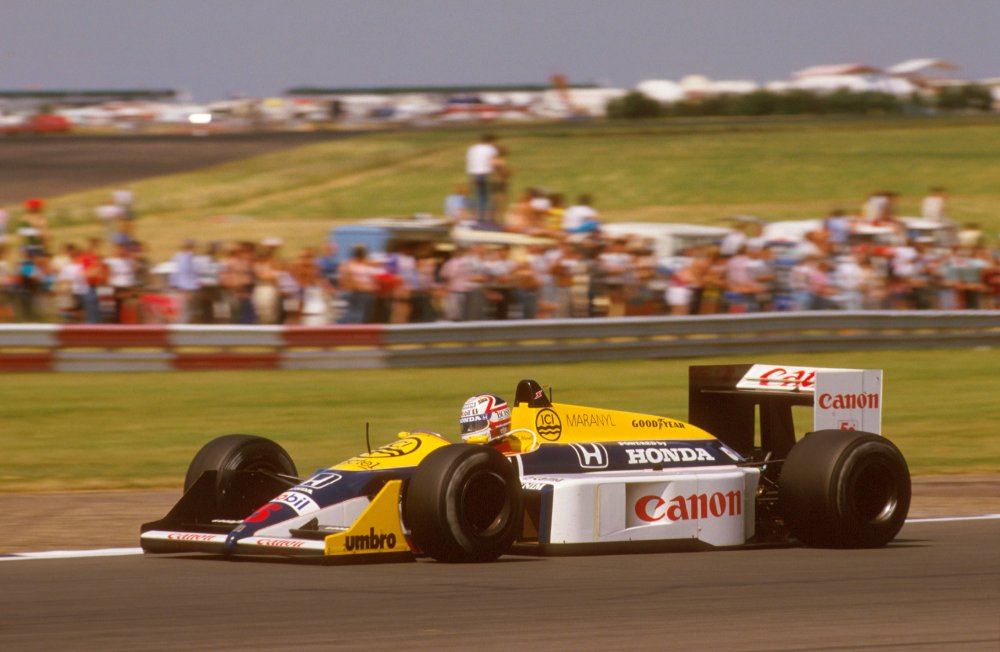
Silverstone’s speed forced changes. A major accident at Woodcote in 1973 contributed to a chicane being installed for 1975. By 1987, when Silverstone became the race’s permanent home, turbo cars and increasingly effective aerodynamics had made the old airfield course astonishingly quick. Nigel Mansell (pictured above) erased a 29-second deficit to Williams team-mate Nelson Piquet before selling him a dummy at Stowe, creating the first great moment of the exclusive Silverstone era.
The modern Silverstone
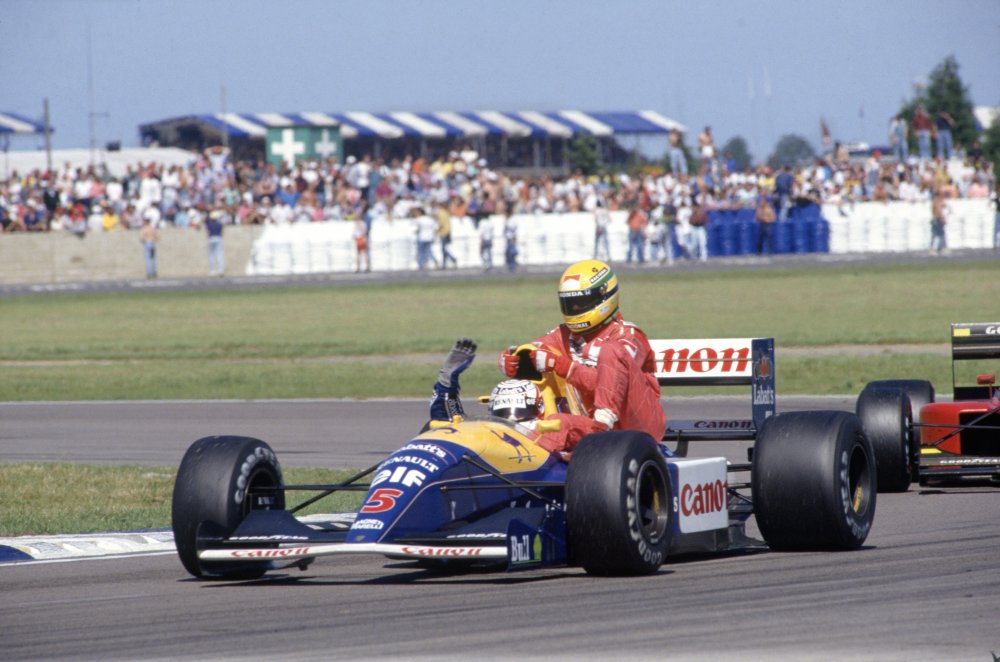
The circuit was substantially reworked in 1991, replacing some of its stark simplicity with the Maggotts, Becketts and Chapel sequence, Vale and a more technical infield. Further alteration produced the Arena layout in 2010 and the Wing pit complex opened the following year.
The race itself nearly left. Commercial disputes between Formula 1 and the British Racing Drivers’ Club led to a proposed move to Donington Park for 2010, but the required redevelopment could not be financed. Silverstone retained the event and committed to modernisation.
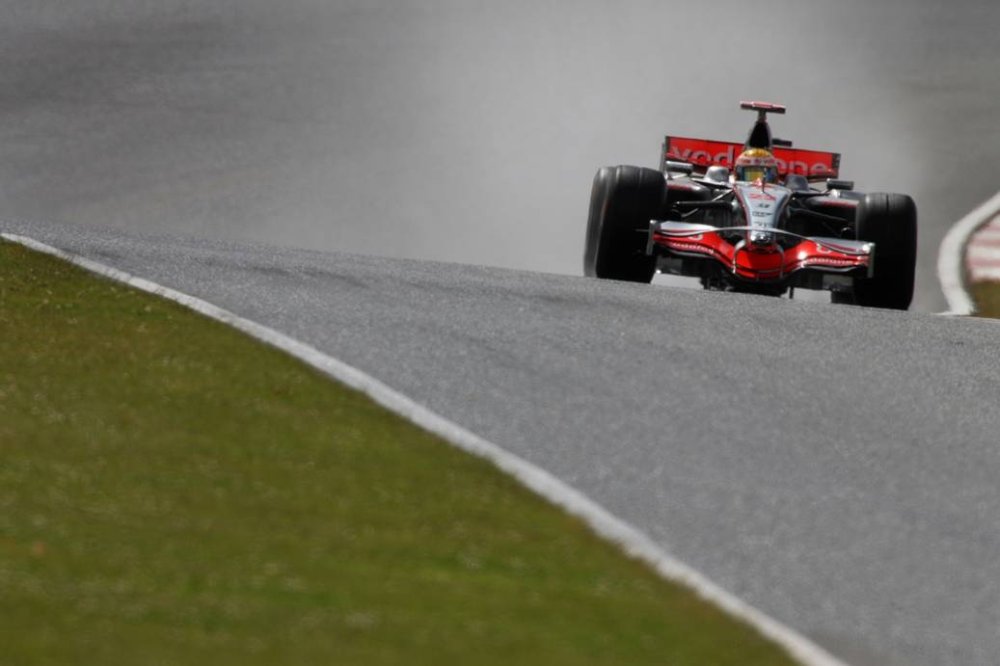
Drama remained constant. Michael Schumacher won in 1998 while serving a stop-go penalty on the final lap, crossing the finish line in the pit lane. Lewis Hamilton won by 68 seconds in torrential rain in 2008, crossed the line with a punctured tyre in 2020 and recovered from a ten-second penalty to win after his first-lap collision with Max Verstappen at Copse in 2021.
The British Grand Prix is rarely dull – what’s your favourite story from the past 100 years?
British Grand Prix winners 1926-2025
1926 Brooklands: Robert Sénéchal and Louis Wagner, Delage
1927 Brooklands: Robert Benoist, Delage
1948 Silverstone: Luigi Villoresi, Maserati
1949 Silverstone: Emmanuel de Graffenried, Maserati
1950 Silverstone: Giuseppe Farina, Alfa Romeo
1951 Silverstone: José Froilán González, Ferrari
1952 Silverstone: Alberto Ascari, Ferrari
1953 Silverstone: Alberto Ascari, Ferrari
1954 Silverstone: José Froilán González, Ferrari
1955 Aintree: Stirling Moss, Mercedes-Benz
1956 Silverstone: Juan Manuel Fangio, Lancia-Ferrari
1957 Aintree: Stirling Moss and Tony Brooks, Vanwall
1958 Silverstone: Peter Collins, Ferrari
1959 Aintree: Jack Brabham, Cooper-Climax
1960 Silverstone: Jack Brabham, Cooper-Climax
1961 Aintree: Wolfgang von Trips, Ferrari
1962 Aintree: Jim Clark, Lotus-Climax
1963 Silverstone: Jim Clark, Lotus-Climax
1964 Brands Hatch: Jim Clark, Lotus-Climax
1965 Silverstone: Jim Clark, Lotus-Climax
1966 Brands Hatch: Jack Brabham, Brabham-Repco
1967 Silverstone: Jim Clark, Lotus-Ford
1968 Brands Hatch: Jo Siffert, Lotus-Ford
1969 Silverstone: Jackie Stewart, Matra-Ford
1970 Brands Hatch: Jochen Rindt, Lotus-Ford
1971 Silverstone: Jackie Stewart, Tyrrell-Ford
1972 Brands Hatch: Emerson Fittipaldi, Lotus-Ford
1973 Silverstone: Peter Revson, McLaren-Ford
1974 Brands Hatch: Jody Scheckter, Tyrrell-Ford
1975 Silverstone: Emerson Fittipaldi, McLaren-Ford
1976 Brands Hatch: Niki Lauda, Ferrari
1977 Silverstone: James Hunt, McLaren-Ford
1978 Brands Hatch: Carlos Reutemann, Ferrari
1979 Silverstone: Clay Regazzoni, Williams-Ford
1980 Brands Hatch: Alan Jones, Williams-Ford
1981 Silverstone: John Watson, McLaren-Ford
1982 Brands Hatch: Niki Lauda, McLaren-Ford
1983 Silverstone: Alain Prost, Renault
1984 Brands Hatch: Niki Lauda, McLaren-TAG
1985 Silverstone: Alain Prost, McLaren-TAG
1986 Brands Hatch: Nigel Mansell, Williams-Honda
1987 Silverstone: Nigel Mansell, Williams-Honda
1988 Silverstone: Ayrton Senna, McLaren-Honda
1989 Silverstone: Alain Prost, McLaren-Honda
1990 Silverstone: Alain Prost, Ferrari
1991 Silverstone: Nigel Mansell, Williams-Renault
1992 Silverstone: Nigel Mansell, Williams-Renault
1993 Silverstone: Alain Prost, Williams-Renault
1994 Silverstone: Damon Hill, Williams-Renault
1995 Silverstone: Johnny Herbert, Benetton-Renault
1996 Silverstone: Jacques Villeneuve, Williams-Renault
1997 Silverstone: Jacques Villeneuve, Williams-Renault
1998 Silverstone: Michael Schumacher, Ferrari
1999 Silverstone: David Coulthard, McLaren-Mercedes
2000 Silverstone: David Coulthard, McLaren-Mercedes
2001 Silverstone: Mika Häkkinen, McLaren-Mercedes
2002 Silverstone: Michael Schumacher, Ferrari
2003 Silverstone: Rubens Barrichello, Ferrari
2004 Silverstone: Michael Schumacher, Ferrari
2005 Silverstone: Juan Pablo Montoya, McLaren-Mercedes
2006 Silverstone: Fernando Alonso, Renault
2007 Silverstone: Kimi Räikkönen, Ferrari
2008 Silverstone: Lewis Hamilton, McLaren-Mercedes
2009 Silverstone: Sebastian Vettel, Red Bull-Renault
2010 Silverstone: Mark Webber, Red Bull-Renault
2011 Silverstone: Fernando Alonso, Ferrari
2012 Silverstone: Mark Webber, Red Bull-Renault
2013 Silverstone: Nico Rosberg, Mercedes
2014 Silverstone: Lewis Hamilton, Mercedes
2015 Silverstone: Lewis Hamilton, Mercedes
2016 Silverstone: Lewis Hamilton, Mercedes
2017 Silverstone: Lewis Hamilton, Mercedes
2018 Silverstone: Sebastian Vettel, Ferrari
2019 Silverstone: Lewis Hamilton, Mercedes
2020 Silverstone: Lewis Hamilton, Mercedes
2021 Silverstone: Lewis Hamilton, Mercedes
2022 Silverstone: Carlos Sainz Jr, Ferrari
2023 Silverstone: Max Verstappen, Red Bull-Honda RBPT
2024 Silverstone: Lewis Hamilton, Mercedes
2025 Silverstone: Lando Norris, McLaren-Mercedes