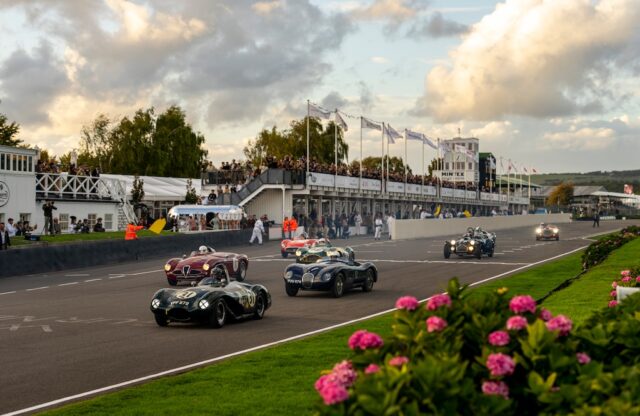


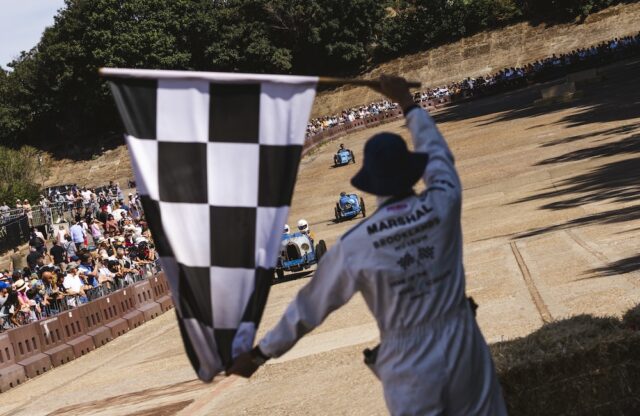
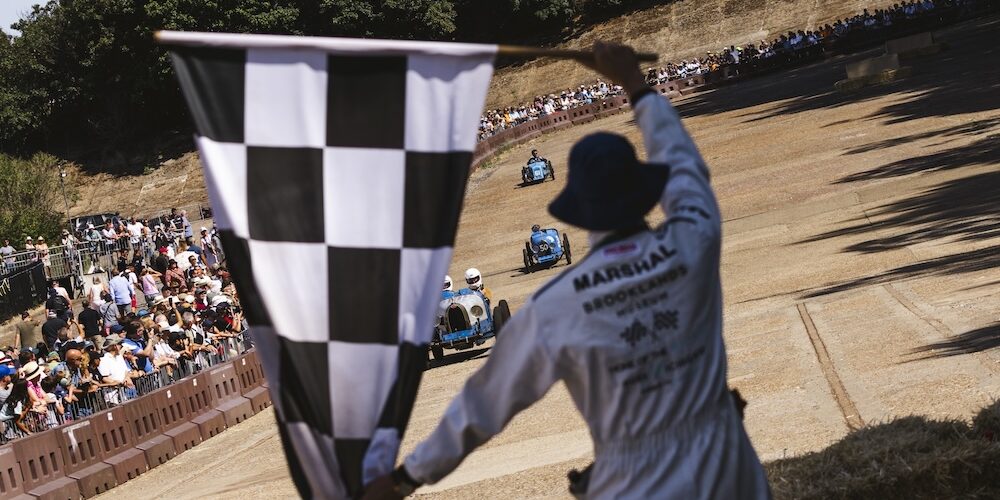
In the past few years, the popularity of classic and vintage motor sport events has led to huge, slow-moving crowds, rising prices and long walks from the car park. The pre-World War Two Brooklands banked track characterised itself with the phrase ‘The Right Crowd and No Crowding’; this ethos perhaps seems a little snobbish these days, but that is exactly how the recent Brooklands centenary celebration of the first Grand Prix race at the Surrey race circuit felt.
In 1906, prior to World War One, local estate owner Hugh Fortescue Locke King, a very wealthy motoring enthusiast, had become convinced that the British motor industry was falling behind its European competitors through having no place for high-speed testing. Any motor sport on public roads had already been banned in the UK. Locke King therefore planned and paid for the world’s first purpose-built banked motor-racing circuit. The first event was held there on June 17, 1907. The surface was rough-cast uncoated concrete, since the technology to use Tarmacadam on the banking was not yet available.
If wealthy British drivers wished to race at the top level, they had to do so abroad. One of these successful racers was Sunbeam driver Henry Segrave, who in 1926 proposed a Grand Prix in Britain following his victories in both the French and San Sebastian Grands Prix.
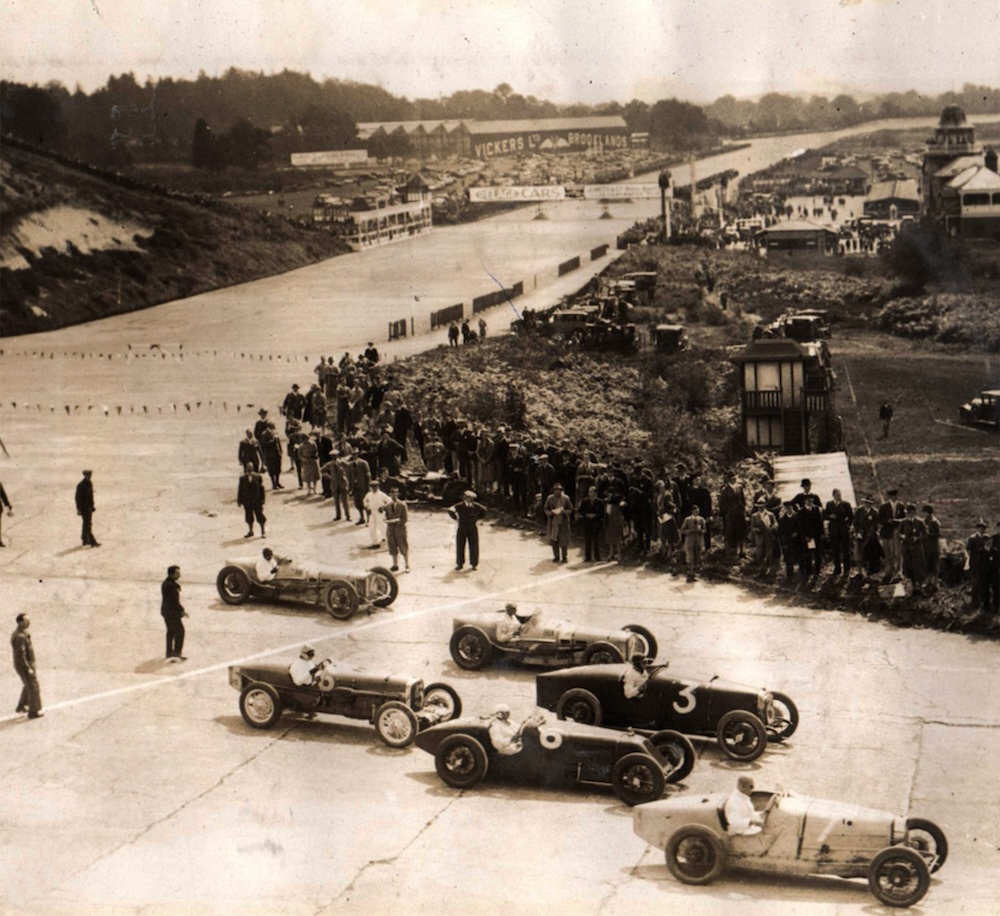
This first GP was held on August 7, 1926. There were only 13 entries, but four dropped out before the event. The nine that took the start comprised three French Delages, three French Talbots – one driven by Seagrave – an Aston Martin, a Halford Special and Malcolm Campbell’s Bugatti. Two of the non-starters were the very radical John Godfrey Parry Thomas ‘Flat Iron’ cars, so called because of their extremely low build. Tragically, Parry Thomas was killed shortly before the Brooklands race while attempting to beat the World Land Speed record on Pendine Sands beach in Wales, driving his self-built car ‘Babs’. The yet-to-be-completed race machines were therefore withdrawn.
August 7 was a very hot day; the drivers of all three Delages had to stop frequently to bathe their badly burned feet in buckets of water. Despite this setback, after four hours the winners were Robert Sénéchal and Louis Wagner in their Delage 15 S 8, with Campbell second in his Bugatti 39A, and Robert Benoist and André Dubonnet third in their Delage 15 S 8. Two of the Talbots retired with supercharger problems, the third did so with a damaged front axle. George Easton retired the Aston Martin with a blown head gasket and Frank Halford’s self-built Halford suffered from a broken prop shaft.
Even in 1926 the concrete track was punishingly bumpy, and by the 1930s it was not in good condition – but the immensely brave John Cobb set the all-time lap record in 1934 at 143.44 mph (230.84 km/h). Anyone who has driven there recently can tell you how bumpy it is now.
During World War Two, sections of the track were removed to lengthen the central runway and allow locally built bomber aircraft to take off and land; the track quickly fell into disrepair. Later on in the 20th century, a large team of enthusiasts took over all the old buildings and turned the old circuit into an aeronautical and race car museum.
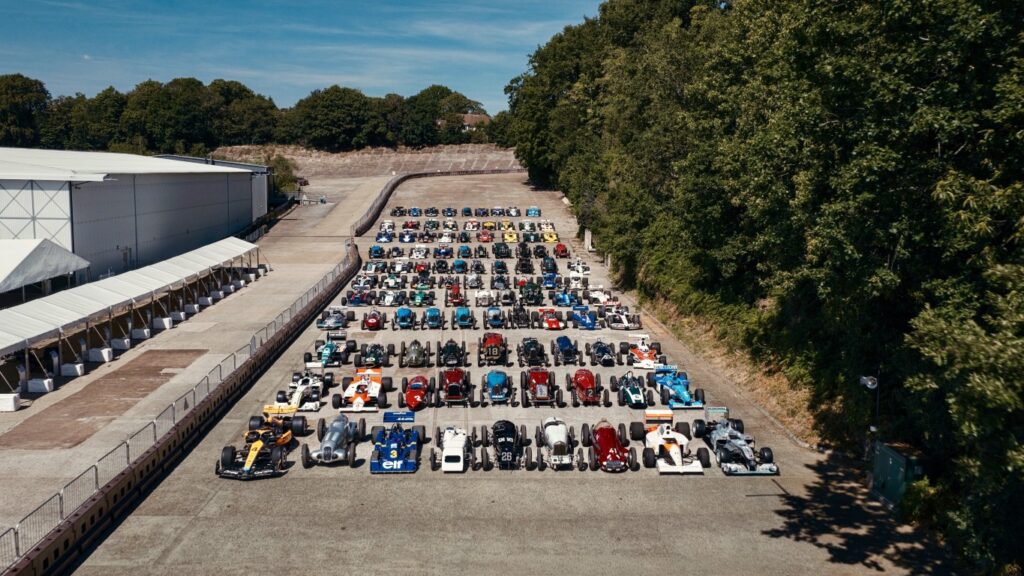
To celebrate the 100th anniversary of the 1926 Grand Prix, on August 8, 2026 Mark Constanduros, Allan Winn and the Brooklands Museum team gathered more than 120 Grand Prix cars together for the Brooklands centenary celebration, from a sister model of 1926’s winning Delage to a 2024 Haas Grand Prix car. Some of the more modern machinery, and a few enthusiastic pre-war car owners, were let loose on the Mercedes-Benz test track to the delight of all those who made the walk across the Brooklands site. V6s, V8s, V10s, V12s and the raucous BRM V16 reminded many people of what true Grand Prix cars used to sound like.
At the Brooklands centenary celebration it was fascinating to look at the variety of graphic schemes and logos on comparatively recent Formula 1 cars, and to see the transition from well known products such as fuel, cigarettes and oil, to obscure sponsors most of us are not familiar with. But who remembers the Lotus Essex petroleum sponsor David Thieme? He studied industrial design at the Pratt Institute in Brooklyn, and in 1973 he used the money that he had made as a designer to found oil-trading company the Essex Overseas Petroleum Corporation. Based in a room of the Hôtel de Paris Monte-Carlo in Monaco, the company was a one-man show, and some sources claim the firm was making about $70m of profit per year. The cars were in a garish colour scheme with a silver foil base for the sponsor’s name.
In April 1981, Thieme was arrested at an airport in Zurich over accusations of fraud to the amount of $7.6m from Credit Suisse. After two weeks of investigation, he was released on bail, which according to sources was $150,000. Subsequently the Essex empire collapsed and Thieme disappeared. Such has always been the nature of Formula 1.
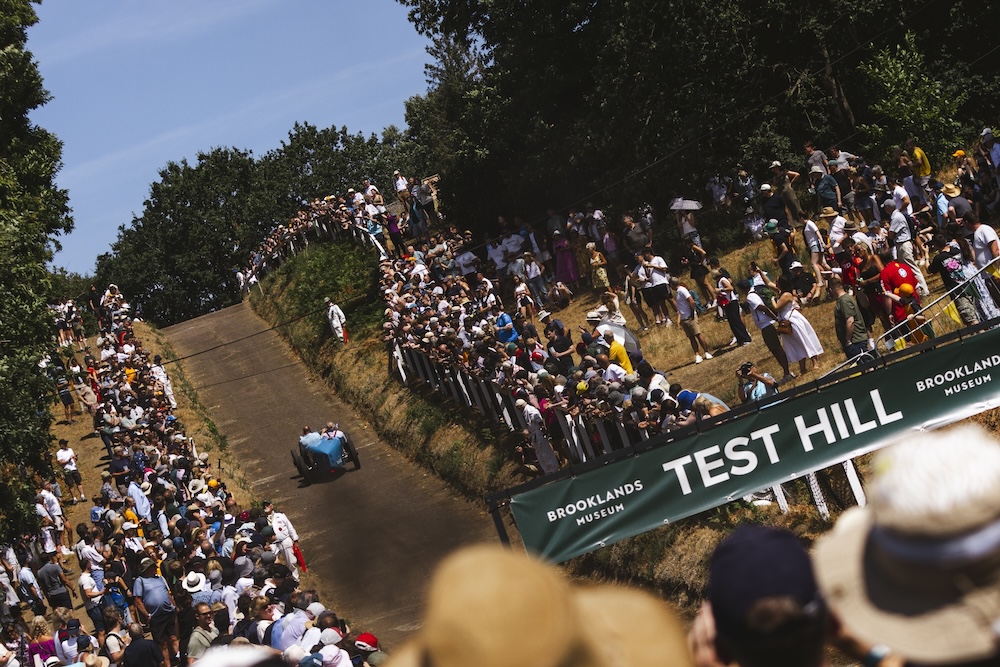
For the multitude of cars being demonstrated at the Brooklands centenary celebration, the instruction from the highly enthusiastic Brooklands staff was to make sure something was happening all the time. That meant that spectators could ride in a small fleet of vintage Bentleys, watch cars storm up the original Test Hill (one-in-four at the top), or sprint race each other on the Finishing Straight. The multitude of Bugatti owners were constantly looking for somewhere to have a blast – very popular.
It was possible to compare not only the sophistication and complexity of aerodynamic appendages over the past 20 years, but the overall size of the cars, too. Do we need to say more? Probably not. But four cars that represented the high points of their eras – the 1926 Delage, the 1937 Mercedes-Benz W125, the 1950 Alfa Romeo 158 and the BRM P V16 – were fascinating to ponder. Also worth comparing were two of the most modest and charming Grand Prix drivers: 1996 World Champion Damon Hill and 2009 Le Mans winner and twice American Le Mans Series champion David Brabham. Both were always ready with a genuine smile and happy to give an autograph.
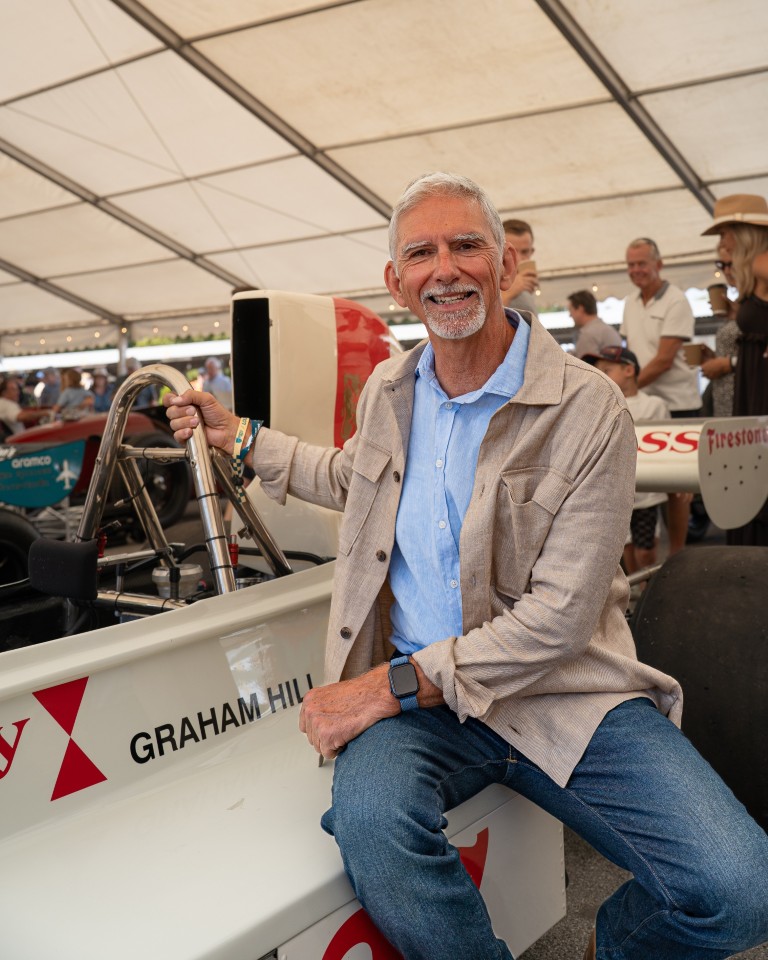
For the first truly grand event held at Brooklands since the late 1930s, where spectator numbers were frequently above 30,000, the 10,000 at the Brooklands centenary celebration felt just right.
Find out more about Brooklands Museum here.