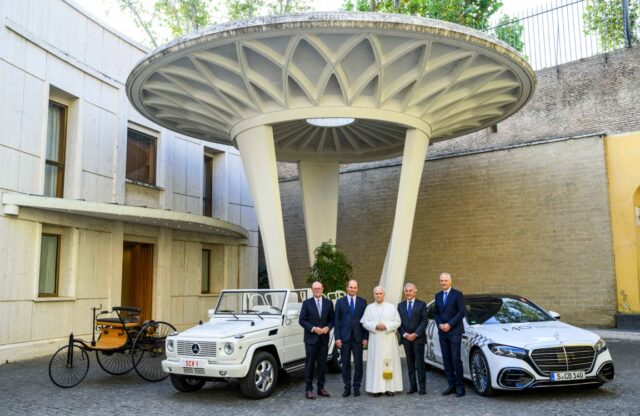
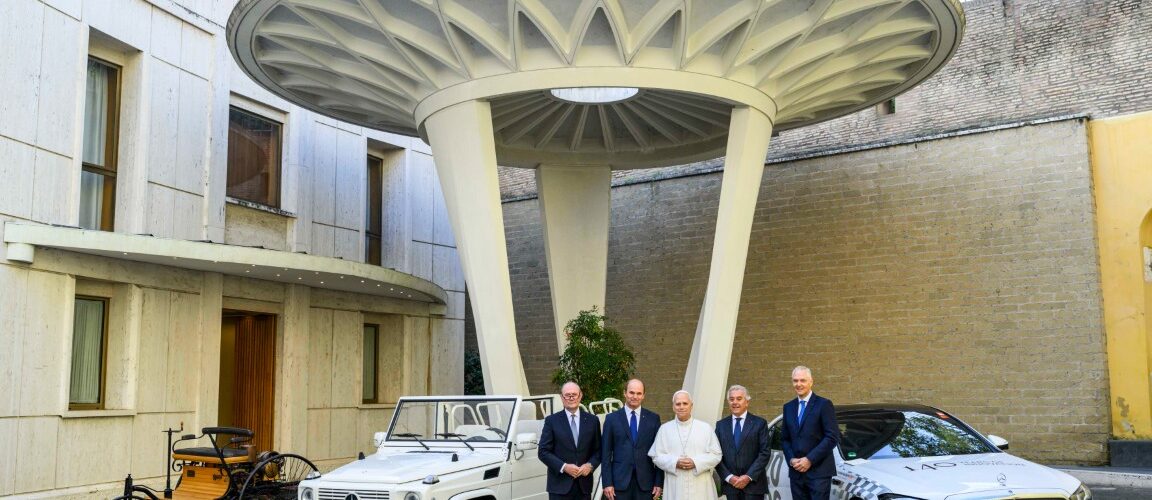
Nearly a century of the Mercedes-Benz popemobile is being marked with an eight-car exhibition at the Vatican, housed in a glass pavilion near the Pinacoteca until the end of January 2027.
Called Mercedes-Benz: A Century of the Popemobile, the exhibition opened on October 28, 2026, coinciding with a meeting between Pope Leo XIV and Mercedes-Benz executives.
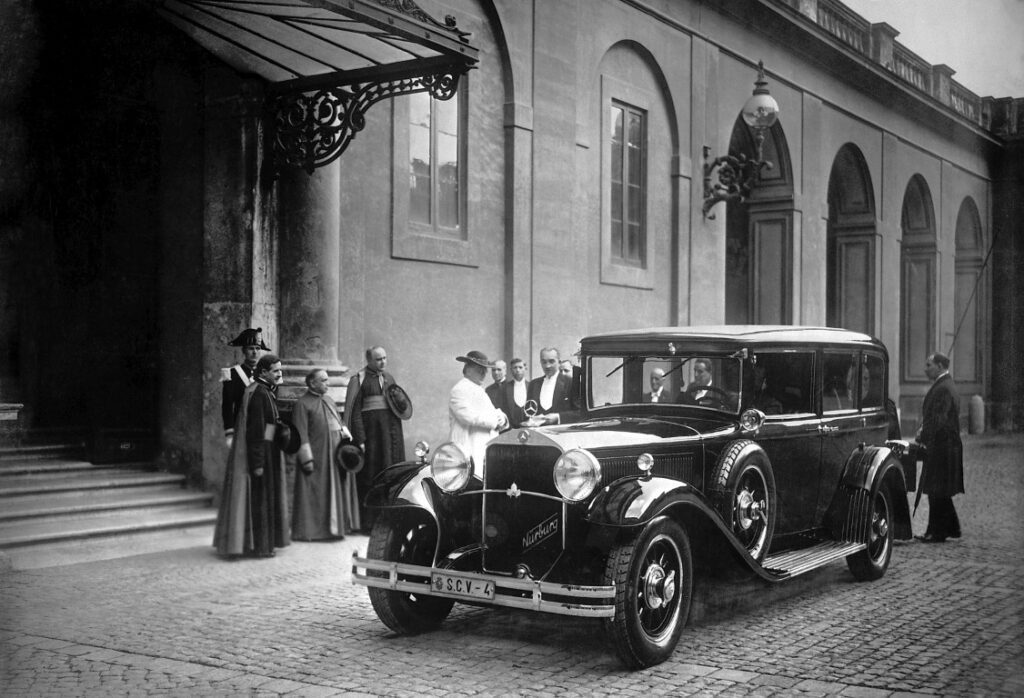
The relationship between Mercedes-Benz and the papacy began in 1930, when Daimler-Benz presented Pope Pius XI with a Nürburg 460 Pullman limousine – which features in the exhibition. The first car to be used regularly by a pope, it was powered by a 4.6-litre straight-eight engine and featured a bespoke interior with a single silk brocade-trimmed rear seat and decorative headlining.
Thirty years later Pope John XXIII received his first Mercedes-Benz popemobile – a long-wheelbase 300 d Landaulet, with removable rear side windows for public appearances and steps that extended automatically when the back doors were opened.
In 1965, Pope Paul VI was given a 600 Pullman Landaulet with widened rear doors, a raised roofline and an individually adjustable rear seat. It also featured a cooling system and an intercom for communicating with the driver. His papacy brought a pair of 300 SEL Pullman limousines in 1967, too. These were 650mm longer than the production cars and were used mainly to transport the Vatican’s senior guests.
The Mercedes-Benz popemobile of popular imagination arrived in 1980, when the manufacturer built a long-wheelbase 230 G for Pope John Paul II’s visit to Germany. Based on the G-Class introduced just a year earlier, it departed radically from the ceremonial limousines that preceded it. The Pope sat in a raised position beneath a tall transparent dome, protected from the elements but clearly visible to the crowds. Pearlescent paintwork, gold trim and a white interior completed the transformation. A second example, based on the 230 GE, followed in 1982.
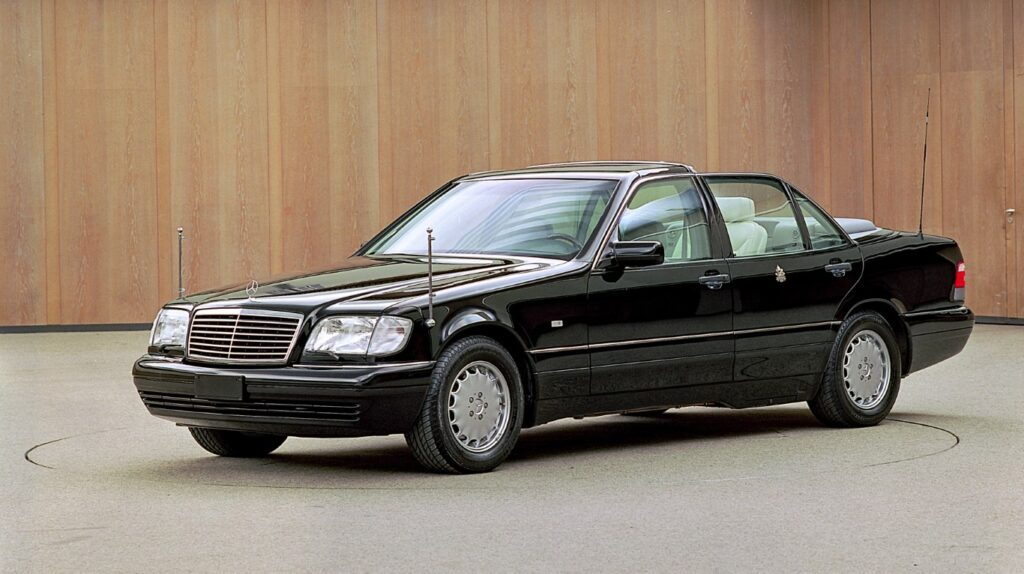
John Paul II’s papacy also produced a more traditional car: an S 500 long-wheelbase Landaulet. Delivered in 1997, it featured an electro-hydraulically operated folding roof and a spacious single rear seat.
Mercedes-Benz adapted the popemobile concept for the M-Class SUV in 2002 with the ML 430, whose transparent dome was integrated more smoothly into its bespoke coachwork. John Paul II first used it at World Youth Day in Toronto that year. An ML 500 followed for Pope Benedict XVI in December 2012, featuring an enlarged rear entrance for easier access and bigger glass panels to improve visibility.
Complementing the papal cars are an 1886 Benz Patent-Motorwagen and one of the new S-Class saloons that toured six continents this year, both displayed to mark 140 years since Carl Benz patented the motor car. The papal story continues, too. Since 2024, the Vatican has been using its first all-electric popemobile, a specially adapted Mercedes-Benz G 580.
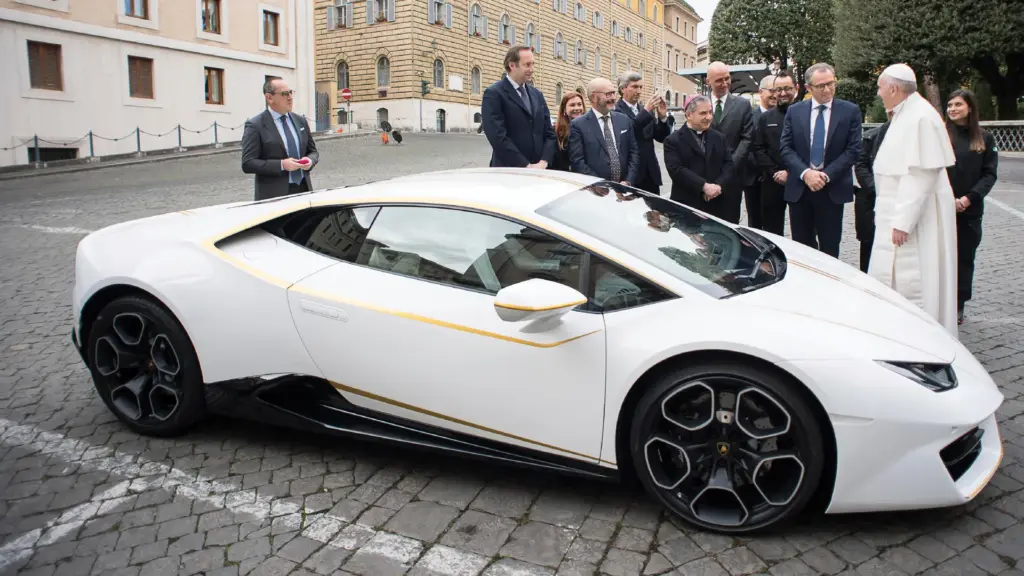
None of the exhibition’s eight papal cars is likely to come up for sale, but vehicles with papal provenance can command substantial premiums. The Lamborghini Huracán gifted to Pope Francis (above) sold for €809,375 at RM Sotheby’s Monaco auction in 2018, more than double its high estimate, while the Fiat 500 he used during his visit to New York fetched $300,000 at a charity auction in 2016.
The Mercedes-Benz: A Century of the Popemobile is open until January 28, 2027. Find out more here.