

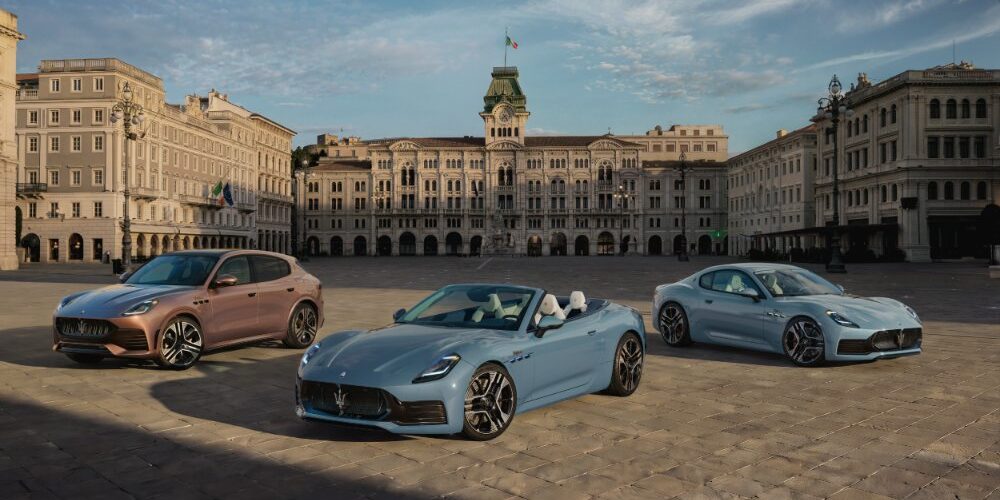
Maserati updates its range – for a brand perennially under criticism from podcast ‘bros’, the news might not have registered much on the radar. But then there was a Q&A…
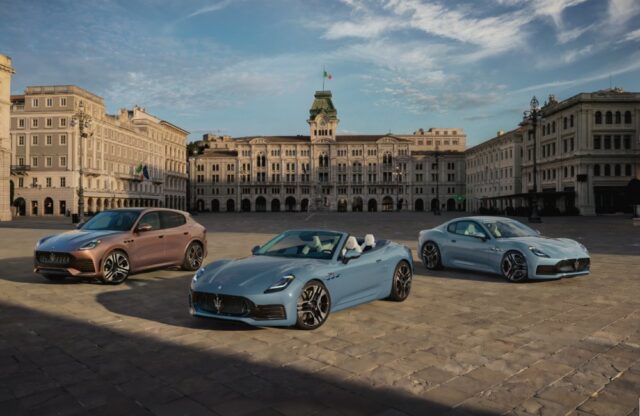
While the MCXtrema-inspired aesthetic updates to the GranTurismo, GranCabrio and Grecale might not be drastic, there are key improvements to the engineering and fit and finish – more on those in a moment. However, the Q&A afterwards, and the comments of Alfa Romeo and Maserati boss Santo Ficili and Maserati/BottegaFuoriSerie general manager Cristiano Fiorio, provided a tantalising view of the brand’s future.
Perhaps the most surprising Maserati updates news was about the BottegaFuoriserie Maserati hypercar project that was hinted at last year. The new hypercar will at least have the option of a manual gearbox, something that Ferrari has refused to do, even at the suggestion of Lewis Hamilton. “[Around] 50 percent of our customers demand a manual gearbox, and they all demand a petrol engine,” Fiori said. “I believe we will have to have a manual gearbox in our offering for a Bottega product.”
It is unlikely the manual gearbox would return to the full range – but it does provide some food for thought. The last manual Maserati was the 4200/Coupe, which went out of production in 2007, and the last manual supercar (not including the largely track-only Barchetta of the early 1990s) was the Bora.
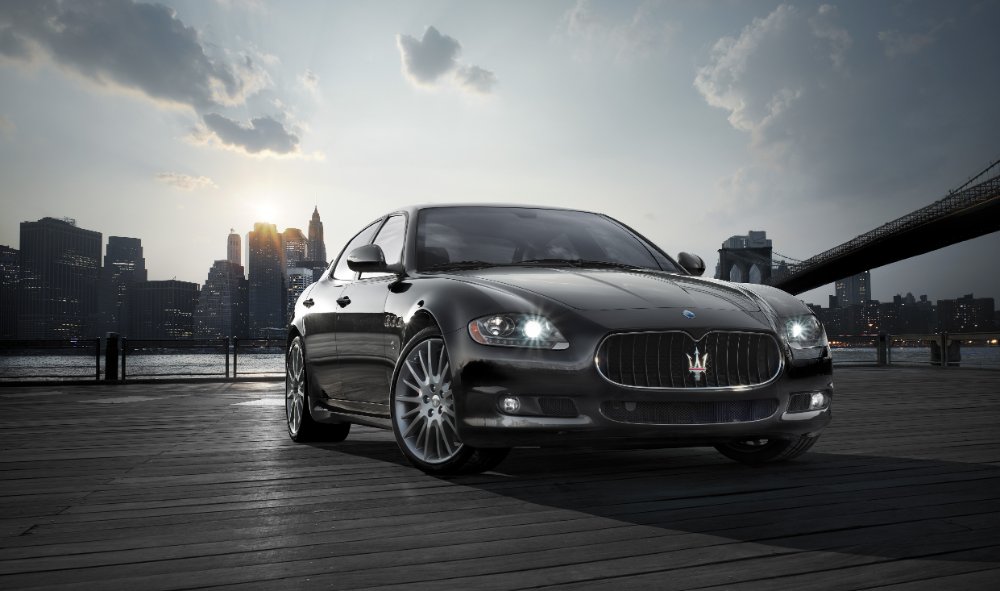
The much-mooted return of the Quattroporte was also brought up in the Maserati updates Q&A. The model is on the way back, in response to Gen Alpha and Gen Z US demand for saloons – although perhaps not in the way traditional QP lovers might expect.
“I believe that sedans will come back; I am not sure with the original reference of original sedan, but with some evolution. We do SUVs, the world is full of SUVs, but a modern interpretation of a sedan can change; I believe that there will be space for a sort of sedan, which is a little bit more capable than historically, but still aggressive,” Ficili said.
“I also believe that the world of Quattroporte is looking for something new, because at the end of the day there is this bridge that still has not been done between SUVs and sedans, and I believe there is space also for us to find the right car to be done. So the answer is absolutely yes.” Sounds suspiciously like a BMW X6 to us. Fiorio also confirmed that a Levante replacement was also likely, and soon, with development closely linked.
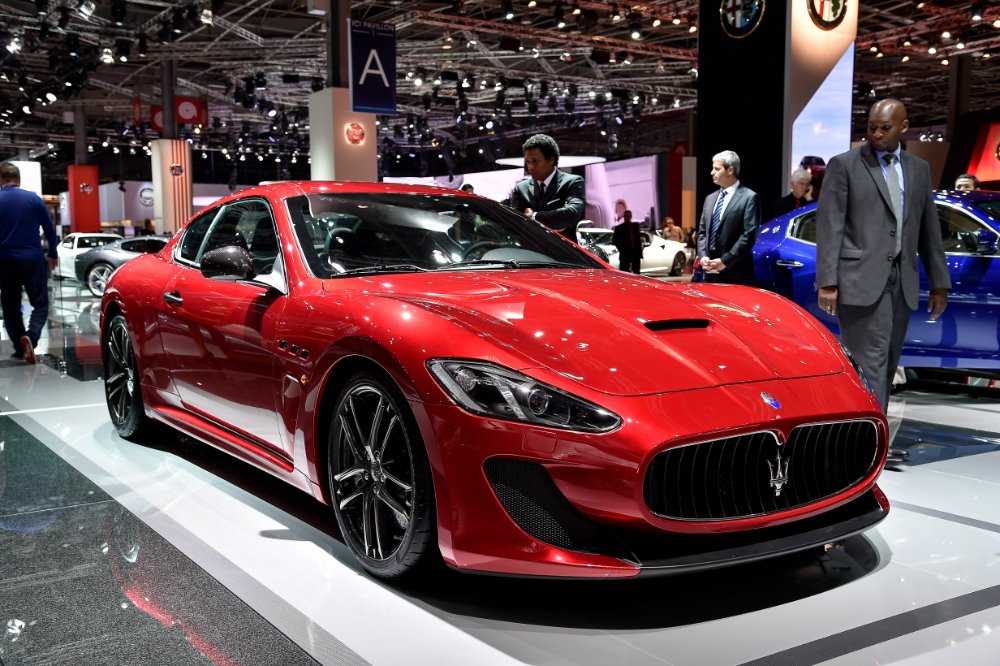
The there’s the thorny issue of the much-missed V8 – well, the naturally aspirated Ferrari-derived one in the old GranTurismo (pictured above), not the twin-turbo one found in the more recent Levante, Ghibli and Quattroporte, which never sold very well due to the sheer cost relative to the rest of the range. While Maserati and its engineers are very proud of its Nettuno twin-turbo V6, customer sentiment can’t be ignored, particularly in V8 hotspots such as the US, Middle East and Australia.
“We have one of the best, if not the best V6 in the world, our Nettuno. The team here is working to develop this engine; [there will be evolution into a] hybrid environment; at this time it is important to exploit the V6 as much as possible,” Ficili said. “Of course we are not forgetting the possibility of also having the V8, although the penetration of this in the total of the engines we are offering, or we will offer in the future, will always be something marginal – but it is a point that we are considering.”
“We have the knowledge and capability to consider a V8,” Fiorio added during the Maserati updates announcement. “We know there are some people in the world who still believe that should be an engine Maserati should have. We are considering it, but we cannot say today we are going to make it.”
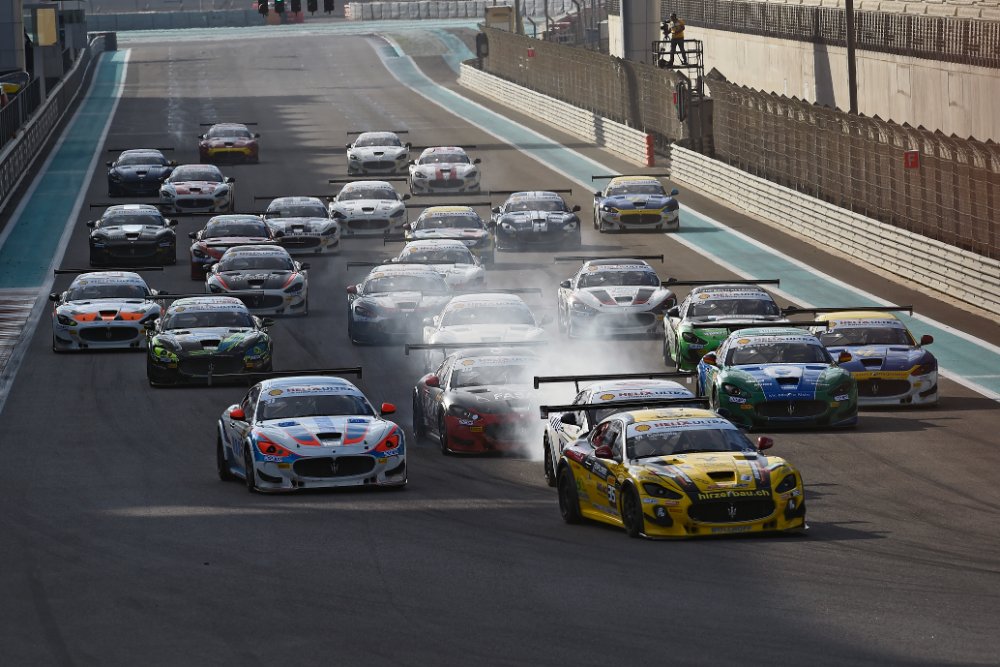
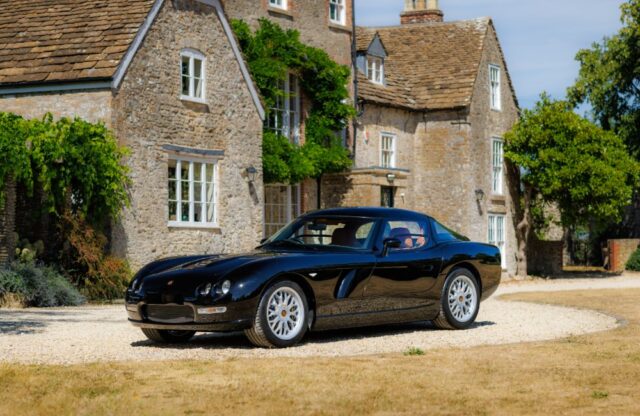
There are also hints that the GranTurismo might continue to be developed, with a potential return of a one-make championship. The Trofeo customer-racing programme worked very well for the old GranTurismo and 4200/GranSport (pictured above), and although the MC20 GT2 racing programme has been highly successful, its impact in getting MC20s and MCPuras out of showrooms has been limited.
“We are still racing today with the GT2 that is also delivering very good results, so probably today is not the right time to talk about the GranTurismo, but for sure we are also considering development in this direction,” Ficili said.
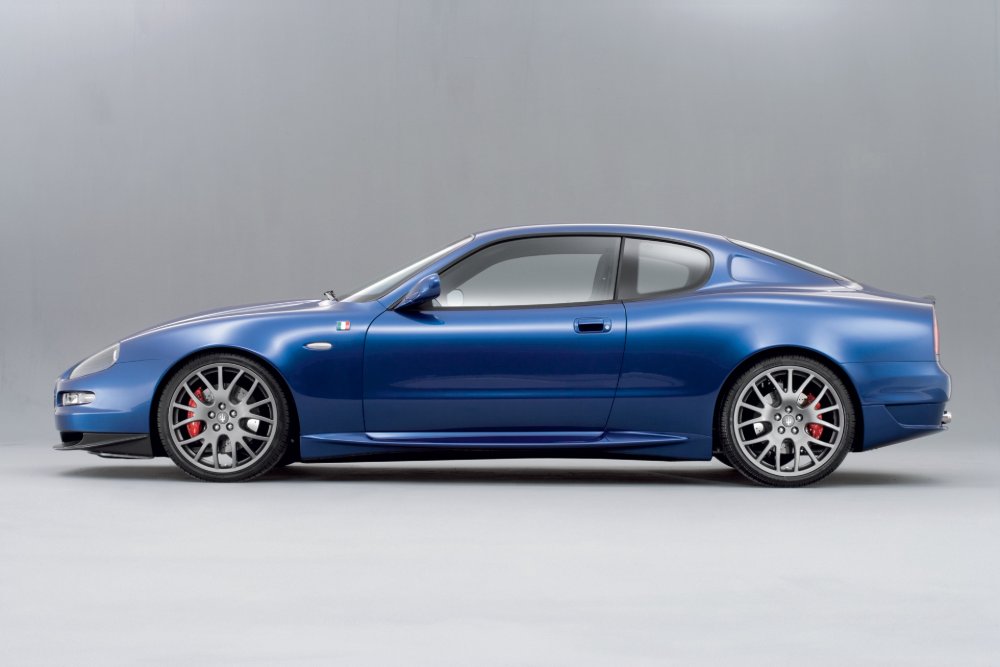
Although Fiorio was cagey as to what the future might be precisely, other than saying we’d find out sooner rather than later, the hints of further development of the GranTurismo into more spicy, extreme road-going versions (much like the GranTurismo MC Stradale, Ghibli II Cup and GranSport MC Victory, the latter pictured above) would work hand-in-hand with a racing programme.
“I am super satisfied about the design, engineering and everything we shared today about the GranTurismo and GranCabrio; [however] we are imagining for the future to do something different compared with what we have today,” Ficili added. “We already did a good job looking at the performance of the car, the new engine, let’s say the new power that we are introducing in Grecale, GranTurismo and GranCabrio.
“We are also imagining an evolution of the GranTurismo in the racing world. It is too early today to talk about this because we already have the GT2 that is racing, but let’s say the sky is the limit in this direction. So we will see in the future, but for sure the plan to develop the GranTurismo is under control and evaluation.”
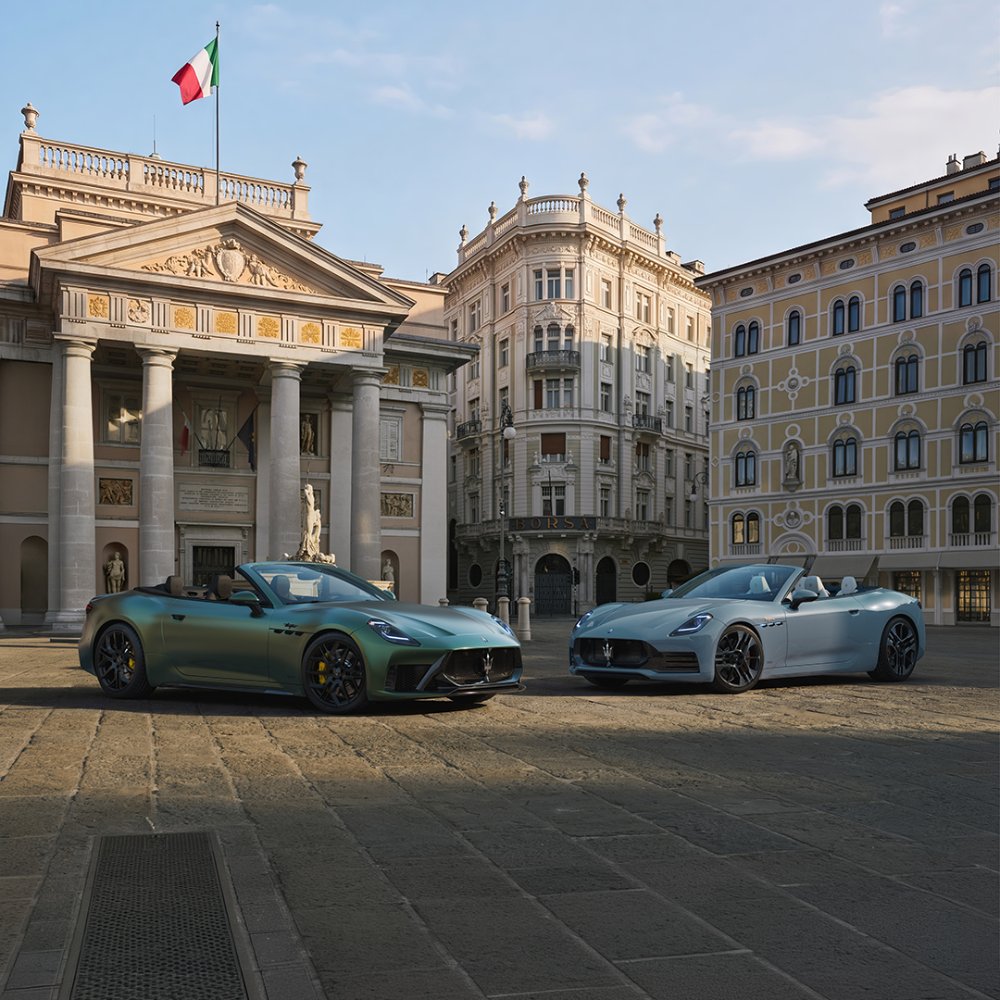
But what of the new cars themselves? First to the GranTurismo and GranCabrio, which have both been given a sharper nose treatment inspired by the MCXtrema. The revised range has been reorganised into three versions: the standard petrol model, the Trofeo and the Folgore. The 3.0-litre twin-turbo Nettuno V6 remains available in two outputs in standard tune it pushes out around 483bhp, while the Trofeo sees power grow to 582bhp, thanks largely to increased boost and a broader torque curve that carries more forcefully through the rev range, giving the top end a freer, less constrained feel. According to head of engineering Davide Danesin, drivers will “need to watch out for the limiter”, such is the enthusiasm with which the GranTurismo Trofeo’s Nettuno engine now spins towards its red line. The petrol models produce up to 479lb ft of torque and a top speed equivalent to more than 199mph, for the entire GranTurismo range.
The Folgore remains the electric version of the GranTurismo. It uses an 800-volt architecture, three electric motors – one at the front and two at the rear – and a 92.5kWh battery with a T-shaped layout running through the central tunnel. Maserati quotes power of around 750bhp to the wheels. The Folgore now has a quoted range of up to 336 miles. Maserati says this is an increase of around 53 miles, compared with the previous version.
The improvement comes partly from a new AWD Disconnect system, which can disengage the front axle shafts and switch the car to rear-wheel drive in 0.5 seconds. The Folgore range improvement also comes from revised aerodynamic work, lower-rolling-resistance Pirelli tyres, improved powertrain thermal management, revised cabin-climate strategies, increased energy recovery under deceleration and greater usable battery energy. The GranCabrio Folgore now has a quoted range of up to 316 miles. Maserati says this is an increase of around 42 miles, compared with the previous version.
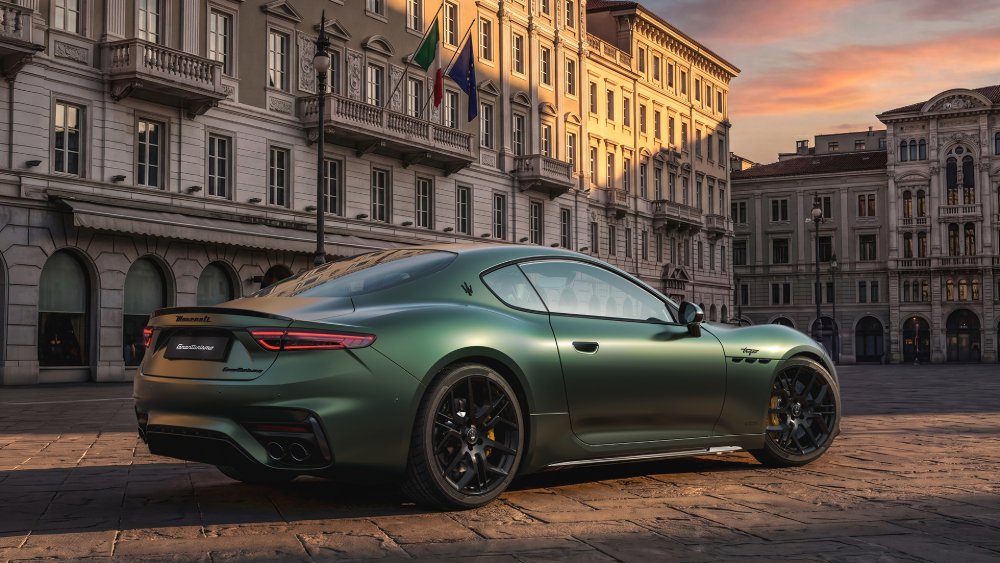
The front of the GranTurismo has been redesigned. The changes include revised central and side air intakes, internal slits to draw off the boundary layer of incoming airflow, a new external air-curtain arrangement and an optimised centre splitter to increase front downforce. The rear lights now use clear lenses. The range gains new Trident wheel designs finished in gloss black. These widen the track by 10mm compared with the standard GranTurismo, which Maserati says improves high-speed stability, lane-change response and cornering precision. The car continues to use a staggered wheel and tyre set-up, with 20-inch wheels at the front and 21-inchers at the rear.
The GranTurismo’s driving modes have been revised. A new Country mode is introduced on the standard GranTurismo and Folgore versions, raising the ride height by 25mm to help the car deal with uneven surfaces at speeds of up to 75mph. In the Q&A, chief engineer Daniele Danesin explained that “basically the car stays higher until you come out from the Country mode, and everything in terms of calibration of the system is optimised for this new height”. This means the dampers and engine have been tuned for rough roads, not just the suspension.
The Trofeo retains a Race mode. The Folgore also offers GT, Max Range, Sport and Corsa modes, with Launch Control available in Sport and Corsa. Maserati says the transmission calibration has been revised for the petrol models, with the aim of giving the car a more direct driving character; constant-throttle upshifts have been delayed to make the response more progressive, while downshifts are brought forward according to brake-pedal pressure. The changes apply to GT and Sport modes.
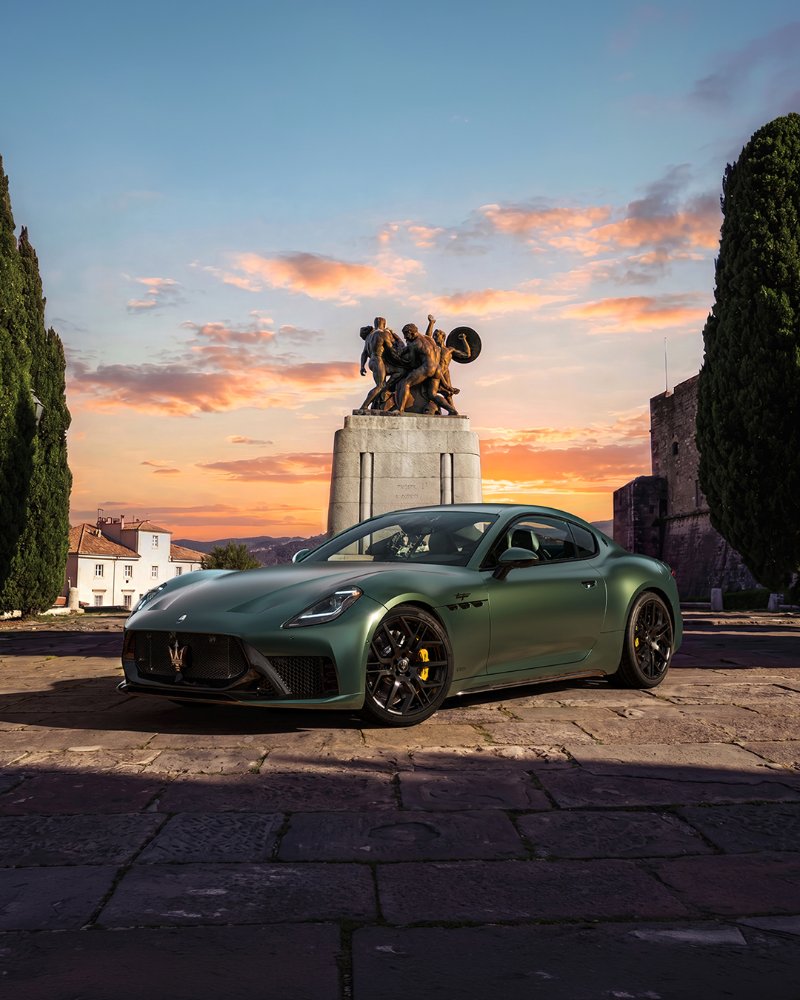
The exterior colour range has been expanded with seven new colours: Matte Green Jupiter, Blu Denim, Matte Bronzo, Gloss Bronzo, Grigio Mistero, Rosso Velluto and Oro Lirico. Maserati has also added new colour options for badges, the radome and tailpipes. The cabin has been updated with a new racing-inspired steering wheel, with flat upper and lower sections, dark satin aluminium spokes and different trim depending on the model.
Perforated leather is used on the standard car and Folgore, while the Trofeo gets a Sport version with Alcantara accents. The Maserati Digital Clock has also been redesigned. It now has a metal outer crown, an octagonal shape, new graphics and a pop-up function that shows changes to the selected driving mode.
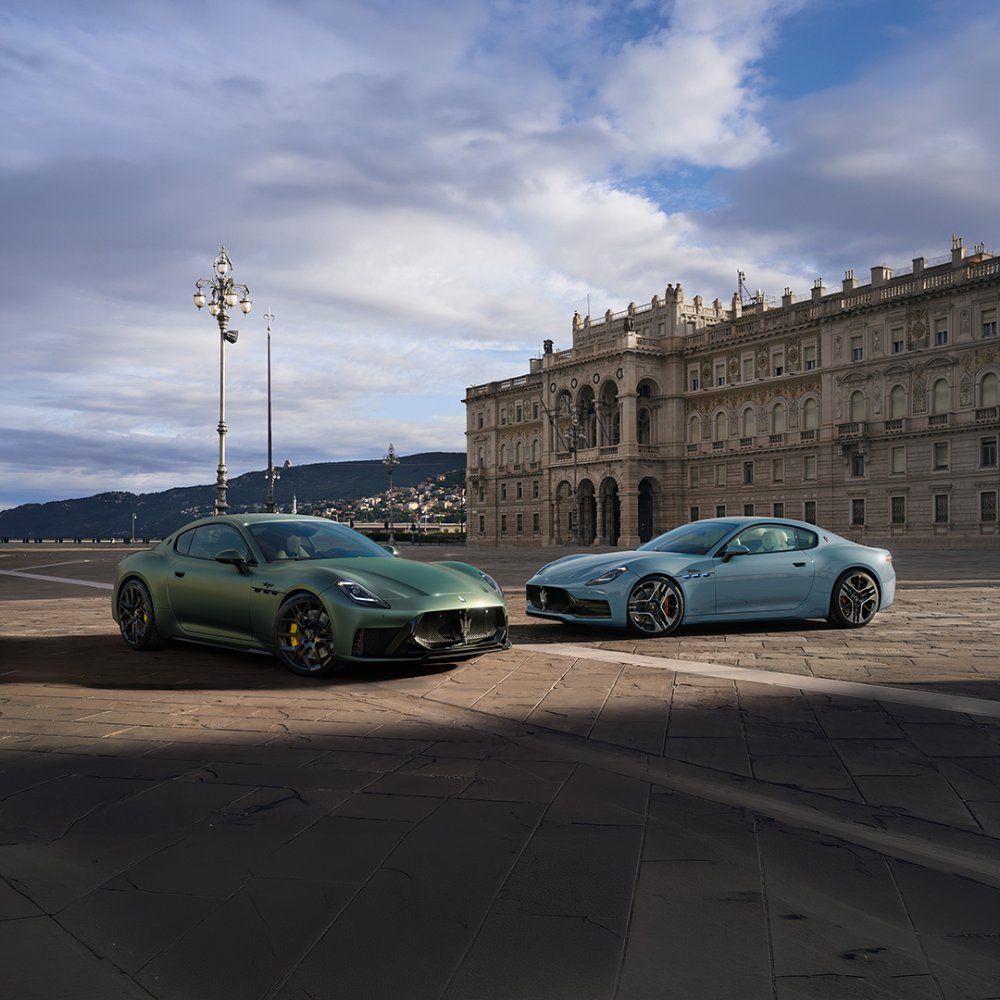
Now to the biggest issue with the original new GranTurismo – cabin haptics and the overall feeling of luxury. The PRND gear selector has been revised with three-dimensional metal controls, and on petrol versions, the steering-wheel paddles now gain an additional parking function first seen on the Folgore. The digital interface has also been updated. The cabin retains a 12.3-inch central display, an 8.8-inch comfort display for climate controls, a 12.2-inch instrument display and a head-up display. Maserati says the display graphics have been revised.
Interior material options have been expanded. New combinations include Bordeaux leather with Nude Alcantara, black and tan leather, and a new Mogano trim. The standard car uses full-grain leather with carbonfibre panels, while the Trofeo adds an Alcantara headlining.
The Folgore uses specific details such as copper badging, illuminated side air intakes and illuminated door pillars. And the GranCabrio retains a fabric roof, available in five colours: Black, Blue Marine, Titan Grey, Greige and Granata. However, full soft-top customisation through the Fuoriserie Bespoke programme is now available – the first example was shown at the Rolex Monte-Carlo Masters 2026, with a Maserati blue roof, a woven finish, and white and lime details inspired by tennis balls.
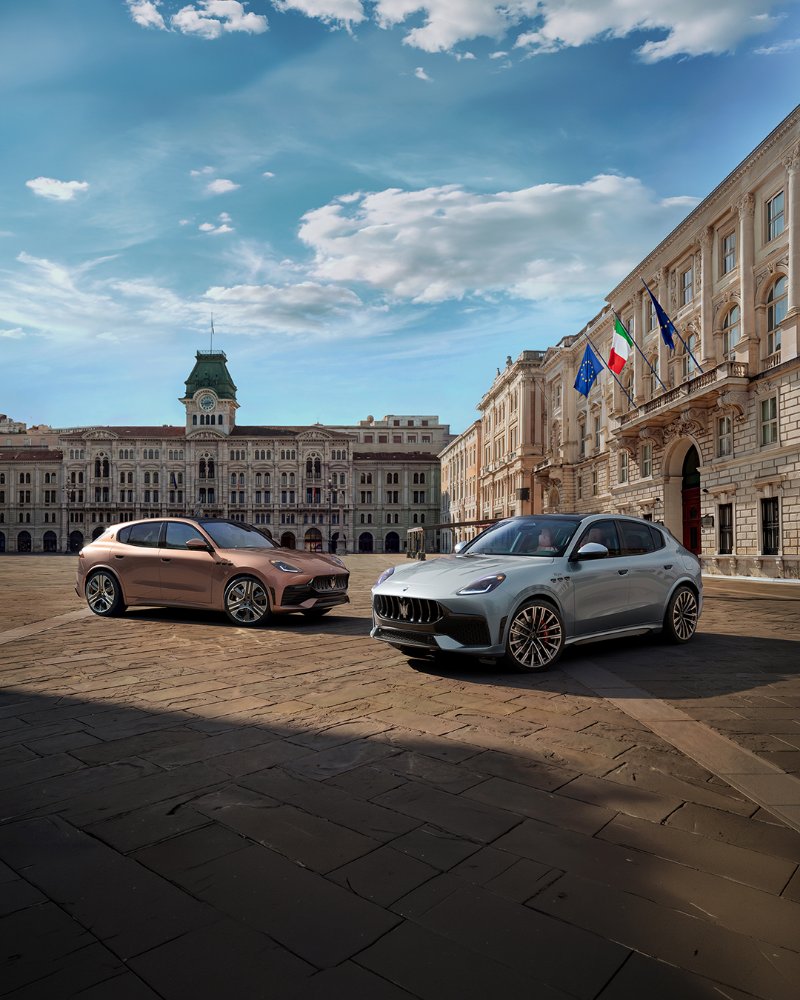
The Grecale range is broader than the GranTurismo and GranCabrio line-ups. Instead of three versions, there’s the Grecale MHEV, Modena MHEV, Grecale V6, Modena V6, Trofeo V6 and Folgore, although not every market will get every version. The Grecale MHEV is offered with around 247bhp or 296bhp depending on market, while the Modena MHEV is listed at around 325bhp, or 247bhp in Italy. These mild-hybrid versions use a four-cylinder engine with a 48-volt system, a belt starter generator, a 48-volt battery, an e-Booster and a DC/DC converter. The Grecale also introduces new 385bhp V6 versions, badged Grecale V6 and Modena V6. This gives the SUV an intermediate V6 option below the 523bhp Trofeo V6; the 385bhp engine produces 369lb ft of torque.
Unlike the 800-volt GranTurismo Folgore and GranCabrio Folgore, the Grecale Folgore uses a 400-volt electric architecture. It has a 105kWh battery, around 550bhp and 605lb ft of torque. Maserati quotes a top speed of 137mph and 0-62mph in 4.1 seconds. The Grecale Folgore’s range is listed at around 328 to 360 miles, depending on wheel and tyre specification. It’s capable of charging up to 270kW, which translates into a time for charging from ten percent to 80 percent in about 18 minutes.
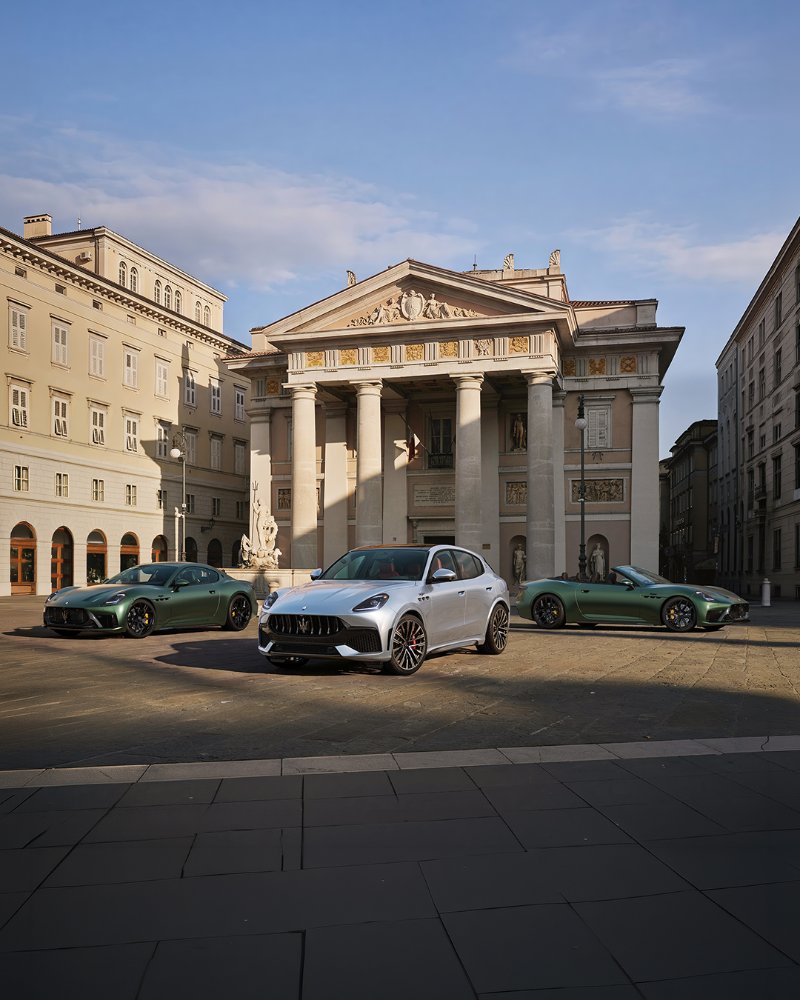
The Grecale Folgore efficiency update is also different. Rather than relying on the same underbody and diffuser revisions described for the GranTurismo and GranCabrio, the Grecale adds an Air Grille Shutter system. This uses adjustable fins in the front grille to regulate airflow to the cooling modules, opening when thermal load requires it and closing to reduce drag when cooling demand is lower. The new bumper adopts a more pronounced shark-nose treatment and an air curtain integrated into the upper facia. The air curtain is shaped to channel airflow along the wheelarch and reduce vortices generated around the wheels.
The Grecale Folgore also receives bumper, chassis and underbody aerodynamic revisions, plus new 21-inch Pirelli tyres with a lower rolling-resistance classification. Maserati says the air suspension can automatically select an Aero set-up to lower the body when conditions allow, reducing frontal area and underbody airflow.
More details on the Maserati updates are available here.