

We’re fast approaching the biggest and most important few days in the global collector market – Monterey 2026 auction week.
This year sees Bonhams move from The Quail to the Monterey Motorsports Reunion, with its traditional spot taken by Broad Arrow. Gooding Christie’s continues as official Pebble Beach partner, while Mecum and RM Sotheby’s always bring the theatrical.
All the auction houses are accepting consignments, and we’re expecting more big hitters to be revealed closer to August, but there are already several tantalising cars and collections up for perusal. Here’s our guide to the early-access lots at Monterey 2026 auction week.
Bonhams
Bonhams has partnered with the Monterey Motorsports Reunion for the Laguna Seca sale during Monterey 2026 auction week, which takes place on August 13. At the time of writing just five cars had been announced, with few details – however, we’ve dug into the chassis numbers to get an idea of what’s on offer.
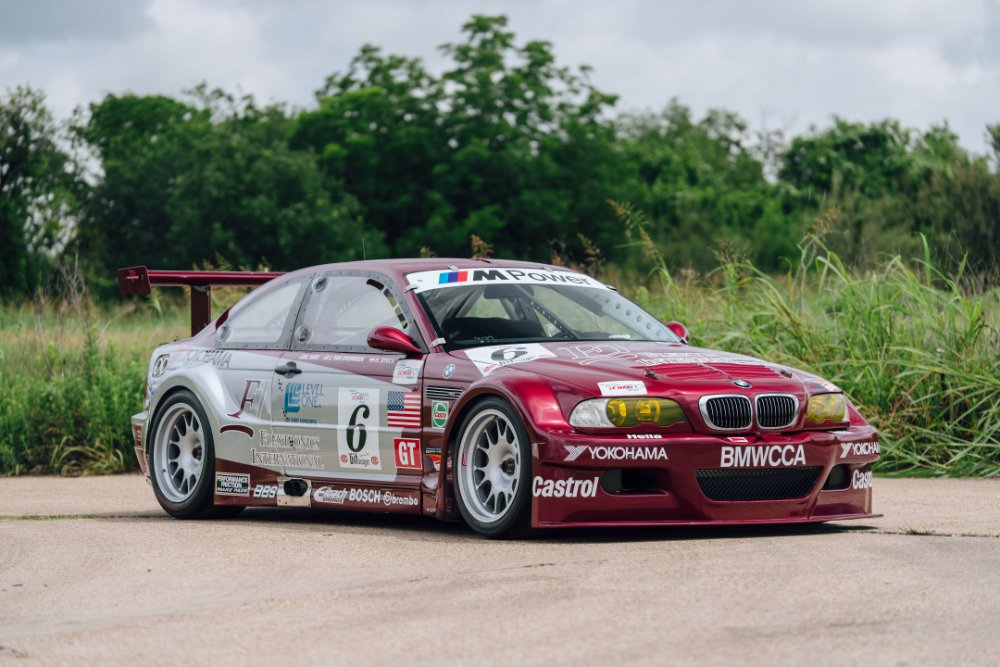
The above 2000 PTG BMW E46 M3 is an important early example from Prototype Technology Group’s American E46 M3 GT programme, predating the better-known V8-powered M3 GTR that arrived in 2001. Chassis 001 is understood to be one of the first cars from PTG’s E46 development, powered not by the later P60 V8 but by BMW’s naturally aspirated 3.2-litre straight-six.
Its first recorded major appearance came at the 2000 Sebring 12 Hours, where it was entered as car no. 6 for Boris Said, Hans-Joachim Stuck and Johannes van Overbeek. It later appeared at Charlotte, Silverstone, the Nürburgring, Sears Point and Mosport during the 2000 season, with Peter Cunningham and Brian Simo also listed in its period competition history. Results included 13th at Charlotte, 21st at Silverstone, 19th at the Nürburgring 1000km and 12th at Sears Point, followed by a DNF at Mosport. In 2001 the car appears to have passed into privateer hands, running with Genesis Racing at Daytona and elsewhere. It finished ninth in the 2001 Rolex 24 at Daytona and later took third at Lime Rock with Rick Fairbanks and Bill Auberlen.
The car was restored in 2009 after inspection reportedly confirmed it as chassis 001 rather than chassis 002. The work returned it to its original ALMS-style appearance, with former PTG crew chief Scott Clarke advising the restoration. It was subsequently displayed at The Quail during a Hans Stuck tribute. No estimate had been revealed at the time of writing.
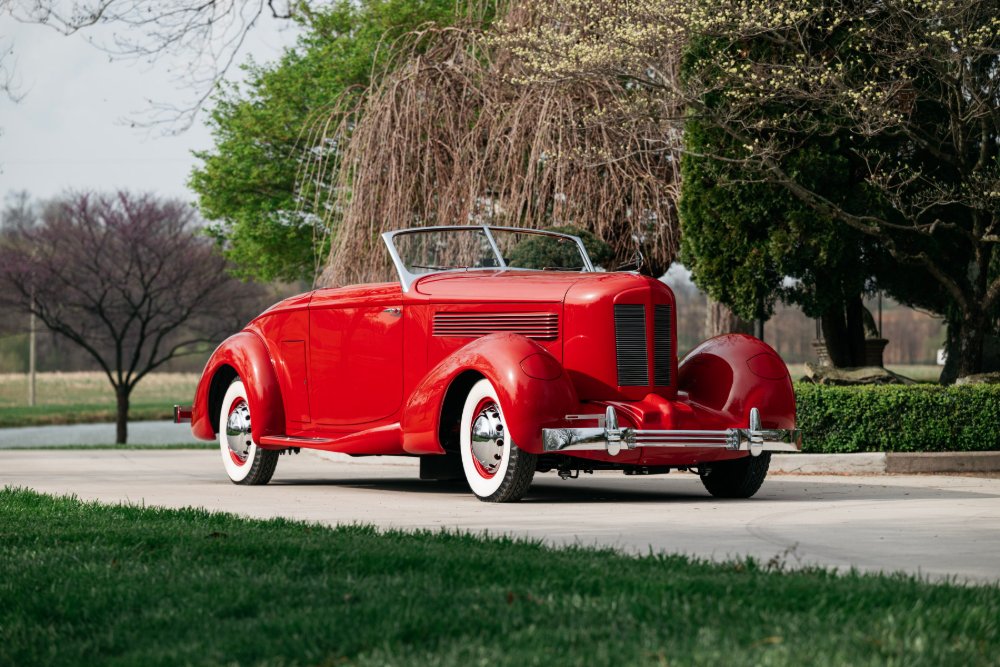
This 1936 Cord Experimental Cabriolet is a highly unusual one-off prototype rather than a standard Cord 810 or 812 open car. Bodied by LeBaron, it is associated with the so-called ‘Baby Duesenberg’ experimental programme, a proposed smaller Duesenberg project that was later revived using components from across the Auburn, Cord and Duesenberg group.
According to Magneto‘s research (Bonhams has not released many details), the project began as the E300, Plan 12 Experimental Duesenberg, with design and engineering input linked to Gordon Buehrig, J Herbert Newport Jr, Herbert T Snow and Philip O Wright. The Cabriolet combines LeBaron coachwork with Auburn frame elements, Cord front-wheel-drive hardware and a supercharged Lycoming V8, making it an unusual hybrid of several strands of ACD engineering. It’s been restored to its original body, drivetrain, colour and interior configuration; no estimate for Monterey 2026 auction week had been released at the time of writing.
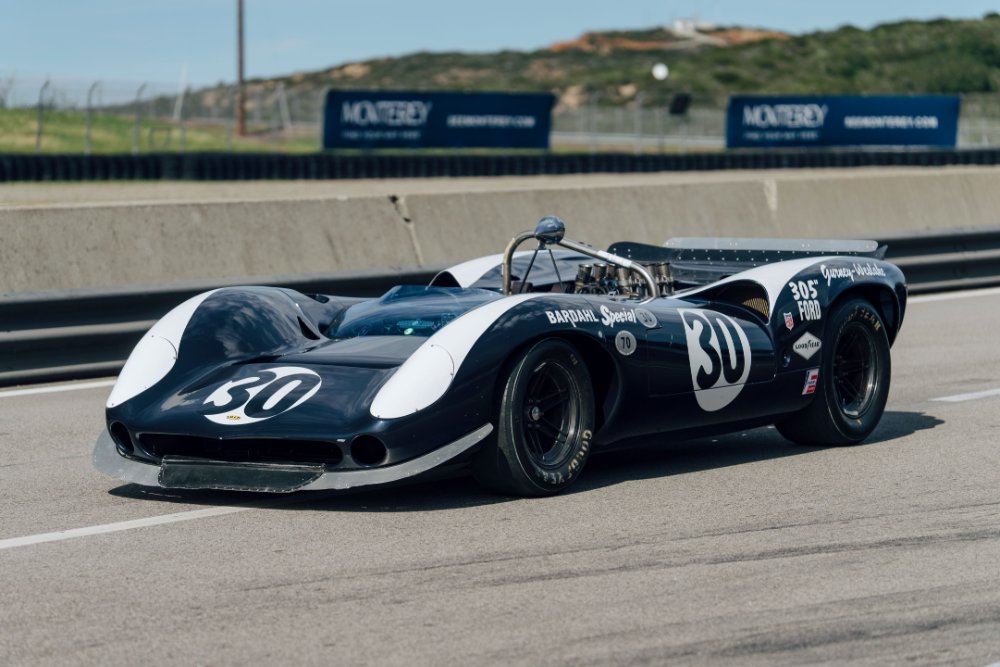
This 1966 Lola-Ford T70 Mark II Can-Am sports-racing car is the ex-Dan Gurney, All American Racers-entered chassis SL71/34, one of the most intriguing machines from the first season of the Canadian-American Challenge Cup. Powered by a small-block Ford V8 rather than the Chevrolet engines more commonly associated with the T70, its headline result came at Bridgehampton on September 18, 1966. Gurney put the Bardahl-backed Lola-Ford on pole and won the second round of the inaugural Can-Am Championship. It’s the only Ford-powered win during the original Can-Am era.
The rest of its 1966 season showed both the promise and fragility of the Ford-Weslake package. SL71/34 appeared at St Jovite, Mosport, Laguna Seca, Riverside and Stardust, with speed often offset by mechanical problems. It was later converted to coupé form, as many T70 Spyders were, before being restored to its original open configuration with Ford V8 power.
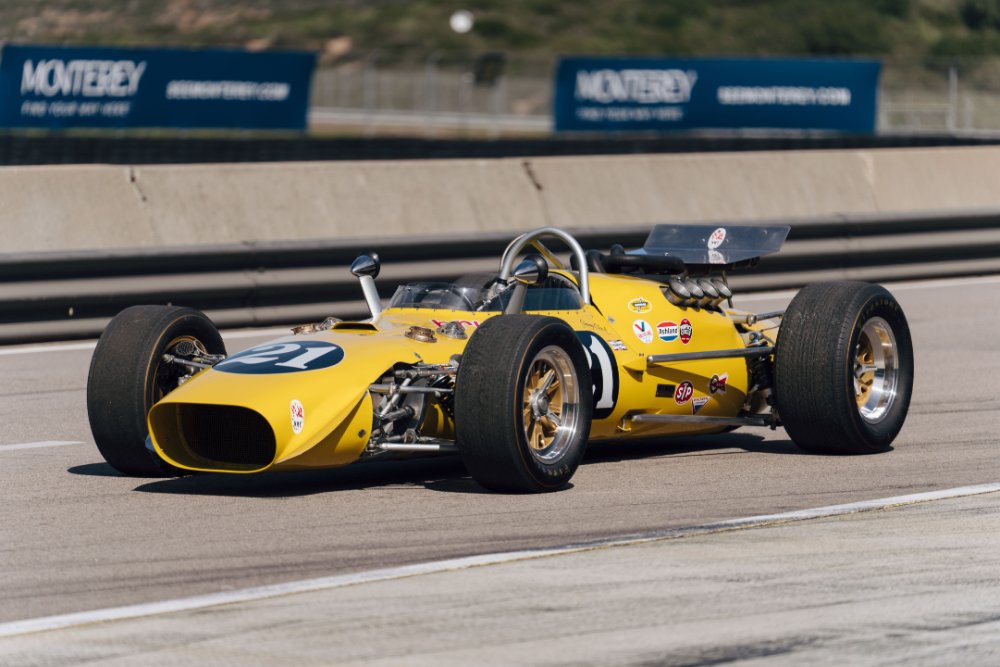
This 1967 Vollstedt-Ford 67B IndyCar is chassis 67B, the no. 21 Vollstedt Enterprises car driven by Jim Clark in the Rex Mays 300 at Riverside on November 26 1967. Built by Rolla Vollstedt in Portland, Oregon, it was one of two new cars constructed for the 1967 USAC season and used a 255ci Ford quad-cam V8. The 1967 Vollstedts were wider than the team’s 1966 cars for improved engine access and used outboard front suspension rather than the earlier inboard layout. Their outer skins were fabricated by California Metal Shaping, with Bryant Heating & Cooling as the principal sponsor.
Chassis 67B first appeared at the 1967 Indianapolis 500 with Cale Yarborough, then continued in USAC competition. At Riverside, Clark drove it as the no. 21 Sperex entry. He qualified second alongside Dan Gurney’s pole-sitting Eagle-Ford, led briefly on lap 24 and retired after 25 laps with valve damage. Gurney won the 116-lap race. The car continued with Vollstedt into 1971, later running with a turbocharged Ford engine.
OldRacingCars records 32 races for chassis 67B, with drivers including Yarborough, Clark, Carl Williams, Arnie Knepper, Art Pollard, John Cannon, Larry Dickson, Wally Dallenbach, Tom Sneva, Gordon Johncock, Jerry Grant, Ronnie Bucknum, Tony Adamowicz, Denny Zimmerman, George Follmer and Kenny Hamilton. It was heavily damaged during practice at Phoenix in 1972, remained unrepaired for many years and was acquired in 2007 by Michael McKinney with Ron Hjaltalin and Marc Prentice. It was subsequently restored and run at Indianapolis in May 2011. Bonhams has not yet published an estimate for Monterey 2026 auction week.
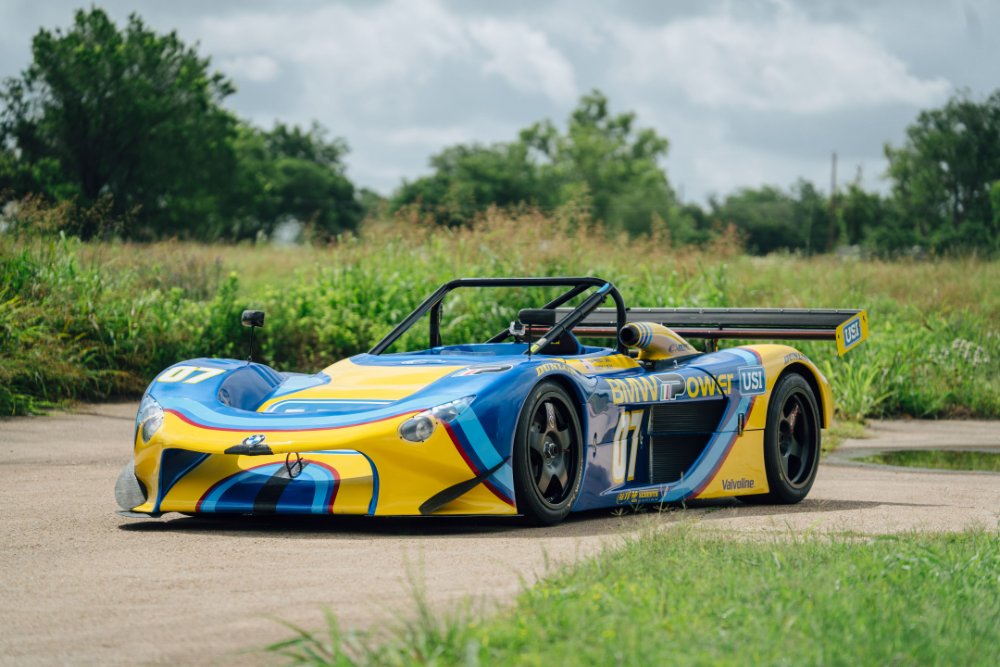
This 2002 Picchio SRPII is chassis 1-02D USA, a BMW-powered Italian sports prototype built for the Grand-Am Rolex Sports Car Series. The car’s period record begins with the 2002 Daytona test and the 2002 Rolex 24 at Daytona, where G&W Motorsports entered car no. 07 for Darren Law, Steve Marshall, Armando Trentini and Cort Wagner. It qualified 33rd and retired after an accident.
During 2002, chassis 1-02 also appeared at Homestead, Fontana, Phoenix, Watkins Glen, Daytona, Virginia International Raceway, Mont-Tremblant and the Daytona finale. Its results included seventh overall in the Daytona 250 Miles on July 4 with Darren Law and Andy Lally, and 19th overall with first in SRPII at Mont-Tremblant on September 15 with Law, Trentini and Lally. The same chassis continued in 2003, generally as car no. 80, including the Rolex 24 at Daytona and further SRPII class wins at Homestead, Watkins Glen, Mid-Ohio and Daytona. Steve Marshall won the 2003 SRPII drivers’ championship in a D-USA, with Picchio taking the SRPII constructors’ title. Bonhams has not yet published an estimate.
Broad Arrow
Broad Arrow’s first Quail auction will take place on August 13-14 at Monterey 2026 auction week, with 175 vehicles expected. It will also still be part of Motorlux at the Monterey Jet Center on August 12, where we believe several cars will be on display.
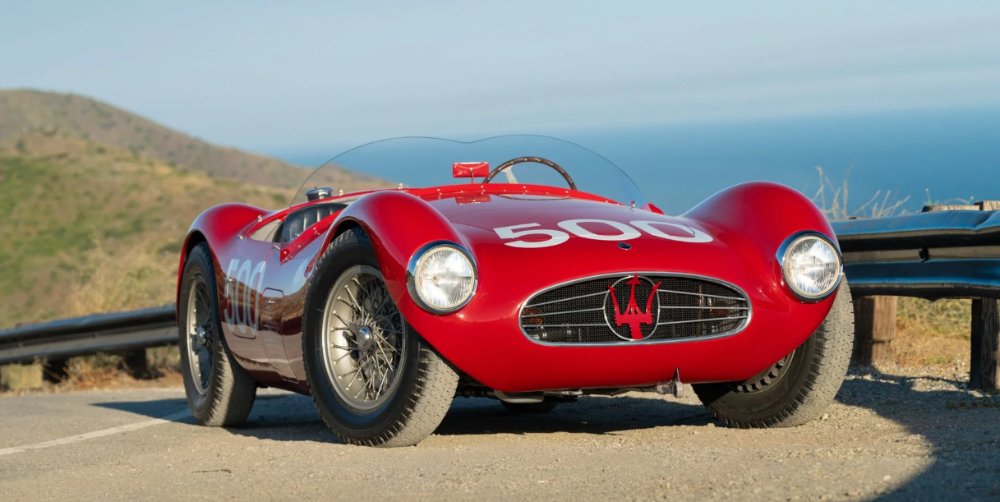
This 1954 Maserati A6GCS by Fiandri & Malagoli is the 25th of 52 A6GCS examples built and was retained by Maserati for Works competition during the 1954 season. It was driven in period by Luigi Musso, whose results with the A6GCS contributed to his 1954 Italian championship in the International Sports Class. Its recorded period results include first in class at the Giro delle Calabrie, Circuito di Senigallia and RAC Tourist Trophy. In 1955 the car was sold to Argentina, where it continued to compete and finished third overall and first in class at the Buenos Aires 1000Km.
The car has been in its current ownership for nearly three decades and has been used in events including the Mille Miglia Storica, Monterey Historics and Colorado Grand. It was also shown at the 2014 Pebble Beach Concours d’Elegance, where it received the Gran Turismo Trophy. It is accompanied by its original engine, stamped ‘2078’, along with two additional spare engines on stands. It is estimated at between $2.4m and $2.9m.
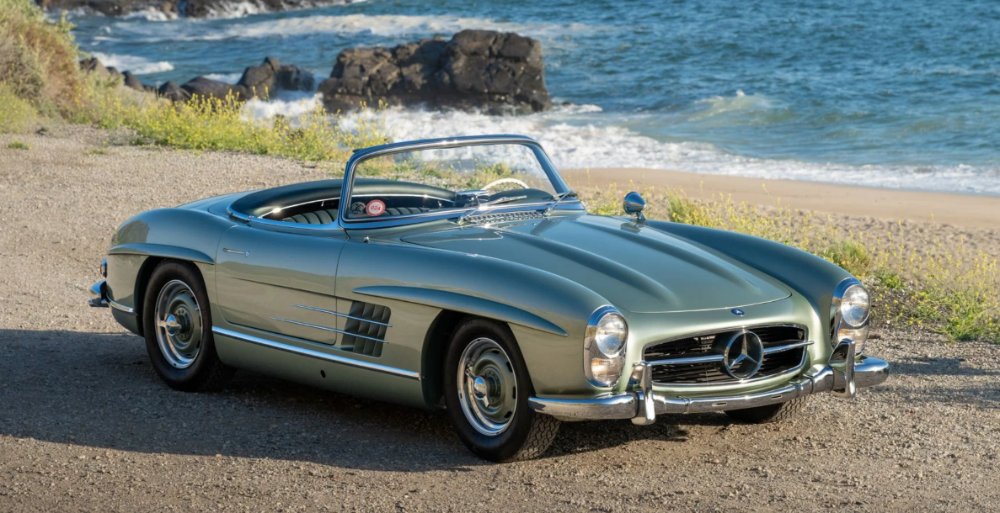
This 1957 Mercedes-Benz 300 SL Roadster is a matching-numbers example from The Bill and Linda Feldhorn Collection. Its Mercedes-Benz Data Card records Light Green Metallic paint, Cream leather, a Green convertible top, U.S.-market equipment and an optional Becker Mexico radio. Research by 300 SL authority Chris Kramer states that it is one of 15 Roadsters finished in this colour.
The car was ordered new in Paris and delivered on May 21, 1958. It later belonged to Lloyd Perry ‘Lucky’ Casner, the American racing driver and Camoradi USA team owner. In 1966, after Casner’s death, it was acquired from his estate in Munich by Colonel Gerald E Sack. It remained in the Sack family for 41 years, passing to his son James E Sack in 2003. The car was acquired in 2007 by 300 SL specialist Rudi Koniczek, who carried out a nut-and-bolt restoration. During the work, the body was removed from the frame and the car was refinished with the correct paint and trim including colour-matched Rudge-style knock-off wheels.
The Feldhorns acquired the car during the restoration in July 2010. After completion, it received first in class awards at The Quail, the Desert Classic Concours d’Elegance, the Gull Wing Group Annual Convention, the Greystone Mansion Concours d’Elegance, the San Marino Motor Classic and the La Jolla Concours d’Elegance. It was also shown at the Concours of Elegance at Hampton Court in 2017 and completed the 300 SL Classic 1000-mile rally in 2021 and 2022. It is estimated at between $1.5m and $1.8m at Monterey 2026 auction week.
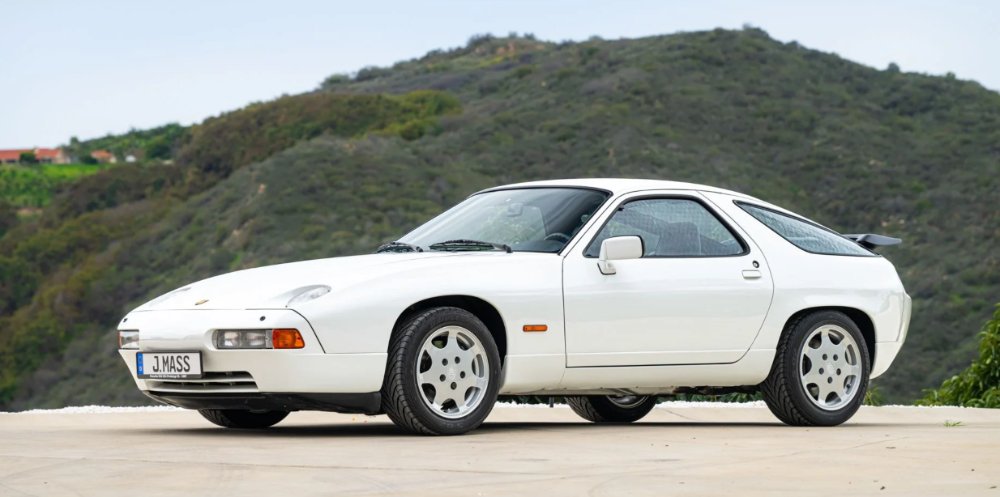
This 1987 Porsche 928 Clubsport Prototype is the ex-Jochen Mass car, internally identified by Porsche as H54. It is the first of four lightweight pre-production 928 Clubsport prototypes built before the model’s public debut, with the other three supplied to fellow factory endurance racers Bob Wollek, Derek Bell and Hans-Joachim Stuck.
The car was delivered new to Mass during his period as a Porsche factory endurance driver, and remained with him until 1998. The factory lightweight specification incorporated a five-speed dog-leg manual transaxle, stiffer suspension, engine revisions and reduced comfort equipment, with the four prototypes finished in Grand Prix White over Marine Blue leather. Documentation includes the original service book signed by Jochen Mass, Porsche paperwork and a copy of the Fahrzeugbrief. The file also records use on Böblingen plates during the car’s prototype period.
Mass later registered the car under his wife Bettina Dunne’s name, and it is said to have covered most of its current 109,321km during his ownership, including high-speed continental use travelling to Group C races. After leaving Mass’s ownership, the car passed to Roland Mews in 1998, then to Jørn Jakobsen in 2006 before being acquired by the consignor in 2014. It was later brought to southern California in 2023. It is offered without reserve and is estimated at between $250k and $350k at Monterey 2026 auction week.
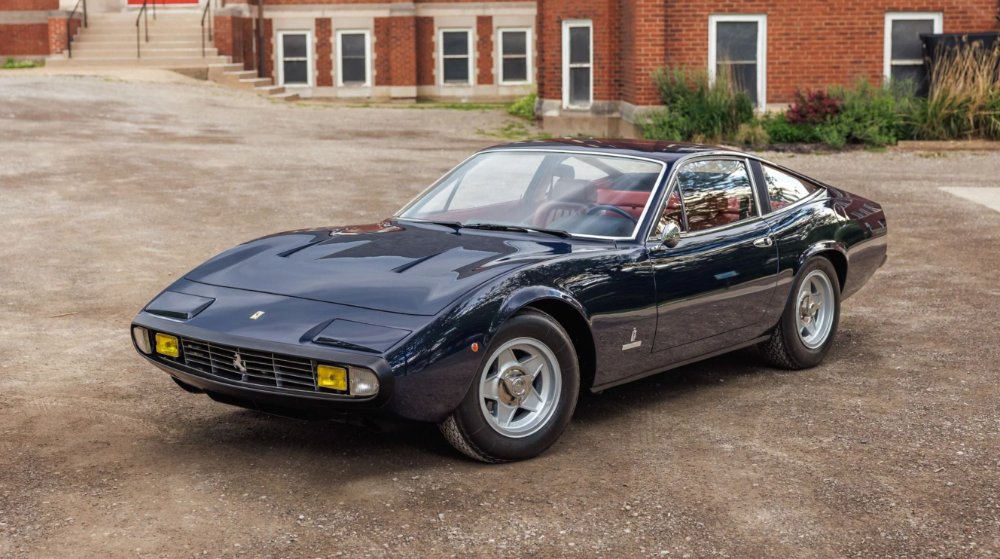
This 1971 Ferrari 365 GTC/4 is chassis 14419, the sixth of 500 examples built and an early-production car with engine no. 8, gearbox no. 6 and Pininfarina body no. 7. It was delivered new in August 1971 by direct factory sale to Carrozzeria Pininfarina.
According to a report by Ferrari historian Marcel Massini, chassis 14419 was personally retained by Sergio Pininfarina through 1973 and used for press photography and demonstrations. It was originally finished in Argento Metallizzato over Pelle Nera, with a leather-covered dashboard in place of the usual textured covering, and yellow Ferrari shields on the front wings. The car was later exported to the US and was refinished in blue over red leather around 1984. In 2016, Fast Cars Ltd of Redondo Beach, California completed a mechanical restoration costing more than $120,000, including work to the engine, transmission, rear end, suspension, brakes and electrical systems.
The Casa Bella Macchina Collection acquired the car in 2017. Richlin Imports of Harrison City, Pennsylvania carried out a body restoration between 2021 and 2023, including bare-metal stripping, metal repairs, Azzurro paint, new windscreen and window mouldings, and a new exhaust system. In March 2024, the car was awarded second in class at the Amelia Island Concours d’Elegance. Ferrari Classiche certification issued in July 2025 confirms it as fully matching numbers. Offered with owner’s manuals and tool kit, it is estimated at between $220k and $260k.
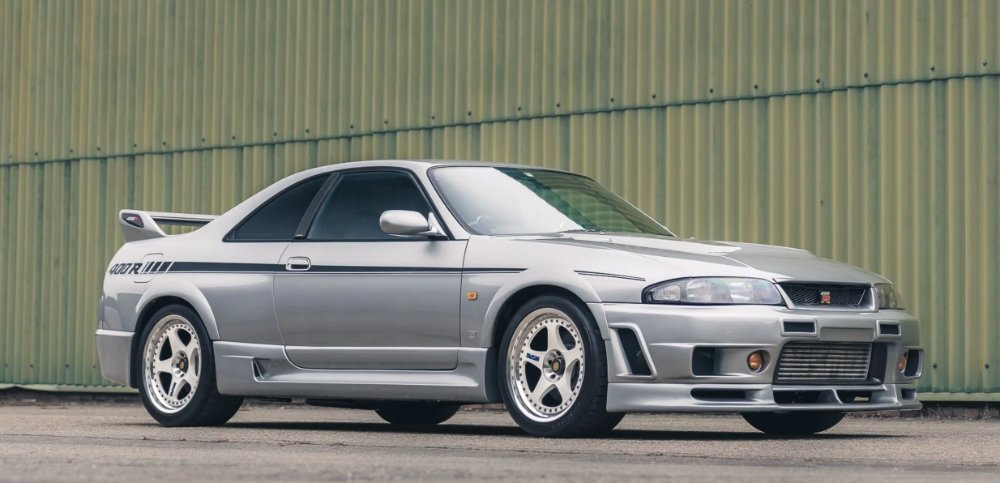
This 1996 Nissan NISMO 400R is the 20th of 44 examples produced and was built as a limited-edition road car based on the R33-generation Skyline GT-R. Developed by NISMO, its power comes from the RBX-GT2 twin-turbocharged straight-six, a 2.8-litre development related to Nissan’s competition engine programme and rated at 400bhp. This example is finished in Sonic Silver and spent nearly three decades in Japan before being imported to the US. It is estimated at between $800k and $950k.
Gooding Christie’s
Gooding Christie’s returns to the Pebble Beach Concours d’Elegance with a two-day sale on August 14-15 at Monterey 2026 auction week. Very few details have thus far been released on its current line-up, but once again Magneto has dived into the chassis numbers.
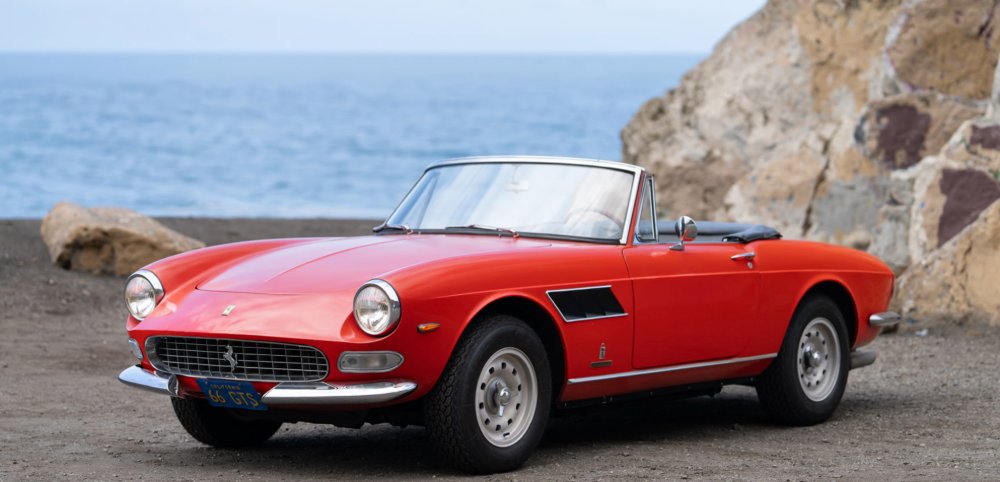
This 1966 Ferrari 275 GTS is chassis 07929, owned new by Pietro Ferraro, an Italian privateer Ferrari racing driver. It was originally finished in Grigio Fumo with a red leather interior. Ferraro’s wider Ferrari connections included ownership through his company, Cartiere del Timavo, of Dino 206 GT chassis 00210, and period competition in cars including a Ferrari 250 GTO.
The currently published ownership record for chassis 07929 is limited after the Ferraro period. Gooding Christie’s states that the car is accompanied by books, tool kit and records dating back to 1978. By 1981, the car had entered the ownership of a Southern California-based family, with whom it remained for more than four decades. It is described as not having been publicly exhibited during that period and this is its first public auction appearance. No estimate has been published.
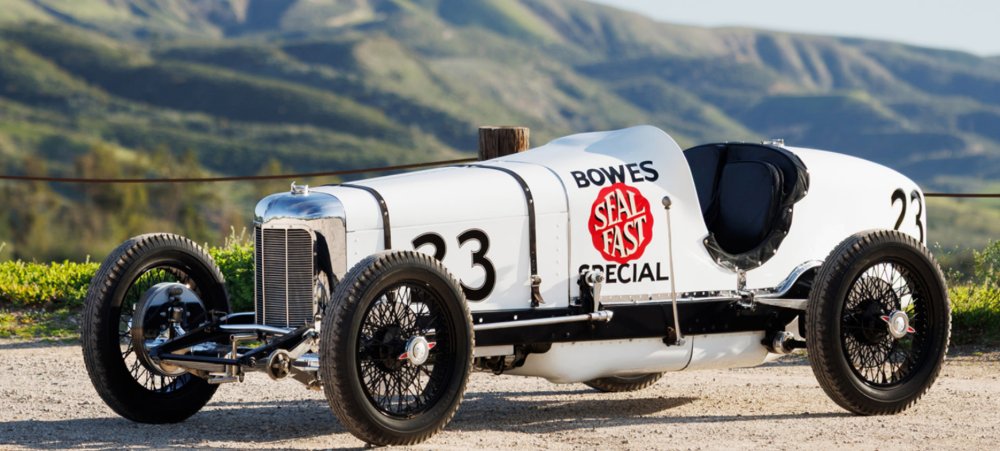
This 1931 Miller ‘Bowes Seal Fast’ Special is the car driven by Louis Schneider, with riding mechanic Jigger Johnson, to victory in the 1931 Indianapolis 500. Schneider’s winning time was 5 hours 10 minutes 28 seconds, at an average speed of 96.629mph.
The car had appeared at Indianapolis the previous year, when Schneider and riding mechanic Clyde Terry qualified fourth and finished third after completing the full 200 laps. For 1931, its Miller straight-eight engine was enlarged from 122ci to 151ci to meet the Indianapolis rules of the period. Schneider qualified 13th at 107.21mph before winning the race ahead of Fred Frame and Ralph Hepburn. No estimate for Monterey 2026 auction week had been released at the time of writing.
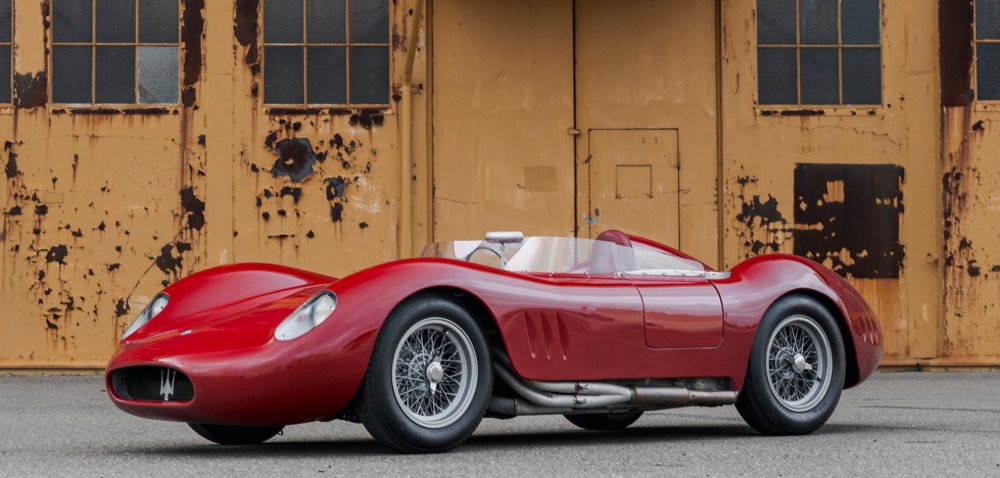
This 1957 Maserati 200SI is chassis 2425, originally fitted with a 2.0-litre engine and intended for delivery to Maserati Corporation of America. The 23rd of 28 200/250-series, chassis 2425 has early Scuderia Centro Sud competition history, including Giorgio Scarlatti’s class win and third overall at the Giro di Sicilia, and André Loens’ overall victory at the Grand Prix de Cadours in September 1957.
The Maserati then went to the US through Dick Hall’s Carroll Shelby Sport Cars of Dallas. Jim Hall raced it in SCCA competition during late 1957, with results at Hourglass Air Force Base and Palm Springs, followed by appearances at Laguna Seca and Riverside. It later passed to Lt Col Robert ‘Bob’ Kuhn, who raced it at Lime Rock and Watkins Glen in 1958.
By 1962, chassis 2425 had been acquired by Otto Klein, who raced it for the following three seasons. His results included a class win at Wilmot Hills and overall victory at Lawrenceville in 1963. Wayne Golomb acquired the Maserati in 1972, when its original engine numbered 2425 was installed. The car was mechanically restored, with the engine enlarged to 2.5 litres, and later passed through further ownership before being restored again in Europe during the 1990s. It returned to American ownership in 2007, appeared repeatedly at the Monterey Historics from 2013 to 2023 and was displayed at the 2024 Pebble Beach Concours d’Elegance. It’s estimated at between $2.25m and $2.75m at Monterey 2026 auction week.
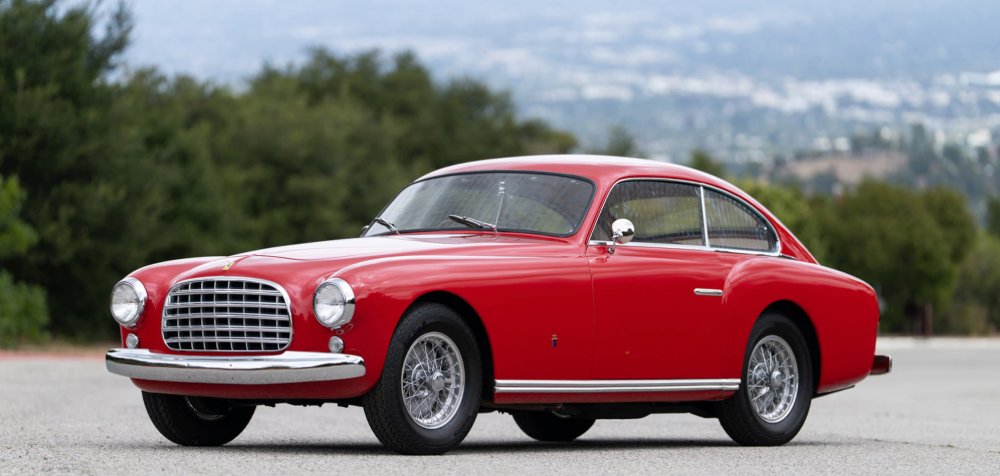
This 1951 Ferrari 212 Inter by Ghia is chassis 0169 E. Some Ferrari registers render the chassis suffix as 0169 EL, while others use 0169 E. Its early life is unclear, but during its American period, chassis 0169 E was owned by Bob Gangemi of California. At some point it was fitted with a 250 GT engine. In 1972, Terrill E Buffum of Palo Alto acquired the car as part of a trade involving antique guns and Ferrari 166 Inter chassis 0124A. The original engine was later located, rebuilt and reunited with the car. Later owners include Marshall Roath and Steven Swig; no estimate has been released.
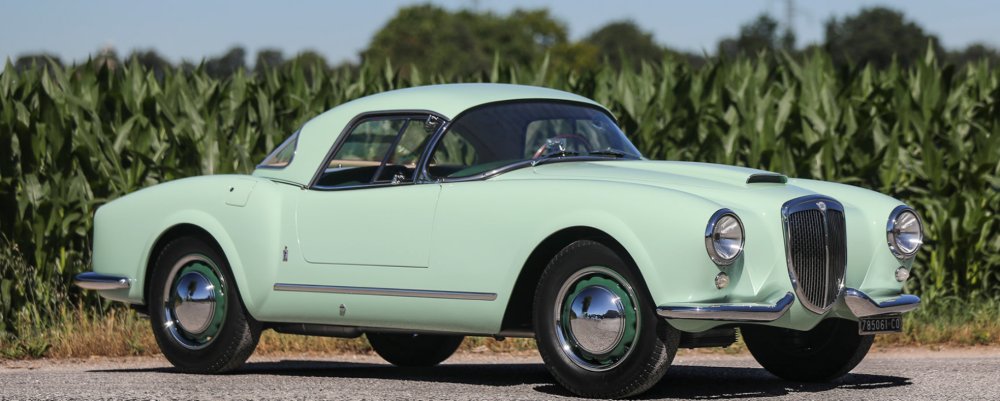
This 1955 Lancia Aurelia B24S Spider America is chassis B24S 1021, one of the 181 left-hand-drive Spider America examples built within total first-series B24 Spider production of 240 cars. Chassis B24S 1021 was delivered new to the US in 1955. It was originally finished in Aquamarine and has been restored with green upholstery.
The car was restored in Italy before its 2022 Pebble Beach auction appearance. The body restoration was completed by Quality Cars in Venice, the engine was rebuilt in Padova, the electrical work was handled in Vicenza and the upholstery was restored in Mantova. The car is fitted with a Fontana hard-top; no estimate has been released.
Mecum
Mecum returns to Monterey 2026 auction week with a promise of 600 vehicles over three days at the Del Monte Golf Course. Held over August 13-15, you can expect plenty of homegrown muscle, European exotica and the downright odd at the sale.
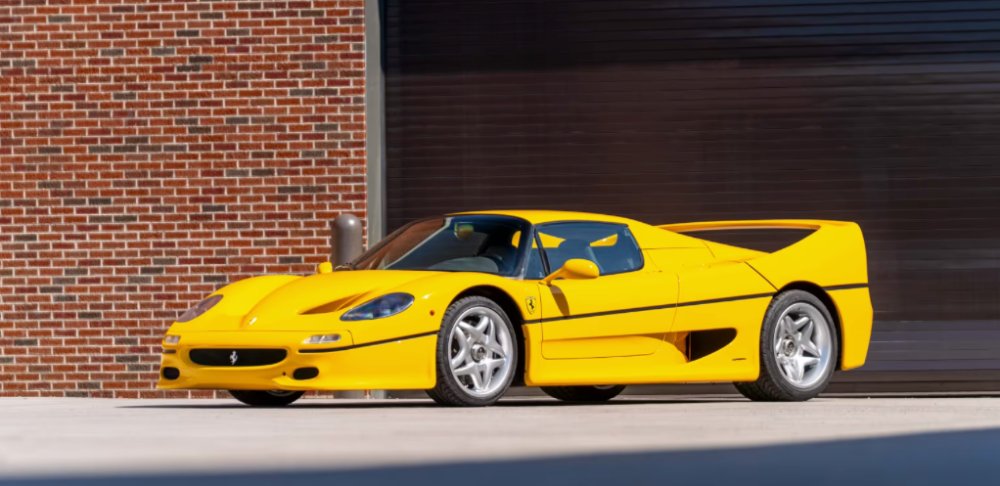
This 1996 Ferrari F50 is chassis 106690, no. 239 of 349 examples produced. It is one of 31 cars finished from the factory in Giallo Modena and was delivered new to Switzerland. The odometer shows 7248km, and is Ferrari Classiche certified with a Red Book. It is accompanied by a three-piece Schedoni luggage set, F50 flight case for the Barchetta/Berlinetta conversion assembly, foldable emergency soft top with storage bag, Ferrari F50 interior torch and original Tod’s Ferrari F50 driving boots. No estimate is listed.
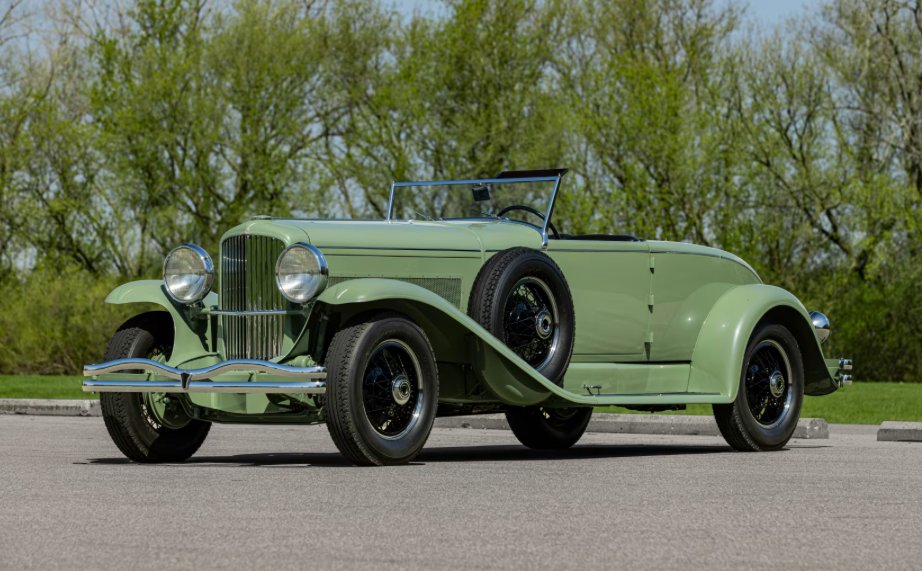
This 1933 Duesenberg Model J Disappearing-Top Convertible Coupe is chassis 2446, with engine J-429 and Walter M Murphy Co body no. 913. The chassis was completed on December 30, 1930 and supplied as a bare chassis to Murphy, where it received disappearing-top convertible coupe coachwork. The Murphy body used a folding roof that retracted into a compartment behind the seats beneath a flush-fitting rear deck panel. It also featured disappearing side windows and Murphy’s thin ‘Clear-Vision’ windscreen pillars. The car is believed to be among the last Model Js bodied by Murphy before the coachbuilder closed in 1932.
By the late 1940s, J-429 was in the ownership of a Hartford, Connecticut attorney. It passed in 1948 to David S Bloom, then in 1949 to Charles Allen, who stored it in Pennsylvania after a clutch or transmission issue. In 1961, it was bought by racer, team owner and USAC figure Bob Estes, who kept it for about 40 years. After Estes’ death in 2001, the car passed through John Groendyke, Dave Kane, Ray Scherr and Craig McCaw. Scherr commissioned its first comprehensive restoration, carried out by Stone Barn Automobile Restoration.
Under the current owner, it has received further work by Tim Purrier of Straight Eight in Troy, Michigan. It was displayed at Pebble Beach five times between 1970 and 1985, and has not been shown or judged at a major concours since the recent work. No estimate is listed.
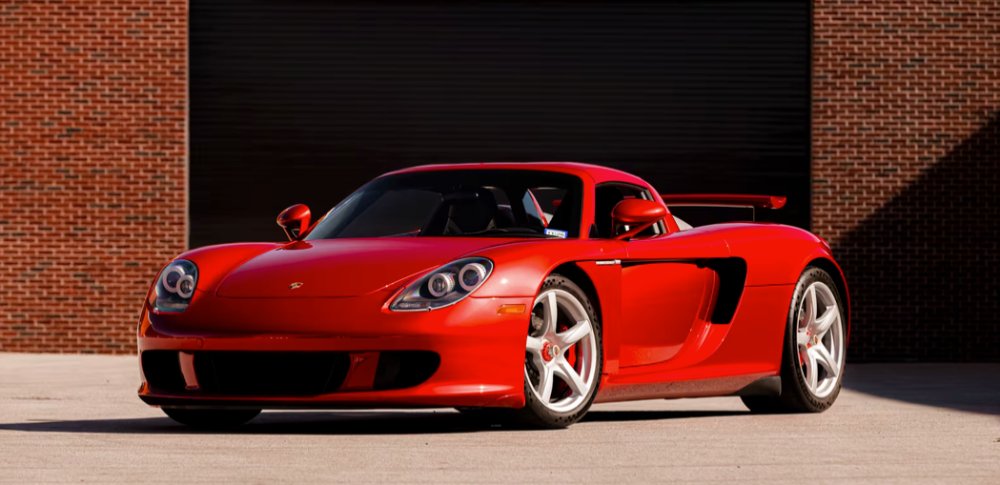
This 2005 Porsche Carrera GT hails from the Milton Verret Collection. The car is one of 644 Carrera GTs originally sold in the US, and it’s covered 3471 miles. The exterior is now finished in bespoke PPG Rosso Fuoco, with a black interior. The car was refinished by Karosserie of Wayne, Pennsylvania. During the three-month process, it was stripped to its bare carbon tub before repainting. No estimate is listed.
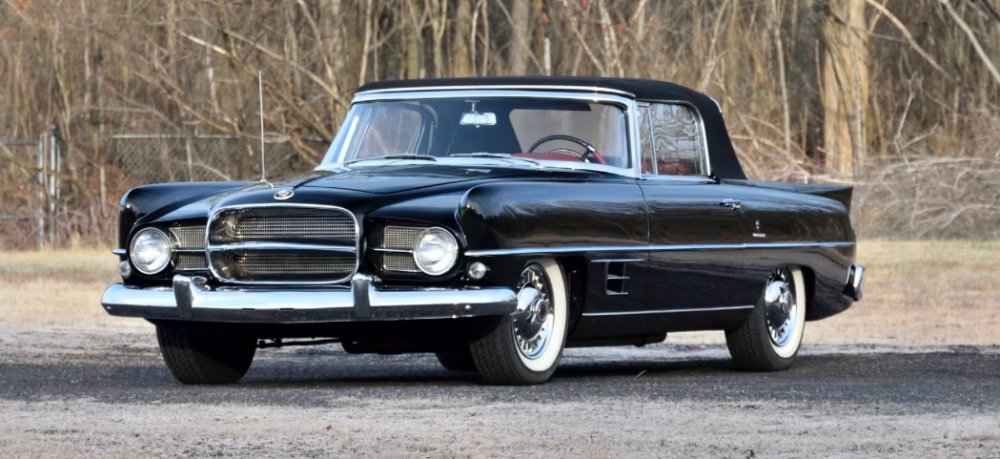
This Dual-Ghia Convertible, chassis D/G 143, is believed to be the 43rd example produced. Finished in black with burgundy interior, it was publicly offered at Saratoga in 2022 and again at Mecum Indy in 2026, where it was bid to $270k but not sold. It now returns to Mecum for Monterey 2026; no estimate is listed.
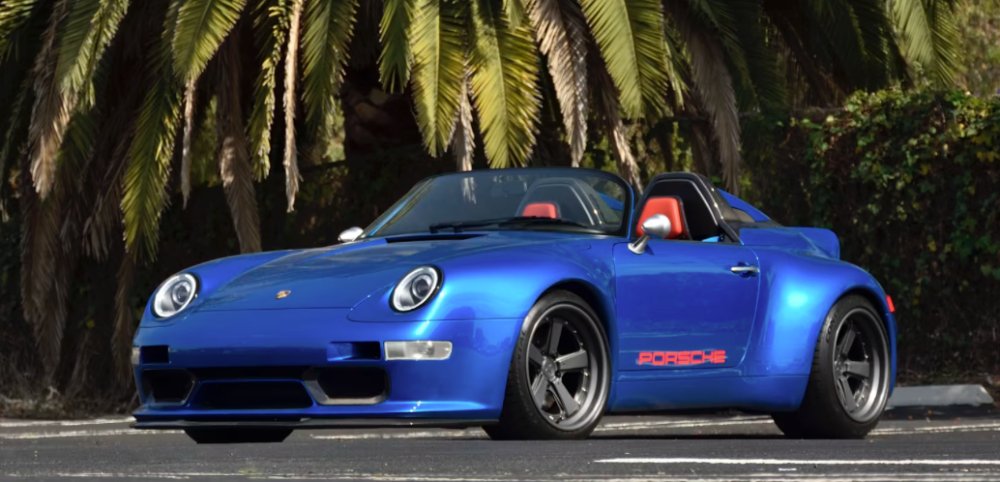
This 1995 Porsche 911 Speedster by Gunther Werks is one of 25 Speedster conversions completed by the company and is known as Blue Phoenix. It’s covered 120 miles since build completion. Its 4.0-litre flat-six was developed by Rothsport Racing in Oregon and uses a custom crankshaft, rods, barrels, Mahle pistons, individual throttle bodies, coil-over-plug ignition and a twin-map Motec ECU. It is rated at 430bhp and 330lb ft of torque, with a 7800rpm red line. It has received a recent service and inspection by Gunther Werks, including installation of a new battery. No estimate is listed.
RM Sotheby’s
RM Sotheby’s comes to Monterey 2026 auction week with its lot list already brimming. We’ve already brought you details of two significant collections – the Ray and Bonnie Kinney Collection and the Sam and Emily Mann Collection. RM Sotheby’s sale takes place on August 13-15 at the Portola Hotel and Monterey Conference Center, and it’s already looking like a very varied lot list.
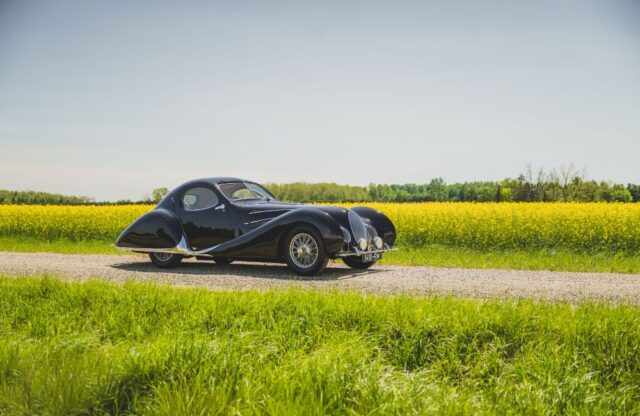
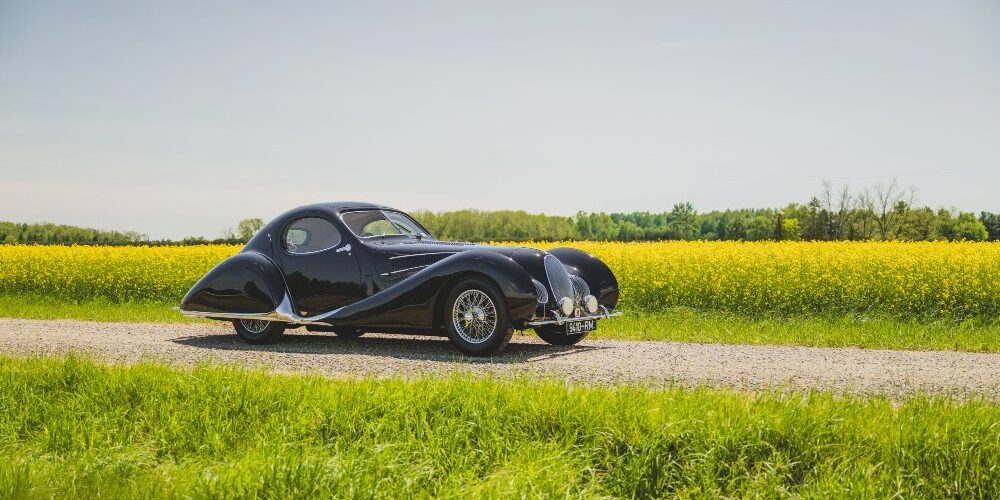
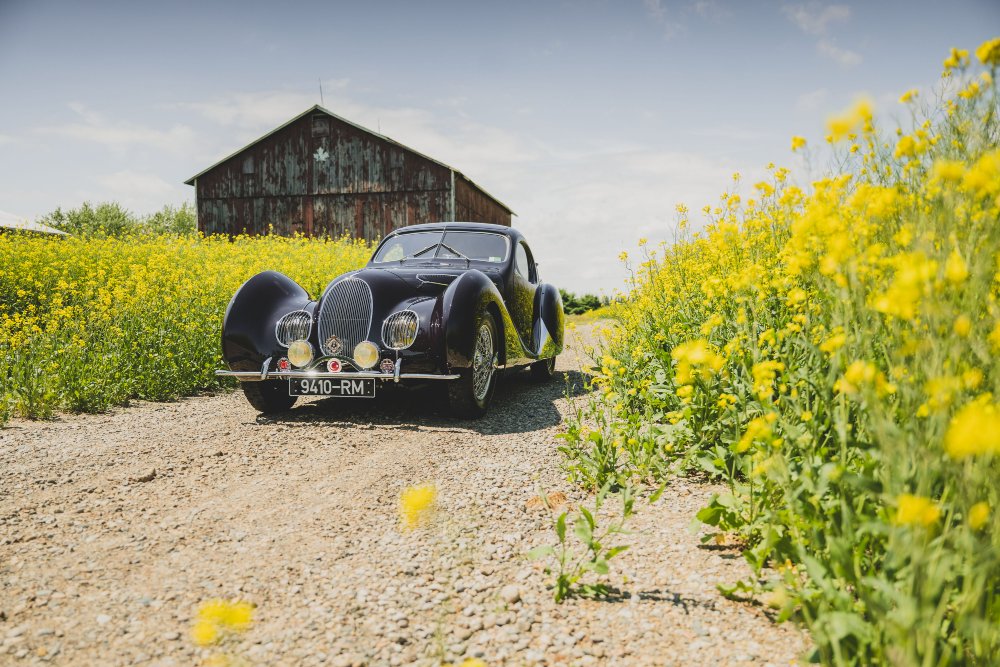
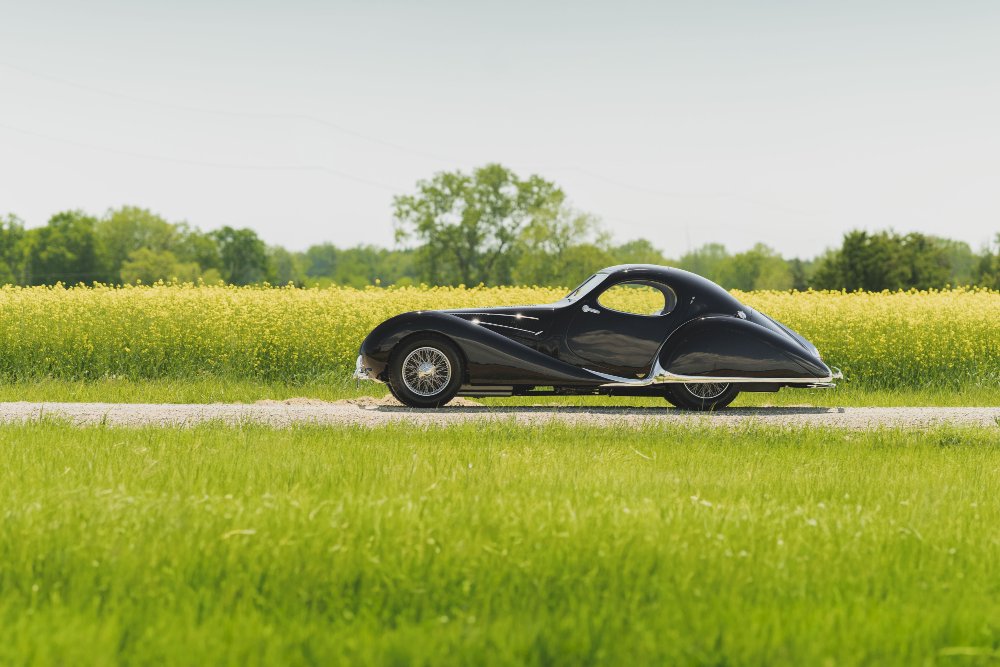
This 1938 Talbot-Lago T150-C SS Teardrop Coupe by Figoni et Falaschi is chassis 90117, one of 11 original ‘New York’-style Teardrop coupes and the only example known to have been commissioned for competition. It was ordered by Philippe Régnier de Massa with body and mechanical details intended for racing use. The car was built lower and longer than other Teardrop coupes, with additional driving lights, an opening rear window, a heart-shaped sunroof, a driver’s bucket-type seat, a 250km/h speedometer, extra engine-bay reinforcement and a long-range fuel tank with external filler.
It was powered by the T150-C SS 4.0-litre six-cylinder engine and used the short 104-inch Super Sports chassis. Régnier de Massa entered chassis 90117 in the 1939 Le Mans 24 Hours, co-driving with Norbert-Jean Mahé. The car ran in ninth place before retiring on lap 88. No further period competition outings are recorded before the outbreak of World War Two.
By 1942, the Talbot-Lago was in Germany and later passed to A Becker of Rangsdorf, near Berlin, without its original engine. After the fall of the Berlin Wall, it was acquired by Peter Schmitz, then by Jan Bruijn in 1995 and Georg Lingenbrink in 1996. A six-year restoration returned the car to road-going presentation with a correct replacement engine. Oscar Davis acquired chassis 90117 in 2006. Classic and Sport Auto Refinishing carried out further mechanical and cosmetic work in 2006 and 2007.
The car later received awards at Villa d’Este in 2010 and the Louis Vuitton Concours Classic Award in 2011. The present caretaker acquired it from the Davis collection in 2022 and has since commissioned service work by RM Auto Restoration. It is estimated at between $7m and $8m.
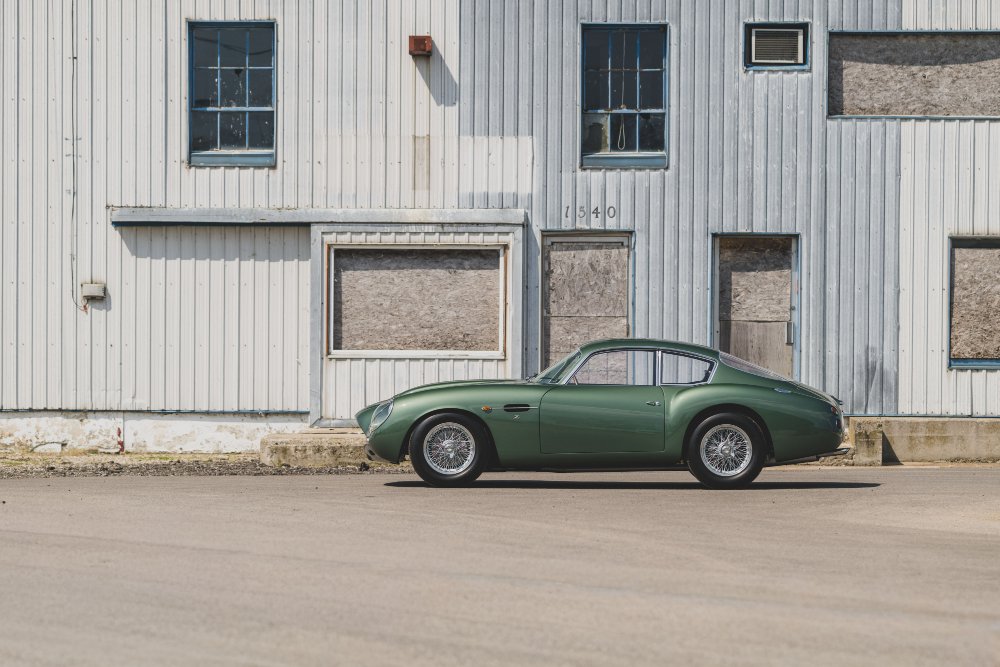
This 1962 Aston Martin DB4 GT Zagato is chassis 0186/R, the 14th of 19 DB4 GT Zagatos built and the only example sold new to Australia. Completed in December 1961, it was finished in Desert White over red leather and equipped with triple Weber 45 DCOE 4 carburettors, a Powr Lok limited-slip differential, Avon TS tyres and a Lucas dynamo.
The Aston was supplied new to Australian owner Laurie O’Neill. It began competition use in February 1962 at Calder, where Doug Whiteford won the GT Handicap. Whiteford then won the GT Scratch and South Pacific GT Championship at Longford, where the Zagato was timed at 141mph in the flying eighth-mile during the GT race and 145mph in a sportscar race. O’Neill later took a class win at Silverdale Hillclimb, while Ian Geoghegan drove the car to third at Warwick Farm and further GT Scratch results at Katoomba.
The model passed in 1963 to Colin Hyams, returned to Aston Martin for service work in 1967 and appeared at the 1968 Melbourne Motor Show. Alex Copland subsequently acquired it, repainted it white and placed it into long-term storage. By 1988 it was in Switzerland, and in 1993 it passed to GK Speirs. John Goldsmith restored the car and then campaigned it in Historic racing during the 1990s.
Around 2000, Peter Read acquired the car and commissioned a further restoration by Richard Williams, with Zagato restoring the bodywork and chassis in Milan. The current owner acquired chassis 0186/R in 2015. Kevin Kay Restorations carried out further work between 2016 and 2020, including a bare-metal refinish in Sanction II Works Green. The Aston won its Zagato Centennial Postwar class and the Vitesse Elegance Trophy at Pebble Beach in 2019. It is estimated at between $12m and $15m at Monterey 2026 auction week.
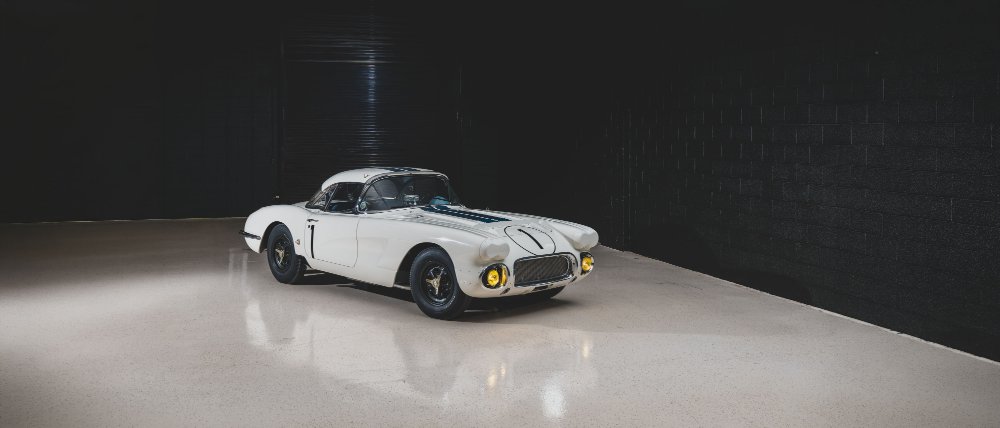
This 1960 Chevrolet Corvette LM is chassis 3535, one of three Cunningham team Corvettes entered at the 1960 Le Mans 24 Hours, and the car raced there as no. 1 by Briggs Cunningham and Bill Kimberly. Before Le Mans, chassis 3535 competed at the 1960 Sebring 12 Hours as no. 2, driven by Dick Thompson and Fred Windridge, retiring with engine failure after 41 laps. It was then used for Le Mans testing, completing more than 520 miles at the April test session with Cunningham and Thompson.
For Le Mans, the car received race preparation by Alfred Momo’s organisation and a fuel-injected Chevrolet V8 prepared with unofficial GM support. It ran with a high-capacity fuel tank, Halibrand wheels, Bendix fuel pumps, side-exit exhausts, Stewart Warner instruments, lightweight aircraft seats and white headlight covers. Cunningham started the race, before Kimberly took over. In changing weather, Kimberly crashed near Maison Blanche and the car retired after 32 laps. After the race, chassis 3535 returned to the US and was sold minus its engine and hard-top to Marshall ‘Perry’ Boswell Jr. It was repaired and modified, then passed through Robert Lee Bollinger, Jerry L Moore, Dan Mathis Sr, John Lehmuhke and Richard W Carr Sr.
The car was rediscovered in a warehouse in 2011 and identified through its chassis plate, confidential frame stamping and retained Le Mans modifications. The Cunningham family reacquired it in 2021 and commissioned a body-off restoration by Kevin Mackay of Corvette Repair Inc, completed in 2023. It was shown at Amelia Island in 2023 alongside the other two 1960 Le Mans Cunningham Corvettes. It is estimated at between $2m and $2.5m.
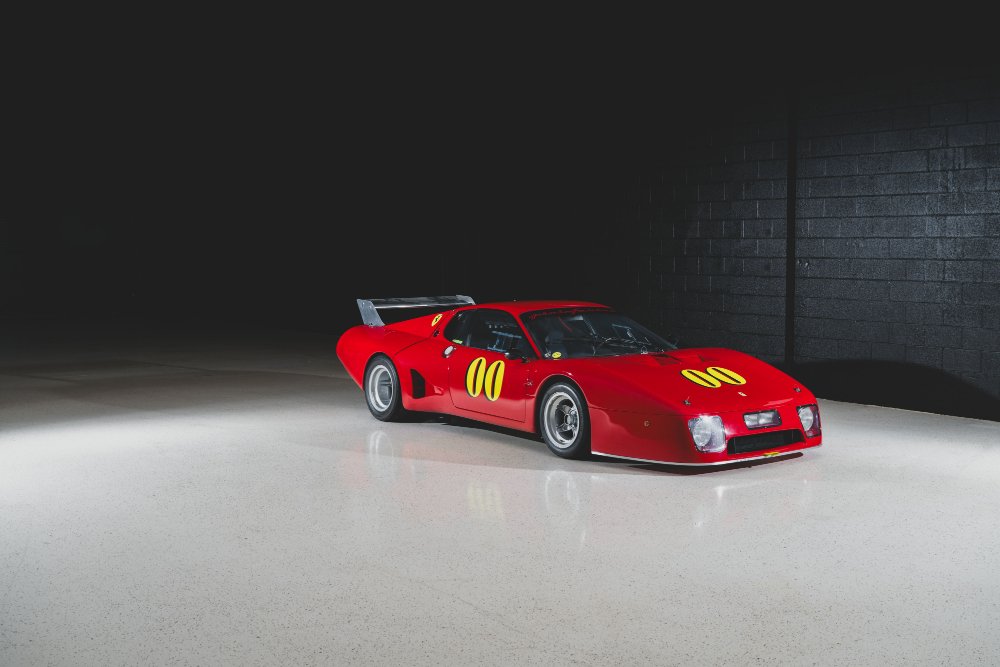
This 1979 Ferrari 512 BB/LM is chassis 29507, the seventh of 25 examples built. Completed in November 1979, it was first owned by Albert Obrist of Reinach, Switzerland and officially sold in January 1980 through Garage Ruf AG.
In February 1980, the car passed to Jon Masterson of Long Beach, California, who used it at club and vintage events including Riverside and Laguna Seca. It was featured in the May 1981 issue of Autoweek and later appeared at the International Ferrari Club Meeting at Rancho Cañada in 1984 and the FCA National Meeting at Watkins Glen in 1990.
In September 1992, chassis 29507 was acquired by Dr Ron Busuttil of Bel Air, California. It was displayed at the Ferrari at 50 exhibition at the Petersen Automotive Museum in Los Angeles in 1997. Kurt and Sandra Schultz acquired the car in 2000 and campaigned it in Shell Ferrari North American Historic Challenge rounds between 2000 and 2007.
The car was sold to German collector Darius Ahrabian in 2007 and subsequently underwent Ferrari Classiche restoration work. In April 2010, it received Ferrari Classiche Red Book certification, confirming its matching-numbers engine, gearbox/transaxle and coachwork. The present owner acquired the car in 2016 through Garage Zenith in Switzerland and later commissioned further work including a coachwork refinish, new timing belts, fuel tank and five-spoke wheels, with the completed work inspected by Michelotto. It is estimated at between $2m and $3.5m at Monterey 2026 auction week.
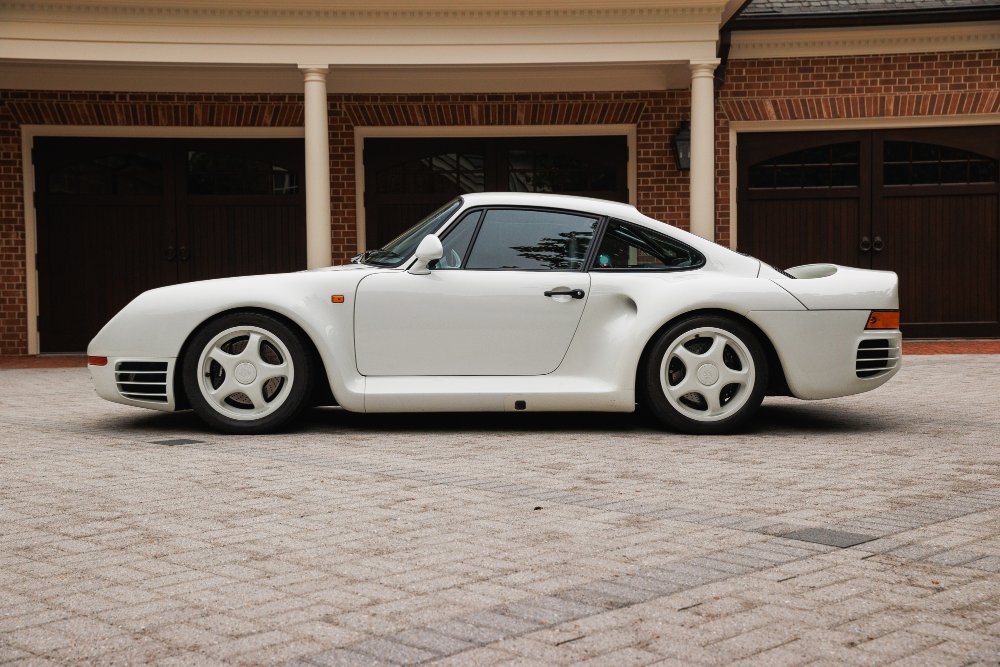
This 1989 Porsche 959 Sport is chassis 5013, one of 29 Sport examples produced. Completed in September 1988 and invoiced in September 1989, it was delivered new to South Korea and later owned by German Formula 1 driver Nick Heidfeld. Chassis 5013 is one of 11 959 Sports finished in Grand Prix White over a grey cloth interior. It was also specified with a passenger-side mirror and is one of two known Sport examples equipped with air-conditioning.
Heidfeld acquired the car in 2007 and in 2017 commissioned Porsche Classic in Stuttgart to carry out an extensive mechanical overhaul. The work, completed in December 2021, included returning the powertrain and Motronic engine-management system to factory specification, with expenditure of nearly €115,000. The present owner acquired the car in 2022, making it a three-owner example from new. It’s covered 4788km and is estimated at between $5m and $6m at Monterey 2026 auction week.
Further details
For more information on Bonhams’ sale, head here.
For more information on Broad Arrow’s sale, head here.
For more information on Gooding Christie’s sale, head here.
For more information on Mecum’s sale, head here.
For more information on RM Sotheby’s sale, head here.