

RM Sotheby’s will offer the Sam and Emily Mann Collection at its Monterey Auction, which returns to the Portola Hotel and Monterey Conference Center from August 13-15, 2026.
The group is led by Clark Gable’s 1935 Duesenberg Model JN Convertible Coupe by Rollston and Bohman & Schwartz, a 1932 Chrysler CH Imperial Speedster and a 1937 Delage D8-120 S Aerodynamic Coupe by Pourtout.
Sam Mann began collecting cars in the early 1980s after building his career as an industrial designer and manufacturer. He holds more than 80 US and international patents across such diverse fields as ear-piercing technology, health and cosmetic appliances, sailboat equipment and skiing devices. The collection assembled by the Manns focuses on Classic Era cars with an emphasis on design, engineering and history. RM Sotheby’s says the cars were selected individually and then restored by either in-house staff or external specialists.
The collection makes up 22 lots, comprising a mixture of cars and motorcycles – let’s take a closer look at some of the highlights.
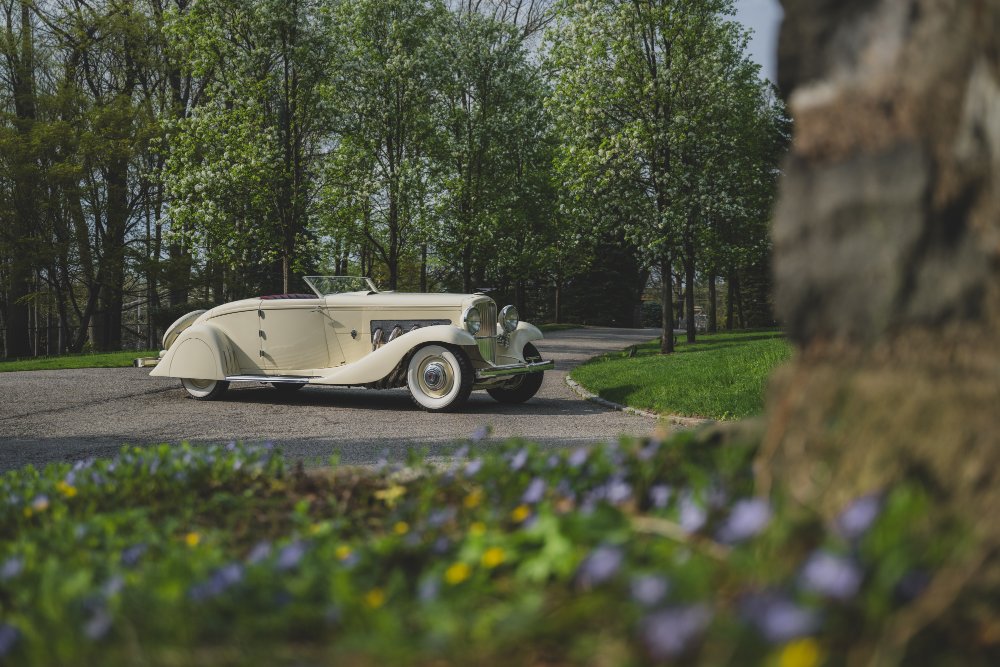
This 1935 Duesenberg Model JN Convertible Coupe by Rollston and Bohman & Schwartz is one of the four Rollston-bodied JN convertible coupes built, and its first owner was Clark Gable. The Duesenberg was ordered by Gable during the period in which he was established as one of Hollywood’s best-known actors, and he was directly involved in how the finished car should look.
The JN convertible coupe already differed from earlier Model J designs. It sat lower over its chassis, used 17-inch wheels, had a low, raked windscreen and incorporated a disappearing convertible top. It also dispensed with the external battery and tool boxes used on earlier Model Js. Rollston completed the initial coachwork, but the car was then sent from New York to Bohman & Schwartz in Pasadena rather than being delivered to Gable in standard form.
At Bohman & Schwartz, Gable worked with designer W Everett Miller on a series of revisions. Surviving copies of sketches show the changes that were requested. The bonnet line was extended over the scuttle, taking influence from Dietrich Individual Custom Packards, and ventilators were added to the cowl to bring fresh air into the cabin. The windscreen was given a more aggressive rake, which required a lower hood to be made. The radiator shell was painted body colour to visually lengthen the car, while rear fender skirts, dual rear-mounted spare wheels and body-coloured wheel covers were also added.
The Duesenberg became closely associated with Gable and Carole Lombard. Lombard accompanied Gable to inspect the car at Bohman & Schwartz, and the finished model was later used by the couple on trips along the California coast and to Vancouver. It also appeared with Gable in studio publicity photographs and was used in the 1938 film Merrily We Live, for which it temporarily wore a darker, water-soluble finish.
After Lombard was killed in a plane crash in 1942, Gable arranged for the car to be sold outside California. At that point it was in Vancouver, and it was brought back only for the purpose of sale. The Duesenberg later passed through several owners, including Don Ballard, SP Motors, GW Cleven, Robert ‘Hans’ Hermann, Richard S Luntz, John Troka, Paul V Colianni, Charles Johnson, Jerome Sauls, PA Parviz, Tom Barrett and the Blackhawk Collection.
In 2005, the Duesenberg was acquired by Sam and Emily Mann, who commissioned Stone Barn of Vienna, New Jersey to restore it to its Gable-era appearance. The restored Duesenberg appeared at Pebble Beach in 2007, won Best of Show at Meadowbrook and Amelia Island in 2008, and was shown at the High Museum in Atlanta. It retains its original numbered bell-housing, J-560. The original crankshaft, also numbered 560, will accompany the car. It is estimated at between $5.75m and $8m.
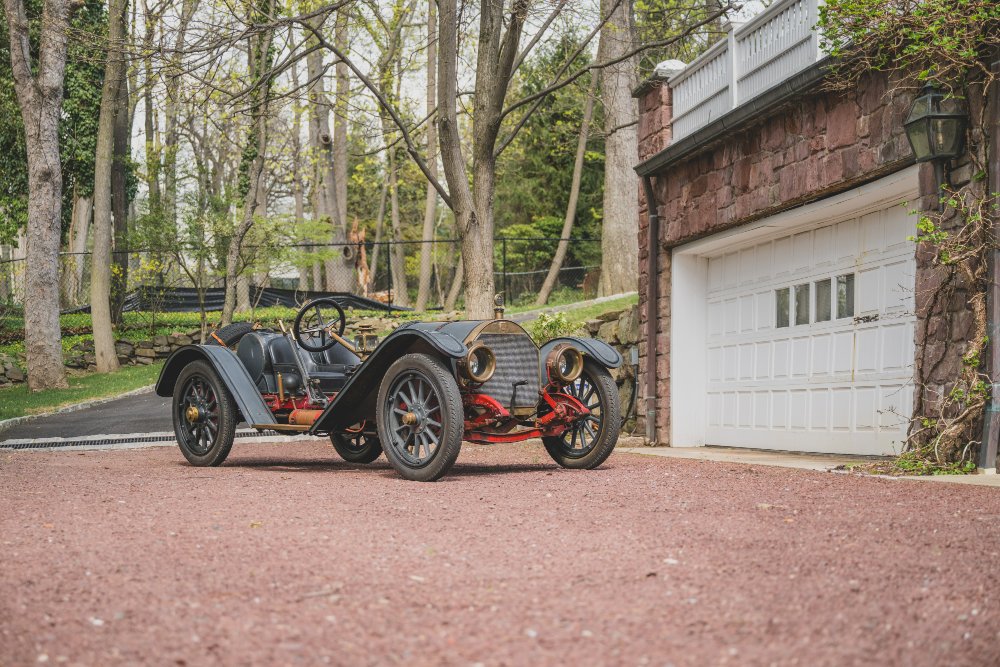
This 1913 Mercer Model 35-J Raceabout is a late-production example of the T-head Raceabout and is recorded by Mercer Associates as the latest known 1913 model. As a 35-J, it has the four-speed manual transmission that was introduced on later cars, a detail that separates it from earlier three-speed examples.
Its known history begins in July 1939, when it was acquired by early enthusiast Paul Cadwell of West Warwick, Rhode Island. Cadwell was the first vice-president of the Veteran Motor Car Club of America, and his purchase of a ‘Mercer Raceabout’ was reported in the April edition of The Bulb Horn. Research carried out for Sam Mann by the late David Brownell recorded that the car was bought from a storage garage, with pioneer collector Smith Hempstone Oliver present to negotiate the $62.50 purchase price.
Cadwell is believed to have sold the Mercer by 1943 to Webster Knight II, heir to the Fruit of the Loom business and an active early American collector. The car was listed in Knight’s ownership in the 1954 and 1957 rosters of the Antique Automobile Club of America, where it was recorded as a Raceabout.
Knight later sold his two Mercer Raceabouts, this 1913 car and an earlier 1911 example, to Ed Saczawa of Manchester, Connecticut. After Saczawa’s death, his widow sold the 1913 Raceabout to Burt Upjohn of Kalamazoo, Michigan. Sam Mann first became interested in buying a T-head Raceabout after riding in one at a Northern California event in the late 1990s. When the Upjohn family later decided to sell this car, it was acquired for the Mann collection in August 1999. In correspondence at the time, Mann described it as “painfully original”.
It retains antique paint that has been with it for much of its known history, along with its original engine and gearbox numbers in their correct locations and the original frame number stamped into the rear cross-member. The front axle was replaced at some point with a 1912 unit, although the original axle was later acquired by Mann from Mercer enthusiast Fred Hoch and will accompany the car.
Mechanical work has included an engine rebuild in 2007 and further maintenance by Zakira’s Garage in Ohio. It has also recently been fitted with new tyres. During the Manns’ ownership, it was used on multiple tours and rallies, including several Mozart Tours, a Friends of Ancient Road Transportation rally and local drives around Englewood. It also appeared in the Prewar Preservation class at Pebble Beach in 2016 and at the Mercer Reunion in Trenton, New Jersey the same year. It is estimated at between $2.75m and $3.5m.
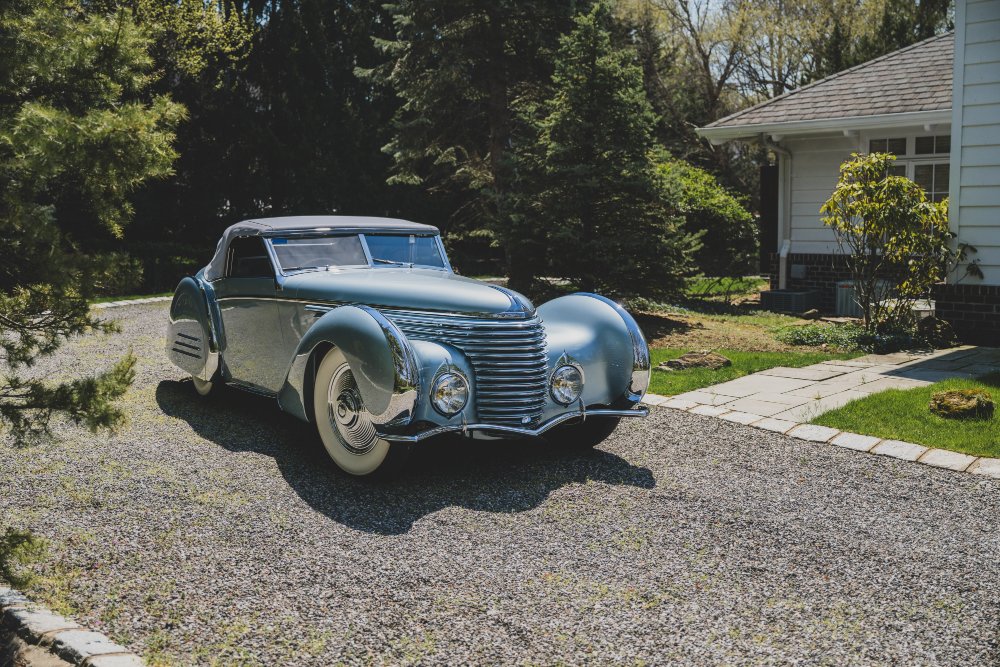
This 1937 Delahaye 145 Cabriolet by Franay is one of five competition 12-cylinder Type 145 chassis produced, and it is believed by its owner to be the car associated with the Prix du Million, the Grand Prix of Pau and the Grand Prix of Cork. Research by Pierre Arbillion and Club Delahaye historian Andre Vaucourt identified this car as chassis 48773.
The Type 145 was developed for the 4.5-litre Grand Prix formula with support from Lucy Schell. In 1937, the French government and the Automobile Club de France offered the Prix du Million for a French manufacturer and driver able to beat the Mercedes-Benz speed record at Montlhéry by August 31. Delahaye entered its V12 145 with René Dreyfus driving, and the car associated with this chassis is believed to have secured the prize.
In 1938, the same car is also understood to have won at Pau and Cork with Dreyfus. After the 1938 season, the Schell Delahaye 145s were retired. This car was stored during World War Two, then acquired in 1946 by a private customer who commissioned Marius Franay to build road-going coachwork. Franay’s design used a traditional Delahaye upright radiator, low, inset headlamps, deep front wings and chrome-blade detailing. The car was shown by Franay at the 1946 Paris Motor Show and at the 1947 Concours d’Élégance du Palais de Chaillot.
The original client was later arrested by Allied authorities on charges linked to collaboration with the Vichy French government. The car was requisitioned and sent to public auction, where Franay bought it. He titled it in his own name in 1953 under a new Service des Mines registration, 151_53_75, and sold it in 1956 during his firm’s bankruptcy. Later owners included Francis Mortarini, Robert de Goulaine, Baron Napoléon Gourgaud du Taillis and Philippe Charbonneaux. Charbonneaux restored the 145 with a recreation of its racing body and moved the Franay body to a post-war Delahaye 135 MS chassis. Sam Mann acquired the Franay-bodied 135 MS in 1997, then the 145 chassis with its Charbonneaux body in 1999.
Mann later reunited the Franay coachwork with the 145 chassis during a restoration completed between 2013 and 2015. The V12 was rebuilt by Chris Leydon, while the body was returned to its original Electric Blue with pale grey leather. The car won First in Class and was nominated for Best of Show at Pebble Beach in 2015, then won the Rolex Circle of Champions Best of Show at The Quail in 2024. It is estimated at between $4.5m and $6m.
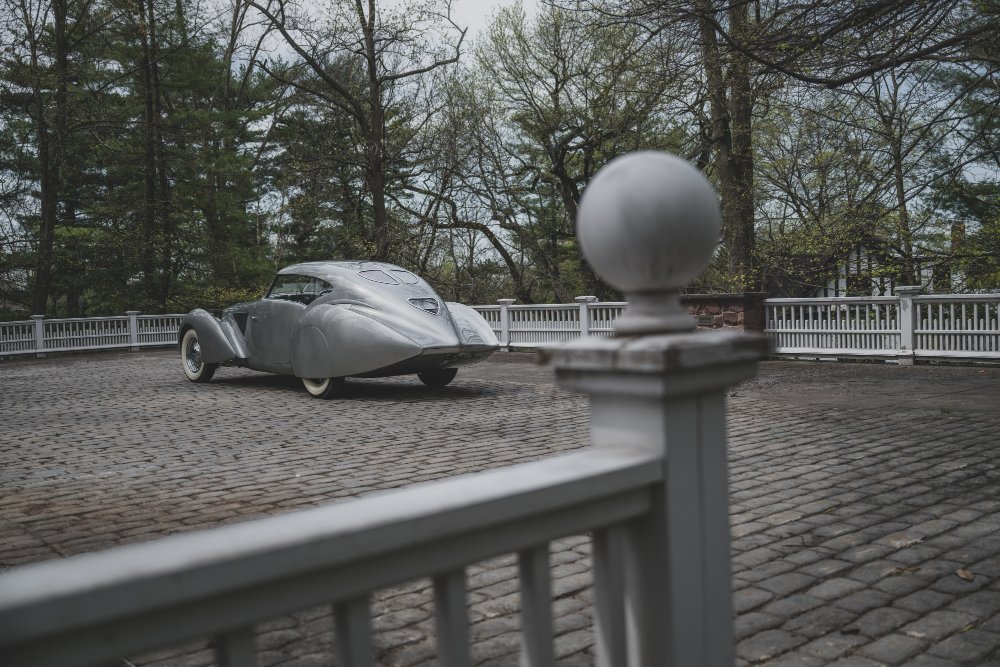
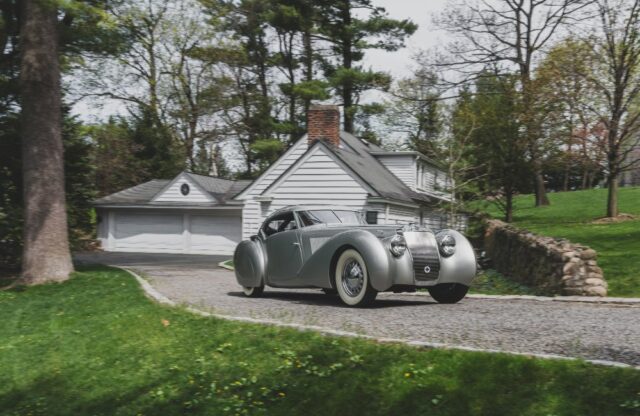
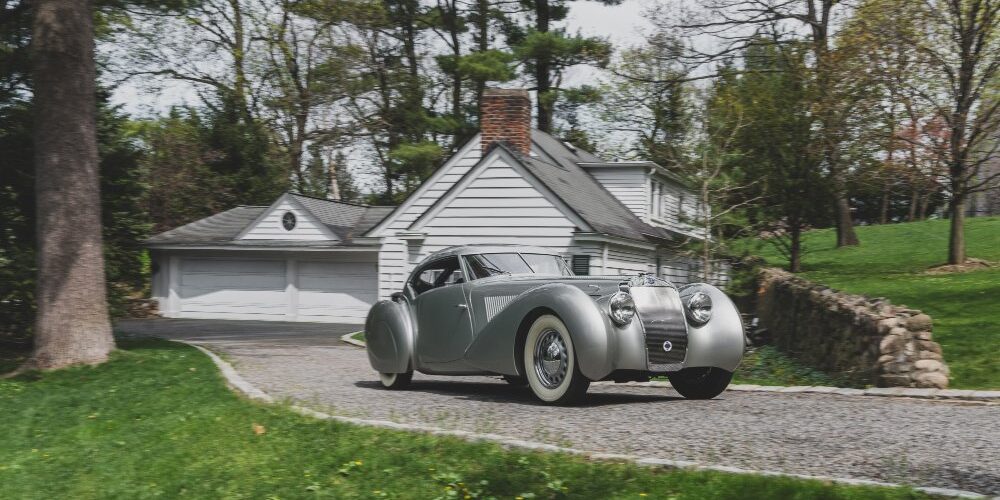
This 1937 Delage D8-120 S Aerodynamic Coupé by Pourtout is the prototype for the D8-120 S chassis and was built as the personal car of Louis Delage. Chassis 51620 was created during the period after Delage had effectively been absorbed by Delahaye, with Louis Delage remaining involved as an executive.
The body was ordered in March 1937 from Marcel Pourtout’s coachbuilding firm in Rueil-Malmaison. Louis Delage was closely involved in the project, and a copy of the build sheet records his approval. The design work was handled by Georges Paulin, whose aerodynamic approach was developed using wind-tunnel testing with scale and full-size models. The completed body was built largely in aluminium, apart from the front wings, and used frameless side glass and a curved windscreen. The car was completed too late to be entered formally for the 1937 Paris Salon, so Delage and Pourtout parked it outside the Grand Palais, where it attracted attention from the press. It was registered in Paris as 5383 RM 1 and is believed to have appeared at a French concours. Louis Delage used it for several years before the outbreak of World War Two.
In 1940 it was sold to M Penicaud, who stored it during the war. After a minor accident in 1953, the car was sent through F Mortarini to Saoutchik, which altered the front and rear styling with a shorter nose, a new windscreen and a one-piece rear window. Later owners included William A Raidy, Willard Maas, a Mr Haynes and industrial designer Robert ‘Bob’ Muelke, who retained it for more than 20 years. It was sold in 1979 to a Connecticut restorer, and was later acquired by Alfredo Brener before passing to Sam Mann.
The restoration involved Contour Metalshaping and Stone Barn, with the altered nose and tail returned to their authentic Pourtout form using period photographs and input from Claude Pourtout. The original fitted luggage was retained, while the engine, previously rebuilt by Phil Reilly, and drivetrain were assembled and tuned.
The completed car won Best of Show at Pebble Beach in 2005. It later received the Louis Vuitton Classic Best of the Best Award, appeared at Rétromobile, was displayed in museum exhibitions and has also been produced as an Automodello scale model. It is estimated at between $5m and $6m.
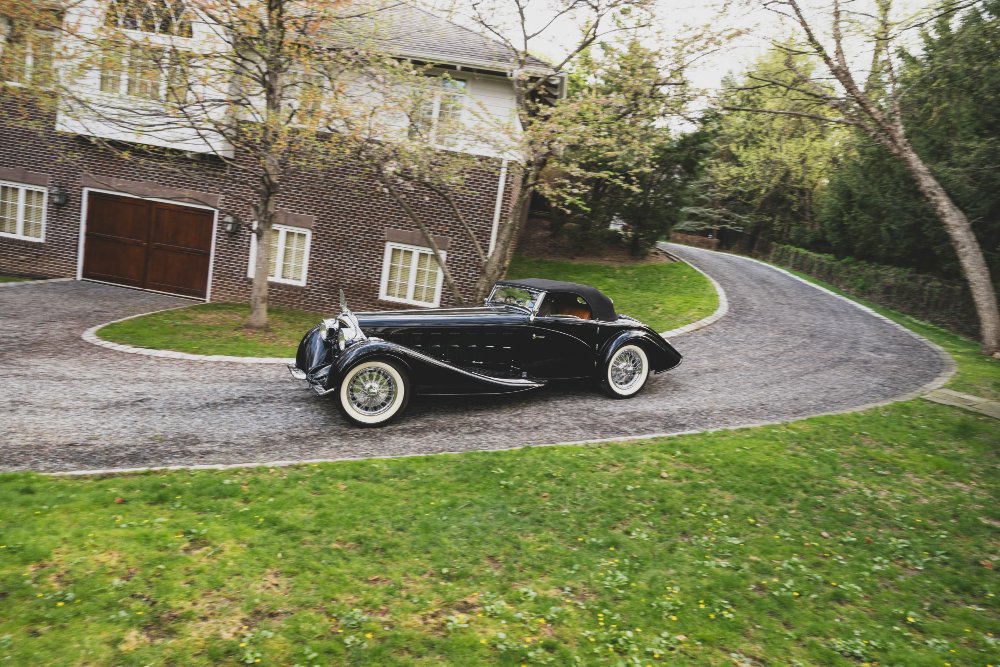
This 1934 Avions Voisin C23/24 Roadster by Saliot is a one-off Paris-built creation by Raymond Saliot, based on an Avions Voisin chassis and later restored to the form in which it became one of the best-known concours cars associated with the Sam and Emily Mann Collection.
The car is understood to have been created for Baron de l’Ecluse for the Grand Concours d’Elegance at Bagatelle. Its exact base model has been debated, but Jean Saliot, son of Raymond Saliot, stated that his father began with a C23 chassis registered 3647 RG. The chassis was lowered in the surbaissé style and fitted with a later C24 2500cc six-cylinder engine with dual carburettors. Saliot had apprenticed in his father’s coachbuilding business before founding Edouard Valliant Automobile in Levallois-Perret in 1928. The firm specialised in body repair and mechanical servicing, with Avions Voisin becoming one of its areas of work. When Avions Voisin ceased production, Saliot acquired factory spare parts and continued supporting the marque’s surviving cars in France. This roadster was one of two coachbuilt Voisin-based cars he created on second-hand chassis.
The body was built by Saliot with employees Joseph and Alfred Brédéka. Its long bonnet, short rear deck, repeated side louvres, flowing wings and detailed brightwork gave the car a very different character from Gabriel Voisin’s own more architectural designs. It was exhibited at Bagatelle in 1935 and received the event’s top award, the Primée. The car’s later history is unclear until January 1951, when historian André Vaucourt recorded it under registration 324 AH51. It was seen in Paris the following year and is believed to have been pictured in L’Automobile. In July 1953 it passed to Jacques Renaud, then returned to the Saliot firm three days later. It reappeared in 1969 on a farm near Cosne-sur-Loire, where it was bought by collector André Corre. Corre restored it in silver, displayed it in France and supplied it for use in Roger Vadim’s 1972 film Hellé. It was sold in 1973 to Paris Volkswagen dealer Mr Girard, who refinished it in black.
Sam Mann acquired the car after seeing a photograph of it in 1999. It was then restored by Stone Barn of Vienna, New Jersey, with research by André Vaucourt and correspondence with the Saliot family and Voisin historians. Finished in black with an ostrich leather interior, it won Best of Show at Pebble Beach in 2002 and Best of Show at Amelia Island in 2004. It is estimated at between $2.5m and $3m.
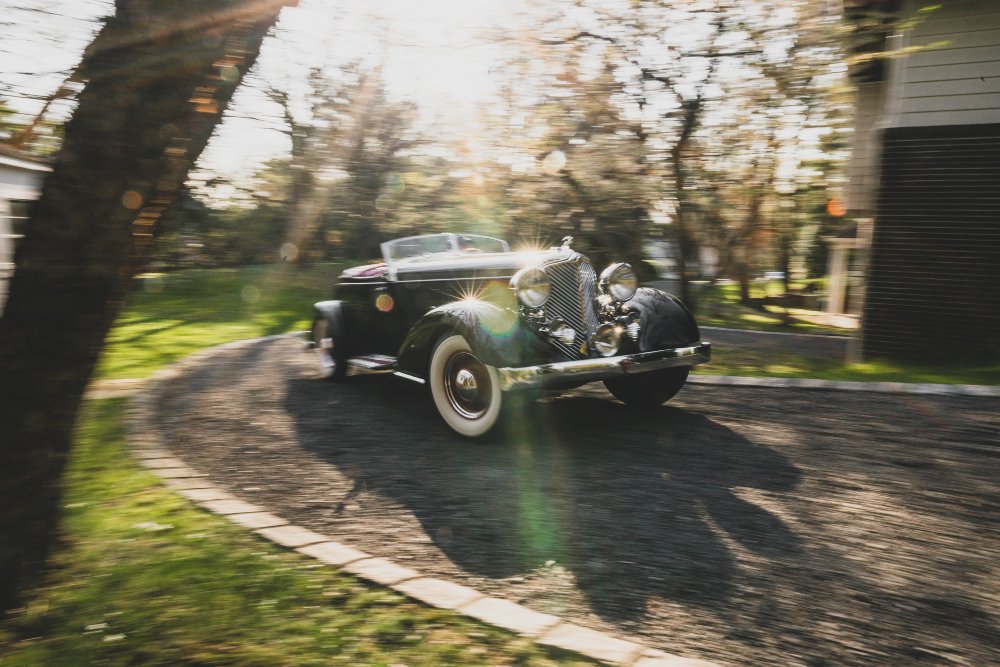
This 1932 Chrysler CH Imperial Speedster is a one-off factory design and engineering study built for Walter P Chrysler. Its form appears to have developed from a 1929 Chrysler design rendering published in Fortune, which showed a low, running-board-free body with a steeply raked split windscreen and pontoon-style front wings incorporating storage compartments.
The finished car was drawn by Herbert Weissinger of Chrysler’s Art Department and built by the factory Custom Body Shop, largely in aluminium. It used a long CL-style bonnet that extended from the radiator shell back over the scuttle to the A-pillars, while the rear body concealed a full-size spare wheel and tyre on a sliding trolley system. Much of the hardware was unique to this car, including the step plates, bumpers, front numberplate treatment and disappearing convertible top, which incorporated a radio antenna in its lining. Early factory photographs showed the car with racing driver Barney Oldfield at the wheel and Chrysler engineering vice-president Fred Zeder beside him. Those images also showed the car in a pale colour and without the radiator stone guard it now carries. It was later refinished in its deep maroon finish. Walter P Chrysler Jr later recorded that the grey seen in early images was effectively an undercoat, used beneath the maroon to achieve a specific colour depth inspired by a Ming Dynasty vase.
The Chrysler straight-eight was fitted with an experimental aluminium high-compression cylinder head, producing around 160bhp, and a Stromberg downdraft carburettor. Further features included an accelerator-pedal-actuated starter, an automatic stall restarting mechanism, a vacuum-operated clutch, a Free Wheeling unit and a pendulum-actuated valve intended to disengage the clutch during sudden stops and restart the engine. Walter P Chrysler used the car for around three years, and it remained in the family after his death in 1940. In 1957 it was refurbished, repainted and fitted with its current radiator stone guard before being taken to Provincetown, Massachusetts. It later entered storage there and, after unpaid storage bills, was pushed outside into the dunes.
In December 1965, Walter P Chrysler Jr traded the car to artist Angelo Ippolito in exchange for paintings valued at around $5000. It was later acquired by Al Nippert, who kept it unrestored for roughly 25 years. Sam and Emily Mann bought it in November 1989. Although service stickers suggested only 8000 miles, the car had aged significantly, and the Manns restored it in their own workshop. It won First in Class and Best of Show at Pebble Beach in 1991. It has since returned to Pebble Beach for past Best of Show displays, achieved a Classic Car Club of America Senior First Prize and appeared in publications including Car Collector and Dennis Adler’s books. It’s now covered close to 13,600 miles, and is estimated at between $2.5m and $3m.
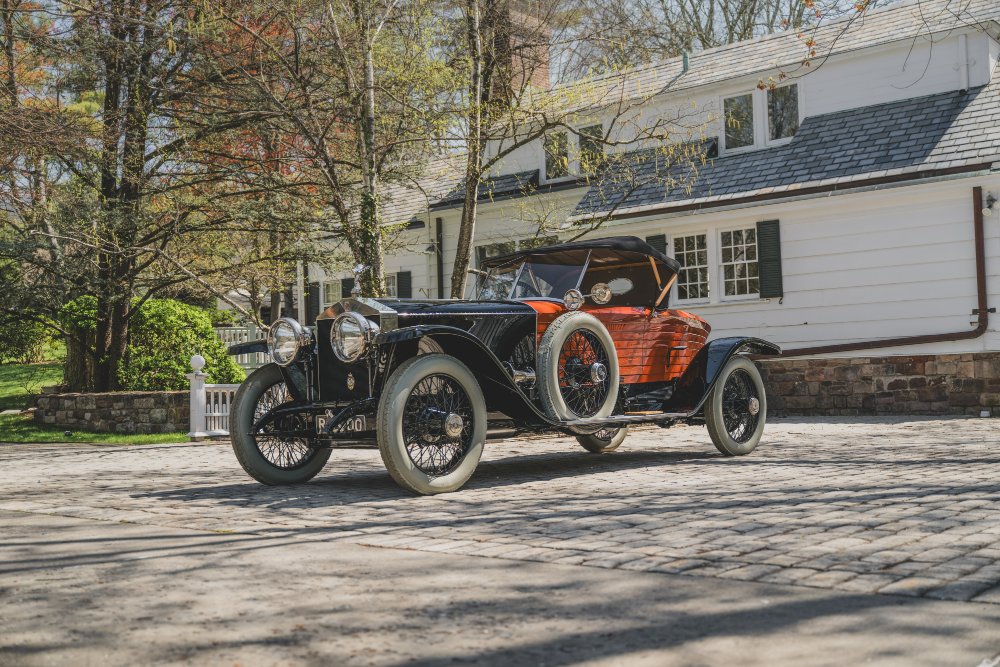
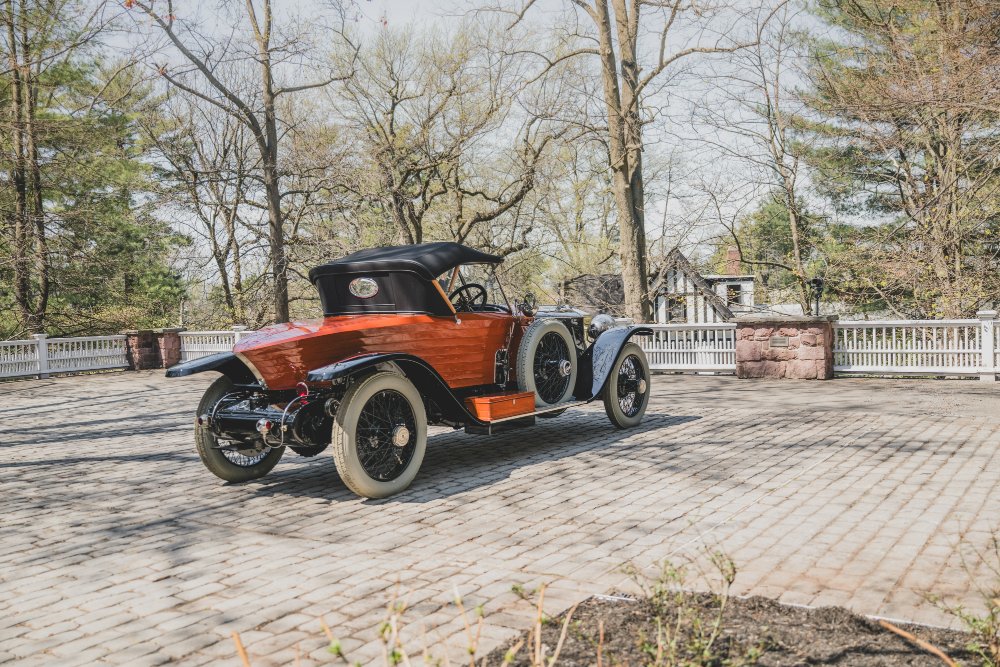
This 1914 Rolls-Royce 40/50HP Silver Ghost Colonial London-to-Edinburgh Skiff by Schapiro-Schebera is a London-to-Edinburgh specification Silver Ghost with Colonial equipment and original Cuban mahogany coachwork. Chassis 54PB was ordered in 1914 and its build record identifies it as an LE-type car, with high-compression pistons. It was also specified for more difficult road conditions, with increased ground clearance, a raised driveline, larger wheels, a 22-inch radiator, larger fuel tanks, louvred bonnets and a four-speed gearbox.
The chassis was first shipped to Rolls-Royce France and then transferred to Garage Majestic in Brussels. Delivery was likely disrupted by World War One, and the car appears not to have received its body until 1919. It was then bodied by Schapiro-Schebera for Belgian client A Lanser. The two-seat skiff body followed a type first popularised by Labourdette, but Schapiro-Schebera used an unusual construction method. Rather than conventional narrow planking, the body sides were formed from three pieces of Cuban mahogany per side, each around 5/16in to 3/8in thick and 8in to 10in wide. The appearance of planking was created through scored grooves and angled planing, with internal support provided by small laminated wood tiles secured with glue and horsehair reinforcement.
By 1925 the Rolls-Royce had been acquired by A Souraty & Cie of Cairo, and it remained in Egypt until the 1950s. In 1956, British enthusiasts Dr Robin O Banard and H Vivian traced it to a Mr Platt in Cairo, who loaned it to them for return to the UK and restoration. After repairs and reconditioning, Platt sold them the car. During their ownership it was depicted in Melbourne Brindle’s Twenty Silver Ghosts. The car remained with Banard and Vivian until 1985, then passed to Robert Barrymore of La Jolla, California. It later became the basis for a Franklin Mint Precision Model. In 2002, June Barrymore sold it to Margie and Judge Joseph Cassini III, who had it freshened and showed it at Pebble Beach in 2005. Later owners included Bill Roper and Hendrik Fredriksen, before Sam and Emily Mann acquired it in 2015.
The Manns commissioned mechanical restoration by Jonathan Wood and Fred Buess, while Scott Bronowski handled paintwork and Chris Messano refinished the wooden body. Later additions were removed, the rear rumble seat was converted to storage and a new top was designed. The car won First in Class at Pebble Beach in 2021 and was displayed at the Audrain Automobile Museum in 2023. It is estimated at between $1.5m and $2m.
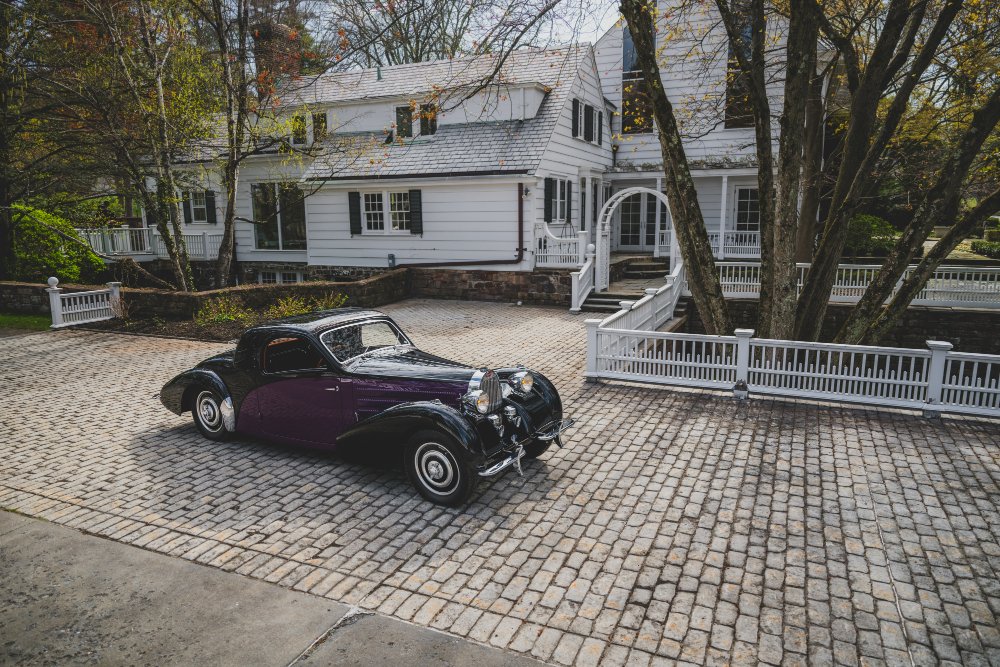
This 1938 Bugatti Type 57 Atalante by Gangloff is a bespoke two-seat coupé built for Fernand Crouzet, the owner of a leather factory in Labastide-Rouairoux in the Tarn. Crouzet ultimately owned three Type 57s, one for himself and one for each of his two sons. Chassis 57633 was delivered to Gangloff in February 1938, with the body completed over the following two months. Although factory-bodied cars carried the Atalante name officially, this Gangloff-bodied car followed the same general form, with a raked windscreen, sweeping roofline, two-tone body treatment and short, enclosed tail. Crouzet worked with Gangloff to adjust the design for grand touring use, with the windscreen moved forward by around three inches to improve cabin space, legroom and luggage capacity. The rear wings were lengthened, the spare wheel was recessed into the rear deck and the car was fitted with a large single-piece rear window. Crouzet also specified instrumentation normally used on supercharged cars, along with disc-style wheel covers and special bumpers.
The Bugatti remained with the Crouzet family until June 1941, when it was sold to Pierre Vidal of Toulouse. Around 1943 it was sold again in Paris, and it was later refurbished by the Paris Bugatti works. In 1947, it entered service with the French Government at its embassy in London. It subsequently passed through several private owners, including early enthusiast J G H Carter. In 1955, the car was bought by automotive author Kenneth Ulyett, who used it regularly until his death in 1977. It was sold from his estate in 1987, later entering Japanese ownership before being acquired in 2003 by J Peter Ministrelli of Michigan. Ministrelli commissioned a ground-up restoration by Brian Joseph’s Classic & Exotic Service in Troy, Michigan. Its engine and drivetrain had previously been rebuilt by Hill & Vaughn in California, although further detail work was carried out during the restoration, including recreation of the hand-scraped finish on the aluminium cam and timing-gear castings.
The restored Bugatti appeared at Pebble Beach in 2005, won its class at Amelia Island in 2006 and scored 99.5 points at the Michigan Region CCCA Grand Classic. It was sold at auction later in 2006, then passed through owners in England before being acquired by Sam and Emily Mann from the Roberts family in 2020. It is estimated at between $1.5m and $1.8m.
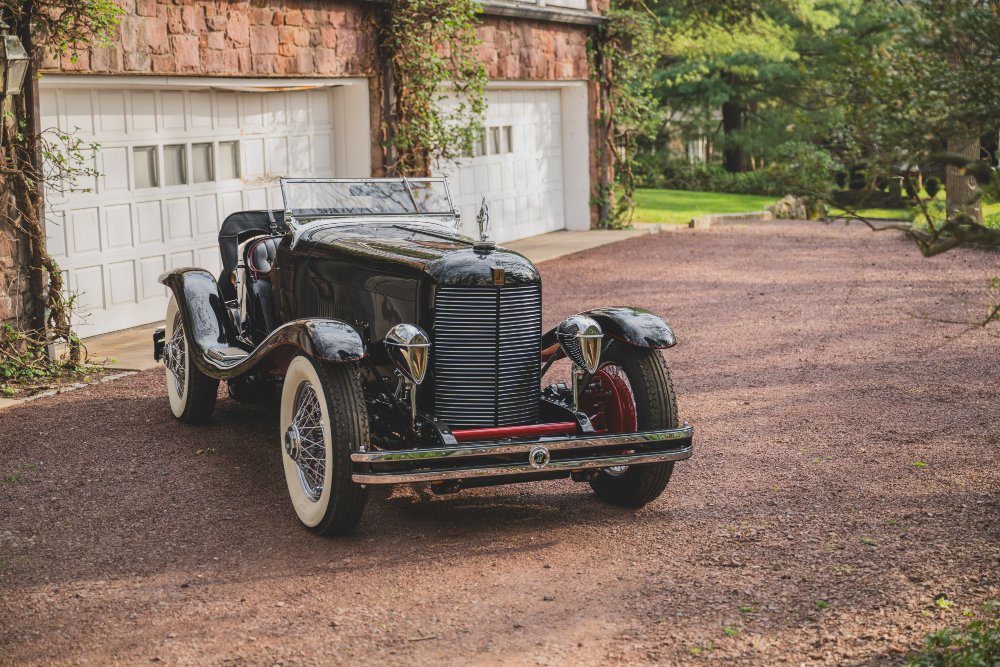
This 1929 Du Pont Model G Two-Passenger Speedster by Merrimac is one of three two-passenger ‘taper tail’ Model G speedsters built with an external spare wheel. It is also recorded as one of two with a rumble seat, and the only example of this configuration with a folding windscreen and exposed vertical centre bar in the grille. Chassis G-949 was recorded in the Du Pont factory Car Record as a two-passenger speedster fitted with an exhaust cut-out, tachometer and Woodlite headlamps. Its body was part of the speedster series styled by L Briggs Weaver, with aluminium coachwork, cut-down doors, partial belly pans and a cast aluminium grille and radiator-shell assembly. G-949 was displayed at the 1929 New York International Automobile Show, where the speedster design made its public debut.
The car’s first owner was Charles Hirshhorn, whose family’s National Tea Packing Company helped popularise the tea bag. Hirshhorn is said to have maintained the car carefully, storing it at the National Tea Packing facility and using a live-in chauffeur. Its Cartier radiator mascot, formed as a pair of seagulls, was acquired early in the car’s life from F A O Schwarz. In 1953, the Du Pont passed to R B George of Germantown, Pennsylvania. George carried out light cosmetic reconditioning, and in 1958 it was sold to Philadelphia collector Stan Tarnopol, then in 1962 to Henry Gerlach, also of Philadelphia.
Gerlach kept the car for 37 years before Sam and Emily Mann acquired it in May 1999. It was later restored by the Manns’ in-house facility in black over black. Following restoration, it won First in Class in the American Classic Open category at Pebble Beach in 2012, followed by First in Class at Amelia Island in 2013. More recently, the car was displayed in June 2025 at a Du Pont Motors reunion in Wilmington, hosted by members of the founding family. It is one of around 25 Model Gs believed to remain, and is estimated at between $800k and $1.2m.
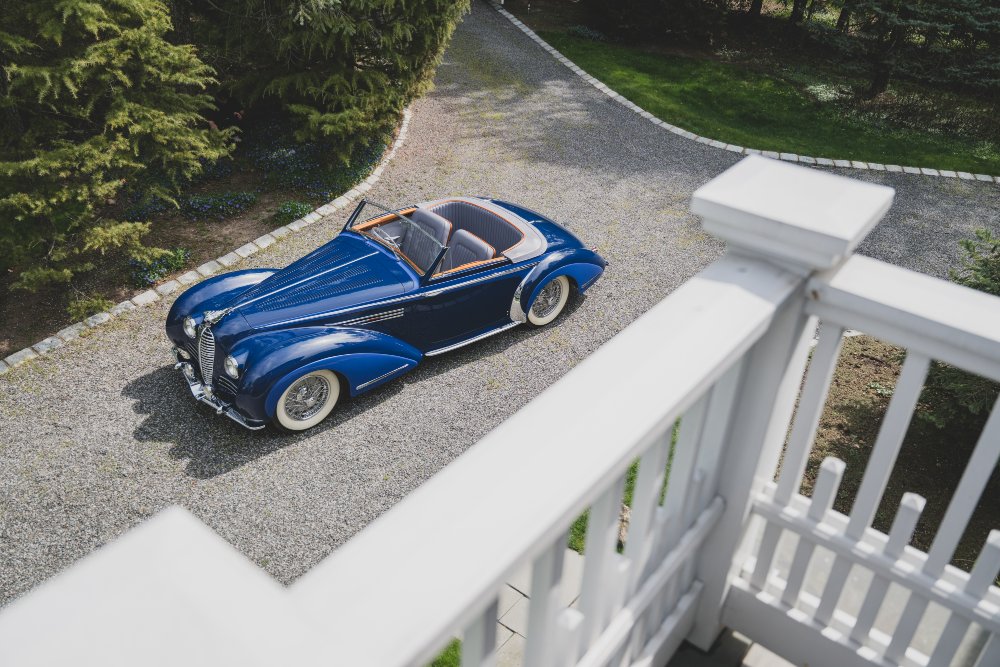
This 1947 Delahaye 135 M Cabriolet ‘Vedette’ by Chapron was built for Robert Laigneau, an industrialist based on Rue de la Victoire in Paris. Chassis 800735 was completed in June 1948 and registered 4173RQ3 the previous month. It appeared that June at the Grand Concours d’Élégances Automobiles de Paris in the Bois de Boulogne, where it received the Grand Prix d’Honneur and Grand Prix. It was subsequently shown at the concours d’elegance at Cannes.
In July 1948, the car was driven in the Paris-Anet Automobile Rally by French actress Michèle Morgan. Period photographs of Morgan with the car document many of its original details, including the Lucite interior fittings. One rally detail recorded in period photographs, a Mickey Mouse figure hanging from the rear-view mirror, is no longer present. Laigneau sold the car in November 1948 to François Ourif, also of Paris. Its registration changed to 143R75 in December 1950. The car later came to the United States, believed in the late 1950s or early 1960s, through Ken Johnson of Malibu, California. The next known owner was Bill Hinds, an early Southern California enthusiast and restorer of French cars. Hinds restored the Delahaye in red. It later passed to Illinois sports car collector Bill Jacobs.
Sam Mann first became aware of the Chapron ‘Vedette’ design through the two-tone green example owned by Jim Hull, featured on the cover of Car Collector in December 1981. When chassis 800735 later became available at auction, Hull alerted Mann, who acquired the car on April 11, 1987. It became the first coachbuilt French automobile in the Mann Collection. The car was used as acquired for around a decade before restoration began. Work was carried out by the Manns’ in-house facility between 1997 and 1999, with the engine rebuilt by Don Koleman of Competition Motors. Hull’s own “Vedette” was photographed in detail to help reproduce the correct features, while Vaucourt supplied the Chapron build records. The dashboard was returned to its original configuration, with the instruments grouped centrally. Since restoration, the Delahaye has appeared at events including the Pebble Beach Concours d’Elegance in 2009 and has also been used on the road. It is estimated at between $700k and $1m.
Further details
For more information on the Sam and Emily Mann Collection sale, head here.