

“Like a lot of businesses that start from a hobby, it really began with a passion and a desire – there was something I wanted that I simply couldn’t find,” says Charles Fawcett, founder and head of research and development at Twisted Automotive. “So we went down the route of sourcing it, developing it and ultimately creating it ourselves.”
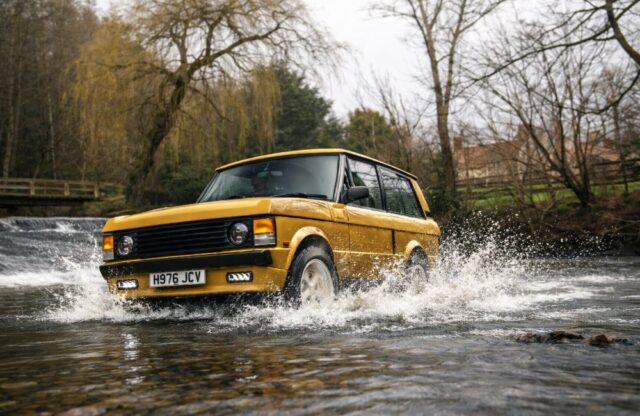
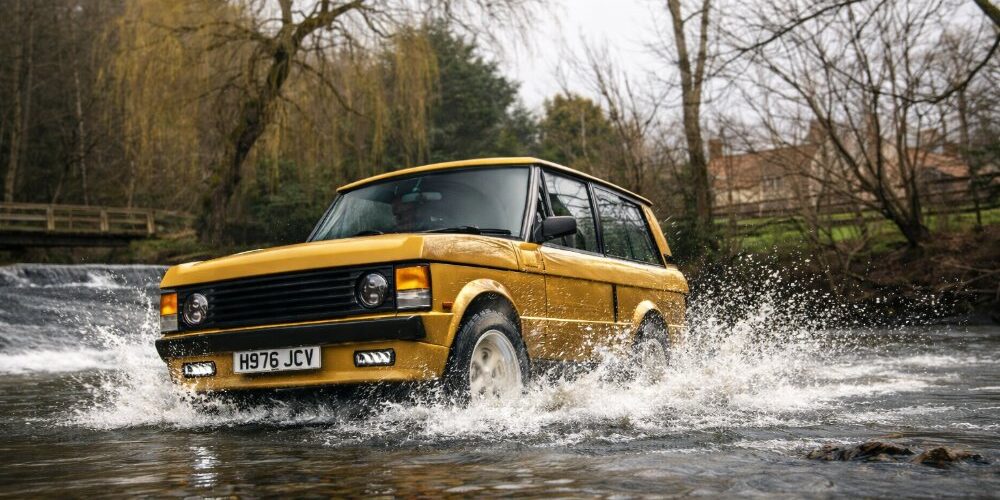
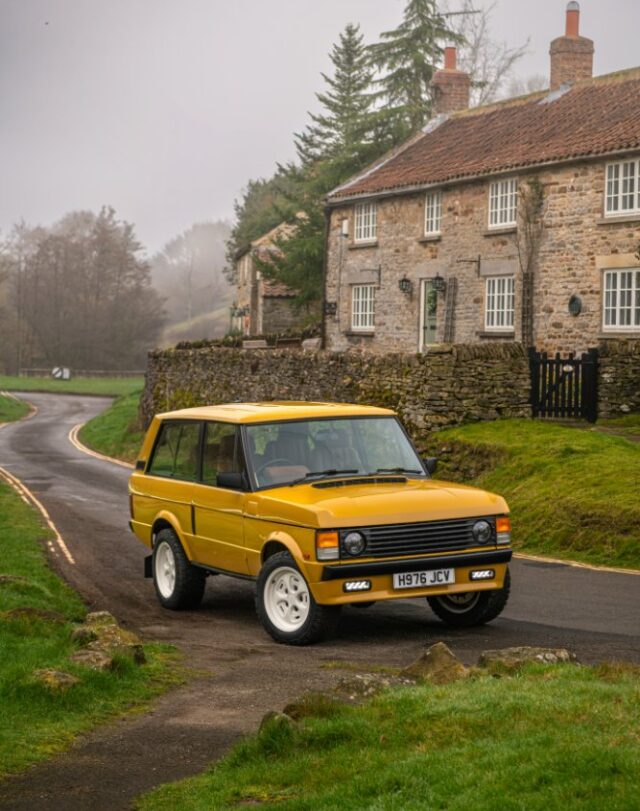
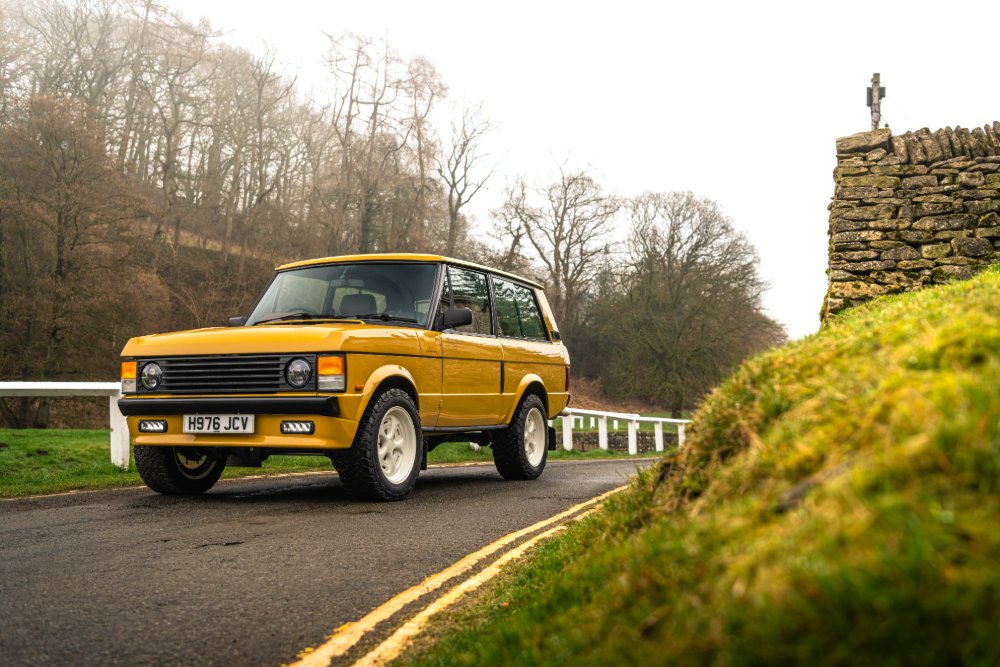
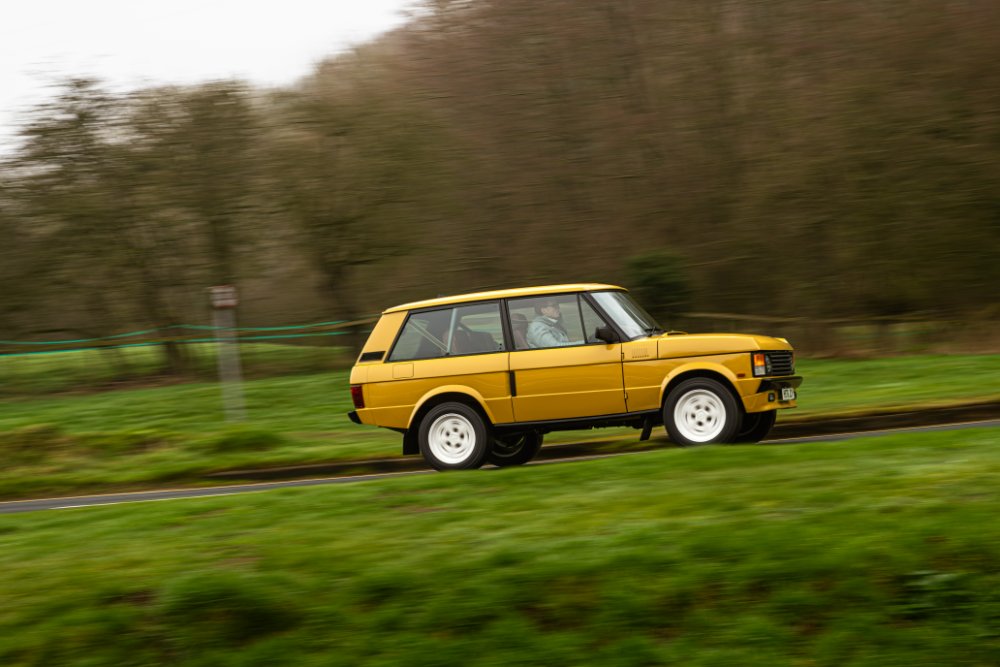
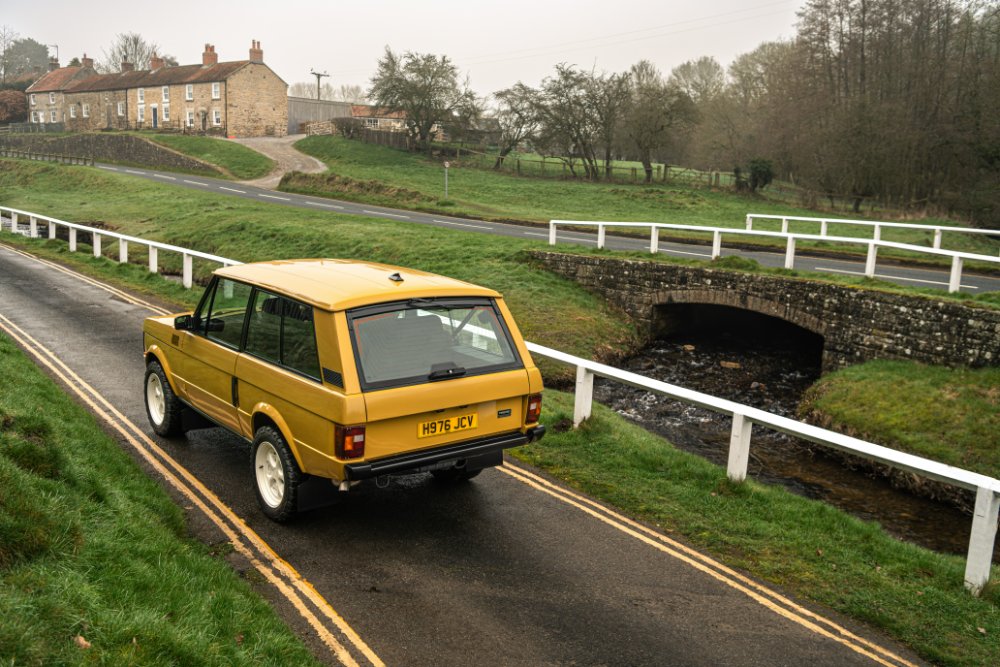
We’re at Twisted Automotive in Thirsk, North Yorkshire, UK, to see Fawcett’s latest creation: a deeply personal three-door Range Rover that, in many ways, loops back to the original reason he started the company in the first place. It has taken years to bring together, and the Bahama Gold car Magneto is driving today is effectively a development mule – the production version will be notably different in several key areas.
Twisted Automotive: The background

For the uninitiated, Twisted has built its reputation by taking the utilitarian Land Rover Defender and making it markedly better on the road without robbing it of the very qualities that made it appealing in the first place. “In the late 1990s and early 2000s, people were taking Land Rover products and turning them into phenomenal off-roaders. You’d see families with Defenders and Discovery models fitting big, aggressive off-road tyres, lifting the suspension, changing the radius arms, adding winches, roll cages, snorkels and all sorts of other equipment so they could go off-roading,” Fawcett recalls. “That was seen as the natural secondary purpose of a Defender or Discovery, behind being a utility vehicle. But the reality was quite different.”
Most, he says, were venturing off-road perhaps once a month, maybe once every couple of months. The other 30 days of the month, the vehicle was being used to commute, drive to work or simply get on with everyday life. “Frankly, they were pretty awful on the road,” he says.
Fawcett’s background is in off-road driver training, but before that he was involved in the motor trade with his father. Over time, one thing became obvious: a standard Land Rover is already an extraordinarily capable off-roader.
“In standard form it will do pretty much everything you want it to do,” he says. “You could even argue that some of the modifications people make – suspension lifts and the like – can actually limit the vehicle in certain situations, particularly on the road. At standard ride height a Defender has a 45-degree approach angle and about a 49-degree departure angle on a 90, and around 37 degrees on a 110. In other words, they’ll climb the side of a mountain in standard form. They don’t need to sit a metre in the air to be enormous fun.”
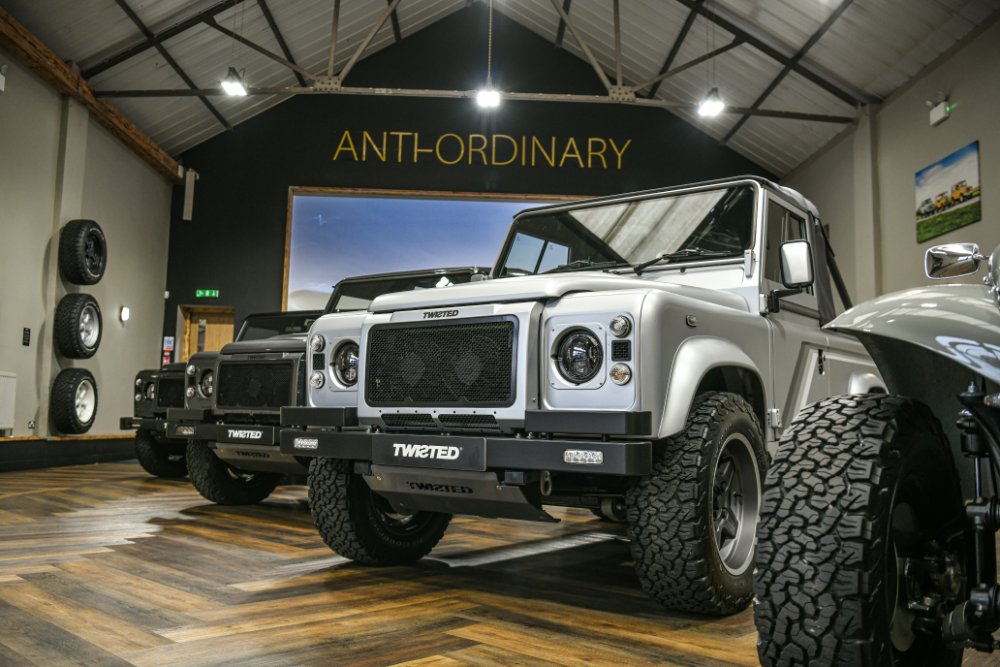
That became the basis of Twisted’s philosophy: never take away what the vehicle could do originally, just make it better in the areas that matter most to the people actually using it. “Make it quieter and quicker, and improve the turn-in and the handling. Make it stop properly in a straight line, help it accelerate better and make it cruise comfortably on the motorway – all the things it was probably never originally intended to do particularly well,” Fawcett explains. “But you must never take away the soul or the credibility of the vehicle, because that’s imperative. That’s what the Defender and Land Rover are all about. They have to remain credible. They have to be capable of doing all those things they were designed to do.”
That approach made Twisted’s name with the Defender. More than a decade ago, the company struck a deal to buy 240 of the final examples when Land Rover altered its sales processes and began curtailing supply to modifiers. Those 240 Defenders went into storage and, over the past ten years, have formed the backbone of Twisted’s upgraded Defender programme; only 22 unregistered examples remain. Today there’s a worldwide sales network, a showroom in New York, a forthcoming manufacturing facility in South Carolina and a dealership in Japan. Twisted’s main factory, just down the road from the showroom, is dedicated largely to overseas sales.
Yet even Twisted’s Defender business has evolved. “Our core is absolutely the Defender, but we no longer need brand-new, delivery-mileage donor vehicles in the way we once did,” Fawcett says. “The work we’re doing today is so extensive that we can take something with 10,000, 15,000 or even 20,000 miles on it and still build the car we want. We end up using very little of the original vehicle anyway.”
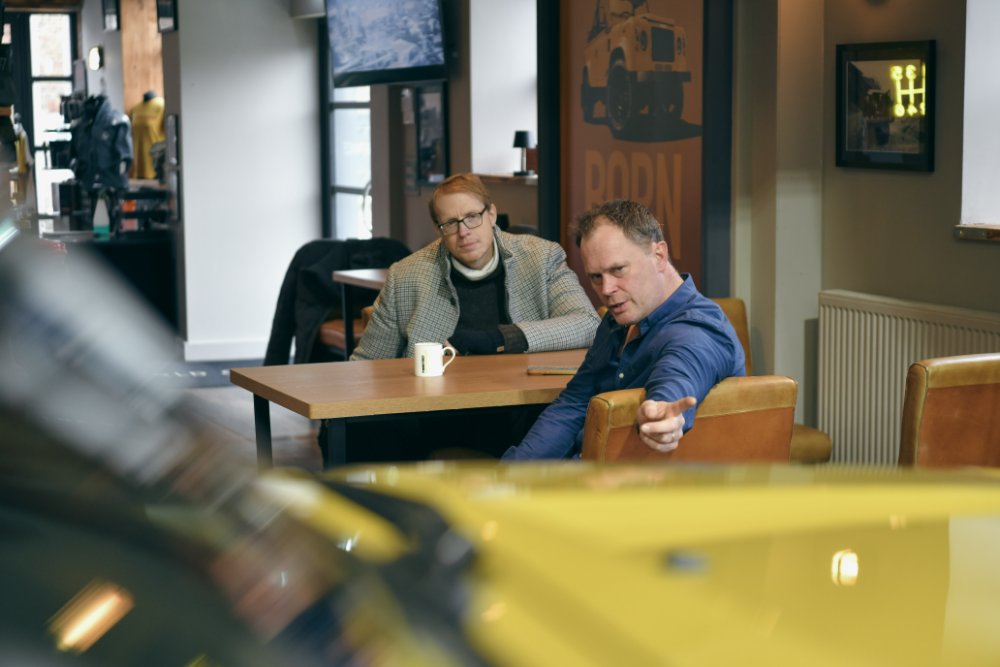
Ten years ago, the process was quite different. Back then, the donor was usually brand new, and Twisted could take a fresh Defender and turn it into a finished product in a matter of weeks. Now the build is far more involved.
“These days a car will typically spend about four months on the ramp with our technicians, and that’s before you add trimming, paintwork and any other specialist subcontracted work. It’s a really extensive build – around 1500 hours per vehicle,” he says. “Because of that, we simply don’t need brand-new donor cars in the same way we once did. Occasionally a customer will say that it has to start with a delivery-mileage vehicle, and that’s absolutely fine – we’ve got them available, and very few other people do. Otherwise we simply source the best used vehicles we can find and start from there.”
That same philosophy underpins the move from Defender to Range Rover, although for Fawcett this is far more than a simple product-line extension. Twisted has dabbled with Range Rovers before – in the late 1990s and early 2000s, 200Tdi and 300Tdi conversions and upgrades were a popular part of the business before it decided to focus solely on the Land Rover Defender – but the three-door Range Rover has always held a special appeal.
“I’ve always adored the three-door,” he says. “It’s such a wonderful mix. It has enough utility to feel properly alive, but also enough glass and visibility. I don’t want to say comfort – because they’re not particularly comfortable – but they have enough credibility as both an off-road and an on-road vehicle. They sit in this lovely middle ground where they manage to do both things beautifully. They’re full of character and, fundamentally, underneath they’re still a Land Rover.”
For Fawcett, the 100-inch wheelbase has always been the sweet spot. “If you wanted to build a proper safari vehicle or a serious off-roader, 100 inches was the ideal wheelbase. With Land Rover you’ve got the 90 – which is actually 92.9 inches – and then the 110, but the 100-inch Range Rover wheelbase always felt like the magic number to me, so I just fancied seeing what we could do with one.”
There is also a simpler reason: he just wanted one. “Over the years I’ve bought quite a few fully restored three-doors – lovely-looking cars – but when you actually get them, they’re often not that good. Someone has done an average job restoring them,” he says. “The reality is they’re far more labour intensive than a Defender.”
If a typical Defender build takes around 1500 hours, Fawcett reckons a proper Range Rover restoration takes closer to 3000. “Unless you’re someone working out of a shed and not charging your labour, it simply isn’t viable. There are lots of small cottage-industry builders doing beautiful Range Rovers, but there aren’t many people doing full builds to the level I’d want. So I figured we’d just do our own.”
That, crucially, was all this was ever meant to be: a one-off built for himself. “It was just something for me – a bit of fun. We talked about it, built it and that was supposed to be the end of the story,” he says. “But people saw it and started asking for them…”
Now the order book for 2026 is full and 2027 is already beginning to fill. The car we’re driving today, though, is still very much the development car. “We’ve had to rethink our approach slightly to make sure we can actually produce them properly. Building it the way we built the first one simply doesn’t work commercially,” he says. “We’ve poured hundreds of thousands of pounds into it and thousands of hours of work, but we’ve learned an enormous amount. What we eventually produce for customers will be something quite different. And I genuinely believe the finished product – the one our customers will get – doesn’t really exist anywhere else at the moment.”
Twisted Range Rover: The inspiration
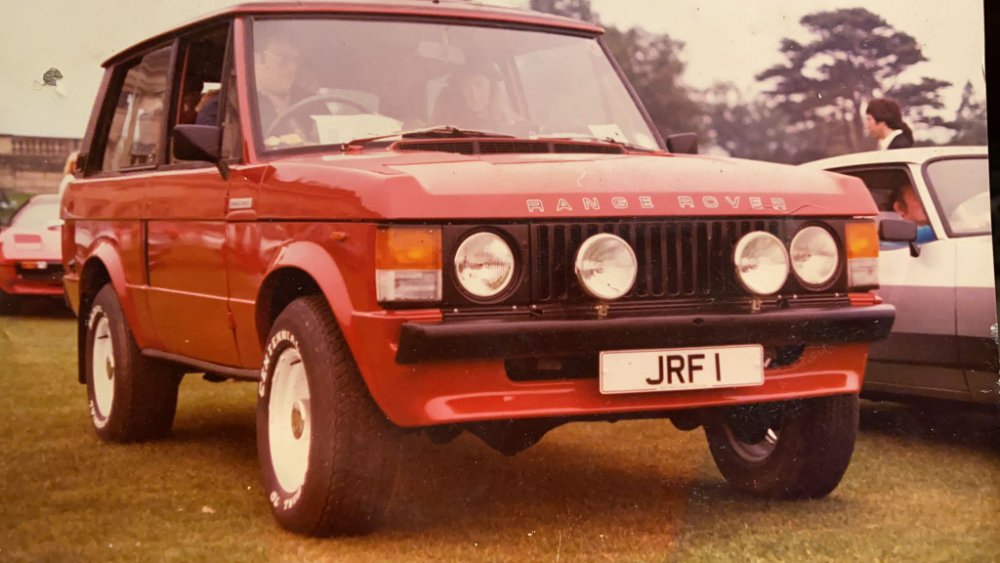
“Nostalgia is expensive,” Fawcett chuckles when Magneto asks about the visual inspiration. “We’re all still little kids inside – we just reach a point where we can finally afford the things we always wanted. For me, that dream goes back to a car my dad had when I was a kid – a three-door Range Rover.”
His father’s car had been subtly modified. “It had glassfibre flared arches that he’d blended into the bodywork, and he’d made a front spoiler using an MGB V8 spoiler, cutting it down the middle and widening it so it would fit the Range Rover. It also had Weller eight-spoke wheels, with General Grabber road tyres with the white lettering and a pair of chrome spotlights mounted on the bumper,” he says. “Very much a 1970s vehicle, but in my head it was just the most beautiful three-door Range Rover I’d ever seen.
“It felt like a classic Range Rover that had taken just a tiny bit of steroids – not too much, just enough that you knew it wasn’t standard. It wasn’t overdone or showy. It wasn’t ‘pimped’. It was just beautifully executed.”
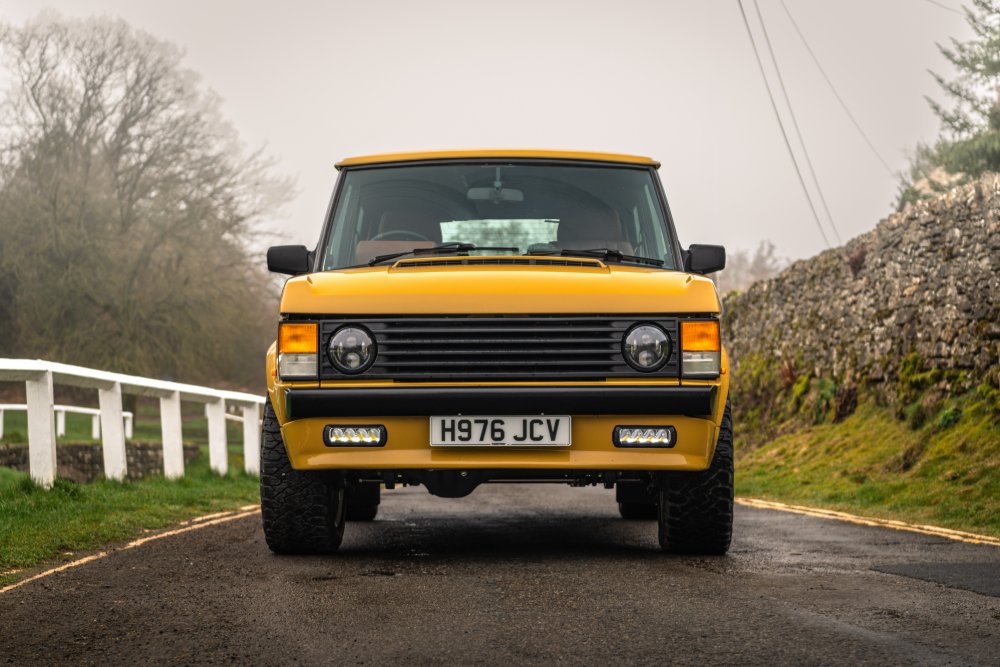
That sense of restraint runs through this build, too. In Bahama Gold, the Twisted Range Rover looks superb from a distance, but Fawcett is the first to point out where the prototype falls short. “If you stand back and look at this car I think it’s beautiful. You can admire it from almost any angle. But when you look closely, none of the panel gaps actually line up properly. We’ve spent an enormous amount of time trying to make the original panels fit correctly, and they simply don’t.”
The answer has been to partner with Coventry Metal Craft to create tooling for every exterior panel. “It’ll hand-form every panel specifically for our cars. Nobody else is doing that – everyone else is using reproduction panels that never fitted properly in the first place,” he says. “For example, the bonnet is often called the ‘smiley bonnet’ because it curves slightly. Ours won’t. It will be perfectly straight.”
To get there, Twisted is scanning four different vehicles, surfacing the data and producing entirely new tooling. It is a vast undertaking, but Fawcett sees no alternative. “It’s made the project far bigger than we ever intended, but in our view it’s necessary because the car deserves that level of attention.”
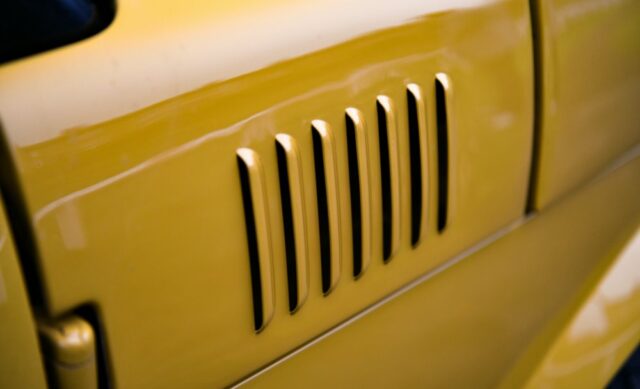
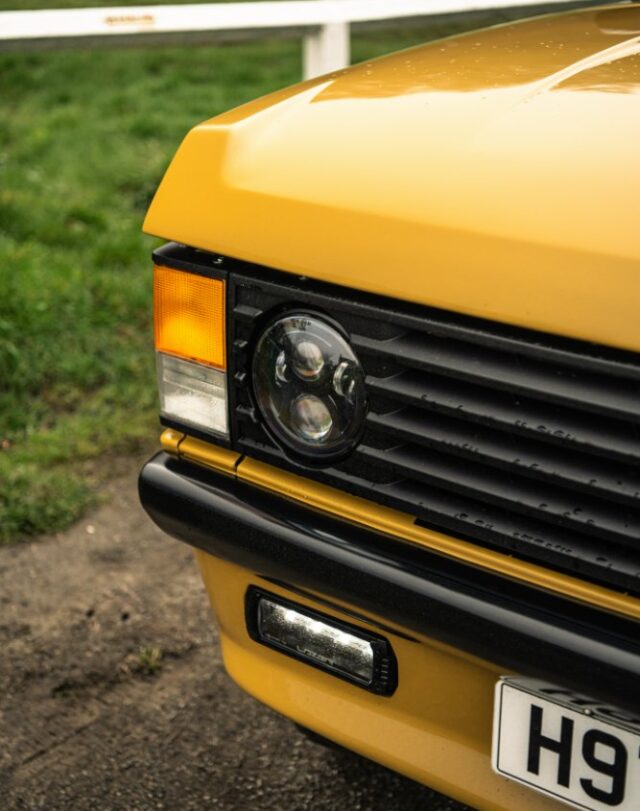
On the production car, Twisted will also integrate the C-pillar vent into the body panel rather than using a separate piece, redesign the plastic sill trims and replace the current handles with in-house billet aluminium items. The front spoiler is being subtly reshaped, too. “The relationship between the wing and spoiler isn’t quite right yet,” he says.
And that’s before you get into the details hidden from view. The seat mounts, wiring harness, cooling system, centre console, dashboard facia and headlining are all being redesigned. There will even be the option of an electric rollback fabric roof.
Twisted Range Rover: The engineering
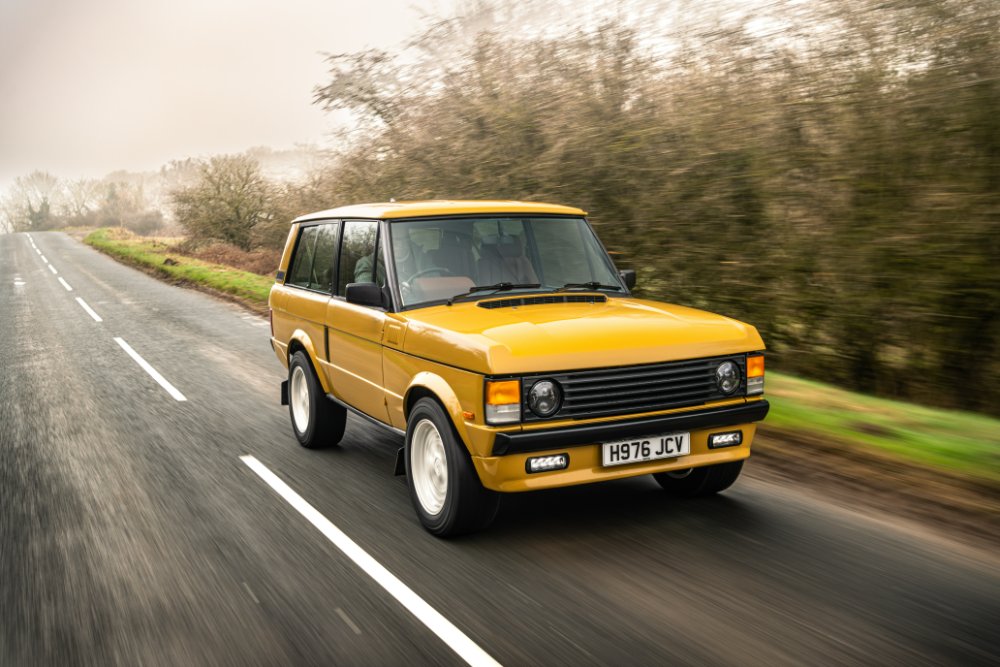
Under the bonnet sits a Chevrolet LT1 V8 producing around 500bhp – a unit Twisted knows intimately from its Defender projects. “There may well be customers who ask us to build the car with the Rover V8, which is absolutely fine. We can produce something beautiful, quick and suitably ‘Rover’. But ultimately the Rover V8 was originally an American engine anyway, and we’ve spent years perfecting the LT1 American V8 in the Defender. So it was a natural fit to use what we already know,” Fawcett explains. “It’s reliable, it’s quick, it’s relatively quiet, it’s reasonably efficient on fuel, and – crucially – it fits.”
The LT1 is paired with a GM 8L90 eight-speed automatic gearbox. “We’ve done our own development work on the mapping, intake system, cooling, oil lines, fuel system and exhaust. So it’s very much our interpretation of that powertrain,” he says. “The gearchanges are something else – incredibly smooth. It can be as quiet and as relaxed as you want it to be, but if you ask for it, it becomes an absolute wild animal.”
Of course, getting 500bhp to behave in a car originally launched with far less takes some doing. The first step was a full chassis restoration, after which Twisted fitted Defender axles, along with the same differential shafts, CVs and flanges it uses on its Defender builds. There are torque-biasing differentials front and rear, plus a lockable centre differential in the transfer box.
Braking is handled by Alcon six-pot front calipers with 368mm discs, with four-pot calipers at the rear. Suspension bushes are a mix of polyurethane and rubber. “Too much polyurethane makes it harsh, too much rubber and they wear too quickly, so we use a combination of both,” says Fawcett.
The suspension itself is an evolution of the system developed with Rhoddy Harvey-Bailey for the Defender over the course of a year. “We kept the standard ride height, but we removed around 50 pounds of spring rate from the first 25mm of travel, then increased the rate through the centre of the spring with a progressive design. We also reversed the bias of the anti-roll bars – lighter at the front and much stiffer at the rear,” Fawcett explains. “A softer front anti-roll bar allows more travel at the nose. Standard Land Rover set-ups tend to lift the inside front wheel under hard cornering or acceleration. By softening the front and stiffening the rear, you allow the front suspension to work properly.
“The softer initial movement absorbs small road undulations, but when you’re pushing on and loading the car through a corner, the spring moves onto the firmer part of its rate. The dampers are tuned to match the spring and anti-roll bar set-up. They’re produced by Bilstein, while Eibach manufactures the springs and anti-roll bars for us. None of it is off the shelf – it’s all developed specifically for us.”
Chassis bracing has also been a major focus: “The standard chassis has a centre crossmember that doesn’t actually do very much. We replaced it with a square brace that also acts as the gearbox mount, which significantly reduces chassis twist. That twist is what lifts the inside front wheel under hard acceleration. With the brace installed the car stays much flatter. It does introduce a little more resonance from the engine because it’s mounted more firmly, but the trade-off is a far more predictable car to drive. The Range Rover sits slightly lower at the nose than the Defender set-up would, but visually and dynamically it feels right.”
The steering has been left largely alone. Fawcett doesn’t believe there was anything fundamentally wrong with it in the first place. “Older four-wheel-drives used worm-and-screw steering, which was incredibly vague, but the Defender and Range Rover set-ups are perfectly acceptable. What we’ve done instead is focus heavily on alignment settings and tyre pressures, which make a huge difference. Because of the wider track, we’ve also altered the lock stops, which gives a noticeably tighter turning circle and makes the car much easier to manoeuvre.”
The real difference, he says, is in the way it behaves at the limit. “A standard Defender or Range Rover will understeer first, then suddenly snap into oversteer if pushed hard. The suspension set-up we’ve developed gives much more communication. You can turn in harder, feel the grip building – and when the tyres finally start to let go, they do it progressively rather than suddenly.
“Standard Land Rovers can be quite alarming in emergency situations – braking and steering at the same time tends to upset them badly. With this set-up the car tells you what it’s about to do well in advance. It still retains that slightly floaty rear-end character – it still feels like a Range Rover – but it’s much more planted, which is essential when you’re dealing with 500bhp.”
Cooling is another area where the prototype has already driven production changes. The mule currently uses an original V8 Range Rover radiator, but customer cars will get a Twisted-designed aluminium item. “That’s been a recurring theme with this project. Many parts that should be readily available simply aren’t good enough any more, so we’ve ended up developing and manufacturing our own components,” he says.
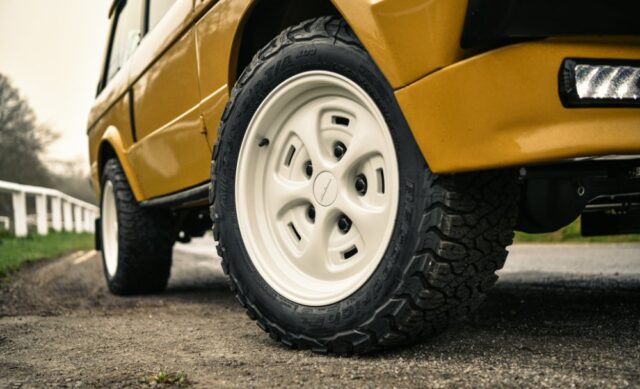
There is new glass throughout, redesigned carpets with the soundproofing applied to them rather than to the body, and a reworked parcel shelf. The wheels are Twisted’s own interpretation of the original Rostyle, cast in 18 x 9 aluminium. Tyre development has included everything from snow tyres to Michelin road rubber, but at present the car sits on BFGoodrich Trail-Terrains.
Other lessons have come from the sort of detail only a prototype reveals. “If you leave the doors open while working on these cars the doors eventually begin to sag – every classic Range Rover does it – so we’re remanufacturing the hinges in billet aluminium with bronze bushes,” Fawcett says. “There are about 40 to 45 3D-printed parts on this prototype, and those will all be replaced with billet aluminium components for production. It’s a long list of little refinements.”
Twisted Range Rover: Inside and out
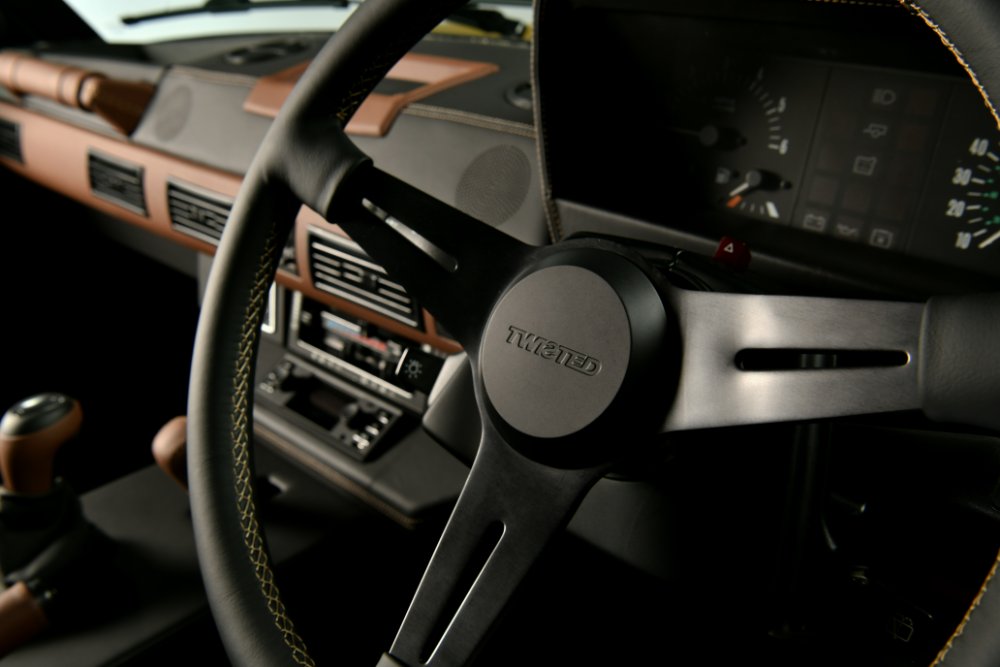
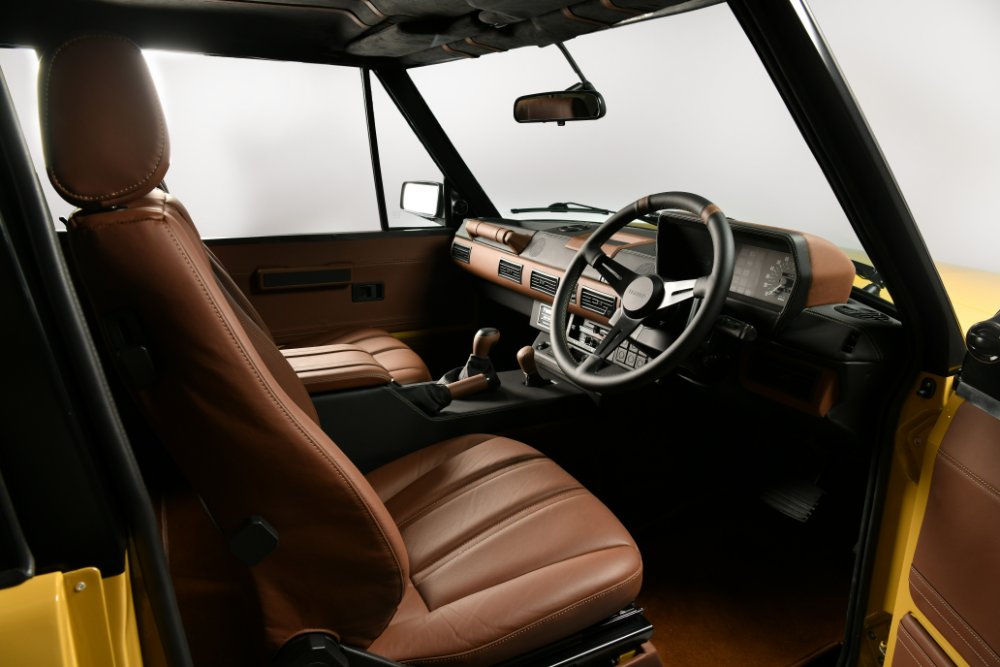
The cabin is customisable, although Twisted has a very clear idea of what the finished product should be. Colour and materials are at the heart of it, but the fundamentals are already decided. “We believe we’ve chosen the right seat for the car, and we’ve mounted it in a position that improves the driving experience. In a standard classic Range Rover you tend to feel like you’re sitting on the seat rather than in it. We’ve adjusted that slightly so you sit more naturally within the car while still retaining good visibility,” says Fawcett. “Ideally we’d like to keep that seating set-up consistent, because it works very well. But ultimately, the specification we’ve created is the one we believe in – that’s what we’ll be offering.”
That does not mean every car will be identical. Far from it. “Customers always have ideas, and often they’re very good ones,” he says. “One of the gentlemen I met last week asked if we could adjust the brake-pedal position slightly. It currently sits a little higher than the throttle pedal, and he wanted them to be level. That’s not something I’d ever have thought about, but it’s very easy to do – and it’s a great example of the sort of detail that matters to someone who’s having a car built specifically for them.
“When you commission something such as this, you naturally want to feel that you’ve touched every detail. So in reality there will probably be more changes that customers request which people can’t see, rather than obvious visual differences. Paint and trim are the easy things – but details such as pedal positions, switch placement and small ergonomic tweaks are where a lot of the thought goes.”
Twisted expects the first production panels to enter manufacture in May, with the shell and body ready by mid-summer. The first six customer cars are due to follow at eight-week intervals, with an annual production target of 12 cars. Price? £350,000.
Fawcett insists the Range Rover is not there to replace the Defender, nor is it just another line in the catalogue. “We built it because we love it. When you really love something, you end up putting 150 percent into it,” he says. “In truth, we almost ended up here accidentally. About eight months ago a customer came in to order a completely different vehicle. This Range Rover happened to arrive outside on a truck while he was here. He stopped, looked at it and asked: ‘Can you build one of those?’ At that point we hadn’t planned to produce them at all. But the reaction we’ve had has been phenomenal. In many ways it feels like a natural companion to the Defender.”
And that, perhaps, is what makes the project so compelling. Twisted may have made its name by civilising the Defender, but this three-door Range Rover feels more personal than that: not a calculated attempt to broaden the business, but the fulfilment of an idea Fawcett had been carrying around since childhood. So how does a dream drive in reality? Let’s find out.
Twisted Range Rover: On the road (mostly)
Twisted’s headquarters in Thirsk sits within easy reach of one of the most atmospheric driving roads in England: Blakey Ridge, high up on the North York Moors. On a clear day the views stretch for miles across rolling heather and dry-stone walls. Sadly, on the day of our drive the Moors had other ideas. A thick fog had settled across the ridgeline, turning the landscape into a sort of damp grey void. Hopes of finding Margot Robbie perched on a rock were sadly also dashed.
Still, the journey to and from the ridge provides a useful cross-section of real-world driving: fast A-roads, narrow and twisting B-roads, a splash through a ford and a handful of sleepy villages. In other words, exactly the sort of environment in which a restomod such as this will spend most of its life.
That matters. Making an old car fast in a straight line is relatively easy. Making it behave well on a racetrack is largely a matter of careful set-up. The real challenge lies somewhere in between: taking a classic car with a large engine and making it feel convincing on normal roads. The Twisted Range Rover gets that balance right almost immediately – and crucially, it does so without stripping away the character that defines the original.
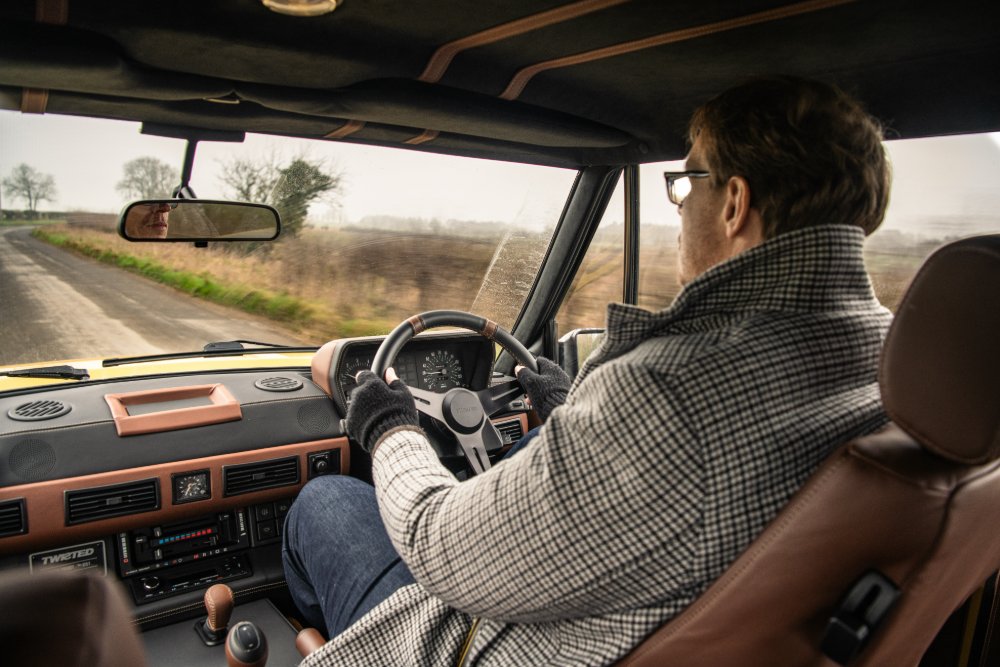
At idle there’s a faint tremor through the steering wheel, just enough to remind you there’s something substantial happening beneath the bonnet. The Chevrolet LT1 V8 settles into a gentle burble, but it’s a surprisingly civilised one. Rolling quietly through the small villages scattered across the Moors, the car never feels antisocial or theatrical. If anything, the only obvious difference compared with a modern SUV is the reaction it generates from pedestrians, who seem rather pleased to see it.
The same civility continues when we find ourselves stuck in a slow-moving queue behind a pair of tractors tackling Sutton Bank, one of Britain’s steepest public roads with gradients approaching 25 percent. It’s not the most glamorous setting for a £350,000 restomod, but it does provide an opportunity to take in the cabin properly.
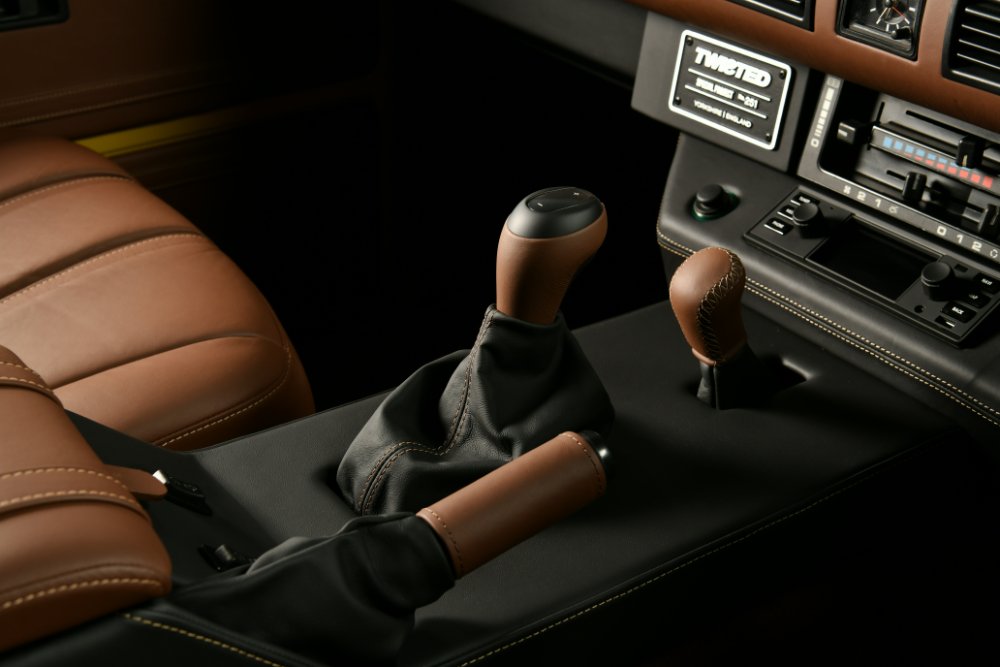
The first thing you notice is what isn’t there. No enormous infotainment screens, no menus buried three layers deep. Instead there’s a set of chunky switches and tactile controls that feel entirely appropriate for the car’s character. The production version will evolve slightly – there will be cup-holders, additional billet aluminium components and a more refined hidden audio system – but the overall approach remains reassuringly analogue. The seating position has also been subtly improved. You sit slightly lower than in a standard Range Rover Classic, which gives a more natural driving posture while still preserving the commanding view over that vast bonnet.
Eventually the tractors crest the hill and the road opens out. With 500bhp available, it seems only polite to see what happens next. The power delivery is pleasingly progressive. Rather than arriving in one overwhelming surge, the LT1 builds its momentum in a smooth, controlled wave. The distant burble from earlier hardens into a deeper growl as the throttle opens, and the big Twisted Range Rover gathers speed with unexpected enthusiasm. This isn’t a car obsessed with numbers, and Twisted hasn’t chased headline acceleration figures. That would rather miss the point. But when required, the performance is brisk enough to place it firmly in modern performance-SUV territory. Importantly, though, it doesn’t feel like a Range Rover Sport.
While it would have been entirely possible to transform this car into something far more aggressive on a B-road, doing so would have removed much of the nuance that makes a classic Range Rover so distinctive. Instead the Twisted car feels like a subtly sharpened version of the original rather than a complete reinterpretation. The steering is direct, although there’s still a hint of the familiar slack around the straight-ahead that has always characterised older Land Rovers. While that might seem like a criticism, it isn’t; it just means that the steering isn’t constantly reacting to cambers and bumpers, giving the car a relaxed gait. Likewise, that slightly floaty Range Rover gait remains present. It does mean you won’t be attacking corners with the same enthusiasm as you might in something like an Alfa Romeo Stelvio Quadrifoglio.
Instead, the Twisted Range Rover is at its best when covering ground swiftly and effortlessly. The ride strikes a pleasing balance between control and comfort: supple enough to absorb poor surfaces, yet firm enough that the car never feels vague or wallowy. You’ll certainly notice potholes and bumps, but they arrive as information rather than punishment.
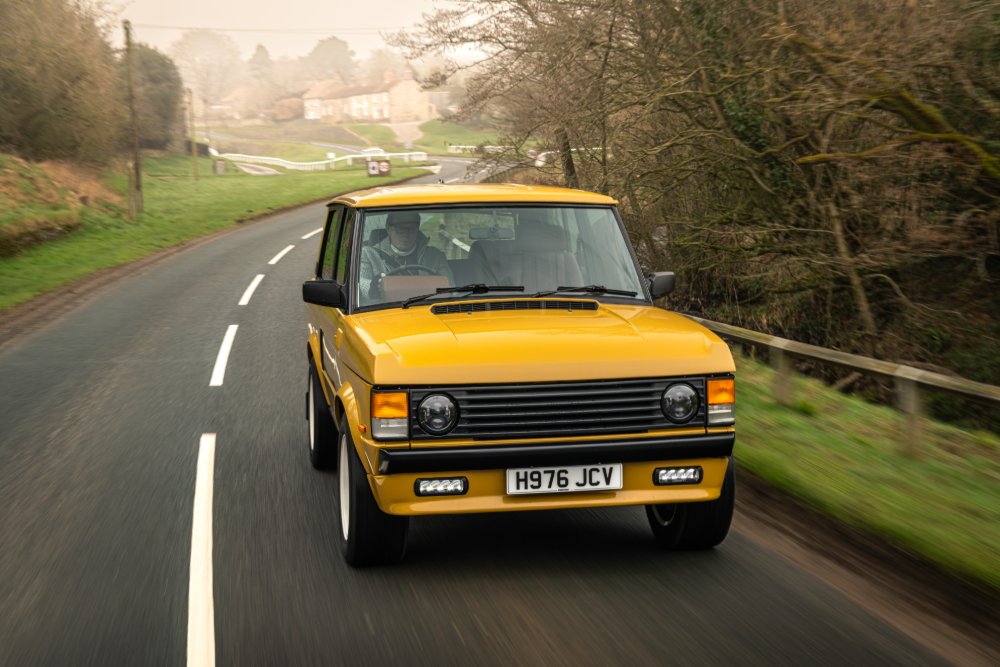
What impresses most is the way the chassis handles the engine’s output. Rather than feeling like four driven wheels arguing among themselves about who gets to deliver the torque, the car simply surges forward in one cohesive movement. The brakes, meanwhile, are exactly what you’d hope for in a vehicle with this sort of performance: powerful, but delivered with a reassuringly progressive feel. Develop a rapport and you’ll be pushing the Twisted Range Rover harder than you would in a standard Classic; there’s good feedback through the steering wheel, and while body roll hasn’t been eradicated (which is largely a good thing, all told), there’s more confidence to press on into the corners than you’d otherwise believe.
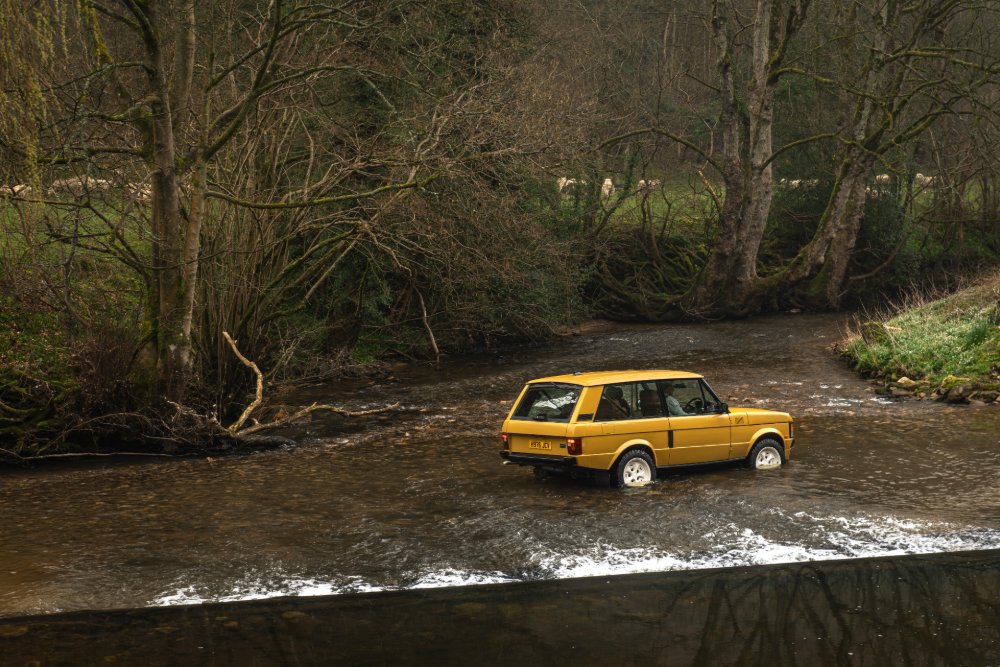
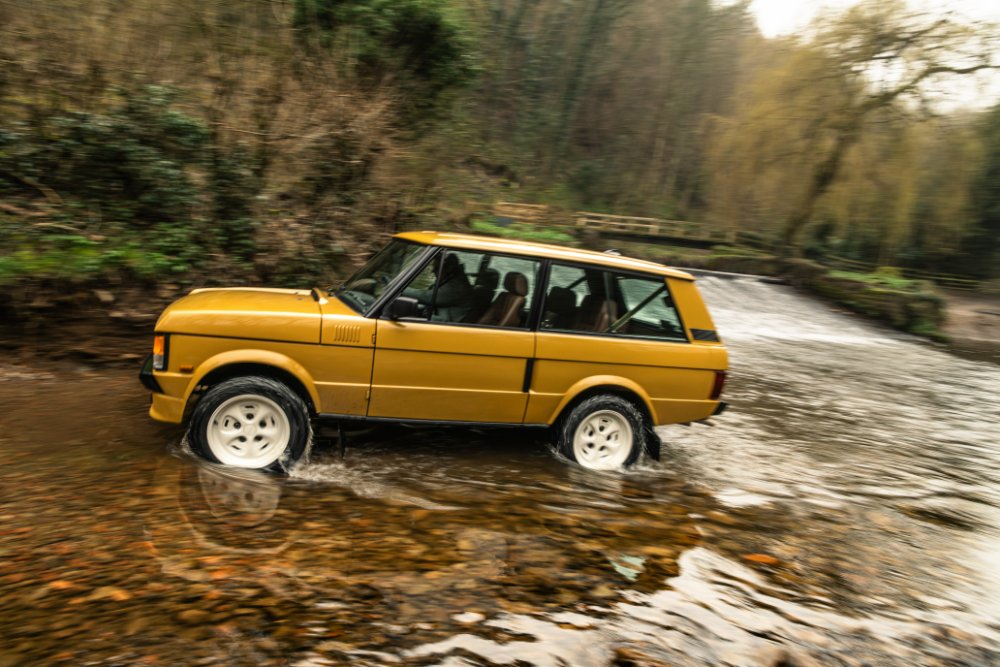
Then there’s the off-road capability. Admittedly, most £350,000 restomods are unlikely to venture far enough off-road beyond a concours lawn, but it’s reassuring to know that this one could if required. A rock-strewn ford and the uneven track leading down to it are dispatched without drama, the Range Rover shrugging off the terrain with ease, much in the same way that defined the original car more than half a century ago. Which neatly sums up the overall impression.
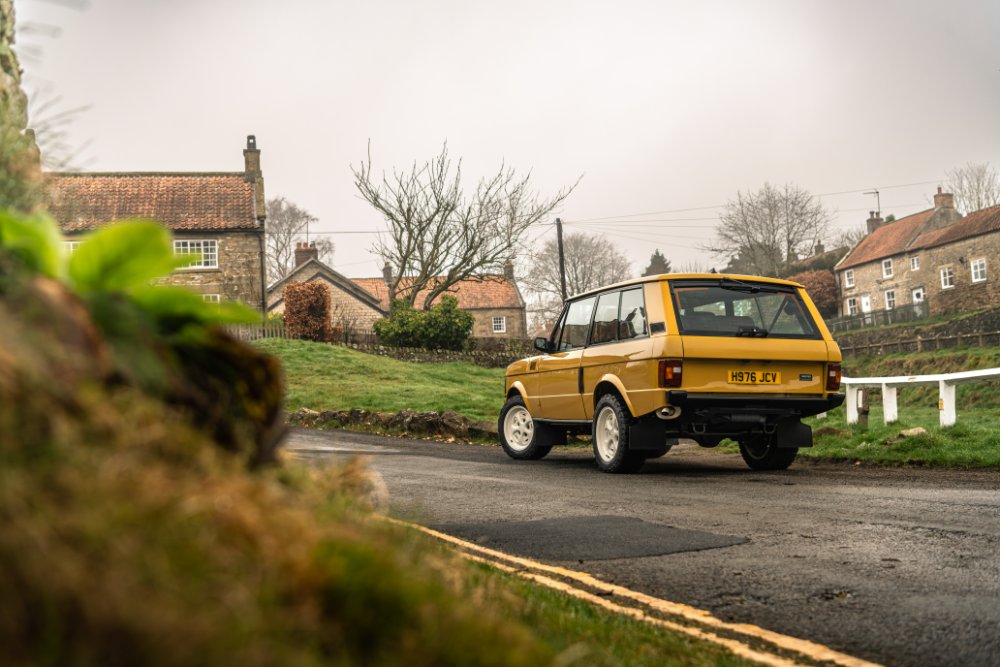
It would have been easy – perhaps even tempting – to turn this project into a thoroughly modernised Range Rover. But that would have stripped away the qualities that made the Classic so appealing in the first place. Instead, Twisted has taken the original recipe and refined it. The essence remains intact: the slightly languid driving style, the commanding view out, the ability to cover ground in unflustered comfort. What’s changed is the precision, the performance and the polish.
The Twisted Range Rover isn’t a daily driver in the modern sense, nor is it a track toy. Think of it instead as a grand tourer for scenic roads and long days out. And in that role, it feels exactly right.
More information on Twisted can be found here.