



Swiss businessman and car collector Albert Spiess, whose collection included some of the most historically significant Lamborghinis in existence, has died. Automobili Lamborghini announced his death on September 22, 2026.
Born in 1950, Spiess spent much of his working life in the Swiss food industry. He was a co-founder of Spiess AG and led the company for around 40 years, specialising in Bündnerfleisch and other meat products from the canton of Graubünden. ORIOR acquired Spiess in 2008, and Albert remained head of the business until his retirement on June 30, 2012.
It was his car collection, however, that made his name familiar far beyond Switzerland. Lamborghini was at its centre. In a 2025 interview with the manufacturer, Spiess recalled that his first car from Sant’Agata was a 1979 Countach LP400 S. A Miura SV and Silhouette followed, but his buying subsequently became increasingly concerned with the significance and history of individual cars rather than simply assembling examples of each production model.
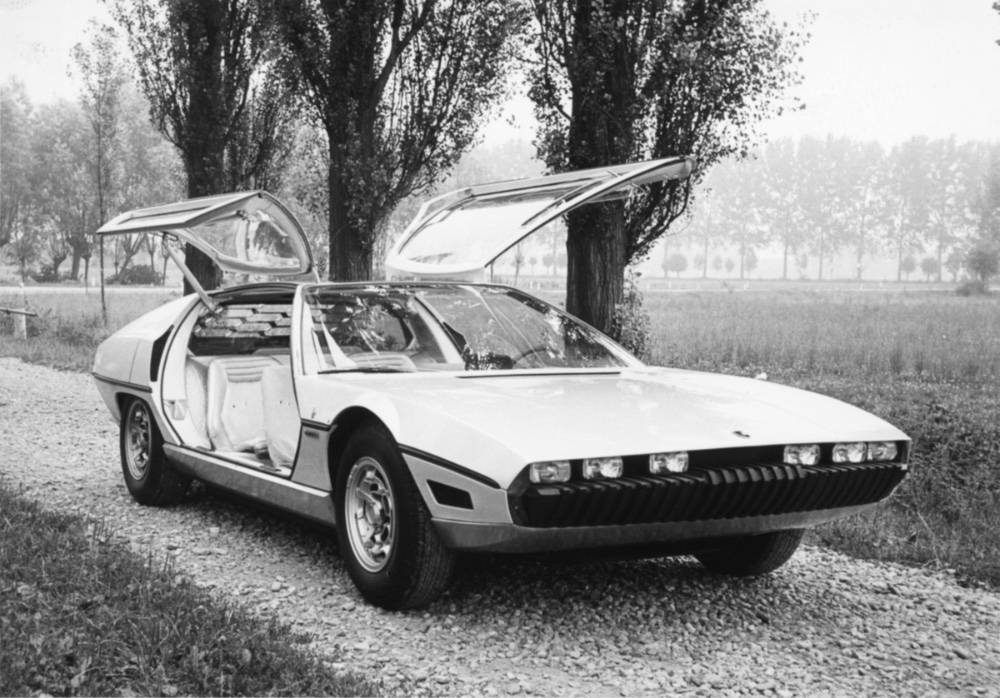
The result was a Lamborghini collection with an unusually strong emphasis on prototypes and design studies. At the 2013 Schloss Bensberg Classics, for example, Spiess displayed the 1963 350 GTV, together with the Bertone Marzal (pictured above) and Bravo concepts and the unique Miura Roadster. The latter had been created for the 1968 Brussels Motor Show and remained a one-off.
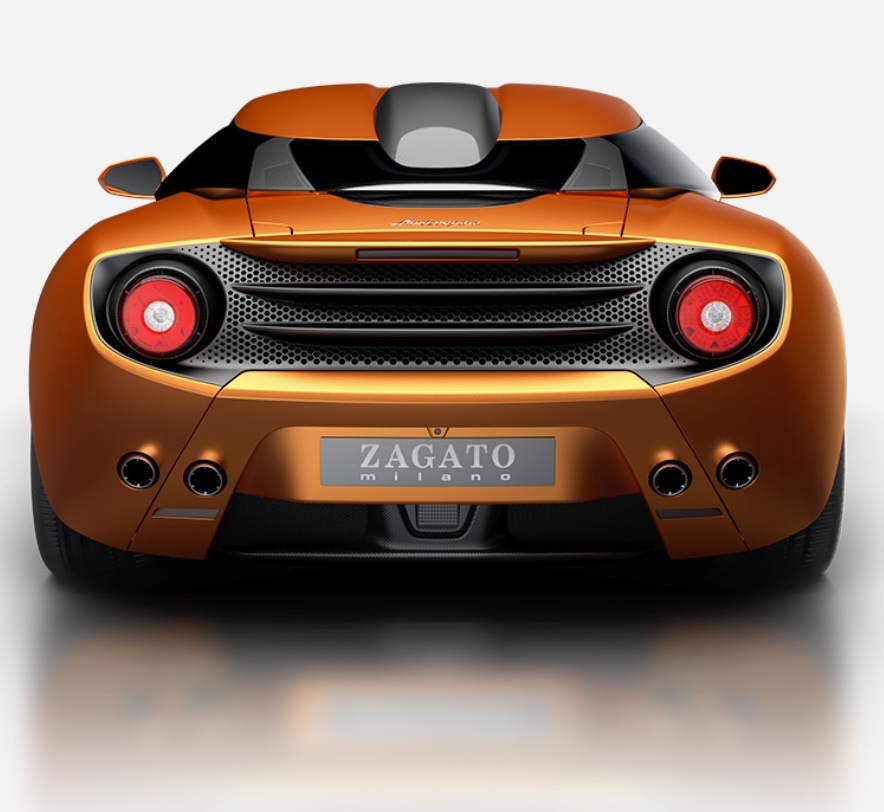
Spiess’ interests extended considerably beyond Lamborghini. Alfa Romeo was another important thread in the collection, and among his best-known cars was a 1968 33 Stradale, chassis 75033.110. The remarkably original car won the Coppa d’Oro, decided by public vote, at the 2018 Concorso d’Eleganza Villa d’Este, as well as the Trofeo ASI for the best-preserved post-war car. Spiess also owned examples of the Alfa Romeo SZ and RZ. Those Alfas formed part of a wider fascination with Zagato. By 2014 his collection already included an Aston Martin V8 Zagato and V12 Zagato alongside the SZ and RZ, and Spiess subsequently took the relationship with the Milanese coachbuilder a stage further. To mark Zagato’s 95th anniversary he commissioned the Lamborghini 5-95 (pictured above), a comprehensively rebodied Gallardo LP570-4 that was unveiled at Villa d’Este in 2014.
Maserati was represented by cars of comparable historical importance. Spiess owned the dark-blue 1956 450S, chassis 4502, which won Best of Show at the 2014 Concorso d’Eleganza Villa d’Este. One of nine 450Ss built during 1956 and 1957, the Fantuzzi-bodied 4.5-litre competition car had originally been sold to American entrant Tony Parravano and subsequently raced in the US before eventually joining Spiess’ collection in Switzerland.
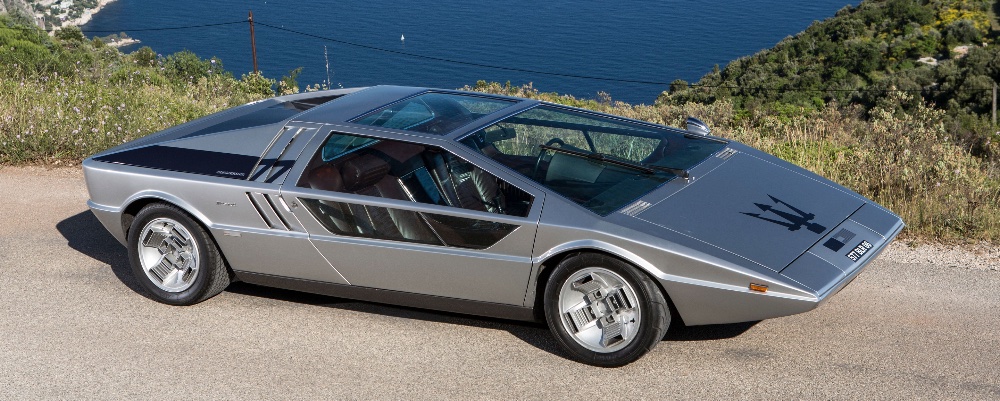
At the opposite end of the Maserati spectrum was the Boomerang, Giorgetto Giugiaro’s extraordinary wedge-shaped show car. First displayed as a static model in 1971 before appearing as a running car at Geneva the following year, the Boomerang used Bora mechanicals beneath its radically geometric Italdesign body. It eventually entered Spiess’ collection and remained with him until it was sold at Bonhams’ Chantilly sale in 2015 for €3.335 million.
Bugatti was another area in which Spiess pursued the development cars rather than concentrating only on production models. Of particular interest were cars connected with the gestation of the EB110 at Campogalliano. Before Bugatti adopted the carbonfibre monocoque that became one of the production EB110’s defining features, its early development programme employed aluminium-chassis prototypes carrying A-series designations. Bugatti itself records the early A1, A2 and A5 cars as aluminium-chassis prototypes, while specialist coachbuilding records associate Spiess’ collection with A3, A4 and A5 from the Marcello Gandini-led development phase, sometimes described under the DMD80 designation.
These early machines are particularly revealing because they record the period before Gandini’s original, more angular design was developed into the EB110 that reached production in 1991. The Bugatti story in his collection extended beyond the EB110. Specialist records also place the 1999 Bugatti 18/3 Chiron in Spiess’ collection. Designed by Fabrizio Giugiaro at Italdesign during the Volkswagen Group’s early revival of Bugatti, the 18/3 was a mid-engined concept shown at Frankfurt and formed part of the sequence of experimental Bugattis that eventually led towards the Veyron.
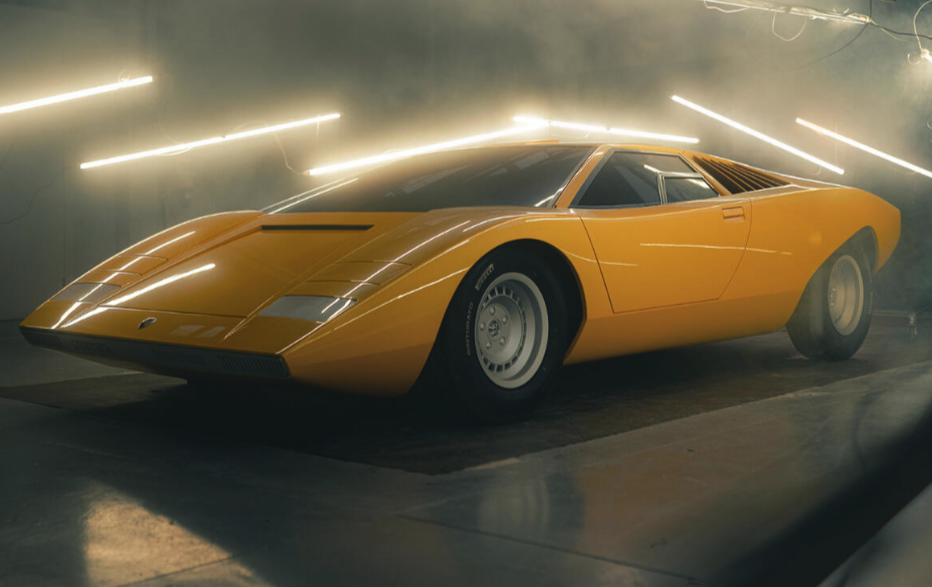
Spiess’ most ambitious collaboration with Lamborghini concerned a car that had ceased to exist decades earlier. The original Countach LP500 prototype was unveiled at the 1971 Geneva Motor Show before being used during crash testing in 1974. Spiess later commissioned Lamborghini Polo Storico to recreate it, with the project drawing on surviving factory documentation and requiring more than 25,000 hours of work. The completed LP500 was shown at the 2021 Concorso d’Eleganza Villa d’Este, 50 years after the original prototype’s debut. Unlike a conventional restoration, the undertaking involved recreating a lost car from archive material, making it one of the more unusual projects carried out by Lamborghini’s historic department.

Spiess remained closely interested in the company’s new cars, too. By late 2025 his collection contained at least one example of each of Lamborghini’s six modern ‘few-off’ series produced up to that point: Reventón, Sesto Elemento, Veneno, Centenario, Sián and Countach LPI 800-4. He identified the Sesto Elemento as a particular favourite, principally for its low weight and extensive use of structural carbonfibre.
His long association with Sant’Agata also made him a familiar figure within the company. In tributes following his death, Lamborghini chairman and CEO Stephan Winkelmann recalled knowing Spiess since joining the manufacturer in 2005, while chief marketing and sales officer Federico Foschini said their acquaintance stretched back almost 30 years. Both referred to a personal relationship that had developed alongside Spiess’ activities as a collector.
The Magneto team wishes to pass on its condolences to the Spiess family.