

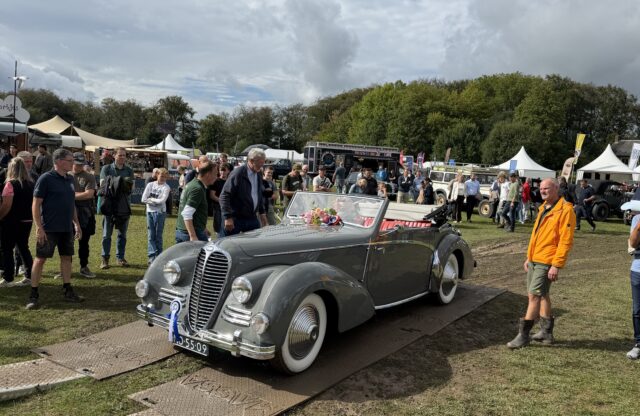
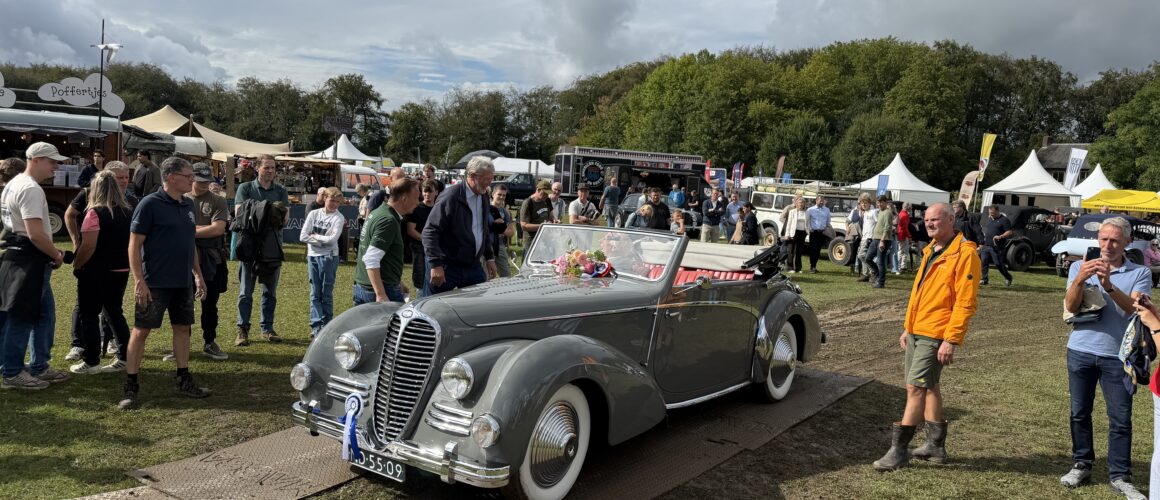
A 1948 Delage D6 3-Litre with cabriolet coachwork by Pennock took Best of Show at the Wheels Mariënwaerdt 2026 Concours d’Elegance, held at Landgoed Mariënwaerdt near Beesd from September 11-13. The Delage also won the 1950s Convertibles class, while the public award went to a 1958 AC Aceca.
Magneto was there to help with judging the Bristol and Bristol-engined car classes.
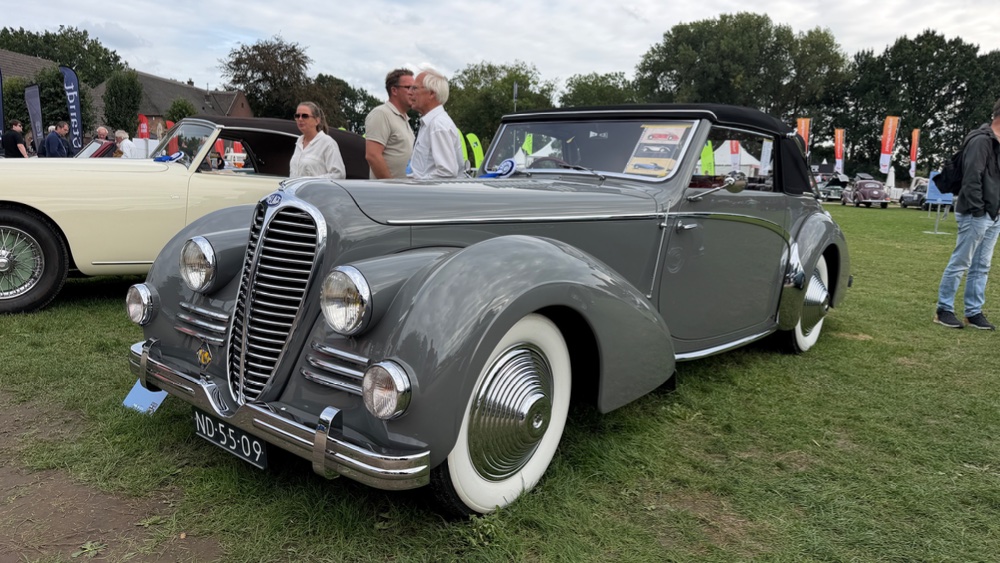
The D6 is one of two 3-Litre chassis bodied by Carrosseriefabriek Pennock in The Hague. One received formal limousine coachwork with a division between the driver and rear passengers; the second became the four-seat, two-door cabriolet that survives today. Its body was designed by Cees Akkermans, who joined Pennock after World War Two and came from a coachbuilding family. Akkermans had worked and studied abroad, and had an interest in French coachbuilding. The resulting Delage used prominent front wings, closely paired vertical grilles and horizontal brightwork around the auxiliary lamps, giving it a distinct appearance from contemporary D6s by coachbuilders such as Chapron, Guilloré and Letourneur et Marchand.
Pennock had been active in The Hague under the family name since 1886, initially building carriages before moving into motor vehicles, buses and commercial bodies. Its passenger-car work included bodies for marques such as Delahaye, Healey and Talbot-Lago. A Pennock-bodied Healey won the award for best Dutch coachwork at the Scheveningen Concours van Koetswerken in 1949. The company supplied an Austin Princess to the Dutch Royal Household in 1952 but was already experiencing financial difficulties. It was eventually liquidated in 1954.
Dutch archives list the car’s first admission to the road as June 30, 1948, with its first registration in the Netherlands recorded on the same date.Period figures generally put the standard engine at around 90bhp, although its present Dutch registration data records 101bhp. By early 2015 the Delage was being restored by Dutch Delage specialist and enthusiast Jaap van Wijk. In August 2022 it was shown at the Concours d’Elegance at Paleis Soestdijk as part of a display devoted to Dutch coachbuilding, alongside several other surviving Pennock-bodied cars. It returned to concours competition at the Wheels Mariënwaerdt 2026 event, winning its class before being selected as Best of Show.
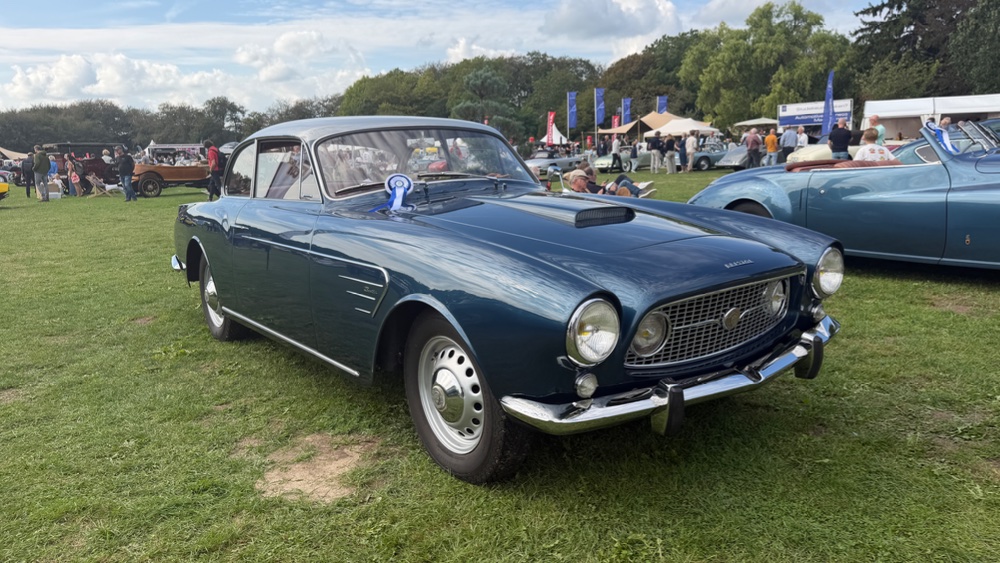
The Bristol anniversary class at Wheels Mariënwaerdt 2026 produced another connection with specialist coachbuilding. Victory went to the 1957 Bristol 406E Beutler, chassis 406E5002, a prototype commissioned while Bristol was developing the 406. Swiss coachbuilder Gebrüder Beutler completed the car before the production 406 had been finalised, and it was displayed at the Earls Court Motor Show in October 1957. Its body showed one possible direction for Bristol’s next model, although the production 406 ultimately adopted a different design built in Britain by Jones Brothers of Willesden. Beutler is also believed to have completed two further 406-based cars for private customers.
Chassis 406E5002 remained the prototype directly connected with Bristol’s development programme. The car was bought from Heritage Classics Motor Company in Beverly Hills in August 2007 and then spent around 15 years in storage. By the time of Mariënwaerdt four years later, it had been returned to concours condition and won the Bristol class, despite an unfortunate shipping accident on the way to the event.
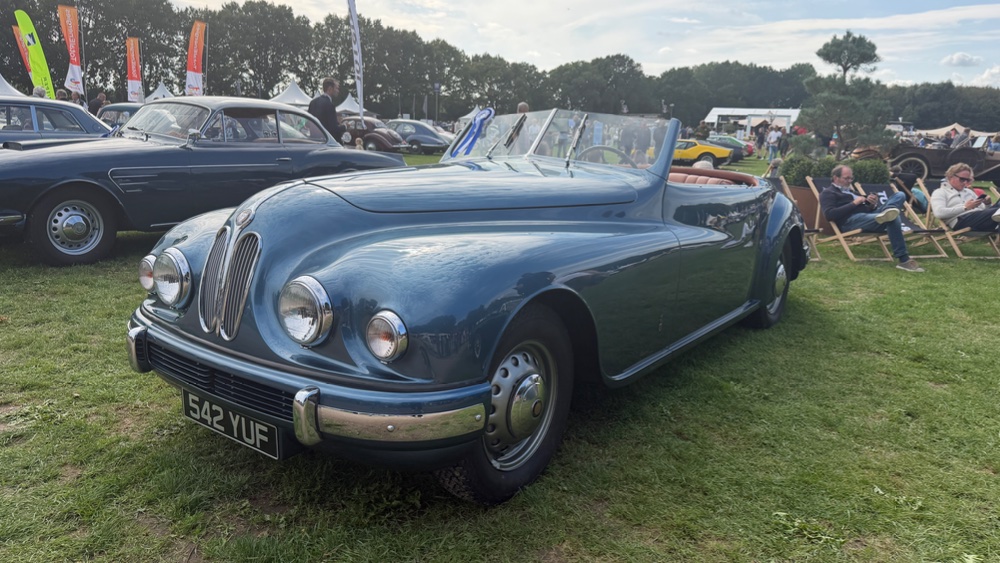
The Bristol display also included 1950 402 Drophead Coupé chassis 402/711, one of around 20 examples of the marque’s first production open model. Chassis 711 was completed in February 1950 and was built in left-hand-drive form despite being delivered new in Britain. Its first owner was Pallas Oil & Trading Co Ltd at Imperial House in Moorgate, London. By 1995 the car had reached California.
A record compiled by the North American registrar of the Bristol Owners Club listed Roger Smith as its owner and described 402/711 as incomplete and fitted with a 3.5-litre Jaguar engine. The Bristol was restored in 2010 and subsequently maintained by RH Classics, and it changed hands at Bonhams’ Bond Street sale in December 2025.
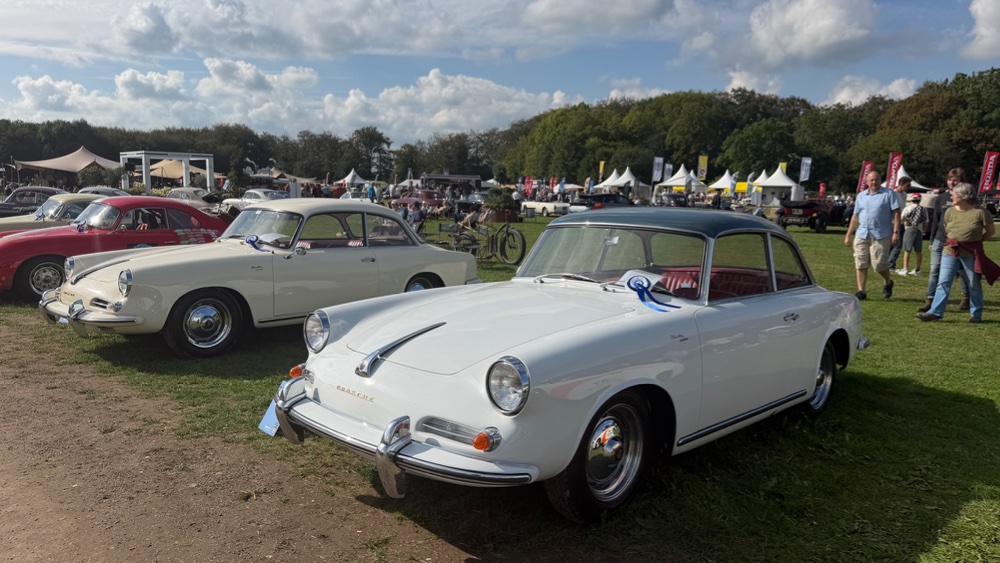
Beutler was also represented in the Porsche field at Wheels Mariënwaerdt 2026, where two of its four-seat derivatives of the 356 were displayed together. The Swiss company’s relationship with Porsche dated back to the marque’s earliest production cars. In 1948 chassis 356/2-002 was sent to Thun so that Ernst and Fritz Beutler could develop an open body, and six early cabriolets were eventually produced. A Beutler cabriolet was shown alongside a Gmünd coupé when Porsche appeared at the Geneva Motor Show in 1949.
Beutler returned to Porsche-based coachwork a decade later. In December 1958 a spare 356 chassis, number 12335, was sent to the company and lengthened by approximately 250mm before receiving an aluminium 2+2 body. Erwin Komenda and Porsche’s styling department inspected the finished car, after which later versions incorporated more standard Porsche components, including lamps, bumpers and door furniture. The second long-wheelbase car, chassis 13011, was an open version commissioned by Carl, Duke of Württemberg after he saw the Beutler design at Geneva.
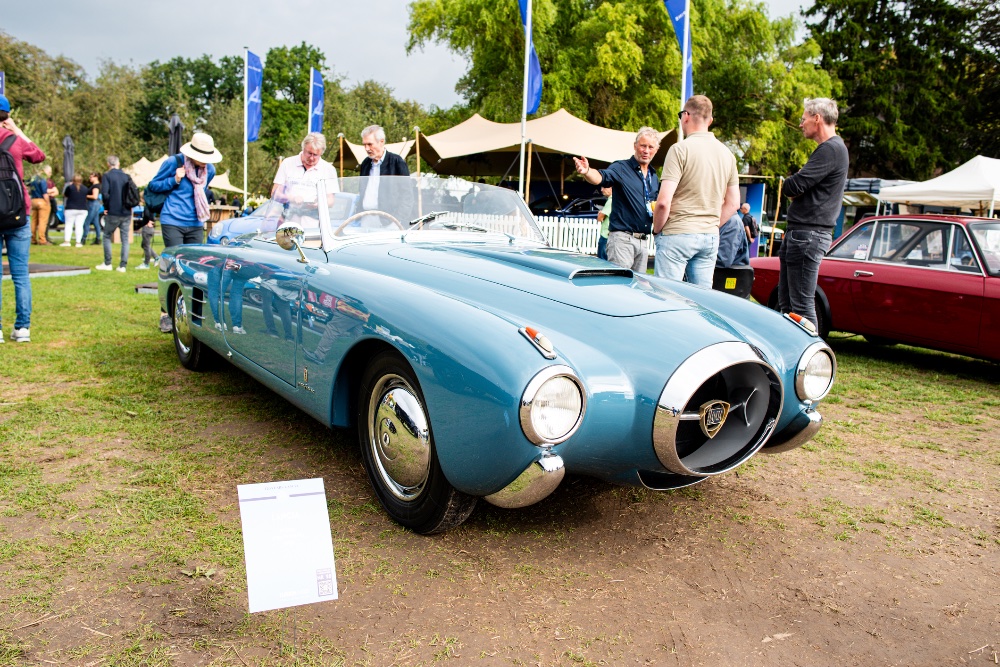
Lancia collected five awards at Wheels Mariënwaerdt 2026, during its 120th-anniversary year. A Flaminia Coupé 2.5 won the marque class, while the Most Original Award went to the 1952 Aurelia PF200 Spider, chassis B52-1004.
The first of the small group of PF200 show cars created by Pinin Farina, it made its debut at the 1952 Turin Motor Show. The large circular opening in its nose reflected the influence of contemporary jet aircraft, with the North American F-86 Sabre frequently associated with the design. Italian actor and singer Renato Rascel saw the PF200 at Turin and bought it directly from Pinin Farina, taking delivery in July 1952. It passed through several further owners before being acquired in 1974 in dismantled and poor condition.Its new owner began a restoration during the 1980s that took nearly ten years, that saw several visual revisions to bring it into line with later example of the PF200. The PF200 then remained in the same ownership for close to half a century and was at one stage displayed inside its owner’s home.
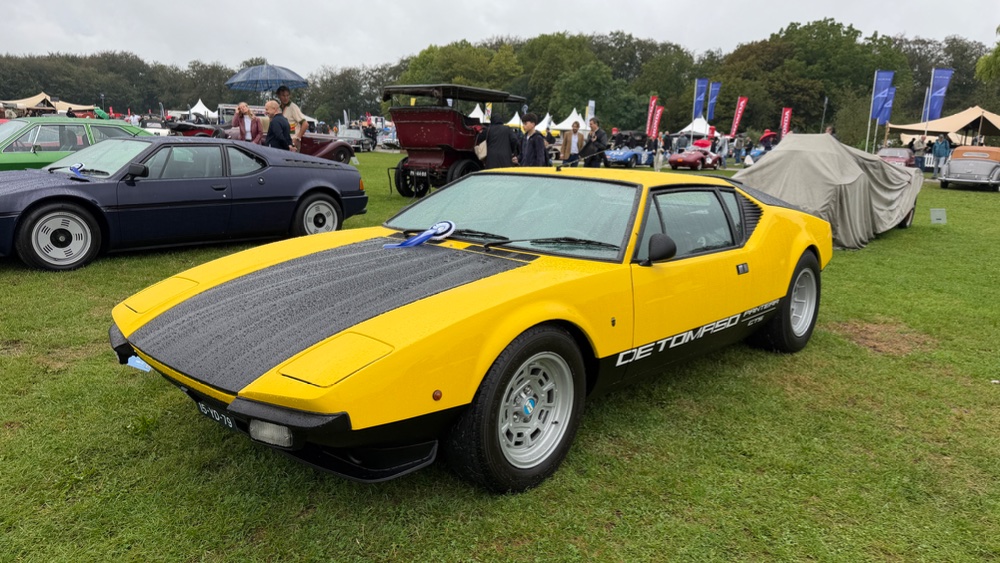
The winner of the 1970s Sports Cars class at Wheels Mariënwaerdt 2026 was the 1972 De Tomaso Pantera that had originally been built as the Pantera 290 prototype. It was displayed at that year’s Geneva Motor Show with a tuned 2994cc Ford Essex V6 in place of the production Pantera’s Cleveland V8. The engine produced around 207bhp and was coupled to a five-speed transmission, with a claimed top speed of around 140mph.
De Tomaso was considering the car as a lower-priced version for European markets, but the project did not progress to production due to a lack of interest from the buying public. The prototype later returned to the factory, where it was rebuilt with conventional V8 Pantera mechanicals before being sold. It was converted again later in its life, this time into GT5 specification.
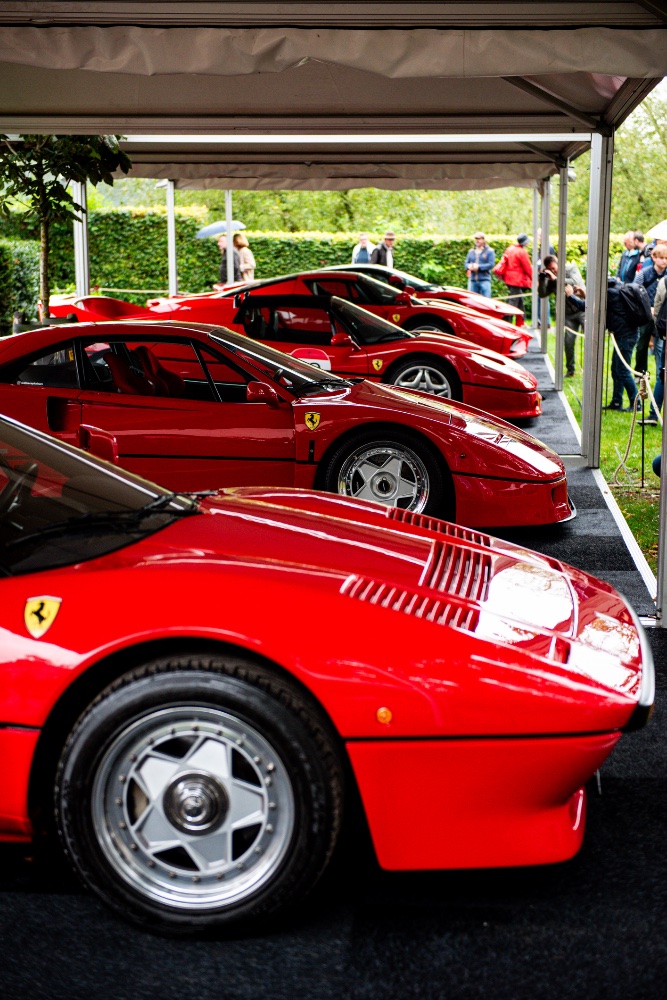
Away from the judged concours at Wheels Mariënwaerdt 2026, Ferrari provided one of the event’s largest marque displays. Fifteen cars were recorded in the dedicated collection, ranging from 1950s sports-racing machinery to recent limited-production models. The 288 GTO, F40, F50, Enzo and LaFerrari were joined by the F80. An FXX-K Evo, Monza SP2, Daytona SP3, 599 GTO, 812 Competizione and 849 Testarossa were also among the cars shown, alongside three fascinating older machines.
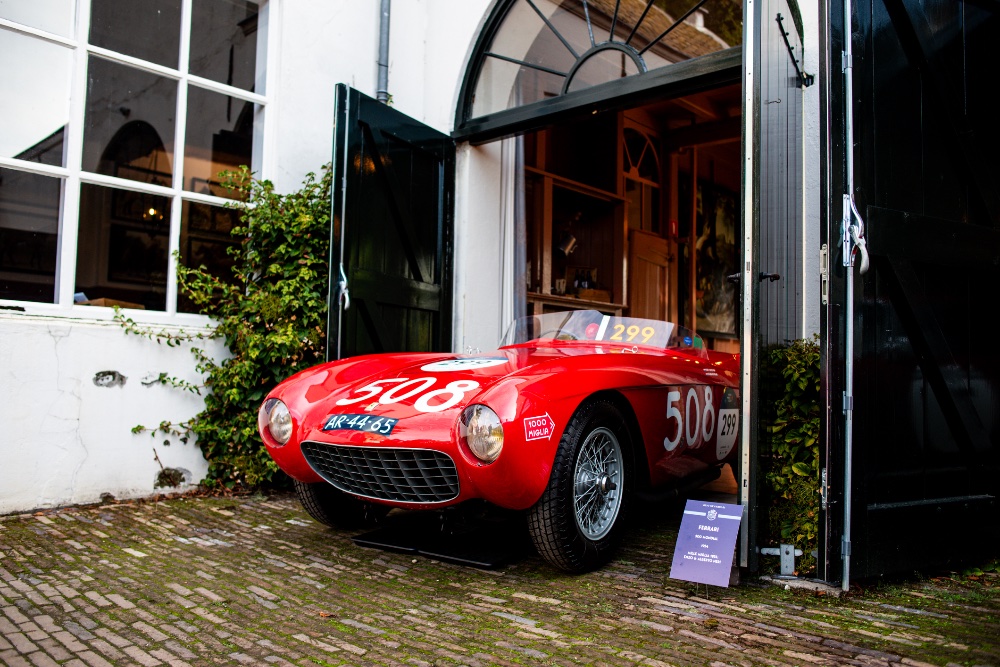
The oldest was 1954 Ferrari 500 Mondial chassis 0414 MD, a Pinin Farina-bodied 2.0-litre sports racer from Ferrari’s early four-cylinder competition programme. Its Lampredi engine produced around 155bhp in a car weighing roughly 750kg. Chassis 0414 MD began its competition career with Scuderia Ferrari. Paolo Marzotto and Marino Marini drove it in the Coppa della Toscana in April 1954 but retired. Ferrari subsequently sold the car to Enzo Neri. On May 2, 1954, Enzo and Alberto Neri started the Mille Miglia in 0414 MD carrying competition number 508, corresponding to their 5:08am starting time. They reached Ravenna before mechanical trouble stopped the car on the way to Pescara. Another 500 Mondial, driven by Vittorio Marzotto, finished second overall behind Alberto Ascari’s Lancia D24.
Neri continued to use 0414 MD and entered it for the Supercortemaggiore meeting at Monza in 1955. The Ferrari was then sold to David V Uihlein of Cedarburg, Wisconsin, and moved to the US. Uihlein used the car at Road America before it passed to Herbert ‘Bud’ Anderson. Anderson finished ninth overall and third in class at an SCCA regional meeting in Milwaukee in August 1958, and later shared it with Wendt in the 1959 Road America 500, where the car retired.
Larry Knaack acquired 0414 MD in 1964 and it remained in America for another three decades. It passed through SMC in La Jolla in 1995, went to Brandon Wang in 1996 and then to Christopher Cox in May 1998. Three months later it was bought by Dutch Ferrari importer and collector Frits Kroymans, bringing it back to Europe. It has since appeared regularly in Historic events, including the Mille Miglia, where Fredericus Kroymans and Tjeerd Meijer drove it in 2018.
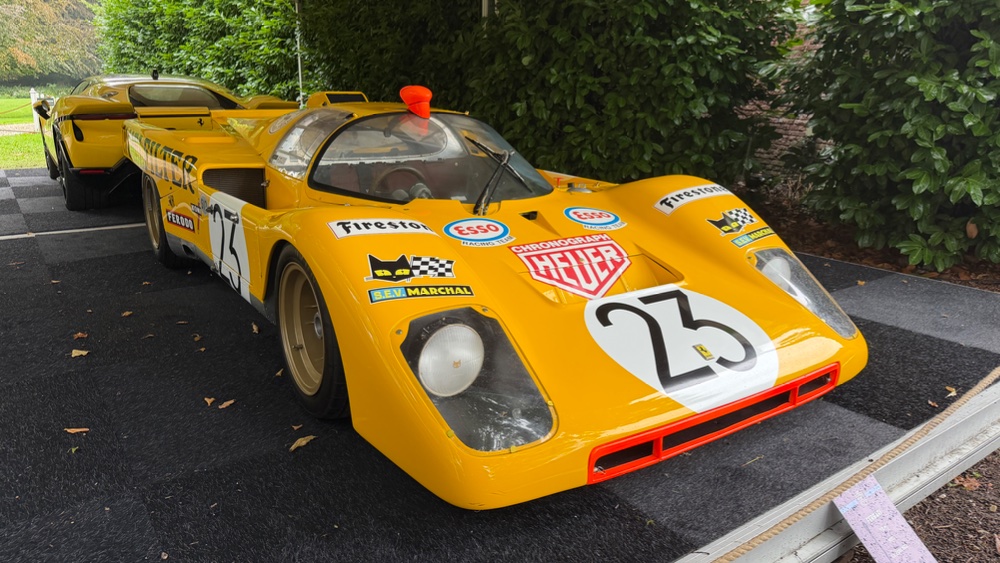
The second competition Ferrari at Wheels Mariënwaerdt 2026 was 512 M chassis 1030, which started life as a 512 S and was supplied new in 1970 to Jacques Swaters’ Écurie Francorchamps. It was finished in the Belgian team’s yellow rather than Ferrari red. Derek Bell and Hugues de Fierlant gave it its competition debut at the Spa 1000km on May 17, 1970. Despite a sticking throttle affecting practice, Bell qualified seventh and the pair finished eighth overall. A month later 1030 received long-tail bodywork for Le Mans. De Fierlant shared it with Alistair Walker and they finished fifth overall and fourth in the 5.0-litre sports car class.
Later in 1970 the Ferrari was used during production of Steve McQueen’s Le Mans before returning to competition. Bell and de Fierlant finished sixth at the Kyalami Nine Hours, while de Fierlant and Gustave Gosselin took another sixth place at the Buenos Aires 1000km in January 1971. Its Daytona 24 Hours ended with a loss of oil pressure.
The car was subsequently converted to 512 M specification, gaining revised bodywork and developments to its 5.0-litre V12. It returned to Le Mans in June 1971 for de Fierlant and Alain de Cadenet, but clutch and gearbox trouble caused its retirement. Three weeks later de Fierlant won the Coupes Benelux at Zandvoort. De Cadenet and Lothar Motschenbacher then finished fourth in the Watkins Glen Six Hours before de Cadenet drove 1030 again in the Can-Am race held at the same circuit the following day.
De Cadenet later acquired the car and it subsequently passed through Neil Corner to Anthony Bamford in 1972. Its racing continued in Britain. Peter Brown won at Thruxton twice, Snetterton and Croft, Neil Corner won at Silverstone and Willie Green finished second at another Silverstone meeting. Across those seven recorded British appearances, the Ferrari took six wins and one second place.
The third classic-era Ferrari at Wheels Mariënwaerdt 2026 was 275 GTB chassis 08061, a long-nose, aluminium-bodied example originally fitted with three Weber carburettors and finished in Rosso Chiaro. It was first registered in Reggio Emilia on January 20, 1966 and sold by SEFAC seven days later to local resident Rodolfo Landini for 5.75 million lire. Landini regularly returned the car to Ferrari’s Assistenza Clienti department in Modena.
In January 1968 the 275 GTB was sold to Irishman John Michael O’Keefe, who was then resident in Reggio Emilia. Factory servicing continued, with its last recorded visit to Modena taking place in May 1970. The car later moved to the US. By 1974 it belonged to Douglas Wolfe of Shoemakersville, Pennsylvania, and subsequently appeared in Ferrari Owners Club records with Terence M Clark of Charlottesville, Virginia.
Ed Berner of New York bought 08061 in 1977 and kept it for almost 24 years. Fiskens sold the Ferrari in 2002 to Gregory Noblet, son of French gentleman racer Pierre Noblet, who had raced a 250 GTO in period. Under Gregory Noblet’s ownership, 08061 began an extensive programme of Historic competition. It appeared regularly in the Tour Auto, Le Mans Classic, Ferrari Maserati Historic Challenge, Spa Classic and other events between 2004 and 2013. In 2012 it was the only 275 GTB invited to join the 250 GTO 50th Anniversary tour. For Historic racing the car used a six-Weber engine prepared by Piet Roelofs, together with uprated brakes and other competition modifications, and after a subsequent sale GTO Engineering carried out a bare-metal restoration in 2014.
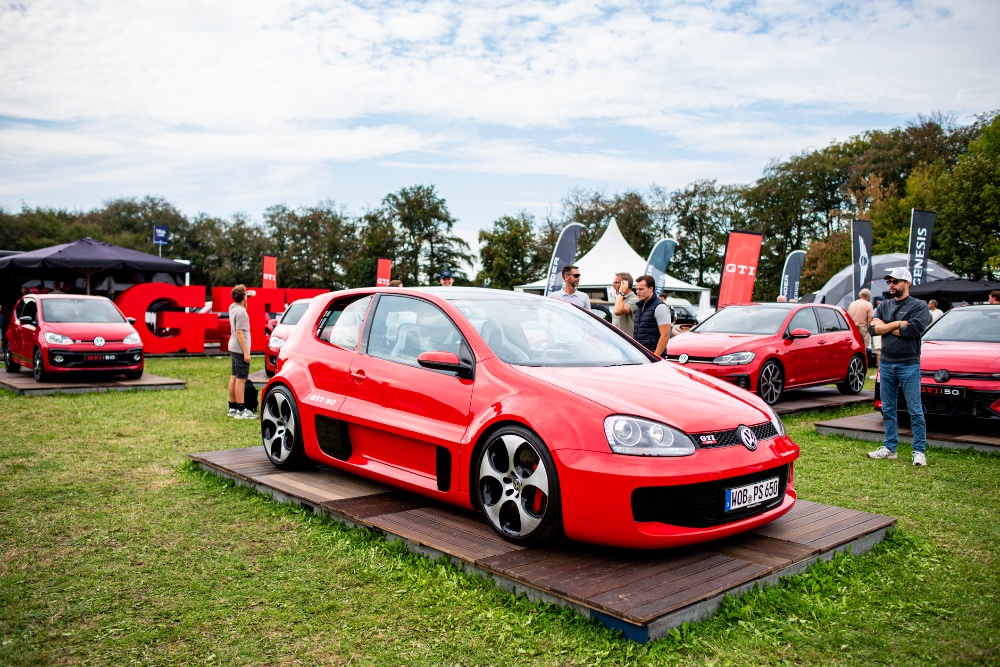
Wheels Mariënwaerdt 2026 also included substantial running activity. The Pre-War Sprint used a partly unsurfaced course over the dyke beside the River Linge, with machinery from Bentley, Bugatti, Alfa Romeo, Riley, Alvis and MG among those making repeated runs. Elsewhere, Bentley was represented by more than a dozen cars from the Cricklewood period, covering the 3 Litre, 4½ Litre, 6½ Litre and 8 Litre models, while Volkswagen marked 50 years of the GTI with 13 cars from the Pon Collection. These ranged from an original 1976 Golf GTI to later GTI derivatives and the current Clubsport Edition 50, and there was also an appearance from the mid-engined Golf GTI W12-650 concept (pictured above).
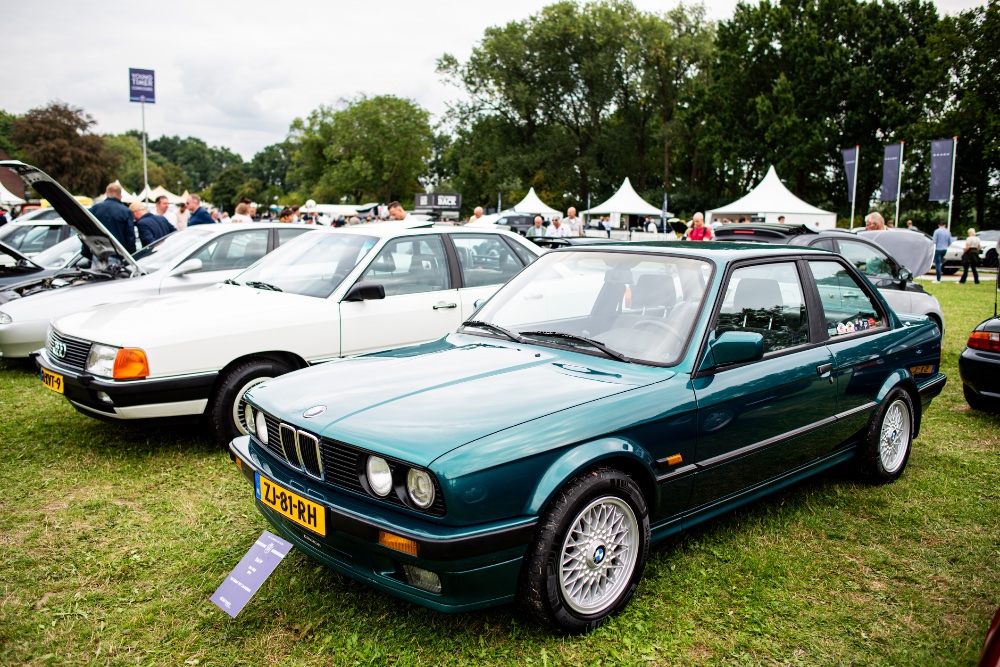
The inaugural Youngtimer Concours at Wheels Mariënwaerdt 2026 covered more recent machinery. Werner Koenen’s 1986 Audi 100 1.8 CD took Best of Show, with Damian Kreijne’s 2001 BMW 330Xi Touring finishing runner-up. Among the other main concours results, an Alfa Romeo 6C 2500 SS Coupé won the Touring Superleggera centenary class, while a 1954 Porsche 356 Pre-A took the dedicated Porsche category. The 1959 Triumph Italia 2000 won the 1960s Sports Cars class and also received the Most Travelled Distance Award.
A 1904 Chenard & Walcker open tourer with Labourdette coachwork won the Special Coachwork Pre-War class. Its early history has not been fully documented, but the car dates from the period when Labourdette was moving from carriage construction into motor-car coachbuilding, almost two decades before Chenard & Walcker won the inaugural Le Mans 24 Hours in 1923.
Further awards went to a 1919 Kappa for Dutch Heritage, a sixth-series Lambda for Best Preserved Car and a 1991 Delta HF Integrale for Advanced Engineering. The Junior Jury chose an Alfa Romeo 6C 2300 MM Touring, while a 1953 Nash-Healey Pinin Farina Series II received the Judges Compliment Award. A 1978 Volkswagen Scirocco TS took the Future Classic Award.
This was Magneto magazine’s second trip to the Wheels Mariënwaerdt concours, and the cars were even better this time around. There’s a wonderful, relaxed feeling to the event, and plenty to see and do. It’s only a short drive from Schiphol airport and, if driving, the Hook of Holland is about an hour away for travelling by ferry.
Wheels Mariënwaerdt will return to Landgoed Mariënwaerdt in 2027, with dates to be announced; further information is available from the official Wheels Mariënwaerdt website.