

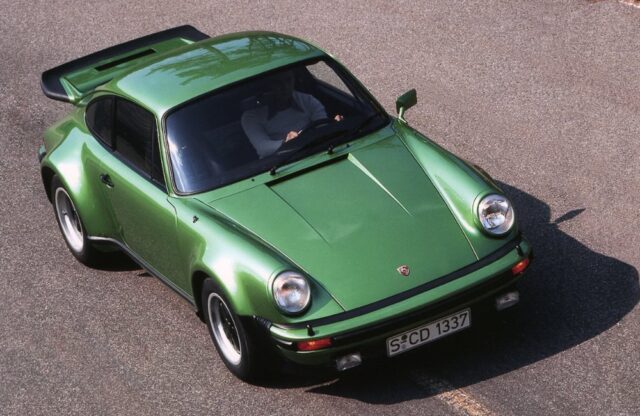
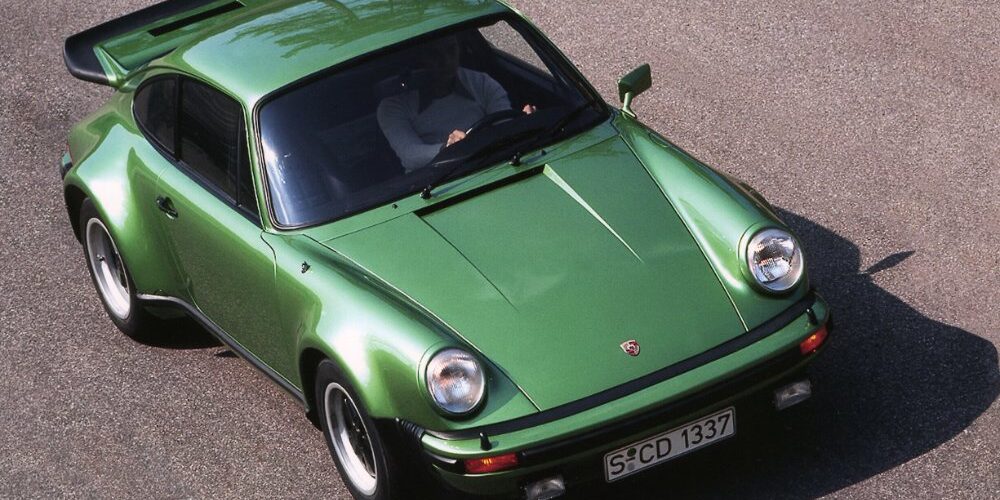
If you feel as though every other catalogue this spring contains a glut of Porsches, you’re not imagining it. Between Amelia and the various Porsche-only jamborees, the auction houses have assembled something approaching a Stuttgart migration. The question isn’t whether Porsches sell – it’s whether they all sell at last year’s prices.
A big test of the market comes in the spring – if you’re in the market for Porsches over the coming months, opportunity knocks. RM Sotheby’s offers six Porsches (for the purposes of clarity, we’re including ‘Porsche adjacents’, such as Rufs, Gunther Werks and Singers in our numbers) in Miami. Gooding Christie’s goes further, with 38 Porsches and Rufs, most of them early 911s and 356s, and a notable proportion offered without reserve. Over the same two days Broad Arrow presents 21 more, before returning a month later with a Porsche-dedicated sale alongside Air|Water. Add RM’s mid-March Magnus Walker Collection and the arithmetic becomes unavoidable: a great many 911s are chasing attention within a very narrow window.
“The short answer is no – there will be dramas,” says Paul Michaels of long-time UK Porsche specialist Hexagon Classics. “Like any product, it’s about numbers – if there are too many, prices are affected. Most people won’t want to take a lower price, so cars get withdrawn. It has to calm down, because one car selling for a fortune doesn’t mean all the rest are worth the same – you get two rich nutters in a room and anything can happen.”
However, Lee Maxted-Page of Maxted-Page is a little bit more optimistic – he doesn’t necessarily see too much supply. “Sell-through rates at auctions in America and recently in Paris have been very strong. It’s still about quality,” he says. “What we’re seeing is that the market is really waking up again to exceptional cars – low-mileage examples and models built in small production numbers. Those are the cars selling easily and achieving top money right now.”
Paul agrees – after the Covid years, where anything with a Porsche badge, whatever the condition, was seized upon, buyers are now more choosy. “For the earlier cars, it’s all about condition and history. If they’re in good condition and have strong provenance, they sell easily. If there are questions around history, originality or maintenance, it becomes much more difficult,” he says. “Buyers are more aware that cars sometimes go to auction for the wrong reasons.”
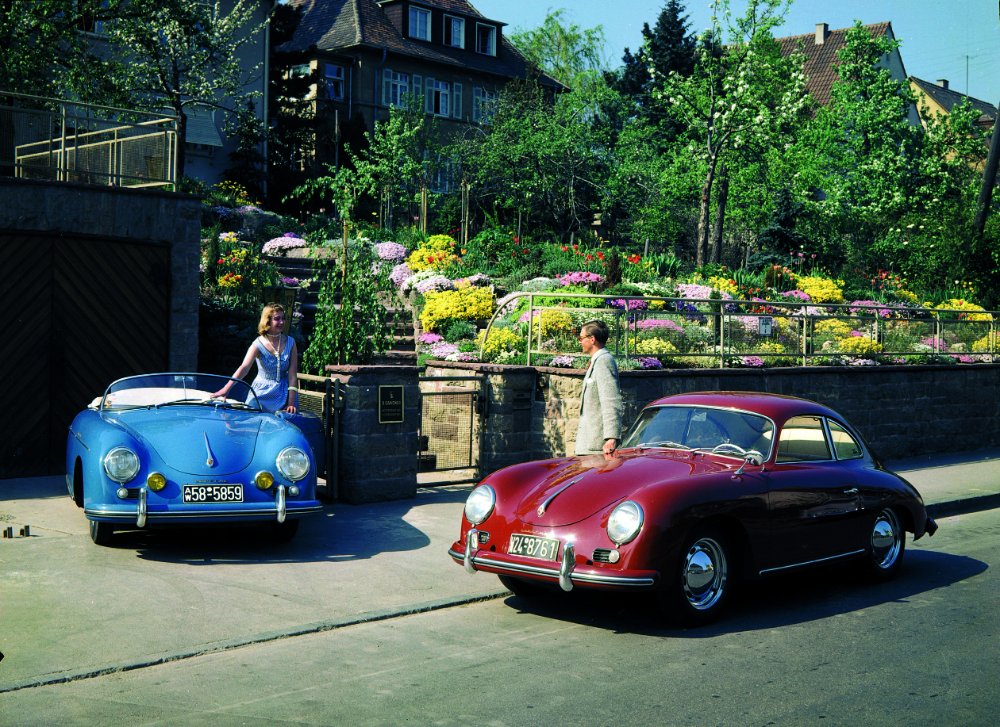
Lee still sees a healthy balance of supply and demand for higher-production cars, but doesn’t expect anything spectacular to happen in that segment during the spring rush – but he views the 356 market as really thinning out. “Unless you have an exceptional Speedster or Carrera, which will always be in demand, there are fewer buyers overall,” he says. “I’m not expecting spectacular results for the 356s coming up, or necessarily for earlier 911s. They’ll transact, but they’ll likely just make sensible money.”
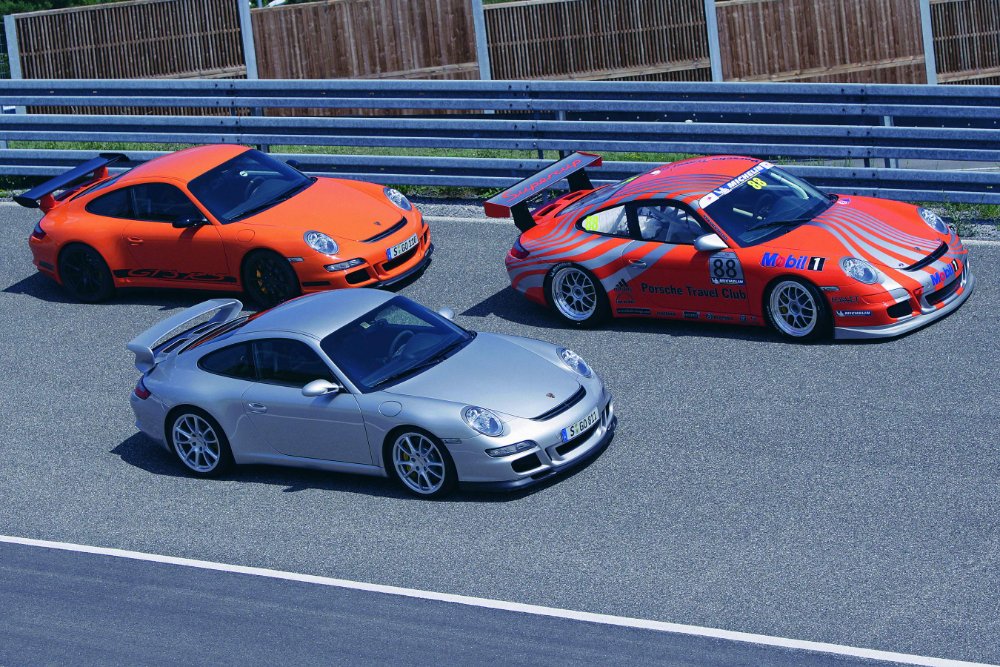
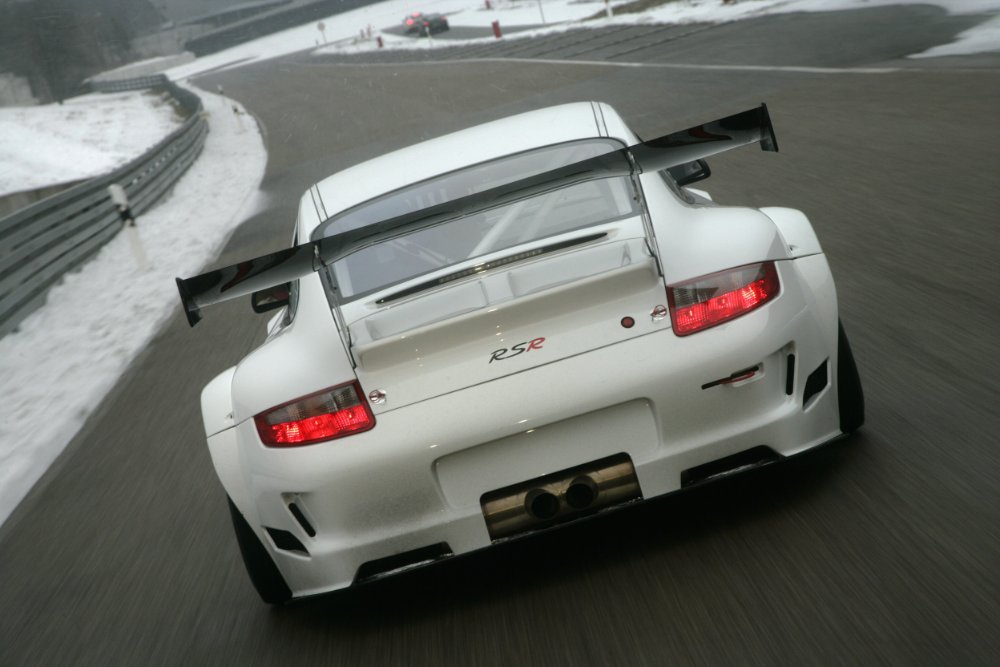
Instead, Lee’s seeing the Porsche market follow the general trends in the wider market, in terms of what’s popular. “We’ve seen a noticeable sideways trend and reduction in volumes for 1970s cars and arguably 1980s cars as well,” he explains. “Right now it’s really about the later cars. We mainly supply racing cars, so for us that means 993, 996 and 997 models – GT2s, 996 RS and RSR, and 997 RSRs in both GT2 and GT3 specification. That segment has really picked up for us over the past year or two and has a strong upward trend.”
In our recent interview with Goran Turkic of Tedson Motors, he suggests that the restomod market is a good advert for a brand’s history – but Lee doesn’t see the ‘backdating’ approach having much of a halo effect on older Porsches. “We’re not restomod people, but I respect what Singer does. It’s got a good position in the market, its cars are beautifully executed – essentially a look back at the classic lines of the early 911, but with modern functionality, more power, less weight. It does this very well, and a lot of our customers own a Singer,” he says.
“But I don’t think what it does really determines what’s happening in the broader Porsche market. There will always be love for ’60s and ’70s Porsches. However, those cars have risen to a level where they’ve probably found their ceiling. Given supply and demand, I don’t see dramatic increases or reductions in price for good examples – they’ve largely stabilised.”
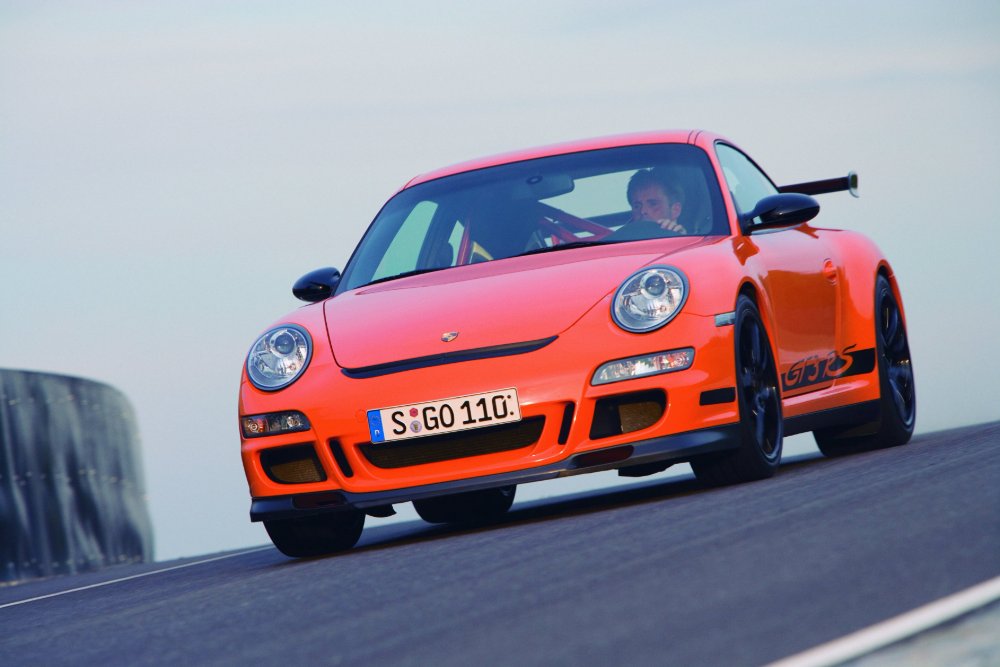
Lee is now seeing the later eras such as the 997 starting to gain prominence. “There’s a lot of love for the 997. The 991 and 992 are obviously great 911s – technically more capable and more sophisticated – but they’ve become larger, heavier and more electronic,” he says. “The appeal of the 997 – whether it’s a GT3 RS, GT2 RS, RSR or GT3 Cup car – is that they’re the last of the truly analogue-era cars before computers and technology took over too much. That’s one of the key reasons there’s so much affection for them right now.”
A particular theme over the past year has been a decline in auction prices of the Carrera RS 2.7. One headline-grabbing million-dollar result (Gooding Christie’s, Monterey) briefly suggested they were entering the stratosphere. Subsequent c.€350,000 sales – and a few awkward silences – imply that the atmosphere remains stubbornly terrestrial. However, both Paul and Lee see this as auction market economics at play.
“One car makes crazy money because you’ve got two determined bidders in the room. After that, it can become difficult, because there’s no guarantee the next one will achieve the same result. Something gets hyped up, but that doesn’t mean it’s sustainable,” Paul says. “If you’ve got a genuinely good car – with proper history and maintenance – it’s saleable. You just can’t be greedy.”
Lee believes that good Carrera RS 2.7 Tourings can still command €500k, with Lightweights double that, but he acknowledges the wide variables in pricing between examples: “There’s quite a large supply, they’ve been around a long time, some have been restored multiple times, some no longer have their original engines, others are older restorations. That variability drives the range in prices. The best 2.7 RS cars rarely appear at auction. Those that do are often there because someone wants to cash out.”
As we noted here, the same Paris auction with the €350k Carrera RS 2.7 saw a 996 GT3 RS top €300k. That a 996 GT3 RS can now sit within €50,000 of a Carrera RS 2.7 would have sounded faintly comic not long ago. Yet here we are: the water-cooled interloper edging ever closer to air-cooled sainthood. Could the water-cooled car’s ‘forbidden fruit’ nature to US audiences denied it when new 25 years ago mean that it could be in demand?
Lee’s not so sure. “Anything with an RS designation will always be collectable – there’s a lot of affection for the 996 RS,” he says. “That said, there was a clear step change with the 997. EVO magazine rated the 3.8 Gen 2 997 GT3 RS as the best car out of 200 they tested – that shouldn’t be forgotten.”
He sees parallels with racing versions, too. “The difference between a 996 RSR and a 997 RSR is also significant. The 996 felt closer to a Cup car in terms of aero and suspension, whereas the 997 was an exceptionally well built motor sport car with tremendous success,” he says. “That’s where I see the future trend of collecting going – whether people choose to drive them, collect them or race them.”
Both Paul and Lee have, however, noted a significant chilling in the UK right-hand-drive market for all Porsches, despite the low production numbers. “It’s been quite quiet, there’s been geopolitical uncertainty globally.” Lee says. “By contrast, America has had a feel-good factor recently, and it’s largely business as usual there. If global stability improves, that can only help confidence, business investment and, in turn, discretionary spending on hobbies.”
What both agree on is that the market feels more selective than it did two years ago. The best cars – well documented, correctly restored, sensibly estimated – will find homes. The average ones may discover that ‘investment grade’ was always an optimistic description.
Many thanks to Paul Michaels of Hexagon Classics and Lee-Maxted Page of Maxted-Page.