

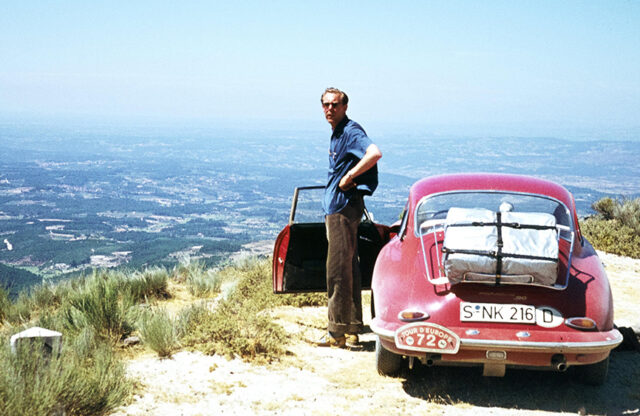
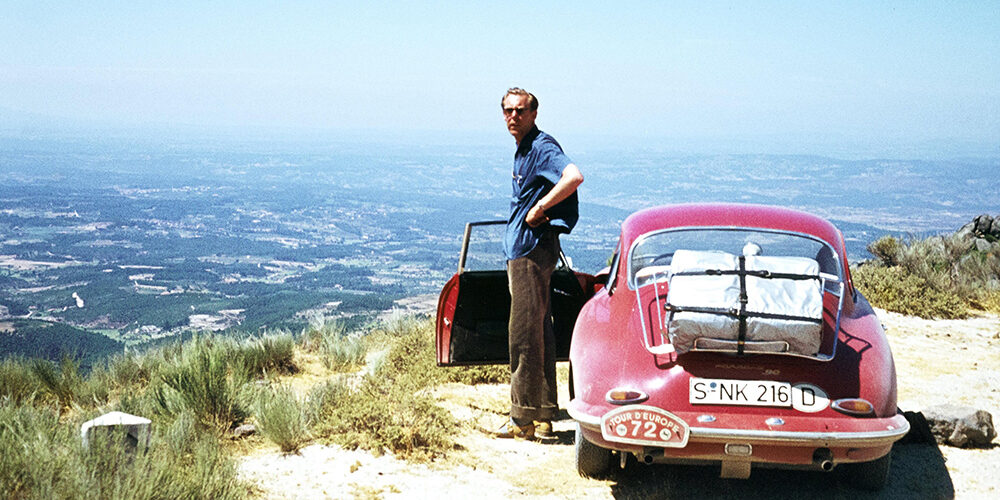
Peter Falk, renowned Porsche engineer and race team director, has passed away aged 93.
Falk was born on November 27, 1932 in Athens, as the son of an archaeologist. After completing an apprenticeship as a car mechanic, he studied mechanical engineering in Stuttgart, specialising in automotive technology. At the age of 23, Falk entered his first rally as co-driver to Alfred Kling, his neighbour and workshop owner. The pairing secured a class victory, followed by further competitive results at the Geneva Rally and the International German Rally in 1957, as well as a sixth-place finish in the Liège-Brescia-Liège road race. These early performances established Falk’s credentials within European rallying at a time when the discipline was rapidly evolving.
In 1959, Falk joined Porsche’s vehicle-testing department, at the time a small team of around ten engineers. Five years later, he moved into pre-development and race support, contributing to the technical work that underpinned the launch and evolution of the Porsche 911. His role bridged engineering development and competition, reflecting the increasingly close relationship between road-car innovation and motor sport during the period.
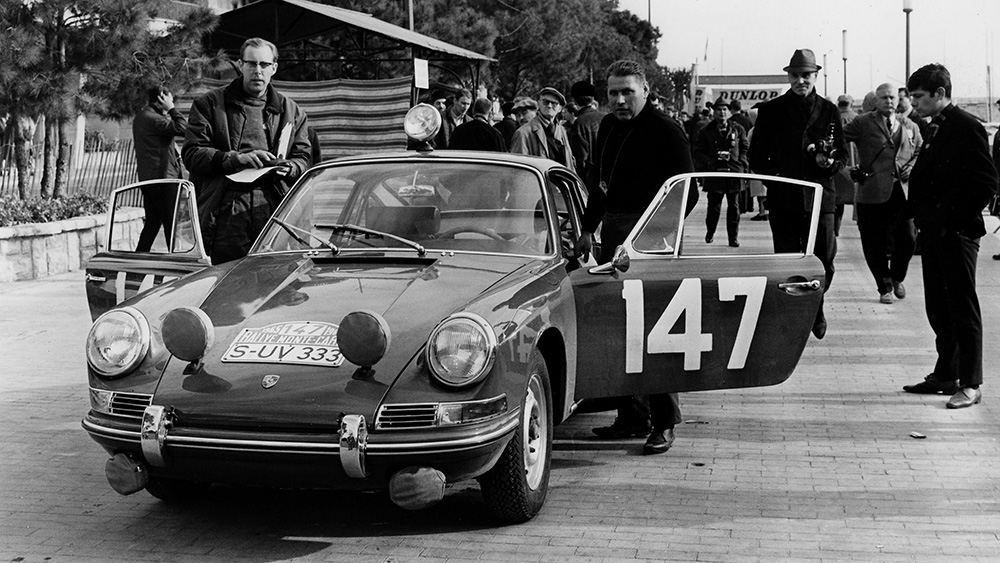
At the 1965 Monte Carlo Rally, Falk served as co-driver to Herbert Linge in the first international competition outing for the Porsche 911. The two had previously competed against each other in the early 1950s at the Black Forest Rally, then on motorcycles. In Monte Carlo they finished fifth overall, one of only 22 crews to complete the event from an original entry of 237.
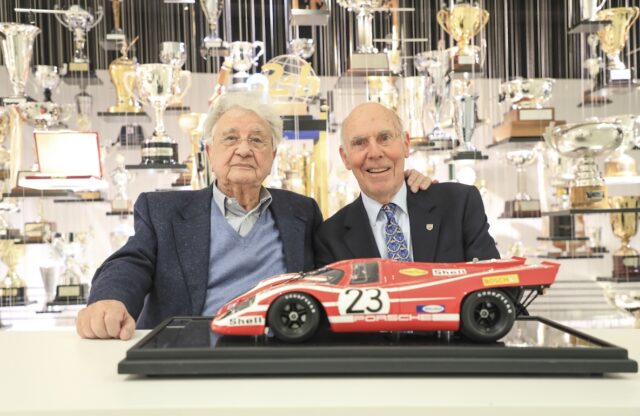
Over the following decades, Falk became a central figure in Porsche’s competition and engineering programmes, contributing to both the brand’s motor sport results and its road-car development. He was closely involved in the competitive success of the Porsche 911 and played a role in the development of a number of significant racing models, including the 904 and the 917.
Between 1973 and 1981, Falk served as head of testing within series development, working on the 911, 924 and 928 model lines. In this capacity, his influence extended beyond motor sport, helping to define Porsche’s broader technical direction during a period of expansion and diversification for the company.
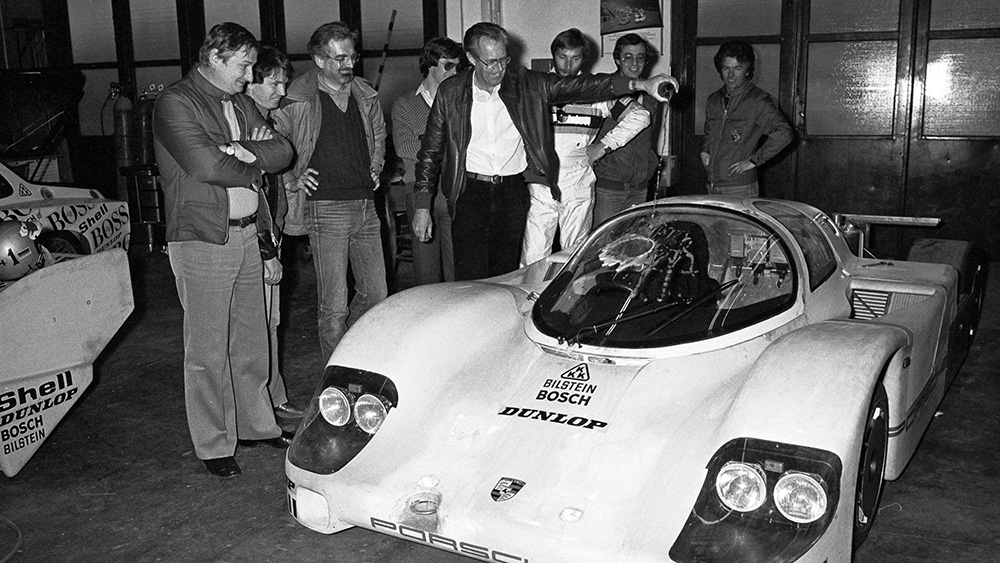
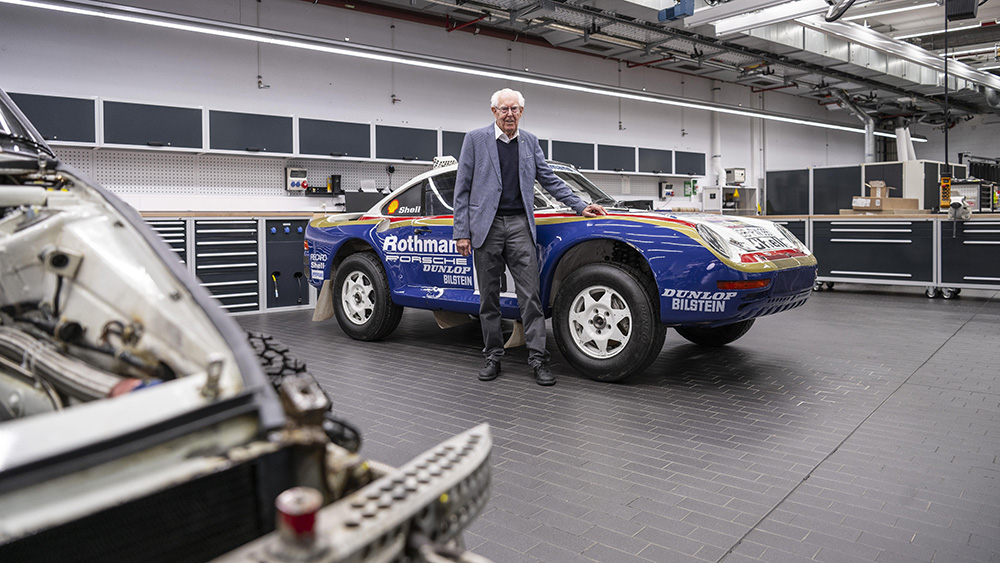
Falk later assumed the role of racing director, overseeing Porsche’s Group C programme with the 956 and 962. This period marked one of the most successful chapters in the marque’s competition history. Under his direction, Porsche secured seven overall victories at the Le Mans 24 Hours and claimed 11 world championship titles during the 1980s. Further achievements during this era included five overall victories at the Daytona 24 Hours and two overall wins in the Paris-Dakar Rally, in 1984 and 1986 respectively – although Falk himself viewed the 1982 Le Mans and 1984 Paris-Dakar wins as his personal highlights.
By the late 1980s Falk had taken on responsibility for chassis development at Porsche, a role he held until 1992. During this period, he was involved in the engineering work that led to the fourth generation of the 911, the 993. His focus on chassis refinement and vehicle dynamics formed part of the wider development programme that shaped the model’s evolution as Porsche prepared the 911 for a new water-cooled era.
Following his retirement in 1993, Falk maintained a close association with Porsche. He worked for many years with the Porsche Heritage and Museum team, and he was a regular presence at classic car events as well as involved in the organisation of a number of historic vehicle rallies.
Peter Falk passed away on January 23, 2026, and is survived by his wife Ruth, a daughter and a grandson.