

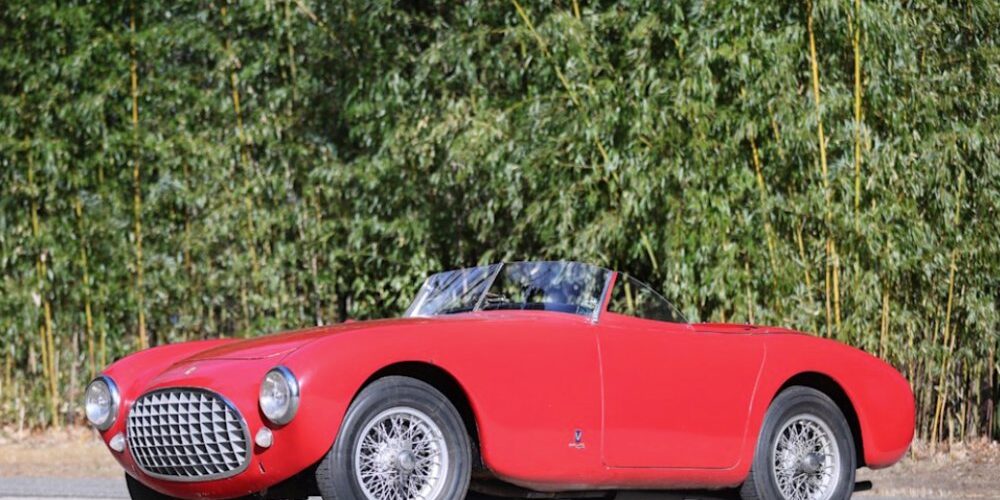
Italian film director Roberto Rossellini’s first Ferrari, a 212 Export Spider, is among a host of Maranello machines set to go up for grabs at Gooding Christie’s Amelia Island auction, which takes place on March 5-6, 2026.
At the time of writing 19 Ferraris are available, with the oldest dating from 1951 and the youngest coming in the form of a 2022 Ferrari F8 Spider. We’ve picked out some of the highlights below, including details on Rossellini’s 212 Export Spider.
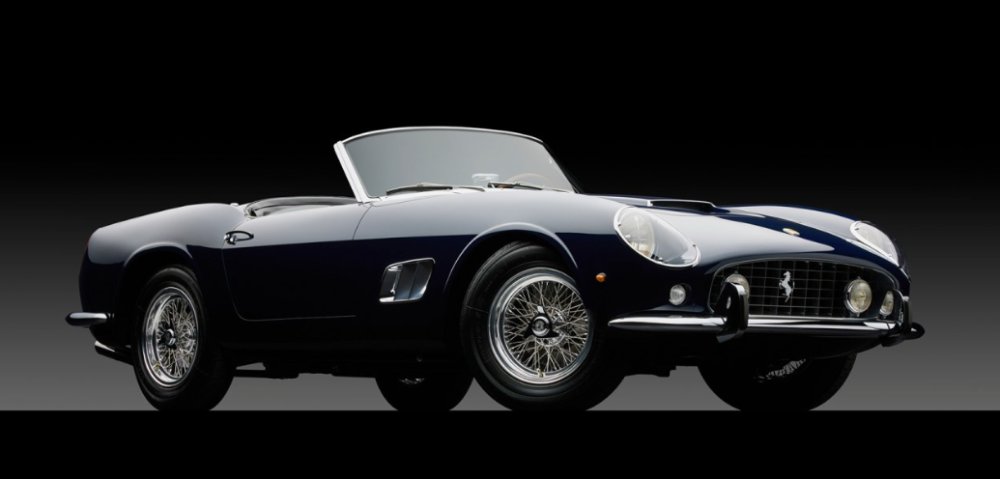
The leading lot at Gooding Christie’s Amelia Island sale is a 1960 Ferrari 250 GT SWB California Spider, chassis 1963 GT. The car was delivered new in October 1960 to Auto Becker of Düsseldorf, Ferrari’s official distributor in Germany. It was finished in Argento with grey leather upholstery, and was specified with early SWB California features including Weber 40 DCL6 carburettors with open velocity stacks, Koni shock absorbers, Borrani RW 3598 wire wheels, an Abarth exhaust system and an 8×32 rear axle.
From January to September 1962, Auto Becker advertised the car for sale in Auto Motor und Sport, describing it as a one-owner example with 12,900km recorded. By the end of 1962, the Ferrari had been exported from Germany and sold to an owner in Lugano, Switzerland. Ferrari Assistenza Clienti records show that by 1964 the car had covered 27,290km. Two months later, it appeared in the US, advertised in Road & Track by Bob Jeffries of Joplin, Missouri with an asking price of $10,500.
By 1970, the 250 GT SWB was located in St Louis, Missouri in the ownership of Don Levin. In 1974, it was acquired by Jim Southard of Classic Car Investments in Smyrna, Georgia, and in 1976 it was advertised with its original hard-top at a price of $16,750. Later that year, the Ferrari was purchased from Ferrari of Los Gatos, California by Ronald Van Kregten of Scotts Valley, California, who kept it for several decades.
During Van Kregten’s ownership, the car remained unrestored. Following his death, it was consigned to Gooding & Company and offered at the 2009 Scottsdale auction, where it was sold to the current owner. A comprehensive restoration was subsequently carried out by Dennison International of Puyallup, Washington. Mechanical systems, including the matching-numbers engine, were rebuilt. The Scaglietti bodywork was refinished in a period-correct non-metallic dark blue, and the interior was retrimmed in tan leather. The restoration also included the undercarriage, engine bay and ancillary components.
The 250 GT SWB was presented at the 2010 Pebble Beach Concours d’Elegance, where it participated in the Tour d’Elegance and was entered in Class M-1 for Ferrari Grand Touring cars. Ferrari Classiche inspected the car in June 2011 and issued Red Book certification, confirming the retention of its original chassis, body, engine, gearbox, rear axle and other major components. A 330 GT five-speed gearbox has since been installed, with the original unit retained. The car is estimated at $16m to $18m at Gooding Christie’s Amelia 2026 sale.
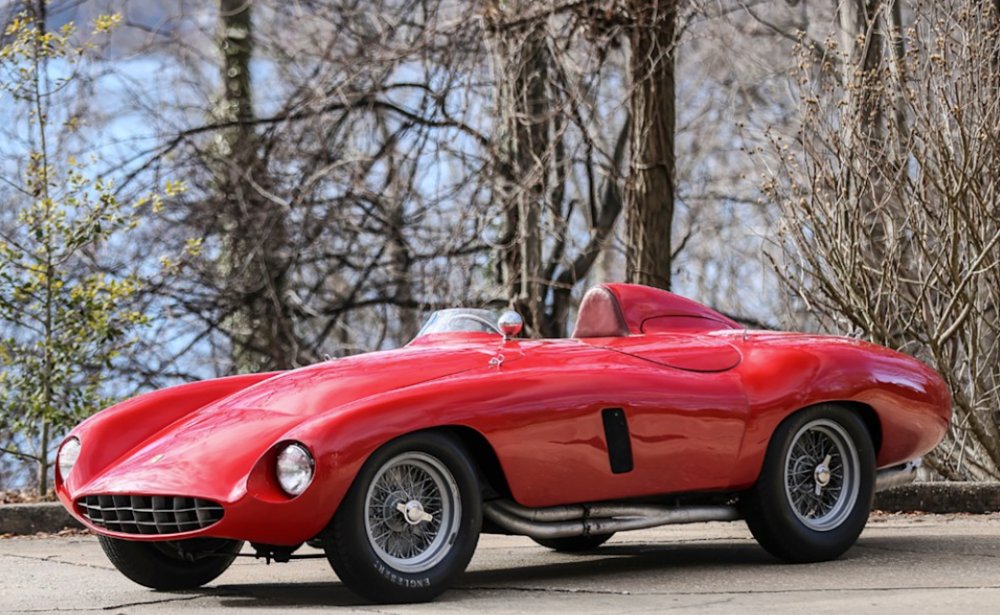
This Ferrari 750 Monza, chassis 0522 M, was completed in early 1955 and delivered new in March of that year to Franco Cornacchia – an early Ferrari customer, dealer and team owner. He founded Milan’s first official Ferrari dealership and established Scuderia Guastalla, through which he campaigned Ferraris in competitions across Europe and the Americas. In 1955, chassis 0522 M was entered in two Italian hill climbs – Corsa Sulle Torricelle in March and Parma-Poggio di Berceto in June – and in the Gran Premio di Bari, where it was driven by Chico Landi to a ninth-place finish.
After these appearances, Cornacchia sold 0522 M and the car was exported to the US. It entered the Southern California sports car scene and was acquired by Los Angeles car dealer and racer Ernie McAfee. Between October 1956 and May 1957, 0522 M was campaigned in SCCA National events at Palm Springs and California Sports Car Club races at Pomona and Santa Barbara. During this period it was driven by Robert Path of Santa Monica on behalf of its owner, novelist and screenwriter Alan Brown Le May.
Subsequently the 750 Monza was purchased by Jack Bates, president of Frank Monise’s foreign car dealership in Pasadena and a competitor in local sports car races. Bates refinished the car in metallic silver-blue with white stripes and entered it in CSCC events at Pomona, Santa Barbara and Riverside between July and September 1957. The best recorded result was fifth overall at Riverside. At the end of the 1957 season, the car was sold to Dr RP McGuire of Fort Worth, Texas. During his ownership, it was repainted dark blue and entered in the SCCA Frost Bite races at Eagle Mountain National Guard Base in January 1958, where it was reportedly driven by Jim Hall.
The 750 Monza was later acquired by Otto Zipper and returned to Los Angeles. In the 1960s, Zipper sold it to Briggs S Cunningham. Registered as NSV 919, it was displayed in the Cunningham Automotive Museum and appeared in the facility’s series of postcards. The Ferrari remained with Cunningham until 1985, when it was sold to Augie Pabst of Milwaukee, Wisconsin. Pabst raced it at the Chicago International Historic Races at Road America in July 1985, before selling it to Bill Schley of Wisconsin. It subsequently passed to Mark J Smith of Pennsylvania and was acquired by the current owner in 1987.
Chassis 0522 M, which has remained largely unseen since the 1980s, is believed to retain its original chassis, Scaglietti coachwork, engine and transaxle. It remains largely unrestored. It is estimated at between $3.5m and $4.5m at Gooding Christie’s Amelia 2026 sale.
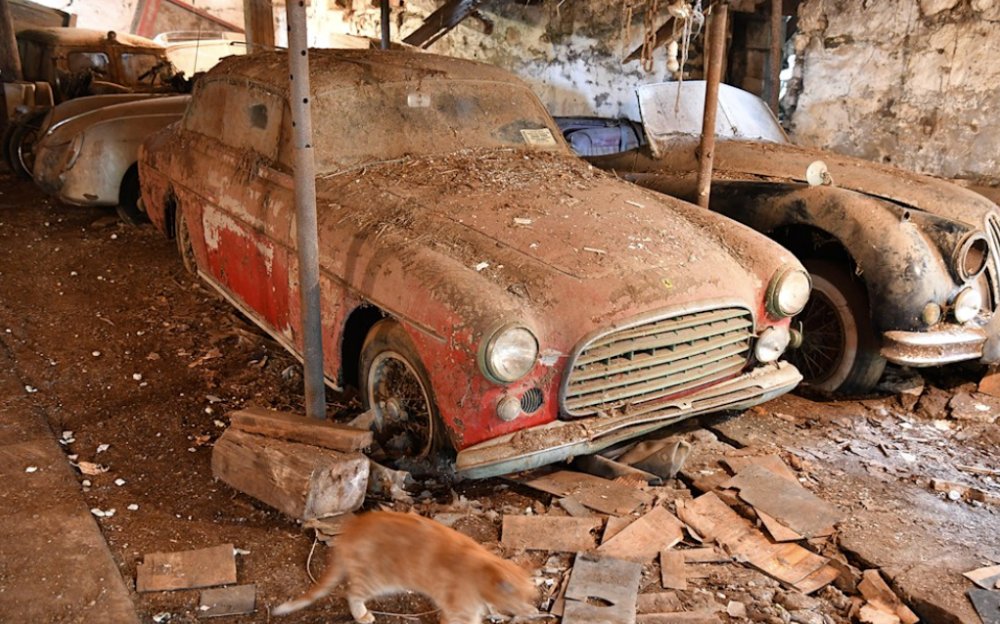
This 1951 Ferrari 342 America is the first of the breed to be built. Chassis 0130 AL received a one-off body by Ghia – the other 23 342s were bodied variously by Pinin Farina, Vignale and Touring. The car was finished in a two-tone livery, believed to be dark blue with a silver-grey roof. Its interior featured a blue upper dashboard and grey lower dashboard with matching blue and grey leather upholstery. The dashboard included a single-instrument binnacle housing a Jaeger gauge with tachometer, speedometer and odometer plus fuel, water-temperature and oil-pressure readings.
Upon completion, 0130 AL was selected to debut the 342 America model. From October 4-10, 1951 it was displayed on Ferrari’s stand at the Salon de l’Automobile at the Grand Palais in Paris, alongside a 212 Export Touring Barchetta and a 212 Inter Vignale. The car was then shipped to London to appear at the 36th International Motor Show at Earls Court on October 17-27.
At Earls Court, the 342 America was exhibited on the stand of Brooklands of Bond Street, the London distributor for Ferrari. The asking price at the show was £9700. After the event, the Ferrari returned to Maranello for final preparation and road testing on February 22, 1952. It was then delivered to Brooklands of Bond Street and sold to its first private owner, David Brown, owner of Aston Martin Lagonda. The car was registered as XMY 124 and appeared in period photographs at Oulton Park in 1955 and at other British events wearing race number 87 and a British Racing Drivers’ Club badge.
By the mid-1950s, the 342 America had been sold to GM Focquet of Oxfordshire, repainted in Italian racing red, and re-registered as MJJ 765. Subsequent English owners included Michael Ward, dealer Colin Crabbe and collector Stephen Pilkington. In late 1966 or early 1967 the car was sold to Edwin K Niles of Los Angeles, and by May 1967 it had gone to Robert Chevako of New Woodstock, New York. Chevako drove the Ferrari to the Watkins Glen Sports Car Grand Prix in June 1967.
The consignor recently acquired the car from Chevako’s estate. The 342 America remains largely intact in as-found condition, retaining its UK registration plates, elements of the original two-tone interior and the matching-numbers engine. It’s estimated at between $900k and $1.2m at Gooding Christie’s Amelia 2026 sale, and is offered at no reserve.
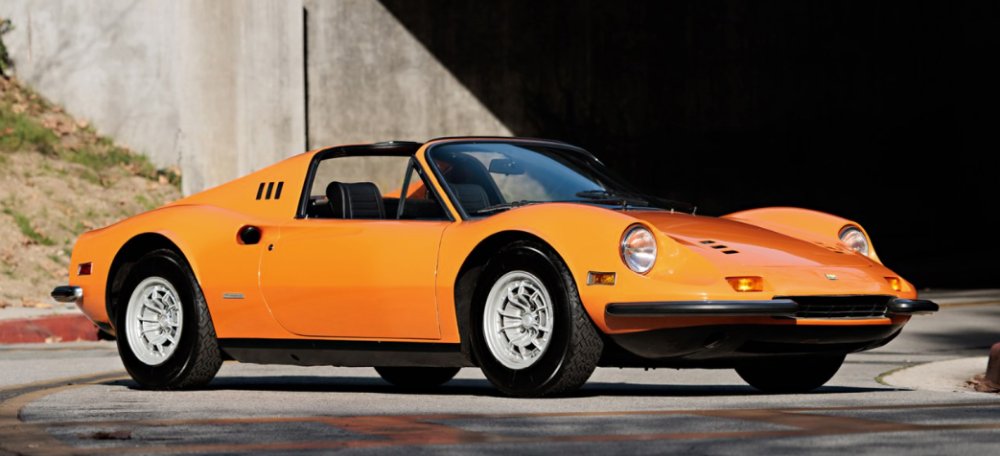
This Ferrari Dino 246 GTS, chassis 08062, is the only example of the breed ever finished in Signal Orange, a period colour selected from Porsche’s palette. A US-specification car, it was equipped with Borletti air-conditioning, electric windows, radio and black Connolly leather upholstery. The car was ordered through official Ferrari dealer Francisco Mir of Santa Monica, California, and it was built to special order for a client: famous Californian modernist architect Craig Ellwood.
Ellwood collected the Dino directly from the Maranello factory, where it was first registered on Italian tourist plates, EE 60557. He modified the car with Perspex headlamp covers, a fender-mounted mirror, black-painted wheel centres and a full-width rear bumper. The Ferrari was later registered in California with vanity plates reading VROOOM. Period photographs show the Dino alongside Ellwood’s ‘inhabited bridge’ at the ArtCenter College of Design in Pasadena. The architect retained the Dino for decades, including during his retirement in Tuscany, Italy, before the car returned to the US.
In the late 1990s, Ferrari specialist Elliot Grossman acquired the Dino via a government auction near San Diego on behalf of Symbolic Motor Car Company, which restored it in its original colours. In around 2000, it was purchased by collector Antonio Curreri of New York City, who commissioned an extensive mechanical rebuild, including engine, gearbox and suspension, by Vincenzo Latino of Auto Elite in Tenafly, New Jersey. Curreri retained the Dino for more than 20 years, occasionally driving and exhibiting it. It changed hands again more recently, and at Gooding Christie’s Amelia 2026 sale it’s estimated at $900k-$1.1m.
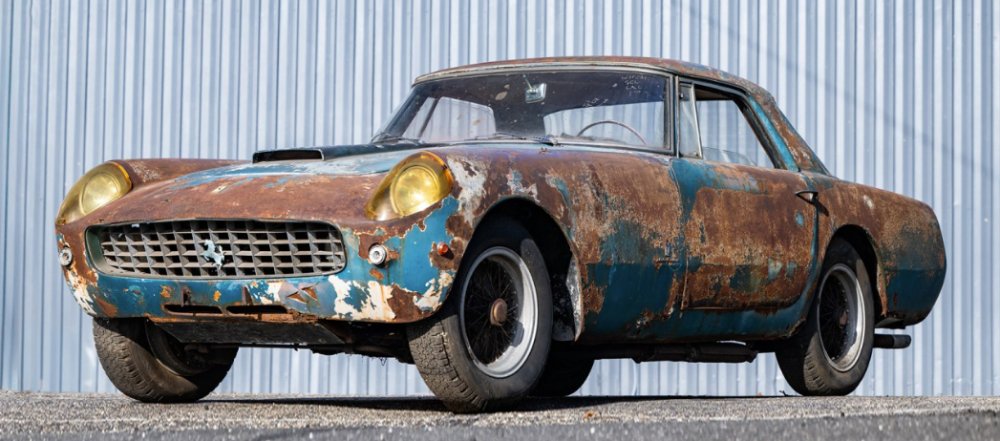
This 1959 Ferrari 250 GT Coupé, chassis 1359 GT, is the 158th of 353 examples built, and was finished in Grigio Fumo (Smoke Grey). First delivered to Vendita Automobili Roma in July 1959, it took until February of the following year to sell, to Alberto di Tanna of Rome. He kept it for only a year, selling it to a Rome-based pharmaceutical company. Over the next seven years, the Ferrari was owned by a succession of four individuals residing in Brescia. In 1969, it was acquired by a private owner in Switzerland. Period photographs show the car in that country with Brescia licence plates, shaved bumpers and a covered-headlight conversion.
Further features still present include dual ignition switches, earless knock-off bolts plus a relocated battery and fuse panel. These modifications suggest the 250 GT may have seen competition use in Switzerland or Germany, where it resided later in 1969. In late ’69, the Ferrari was acquired by a US serviceman based in the Bavarian Alps. The car was shipped to Newark, New Jersey, driven a few times and then placed in storage. At Gooding Christie’s Amelia 2026 sale, it’s estimated at between $300k and $500k.
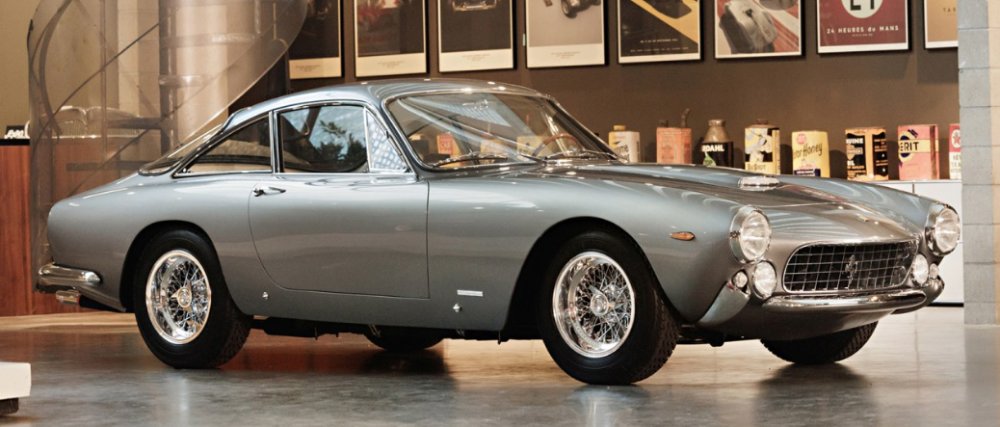
This 1963 Ferrari 250 GT Lusso, chassis 5127, was originally finished in Grigio Fumo with black Connolly leather upholstery, and delivered to Crepaldi in Milan. Its early life is largely unknown, but by 1989 it was owned by Bill Ziegenbein of Prestige Motors in Michigan. It appeared at auction in London in 1990 and was offered for sale in California the following year. In 2001, the 250 GT was sold at the Domeinen Auction in the Netherlands and acquired by Ferrari collector Fritz Kroymans. During his ownership, the car was displayed at the 2009 Amsterdam International Motor Show (AutoRAI) before returning to the US and passing through the hands of two additional collectors.
In 2019, chassis 5127 GT was acquired by the current owner and promptly restored by the in-house mechanic. The body was stripped to bare metal, prepared and refinished in Grigio Fumo. Its interior was retrimmed in avorio (ivory) leather. Chrome trim was refinished by Brightworks Restoration, and driveline components were refreshed and cosmetically restored, while ancillary systems including brakes, suspension and electrical components were renewed; it has not been shown since these works were completed in early 2026. At Gooding Christie’s Amelia Island sale, it’s estimated at between $1.6m and $1.8m.
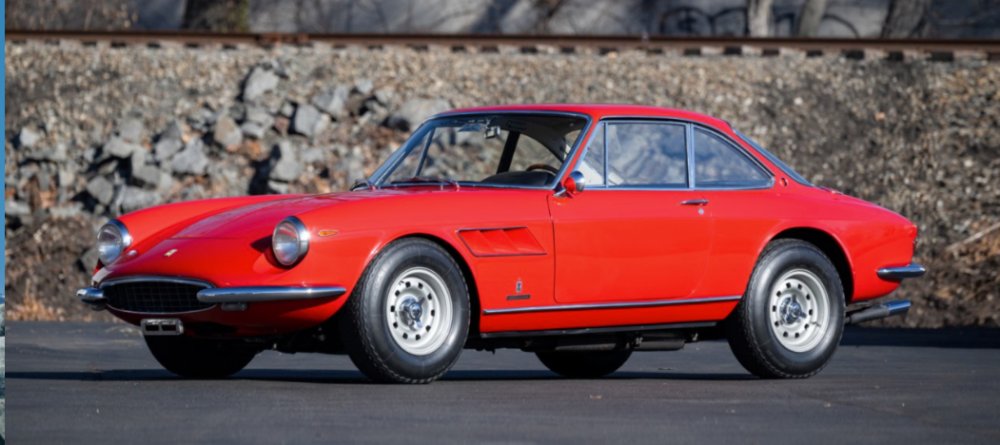
This Ferrari 330 GTC is the factory pre-production prototype developed prior to the commencement of series manufacture. Originally constructed in late 1964 under the designation 275 GTC, chassis 06431 was completed the following year and retained by Ferrari for an extended programme of development and evaluation. Factory records indicate that the car underwent intensive testing at Maranello, which is reported to have included assessment by Enzo Ferrari.
Following the conclusion of its prototype duties, the car was rebuilt by Ferrari to full 330 GTC production specification. It was sold in December 1966 to its first private owner, Carlo Bombieri of Milan. At the time of delivery, the Ferrari was finished in Rosso Cina with black leather upholstery and equipped with Borletti air-conditioning. Although comprehensively updated prior to sale, the car retained a number of characteristics specific to its prototype origins. These include a bonnet of 275 GTS profile and several interior features that differ from standard production 330 GTCs – notably the dashboard configuration, instruments, switchgear, luggage shelf and handbrake-release mechanism.
Registered in January 1967, chassis 06431 was serviced directly by Ferrari through its Assistenza Clienti department until May 1971. Bombieri retained ownership for a further 11 years before selling the car to Francesco Santovetti of Rome. The Ferrari remained in Italy until 1993, when it was sold to Italian Motors Ltd. of Hong Kong and exported. After a short period with Hong Kong collector Danny Chow, the 330 GTC entered a private collection specialising in one-off, custom-bodied and special-series Ferraris from the 1950s and 1960s, where it remained for almost 30 years. At Gooding Christie’s Amelia 2026 auction, it’s estimated at between $650k and $800k.
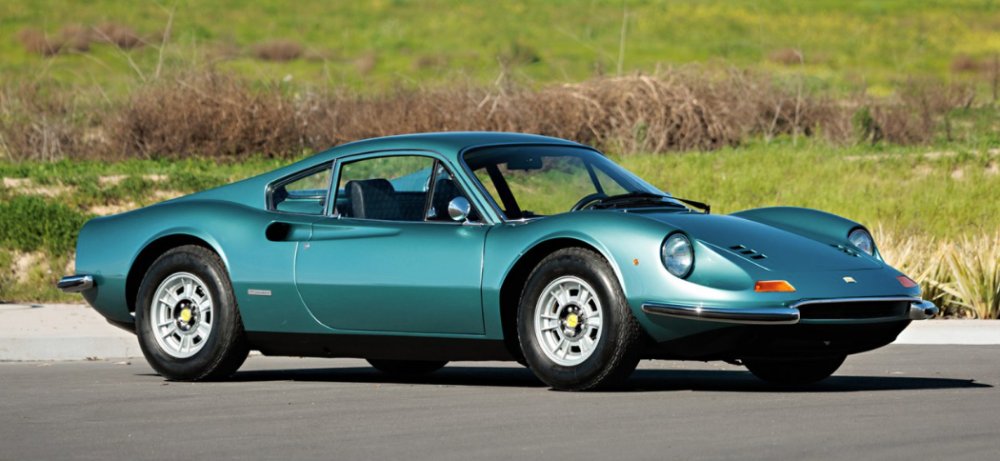
This European-specification 1972 Dino 246 GT is one of only 52 examples factory-finished in striking Blu Chiaro Metallizzato. It was first delivered to Ferrari dealer Elie Ayache in Beirut, Lebanon. The car entered the US in 1977 via Werner Schoch of W Schoch Porsche Sales Inc in Rancho Palos Verdes, California. Five years later it passed to a private owner in Huntington Beach, where it remained for more than 30 years. In 2015 the Dino was sold within California to Chris Salay of Sherman Oaks, who initiated cosmetic and mechanical work including a repaint, interior renewal and mechanical servicing. It’s estimated at between $475k and $550k at Gooding Christie’s Amelia 2026 auction.
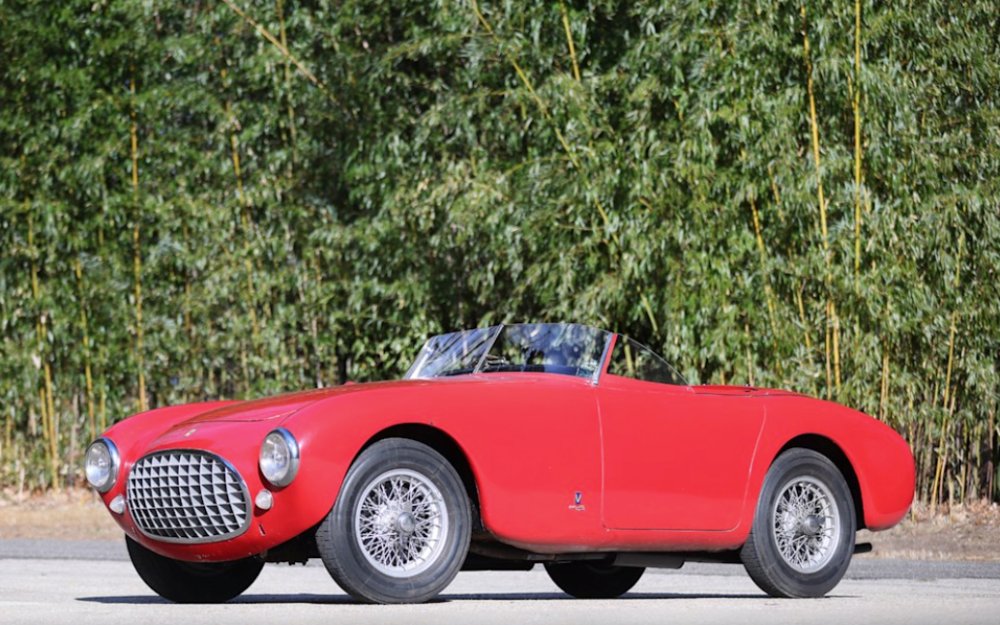
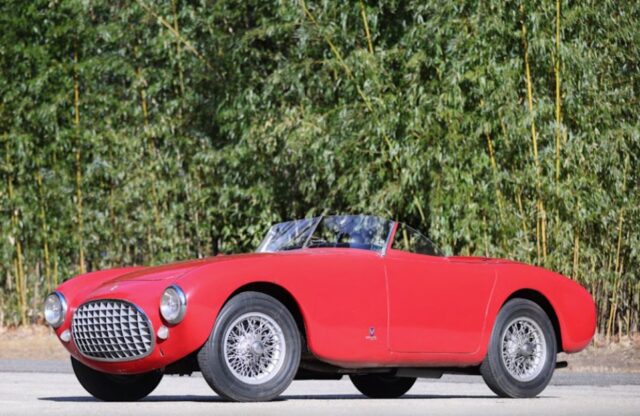
Finally, to Roberto Rossellini’s 1951 Ferrari 212 Export Spider, one of 30 built. Vignale’s body is the first of two spiders based on Michelotti’s Spyder Super Sport design. Chassis 0076E made its debut at the Geneva Motor Show in March of that year, and it later went on display at the Torino Motor Show in April. There it drew the attention of film director Rossellini, who was in attendance with Ingrid Bergman.
Rossellini purchased the Spider new through Roman agent Ponti & Mambretti, making it his first Ferrari of many, and it accompanied him between Rome, film sets and the south of France. Ownership was passed to his production company, Aniesse Film, in 1951, and a year later he drove the Spider to Monaco, where it was photographed by Edward Quinn.
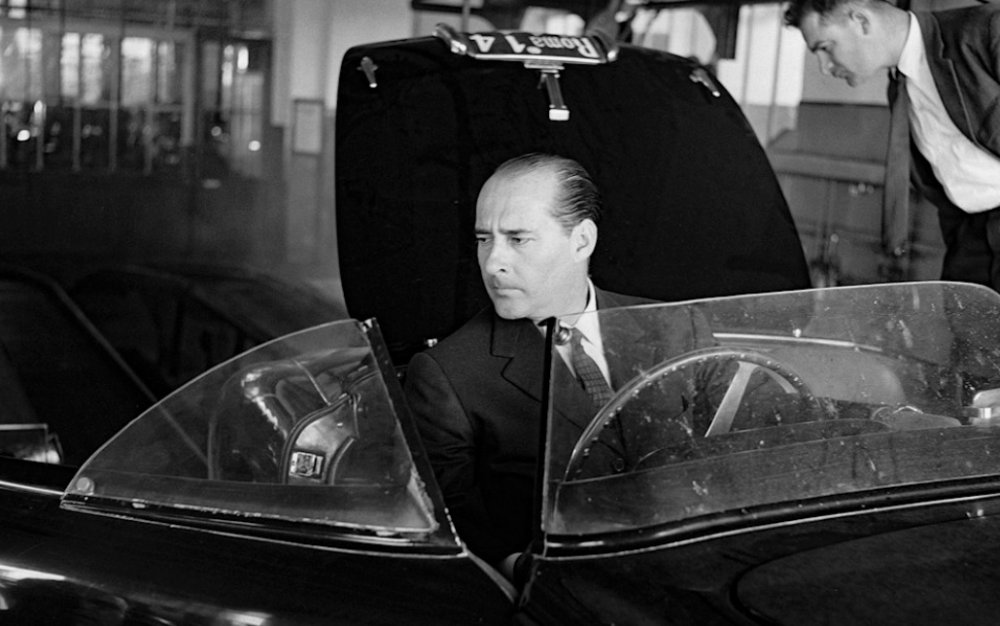
Rossellini kept the car until 1953, when it was sold by Aniesse Film administrator Alberto Sacconti to Francesco Marsili Feliciangeli. The Spider remained in Rome into the mid-1950s and in September 1954 t was acquired by Trasporti Aerei Mediterranei SpA, an airline based on Via Vittorio Veneto. In the early 1960s, chassis 0076E was purchased by Luigi Chinetti Motors and exported to the US. By 1965 it was owned by EP Tex Downs of Salt Point, New York.
Ownership subsequently passed to Mike Blue and then to Webster B Todd of Princeton, New Jersey, who drove the car at a Ferrari demonstration event at Bridgehampton Raceway in September 1966. In 1967 the Ferrari returned briefly to Luigi Chinetti Motors before being acquired by Norman H Silver of High Point, North Carolina. After passing through a small number of East Coast owners, the Spider was acquired in the 1980s by its current custodian and remains in unrestored condition. At Gooding Christie’s Amelia sale, it’s estimated at $2m-$3m.
For more information on Gooding Christie’s Amelia 2026 auction, head here.