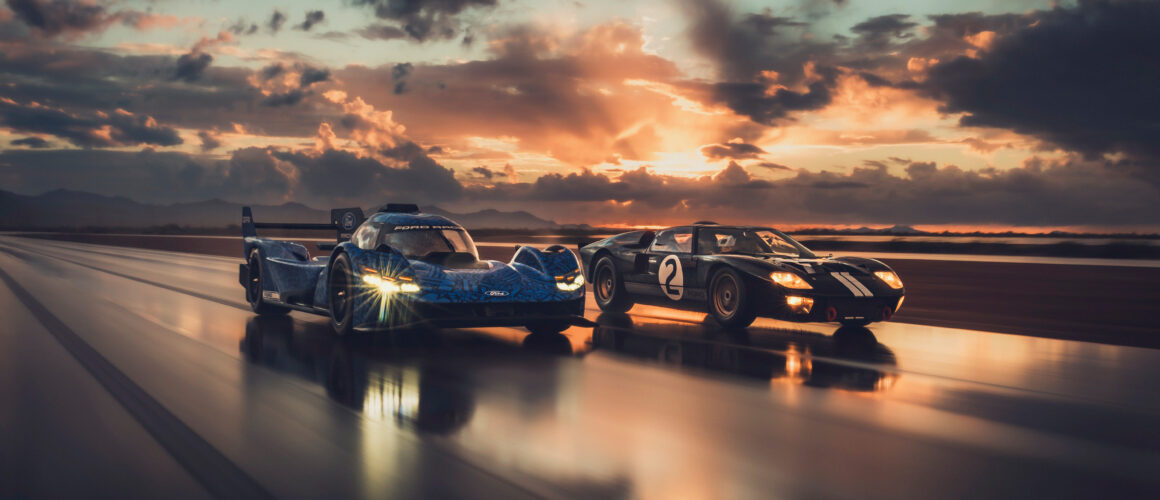
Sixty years after the 1-2-3 that humbled Ferrari, Ford has revealed the GT41, the hypercar with which it will chase outright victory at La Sarthe in 2027. Its V8 is built 20ft from where the GT40‘s engines were developed, and the past is never far away
In a display case at Ford’s new world headquarters in Dearborn this week lay the unsigned contract for Ford’s purchase of Ferrari. “Yes, Ford really did try to buy Ferrari,” says Ted Ryan, the company’s chief archivist, who put it on show for the preview of the GT41, the hypercar with which Ford will return to the fight for outright victory at the Le Mans 24 Hours in 2027. A few feet away sat the bar tab from the 1966 victory party, and next door stood the new car.
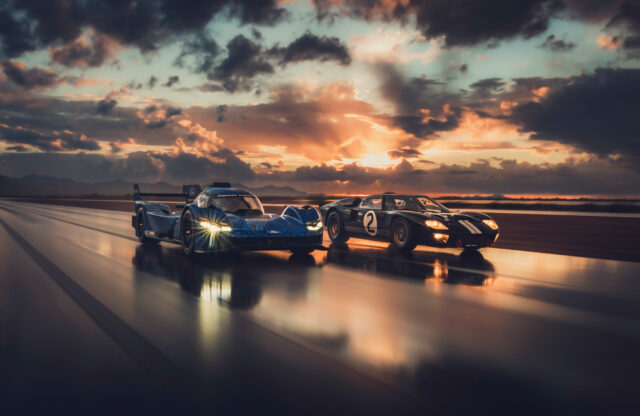
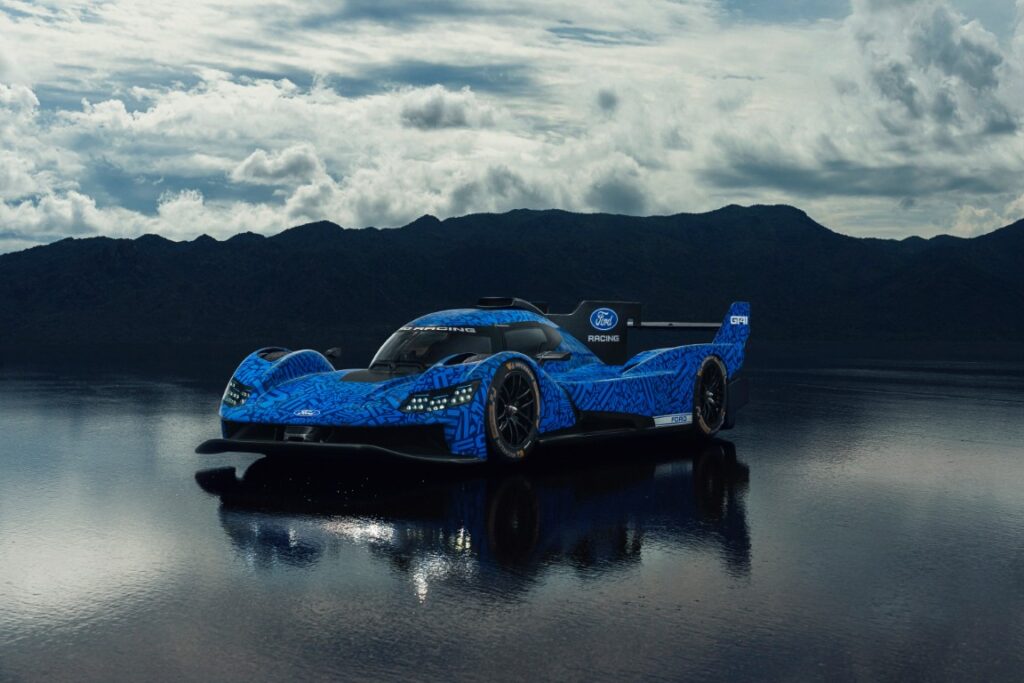
The GT41 made its public debut on November 26 at Ford Field in Detroit, during the Thanksgiving Day NFL game. Its name follows the GT40’s lead: where the 1960s car was named for its 40in height, the air intake of the new car sits 41in from the ground under current Hypercar regulations. Power comes from a naturally aspirated 5.4-litre V8, derived from Ford’s Coyote road-car engine and paired with a hybrid system.

The contract explains why the name carries such weight. When Enzo Ferrari walked away from the deal in 1963, unwilling to cede control of his racing department, Henry Ford II resolved to beat him at his own race. The GT40 that resulted, developed in England from Eric Broadley’s Lola Mk6 at Ford Advanced Vehicles in Slough, failed to bring a single car home in 1964 or 1965. Ford’s position now has an echo of that era, as it joins a Hypercar field in which nine rival manufacturers have been racing for several seasons and Ferrari has won three years running since 2023. “We’re bringing in an all-new car when they’re bringing an Evo,” says Mark Rushbrook, global director of Ford Racing. “It’s a massive challenge.”
When the 1960s turnaround came, it was emphatic. With Shelby American and Holman Moody running the cars and a 7.0-litre V8 behind the driver, GT40 Mk2s finished first, second and third in June 1966, ending Ferrari’s run of six consecutive wins. The staged formation finish cost Ken Miles a victory he had all but earned, with Bruce McLaren and Chris Amon declared winners because their car had started further back on the grid. Two months later, on August 17, 1966, Miles was killed at Riverside while testing the Mk2’s successor.
That story reached a new generation through Le Mans ’66 (Ford v Ferrari in the US), and Ford has leaned on it for the launch: Zack Snyder’s anthem film for the GT41 is narrated by Matt Damon, who played Carroll Shelby, and was shot partly in the hangar that served as Shelby’s workshop in the 2019 film. Ryan, for his part, calls it “a beautiful movie, but an excellent work of fiction”, pointing out that Miles, far from being at war with Dearborn, “was a huge fan of the company”.
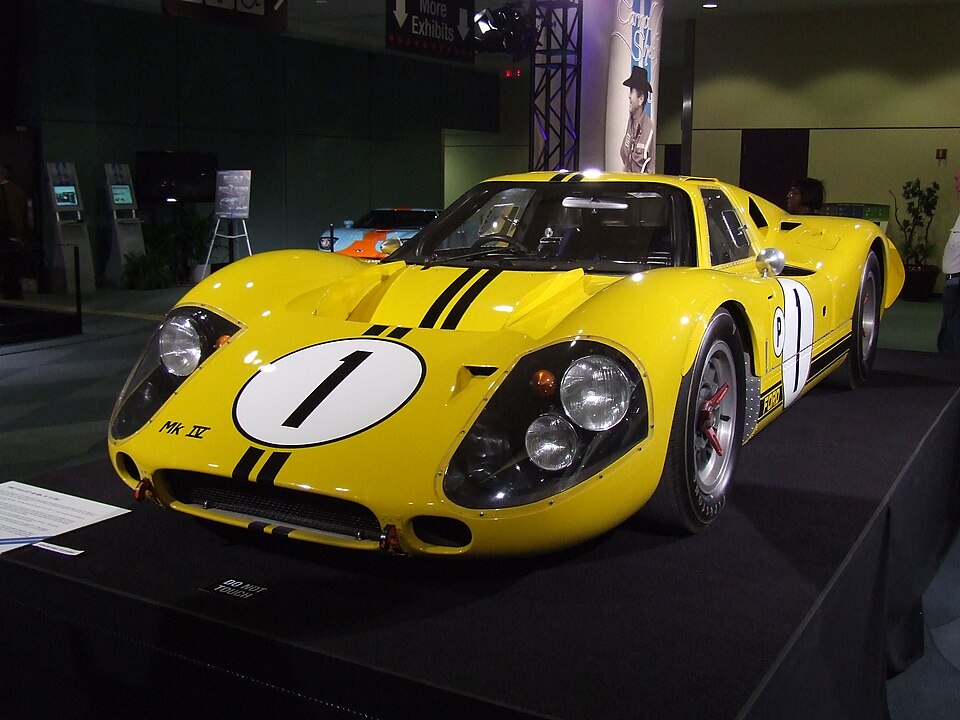
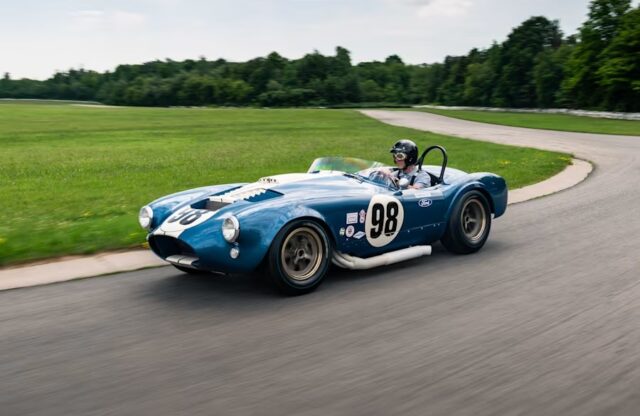
The car Miles had been developing became the Mk4 (above), and it is the closest parallel to the GT41. Conceived in 1965 by Ford’s Special Vehicles Activity and built in Dearborn around a bonded aluminium honeycomb chassis borrowed from the aerospace industry, it won on its debut at Sebring and then at Le Mans on June 10-11, 1967, when Dan Gurney and AJ Foyt Jr averaged 135.7mph with its 500bhp 427ci V8. “That victory was significant because it was American built, American designed and American raced,” says Ryan.
The GT41’s engine programme is a deliberate attempt to recapture that self-sufficiency. Designed by Ford engineers, the V8 is hand-assembled by two builders, Ben Johnson and Kyle Stevens, in an 800sq ft room converted from two decommissioned test cells in Ford’s 1949 dynamometer building, 20ft from the cell in which the 1960s Le Mans engines were developed. Each takes more than two weeks to build, from a block cast on the production line in Windsor, Ontario. “That was the first time an engine was hand-assembled in this building in many, many years,” says Stevens of the first.
The methods would be unrecognisable to Miles. Ford has never raced a hypercar at Le Mans, so laps driven in its simulator in North Carolina are replayed on the dynamometer, the engine running laps of La Sarthe it has never seen. Parts including the oil pump housing are metal-printed in Dearborn using processes developed with Red Bull Ford Powertrains in Formula 1.
The GT40’s run continued after the rules outlawed the big-engined prototypes. John Wyer’s Gulf-liveried Mk1, chassis 1075, won in 1968, when Pedro Rodríguez and Lucien Bianchi took a race postponed until September by unrest in France, and again in 1969, when Jacky Ickx and Jackie Oliver held off Hans Herrmann’s Porsche 908 by seconds. Ford’s 2027 line-up has Le Mans pedigree of its own: Mike Rockenfeller won outright with Audi in 2010, and reserve Tom Dillmann is a two-time class winner.
Sebastian Priaulx, meanwhile, is the son of Andy Priaulx, who raced the number 67 Ford GT in 2016, when Ford returned 50 years after the 1-2-3 and won the GTE Pro class. “My dad unfortunately didn’t get to win Le Mans, but the Ford did,” he says. “Hopefully, we can.”
Even the GT41’s prototype blue-on-blue livery reaches back. Among its hidden details is the Spirit of Detroit sculpture, a nod to the city where Henry Ford beat Alexander Winton at Grosse Pointe on October 10, 1901, two years before he founded Ford Motor Company. “Ford’s racing history began 125 years ago when my great-grandfather won a race that helped him found Ford Motor Company,” says Bill Ford, executive chair.
The GT41 has completed its European test programme and moves to the US for further running in December and January, before its racing debut in Qatar in March. Le Mans follows in June, 60 years after Gurney and Foyt’s victory. “We’ve got 125 years of racing heritage behind us, and we love to look at that and celebrate that,” says Rushbrook. “But we can’t dwell on that.” Ford will nonetheless be judged against the most exacting standard of all: its own history.