




Ferrari has unveiled the 296 GT Modificata, a 720bhp development of its 296 GT3 Evo racing car intended for non-competitive track use through the Club Competizioni GT programme. The two-seater combines an uprated V6 with revised aerodynamics, additional cooling capacity and equipment designed to support driving tuition and data analysis.
Presented digitally during Ferrari Racing Days in Budapest, Hungary, the 296 GT Modificata draws on the 296 GT3 Evo that entered competition at the beginning of the 2026 season, alongside development work from Ferrari’s road cars and other racing programmes. It follows the 488 GT Modificata introduced in 2020 and will be produced in what Ferrari describes as extremely limited numbers.
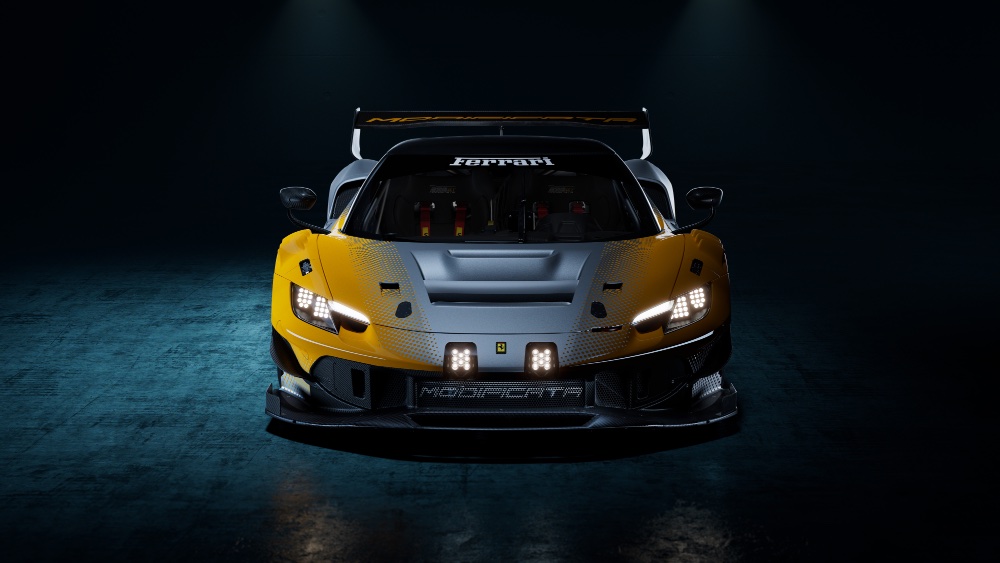
Its intended use allows Ferrari to develop the car outside the technical restrictions governing the model’s GT3 counterpart, including Balance of Performance requirements. Ferrari says the resulting package has the potential to lap Fiorano three seconds faster than the 296 GT3 Evo, although it has not supplied an outright lap time – or a production total or price.
The engine retains the GT3 Evo’s rear-mid-mounted, 120-degree V6 architecture, with a displacement of 2992cc, four valves per cylinder and dry-sump lubrication. Bore and stroke are 88 x 82mm, while the compression ratio is 9.4:1. Output is 720bhp (730cv/537kW) at 7500rpm, with 590lb ft (800Nm) at 5000rpm. Ferrari quotes an increase of 130cv, equivalent to approximately 128bhp, over the GT3 Evo, whose output is subject to Balance of Performance restrictions. Specific output is 244cv per litre – approximately 241bhp per litre, with Ferrari also quoting 179kW per litre.
The changes extend to the crank, camshafts, induction system, intercoolers and turbochargers. Although the turbos retain the external housing geometry of the GT3 Evo’s units, their internal components have been developed specifically for the Modificata. Ferrari says this work also draws on experience with the 499P Modificata, its customer track version of the Le Mans Hypercar. An additional low-pressure fuel pump has been incorporated to meet the engine’s increased fuel-flow requirements, while the tailpipes have an entirely new design.
The transverse six-speed sequential gearbox uses a carbon clutch and revised ratios selected to suit the engine’s new operating range. The increase in output has also required changes to heat management. A redesigned front bonnet incorporates a larger main opening and a dedicated vane that directs hot air leaving the central front radiator away from the lateral intercoolers. The vent near the base of the windscreen has been reshaped to improve thermal management of the components beneath the bonnet.
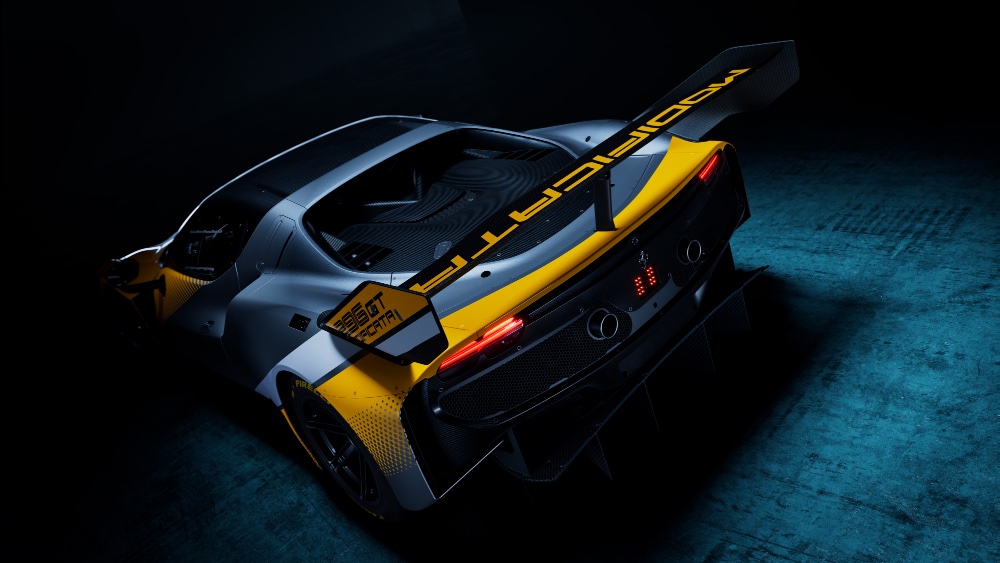
At the front, a new slotted splitter manages airflow along the underbody. Ferrari says this increases the car’s overall capacity to generate downforce. The rear wing has been redesigned to improve aerodynamic performance while maintaining the required balance between the front and rear axles. Its architecture incorporates a single central pylon, an enlarged 5mm Gurney flap and structural endplates influenced by the 499P. The endplates also help manage the vortices generated by the wing. Ferrari has not provided a downforce figure in the release.
The braking system develops the hardware used by the 296 GT3 Evo and 296 GT3 Biposto. New steel front discs have improved ventilation, while two supplementary intakes in the lower front bumper increase the cooling air supplied to the brakes. The cooling ducts have also been redesigned to improve airflow efficiency. Ferrari says these changes improve the system’s ability to dissipate heat, supporting more consistent braking performance and reliability during extended circuit use. The published disc dimensions are 400 x 26mm at the front and 332 x 32mm at the rear.
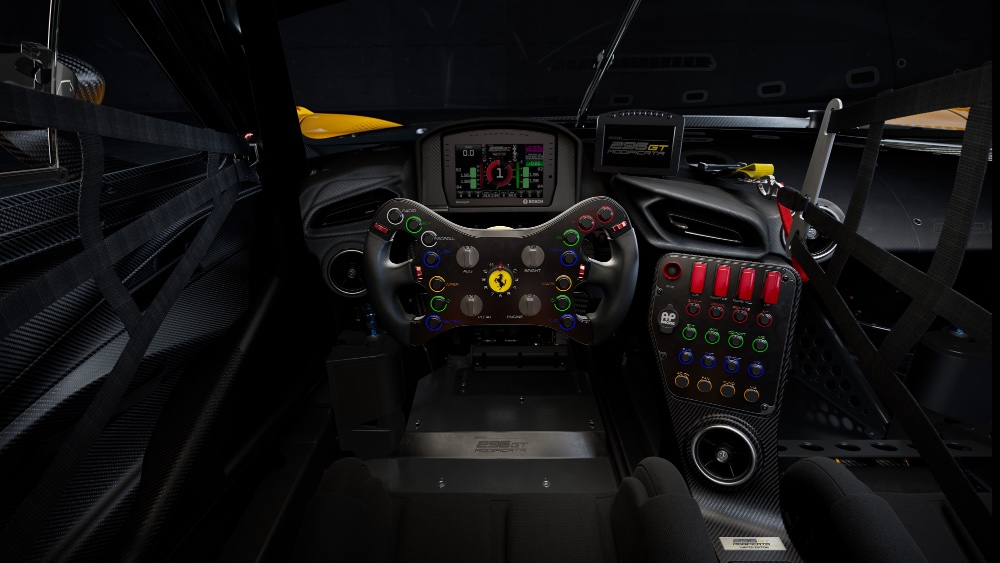
As on the GT3 car, ABS is fitted. Its calibration is intended to make the braking performance accessible to drivers with differing levels of experience, including during prolonged sessions at circuits that place high demands on the brakes. Traction control is also included, together with a DDU driver information display featuring a dedicated layout and graphics.
The Modificata measures 5033mm long, 2050mm wide excluding mirrors and 2230mm across the mirrors, with a height of 1082mm. Its wheelbase is 2660mm, while front and rear track widths are 1726mm and 1714mm respectively. Ferrari quotes a dry weight of 1330kg and a fuel capacity of 120 litres. Tyre sizes are 325/680 R18 at the front and 325/705 R18 at the rear.
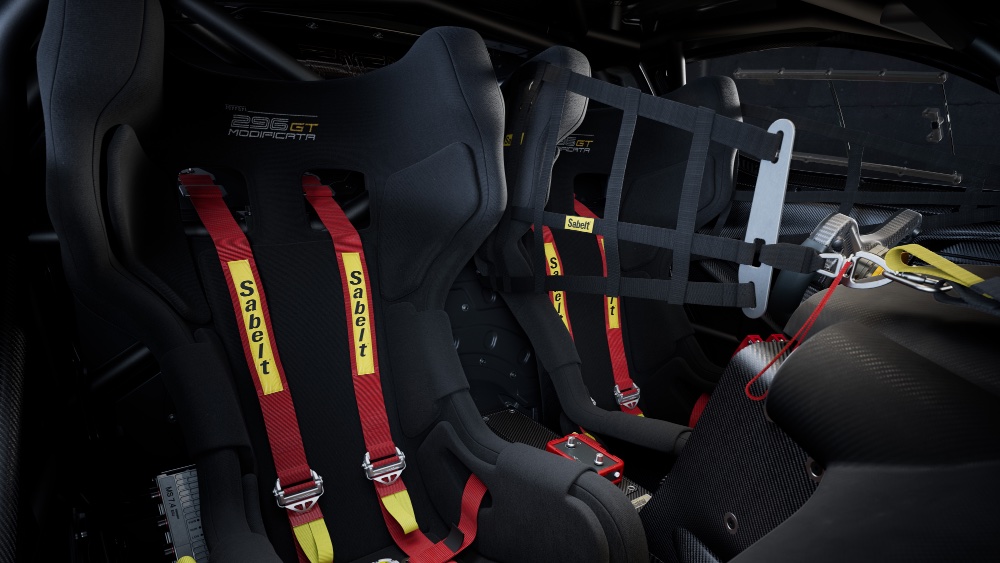
Changes to the roll bar have allowed Ferrari to install a second seat, enabling an owner to carry a passenger or receive instruction from a coach during track sessions. The passenger has a dedicated footrest, while an integrated intercom allows continuous communication between the occupants, including during timed sessions. The standard equipment list includes several systems offered as options on the GT3 Evo. Ferrari’s Data Acquisition System, in Step 1 and Step 2 specification, adds sensors including pitot tubes to measure airspeed, damper potentiometers and brake-temperature sensors.
VideoBox Premium records video of the driver during sessions for subsequent review with a coach. Rear Camera Premium is also fitted, along with the IRTPMS Step 2 system for monitoring tyre pressures and temperatures. Professional seat harnesses, the carbon clutch and an additional cabin-cooling fan are included in the package. Optional equipment includes rear radar, which alerts the driver to cars approaching from behind at higher speed. Buyers can also specify their livery from the full range of colours available through the Ferrari Design Studio.
The 296’s more direct predecessor, the 488 GT Modificata, combined development from the 488 GT3 and 488 GTE competition cars in a model intended solely for track use. Ferrari followed it in 2023 with the 499P Modificata and the Sport Prototipi Clienti programme for customer drivers. That car was derived from the 499P endurance racer, which won Le Mans in 2023, 2024 and 2025.
The 296 GT Modificata is intended solely for track days and Club Competizioni GT events. Its purchase includes participation in two years, or 12 rounds, of the programme, giving owners access to circuits with differing layouts and technical demands. Ferrari’s announced 2027 Club Competizioni GT calendar comprises seven events: Jerez de la Frontera in Spain, Misano Adriatico in Italy, Fuji in Japan, Indianapolis in the United States, Paul Ricard in France and Spa-Francorchamps in Belgium, followed by the season-ending Finali Mondiali Ferrari. The venue and dates for the Finali Mondiali round will be announced separately.
More details on the Ferrari 296 GT Modificata are available here.