

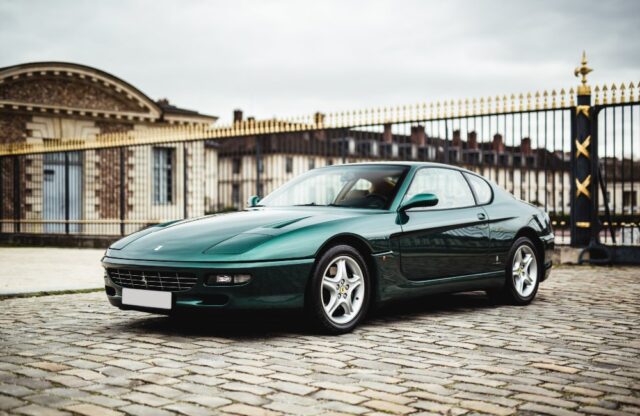
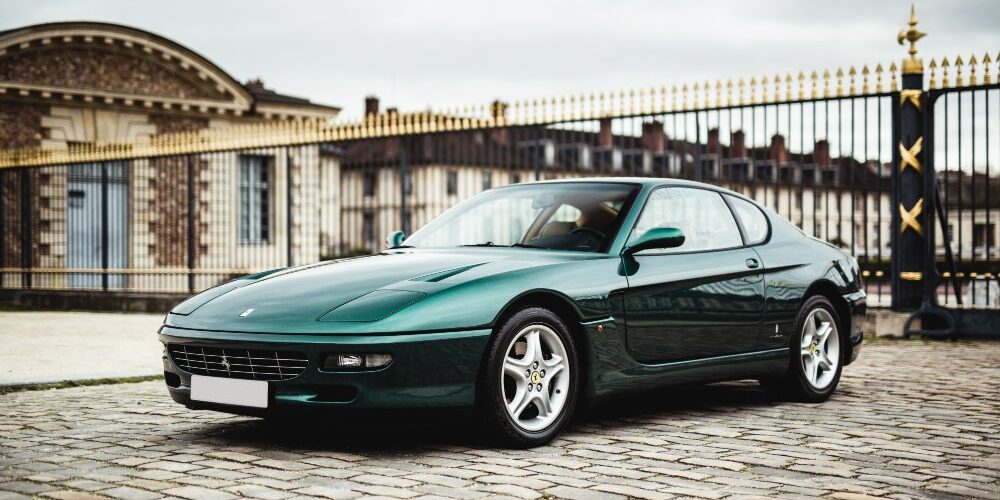
For years, the Ferrari 456 occupied an unusual position in the market. It offered a naturally aspirated V12, four genuinely usable seats and, in GT form, a six-speed gated manual gearbox, yet values remained substantially below those of the contemporary F355 and, increasingly, the 550 Maranello. In the US, however, there are signs that buyers are reconsidering that hierarchy.
“As a broad generalisation, the US is the strongest market,” says Harvey Stanley, director of private sales, UK at RM Sotheby’s. “Whatever trend you see in America tends to be reflected later in Europe and the UK, although usually to a lesser extent. If you look at F355s and 550s, they’ve gone completely bonkers in the States. There has been good appreciation for both cars in the UK and Europe, but nothing like the extent we’ve seen in America.”
Stanley believes the Ferrari 456 has historically been held back by several factors: “The market tends to favour two-seat cars, for a start. Then you have the fact that all three are expensive cars to maintain, and the 456 is probably the most expensive of the three while also being the cheapest to buy. That means the cost of maintaining one, relative to the value of the car itself, has historically been quite prohibitive when it comes to capital appreciation.”
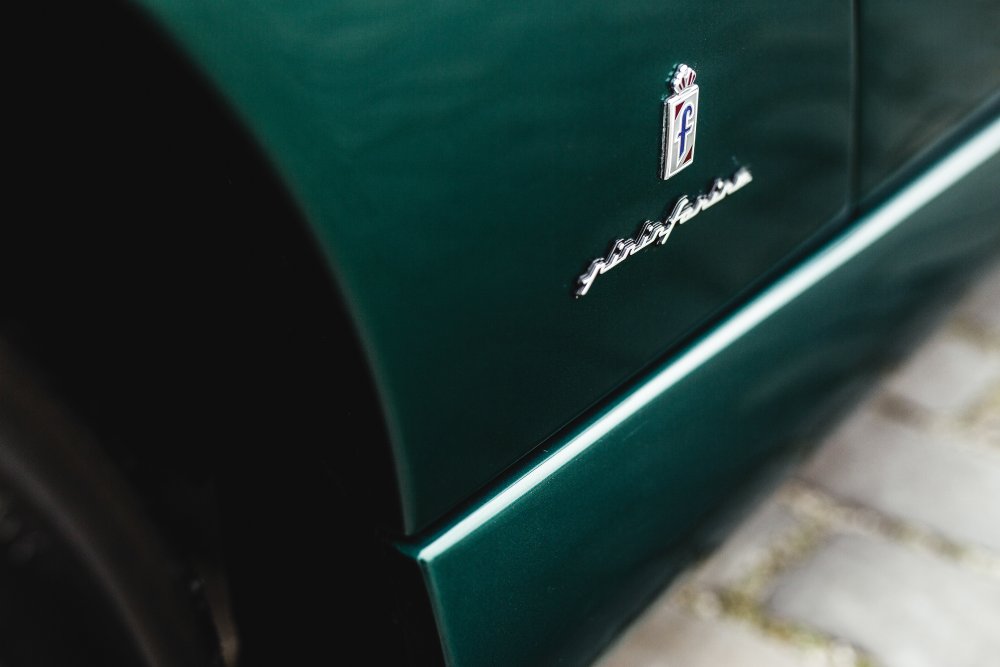
Then there is the Pininfarina bodywork, which deliberately avoided the visual drama of Ferrari’s mid-engined cars. “The styling has also been a little polarising,” Stanley says. “But fashions change. I think the shape is starting to come back into vogue.
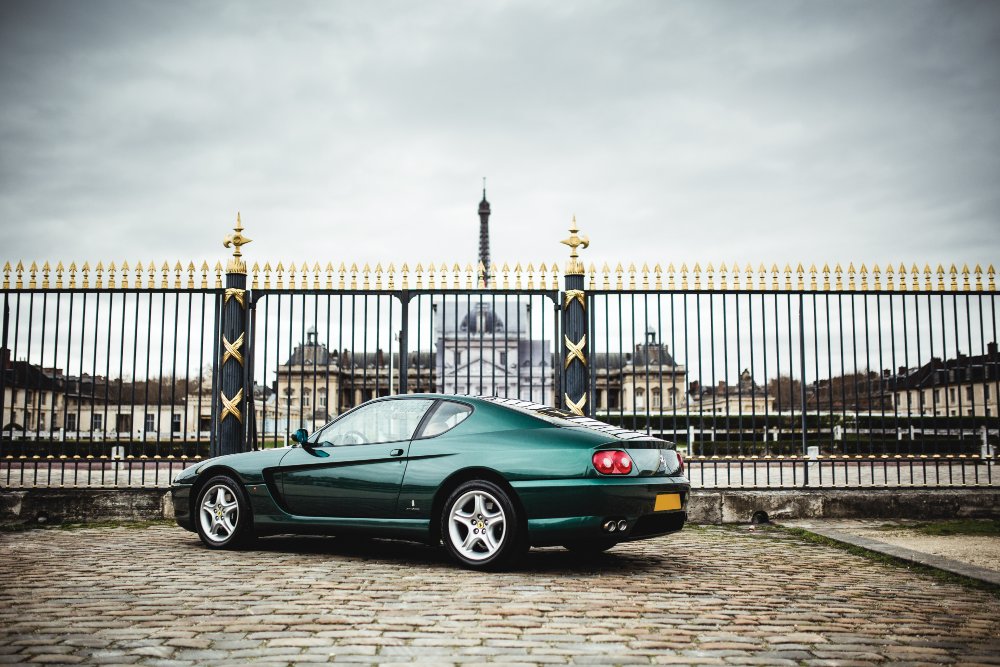
Recent US sales suggest that change is already underway, particularly for manual cars. Research into public auction transactions from February 2025 through early August 2026 found 33 completed US sales, with a reported median of $65,000. However, that headline figure hides an increasingly pronounced separation between ordinary automatic cars and desirable manual examples.
A manual 1995 Ferrari 456 GT sold on Bring a Trailer for $230,000 in September 2025. Other manuals have produced results of $140,000, $156,000 and $135,000 respectively, while a 2000 456M GT sold for $156,000 in April 2026. Even more ordinary examples have frequently passed $100,000: a 1994 GT made $100,200, a 2002 456M GT $113,500 and a 1995 GT $107,000.
The movement continued into Monterey Car Week. A 15,000-mile manual 1995 Ferrari 456 GT sold on Bring a Trailer on August 14 for $145,000, while Mecum’s Monterey sale produced a $74,800 result for a 2001 456M GTA in Azzurro California over Crema. The latter had been estimated at $70,000-$85,000.
That automatic result is particularly interesting because the same chassis had appeared at Bonhams’ Quail Auction in August 2025, where it sold for $42,560 including premium against a $50,000-$60,000 estimate. Twelve months later, it had increased by $32,240, or 75.8 percent. There may have been differences in condition, preparation and presentation between the two sales, so it should not be treated as a clean measure of market appreciation. Even so, it provides another indication that the US market is reassessing the Ferrari 456 beyond only exceptional gated-manual cars
Stanley sees the manual gearbox as central to the model’s longer-term appeal. “Having a manual gearbox is becoming increasingly important,” he says. “It is relatively rare, but another factor is that buyers are getting younger. I get a lot of calls from friends and potential buyers who want a car they can enjoy with their children, and I think that is relevant to the 456.”
The 456 occupies a niche Ferrari has never really repeated. Manual 612 Scagliettis exist, but in tiny numbers and at correspondingly high values. “You can get a manual 612, but they’re already very expensive,” Stanley says. “On top of that, I don’t think the manual gearbox suits the 612 particularly well.
“The 456 was designed around a manual gearbox. The 612 was really designed around the F1 transmission. That distinction does make the 456 interesting.”
That assessment is echoed from the workshop by Tim Bate of UK Ferrari specialist Emblem Sports Cars, who worked within the Ferrari dealer network when the 456 was current. “A manual 456 feels solid because you effectively have a substantial mechanical linkage between you and the gearbox,” he says. “If something moves, you feel it.”
By comparison, the manual 612 used a cable shift. “I’ve driven a manual 612 and it’s like a 360. It uses a cable-operated shift, and that can feel vague and disconnected. The cables themselves can flex. So again, there are plenty of positives for the Ferrari 456 compared with a 612.”
For Bate, however, the appeal starts long before the gearlever moves. “They’re an amazing GT car, without question. If you want to go touring, drive to the south of France or go down to Monaco for an extended period, they’ll do it very comfortably and effortlessly.
“They’re much more usable than a 400, 412 or Testarossa,” he continues. “The gearchange is lighter, the clutch pedal is lighter and they’re easier to drive. When you sit in one, particularly from an ergonomic point of view, it also comes across as quite a simple car. You have the gauges and dials, and essentially the bare-bones information you need. Underneath the skin they are complicated cars. There is a lot going on, but what you’re actually presented with is a very uncluttered dashboard. It’s functional and everything is clearly laid out.”
There is even room for a small criticism of the 456’s predecessors. “The 412 even has split heating, with separate systems for passenger and driver,” Bate says. “The 456 does away with that. I’ve always thought split climate control is fairly pointless anyway. You’re sitting about a foot apart from one another, so one system is effectively fighting the other. With a 456, you could get into one having never driven it before and work everything out within seconds.”
That usability may be gaining importance as the generation that grew up with 1990s Ferraris enters the market. “If I wanted to go on a classic car holiday, take my wife to a Ferrari Owners’ Club event or take the children out somewhere, a 456 lets you do all of those things,” Stanley says. “I have a modern 911 Turbo and recently had to give somebody a lift. You can barely use the rear seats. A 456 has properly usable rear seats, certainly for children.
“Throughout my career I’ve had people asking what interesting car they can buy that will still allow them to take the kids with them. The 456 answers that question very well.”
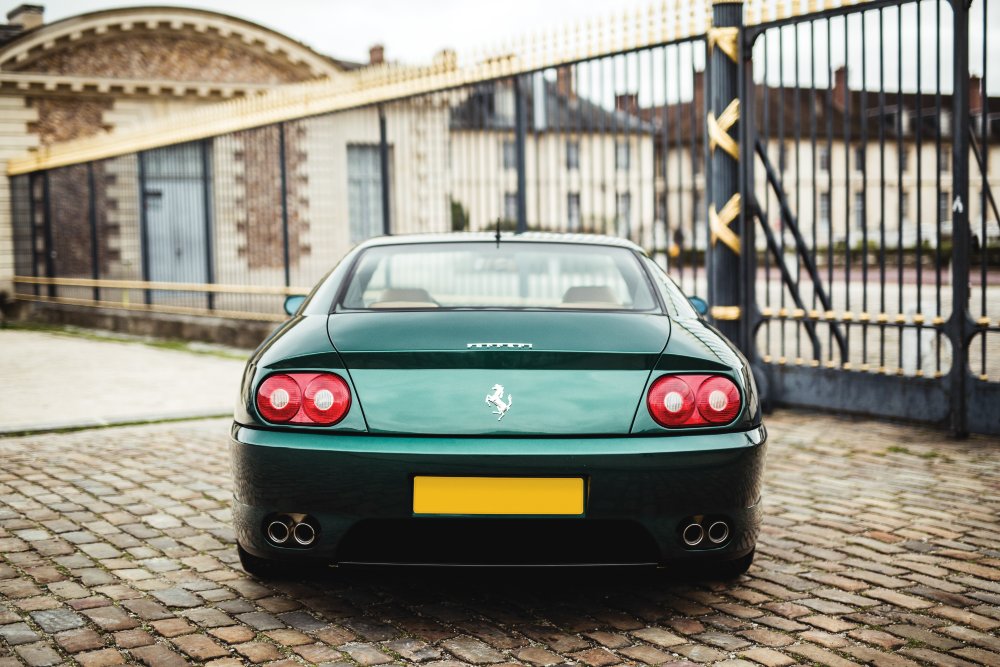
The American market may be leading the movement, but Europe provides some supporting evidence. Of 30 completed European sales identified between February 2025 and August 2026, 16 were manuals. Fifteen cars carried public estimates: nine sold within range, four below and two above.
A manual 1994 Ferrari 456 GT sold through Aguttes in June 2025 for €83,860 against a €60,000-$80,000 estimate. Three months later another 1994 GT realised €69,832 at Artcurial, having been estimated at €30,000-$50,000. That result was nearly 40 percent above the upper figure.
By early 2026, European estimates appeared to have adjusted. Two manual 1999 456M GTs offered in Paris in March produced €78,260 and €79,092, broadly around their respective estimate ranges.
The UK remains a noticeably softer market. That provides a useful contrast with the US rather than necessarily contradicting the broader trend. “Value-wise, 456s have really plummeted,” Bate says. “I know they’re stronger elsewhere, but certainly in the UK they’re not particularly desirable at the moment, which is strange and a shame.”
There are nevertheless signs of movement. “I actually had a customer ask me this week to look out for a 456 for him, and that hasn’t happened for a really long time. Hopefully the trend you’re seeing in Europe eventually comes across to the UK and makes these cars more desirable again.”
Bate puts current UK values broadly in the low £40,000s to £60,000 range, with an exceptional low-mileage car possessing excellent history potentially exceeding £70,000. Stanley believes the longer-term ceiling could be considerably higher: “I don’t think they are ever going to become hugely valuable cars. But I see no reason why a good 456 couldn’t eventually settle around the £100,000 mark, with perhaps £150,000 for a truly exceptional car.”
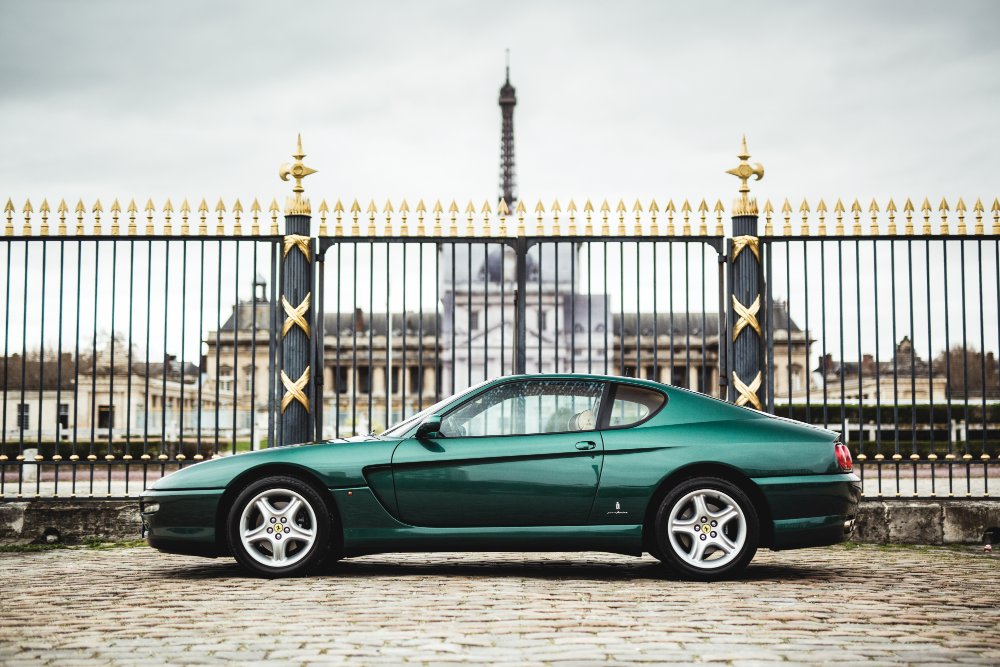
Which 456 eventually commands the strongest values is less clear. Stanley favours the later 456M: “There isn’t a huge amount of difference between them, particularly with the manual cars. With the automatic, I think the gearbox is better in the M. Generally, though, I don’t see why people wouldn’t want the slightly more evolved car.”
Ferrari collectors do not always follow that logic. “The F355 is a good example,” Stanley says. “Some people specifically want the early 2.7 Motronic cars rather than the later 5.2. I understand that there is a preference for the early cars, but personally I don’t really understand why, because the later cars are better. With the 456, I would say the M is the better car and therefore, logically, ought to be worth more.”
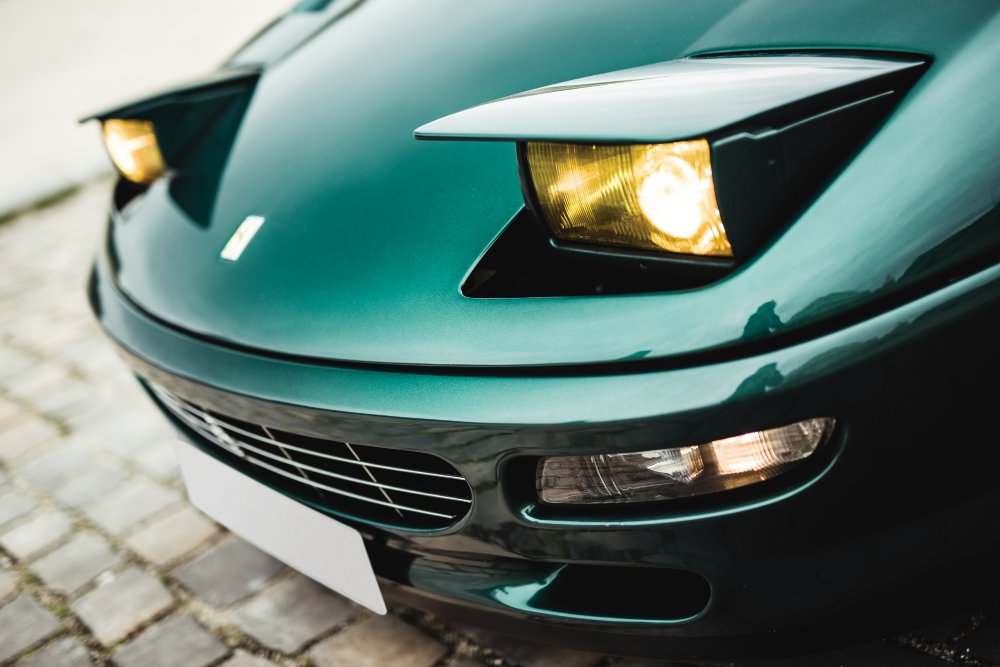
Bate takes the opposite view: “I like the early GT. I think its bonnet looks better because you have those nice scoops, and I think the dashboard looks better because it’s uncluttered. There are no airbags and the steering wheel looks much nicer. Once you get into the later cars, you have airbags and a much bulkier steering wheel.”
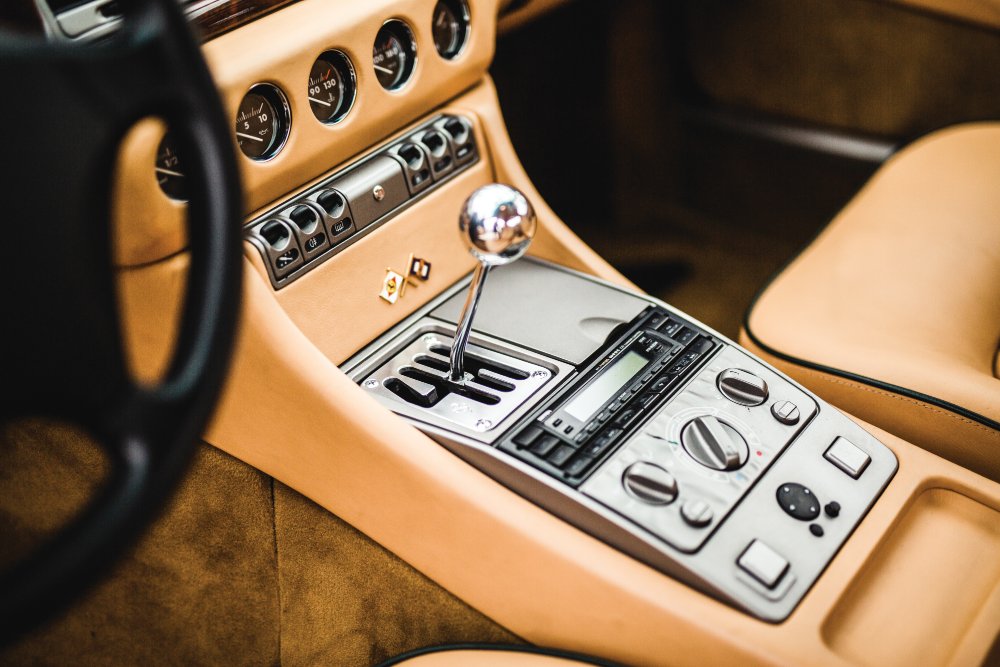
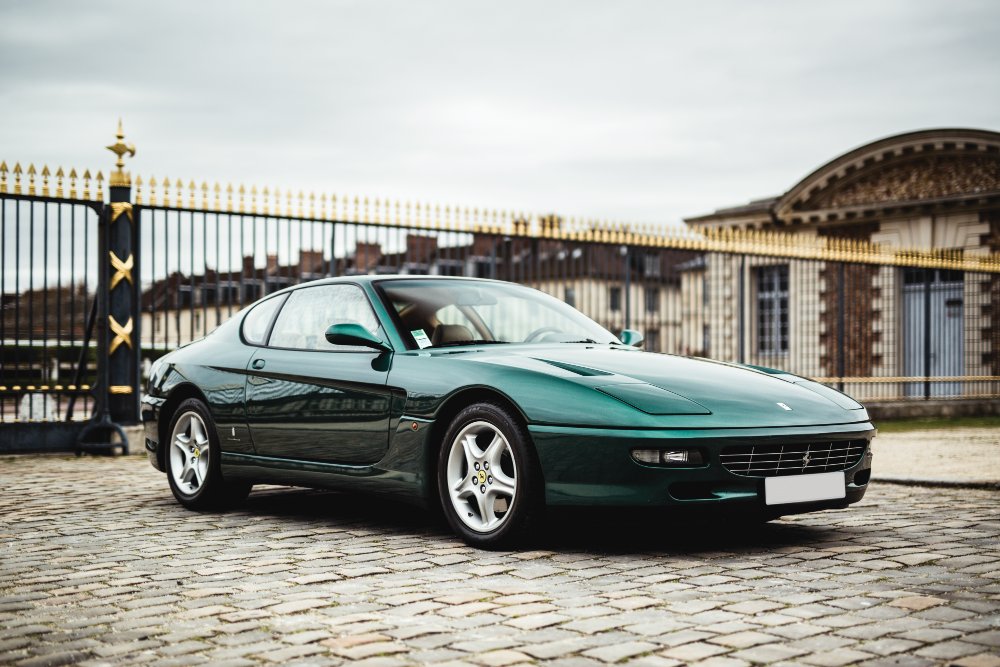
Specification could increasingly separate the best cars. Both specialists identify Tour de France Blue over tan as particularly appealing. “Tour de France Blue, particularly with a tan interior, is going to be very desirable,” Stanley says. “Another colour that was relatively popular on 456s was Verde Zeltweg. I think green is probably the one to have, or one of the blues.”
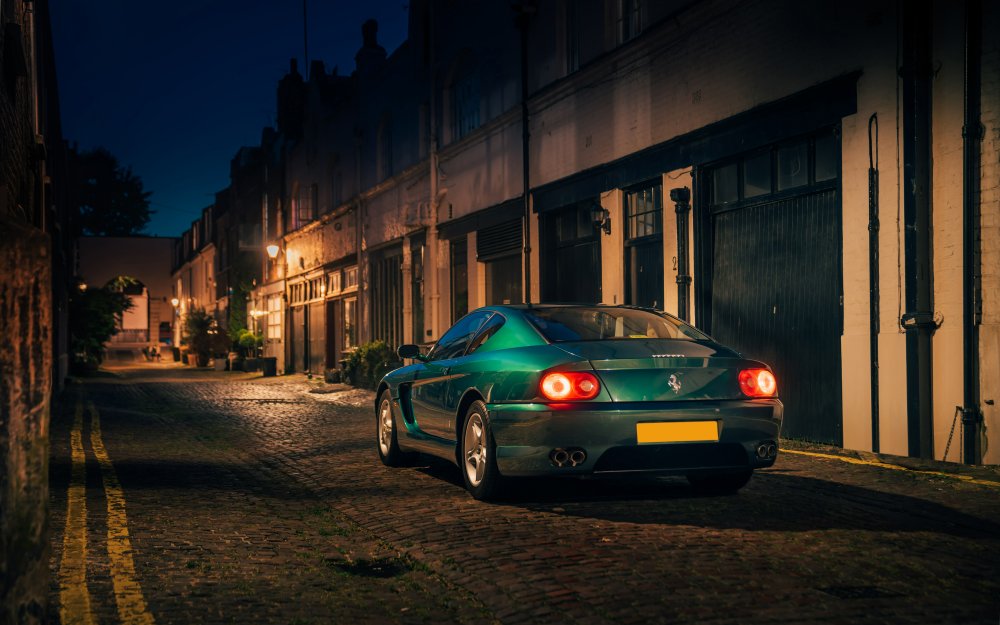
Bate recalls another green specification associated with the end of 456 production. “Towards the end of 456M production they were struggling to sell the cars, and Tony Willis was working at Maranello Concessionaires at the time. He specified some of those later cars in a metallic green with tan seats and green carpets. In the trade that combination became known as the ‘Tony Willis spec’. It’s a lovely colour, a very metallic green with a slightly gold appearance underneath it in certain light, and the tan leather and green carpets work surprisingly well.”
Early GTs could also be supplied with fitted luggage. “I always thought it was a lovely touch,” Bate says. “That stopped fairly quickly, and the luggage became a very expensive accessory instead. Finding an early GT today with all of the original luggage, all the bags and boxes, is quite difficult.”
For buyers tempted by the relative affordability of a 456, however, specification comes after condition. A low purchase price does not turn it into an inexpensive Ferrari to own.
“The engine is maintenance heavy,” Bate says. “You’re never going to get away from that. Any Ferrari V12 is maintenance heavy.”
The 5.5-litre motor shares components with the 550, which helps parts availability, but still uses shims and buckets rather than hydraulic valve lifters. Valve clearances require checking and adjustment, while cam-seal oil leaks can develop. Then there is the suspension: “You have the rear suspension system, which is prone to leaking, and the dampers are hugely expensive.”
“The windows can be a nightmare to keep in adjustment, too. The regulators are very expensive, and replacing or repairing them is labour intensive.”
Manual cars can develop another problem that owners may not immediately recognise. “We’re starting to see quite a few with very heavy clutch pedals,” Bate says. “You rarely replace a clutch in one because it starts slipping. More often the pedal becomes incredibly heavy because the diaphragm spring deteriorates.
“Owners sometimes don’t realise how heavy it has become because it deteriorates gradually. Then you get into the car and think: ‘Crikey, how are they even driving this?’”
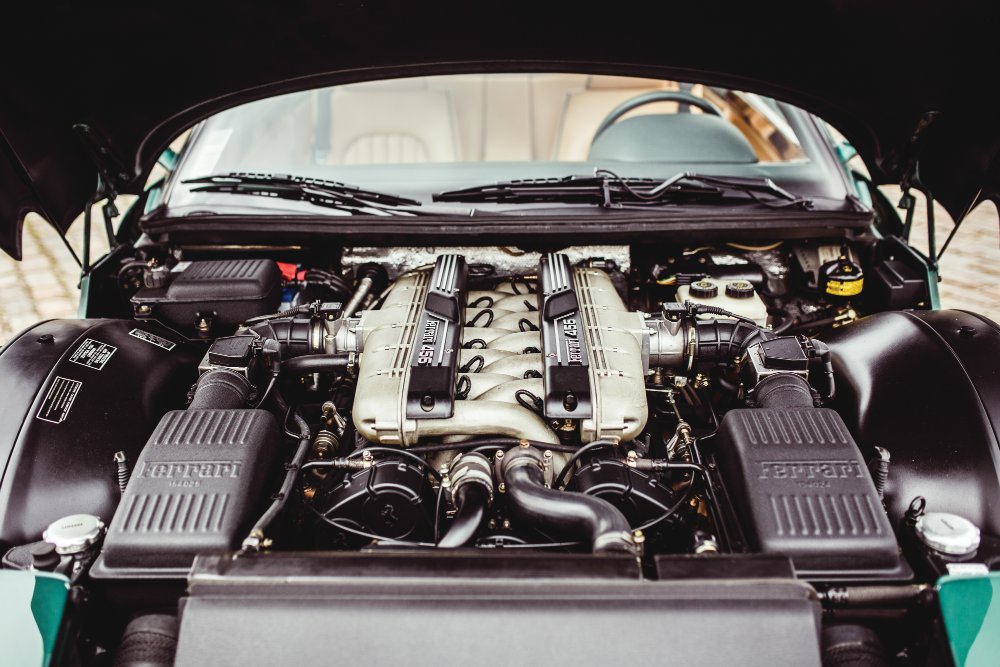
Corrosion is becoming more important as the oldest cars pass 30 years of age. “We’ve had quite a few recently with corrosion serious enough to become an MoT issue,” Bate says. One problem area is around the windscreen. Drainage points feed water through sections of the structure, and Emblem has opened cars to find inadequately protected steel inside. Water therefore drains into a cavity, sits there and the structure corrodes from the inside out. “That can become very expensive because the corrosion then progresses down into the sills and surrounding chassis areas. We are beginning to see more 456s with quite serious structural corrosion requiring welded repairs.”
For US buyers, cars that have spent their lives in dry climates may have an obvious advantage, but accident repairs, water ingress and storage conditions remain more important than geography alone.
Parts availability can be another trap. Early GTs had a layshaft locking-nut issue, although Ferrari revised the design and Bate says the fault is now rarely encountered. Automatic-transmission components are becoming harder to get hold of, though: “Even basic service items such as filters and gaskets are becoming difficult to find.”
The cabin can be worse. “Anything inside the car. Switches, gauges, catches, almost anything interior-related is nearly impossible to get. That’s why condition is so important when buying one.”
Yet the picture is not one of constant mechanical disaster. Asked how often properly maintained 456s actually leave owners stranded, Bate’s answer is immediate: “Very rarely.”
“In terms of conventional breakdowns, it is really rare for a 456 to leave you at the side of the road. I’ve hardly ever known one properly break down.”
There are stranger problems. Emblem has dealt with several instances in which radio-frequency interference prevented the remote from disarming the immobiliser. Owners parked normally, returned later and found the car would not start. “The cure is remarkably simple but not very convenient: move the car far enough away from whatever is interfering with the signal and it starts working again. In some instances that has meant pushing it some distance down the road.”
Modern ethanol-containing gasoline can also attack the rubber mountings surrounding the in-tank fuel pumps, although Bate says this is not peculiar to the 456 and is increasingly appearing across 1990s Ferraris. His advice to a buyer is therefore straightforward. “The secret is buying a car that already has everything and is in genuinely good condition. You want the interior to be complete and in good condition, and you want all the electrical equipment to work. If you buy a car needing lots of work, with multiple electrical systems not functioning, you’re signing yourself up for trouble. So the condition of the car you start with is enormously important.”
That may also explain why auction results now cover such a wide range. A 456 can still look inexpensive next to almost any other 1990s Ferrari V12, but bringing a neglected example to the standard of a $150,000 manual car can rapidly consume the difference. The underlying car, however, has aged well.
“Fundamentally I think the 456 is a seriously underrated car,” Bate says. “What we’re seeing more generally is customers returning to older Ferraris. “They’re good analogue cars. They have a key and they have a handbrake. That’s what people are starting to like again.”
He remembers Ferrari being particularly proud of the 456’s vast one-piece carbonfibre bonnet when the car was new. Three decades later, the model’s more prosaic virtues may matter just as much: a gated shifter, space for children, a V12 without turbochargers and enough luggage room to cross a continent.
“The other thing [customers say] is that the modern cars are simply too fast,” Bate adds. “That’s part of why these 1990s models are becoming attractive again. They still feel analogue, they’re understandable and, in many cases, they’re fundamentally very strong cars.”
America appears to have noticed first. The 456 is still one of the cheaper ways into a front-engined Ferrari V12, but $100,000-plus manual sales are becoming increasingly ordinary and Monterey has now provided evidence of firmer demand for the automatic as well. The inexpensive Ferrari 456 has not disappeared yet. The cheap one may already have done.
Thanks to RM Sotheby’s and Emblem Sports Cars.