

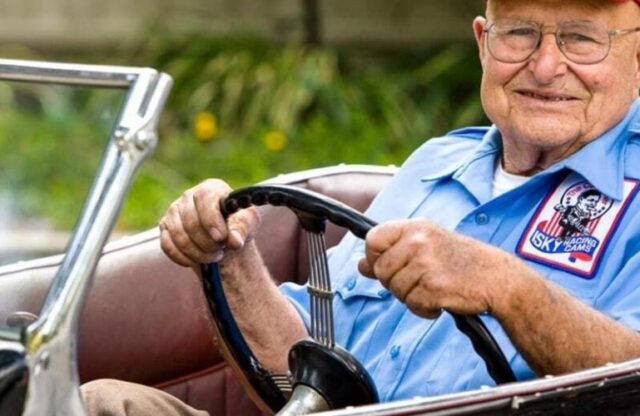
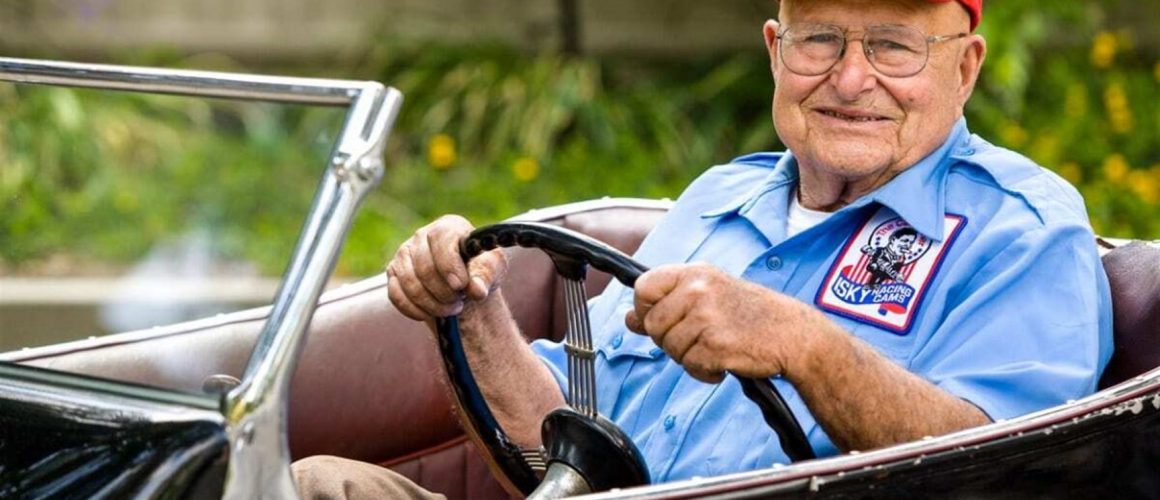
Ed Iskenderian, the pioneering hot rodder known as ‘The Camfather’, has passed away at the age of 104.
Born on July 10, 1921 in Tulare County, California to Armenian parents, Ed moved with his family to Los Angeles, where as a youngster he immersed himself in mechanics and speed, gaining impressive automotive skills at a very young age. He built his first car, a Model T roadster, in high school, and promptly raced it on dry lake beds. Thanks to his tool-and-die apprenticeship and hands-on experimentation with engine components, in particular camshafts, he gained quite a reputation in California.
After serving in the US Army Air Corps, he returned to the Californian hot rod scene. Frustrated at the time it took to acquire high-performance camshafts, in 1946 he bought a second‑hand cylindrical grinder, modified it with a custom cam‑grinding attachment and began producing camshafts of his own. He was also the first to use computing power for camshaft design. Iskenderian Racing Cams was born, and his firm became the go-to for builders of stock cars and drag racers as well as speed-record cars and boats.
Several firsts can be attributed to Iskenderian, including high‑density chilled iron lifters, hydraulic racing cams, anti‑cam‑walk kits and coordinated cam/spring component kits that simplified engine building. However, he also knew the power of marketing – he was among the first makers of performance parts to advertise directly to enthusiasts in magazines, sponsor racers and use branded merchandise such as T‑shirts to promote his company. He also played a key role in establishing the Speed Equipment Manufacturers Association, now known as SEMA, and he served as its first president between 1963 and 1964.
Top Fuel dragsters of the 1960s and 1970s routinely used Iskenderian components; Ed’s cams and valvetrain parts were integral to legendary cars such as Don Garlits’ Swamp Rat series, plus the cars of Tom ‘Mongoose’ McEwen, Carol Cox, ‘Dyno Don’ Nicholson and Big John Mazmanian. His parts were also used in streamliners and salt-flat record machines, including vehicles attempting the 300mph-plus barrier in the 1970s and 1980s.
While many such machines were turbine-driven, piston engines remained critical in hybrid or auxiliary set-ups, particularly in cars using multiple engines to generate the initial thrust or to power auxiliary systems. Iskenderian cams, lifters and valvetrain kits were used to ensure these engines could sustain revs well beyond standard racing limits without failure.
His components were prized for their durability under extreme stress and high temperatures. One such example is the Don Vesco Silver Bird and Lightning Bolt, which used dual engine set-ups that required reliable valve timing, optimised airflow and resistance to valve float at enormous velocities.
Although Ed’s drag-racing and hot rod exploits are best known, his camshafts and valvetrain components were widely adopted in road racing, hill climb and endurance competition vehicles, including European imports and American sports cars. The Chevrolet Corvette and Camaro and the Ford Mustang were frequently campaigned in SCCA road racing, hill climbs and endurance events, and Iskenderian cams offered improved valve timing, higher lift and precision engineering that allowed engines to reliably produce ten to 20 percent more horsepower.
It wasn’t just American cars that benefitted from Iskenderian’s touch, either – American SCCA competitors in Ferrari 250s and 365 GTB/4s, plus Porsche 356, 911, 904 and 906 racers, were known to use his cams to maintain high revs for longer. His work could also be seen in competition variants of the Alfa Romeo Giulietta and Spider, the BMW 2002 and 507, and the Maserati 3500 GT.
In the 1980s and 1990s, Iskenderian’s business embrace the heritage market, with a focus on restoration, historic racing and vintage competition, while still having a hand in camshaft design. The brand expanded internationally, as European and Japanese import enthusiasts sought Isky cams for road racing and endurance events, and the company’s catalogue diversified with pre-ground cams, complete valvetrain kits, and technical support materials. Modernisation of manufacturing processes allowed the production of precision cams compatible with contemporary metallurgy and engine design, while retaining the classic Isky profiles that had proven successful in racing.
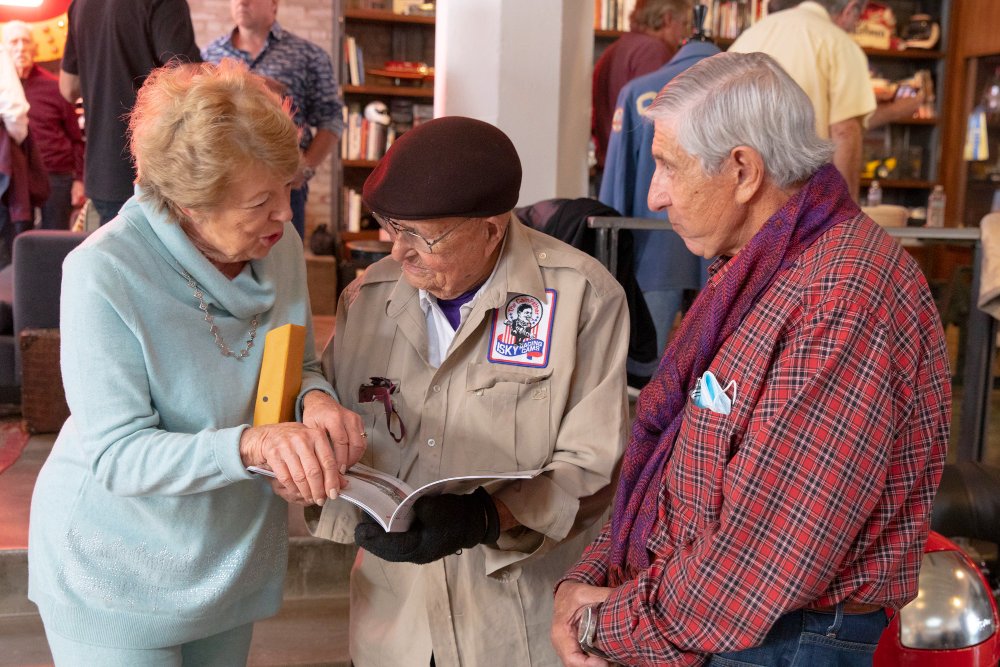
Iskenderian remained active in the industry well into his later years, advising builders, attending events and preserving the history of hot rodding, and in 2024 he was inducted into the Performance Racing Industry Hall of Fame.
More information can be found here.