

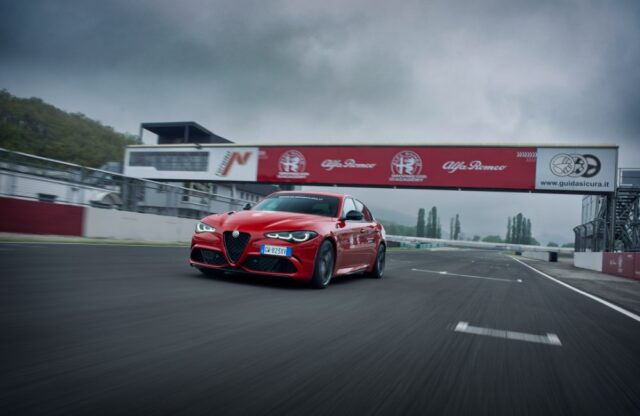
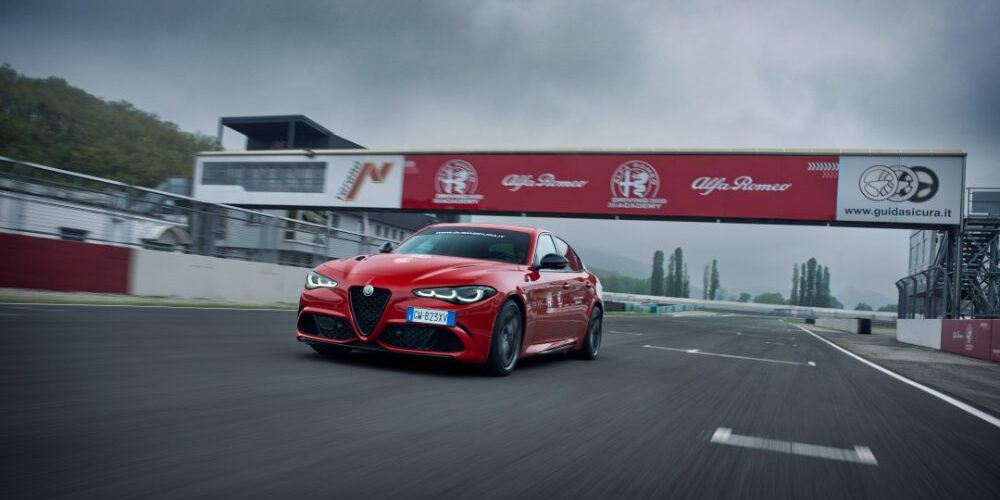
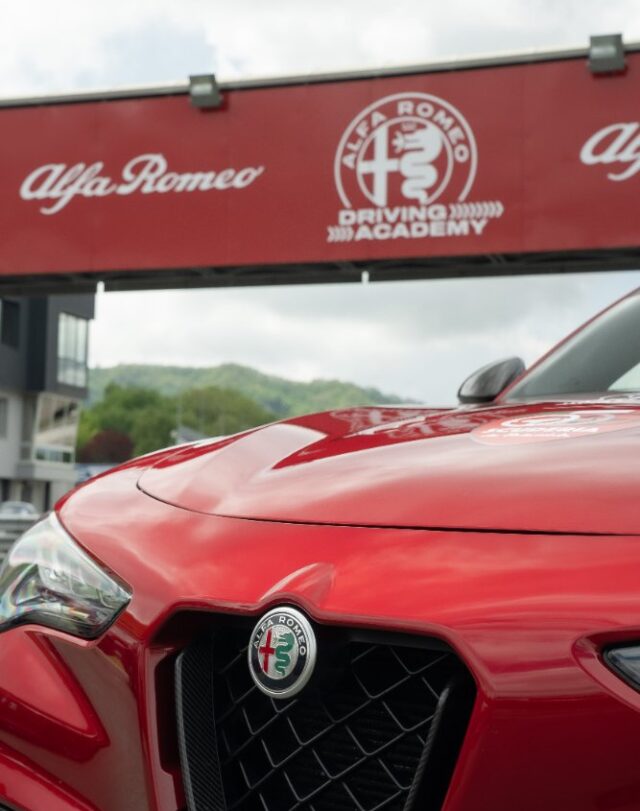
There is a distinct romance to the Varano de’ Melegari circuit when the Emilia-Romagna skies open up and deliver a steady, clinging drizzle. It’s here, deep in Italy’s Motor Valley, that the ghosts of motor sport past seem to hang in the tyre smoke. Memories of past glories, victories and battles across the Tarmac. Nostalgia indeed – it’s the life blood that keeps Alfa Romeo going. It’s also here that the marque has renewed its ties with Scuderia de Adamich, creating the Alfa Romeo Driving Academy.
Building on a collaboration that stretches back to 1991, when former Formula 1 driver Andrea de Adamich helped establish the Centro Internazionale Guida Sicura, the long-established driving school has been rebranded as Alfa Romeo Driving Academy powered by Scuderia de Adamich. With professional instructors overseeing Safe, Advanced, Sports and Advanced Driving programmes, it is now a showcase for Alfa’s current line-up, blending road-safety nous with high-performance driving. But as we arrived at the damp paddock in a fleet of new Tonales, a rather poignant question hung in the humid air: just how much pure, unfiltered Alfa-ness is actually left in the cars you can go out and buy today?
It’s a question that Alfa Romeo itself seems to be wrestling with. Recent months have seen Stellantis step back from its EV-only assumptions, with Alfa’s next Giulia and Stelvio now expected to retain combustion options. As part of this Stellantis-era soul-searching, Alfa recently confirmed something that made dyed-in-the-wool Alfisti breathe a collective sigh of relief: the return of the hatchback. Promising to channel the spirit of the 147 and Giulietta, the upcoming C-segment STLA One-based hatch feels like an attempt to reclaim the hearts and minds of the core faithful. And frankly, it needs to. Because walking through the Varano pitlane to our Tonales felt a bit like walking through a museum of Alfa’s lost soul.
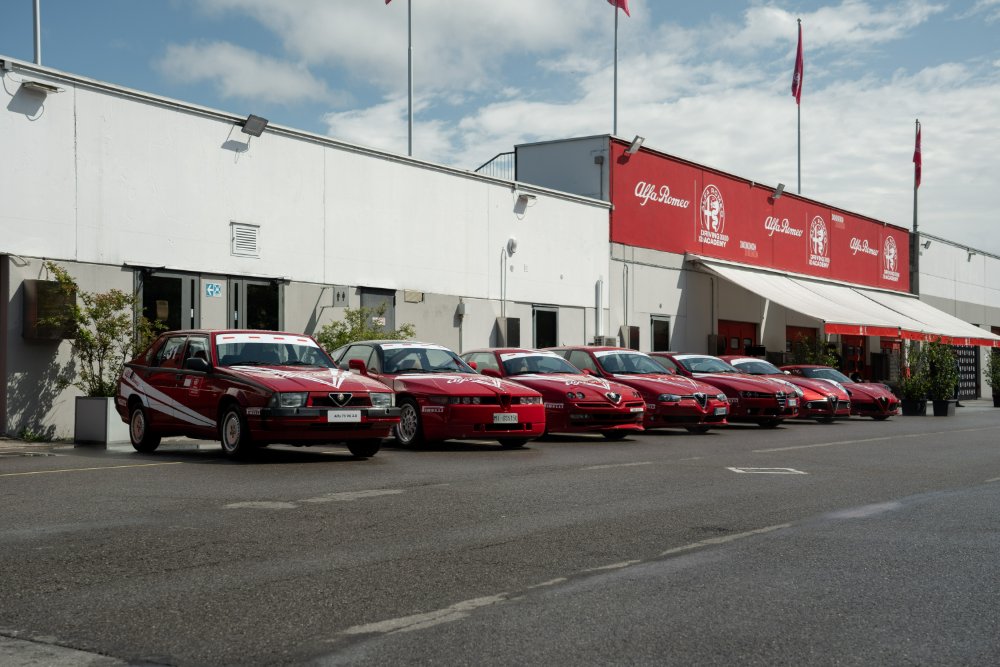
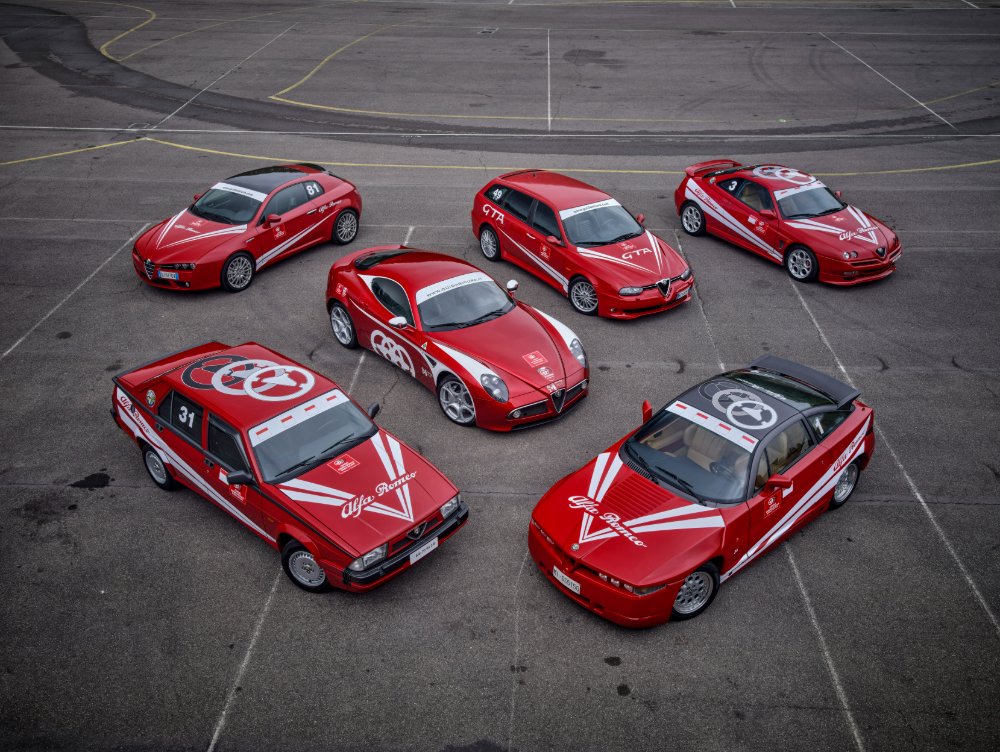
Parked tantalisingly nearby were modern classics of wildly different stripes. While the carbon-clad 8C Competizione and the brutally magnificent ES30 SZ are obviously rarefied exotica, it was the sight of a 156 GTA Sportwagon, a wedge-profiled 916 GTV, a Brera and a 4C Spider that truly twisted the knife. They served as a glaring, beautiful illustration of how atomised the current Alfa line-up has become.
Today, the Alfa Romeo showroom consists of the Junior and Tonale, the Giulia saloon, the Stelvio SUV and the limited-run 33 Stradale hypercar, which is entirely sold out. We’re told that the cold, hard mathematics of modern economies of scale mean there is simply no room for an attainable two-door coupé, a sweeping estate or a wind-in-the-hair Spider. These are the very cars that provided the emotional scaffolding for the Alfa Romeo mythos over the past half-century. Today, unless you have near-six-figure money to spend on a Giulia or Stelvio Quadrifoglio, or a seven-figure sum for a 33 Stradale, that visceral, synapse-sizzling Alfa spirit of 25 years ago feels frustratingly out of reach. Or does it?
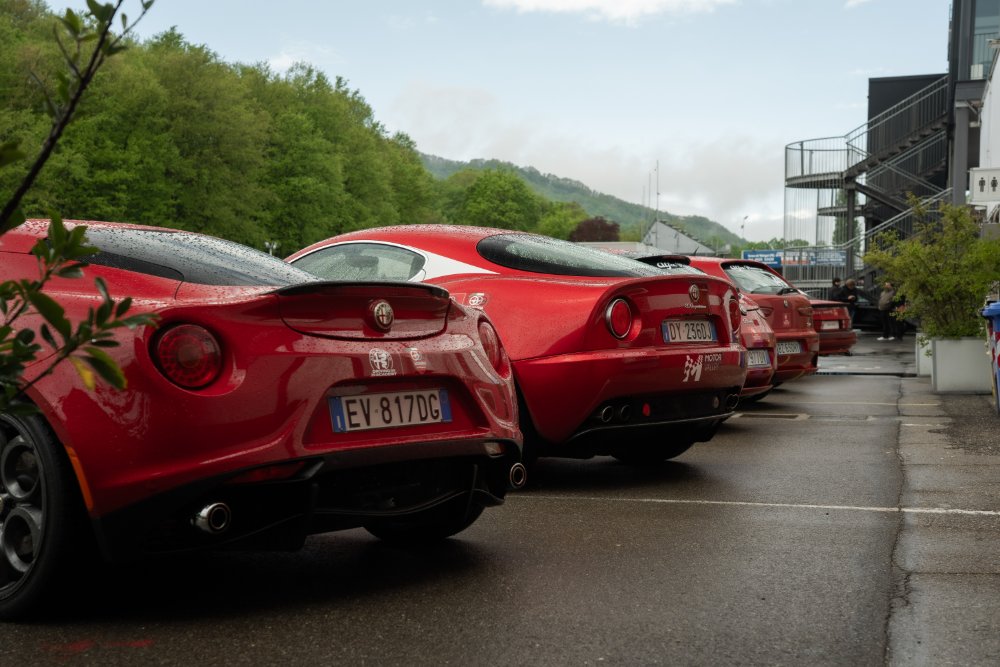
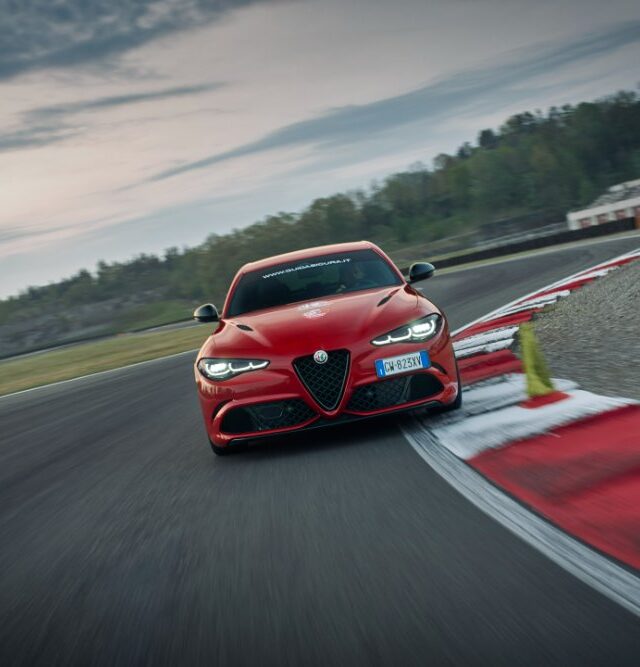
You can book a day at Varano to wring out the historic fleet, but alas, the drizzle meant the classics remained static for us. So, back to the Alfa Romeo of today. To find the pulse, we were let loose with professional drivers guiding us around the twists and turns of the circuit. Unsurprisingly, the primary car for our track session was the Giulia Quadrifoglio, although we also sampled the full range minus the 33 Stradale.
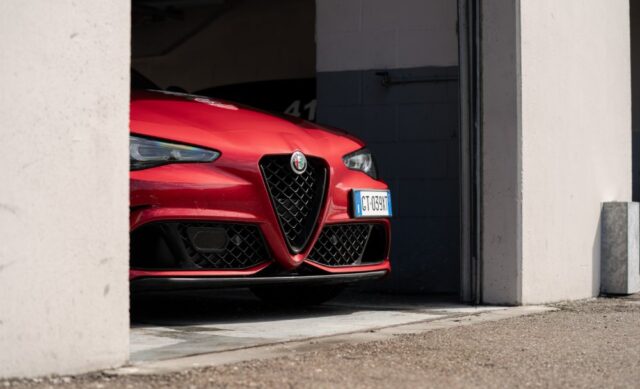
The Giulia is an old-stager now, a car currently celebrating its tenth birthday and enjoying a stay of execution as Alfa’s EV-only ambitions have been revised. But my word, what a stay of execution it is. The twin-turbocharged 2.9-litre V6 remains a masterpiece, providing the lion’s share of the day’s joy. We’ve recently driven far newer, objectively faster rivals from BMW and Mercedes-Benz, cars that pack even more horses under their heavily sculpted bonnets. Yet, stepping into the Giulia, its relative simplicity is intoxicatingly refreshing. Where a modern BMW M car will batter your optic nerve with digital screens and an adjustability overload that is more baffling than genuinely useful, the Alfa just asks you to drive it. It hasn’t been entirely ignored over its decade on the planet, either. A mechanical rear limited-slip differential has recently been added to the mix, and you’re still offered the choice between steel and carbon-ceramic brakes, a not-inconsiderable four-figure option. Not one I’d go for…
While the optional carbon ceramics possess ferocious, face-distorting stopping power, the pedal itself remains slightly wooden. It lacks that final, granular degree of hydraulic feedback, forcing you to trust the mathematics rather than feel the bite. However, get over that and there’s a lot to love. The Giulia Quadrifoglio dances on its toes in a way the belies its size. Fling it into Varano’s tighter hairpins and the mechanical limited-slip differential – which thankfully replaced the electronic-controlled diff of old a few years ago – allows you to ride the throttle with deliciously analogue predictability. With the optional Akrapovič exhaust howling a sonorous raspy aria, it is a visceral experience in a distinctly Alfa way.
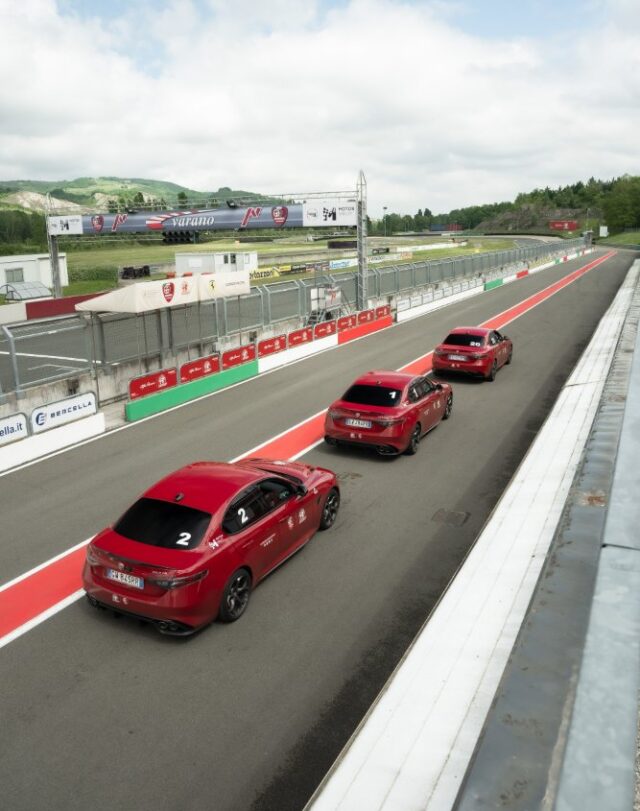
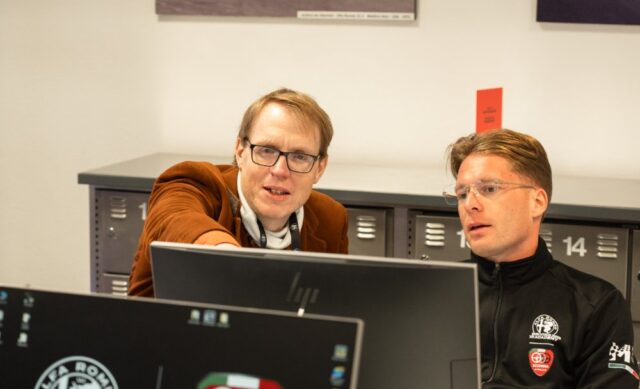
For those venturing beyond the entry-level Safe driving tier, the academy’s Advanced, Sports and intensive two-day Advanced Driving programmes offer a wonderfully tactile deep dive into car control. Participants are thrown into emergency-braking simulations, wrestle with pneumatic slide machines designed to induce sudden rear-wheel skids and tackle an artificially wet, low-grip GT Track to highlight the limits of the cars’ active safety systems. As the syllabus progresses into the Sports and Advanced tiers, the focus sharpens onto pure track craft. You’re paired with professional racing instructors who ride shotgun to help finesse your cornering trajectories, braking modulation and throttle application. It’s all backed by pit-linked telemetry systems that mercilessly dissect your steering angles and pedal inputs in real time, aiming to transform raw speed into genuine, repeatable pace.
Despite Varano being a bit too short and frantic to fully unbridle the Giulia’s 500bhp-plus, we certainly gave it our best shot at the Alfa Romeo Driving Academy. In the passenger seat was Giampiero Simoni, a name that will instantly spark joy for anyone who remembers the golden Super Touring heyday of the 1990s British Touring Car Championship. He was part of the squad that took the 1994 title for Alfa Romeo – the kind of grassroots motor sport programme marketing that Alfa is badly lacking.
There wasn’t much time to ruminate on that, because I was first out on a very damp track in 500bhp of someone else’s car. After a first corner neither of us will look back on with much fondness, Simoni was utterly adept at getting me to finesse the Giulia along the damp Tarmac, coaxing out the chassis’s inherent balance. Well, when I wasn’t getting on the throttle just that little bit too early.
Once back at base, checking the data-logging to see just how far off the reference lap set by the professionals I actually was, complete with a general mark out of ten, it clicked. Each of us had several bites at the cherry, our confidence and pace building as the damp track gradually yielded to a drying line. I posted an average telemetry score of 7.22 in the Giulia Quadrifoglio. Frankly, this was a pleasant surprise; I’ve never been a huge advocate of carbon-ceramic brakes paired with brake-by-wire systems. Call it a personal quirk, but I crave the granular, analogue feel of traditional set-ups. That’s my excuse for such a low score, and a braking graph that looked like a bad day in the Bay of Biscay. Still, a 7.22 was nothing to sniff at, even if it remained a somewhat humbling distance away from the 8.2 laid down by a rather talented French journo in another group.
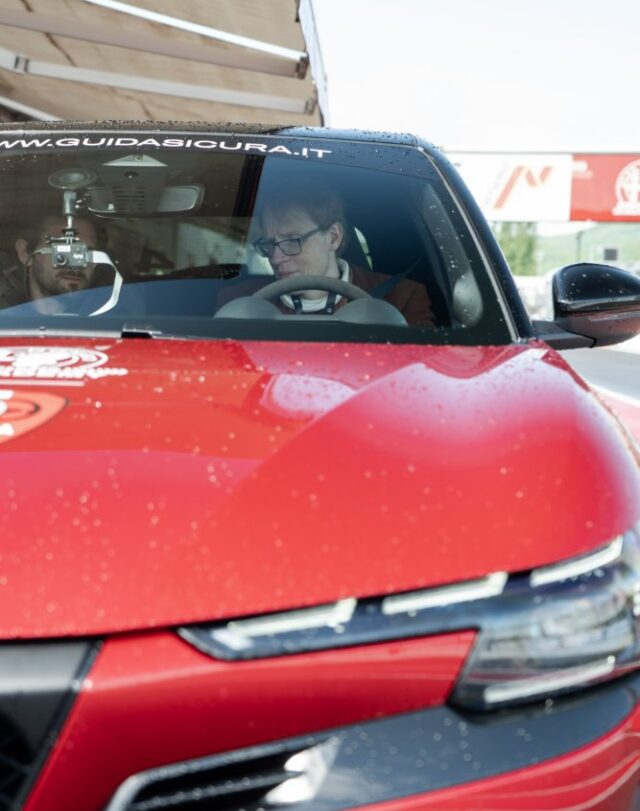
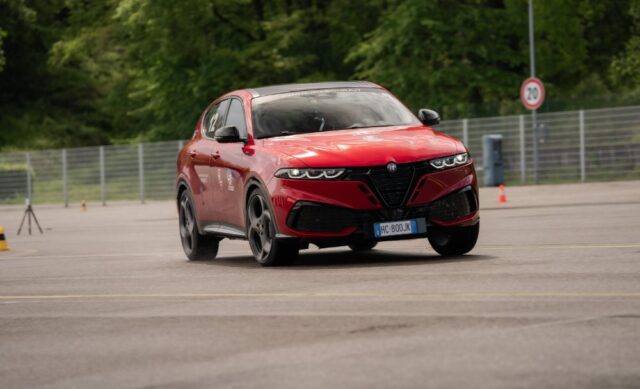
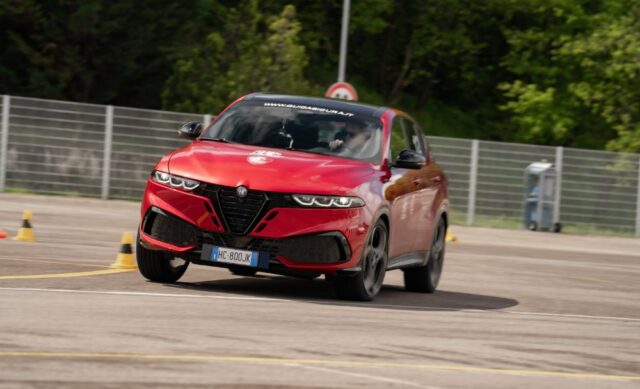
Later in our day at the Alfa Romeo Driving Academy, we were let loose in the new all-electric, top-of-the-range Junior. Commercially speaking, the Junior has quickly become the star performer of the current Alfa Romeo range, buoying sales figures and proving there is life in the brand yet. I confess I approached it with a hefty dollop of scepticism, but on track it was undeniably rapid, its handling dialled in, engaging and razor sharp. And yet, as my tactfully unnamed instructor and I both agreed, it would have been an absolute masterpiece with a 300bhp proper combustion engine under the snout. Ultimately, a silent Alfa Romeo feels a bit like choosing to buy the tribute artist’s album rather than spinning up the original vinyl; the notes are there, but the soul is missing.
Our track session culminated in a frantic figure-of-eight thrash in the Tonale. I was at the press launch for the upgraded Tonale in Pisa last year, and my verdict remains unchanged: it’s a highly likeable car, easily the most stylish crossover on the market today. However, it doesn’t quite capture the everyday exotic Alfa-ness that defined the brand’s glorious 1990s heyday. The steering is hyper-alert and sharp, a true modern Alfa tradition, but the powertrain just lacks a certain effervescent zip. Not that you need a surplus of horsepower when you’re slithering around a moist cone course in a car park, but it was surprisingly good fun – even if the multi-million-pound line-up of Alfa’s historic greats was parked just a little too close for comfort.
It is incredibly easy to criticise Alfa Romeo these days, and people often do. But initiatives such as the Driving Academy, alongside the museum’s heritage and bespoke work of the BottegaFuoriserie, prove that beneath the corporate umbrella there are still beating hearts of genuine enthusiasts who love the brand fiercely. They didn’t have to reforge this link with the driving school, but it feels like an important, tangible step toward clawing back the affections of its traditional European heartland.
The sobering reality, however, is that as brilliant as the Giulia Quadrifoglio is, it remains financially out of reach for the average Alfa enthusiast. What the brand desperately needs is a proper, lunatic hot hatch in the mould of the Alfasud Ti, the 145 Cloverleaf or the gloriously unhinged 147 GTA (the last two of these, I should admit, I own). It is highly, almost impossibly unlikely to happen, but just close your eyes and imagine the Giulia Quadrifoglio’s twin-turbo V6 shoehorned into a hatchback shape. Now that would be a proper Alfa. Bonkers, mad and all the better for it.
If it sells, who knows, there might be two-door saloon, maybe a Spyder – proper Alfas… That’s a big if, but the Alfisti can dream. It largely depends on whether the Junior’s success can be parlayed into the new hatchback, and for that there needs to be tangible halo cars; at the moment, the person who falls in love with the 33 Stradale will be somewhat nonplussed when they go to an Alfa showroom. But maybe, just maybe, there might be hope around the corner. Let’s just hope those behind the wheel can steer the company with the charm and accuracy of a certain Mr Simoni.
You can find out more about the Scuderia de Adamich Alfa Romeo Driving Academy here.