

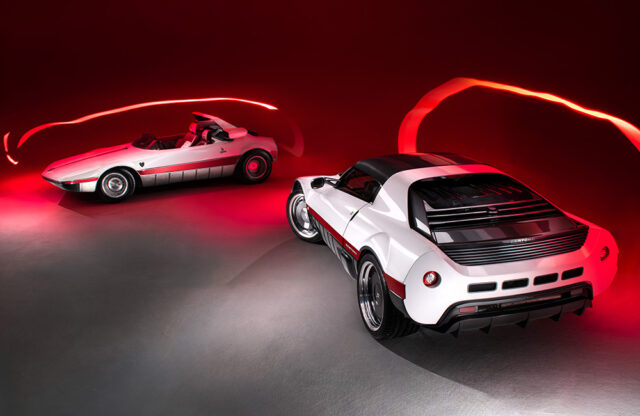
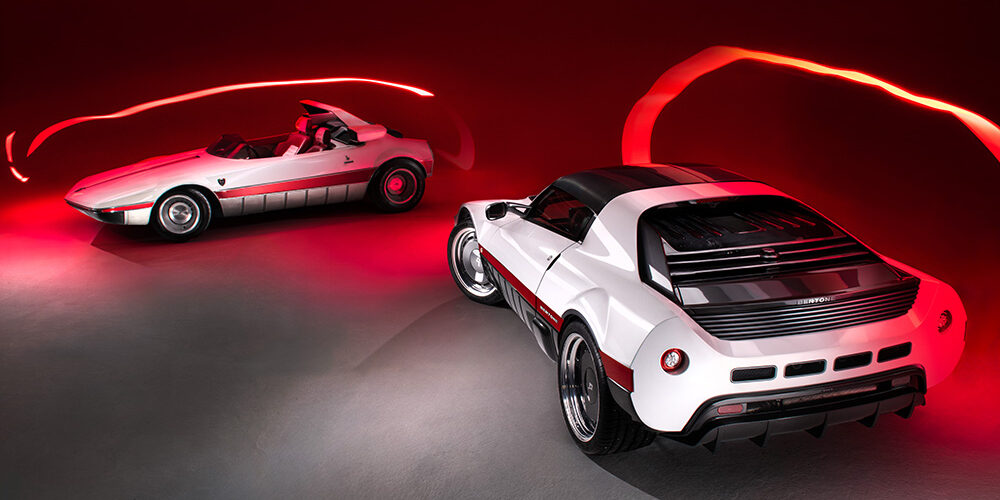
Say hello to the new Bertone Runabout – a fully functional modern take on Marcello Gandini’s influential 1969 original. Whereas that concept was based upon the Autobianchi A112 with a Fiat 128-derived 1.1-litre four-cylinder engine, the new car has a 3.5-litre supercharged V6 doling out 475bhp, and the option of a targa roof version.
However, first some context. The original Autobianchi A112 Runabout broke cover at the 1969 Turin Auto Show, and used the same transverse mid-engined layout as Gandini’s Lamborghini Miura and the extreme wedge profile of 1968 Alfa Romeo Carabo. While a very daring prototype, this was not just some flight of fancy dreamed up by Gandini and Nuccio Bertone – Fiat was wrapping up production of the Fiat 850, which meant that the 850 Spider that was built at Bertone’s Grugliasco factory, would need a replacement to keep Bertone’s lights on. Inspired by racing boats of the mid-1960s, the car became the inspiration for the Fiat X1/9, and elements were incorporated into the Lancia Stratos.
The modern Runabout is the second car to be revealed by Bertone in the company’s current form, under the stewardship of Mauro and Jean-Franck Ricci of Ideactive. They acquired the Bertone brand in 2022, and announced the GB110 hypercar project in December 2022 and unveiled it in June 2024. The new Runabout was announced in late 2024 – and the first physical prototype will make its debut at Rétromobile in Paris this week. We have an exclusive interview with designer Andrea Mocellin below, but firstly here are some of the granular details.
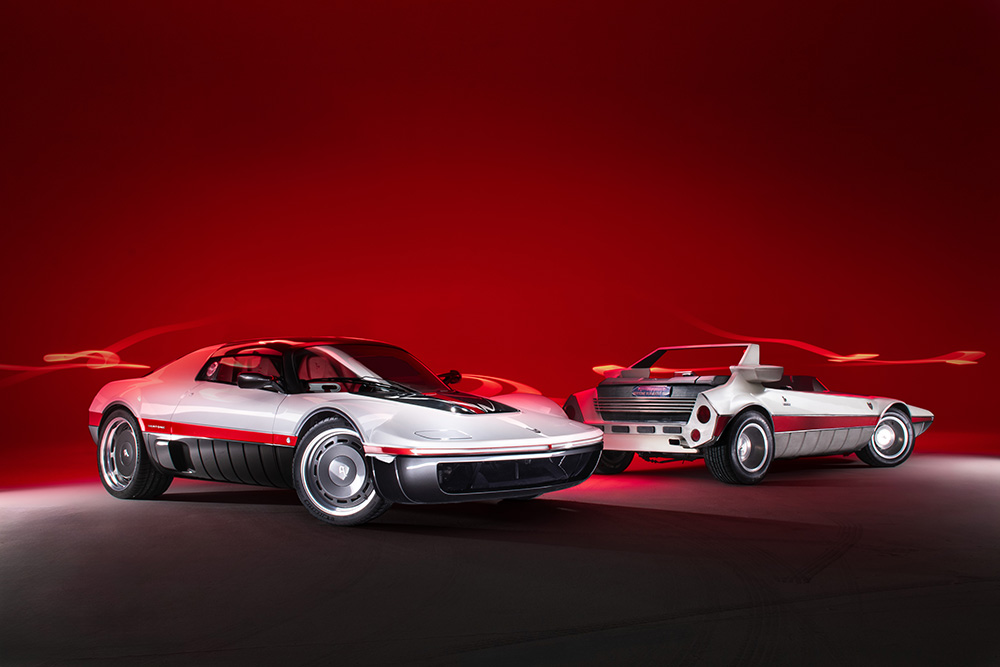
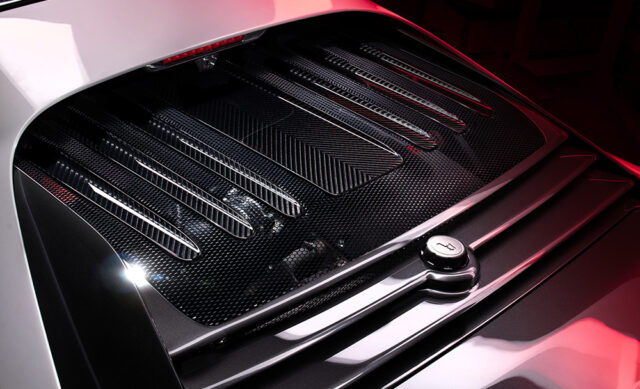
The new-for-2026 Bertone Runabout comes in two forms. The Barchetta is a reimagining of the original Gandini design, scaled up to a more modern interpretation based on a Lotus Exige mechanicals. The 3.5-litre all-aluminium V6 uses an Eaton/Edelbrock TV supercharger, while engine breathing and the exhaust system have been revised. There’s a KT500 carbonfibre airbox for greater flow, plus revised stainless-steel manifolds and a high-flow catalyst integrated into a re-engineered Y-pipe exhaust system.
Around 475bhp and 490Nm of torque are targeted, which should make for fairly brisk progress seeing as the aluminium-bonded chassis is cloaked in carbonfibre and thus weighs 1057kg. Max speed is said to be 270km/h, with 62mph coming up in 4.1 seconds. Just 25 will be made, costing €390k before taxes.
But how do you go about translating a late-1960s pure concept into a 2026 road-going machine? We spoke to Andrea Mocellin about how the car came to take shape.
“I loved the process from the very beginning, for the simple reason that the Runabout is a self-explanatory car,” he smiles. “It is based on designing a car through principles rather than styling alone.”
Andrea describes the principle Gandini introduced with the original Roundabout as “almost the Mona Lisa of compact sports cars”. “It introduced ideas that later appeared in cars such as the Fiat X1/9 and the Lancia Stratos – principles that carried through generations,” he says. “So when we started the project, the idea was to preserve the essence of the original Runabout: the nautical inspiration in the lower part of the car, the sculptural upper body, and what I like to call the ‘L-signature’ – the line that runs from the nose to the A-pillar.”
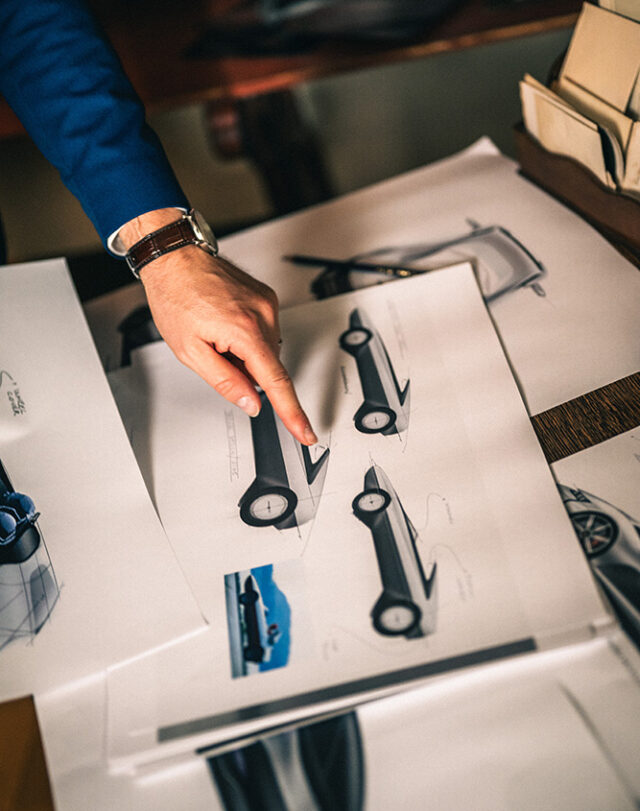
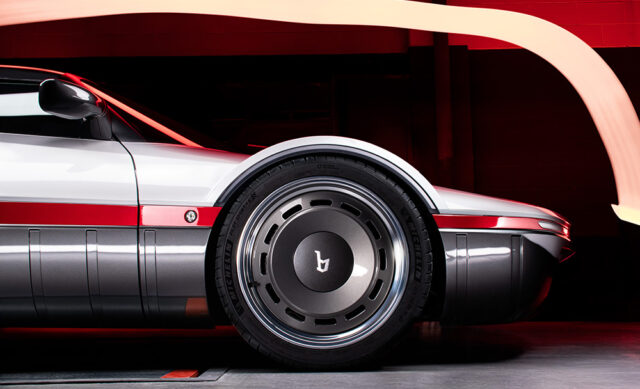

Andrea points to the front wings, which stand proud of the wedge-shaped design; he says these key elements became the script for the project from the very start. “Initially, we explored different directions – something more futuristic, something more classical, or a simple evolution,” he says. “In the end, we chose to design a completely new car. And I think the images explain very well the relationship between the two products.”
The main point of the design was respect, he says – respect for the history of the Roundabout, but what it represents in the history of car design. “It was provocative, it was unique and it is instantly recognisable,” Andrea says. “When you see it, you know it’s a Runabout. And if you don’t know it, you’re curious enough to want to learn about it.”
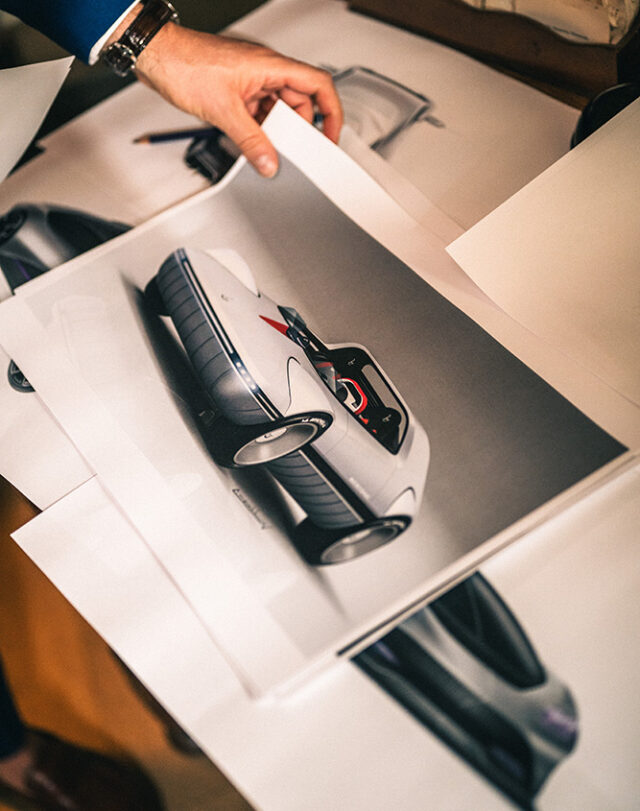
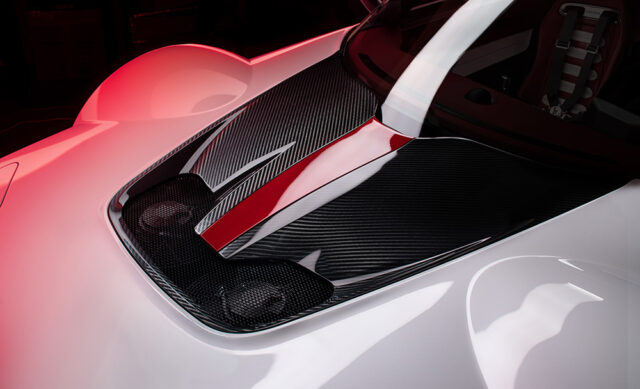
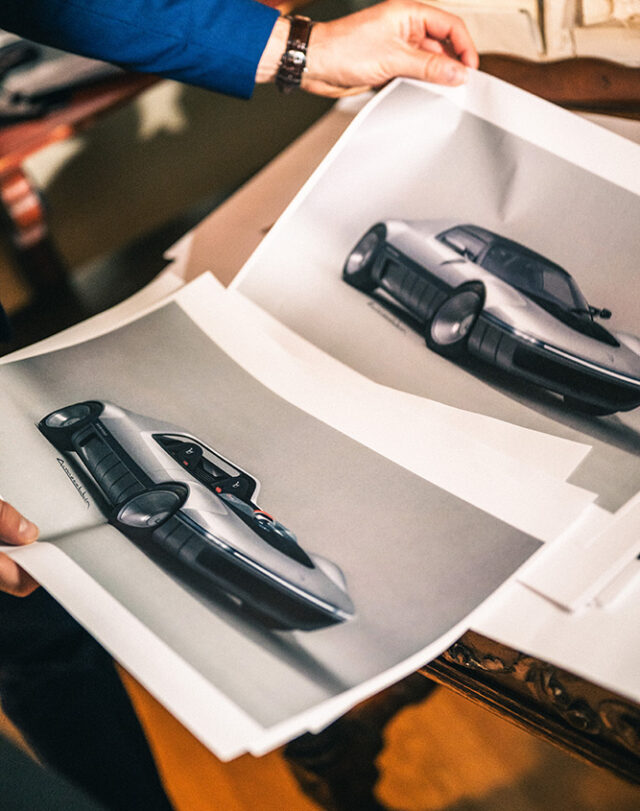
Andrea says you can see that influence in the Targa version of the Bertone Runabout. “The original Runabout was a barchetta, and that was naturally the first sketch. But the Targa opened up many more possibilities for customers, especially in terms of customisation. It became essential in order to offer a truly unique product that can be enjoyed in many situations,” he says. “What you see today is a car that fully respects the history, but is also designed for today – something that can live on for future collectors and enthusiasts.”
However, taking the roof off the donor car poses some questions about structural rigidity – and the original concept, although influential, was very much a concept rather than a production-ready car. “From the beginning, the goal was to build a car that could actually be driven and manufactured, even if only in a 25-car limited series. That guided the feasibility and manufacturability from day one. I don’t see myself as a designer who styles first and asks questions later – I prefer to work in constant dialogue with engineers, aerodynamicists and the technical team,” he says.
He admits it was a challenge, however. “Creating such a pure form requires an equivalent effort from the engineering team to maintain structural integrity. Everything you see was designed with performance and comfort in mind. The exposed front wings, for example, dictated how the suspension and structure were developed around them. This was all done as an homage to the original Runabout. These characteristics were essential to making the project successful and offering clients something truly special.”
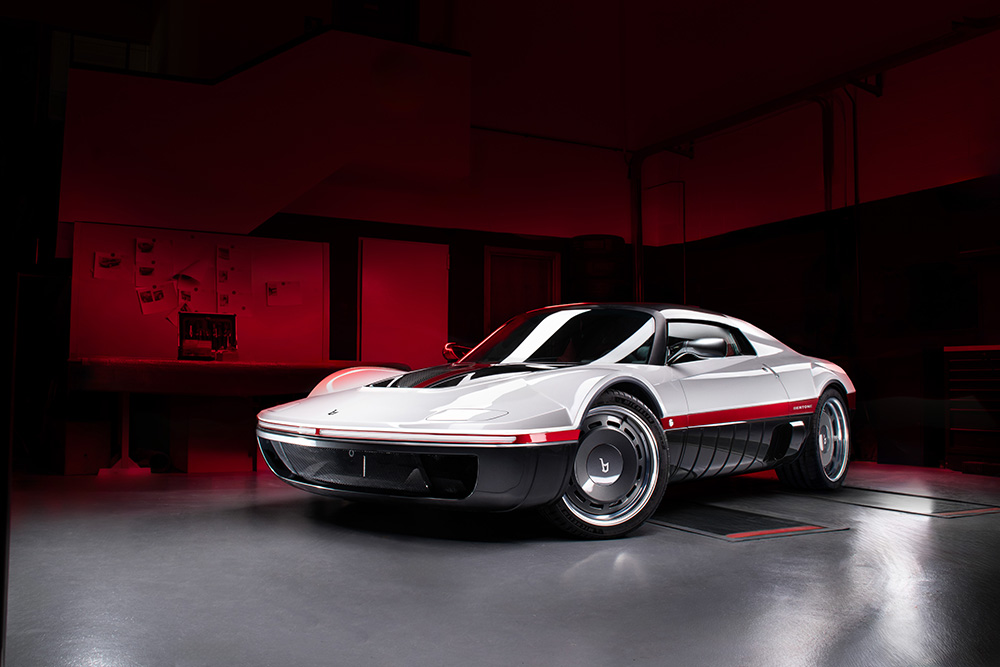
In 1969, Gandini was working with a free hand, yet a modern interpretation means not only modern safety regulations, but also a car much larger than one from so long ago. Andrea says the team worked hard to keep the car compact. “Yes, it is slightly larger, but in the context of today it mirrors what the original did in its era – delivering an almost go-kart-like experience. Inside, it encourages sporty driving. Of course, the modern car is more powerful, which justifies the size, and drivers today also have different expectations,” he says. “When you see it in person, the proportions feel absolutely unique for a 2026 car, particularly in profile and architecture.”
A key part to keeping the 2026’s Runabout’s so low was to bring back pop-up headlamps, he says. “The sharp nose is one of the car’s unique selling points, and something you rarely see today. That’s why we brought back pop-up headlights. The daytime running light forms a clean horizontal line, and when you need the main beam, the pop-ups deploy,” he says.
“When closed, the profile is extremely sharp, echoing the original Runabout. When open, the car almost feels animated – especially with the Targa roof open. It becomes a character, almost alive. This continuity with the original was key, and maintaining a minimal design doesn’t mean simplicity – it means clarity. If you remember this car, you could sketch it from memory in seconds. That’s the strength of clean geometry.”
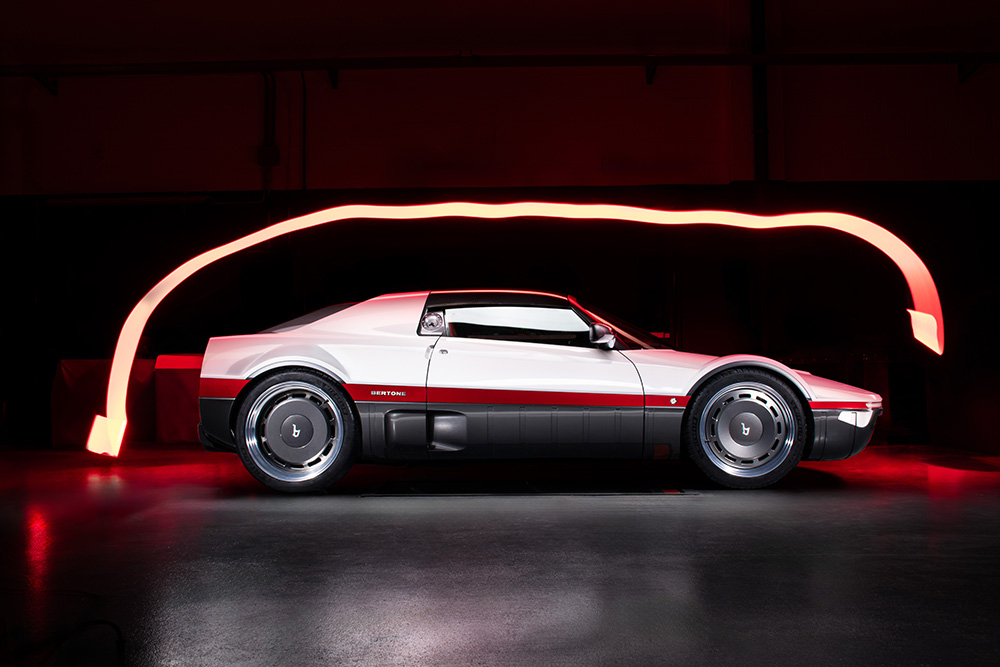
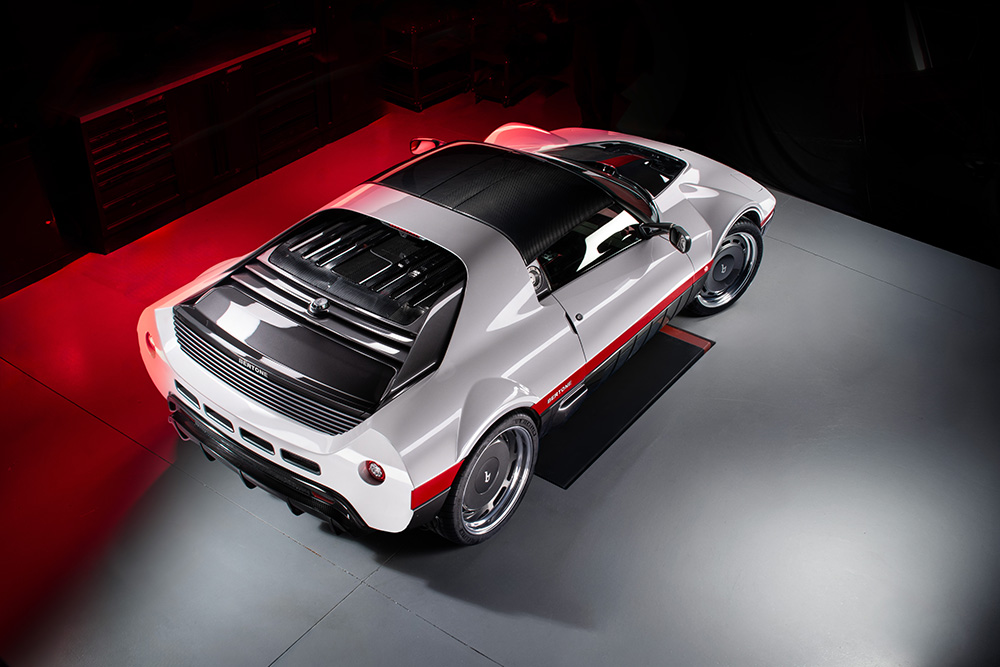
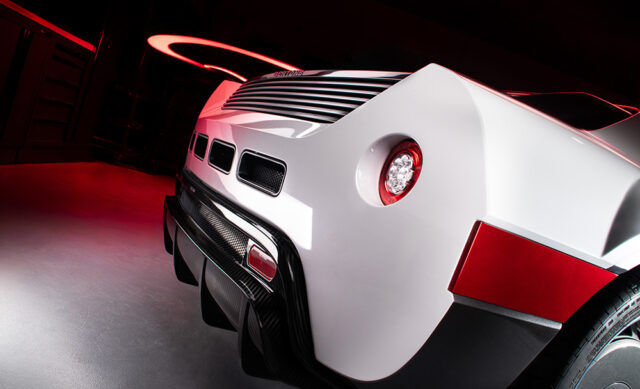
The need to actually work means that cooling and heat management were a problem that the original Runabout didn’t need to worry too much about. For the 2026 Runabout, the functional elements have been located into the lower black area, Andrea says. “Large front intakes, side inlets and carefully managed outlets ensure cooling and aerodynamic efficiency. The upper body remains pure, almost sculptural, while the lower section expresses function. The rear features a dark carbon section with aluminium elements referencing the original Runabout, again balancing performance and heritage.”
While neither the Barchetta or Targa are likely to become track-day warriors, aerodynamic efficiency hasn’t been sacrificed, Andrea adds. “From day one, aerodynamics, cooling and performance were developed in parallel with design using simulations and CAD – we were careful not to add unnecessary aero elements later,” he says. “It’s easier to add than to integrate harmoniously, and we wanted the car to remain clean and memorable.”
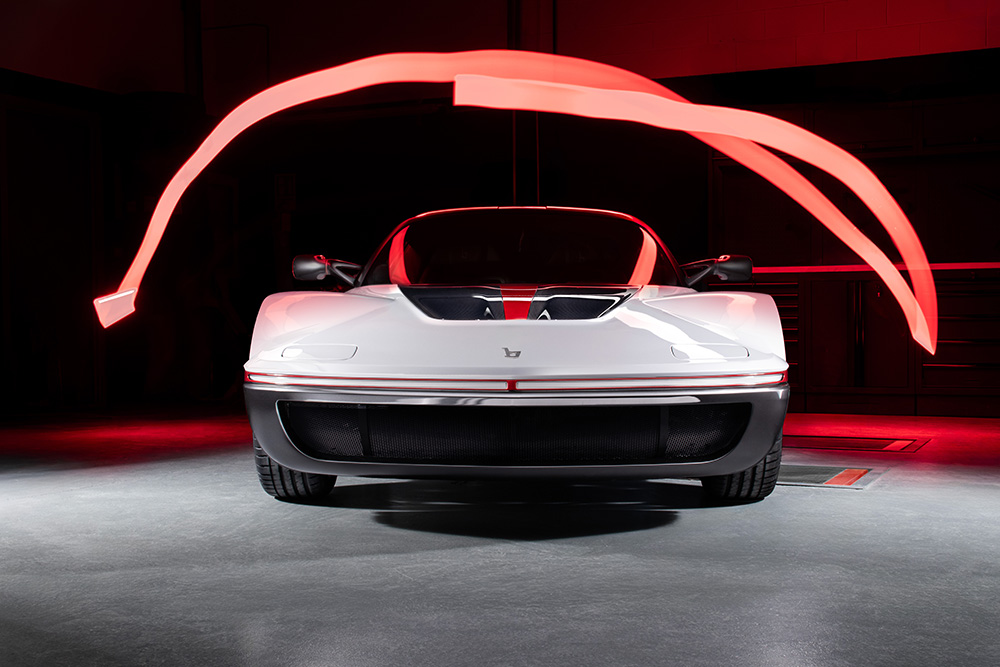
However, it is the front that Andrea’s most proud of – understandably, considering the restrictive nature of modern pedestrian crash regulations. “In an era of safe, conservative design, this car is provocative. The exposed front wings are extremely rare today, and I’m proud we kept them intact throughout development,” he says. “The coda tronca at the rear is also important to me. It’s a timeless Italian design cue. The geometry is primitive and honest, and that’s why it won’t age. The goal was to create something timeless, just as the original Runabout still inspires today.”
That inspiration continues inside the car – but that does pose a problem. The original Runabout was minimal to the extreme, yet there is a limit to just how much ‘minimalism’ can be accepted by those spending many hundreds of thousands on a car; witness the gripes about the Maserati MC20/MCPura in the mainstream press. Andrea acknowledges this, pointing to a need for the Bertone Runabout to adapt to modern expectations. “We focused on materiality – aluminium, leather, nautical influences – rather than automotive plastics. Everything surrounds the occupants like a boat,” he says. “The only digital element is the instrument cluster, allowing personalisation. We even included a nautical compass as an homage to Gandini’s original design.”
Finally, Andrea says renderings can only say so much. “This is a car that truly comes alive in the flesh. The proportions, the details, the interior – it generates emotion. It reflects an Italian design philosophy based on strong, positive volumes rather than negative forms, and that’s something we are proud to protect as part of our heritage.”
More details on the Bertone Runabout can be found here.