

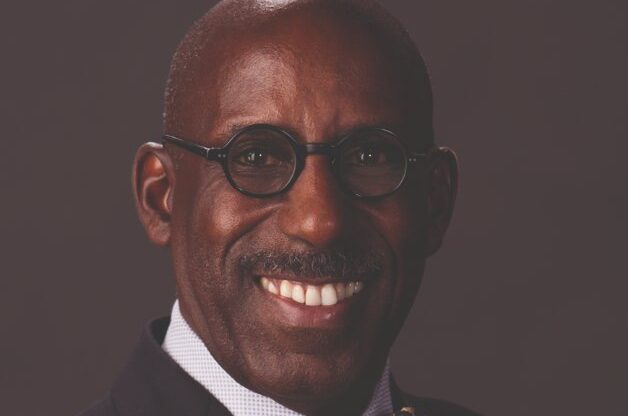
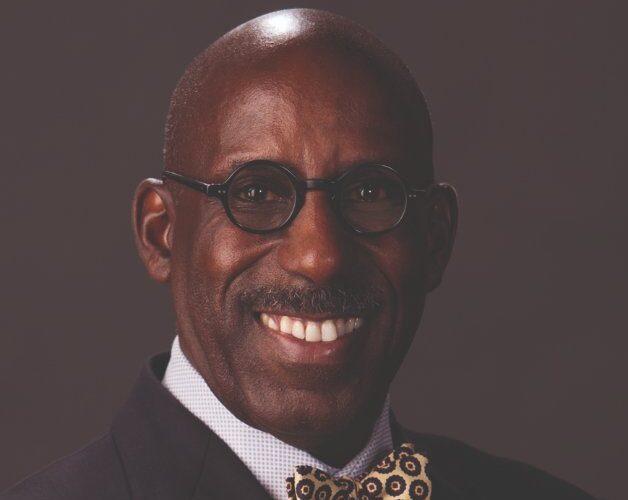
It’s been a good few weeks for Donald Osborne – when Magneto met up with him at Rétromobile Paris 2026, he’d just been announced as FIVA‘s North American representative, and he’d recently achieved a long-held dream: acquiring his own Alfa Romeo SZ.
However, the love affair for the Alfa Romeo brand goes back much further. “When I was a little kid, I had absolutely no friends, so I spent all of my time in libraries reading car magazines and car books. I started reading Italian magazines before I knew any Italians. I just loved those pictures, and the cars were amazing,” Donald explains. “When I was eight years old, my two older brothers took me to the New York Auto Show, and I fell madly in love with these cars I’d never seen before – Alfa Romeos, specifically the 2600 Sprint. I thought, ‘Wow, what an amazing car this is.’ So I always loved Alfas.”
He later discovered his love of Lancia through Alfa Romeo, but it was the latter that represented something very special for Donald. “The idea of this company being so incredibly old, its development through racing and bringing things like the 1900 – the family car that wins races,” he says. “Everything about an Alfa Romeo gives you an attitude of enthusiasm and performance, no matter what it is you’re doing, whether it’s a four-door saloon, a coupé or a convertible.”
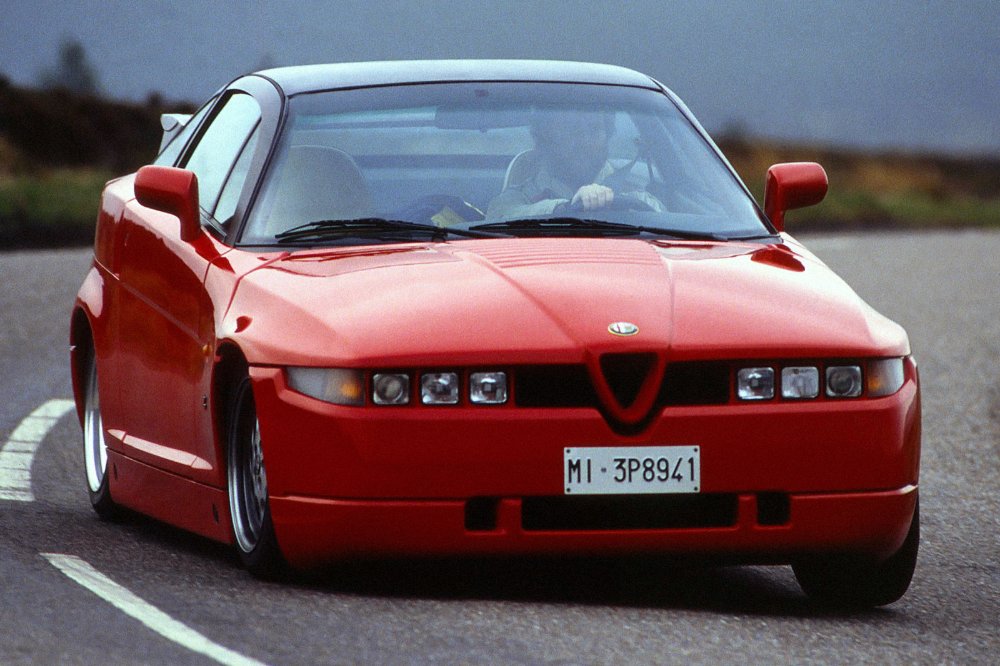
However, it is an entirely different Alfa Romeo that’s joined Donald’s fleet – an ES30 Alfa SZ. “This particular Alfa has a very, very fond place in my heart, because I attended the 1989 Geneva Motor Show when the car was introduced, and I thought, ‘Oh my God, it’s the most incredible thing I’ve ever seen in my life,'” Donald says. “I knew they weren’t going to sell it in the US, which made me very sad, but I thought, ‘One day I will have one of those cars.'”
Donald had to wait until the Alfa SZ was 25 years old to allow the car to be imported to the US, and he promptly sold his Lancia Fulvia Zagato and headed to Italy to source one. “I arrived in Italy a week after an RM auction in London, where an Alfa SZ had sold for half as much again as any had before, and the entire market adjusted itself in a week. I thought, ‘Ah… this is not lucky,'” he chuckles. “But I persevered. I finally found a car through a friend in Holland. It was everything I wanted. I didn’t want a low-mileage car; I wanted one that had been driven and well maintained.”
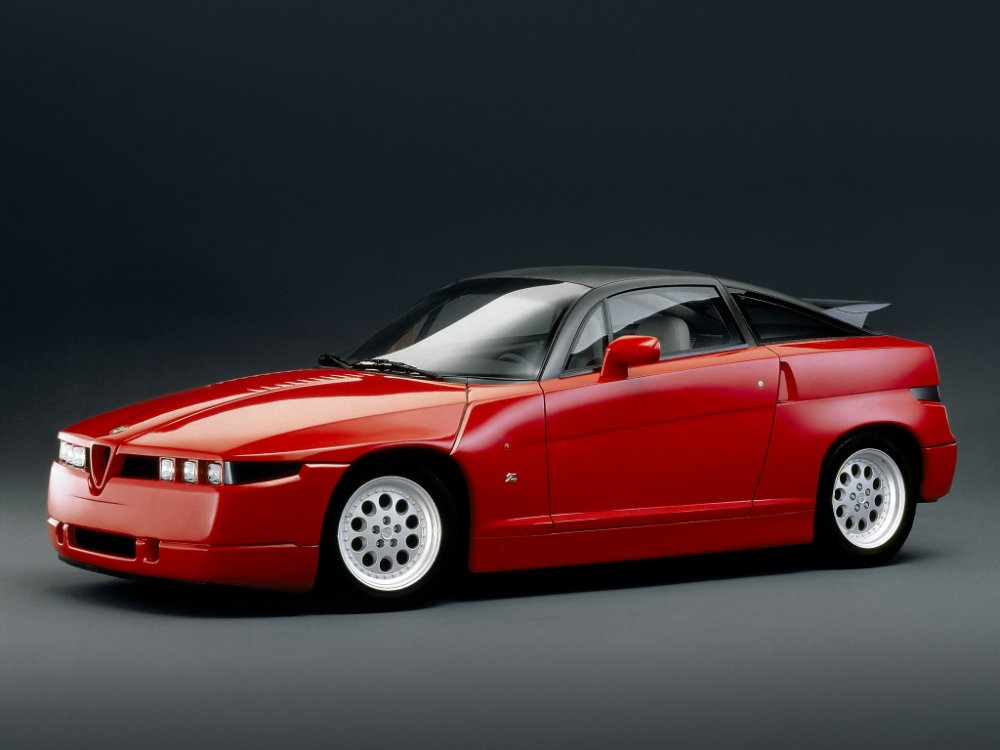
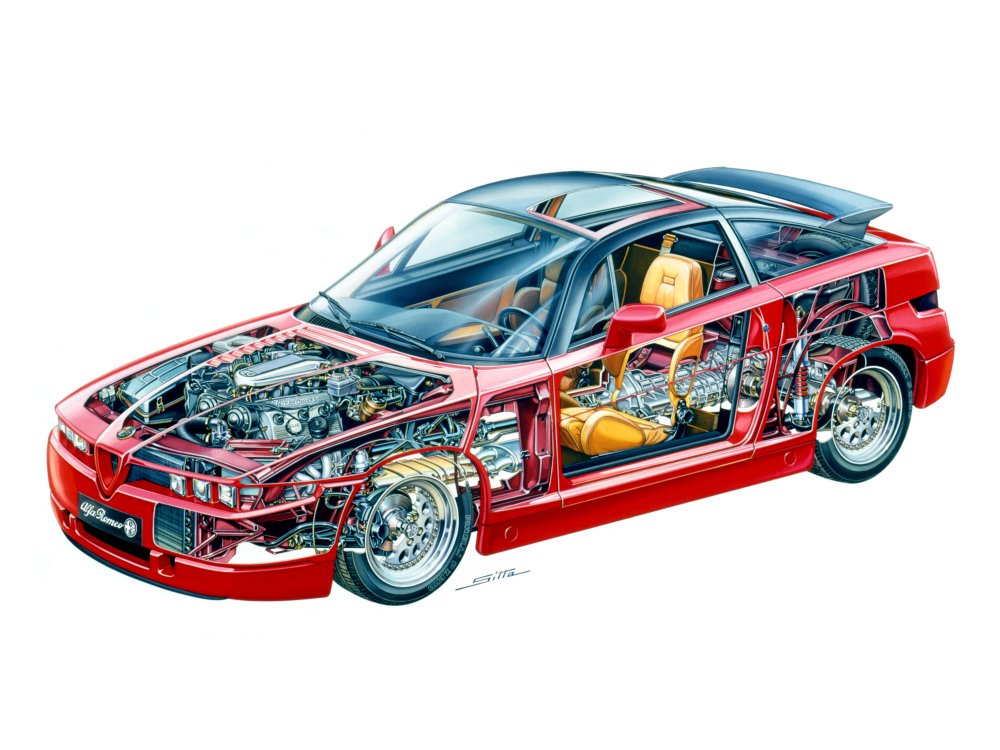
Then Donald started looking at the details. “They had just begun remanufacturing Alfa SZ windscreens – €2000, not including shipping – and I was living in California. It rides on bespoke Koni shock absorbers with hydraulic height adjustment. It’s got those wonderful little square headlights, shared with only one other car. The body panels are thermoplastic; if you had to replace one, you’d need glassfibre or something similar,” he recalls. “And then, most importantly, California emissions: every two years I’d have to swap the Alfa SZ’s headers and exhaust for Alfa 75/Milano parts just to pass. I thought, ‘This is crazy – forget the dream.'”
Fast-forward to today and, having spent a successful five-year stretch as the Audrain Automobile Museum’s CEO, Donald is spending five months of the year in Italy. “I’ve got a place in Bergamo. I thought, ‘Here, I can actually run one of these cars.’ I’d just sold my Ferrari Roma in the US, and I wanted a fun car for Italy,” he says. He set himself very strict budget – €85,000 to €90,000 – knew exactly what he wanted. “I looked at a few Alfa SZs: nice, but each had something missing – documentation, paint defects, interiors more worn than I liked. Then there was one car advertised in Milan for much more money than I ever planned to spend. The mileage was far too low – 4400km – not what I wanted.”
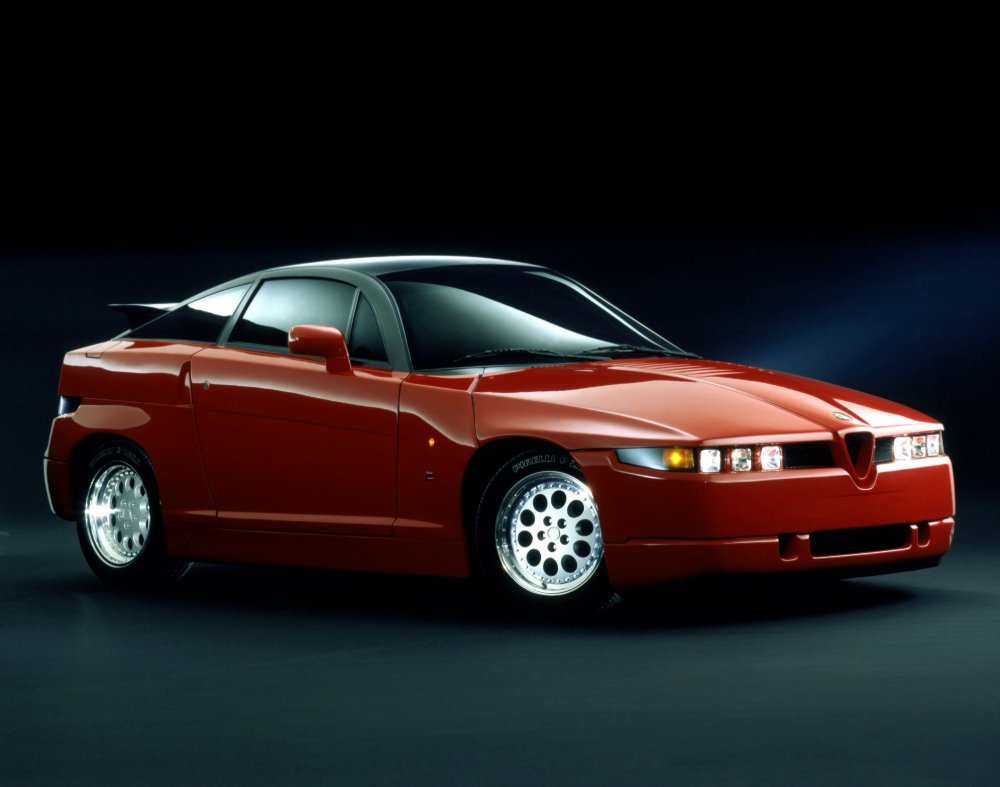
However, Donald chose to have a look at the car, simply to provide a reference point – but he was knocked over immediately. “I took the Alfa SZ for a drive, and even in Milan, which is not the place to drive, it was astonishing. Back in the showroom, I went through everything: all the books, the owner’s manual and service manuals still in their paper sleeves, the original deposit receipt, parts book numbered to the chassis, the car cover – everything. It was a one-owner example; the original radio worked perfectly, and it had been comprehensively serviced – shocks, belts, everything,” he smiles.
“I thought, ‘I can’t pass this up.’ I made an offer at my budget. The owner declined, but countered at €5000 less than his asking price. I thought, this is crazy. I countered again at €5000 under that and said I’d stick to my number. For decades I’d told clients and friends: if you’ve been looking for a car for ten or 20 years and you find the right one, and you have the money, do it – you won’t regret it. So I did – and it has been absolutely astonishing.”
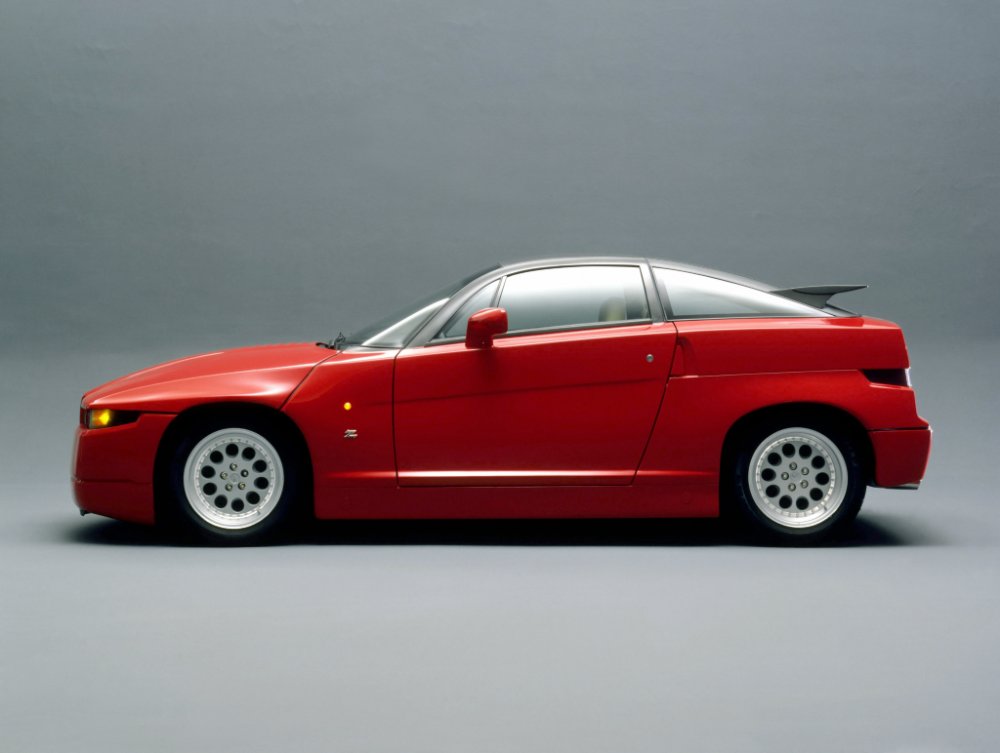
The Alfa SZ is, along with cars such as the Lancia Delta HF Integrale, Maserati Shamal and BMW M3 E30, gaining weight in collector cars circles, celebrating ‘brutalist’ design. Can Donald see such brutalist design becoming more accepted in concours circles? “There are two conversations here. One is what makes a car interesting; the other is what makes it a classic. The Alfa SZ spoke clearly to the brand and to its period. As with fashion, designs that strongly express their era become timeless. The Alfa SZ was striking in period. It was made for a very specific purpose: to act as a halo model for Alfa Romeo at the time, and it incorporated a great deal of interesting technology as part of that.
“So, looking at it now, 37 years later, you can ask, did this actually speak to the brand’s character? The answer is absolutely yes. Does it speak to its period? Absolutely yes,” he explains. “At the 1989 Geneva show, the Chevrolet Corvette C4 and Mercedes-Benz SL R129 were introduced alongside it. Attractive cars – but you could walk past them. The Alfa stopped everyone. Art affects you emotionally – you may love it or hate it, but it moves you. That’s what the Alfa SZ does.”
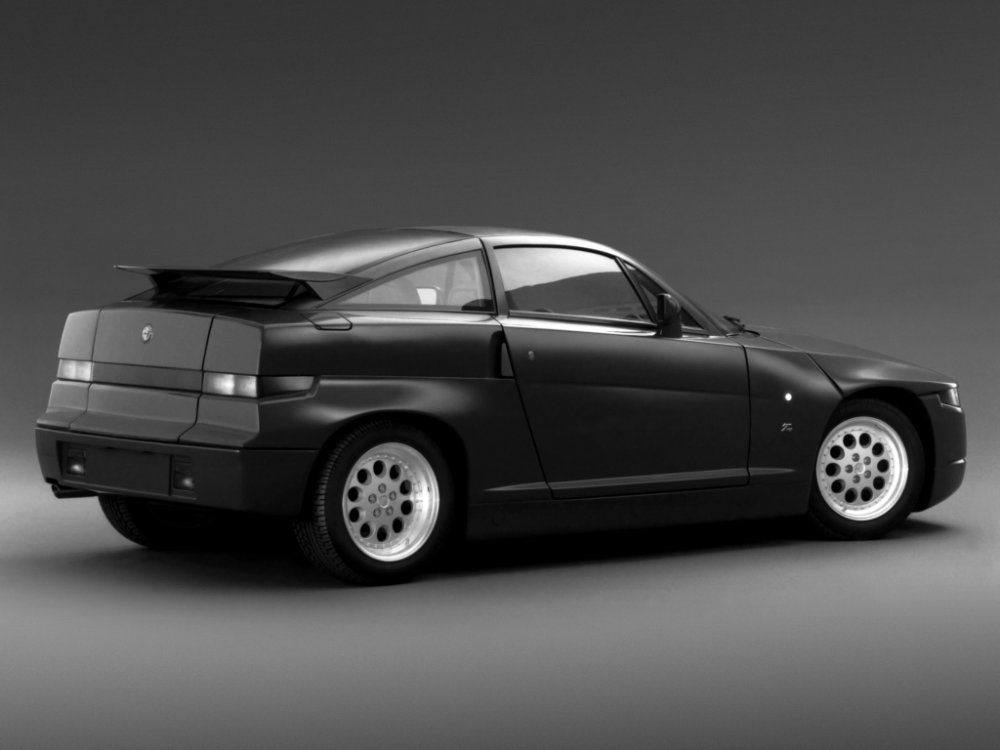
Donald says many concours judges struggle with 1980s and ’90s cars because they remember them new. “Many – although not all – judges on the concours circuit are people of a certain age, a lot of them my age. Some find it difficult to look at cars from the 1980s and 1990s in a collector or historic context because they think, ‘I remember that when it was in the showroom – why is it sitting here on the concours lawn?’ Well, guess what: that 1936 Mercedes was once in a showroom, too,” he says.
“I think any concours judge who struggles to accept something like the Alfa SZ on the lawn needs to examine their own approach and attitude. Collecting is like the universe: it expands constantly. There is new contemporary art being created today, but that doesn’t mean Renaissance art is unimportant or worthless. And just because you love Renaissance art doesn’t mean contemporary art is unimportant or worthless. You have to judge things on their own merits.”
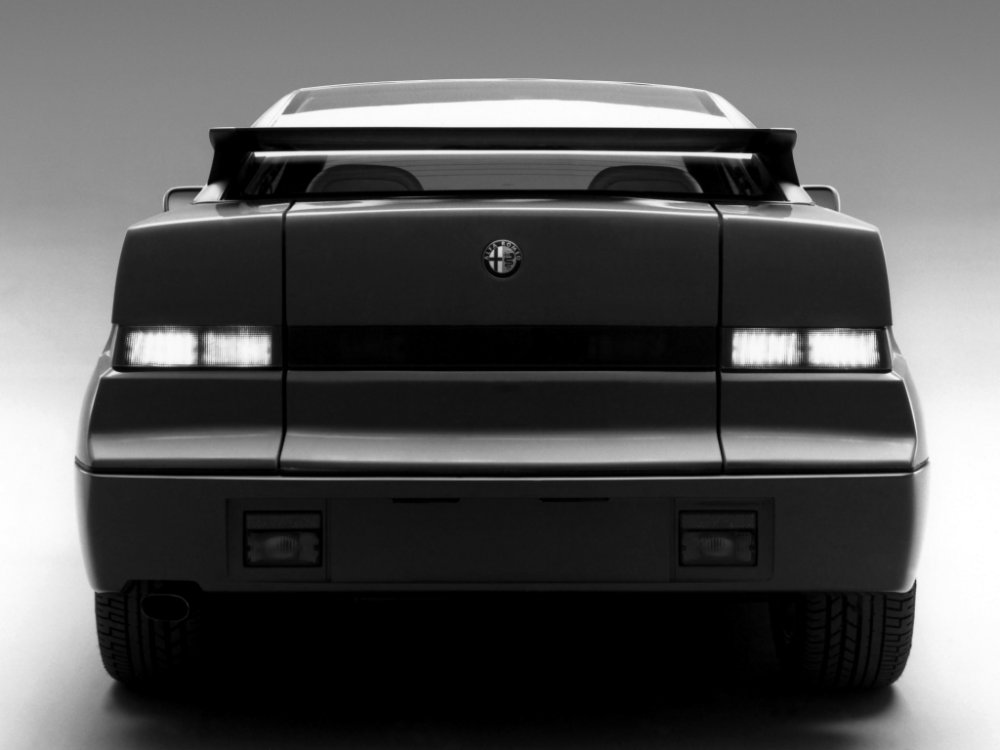
Donald also believes the passage of time is needed. “We live in an age of panel talent TV shows where someone becomes a ‘diva’ after eight episodes. No – you’re someone who sang on television three times, and that’s terrific, but how many of those people are remembered five or ten years later? The ones who endure are the artists who had real careers,” he says.
“People sometimes say, ‘No one’s interested in cars from the 1930s or the 1950s any more.’ That’s simply not true. There were extraordinary cars made in the 1920s, ’30s and ’50s – and there were also a lot of boring ones. The boring ones are forgotten, and that’s fine. There has always been boring art, boring furniture, boring architecture. The best – the cream – rises to the top. I was shocked when I posted about buying the Alfa SZ by how many people said, ‘That’s my dream car.’ It tells you something.”
Donald is careful to acknowledge that the word ‘brutalist’ in its architectural context has a bad reputation, for a variety of reasons not limited to just aesthetics. “It’s one of those situations where the word brutalist punches up – there’s a negative connotation. Brutalist architecture is stunning and very imposing, but the politics behind it can be troubling,” he says. However, looking at purely automotive brutalism, he sees some of the wedge cars as being part of the same aesthetic.
“I think that if you park the Alfa SC next to a William Towns Lagonda, they’re very much of the same feel and period – when I look at the SZ, I remember quite vividly when the Alfa 75 was first introduced as the Milano in the US. I remember everybody commenting on the car’s wonderful dynamics, but asking what was up with the boot – had it been rear-ended? I think cars of that type stand out, but it is far less visually jarring today than it was when it was first introduced. People are used to seeing it, and when you think about the evolutionary style of most of the market around it, that was much more immediately approachable.”
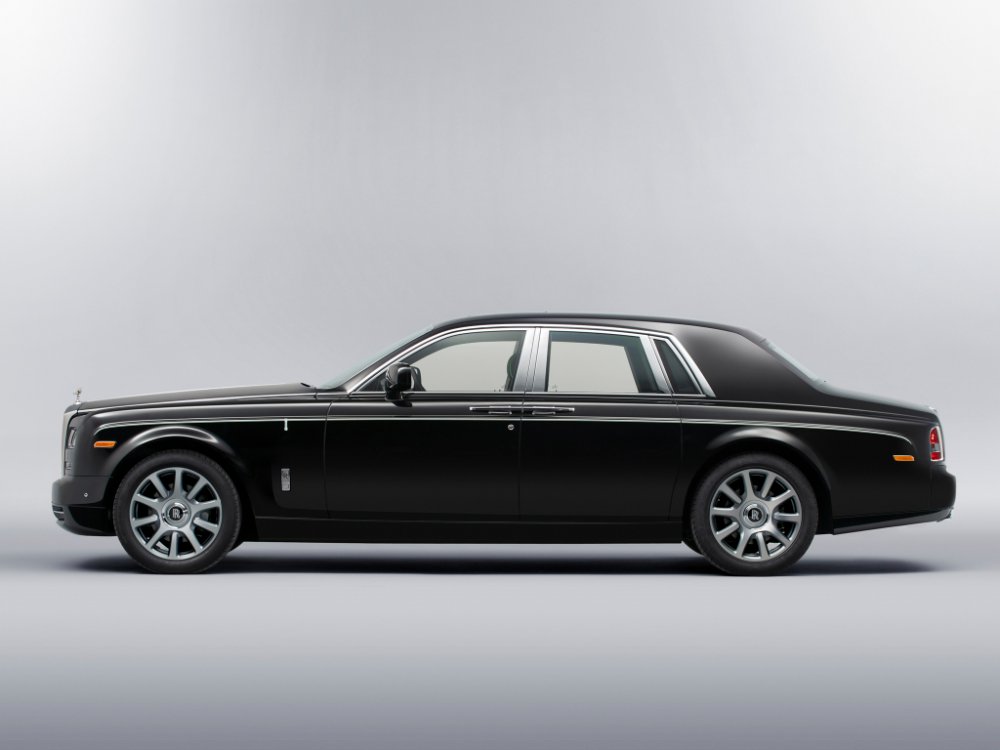
He draws a parallel with the difference between the Mercedes-Maybach and Rolls-Royce Phantom of the early 2000s. “The Maybach was a beautiful car, but it rather looked like any other Mercedes,” Donald says. “By contrast, when people first saw the Rolls-Royce, they said, ‘Oh, that’s the most outrageous thing I’ve ever seen,’ but it had real character and presence. That’s why people remember it. In terms of style, I think the Phantom very much belongs to that same family.”
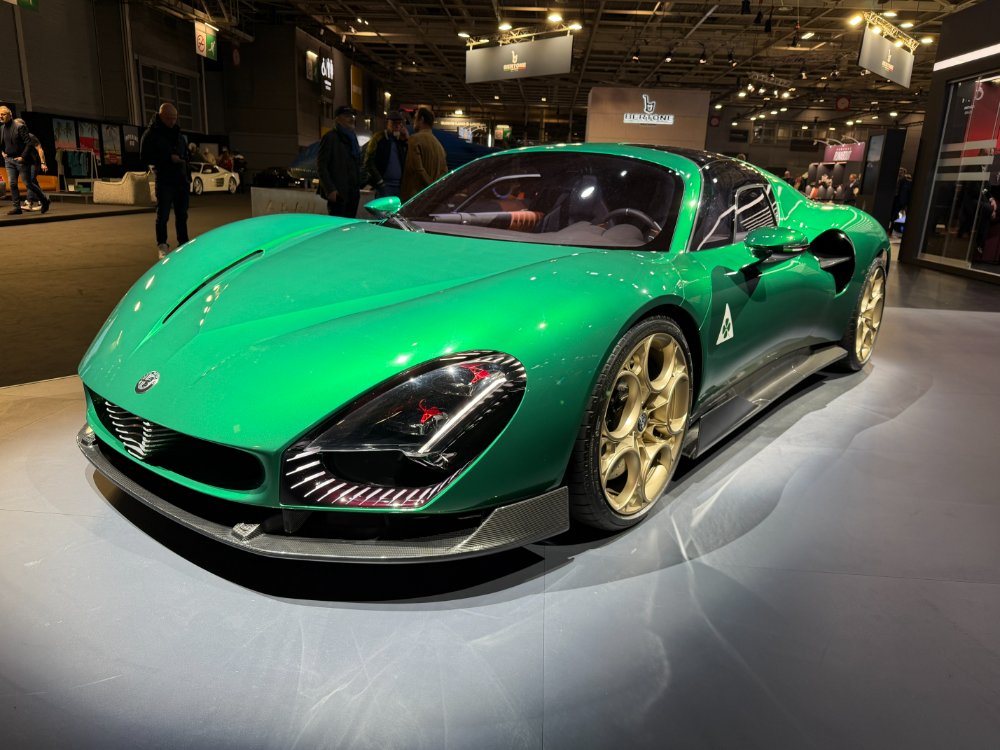
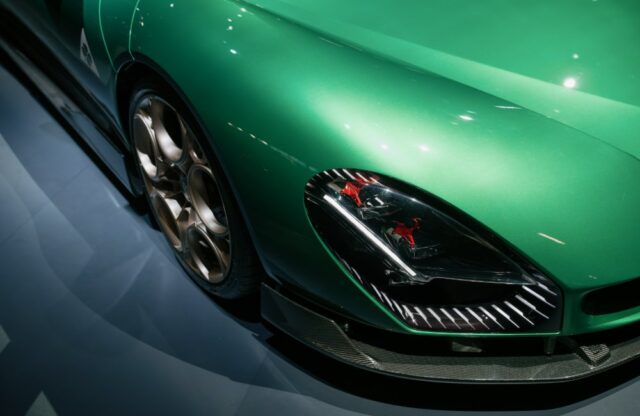
Alfa Romeo currently finds itself in another era of crisis and transition – and Donald can’t help but note the similarities between when the SZ was launched, and the new 33 Stradale (pictured above). “When you think about the resources of a company such as Stellantis, and the fact that Alfa Romeo, in the past nine years, has introduced basically two new models, while in the same period Ferrari has introduced eight, there’s obviously something wrong – there is no visible brand strategy for Alfa Romeo,” he says. “The new 33 Stradale is a terrific car, but it has absolutely nothing to do with the rest of Alfa Romeo’s production. It’s much like the BMW 507 in the mid-1950s relative to the rest of the BMW line.”
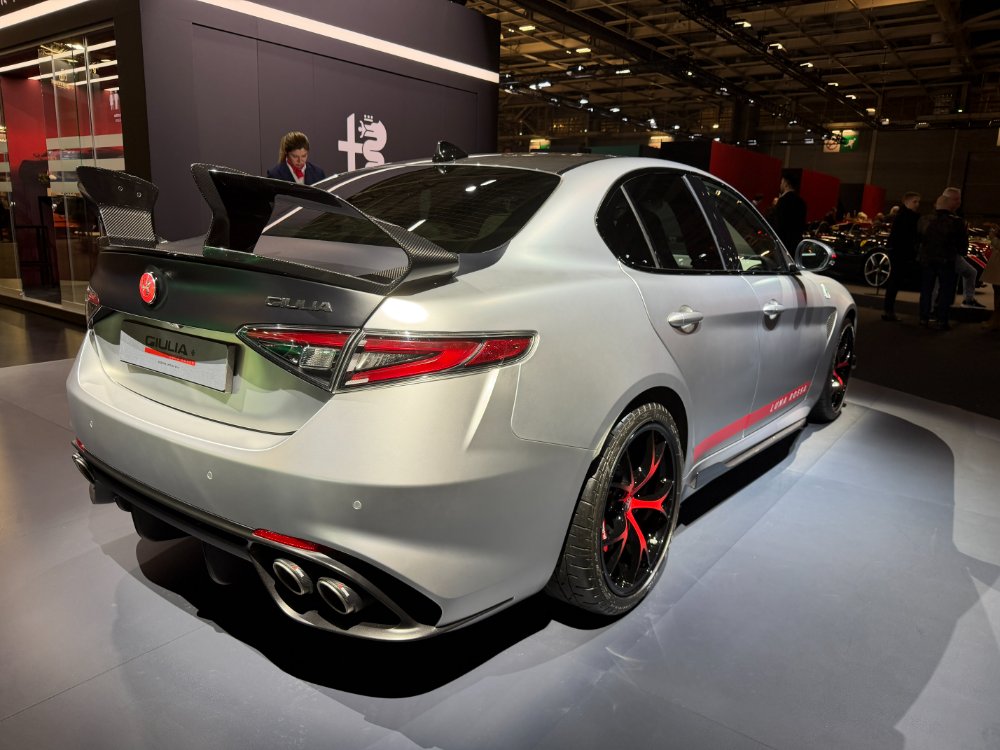
Donald notes that BMW did eventually save itself, but for Alfa Romeo to turn itself around it needs the corporate will. “My experience with Alfa Romeo – whether it was an Alfetta saloon, a GTV or a Spider – was that they all had a great spirit behind the wheel. You can still deliver that today, whether it’s a crossover or an SUV. But they must get back into producing two-door sports cars,” he says.
“From a corporate point of view, it requires a realisation that not every brand and not every model is a volume model. Jeep is the brand that has now saved five companies – five, literally five companies. If those companies can recognise, ‘Look, we need to make margins, let’s do that with Jeep,’ then all the rest of the vehicles should be targeted at specific markets. Sell half a million globally, rather than trying to sell three million of everything around the world. And most importantly – especially in the United States – support your dealer network.”
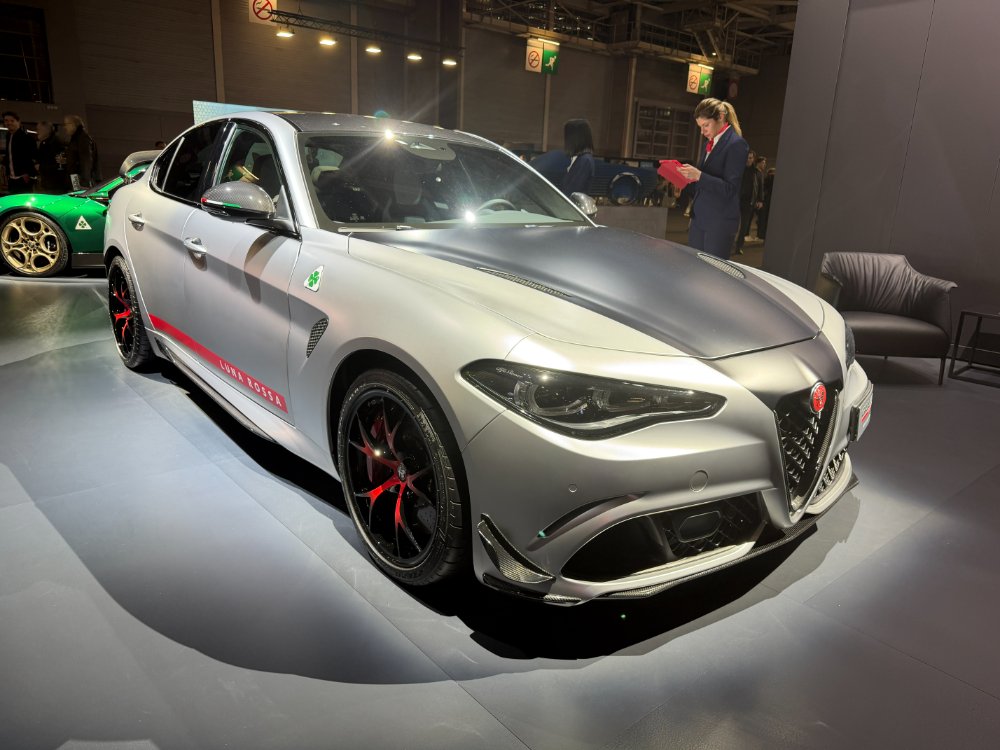
However, can Alfa Romeo really regain the mass-market enthusiast – or indeed, are they out there? Designer Ian Callum told previously this writer that for most people, cars are simply white goods. Donald doesn’t see it that way – but the brand must return to its heartland. “If I were unfortunate enough to be crowned Prince of Alfa Romeo tomorrow, the very first thing I would do would be to reclaim the heritage of Alfa. One of the biggest challenges the brand has faced is that it effectively gave away the heritage of the sports saloon to BMW. Alfa Romeo invented the sports saloon: the 1900, then the Giulietta, then the Giulia. And it forgot to say, ‘This is who we are. This is what we do,'” Donald muses.
“I bought a new Giulia in 2017, which I sold last year, and it was a fantastic car. It reminded me of my Milanos and all the other Alfas I’d owned. Mechanically, it had nothing in common with them, but there was a spirit behind the wheel. It’s like getting into a Porsche: a modern 911 is extremely different from a 901, but you still feel a sense of Porsche-ness. I have a Mercedes GLC 300, and it feels like a Mercedes, just as my 1999 SLK 230 does. Let the vehicles speak for themselves. If you know what your market is, you look at what they want and deliver that, rather than trying to be everything to everyone.”
It’s that latter spirit that is expressed in Donald’s Alfa SZ – and despite the car’s low mileage, he’s not going to be afraid to use it. “I cannot wait for spring and some great mountain drives in the car – it’s going to be absolutely marvellous,” he says. “I’m so over the moon that a 37-year dream is finally being realised.”
For more information on FIVA, head here.