

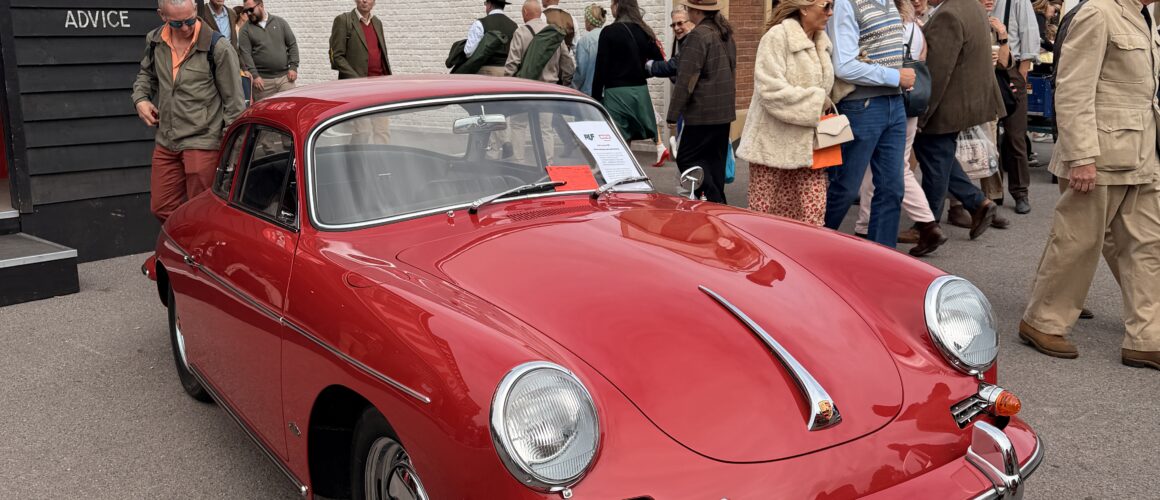
The 1962 Porsche 356 Alois Ruf Jr found in Florida was in a very sorry state. Left languishing in what he describes as “almost a henhouse”, its bodywork had been patched with tape and painted over in yellow. The floor had completely rusted away, too, and been replaced with wood. Undeterred, Ruf paid around $1500 for the dilapidated classic car and brought it back to Germany.
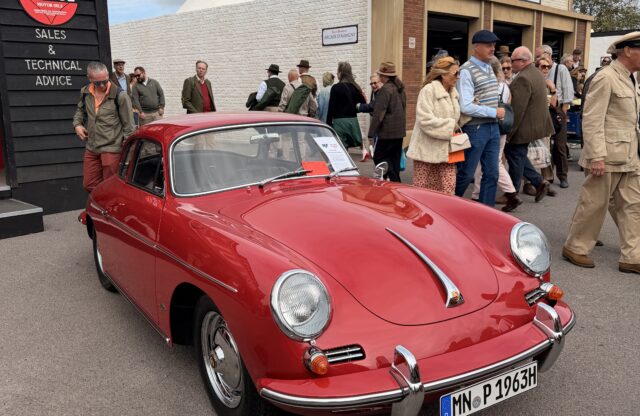
Today, that patchwork Porsche 356 looks like a very different machine. Parked outside the Motul stand at the Goodwood Revival, where it is displayed alongside the newly launched RUF x Motul Heritage Motor Oil, its red paintwork gleams in the September sunshine.
The Karmann-bodied Porsche 356 was a relatively unusual sight in Europe even when new. Porsche had commissioned the German coachbuilder to help meet demand, but most examples were exported to the US. “It was a very rare model in Europe, because most of these cars – or almost all of them – went to the US,” Ruf tells Magneto.
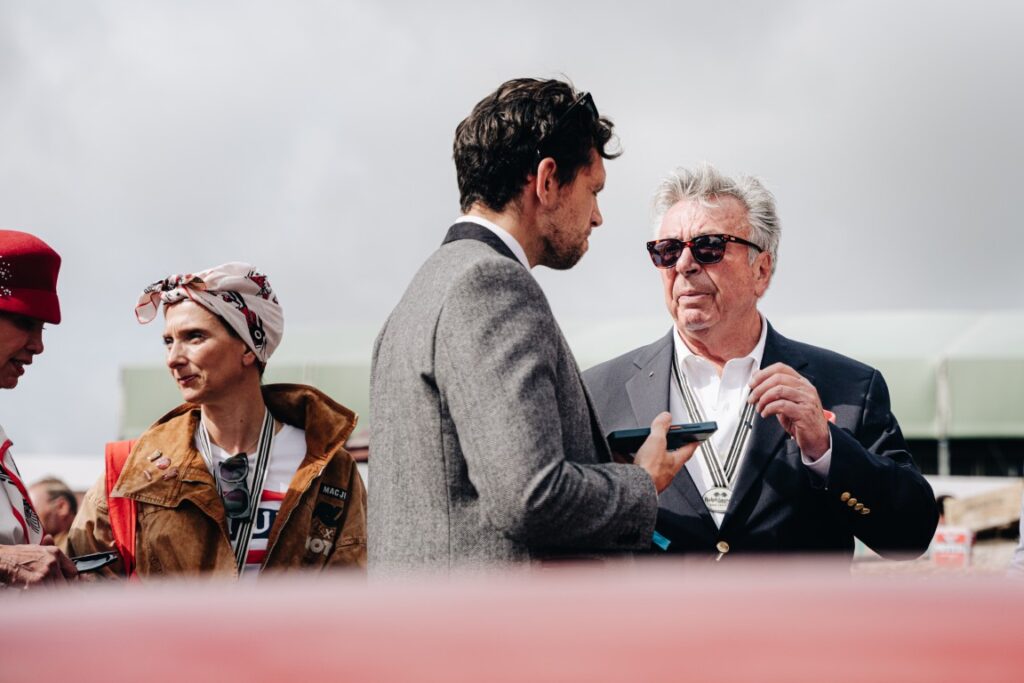
For Ruf, however, the combination of Karmann coachwork and red paint carried a much more personal significance. In 1963, his father, Alois Ruf Sr, was driving one of the family’s Mercedes-Benz tour buses when a brand-new 356 overtook him. Moments later, its driver lost control.
“He was making too many movements on the steering,” Ruf recalls. “He rolled the car and ended up in a ditch.”
Ruf Sr stopped to help. The driver had escaped with only cuts from broken glass, but was nevertheless taken to hospital. Ruf’s father then offered to recover the damaged Porsche.
“My dad said: ‘I have a workshop at home, so I can tow your car there and keep it safe. We can then talk in a few days once you’ve calmed down.’”
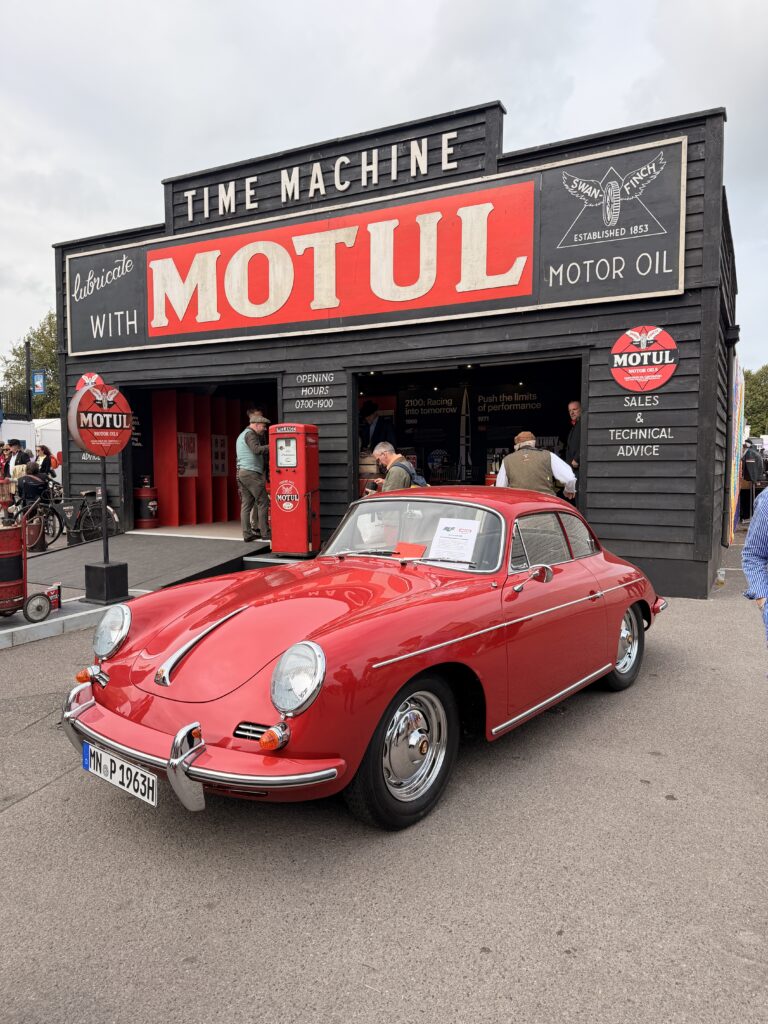
Several days later, the pair spoke again by telephone. “My father ended up buying this damaged car and fixing it,” Ruf recalls. “That is the story of our first Porsche, that the whole family fell in love with. Especially me – I was 13.”
The timing proved significant. Ruf began specialising in Porsche vehicles that same year, setting the family business on the course that Alois Jr would continue after taking over in 1974.
Despite that attachment, the family sold the Porsche 356 in Munich around a year later. From there, its history becomes murky. Ruf believes it was exported to the US during a period when the strength of the dollar was drawing European sports cars across the Atlantic.
Decades later, while examining the yellow Karmann-bodied 356 he had bought in Florida, Ruf scratched through the paint and found red beneath it.
“I thought, well, at least it was a red car like ours,” he says. “It’s a good starting point.”
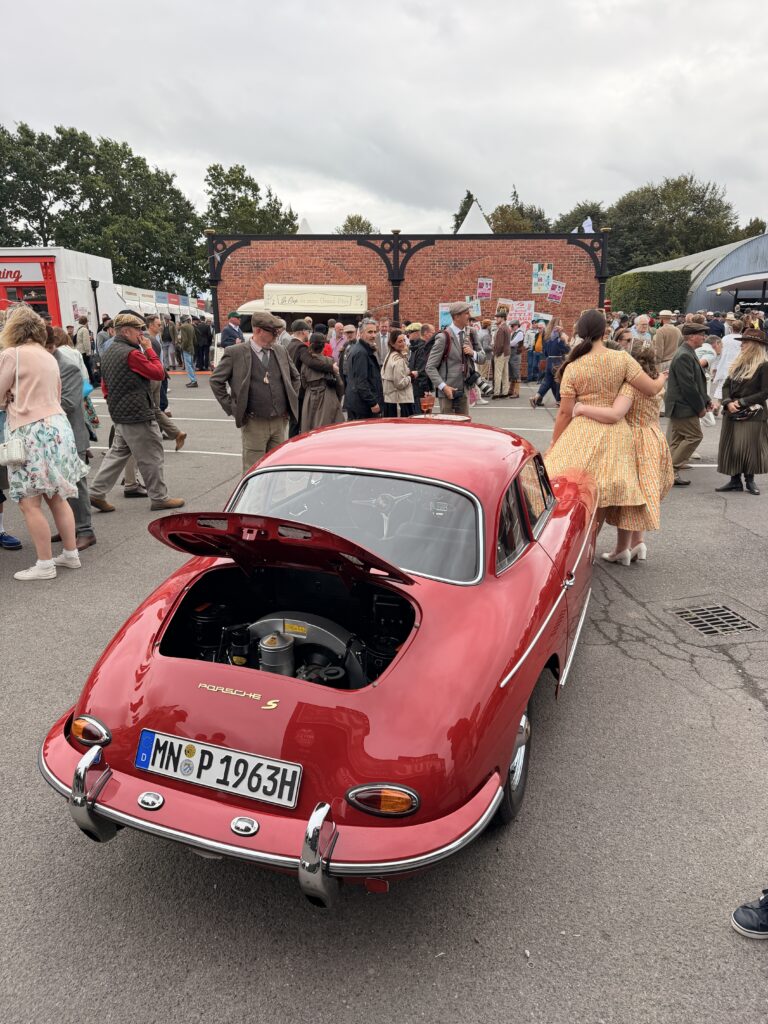
Only after the restoration was complete did the coincidence become something much more remarkable.
“When everything was finished, we came to registering the car,” Ruf explains. “We realised that it’s the same chassis number.”
The 356 he had found in Florida was not merely similar to his family’s first Porsche; it was the exact same car.
“What a coincidence that is,” Ruf says.
The discovery gave the restoration an entirely different significance. The work was far more extensive than the repairs carried out after its original accident in 1963.
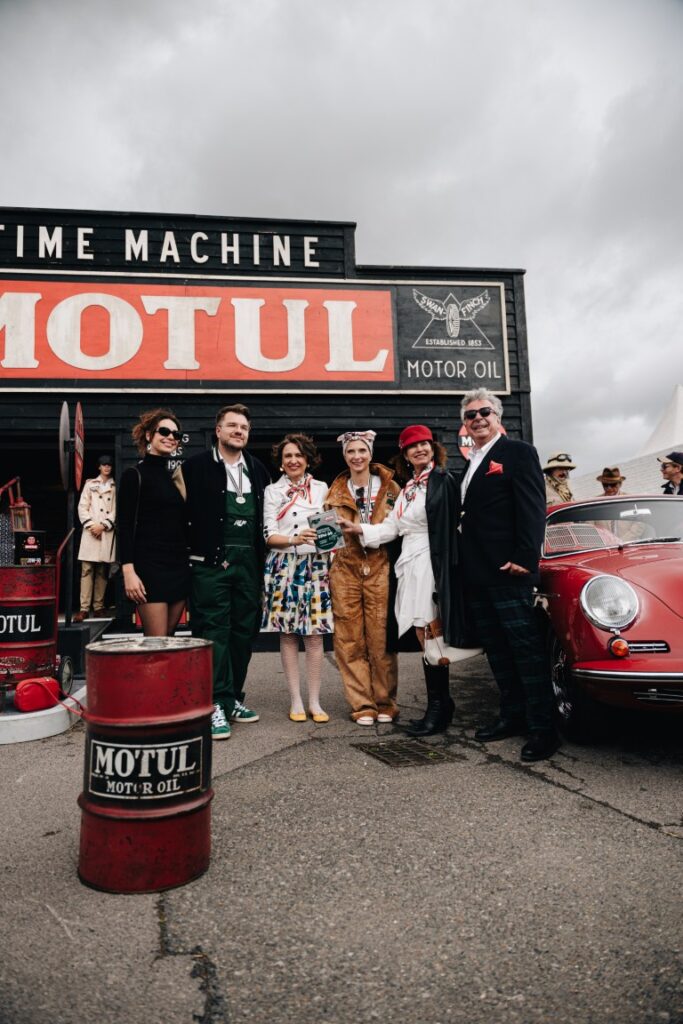
“The first time it was a collision repair,” Ruf says. “Then we had to restore it from A to Z. Everything.”
There is little chance of the 356 disappearing from the Ruf family for a second time: “We’ll keep it in the collection. It’s a piece of history for us. I will never part with this car. No, no, no.”
It now sits in an exalted position among the machinery in the marque’s collection. “This is very, very high up,” Ruf says. “Next to the Yellowbird.”
See here for more information on Ruf Automobile.