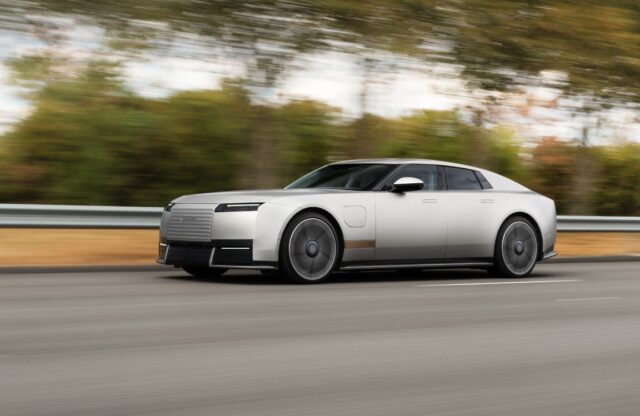


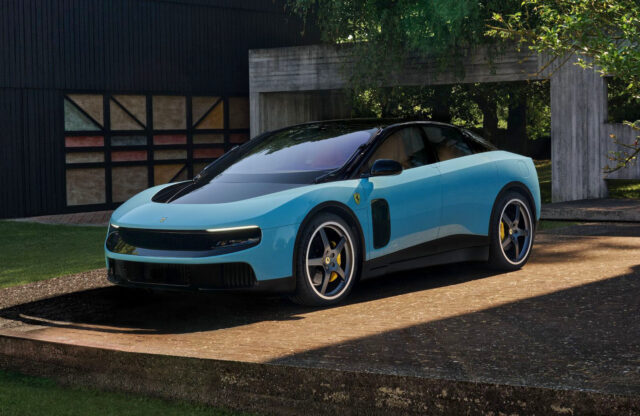
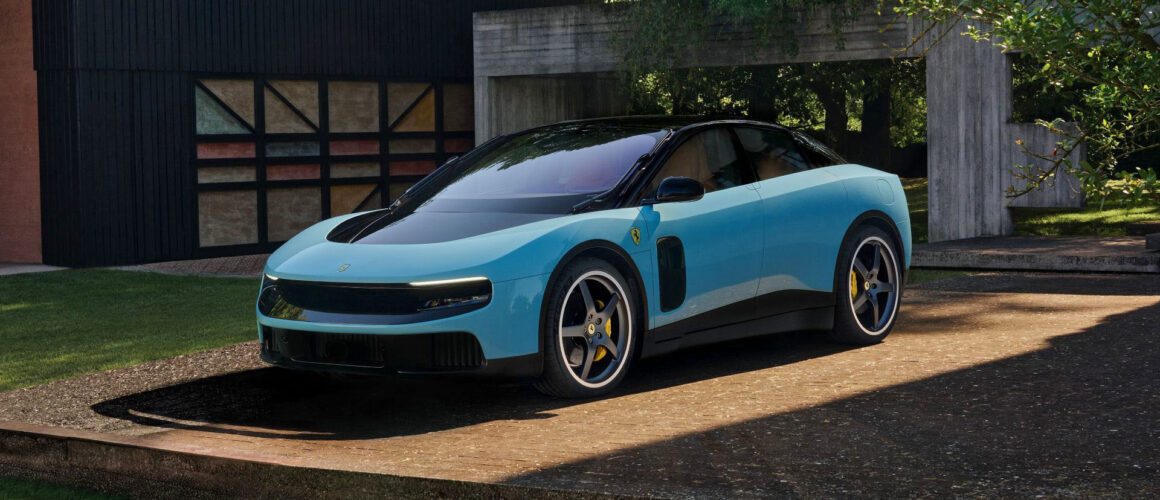
The reveal of the all-electric Ferrari Luce at the Vela di Calatrava in Rome was a marker in the brand’s illustrious history that few will forget. Presented Cupertino-style in an array of five colours including ‘safe’ red and white hues, pastel-toned yellow and blue, and striking orange, the Luce represents a startling (read controversial) new aesthetic for Ferrari.
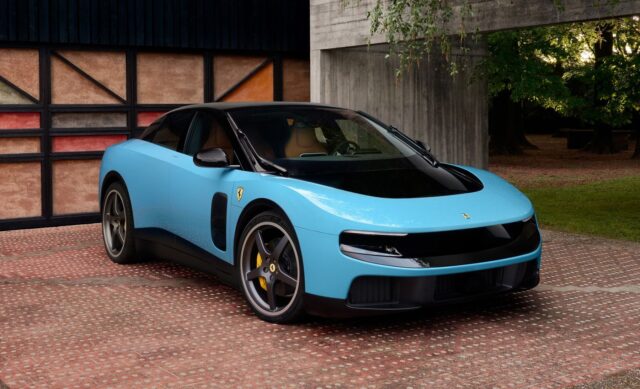
Despite the apparent simplicity of its speedform-style passenger cell and ‘floating’ bodywork, the first fully electric vehicle from Ferrari – and the marque’s first five-seater – has a shape you can’t easily digest. For starters, you have absolutely no idea what size the car is. Those blacked-out sills hide its 1.54m height while outrageous 23-inch front rims and 24-inch rears visually shorten its length of more than five metres. It is the largest car ever to emerge from the Maranello stable – and, at 2260kg, the heaviest by some margin, too.
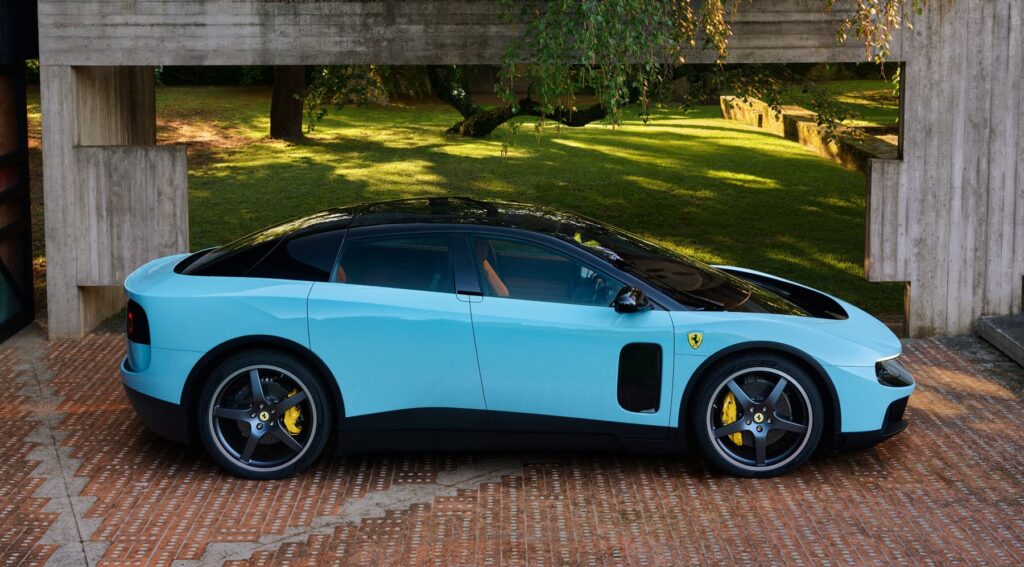
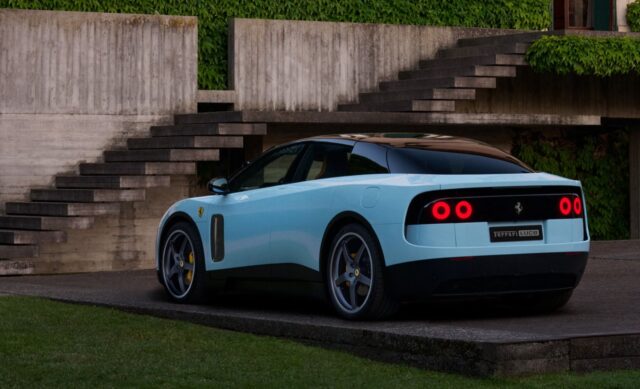
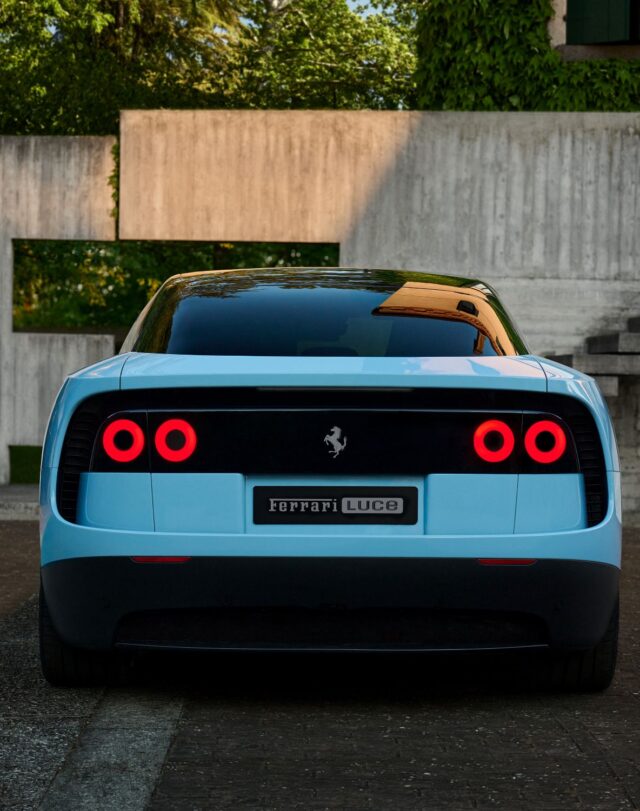
Apart from the badges, the black panel below the front wing containing the headlights that inadvertently creates a tenuous visual link to the raccoon-faced F80 and a rear end partially reminiscent of a 360 Modena, nothing about the all-electric Ferrari Luce’s bodystyle is usual Prancing Horse fare. Unlike with recent models such as SP3 Daytona and 849 Testarossa there has been no raiding of the abundant heritage features bin. The Luce, though, does incorporate one direct link to the past in that it is the first series Ferrari since the 2012 Pininfarina-shaped F12berlinetta to be designed in collaboration with an outside firm. The design collective in the spotlight here is LoveFrom, founded and led by the prodigiously talented industrial designer pairing of Sir Jony Ive and Marc Newson.
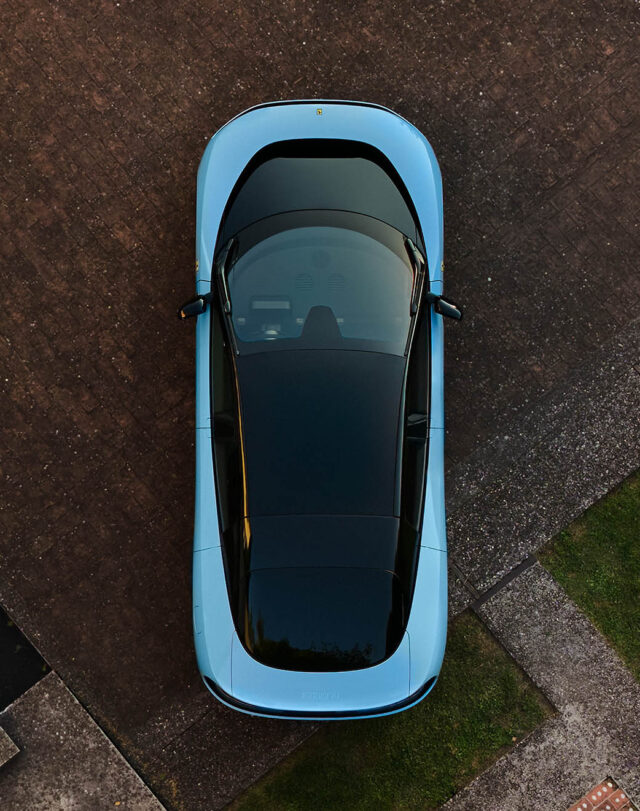
Underlining its willingness to embrace not just a new powertrain, but an entirely new breed of Ferrari, the firm tasked LoveFrom with defining a new design language for the Luce. According to Newson, solving the challenges presented by the preset five-seat, four-door, battery-powered architecture along with EV-obligatory aerodynamic requirements led the team to a basic philosophy of separation. The result is not just a 360º graphic separation of passenger cell (represented by the glass and the blacked-out areas) from the outer body panels but a physical one, too. Obviously, this is most apparent with the bonnet and boot wings.
Ferrari has essentially given LoveFrom licence to design a concept car adorned with Prancing Horse badges, as so often happened in the past with Italian carrozzerie. The difference is this is no one-off special destined for a short season on the motor show merry-go-round – it is the next series Ferrari in showroom spec. Euro-zone deliveries are expected to begin Q4, 2026 priced from £439k. Say what you want about the way it looks or what’s driving the wheels, it is a gutsy move.
Does the Luce look like a traditional sports car? Not particularly. If you are designing a car that breaks away from a traditional internal-combustion engine then it seems logical it should break away in a visual sense as well. Great in theory, seemingly quite difficult in execution.
However, it is the most practical (and apparently the most comfortable) Ferrari ever – a four-door sedan with a near-600-litre boot capacity and serious head and legroom for five adults that just happens to do 0-62mph in 2.5 seconds, tops out at 192mph and [we’re told] is “unbelievably quick” around Fiorano. So, while we are sure it’s not a Ferrari that’ll end up on youngsters’ bedroom walls, don’t be too quick to dismiss its credentials as a proper sports car. Ferrari has thrown every Formula 1 and WEC tech trick plus a ton of innovation at what is essentially a technological tour de force.
The all-electric Ferrari Luce’s key specification points are: 1036bhp from four (one per wheel axle) radial-flow permanent magnet synchronous motors powered by a 122kWh battery pack. The WLTP cycle range is given as 530km, or 329 miles. In conjunction with various actuators, the set-up allows for four-wheel drive, torque vectoring and four-wheel steering, while third-gen active suspension maintains optimum traction.
Ferrari says it has kept the engineering and manufacturing of all the main drivetrain components in-house in order to provide long-term owner assistance, in line with its ‘a Ferrari is forever’ strategy. That said, the Luce is the beginning of the end for ‘matching numbers’.
As EVs require, Ferrari has gone all-out in terms of NVH, engineering an elasticised rear subframe and cleverly deploying noise-cancelling tech to nullify unwanted mechanical frequencies. Aerodynamics has been high on the agenda, too. Usually a Ferrari is all about chasing performance and maximising downforce, but with Luce the emphasis has been on fast charging and drag reduction.
The result is a drag coefficient of 0.254, the lowest of any Ferrari ever, while still producing as much downforce as an Amalfi. The Tesla Cybertruck-style exposed windscreen wipers are a result of prioritising the airflow along the ‘bonnet’ panel into the windscreen. Along with the car’s amorphic rear end, the wipers are the most jarring elements of an otherwise coherent piece of product design.
Going electric is a huge risk of course. Other premium brands launching new EVs have been burned by slow uptake and unprecedented depreciation. This is where LoveFrom’s expertise comes heavily into play. In terms of the interior, it has not merely fitted ever-larger touchscreens into a cheap, buttonless cabin. Instead, it has turned every individual aspect into a joyously tactile work of art. Impeccable design married to top-notch material choices – machined glass knobs, digital instruments with analogue needles, anodised aluminium steering wheel, pedals, dashboard panel, grab handles and more – have made all the difference.
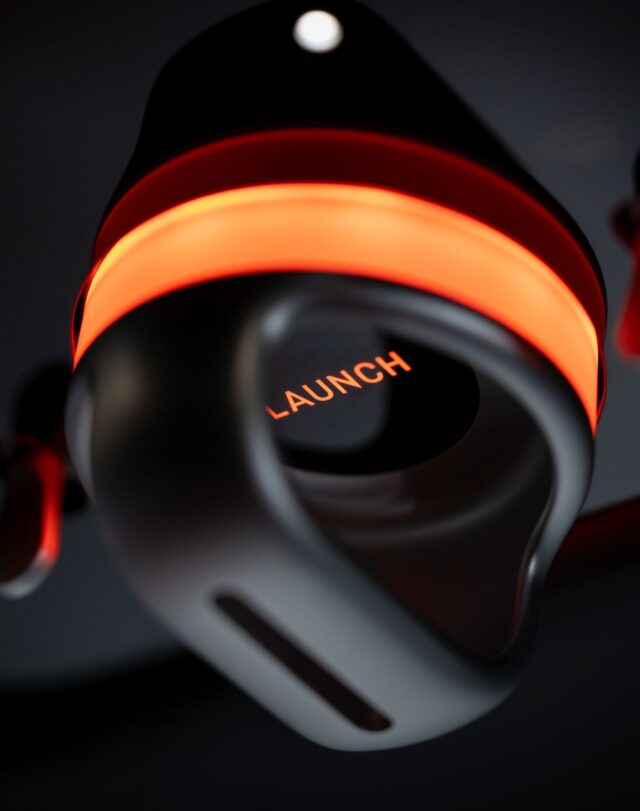
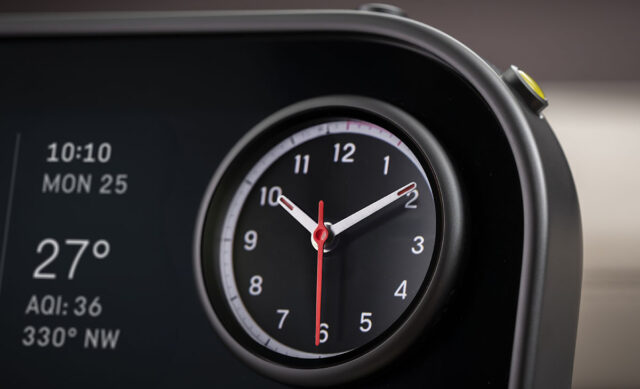
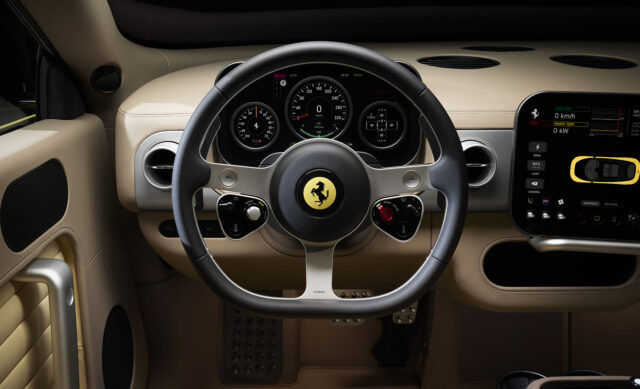
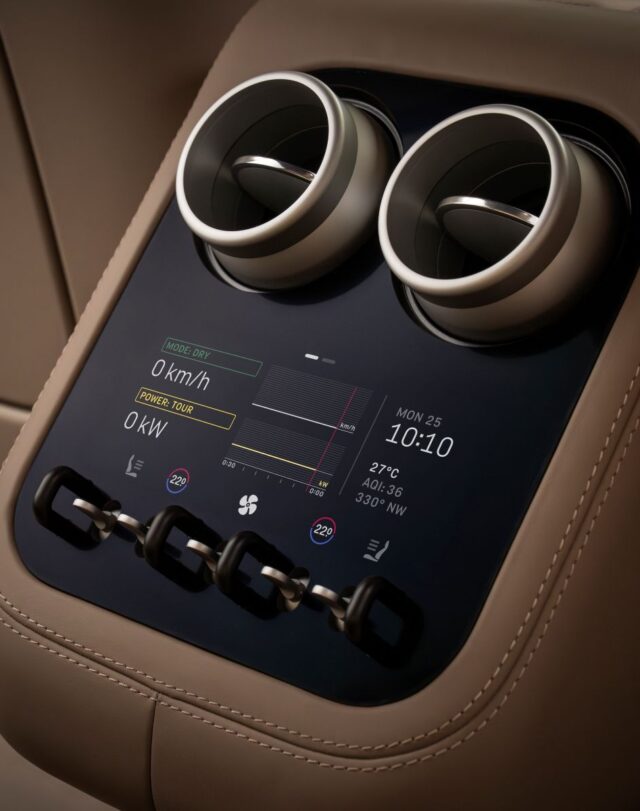
As intimated earlier, the Luce is rather large. Fortunately, its dimensions have translated into a voluminous cabin with ample leg and headroom for those of the taller persuasion. By opting for authentic materials and considered, timeless design, the interior feels precious. As a result it’s likely to still feel valuable in 30 years’ time. In the digital era, it’s not just a seismic moment for Ferrari but for car interiors in general.
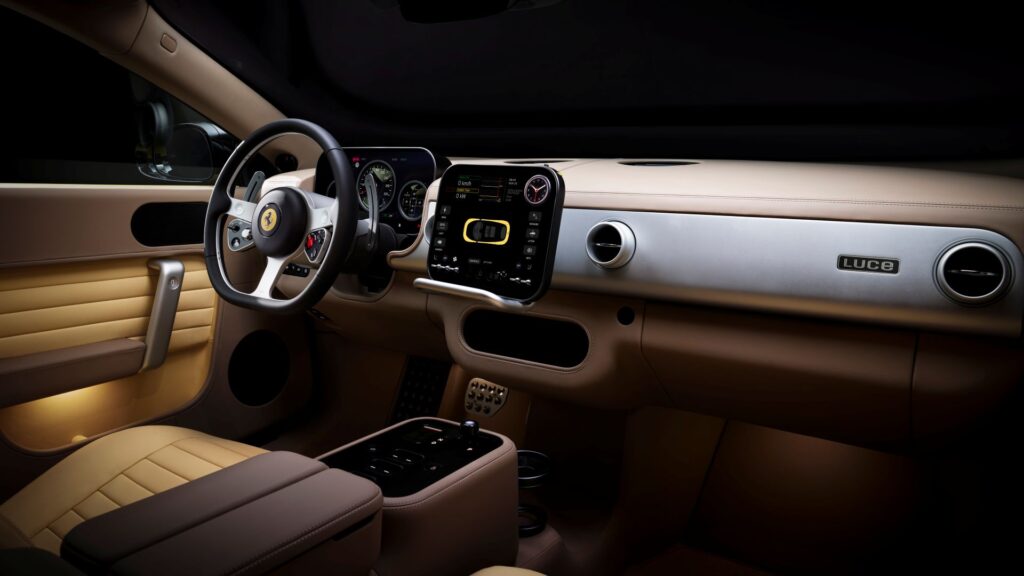
It is unlikely that many of Ferrari’s existing customers asked specifically for an EV to be added to the line-up; in doing so, the company is opening the door to entirely new audiences. After posing the still theoretical question to a number of Ferrari personnel, off-the-cuff expected estimates varied from around 60 percent to 80 percent ‘conquest sales’. The hope is that the Luce will appeal to Silicon Valley’s tech crowd, flush early EV adopters and the upper end of the massive Chinese market. These are all buyers who bought zero-heritage Teslas, Lucids and Xiaomis and are ready to trade up. They’re not likely to care that it doesn’t look like a traditional Ferrari or that it doesn’t have an engine description starting with a V. They only care if is well designed, well specified, represents their stratospheric lifestyle aspirations and image, and puts them at the perceived forefront of technology. The Luce is all that and promises to be brilliant to drive as well.
At the unveiling, Stellantis chairman John Elkann said: “The Luce expands what Ferrari can be without losing what Ferrari is.” Is he right about that? With an authentic, amplified electric-motor soundtrack, cutting-edge drivetrain tech plus new paddle-operated regenerative braking and power delivery driver-engagement tools to play with, we’ll know soon enough.