

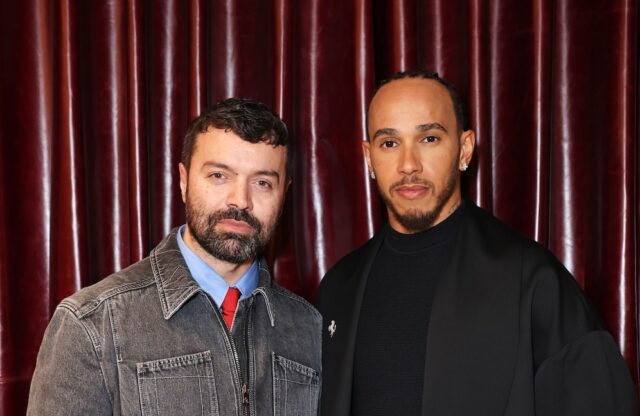

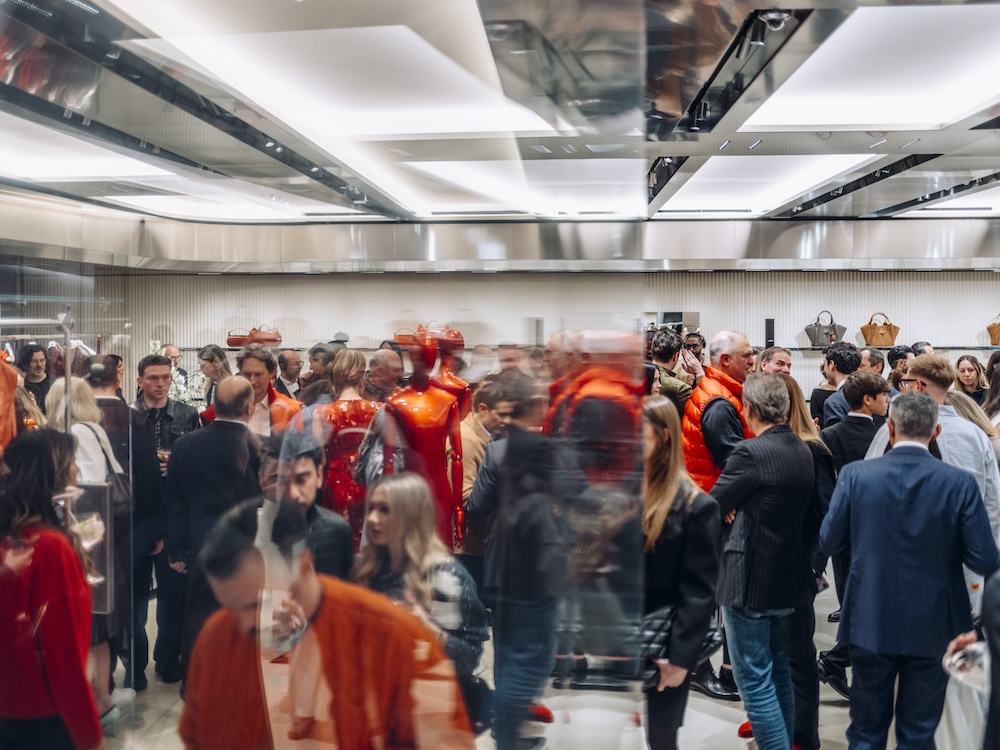
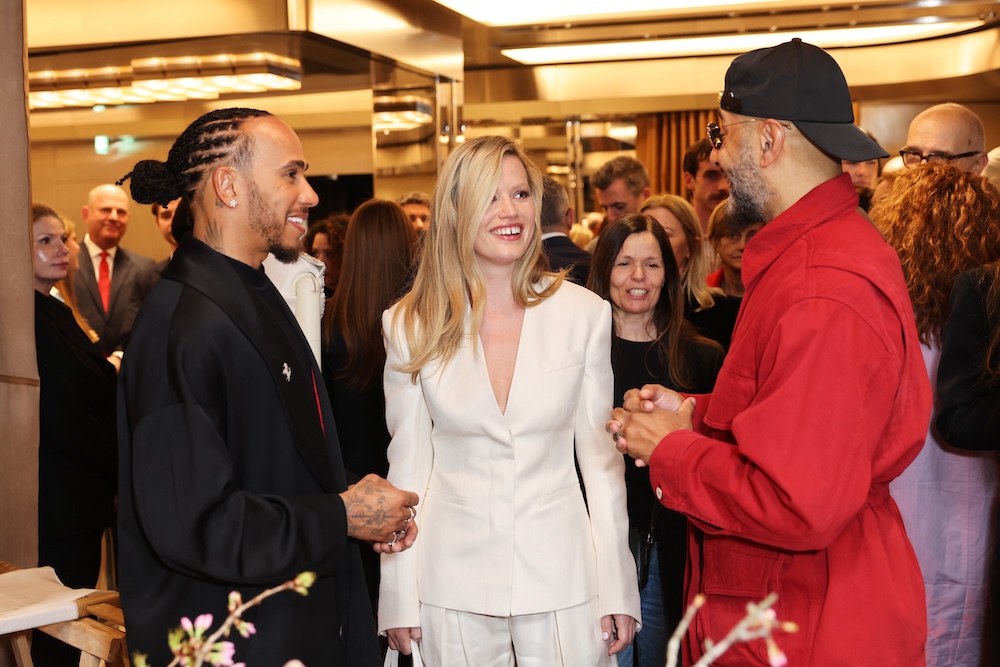
There are just two Ferrari flagship stores in the world: one in Milan, the other just opened on London’s prestigious Old Bond Street in Mayfair. Magneto was at the official opening, and spoke to creative director Rocco Iannone (above, with Lewis Hamilton at the store) about how Ferrari Fashion fits in with the cars and their owners – and how the new store was designed.
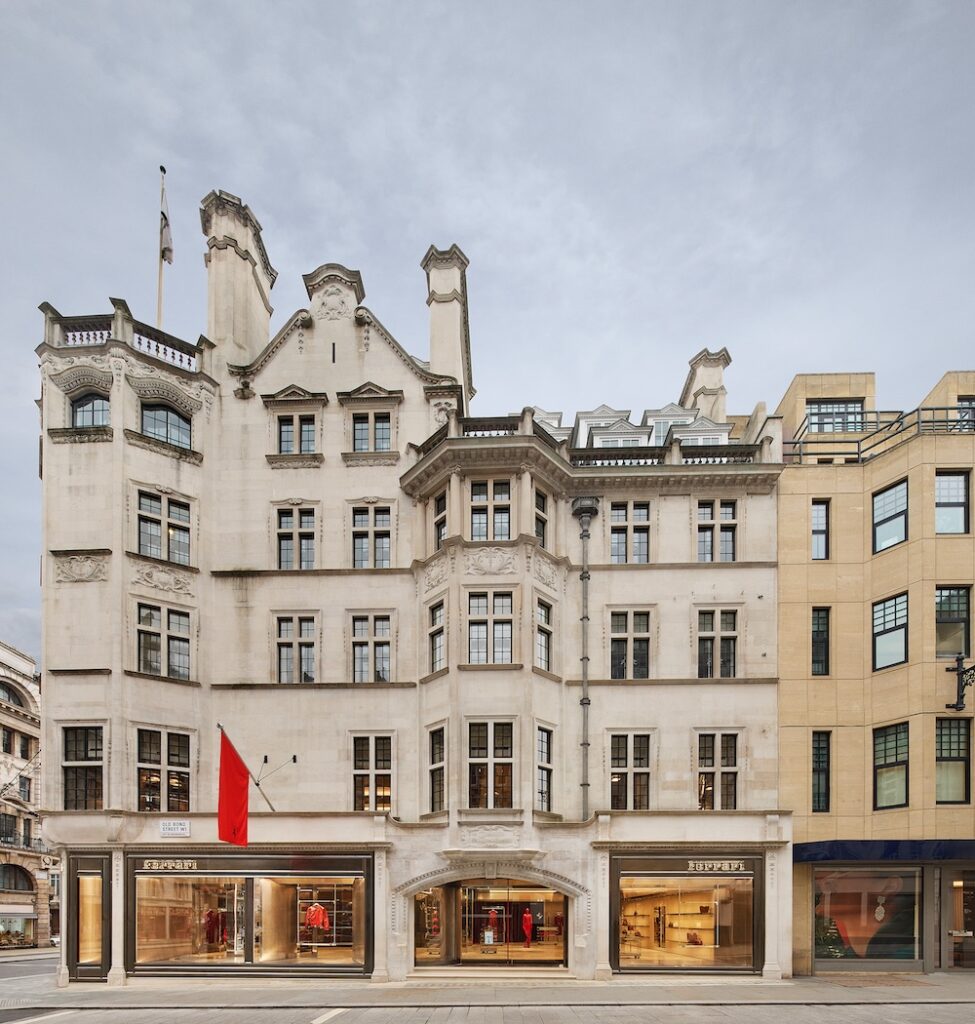
The attention to detail in the London Ferrari store is amazing. How do you choose the various materials used?
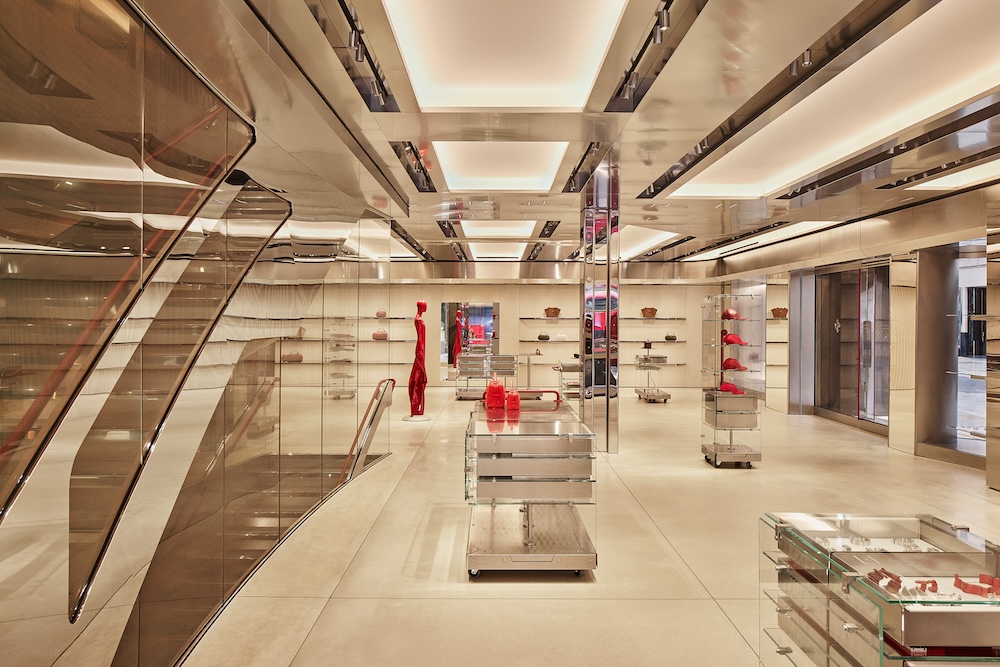
Our starting point is always Ferrari’s intrinsic vocabulary – a language shaped by engineering, precision and the constant pursuit of performance. Materials are never decorative; they are expressive. We look at them almost as an engineer would: for their behaviour, their resistance, their ability to react to light and touch. In the London store, every surface has been considered in terms of its role within a broader narrative. Metals, for example, are not just finishes – they evoke structure, discipline and technical rigour.
More tactile elements such as leather and Alcantara suede introduce contrast, bringing warmth and human interaction into what could otherwise feel purely industrial. The process is about balance: tension between raw and refined, between weight and lightness, between heritage and innovation. Ultimately, the materials need to feel coherent with Ferrari’s world.
Which details in the London Ferrari store are you most proud of?
What I value most is the overall coherence, the fact that every detail contributes to a unified experience rather than standing out individually. That said, I am particularly proud of how we interpreted the concept of the Officina. Instead of recreating it literally, we abstracted its essence: a space in transformation, where elements appear almost suspended between completion and process. Structural components remain visible, volumes feel open and flexible, and there is a deliberate sense of tension in how things are assembled.
I also appreciate the way the space engages the senses progressively. It is not immediate or didactic, it reveals itself over time, through movement, through changing light, through proximity to materials. This layered experience reflects Ferrari’s complexity: something you understand more deeply the closer you get.
What were the challenges involved in creating the London Ferrari store?
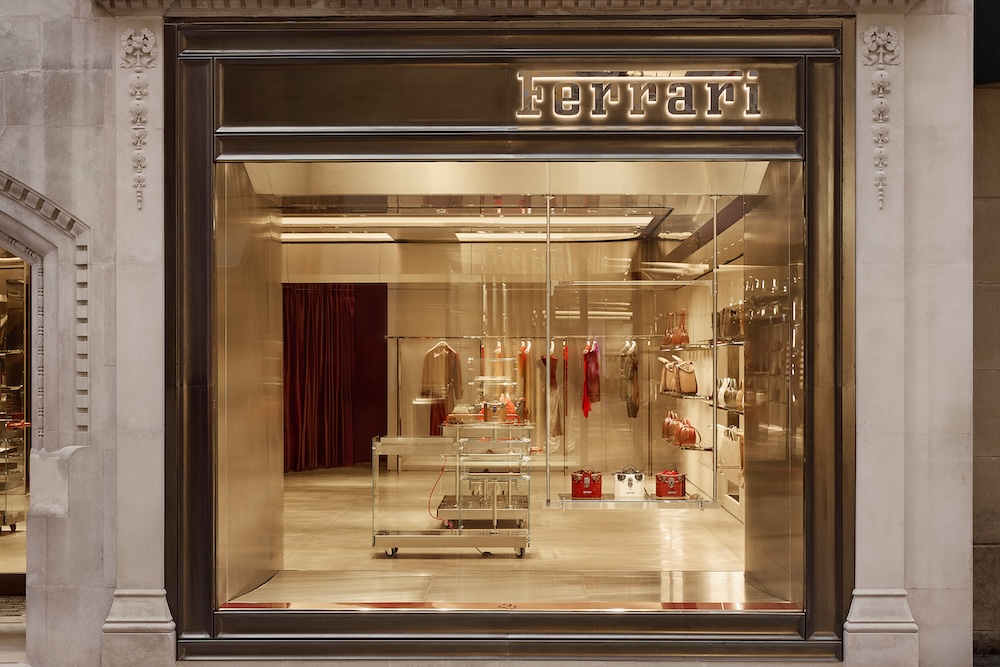
One of the key challenges was avoiding the temptation of nostalgia. Ferrari has an incredibly powerful heritage, but our responsibility is to project it forward. The store had to embody that forward momentum, rather than simply referencing the past. At the same time, we were working within an existing architectural framework, which required a very precise and respectful intervention. It became an exercise in dialogue between what was already there and what we wanted to introduce.
Another challenge was defining what Ferrari retail should feel like today. It’s not just about showcasing products; it’s about creating an environment that communicates values. Achieving that level of clarity where space, material and product all speak the same language requires a very rigorous, almost editorial approach.
What are your latest additions to the Ferrari fashion range?
For the opening of the London flagship, we introduced an exclusive capsule collection conceived as a dialogue between Maranello and London, bringing together Italian craftsmanship and the sartorial heritage of the United Kingdom. The edit is intentionally focused, centred around a sculpted bomber jacket and a sweatshirt for both men and women, each produced in highly limited quantities. This sense of rarity is fundamental, with every piece individually numbered to emphasise its collectable nature.
Materiality is key. A bespoke check motif runs through the collection, referencing British tailoring traditions, while specialised treatments from textured wool blended into leather to overdye finishes which all add depth and a sense of lived-in character. The capsule also includes elevated interpretations of our signature bags (The Maranello Clutch, Nello the Ferrari Tool Case, the Ferrari GT bag), alongside made-to-order travel trunks that reflect the Officina ethos of precision and craftsmanship. Overall, it is a contextual expression of Ferrari translating our core values into a distinctly London perspective while maintaining a strong and coherent identity.
Which items have proven most popular over the past few years?
What resonates most with our clients are pieces that strike a clear balance between functionality and identity. Outerwear is a strong example, garments in leather that protect, perform and at the same time express a very defined aesthetic language. Knitwear has also been particularly successful, especially when it incorporates technical elements or unexpected constructions. And then there are the accessories, especially bags, which have grown significantly. They translate Ferrari’s values into objects that can be integrated into everyday life while still feeling distinctive. In general, the most successful pieces are those that are recognisable without being overt, they carry a sense of intention rather than relying on explicit branding.
Who are they aimed at and what’s your typical customer demographic?
We don’t approach our audience through traditional demographic categories. Ferrari has always been about a mindset rather than a specific profile. Our customers are global and diverse – they come from different cultures, professions and generations. What connects them is a shared sensitivity to design, to innovation and to a certain idea of performance as a way of living. They are individuals who appreciate precision, who are attentive to detail and who look for pieces that express something about their identity. In that sense, Ferrari fashion is less about belonging to a group and more about recognising a shared attitude.
How much crossover do you think there is between Ferrari automotive customers and Ferrari fashion customers?
There is definitely an intersection, but it is not total and that is important. Some clients come to fashion through their relationship with the cars, extending their connection with Ferrari into another dimension of their lives. At the same time, there is a growing audience that encounters Ferrari first through fashion. For them, the brand represents a set of values such as innovation, performance and design excellence that goes beyond the automotive world. What matters is that both groups recognise the same underlying culture. Whether through a car or a garment, the emotional and aesthetic experience should feel consistent.
How did you go about creating a fashion brand that you feel is appropriate to Ferrari?
The process was very much about extraction rather than imposition. We didn’t want to ‘apply’ fashion to Ferrari, we wanted to uncover the fashion that already exists within Ferrari. This meant studying its codes in depth: the proportions, the materials, the use of colour, the sense of movement and aerodynamics. These elements were then translated into garments in a way that preserves their essence without becoming literal. Authenticity is key. The collection needs to feel as though it belongs naturally within Ferrari’s universe. That coherence across product, space and communication is really in essence what makes the project credible.
How closely do you work with the Ferrari automotive designers? Do they have a say in your designs?
There is a continuous and very natural exchange with the automotive design team. We share a common culture of design, which creates a strong foundation for dialogue. This doesn’t translate into direct approvals or interventions, but rather into an ongoing conversation about materials, about processes, about ways of thinking. We are inspired by similar principles, even if the outcomes are different. This relationship is important because it ensures consistency at a deeper level. It’s not about aligning aesthetics superficially, but about sharing a philosophy.
Finally, which are your personal favourites in the Ferrari fashion range?
I tend to be drawn to pieces that best express the duality at the core of Ferrari, the tension between structure and movement, between tailoring and performance. Outerwear is particularly meaningful to me because it allows for a strong expression of this balance. It combines protection, functionality and identity in a very direct way. I also have a strong affinity for accessories, especially bags, where design is distilled into its purest form. They require precision and clarity – every detail matters and nothing can be unnecessary. Ultimately, my favourites are the pieces that feel most resolved where concept, function and emotion come together seamlessly.
The new Ferrari flagship store is at 45-50 Old Bond Street, London. More information here.