

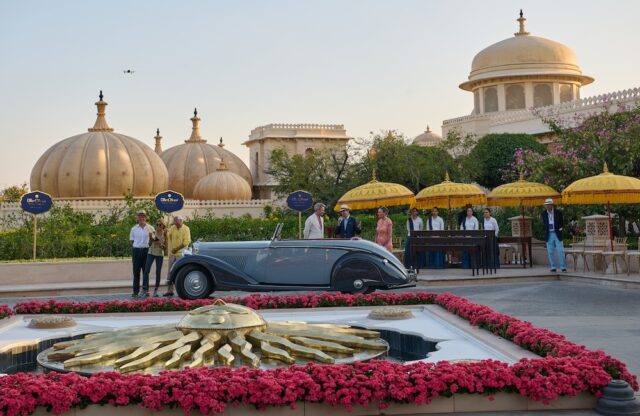
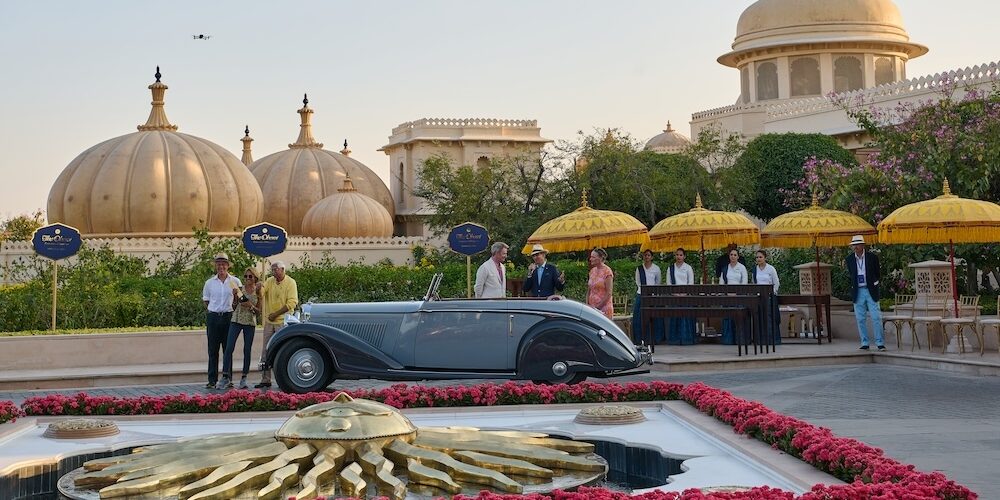
The 2026 Oberoi Concours d’Elegance, the second running of the event after its debut in 2024, awarded Best of Show to a magnificent 1937 Bentley 4¼ Litre, but what will be remembered just as much as is the superlative quality of the event, the location and its VIP guests.
It was attended by several members of India’s erstwhile royal families, including HH Maharaja Gaj Singhji of Jodhpur, HH Maharaja Himanshu Kumarsinhji of Gondal, Yuvraj Mahanaaryaman Scindia, Pratapsinh Gaekwad of Baroda, HH Maharajah Manujendra Shah of Tehri Garhwal, and HH Maharaja Harshvardhan Singh of Dungarpur.
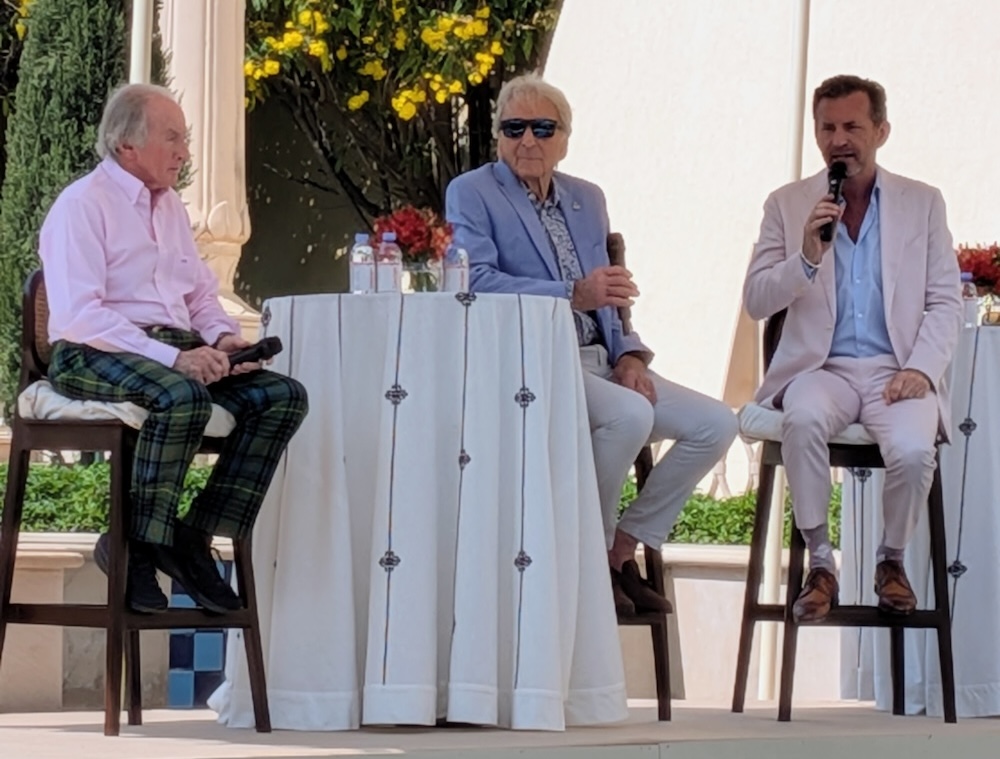
Other VIPs included Sir Jackie Stewart, Derek Bell, Giacomo Agostini and Jean Todt, with the first two captivating an enthusiastic audience with tales of their racing days during a forum (below) hosted by Justin Bell, son of Derek and a successful racer in his own right.
The event was based at The Oberoi Udaivilas hotel in Udaipur, known as The City of Lakes, and began with The Oberoi Tour d’Elegance, a spectacular cavalcade of the concours vehicles around the picturesque Fateh Sagar Lake.
Having won Breakthrough Event at the 2024 International Historic Motoring Awards, the overwhelming view was that the second incarnation had built on the first to deliver a must-attend occasion in the beautiful lake city of Udaipur.
The fundamental elements of a successful concours are the same throughout the world: a stunning venue, be it a golf course, historic house or five-star hotel; a sprinkling of motor sport celebrities; a fabulous gala dinner; some generous collectors; a gathering of international judges; and a selection of fantastic cars. The Oberoi Concours delivered these in spades, and did so with a grace and understated luxury that makes it stand out from every other concours.
At the heart of the event was a field of more than 80 cars, a significant proportion of which at some point had been owned by Maharajas, or Maharanas, as the royal kings of Udaipur were known, and 35 motorcycles, celebrating the significant role this mode of transport continues to play on the Indian subcontinent.
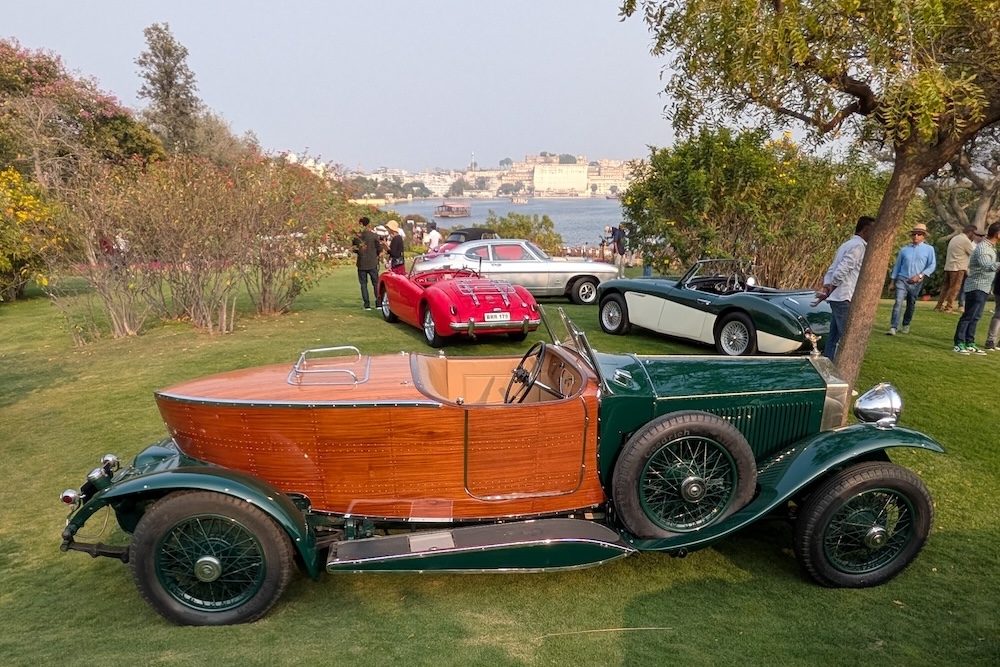
The classes on display were pleasingly eclectic. There were the expected cornerstones – Pre-war and Post-war American Classics, Post-war British Sports Cars and a strong showing of pre-war Rolls-Royce – alongside the now almost obligatory Youngtimer category. Complementing this was Indian Heritage Motoring and Racing, and the Indian Coachbuilt Now class, which showcased contemporary reimaginings of historic models that may or may not have existed in period.
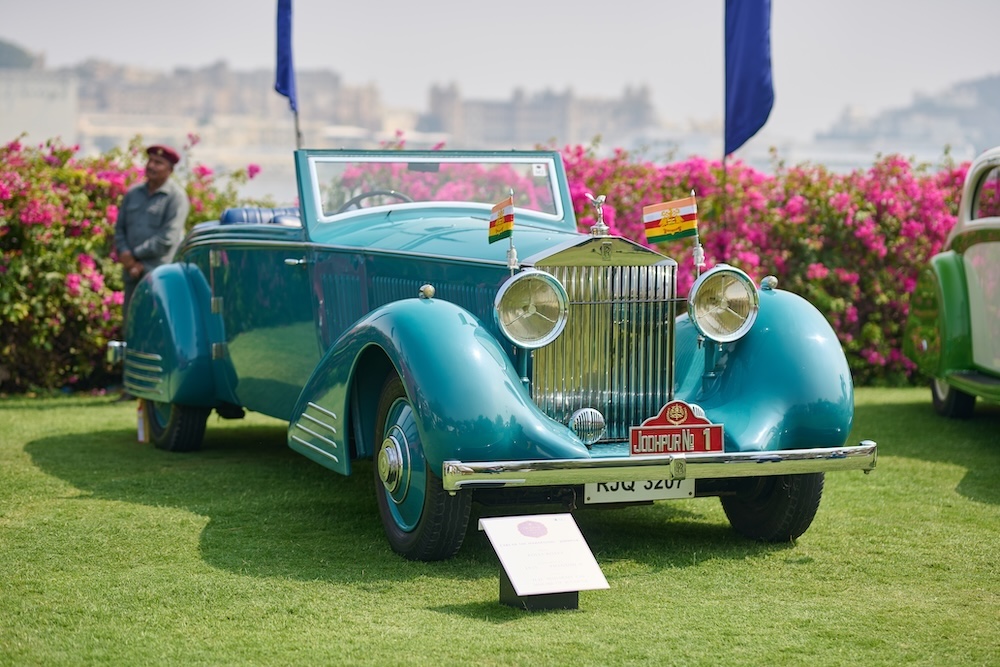
This is a peculiarly Indian concours, and all the better for it. The vast majority of cars live in India and have been restored locally. The quality of restorations and the pace at which the restoration houses in India are catching up with their western contemporaries was commented on by many of the judges. What was also illuminating was the fact, delivered by master of ceremonies Simon Kidston, that the average age of a restorer in India is only 35. The enthusiasm and knowledge amongst the younger generation for Indian heritage, including pre-war cars, was hugely encouraging.
A seminar on restoration and preservation, which included contributions from Louise Wood of P&A Wood, major Hong Kong collector Chip Connor and Pebble Beach’s Sandra Button developed some interesting themes, the two key takeaways being the difference between active preservation versus neglect, and the importance of restoration in telling the story of a car’s history rather than just returning the vehicle to its factory blueprint.
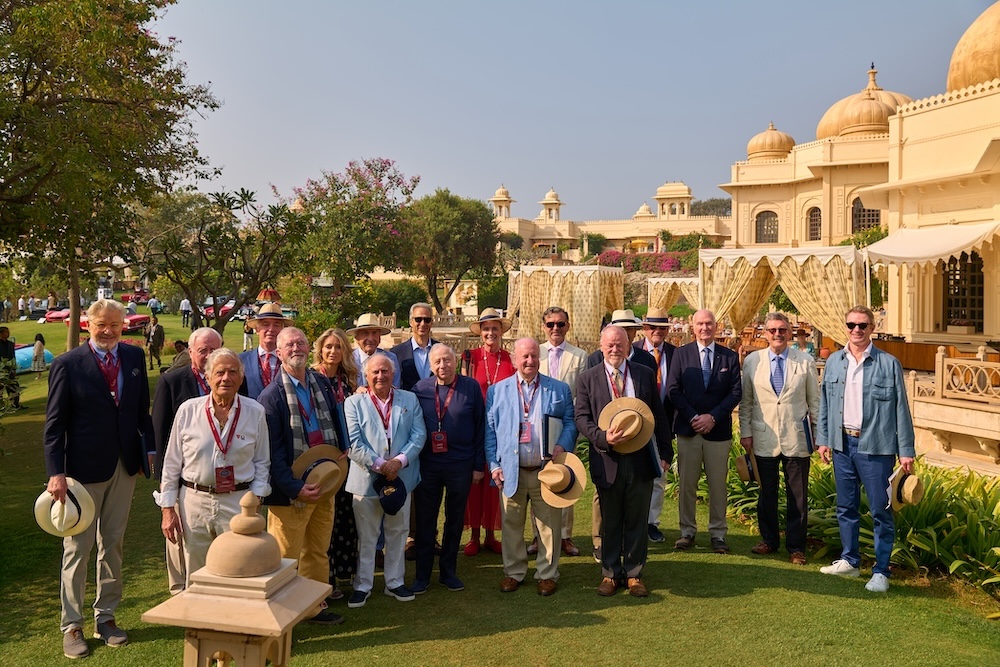
The international judging panel (below), led by Sandra Button, faced the familiar challenge of weighing exceptional provenance, meticulous restorations and the pride of owners who had invested heavily in presenting their cars.
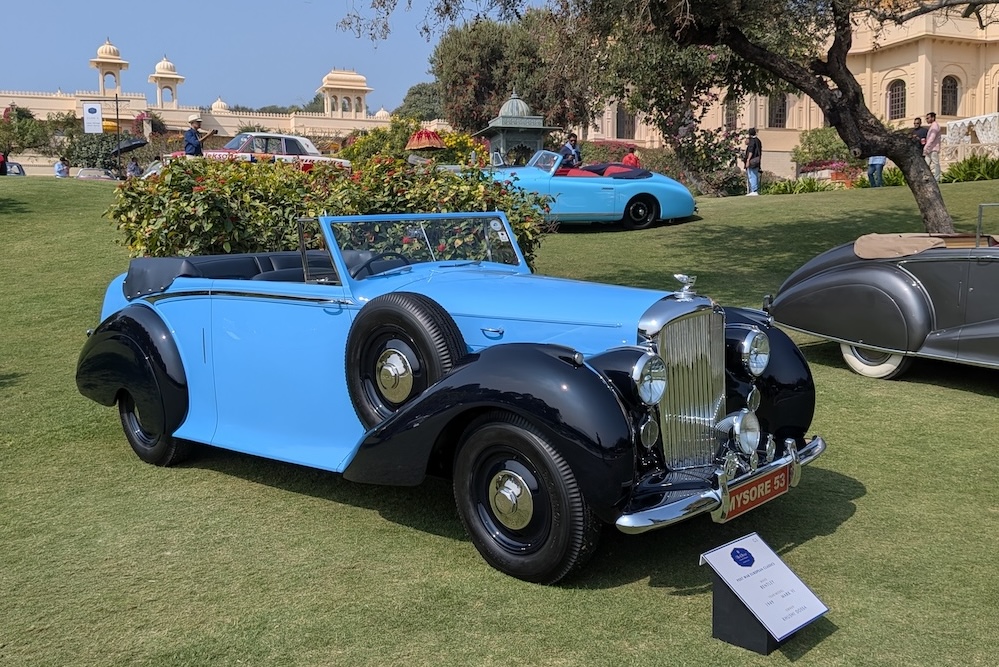
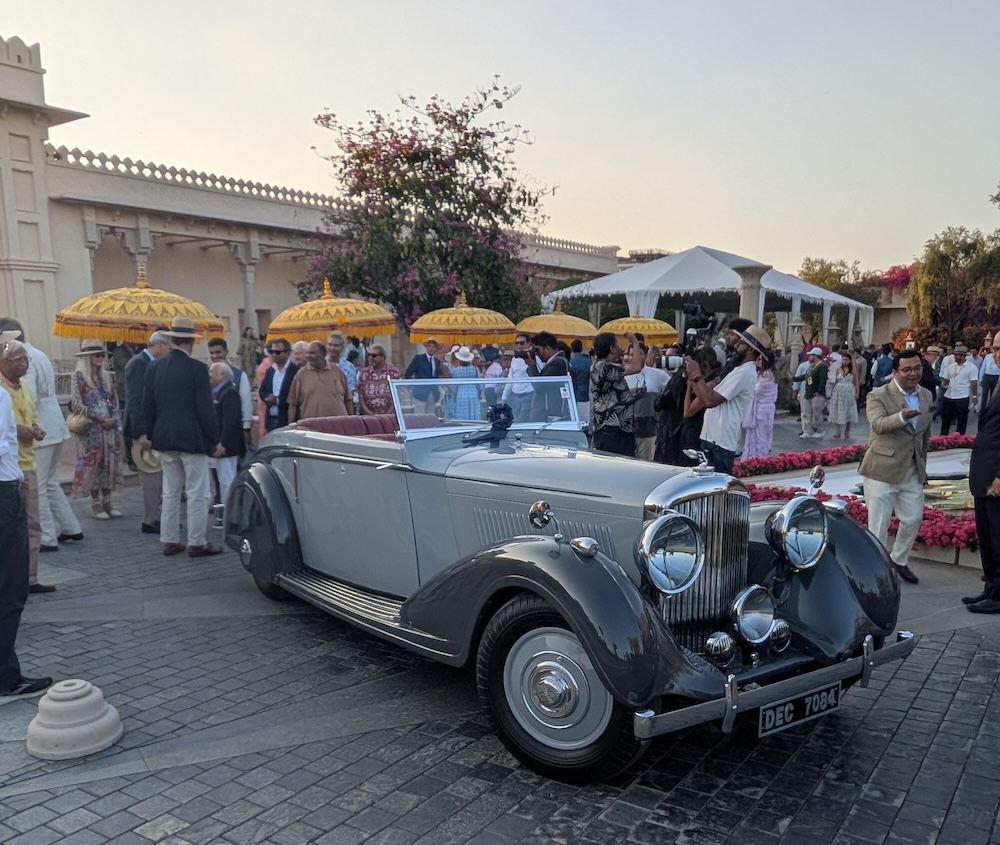
The Best of Show motorcar was presented to the fabulous 1939 Bentley 4¼ Litre Drophead Coupé, owned by Dhanraj Gidwaney. This particular example was delivered new to the Nawab of Bhopal, who later presented it to Maharani Gayatri Devi of Jaipur as a wedding gift. It wears elegant HJ Mulliner drophead coupé coachwork, and, being the MX series, is among the most desirable models of its kind.
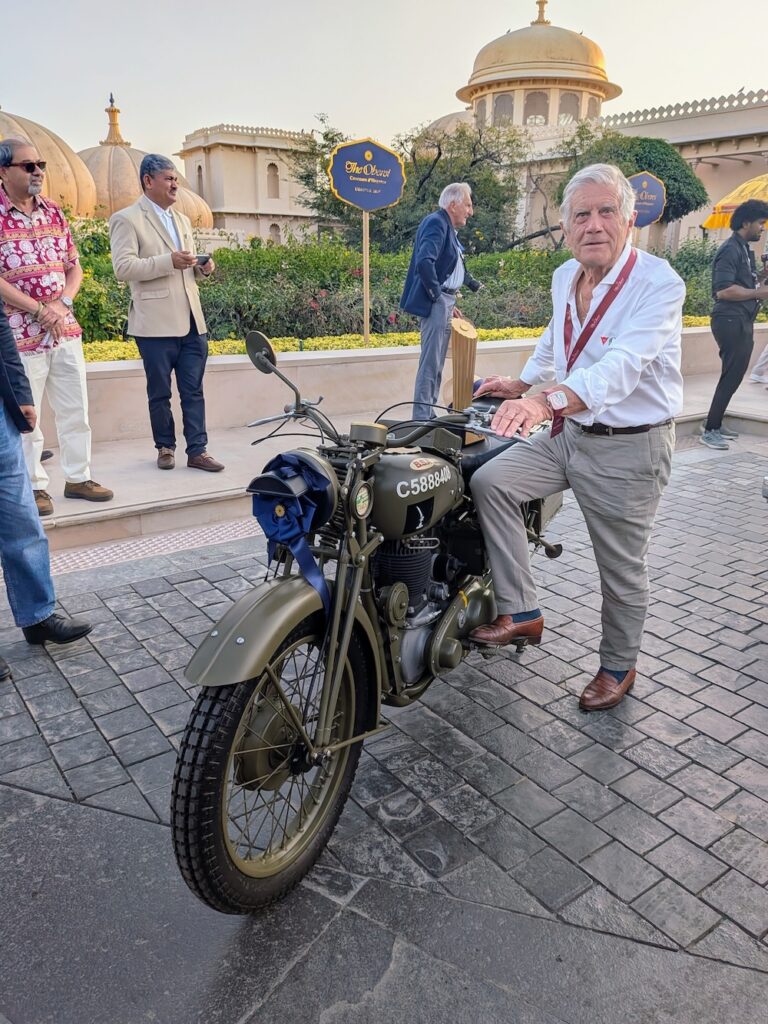
For motorcycles, the Best of Show award was given to a 1944 BSA WM20 owned by Gurmukh Singh Salh. This particular Birmingham Small Arms motorcycle was campaigned by the British Indian army in Burma from 1943 to 1946. A very enthusiastic owner was handed the award by 15 times world champion motorcycle racer Agostini (below).
The success of the Oberoi Concours is down to many factors, the heart of which is hospitality, attention to detail and the generosity of Arjun Oberoi as its host. The only real limitation remains the deliberately intimate nature of the event. The short tour, introduced for the first time this year, was a welcome addition – giving the cars an opportunity to stretch their legs and allowing the residents of Udaipur to enjoy a glimpse of the spectacle. It also hinted at the potential for the concours to extend its reach in carefully considered ways, sharing its evident passion with a broader audience while preserving the exclusivity that underpins its appeal.
Another consideration is how, and to what extent, the event might embrace greater international participation. One of the defining strengths of the Oberoi Concours is its distinctly Indian character: its celebration of local heritage, royal provenance and the subcontinent’s unique motoring narrative. As its reputation grows, interest from global collectors will inevitably follow, and the prospect of seeing some of the world’s great cars on Indian soil would be compelling.
The opportunity, however, lies in striking the right balance: broadening the canvas without diluting the cultural identity that makes the event so distinctive, and which will underpin its continued evolution when The Oberoi returns in 2028.
More information on the Oberoi Concours website.